Followed by DEMONic laughter.
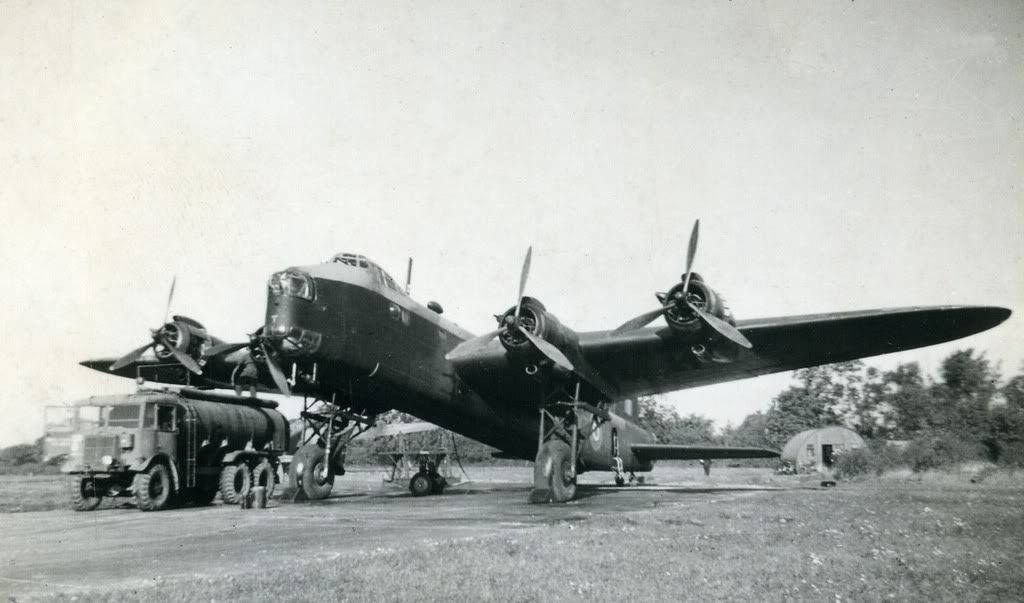
Donated in memory of Sgt Walter Perkins. (flew in 214 Sqn Stirlings and died in a Jossle Op Fortress III).

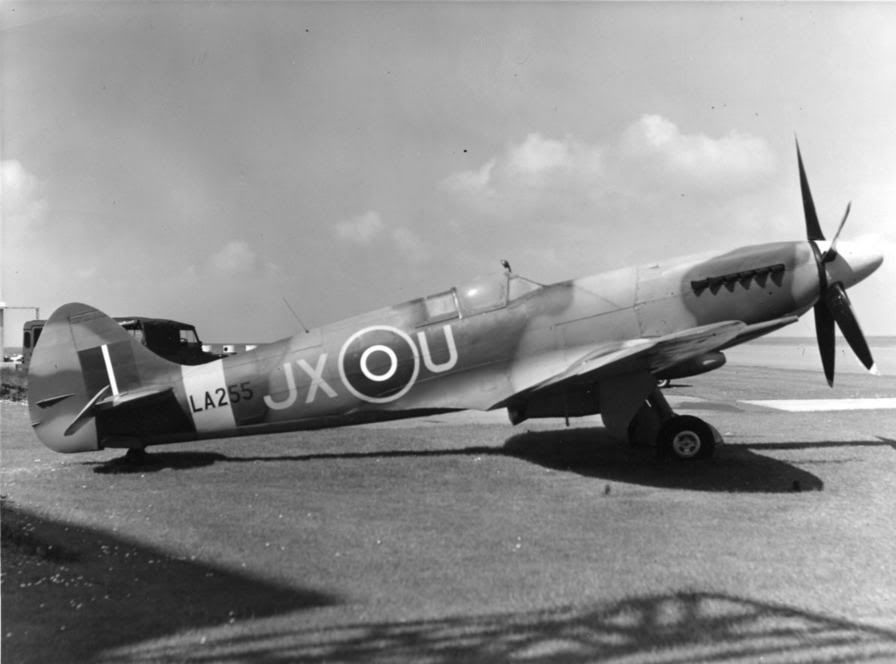
Back in her 1 Sqn days.
John

I wonder if Lindsay Budge recalls a 214 Sqn colleague Sgt Walter Perkins, Air Gunner (Waist position) who was lost on the night of the 21/03/1945 in Fortress III HB785 BU.A.
John
A Hawker Seahawk. Yeovilton?
Am I right in thinking that this might be an RR. Falcon prop of a Bristol Fighter The Blue bands I think are to denote that this is a left hand rotation. Falcons were produced in both Right an left handed versions. (as also were Eagles) A similar prop is fitted to the F.2b in the RAF Museum.
John
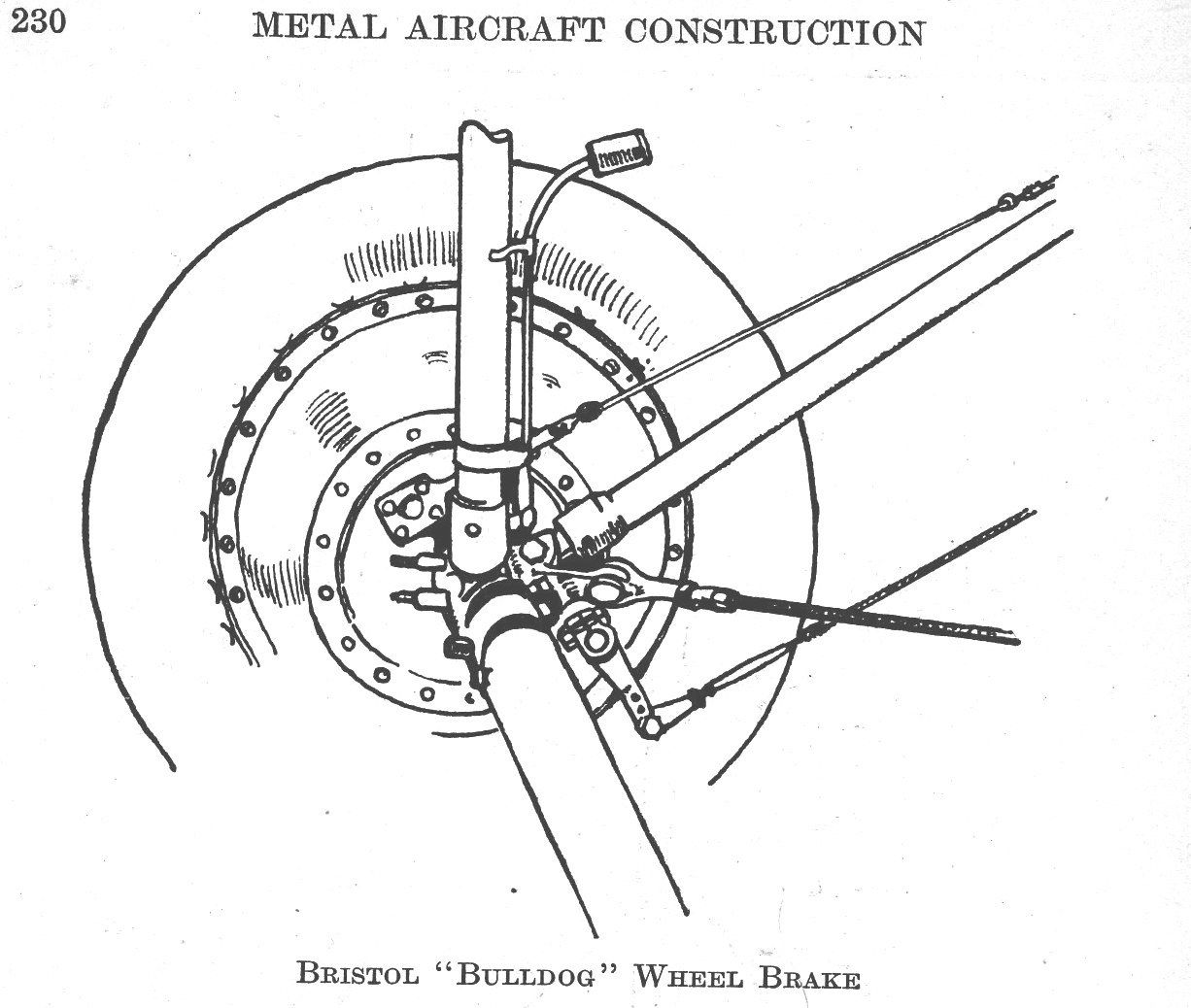
I’m sure that this will not help one iota but it may help folk down at my level to see the Bulldog brake. This illustration is from my 1934 copy of Metal Aircraft Construction (M Langley). I contains a huge number of such illustrations as well as material spec tables and D.T.D lists..
John

The wings would be no problem to remove. Yes the Hunters based for a while at Wymeswold were Hunter 5’s with Sapphire engines. If my memory isn’t playing tricks I seem to recall one of the Sqns with F.5’s was No. 257 with the Chinthe (A Burmese lion) badge. It is 60 years ago. The Avon Hunters were cartridge started, not sure about the Sapphire ones.
John
The photos were definitely taken at RAF Newton, I think in 1960. So in all probability this aircraft had come by road and had come from the hangars or had been allocated as a fire practice airframe. Flying was still being carried out at Newton, mainly Chipmunks and Ansons. The only jets I saw operated from there were the occasional Meteors and the occasional Vampire FB.5. I have found another photo so I can now confirm that the Hunter is coded O oscar.
John
Yes the F.5 was taken at Newton. It certainly hadn’t landed there as it was still a grass airfield. I remember at the Airshow at Wymeswold one hangar was full of Hunter F.5’s. and the other hangar was 504 Meteors. I wondered if this Hunter could have come from Wymeswold.
Steve. I have had a glass on the picture and I think I can just discern a curved top to the letter on the fin.
John
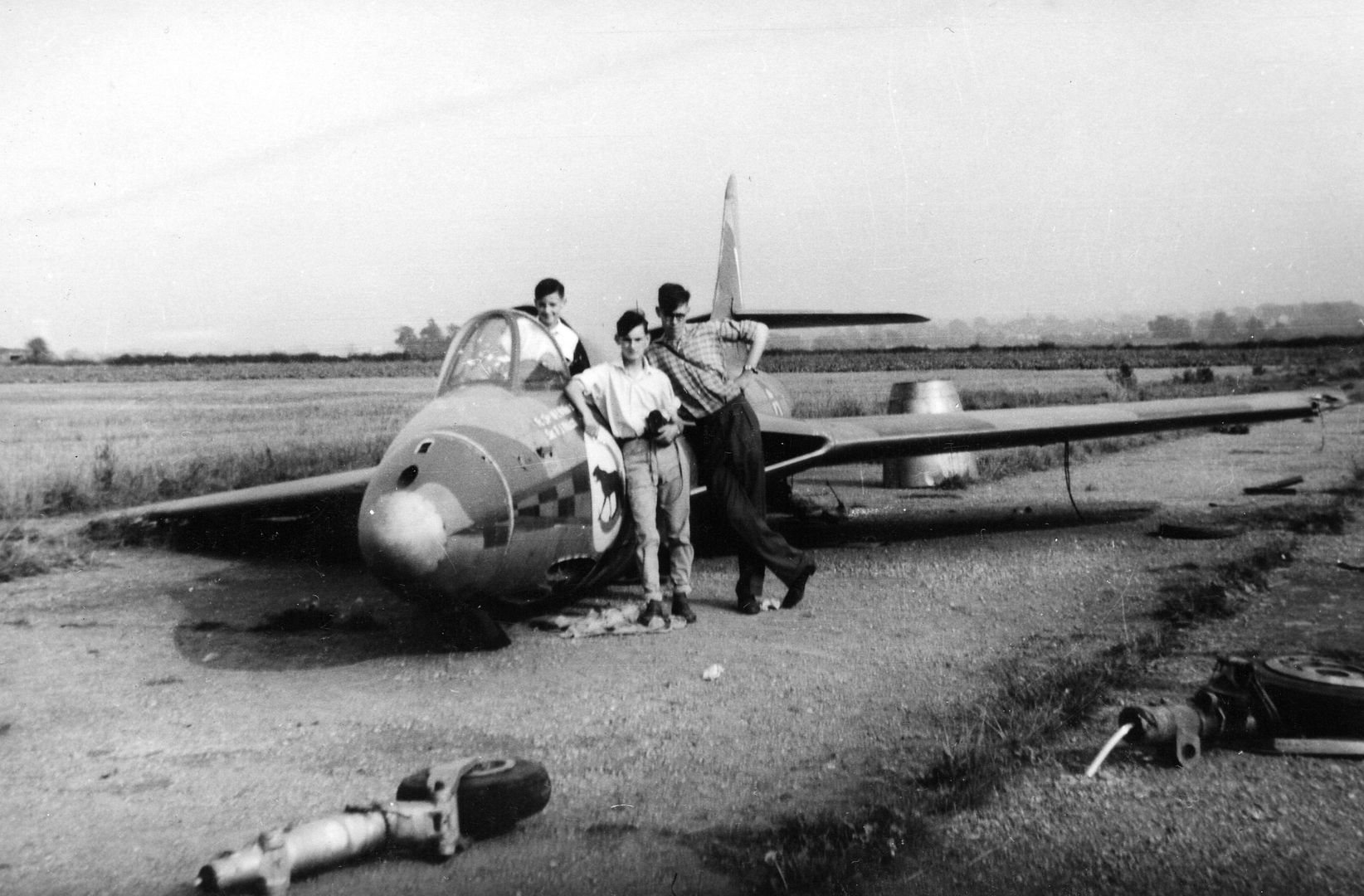
The guys are my brother in the cockpit, me and my pal Derek and we had just walked through the sparse hedge.
I’ve just played with the contrast on a copy and I think the nose door letter might be an O. Another play and Yes it’s an O.

Hi Steve, Unfortunately no, It’s one of the few photos in some old albums which does not have an identity. I have a nose shot and the two names on it are F/O N.E.N Waller (or Walker) and SAC Keeler. I think that the fin letter was a yellow ‘L’. Now amended to an O after a play with the original poor photo.
John
AOG = Aircraft on Ground. In other words can’t return to base until fixed. I too remember the Airshow at Wymeswold. A long bike ride from Calverton but worth it to see the Hunter 5’s, 504’s Meteor 8’s, the Thunderbirds Thunderjets and the Attackers and the Dart Kitten.
I wonder if this was your Hunter. Taken at Newton circa 1960.
John
[ATTACH=CONFIG]243010[/ATTACH]
An almost identical cowling arrangement for the geared Jupiter as that on 9385 was tried on the Bristol Boarhound. J9385 might also have trialed this cowling before being reverted back to the contract standard and dispatched to India. The fact that the top photo is of the standard test/ trials format/view I think reinforces this.
The fairing plates at the rear consist of 9 separate plates from what I can see and easily removed. Of interest J9382 was retained by the makers and also used for several trials. I’m sure that in the interwar air force there was the equivalent of ‘Red Line Entries’ for an aircraft to be flown without damaged panels or items such as the exhaust manifolds needing repair but in short supply, so the earlier direct stubs could be temporarily fitted in lieu.
John
I’m pleased we agree that the whole batch of Wapiti V’s will be the short fuselage types. I think a simple answer to the choice of Jupiter engine types is that the large prop, geared engines were more efficient in India in the hotter temperatures and higher altitudes that the Wapiti encountered there. Glad to help.
John
With the cylinder fins appearing to have ‘squared’ off sides is this off a an air cooled inline engine?
John