black eagle
Sukhoi Su-34 can be front runner for Strategic Force Commands fighter requirements: Experts
Suddenly it seems like all three armed forces of India want to have their own dedicated air fleet and don’t want to depend on air force for all their requirements. When BSF wanted to have their own dedicated fleet for moving its logistics , Indian air force stopped protesting any more now and have help guide BSF in laying down its requirements with aircraft manufactures , IAF seems to have taken this in a positive manner , it also recently oked Army having bulk of HAL built LCH attack helicopter which still in testing phase but usually attack helicopters have been operated by IAF in past ,and Army has per source will also be acquiring MTA aircraft’s which Russia and India will be building jointly to help move it logistics all over the country .
Strategic Forces Commands not to be left behind has put its own demand for two plus Squadrons of its own Fighter jets capable of carrying nuclear payload; it has already mentioned that it wants already tested and available aircraft for this job , Jaguars and Mirage-2000k have been backbone of India’s aerial nuclear weapon carrier for a while , but Jaguars have been dropped for not having enough ground space to carry a nuke under its belly and Mirage 2000 along with Sukhoi Su30MKI have been sole Nuke capable fighter aircrafts.
Recent purchase of 40 Sukhoi Su 30MKI might head to this Elite Nuclear Squadron? Or will new aircraft will be purchased for this role is still unclear , since Cabinet approval for such request needs to be cleared first Front runner will always be Sukhoi 30 aircrafts optimized for Nuclear attack mode , but if IAF doesn’t want to give its fleet of Sukhoi 30 from its squadrons ,then defense expert Rakesh Sharma suggests that Sukhoi Su 34 which is a Bomber Fighter aircraft which Russia has been developing to replace its older Sukhoi Su 24 fleet along with its Tu-22 Medium range bombers could be ideal choice for SCF , Sukhoi Co have already reported that the it has begun full-rate production of this aircraft and Russian air force will acquire 200 aircraft by 2020.
What makes this aircraft front runner is it has shares many of the spares and components with IAF’s Sukhoi su 30MKI platform and will not require separate logistics to maintain them; Aircraft has been designed for precision weapons carrying capability that includes Nuclear weapons, and cockpit layout for pilot has been optimized for bombing roles and features side-by-side seating for a crew of two.
Su34 has long range of Su 30 along with Canards to maintain static instability (higher maneuverability) and to reduce trim drag , in addition it Su-34 features a rearward facing radar capable of detecting, tracking, and directing R-73 or R-77 AAMs at pursuing enemy aircraft.
black eagleMonday, September 06, 2010
FIRST LOOK: India’s Long-Range Cruise Missile Programme

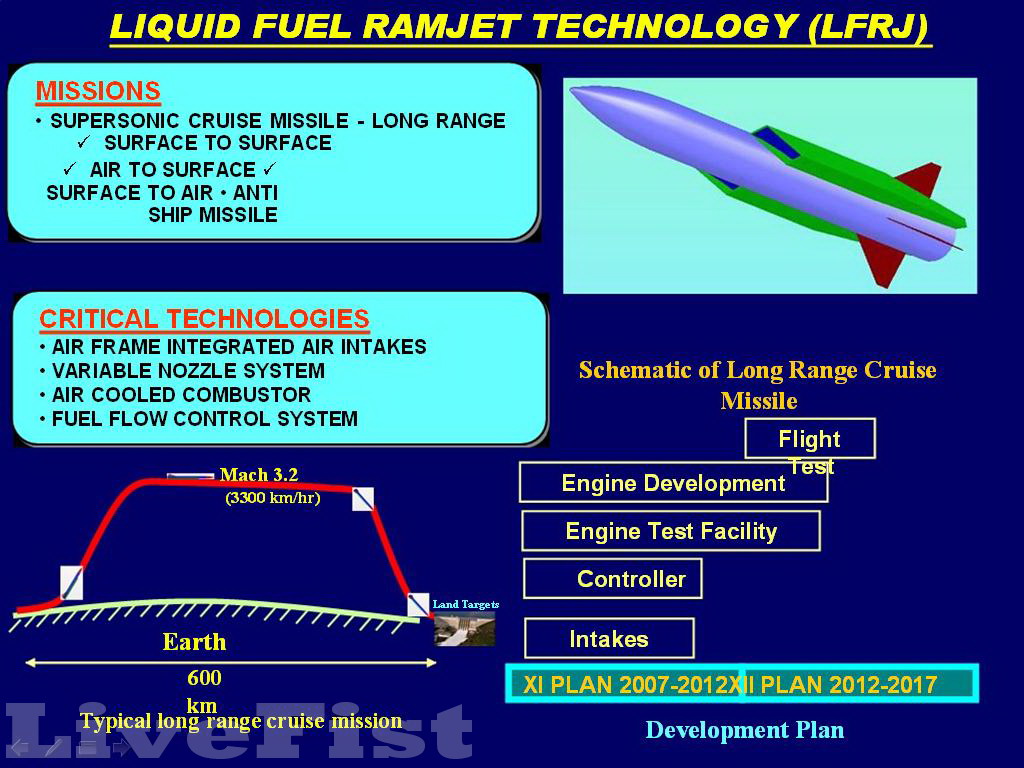
The image above is the first impression of India’s little known Long-Range Cruise Missile (LRCM). The question now arises — is this the same as the Nirbhay, India’s sub-sonic long-range cruise missile programme? This is still tantalizingly unclear. Why? Well, the Nirbhay has been confirmed by the DRDO on several occasions to be based on a subsonic cruise vehicle. On the other hand, the LRCM depicted above is from a slide (see below) in a 2009 DRDO presentation. That particular slide deals specifically with liquid-fuel ramjet technology. Nowhere in the slide is the missile above referred to as Nirbhay, but as LRCM only.
Look at the slide. Here’s where it gets interesting. Under the “missions” head on the slide, it says the LRCM is a “super-sonic cruise missile – long range”, with surface-to-surface and air-to-surface applications. An illustration on the slide indicates that the missile is being developed with a range of at least 600-km at 3.2 Mach.
Even more interestingly, the slide provides scehamatics that indicates the development plan of the LRCM in a fair amount of detail. According to the schematics, under India’s 11th Five-Year Plan (2007-2012), DRDO will complete the development of airframe integrated air intakes (see image) and controllers. These will be completed before 2012. The schematics also indicate that the engine development and engine test facilities are well underway under the 11th Plan, but will be complete under the 12th Plan, i.e, between 2012-2017. The schematics indicate that the DRDO aims for a first test firing of the Indian LRCM by 2013-14.
Apart from the airframe integrated intakes, critical technologies currently under development for the weapon system include variable nozzle system, air cooled combustor and fuel flow control system, all earmarked for the 11th Plan.
The Nirbhay has variously been described, officially missile is being developed with a 300-km stated range, so that’s out.even, as a subconic cruise missile system with a range in excess of 1,000-km (the latter hasn’t been officially stated though). I asked a senior DRDO missile scientist on Sunday if the LRCM was the same as the Nirbhay. He said the Nirbhay was definitely subsonic, and that the only long-range cruise missile programme in India currently was the Nirbhay.
The only supersonic cruise missile known to be under development right now by India is the BrahMos-2 hypersonic cruise missile, which has a stated range of 300-km. If the LRCM and Nirbhay are two separate, distinct programmes, then the former now stands revealed for the first time here.
http://livefist.blogspot.com/2010/09/first-look-indias-long-range-cruise.html
black eagleSunday, September 05, 2010
BrahMos Cruise Missile Tested, Debuts Steep Dive, Validates Supersonic Manoeuver
The Indian Army tested one of its BrahMos supersonic cruise missile on India’s East Coast today. Sources say the test validated supersonic manoeuver that began with an earlier test, and was the first test in which the missile employed a “steep dive”.
http://livefist.blogspot.com/2010/09/brahmos-cruise-missile-tested-debuts.html
black eaglejust wanted to know what is the look down range of the N011m bars fitted on the MKI & how does it compare with the other contemporary radars fitted on rafale , typhoon, F-18 etc?
black eagleTIMES NOW: IAF Recommends Rafale & Eurofighter For MMRCA!
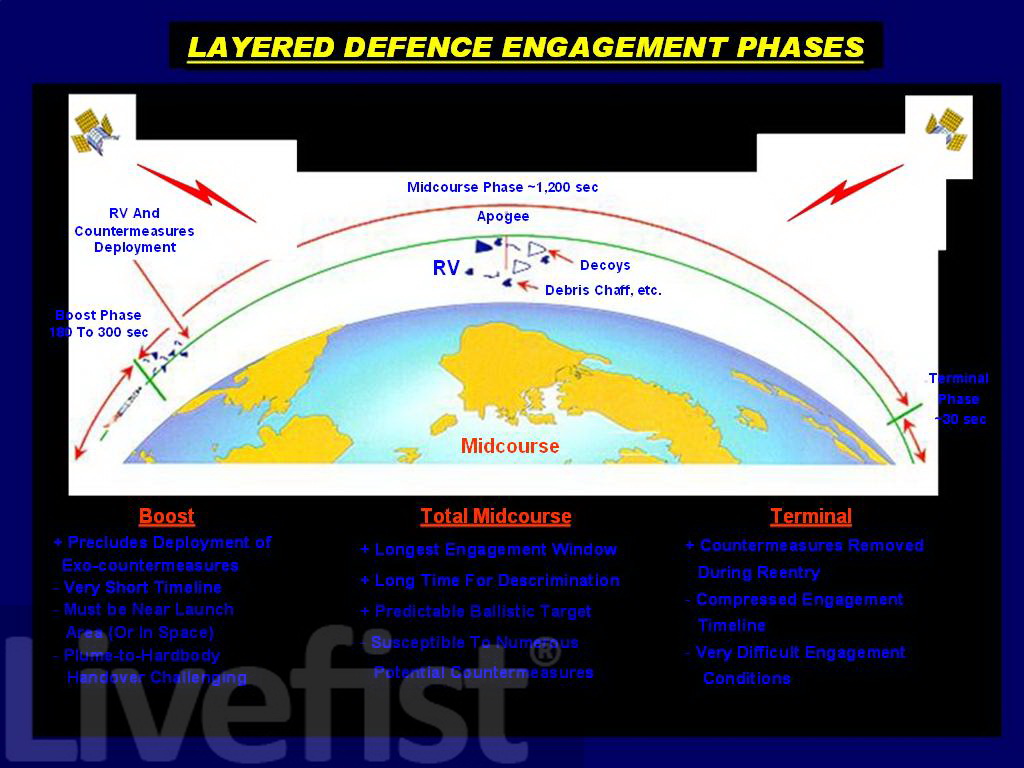
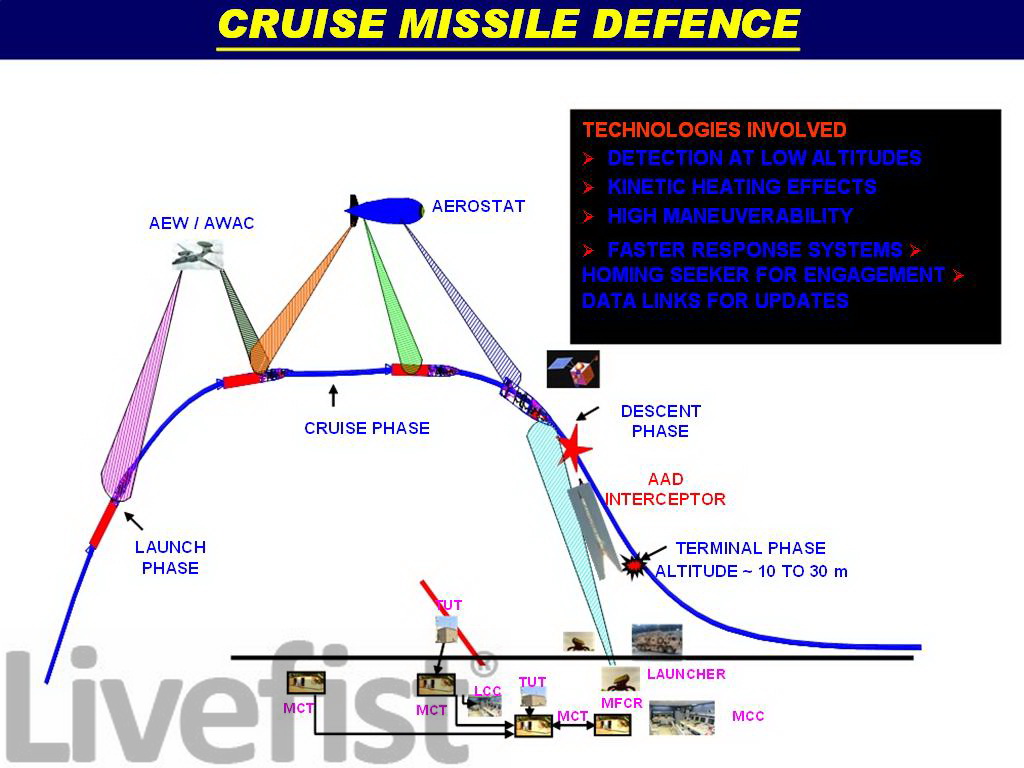
black eagleOfficial Schematics Of India’s Layered Missile Defence System, Including Cruise Missile Defence …
http://livefist.blogspot.com/2010/07/exclusive-official-schematics-of-indias.html
black eagleIndia test-fires interceptor missile
Balasore: India on Monday successfully test-fired its indigenously developed interceptor missile, capable of destroying any in-coming hostile ballistic missile, from the Integrated Test Range at Wheeler Island off Orissa coast.
Aimed at developing a full-fledged multi-layer Ballistic Missile Defence (BMD) system, the trial was carried out from two launch sites of ITR off the Orissa coast, defence sources said.
The whole exercise is to achieve the desired result with precision, said a senior defence scientist. The target missile, a modified surface-to-surface ‘Prithvi’ was first lifted off from a mobile launcher at 10:05 am from the launch complex-3 of ITR at Chandipur-on-sea, 15 km from here.
The interceptor “AAD” missile, positioned at Wheeler Island, about 70 km across sea from Chandipur getting signals from radars tracked it a few minutes later and than intercepted at a definite altitude in the mid-air over the sea, the sources said.
While the test launch of both target and hit missiles were deemed success from their respective test sites, detailed results, specifically the ‘kill’ effects of the interceptor will be known after all data analysis from multiple tracking sources, a defence official said soon after both the missiles roared into the overcast sky leaving behind a thin layer of smoke.
An “AAD” missile was used as interceptor at low altitude, the sources said, adding that the indigenously developed new hypersonic interceptor missiles was designed to be engaged in endo and exo atmospheric condition.
The interceptor designed for endo-atmospheric condition (up to 30 km altitude) is a seven-metre-long and single stage solid rocket propelled guided missile, equipped with an inertial navigation system, a hi-tech computer and an electro-mechanical activator totally under command by the data up-linked from the sophisticated ground based radars to the interceptor.
Similarly, the interceptor designed for exo-atmospheric condition is a two-stage missile with a maximum interception altitude of 80 km, they said.
The interceptor missile had its own mobile launcher, secure data link for interception, independent tracking and homing capabilities and its own radars.
This is the fourth time that the DRDO has tested its intercepting missile. The three previous tests were conducted on November 27, 2006, December 6, 2007 and March 6, 2009 from Wheeler Island.
The fourth test which was scheduled in mid-March was put-off twice and considered abandoned. Due to some technical snags in the sub-system of the missile, the mission was aborted prior to take off on March 14. The next day the target missile deviated from its pre-determined trajectory, which forced the scientists of DRDO to put-off the trial of the interceptor missile, the sources said.
As a safety measure, the Balasore district administration had temporarily shifted about 400 civilian families residing within two km radius of the ITR launch pad-3 at Chandipur from where the target missile was test fired.
http://ibnlive.in.com/news/india-testfires-interceptor-missile-today/127476-3.html?from=tn
black eagleIndo-Russian Hypersonic Missile Takes Shape

black eagleAkash Mk-2 will become Akash EX (Extended Range Mk-II)
BY : IDRW NEWS NETWORK
Initial work on Akash MK-2 has begun ,and the new missiles system will be fielded within next two years by DRDO , earlier plans was to have Akash mk-2 with range up to 50 to 60km but those plans have been curtailed to bring in only extended range Akash with marginal increase in range of 10 to 15 km from its current range of 20 to25 km .
This probably has been done to avoid two different long range missiles in Army and Air force arsenal , DRDO and IAI of Israel have already developed Barak-II (Barak 8) with range of 70km for navy and work on land based version will also be developed soon ,so its logical to work on Barak-II which will be long range interceptor missile for all three forces while Akash MK-1 and MK-2 will be Medium range surface to air interceptor missile for both army and air force .
Barak-2 has been recently been tested in Tel Aviv successfully and further testing will be held in India later this year .
While DRDO will be working with French for the short range Low Level Quick Reaction Missile (LLQRM) know has MAITRI , which will have technology developed for Trishul LLQRM TDP (Technology Demonstrator Project) and will have range of 8 to 15km and will be used by all three defence forces of India.
DRDO will also be developing more advance version of the Rajendra BSR (Battery Surveillance Radar) which is PESA radar, while Akash Mk-2 will have a Rajendra derivative AESA radar to perform the same role, AESA radar will give it better tracking, and engagement functions. Work on AESA variant has begun and almost nearing completion.
DRDO expects to increase the range of Akash by using using better composite booster with lengthened booster section to achieve the desired range.
This will be the Roles of Surface to Air missile in Indian Armed Force
MAITRI (LLQRM) 8-15 km Quick reaction short range Surface to Air missile missile
Akash MK-1 /MK-2 (MR-SAM) 20-25 /35 km Medium range Surface to Air missile missile
Barak-2 ( LRSAM) 70km Long Range Surface to Air missile
While all three missile systems will have different roles in Indian Armed force and will be inducted by all three forces ,only Akash MK-1/2 will not see service in Indian Navy .
black eagleThe Dragon’s new claw
BY : Rajeswari Rajagopalan (The writer is a senior research fellow at Observer Research Foundation, New Delhi)
The US office of naval intelligence report of August 2009, titled ‘The People’s Liberation Army Navy: A Modern Navy with Chinese Characteristics,’ reveals that China is close to developing the world’s first anti-ship ballistic missile (ASBM) system. If China succeeds, it could alter the military equation in the Asia-Pacific region.
Development of ASBM systems is particularly significant given that it will have the capability to defeat US carrier strike groups operating in the region, making it a ‘no-go-zone’ for the US and other advanced navies.
The anti-ship missile systems are believed to be using the modified DF-21 missile that has better accuracy and can carry nuclear warheads big enough to inflict damage on large naval vessels. The missiles, reportedly with a range of 2,000 km, covering the second chain of islands, are aided by a network of satellites, radar and unmanned aerial vehicles that can locate US ships and then guide the weapon, enabling it to hit moving targets.
The employment of a complex guidance system, low radar signature and maneuverability makes its flight path unpredictable, thereby making the tracking systems ineffective.
While there may be scepticism among analysts as to whether China has advanced to such a high level of sophistication, Dai Xu, a Chinese military expert, who spoke to ‘Global Times’ (China) said, “China is indeed developing anti-ship ballistic missiles. It is not a secret. During the 60th anniversary National Day military parade, China exhibited such missiles.”
He however added that these systems need not necessarily have a ‘killer’ effect, capable of defeating the US fleet, as has been made out in several reports. While one may agree with such an argument, what has been worrying is Beijing’s increasingly aggressive behaviour in the seas even against the US and Japanese naval vessels and thereby the potential of these missile systems to create difficult situations in the future.
One of the latest instances of such aggressive behaviour is that of the March 2009 incident in which US Navy reported that five Chinese ships harassed the US submarine surveillance vessel ‘USNS Impeccable’ in the south China area.
Pentagon reports suggests that there were at least half a dozen such incidents in the very same week, where US surveillance vessels were “subjected to aggressive behaviour, including dozens of fly-bys by Chinese Y-12 maritime surveillance aircraft.”
Chinese assertiveness, based on China’s claim to the entire South China Sea as its territory and creating conflictual situations with several countries, including the Philippines, Vietnam, Malaysia, Brunei and Taiwan, could lead to increasing tensions and possible accidents in the seas.
Need for agreement
Although there is scope for these discussions in the 1998 US-Chinese military maritime safety agreement, the two sides have not been able to address these incidents in a useful manner. The US has been seeking an incidents at sea agreement, similar to the 1972 US-Russian Incidents at Sea Agreement.
The trend in Chinese military strategy is worrisome. One of the key areas that China has focused on in the last few years relates to the area denial strategy. Such a strategy, restraining the ability of another country to use a particular space or facility, will allow China to create a buffer zone around its land and maritime periphery which in turn will increase the difficulty for other states to operate close to Chinese mainland.
Chinese sea denial capability is essentially enforced through its growing submarine force. China has a force of 62 submarines, including 12 new and advanced Kilo-class Russian submarines, in addition to different classes of domestically-developed diesel submarines and several nuclear-powered attack boats.
It also has a significant number of surface combatants, including air-defence guided missile destroyers such as Luyang-II and Luzhou class vessels, several powerful multi-role vessels (Sovremenny class destroyers) like Hangzhou, and a large number of different anti-ship missiles that can be launched from submarines, surface ships and airplanes and even shore-based launchers, such as the SS-N-22 Sunburn and SS-N-27 Sizzler systems procured from Russia.
The US Navy does not yet have an effective way of defending their aircraft carriers against these missiles. In a potential conflict on the Taiwan Straits, the PLAN could possibly destroy some ships of the US carrier battlegroups, including US aircraft carriers.
Development of these weapon systems has upped the ante in the region and beyond. First, development of such capabilities by China could potentially lead to arms race in Asia, with countries wanting to develop systems that can counter Beijing’s ASBM capabilities.
The US Navy is already looking at responses, in terms of building deep water ballistic defence destroyers. It is moving away from a strategy of building a fleet that would operate in shallow waters near coastlines to developing capabilities for deep sea anti-ballistic defences.
Similarly, Chinese assertiveness in the Indian Ocean region, its increasing presence in all the littoral states, could create tensions with India. Additionally, the Chinese approach to finding techno-military solutions to these problems can lead to a destabilising situation emerging in Asia.
black eagleSixty-five thousand tonnes of ambition
Recent reports of Indian intentions to purchase an aircraft carrier from Britain would not substantially add to India’s ambitions to be a global power. However, the rumours are symbolic of India’s delicate strategic balancing act as it shifts its focus to China.
By Shashank Joshi for RUSI.org
Britain’s imperial control over India was secured by its mastery of the seas, what strategists today call ‘command of the commons’. The very idea that the United Kingdom could sell one of the Royal Navy’s – and indeed the nation’s – most potent political and military assets to its erstwhile colony is therefore of considerable symbolic importance – both because of the geopolitical inversion that it represents, and also the implications for India’s ascent from a regional to global power.
In November 2009, The Guardian reported that one of Britain’s two forthcoming Queen Elizabeth class aircraft carriers, each costing $2bn, could be sold to India as part of next year’s strategic defence review. India is reported to have lodged ‘a firm expression of interest’.
Each ship will displace 65,000 tonnes (three times the size of the preceding Invincible class carriers), will be specially configured for power projection, and will be the most capable carriers outside of the United States Navy. There is minimal official evidence to support the story, and any Indian Navy interest is more likely to be in understanding the ships’ design and technology than in the purchase of a hull. India’s defence establishment has severe and sometimes crippling difficulties with efficient and timely procurement, and has budgetary constraints of its own. In 2008, sources raised the possible sale of the USN aircraft carrier USS Kitty Hawk, but nothing transpired. The report could be an attempt by the Indians to shake Russia out of its lethargic refurbishment of the Admiral Gorshkov. Lastly, Britain’s Ministry of Defence (MoD) labeled the report ‘unfounded speculation’, although the denial was awkwardly worded and there are strong political incentives to issue such a statement. Nonetheless, if a deal were to pass, there could be far-reaching military and political consequences for both sides and outside powers.
Indian Seapower
Naval expansionThe Indian Navy (IN), the world’s fifth largest, has wide-ranging maritime aspirations. As early as 2000, Defence Minister George Fernandes defined India’s sphere of interest as extending ‘from the North of the Arabian Sea to the South China sea’. A year later, India patrolled the Malacca Straits in the aftermath of 9/11, on America’s request. In 2004, its ships played a prominent role in humanitarian operations after the Indian Ocean earthquake. India’s first naval doctrine was released in the same year. Two years later, four Indian warships in the Mediterranean evacuated thousands from Lebanon during the war between Israel and Hezbollah. In 2008, Admiral Navy Chief Sureesh Mehta announced that ‘by 2022, we plan to have a 160-plus ship navy, including three aircraft carriers, 60 major combatants, including submarines and close to 400 aircraft of different types’, constituting ‘a formidable three dimensional force with satellite surveillance and networking’.
India’s naval expansion accords with rapidly growing perception of a threat from China, whose surface fleet is three times as large and is supported by five times the personnel. The notion of a ‘string of pearls’, referring to Chinese political and military ties with states on India’s periphery, is ubiquitous in strategic circles. This fear is compounded by the pace and scale of Chinese military, and especially naval, modernisation. China has also intensified its claim on India’s north-eastern state of Arunachal Pradesh, blocked a $3bn loan from the Asian Development Bank directed at the province, issued a demarche after Prime Minister Manmohan Singh campaigned there, and reportedly increased the frequency of incursions. As India’s strategic attention shifts from Pakistan to China, its orientation is becoming increasingly maritime in nature; India’s Sea Lanes of Communication (SLOC), along which its energy supplies travel, are perceived to be vulnerable to coercive disruption during a crisis or war. This shift to naval concerns was reinforced by the amphibious nature of the Mumbai terrorist attacks in November 2008.
India’s carrier fleetPresently, the Indian Navy possesses the INS Viraat, an ageing platform that served the UK as HMS Hermes in the Falklands, but cannot launch heavy combat aircraft from its short runway. It was expected to serve until 2011-2, but after recent refurbishments may endure until 2019. The Admiral Gorshkov, purchased from Russia and bedevilled by delays and spiralling costs, is anticipated to enter the fleet in 2012-3 as the INS Vikramaditya. Finally, the first of India’s Vikrant class or Indigenous Aircraft Carrier, the INS Vikrant, is expected to enter into service in 2014, with a second to follow three years later.
If, as is likely, the Vikramaditya replaces the Viraat, then India could possess three carriers by 2017 (delays are probably inevitable). This would guarantee that at least one carrier would be deployed whatever the state of maintenance operations, and that carriers could potentially be simultaneously deployed in the Indian Ocean, Arabian Sea, and Bay of Bengal. These carrier groups would be equipped with highly capable BrahMos cruise missiles, advanced MiG-29Ks, and limited submarine escorts. Depending on China’s naval modernisation, this would constitute Asia’s largest, most advanced and most offensively capable naval force.
65,000 tonnes of ambition: Indias Navy and its rivals, 2010-2025
The Queen Elizabeth class carriers
DrawbacksIt is unclear why the Indian Navy would seek to procure a Queen Elizabeth class carrier: whether they would replace or augment the prospective Vikramaditya. Financial constraints and force planning imply the former, since India would be unlikely to pay an extra $3bn to Russia for an additional carrier whose function has not been articulated in naval doctrine or strategic planning. At the same time, a few factors speak against India purchasing a replacement British carrier.
First, the sheer size of the vessels – capable of carrying forty aircraft – would render them expensive to man and equip with airpower. An extra carrier group would be costly to support in terms of protective screens of surface ships, anti-submarine platforms, and submarine escorts. The naval budget has risen rapidly in recent years, but could not support this scale of expansion. Some naval thinkers contend that inadequately protected aircraft carriers are deeply vulnerable, and consequently of limited military use in a conflict if put at risk by an adversary. This is borne out by the British experience during the Falklands War, and current US concerns over China’s growing submarine force. For India, a hugely costly platform that could be ‘asymmetrically’ neutralised would represent a poor investment.
Second, issues that were invoked during the prospective purchase of the USS Kitty Hawk emerge here: although the flight deck of the Queen Elizabeth class carriers is not much larger than that of the Vikramaditya, the aircraft capacity is twice as large. Indian sailors may not possess the experience to manage a correspondingly more complicated flight deck.
Third, the British carriers are not likely to be as adapted to Indian needs as the Vikramaditya will be. The latter will employ a STOBAR configuration (ski-jump on the bow and three arrestor wires on the stern) with an eye to the Indian purchase of MiG29Ks. The British carrier will use STOVL, as is appropriate to the British fleet of Harriers and the anticipated F-35s. However, this is not a major concern because the British design is anticipated to be modifiable, and arrestor wires could be installed at reasonable cost.
Fourth, India may be concerned about too rapid an expansion in naval capabilities during a period of heightened regional tension. India’s previous use of an aircraft carrier, during the 1971 Bangladesh War, was to launch attacks on Pakistani territory. Pakistan may use procurement of an additional carrier, or an accelerated procurement of a replacement for Viraat, as a pretext for a more offensive posture on Kashmir or advancement of its ballistic missile and nuclear programmes. China may also gain wider acceptance of its own modernisation. Regional powers who have undertaken joint naval exercises with India may become warier of its ambitions.
Fifth, and potentially most important, India may jeopardise its deeply rooted defence relationship with Russia. Bharat Karnad, a former member of India’s National Security Advisory Board, has cautioned that if India chose an American aircraft in its $11bn tender for multirole combat aircraft, ‘the tourniquet of spares and servicing support could be applied across the board, resulting in a rapid degrading of the readiness aspects of the Indian military [and] a cutback in the Russian involvement in many high value military technology collaboration projects’.
He goes on to speculate that ‘there is the possibility of Russia making common cause with China in denying India a permanent seat in the UN Security Council, a seat India craves’. Although the Gorshkov deal is not as lucrative, Russia would likely take issue with Indian rejection at this late stage. It should be noted that although 70 per cent of India’s present military equipment is of Soviet or Russian origin, Russia also depends on India as a major customer and might be self-deterred from taking excessively punitive measures.
OpportunitiesOn the other hand, the acquisition of a Queen Elizabeth class carrier (or a carrier with a similar design) could also bring several benefits. The expanded aircraft capacity over the Vikramaditya would allow for the long-term expansion of naval airpower. The editor of Jane’s Navy International suggests that ‘It’s all about power projection. The Indian Navy is in the process of expanding its reach as a naval force capable of operating far from its own shores’. The actual difference in power projection depends on the Navy’s ability to acquire a suitable aerial contingent and ancillary ships, but the Vikramaditya would likely be a faster ship. The service life of the British carrier, though, would be up to three decades longer.
It is also significant that the British carrier was adapted to be interoperable with the US Navy. In February 2009, executives of Lockheed Martin claimed that ‘the Indian Navy has expressed an interest in the [fifth-generation] F-35B’, for which the Queen Elizabeth class carriers are optimised, adding that the F-16, entered in India’s tender for 126 multi-role combat aircraft, is ‘the bridge to the F-35 for India’. These comments could be nothing more than a tactic to encourage Indian consideration of the F-16. But in the context of the ‘New framework for the US-India Defense relationship’ of 2005, the possibility of configuring a major platform for US assets would be of potential strategic value.
Wider implications
Dr. Lee Willett, Head of the Maritime Studies Programme at RUSI, argues that ‘there is no public indication as yet that this story has any substance. In the context of the current visceral debates in the UK regarding the defence budget and the Future Defence Review, there are many different rumours emanating from different sources for different reasons often due to vested interests. If there is any substance to the story, it is likely that the potential sale of one carrier will be just one of many options being considered within the defence review thinking.’
‘The Government has stated clearly and regularly that the UK’s own requirement for two carriers remains,’ he adds. ‘This raises the question of whether – if there is any truth in this story – the UK should actually consider adding a third carrier to the programme, with that third carrier being the ship sold to the Indian Navy. This would potentially reduce the cost of all three ships, would enable the UK to sell the third ship at market value, and would extend the carrier programme’s investment in British industry and jobs’. The IN’s interest may be in the design and technology principles which are underpinning the UK’s delivery of two state-of-the-art carriers for £5 billion for the pair. One Indian naval source suggested that ‘If we were to be interested at all in the Queen Elizabeth class, it would be because of their claimed air defenses [and] what they claim their radar systems could do’.
If Indian intentions transcend design and technology, the strategic consequences of a sale could be severe for the UK. HMS Invincible was decommissioned in July 2005, Ark Royal is planned to be decommissioned in 2015, and Illustrious in 2012. After 2015, therefore, Britain would be left with just one aircraft carrier. Along with its two major twentieth-century withdrawals from bases in Singapore and East of Suez, this would mark a milestone in the Royal Navy’s ongoing retrenchment. It would also constrain Britain’s ability to simultaneously defend local waters and engage in power projection without local bases. In the summer, former chief of defence staff Lord Guthrie had questioned Britain’s need for two carriers at all, asking ‘Are there other, better ways of delivering sea power, maybe with more frigates? How good are aircraft carriers at chasing Somali pirates in the Gulf of Aden’? The sale of a carrier could dovetail with an intellectual shift in the strategic defence review to manpower-centric conceptions of war, increasingly salient after the British experience in Iraq and Afghanistan. Alternatively, mounting casualties in the latter theatre could instill a wariness to commit troops, strengthening the case for carrier-based air power, as applied against Serbia during the 1999 Kosovo war.
What could be equally important in the medium to long-term would be the shift in the naval balance. At present, Britain has a 3:1 superiority in carriers over India. If a sale occurs, India could reverse that figure in under a decade, giving it the world’s second largest number of carriers. Britain at present supports India’s bid for a permanent seat on the UN Security Council. The UK’s own position is perceived to depend on its nuclear status and formidable military capacity. With the future of Britain’s nuclear deterrent under considerable debate and the possibility of a precipitous decline in its expeditionary capabilities, the UK might judge that India’s accession to the UN Security Council could come at cost to itself. Britain may therefore soften its enthusiasm for India’s bid, as might France. Russia also supports India’s bid, and a weakening in the Indo-Russia defence relationship could similarly imperil its backing. These are merely possible rather than probable scenarios, but their magnitude renders them worthy of attention.
India’s ambitions to be a global power would not be substantially more fulfilled by acquisition of a British rather than Russian carrier. The potential for integration with the F-35 is less consequential than seems, for India is jointly producing a fifth-generation fighter with Russia. The projection of power in defensive, coercive, or humanitarian operations would depend more on the number of carriers than their precise capabilities, although India would prefer a more advanced carrier built to British specifications. This is particularly imperative if India considers China its major peer competitor; any Chinese carrier would not emerge until 2014, and could therefore be a half-generation ahead in terms of technology. None of these considerations has been publicly aired, but they will weigh on the minds of strategists in Britain and India over the coming months.
black eagleArmy and IAF face off over new war plan
The army and air force are battling it out over how to beat Pakistan in a flash war if and when that happens.
The Indian Air Force is not convinced about its role in the army’s “cold start doctrine” for a future Indo-Pak war.
The strategy envisages the air force providing “close air support”, which calls for aerial bombing of ground targets to augment the fire power of the advancing troops.
The growing tension between the two services is evident in a statement of air vice-marshal (retd) Kapil Kak, deputy director of the air force’s own Centre for Air Power Studies.
“There is no question of the air force fitting itself into a doctrine propounded by the army. That is a concept dead at inception,” Kak said.
A senior army officer disputes the notion of a conceptual difference between the two services. “The air force is supposed to launch an offensive under the doctrine by hitting targets deep inside enemy territory,” he said. But he admitted the air force was hesitant about ‘close air support’. ‘Cold Start’ is a post-nuclearised doctrine that envisages a “limited war” in which the army intends to inflict substantial damage on Pakistan’s armed forces without letting it cross the threshold where it could think of pressing the nuclear button.
The doctrine intends to accomplish the task before the international community led by the US and China could intercede to end hostilities. Kak said, “The air force has the primary task of achieving ‘air dominance’ by which Pakistan’s air force is put out of action allowing the army to act at will.”
But he sees little necessity for the air force to divert frontline fighter aircraft for augmenting the army’s fire power, a task that, in his opinion, can be achieved by the army’s own attack helicopters and multiple rocket launchers that now have a 100-km range.
But he agrees the two services should work according to a joint plan. It means the air force would launch ‘battlefield air strikes’ to neutralise threats on the ground based on an existing plan. But that would be different from an army commander calling for air support on the basis of a developing war scenario.
That is not the only problem facing the doctrine. In the past few weeks, many have expressed doubts about the army’s ability to launch operations on the basis of the new doctrine.
There are also apprehensions about the army’s incomplete deployment of forces, lack of mobility and unattended infrastructure development.
But senior officers say the army has identified the units, which would constitute the eight division-strong independent battle groups out of its three strike corps. These battle groups would comprise mechanised infantry, artillery and armour.
“The forces have exercised as constituted battle groups at least six times since 2004. Each of the identified unit knows where they will be deployed,” a senior General said.
According to him, the time for deployment has been cut down to “days”. “No longer will the movement of troops require three months like it did when Operation Parakram was launched after the attack on Parliament in 2001,” he said.
The army also debunks the idea that the troops lack mobility. Some armed forces observers have said only 35 per cent of the army is mobile inside the country.
They have, thus, concluded that even less numbers would be mobile inside the enemy territory.
The army officials, however, pooh pooh the criticism claiming 100 per cent of the Indian troops are mobile.
http://indiatoday.intoday.in/site/Story/74898/India/Army+and+IAF+face+off+over+new+war+plan.html
black eagleIndia, Israel to ramp up military ties
BY :TNN
India and Israel have decided to further bolster their already expansive military ties, especially in areas like joint R&D defence projects, counter-terrorism and intelligence-sharing.
This came after visiting Israeli Defence Forces chief of general staff Lt-General Gabi Ashkenazi met national security advisor M K Narayanan, Army chief General Deepak Kapoor, IAF chief Air Chief Marshal P V Naik and Navy chief Admiral Nirmal Verma on Wednesday.
Lt-Gen Ashkenazi is also slated to visit the Jaipur-based South-Western Army Command, one of the six operational commands of the 1.13-million strong Indian Army.
Indian armed forces have inducted a wide array of Israeli military hardware and software, ranging from UAVs (unmanned aerial vehicles), electronic warfare suites and night-vision devices to missiles, anti-missile defence systems
and sophisticated radars, after the 1999 Kargil conflict. Israel since then has rapidly emerged as India’s second largest defence supplier, notching up business worth a staggering $9 billion.
The focus now is on having joint R&D projects in fields like high-endurance and rotary UAVs, submarine-launched cruise missiles, anti-ballistic missile systems, network-centric operations, micro-satellite surveillance systems, advanced precision-guided munitions (PGMs) and third-generation night-vision devices.
The special status accorded to Israel can be gauged from the fact that the UPA government has not blacklisted Israeli armament companies despite allegations of kickbacks.
black eagleIndia ready with “tiny spies in the skies
BY : DNA INDIA
Weighing just 300 gms and 300 millimetres long, Micro Air Vehicles (MAVs) developed by India’s aerospace scientists have a variety of applications, mainly in surveillance and disaster management.These vehicles have a range of two to five kms, fly some 100 to 200 metres above ground for 30-40 minutes and take pictures of what’s happening.
Significantly, they are not easily susceptible to radar detection as they are “not all of metal” and carbon fibres are used in making them, says Lt. Gen (Dr) V J Sundaram, one of the key scientists behind its conception.In a typical battlefield scenario, MAVs come in handy as they can be sent a couple of kms ahead to survey the area where they would make an aerial circle, take images and come back, scientists said.
“It (an MAV) may be of the order of Rs seven lakh to Rs eight lakh, with 30 to 40 per cent of the cost being sensors”, Sundaram, a former Director of Defence Research Development Organisation (DRDO), said here.
MAVs, capable of carrying mission-specific sensors, are like any other (normal) aircraft — they have navigation, control and guidance. “It rolls on the ground. It can fly also. Everything can be done”. Research and Development in MAVs was taken up a decade ago and has since been actively promoted by the National Design and Research Forum (NDRF), of which Sundaram is Advisor (Micro & Nano Systems), with support of Aeronautical Research and Development Board (AR&DB), DRDO, CSIR, educational institutions and private groups.
Now the MAV programme, a national research initiative, is about to be taken to the next level. Sundaram said a Rs 98 crore proposal has been submitted to the Government to approach the project in an integrated fashion and take it to the users in a big way.
“We have been doing little by little at various places. Now we want it to come as an integrated programme”, he said. “You have to make it (MAV) rugged to withstand winds”.
He expects funds (Rs 98 crore) to come in from Department of Science and Technology, DRDO and CSIR and from potential users such as the National Disaster Management Authority.
More than defence applications such as intelligence gathering by the Army, scientists are enthusiastic while talking about its benefits in the area of disaster management.
For example, in the case of floods, such MAVs can be sent to the affected areas which can’t be reached by other modes so that they can take aerial pictures and come back.It would also come in handy in incidents of major fires and gas leakage.Sundaram said scientists want to make MAVs simple to deploy, without the help of specialists, so that they can be used, even at district levels. “I want to give it to Tahsildars. Every district must have it. They must be able to use it. I am pushing it more for disaster management”.
black eagleIndian Navy’s first four MiG-29K fighters arrive in knocked down condition
BY : IANS
The first four Russian-made Mig-29K fighters to be deployed on the aircraft carrier INS Vikramaditya, formerly the Admiral Gorshkov,when it is inducted into the Indian Navy have been received in a knocked-down condition and will now be assembled in this country, an official said on Saturday.The jets arrived in the country Dec 4, celebrated as Navy Day.
“The four jets, in a knocked down condition, were delivered yesterday (Friday) by an AN-132 aircraft. It will be a while before the jets are assembled and start flying,” an Indian Navy official said but refused the divulge the present location of the aircraft
The jets were purchased by the Indian Navy as part of a $1.5 billion deal signed with Russia in January 2004 for the Admiral Gorshkov. Of this $740 million was meant for the aircraft and the balance for the refitting of the carrier. The Russians have now upped the price to between $2.2 billion and $2.9 billion and negotiations on this are currently underway.
The navy will eventually be getting 12 MiG-29K single-seater aircraft and four MiG-29KUB twin-seat trainer aircraft, some in flyaway condition. The trainer version is similar to the single-seater but with a slightly reduced operational range.
The navy has named its MiG-29K squadron the “Black Panthers”. As the 45,000 tonne Kiev class aircraft carrier, is scheduled to be delivered by 2012, the jets will undertake shore-based sorties from Goa
The contract for the jets also stipulates the procurement of hardware for pilot training and aircraft maintenance, including flight simulators and interactive ground and sea-based training systems.The navy’s MiG-29Ks have arrester gear and stronger landing gear for carrier landings, folding wings and rust-proofing to prevent corrosion from salt water.
The aircraft features a fully digitised glass cockpit, improved engine protection against ingestion of foreign particles like birds, a multi-mode radar and increased range. The contract ensures that the navy gets the entire spectrum of services, including a full mission simulator.
The MiG-29K will provide aerial cover the carrier’s battle group, acquire air superiority and destroy sea-borne and ground-based targets with guided high-precision weapons during the day and at night and in any weather conditions.
The aircraft, the first bought by the navy after the Sea Harriers, will also be capable of playing the role of a midair refueller.


 Sign In