 HuntingHawk
Indian submarine sails for home after refit in Russia (with working Club missiles)
ST. PETERSBURG, August 6 (RIA Novosti) – The INS Sindhuvijay diesel-electric submarine departed for India early Wednesday after an extensive overhaul at a shipyard in northern Russia, the Zvezdochka shipbuilding company said.
The Project 877EKM Kilo-class submarine had been undergoing a refit at the Zvezdochka shipyard in Severodvinsk since 2005.
“The Sindhuvijay diesel-electric submarine has been handed over to the Indian navy,” the shipyard said in a statement.
The submarine is expected to sail for three months until it reaches India.
The Sindhuvijay was built in October 1990 at a shipyard in St. Petersburg. In March 1991 it joined the Indian navy and remained in service until 2005. On June 3, 2005 the submarine docked in Russia for repairs and upgrades.
The overhaul was delayed for six months due to the unacceptable performance of its new SS-N-27 Club-S cruise missiles. In six consecutive pre-delivery test firings in late 2007, the Club missiles failed to find their targets and India refused to accept the delivery until the problems had been resolved.
The Club-S subsonic cruise missile is designed for launch from a 533 mm torpedo tube, or a vertical launch tube. It has a range of 160 nautical miles (about 220 km). It uses an ARGS-54 active radar seeker and Glonass satellite and inertial guidance.
New trials were successfully completed in mid-July.
The upgrade program also involved a complete overhaul of the submarine, including its hull structure, as well as improved control systems, sonar, electronic warfare systems, and an integrated weapon control system. The upgrades reportedly cost about $80 million.
Sindhuvijay is the fourth Indian navy submarine to have been refitted at the Zvyozdochka shipyard.
HuntingHawkHuntingHawkSome pictures of the IAF Contingent on their way to Red Flag. Currently at
the Mountain Home AFB (Idaho ?)
HuntingHawkThe Tejas LCA: improving performance with the current F-404 engine – Ajai Shukla
Posting part of Ajai Shukla’s post on the Tejas’s weight
2. Reduction of Tejas’ weight.
The LCA’s designers say that the removal of telemetry instrumentation, which is essential during flight testing, will bring the Tejas’ weight down by as much as 300-400 kilos. Re-engineering some of the displays and sub-systems within the cockpit will lop off another 300 kilos; the weight reduction of 600-700 kilos is expected to allow the carriage of more weapons.
There is a lack of understanding about what the Tejas’ weight is, since all kinds of figures are bandied about. Let me clarify: The 10.5 tons that I wrote about in my last post is the total weight of the Tejas, with full fuel on board; all 7 pylons fitted but not carrying weapons; and two outboard missiles being carried. The maximum payload of the Tejas is 3.5 tons… carried on its pylons. This could be armament or external fuel tanks; if external fuel tanks are fitted, the weight of fuel will correspondingly bring down the weapons load carried.
But there’s a catch! The maximum take-off weight of the Tejas is 13 tons. So if you load the maximum payload of 3.5 tons onto the 10.5 ton fighter, your weight of 14 tons is beyond the maximum take-off weight. So you’ll have to shed one ton… or either internal fuel or external fuel/armaments. That’s what happens when a fighter’s weight goes beyond what was originally planned.
So the reduction of 600-700 kilos may not actually go into making the Tejas more manoeuvrable. This shaved off weight may be made up by allowing the Tejas to carry (close to) its full capacity of external fuel-cum-armament.
HuntingHawk2 Images from there
HuntingHawkwhat did the second missile hit ? or did it self destruct ? Excellent video btw
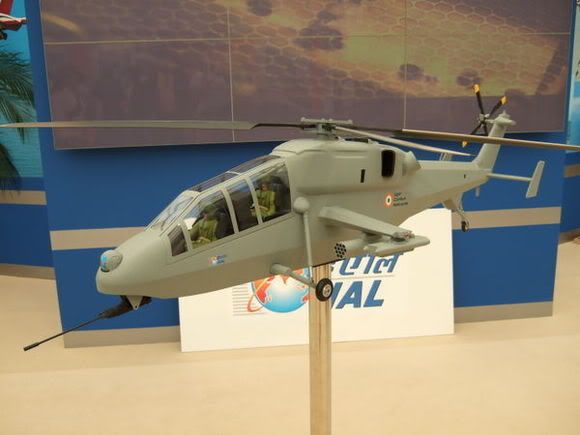
HuntingHawkPic of an LCH at the Berlin AirShow – Thanks to ASharma from BR
HuntingHawkIndia’s jet fighter to deliver precision guided bombs
After successful completion of its hot weather trials, India’s indigenously developed light combat aircraft (LCA) Tejas will now be configured to deliver precision guided bombs.
The trials for this will take place in the Rajasthan desert later this year, a defence ministry official said Friday.
HuntingHawkLots of numbers in this article
Major indigenisation of military aviation
Sandeep Dik****
Total investment will be Rs. 22,000 crore; thrust on design and development
Design and development will be the thrust area
Mega tender for 350 imported helicopters slashed
NEW DELHI: In a move that could make overseas defence companies uncomfortable, the government has embarked on a major indigenisation of the military aviation sector. The total investment will be Rs. 22,000 crore and the bulk of the amount is to be spent on design and development of fixed wing aircraft and helicopters.
The programme envisages increasing the workforce in the sector to 2,600. One-third of the new additions will be design engineers.
“Design and development will be the thrust area. While licensed production leads to a maximum value addition of 45 per cent, this route will increase the percentage to 80,” said a highly placed source privy to a special review meeting on Hindustan Aeronautics Limited (HAL) by Defence Minister A.K. Antony. HAL accounts for half of the sales by all defence public sector undertakings taken together.
Mega tender slashedIn line with this thinking, the mega tender for 350 imported helicopters had been slashed. Only 197 helicopters would be imported and the remaining manufactured in the country, the source said.
Similarly, Sukhoi fighters would be made from the raw material stage, ending the peculiar problem of domestically assembled fighters being costlier than the imported ones. In both cases, the cost of India-made platforms would come down by 15 to 20 per cent.
With an order in hand for 159 advanced light helicopters, HAL planned to produce 18 this year. Of these, 66 would be configured to carry air-to-air and air-to-ground missiles, thus ending the move to import the gunship version.
Medium lift helicopters, numbering 346, would also be indigenously made, the source said.
HAL had entered into an agreement with a Russian company to replace the ageing An-32 transport plane. Under the $600 million plan, India would manufacture 205 military transport planes. Of this, Russia would take 100. Of the rest, India would retain 45 and 60 earmarked for export to third world countries.
“This would be a major addition to India’s product range. So far, we have done helicopters and fighters. This will be our maiden attempt to go into the transport area,” said the source.
The government had sent the technical requirements for the fifth generation fighter aircraft to Russia and is waiting for their observations.
The tonnage would be in line with the Sukhoi-30 MKI, but the plane would have stealth and other advanced features. Development was expected to take a decade.
Sukhoi productionThe major production this year would be of Sukhoi-30 MKI fighters. HAL planned to produce 19, against 13 last fiscal. Mr. Antony, however, had asked the company to examine the possibility of making 23 planes.
The bulk of these planes would be made from the raw material stage, thus ending the problem of domestically made planes being more expensive than the imported ones. In all, 170 Sukhois would be manufactured by 2015. This would be in addition to the 50 imported from Russia. HAL has already produced 34.
The biggest setback to overseas countries would be curtailment of the mega helicopter tender. “This marks a victory for HAL because the armed forces favour imports. We argued that we don’t want to pay the licence fees. We also have competence in this area, having made nearly 600 helicopters indigenously. The maintenance of the imported helicopters will also be HAL’s responsibility,” said the source.
The company planned to make 50 advanced jet trainers, including 14 this year. It would then make another 57, as the armed forces have decided to expand the initial order of 66 to 123.
So there are 84 MKI’s in India currently, with around 20 being added every year built completely from the ground up.
Good news on the Helicopter front too.
HuntingHawkNice pics Ankush, Thanks
HuntingHawkAn Eye in the Sky: the DRDO’s plan for a MALE UAV
by Ajai Shukla
Business Standard, 31st March 08The so-called “war on terror” since 2001 has debunked much of the conventional wisdom about what military equipment a country needs to protect its citizens. But one piece of kit that has repeatedly proved its relevance is the Unmanned Aerial Vehicle, a remotely piloted aircraft which circles several thousand feet over a target area, continuously relaying high-definition pictures to a monitor, far away. The UAV has shown, in counter-insurgency and in anti-terrorist operations as much as in war, the critical importance of an “eye in the sky”.
Unsurprisingly then, India’s Defence R&D Organisation — despite having radically curbed its traditional eagerness to develop even non-essential systems — is going ahead with developing UAVs. The DRDO has sent out Expressions of Interest (EoIs) to several private sector companies, including the Tata Group, L&T and Godrej & Boyce, for manufacturing Medium Altitude Long Endurance (MALE) UAVs, which will be developed by the DRDO. These MALE UAVs will fly at tens of thousands of feet, watching a target for more than 24 hours continuously.
There are several firsts in the MALE UAV programme. It will be the first aeronautical programme in which the DRDO will partner a private company; since independence, public sector giant, Hindustan Aeronautics Limited (HAL), has monopolised this sector. This will also be the first time a production agency (the private company that wins the contract to manufacture the UAVs) will work with the DRDO right through the development process, so that the production run can begin without any hitches.
Significant as those landmarks are, the most interesting part of the MALE UAV programme is the decision-making process, which the DRDO has adopted, in consultation with the military. This was revealed to Business Standard in a series of interviews with top DRDO scientists.
In deciding on India’s fleet of unmanned aircraft, the DRDO and the military first zeroed in on UAVs that no country would sell. They agreed to develop micro-UAVs, which a soldier can carry on his back and quickly launch; and also complex Unmanned Combat Aerial Vehicles (UCAVs), which carry full weapon-loads to strike aerial and ground targets.
A greater dilemma was over mid-sized UAVs; countries like Israel are eager to sell India MALE UAVs. But eventually, says DRDO Chief Controller of Aeronautics and Materials Sciences, Dr Dipankar Banerjee, it was decided to develop, rather than buy, MALE UAVs for two main reasons. Firstly, the large number of UAVs the military requires creates a powerful commercial logic for a private company to manufacture them. And secondly, the DRDO feared that import of MALE UAVs might be blocked.
Dr Banerjee explains, “We have to see what is possible under the Missile Technology Control Regime (MTCR), which bans the transfer of technology and products with more than 300 kilometres range and 500 kilograms payload…. And so, there may be MTCR controls that prevent us from acquiring MALE UAVs. We also recognize that the technology that we develop for the MALE UAV will go into the UCAV.”
Notwithstanding the fears of technology sanctions, the DRDO knows that India’s growing leverage as a major arms buyer is making sensitive technologies easier to access. Technology planners in the DRDO say they are increasingly relying on components assembled from COTS (Commercially available Off-The-Shelf) equipment; the DRDO will develop only strategically vital components and carry out the technologically challenging task of “systems integration”, i.e. assembling a multitude of components into a functioning military system.
Before the end of June, Request for Proposals (RFPs) will be floated for the MALE UAVs. This project will be an important test for the DRDO’s new thinking, it will, equally be a test for the concept of bringing a private sector company into a major project as the DRDO’s industry partner.
HuntingHawkDhruv’s at the Berlin Airshow – Part of the Sarang Team

Serial production of EADS-DRDO missile warning system soon
SUMIR KAUL BERLIN, MAY 29 (PTI)
India’s DRDO and the defence and security division of EADS have successfully developed a “missile warning system” and will start its serial production shortly.
This was announced during the ongoing Berlin Air Show here by EADS which also looked at India as a manufacturing hub from where the technology could be exported to other interested countries.
The system developed by EADS and DRDO’s Defence Avionics Research Establishment (DARE) has passed extensive flight trials successfully, paving the way for equipping several hundred rotary wing and wide-bodied aircraft of the Indian armed forces, the consortium said.
The missile warning system, based on Missile Launch Detection System (MILDS), was tested on board an Indian Air Force test platform (aircraft) and was found perfect on all counts — detection probability, accuracy, false alarm and reliability, said the Chief Executive Officer of EADS’ Defence and Security Division, Stefan Zoller.
“Due to this success, the missile warning system has been accepted as indigenous equipment by the Indian authorities,” he said.
“After initial cooperation of Defence Electronics and (Bangalore-based) Alpha Technologies which has already been started, the transition of series production at the Alpha manufacturing base is foreseen in near future,” the EADS said while making the announcement.
“With DARE’s and Alpha’s high technology standards and our proven products, we are confident of fulfilling the Indian armed forces’ needs for reliable protection against increasing threats,” Bernd Wenzler, another top-ranking official of EADS, said.
Zoller, while talking about the cooperation with India in various fields, said this could be seen as part of EADS’s efforts to rope in as many as Indian partners for its international ventures.
“We do not see India only as a partner but also as a manufacturing hub where such systems can be assembled and later exported to other countries,” he said.
Asked whether the consortium was planning to equip civilian aircraft too with the missile warning systems, he said it was future business but admitted that civilian carriers like Singapore Airlines had shown their keenness to have such a system.
HuntingHawkIts not a deliberate act, the guys a complete nutjob who loves the (close) 🙂 company of other fanatical nuts.
So does this guy 😀

HuntingHawk
Indian naval personnel load relief supplies on board ‘INS Rana’ before its departure for Yangon, in Port Blair, capital of India’s Andaman and Nicobar islands, May 5, 2008. Myanmar’s military government raised its death toll from Cyclone Nargis on Tuesday to nearly 22,500 with another 41,000 missing, almost all from a massive storm surge that swept into the Irrawaddy delta. Picture taken May 5, 2008. REUTERS/Indian Navy/Handout
Is the IN using the LPD for the current Myanmar relief operations?
No. INS Rana and INS Kirpan
HuntingHawkThanks Ankush, I must’ve missed it in the Military images thread.


 Sign In








