 slipperysam
Have you posted it up on the civvie section?
Do you know if they are off the same aircraft and where did they come from might help narrow it down.
The pilots panel is off a civvie aircraft…. two engines, and small EFIS screens.
1990s technology? as more modern aircraft would have bigger screens now.
The 2nd panel .. well again im thinking its a civvie aircraft converted to maybe anti submarine duties?
slipperysamYou have a serious misunderstanding of how government contracts work.
1. Government contracts are competitive with many bidders. The contract award criteria is typically LCTA or Low Cost, Technically Acceptable.
2. To win a contract awarded on an LCTA basis, the bidder has to bid the lowest price he thinks can win, while providing a product which satisfies the terms of the solicitation. Competition is cut throat and profit margins are razor thin, about 7% for systems and 12% for support. This is far below the commercial target of 30% ROI needed to keep shareholders happy.
During the bid evaluation process, government evaluators assess the risks (technical, schedule and budgetary) of each bid. Evaluators are allowed to “risk up” or add cost and schedule span to a bid if they deem it to be too optimistic.
3. Upon contract award, a small army of government auditors descend upon the contractor to assess the daily conduct of the contract. If technical, schedule and budget shortcomings are discovered, they are reported up the chain of command.
4. The government and contractor address issues per the terms of the contract. The root cause(s) of the problem are determined using a well-defined root cause analysis process. With root cause(s) established, corrective action(s) are implemented. Typical remedies are:
- Force the contractor to expend management reserve (budget hold back) and schedule margin
- Force the contractor to reduce profit margins
- Revise the specification requirements
- Force the contractor to re-plan his tasks to fit within the budget available on a year-by-year basis
- Implement a cost sharing routine where contractor pays a % and government pays a % of the overrun
- Go back to the legislature for more money (usually a losing proposition)
There is a semi-serious rule of thumb for government contracts:
“The first 90% of the contract costs 90% of the budget, and the last 10% of the contract costs 90% of the budget”. The obvious best course of action is to accept the 90% solution. But to do so puts government bureaucrats out of work.
Oh i dont?
The reality is much different to what you believe is supposed to happen….
(and i am in ADF). If you honestly believe that contracts are written up to “provide” the best service/ product your very sadly mistaken.
slipperysamIf the military keep the contract there are a lot of costs people don’t seem to be mentioning.
They ‘d have to keep a whole inventory of stores, keep all the manuals up to date, have a project team, design repairs, keep ground equipment maintained, buy specialist tooling etc, etc.
All this costs money, and being the government/military and vastly inefficient, a lot more money that a tightly run civvy company can do it for.It goes to show that if a civvy company can provide the same service for a lot less and still make a profit, just how inefficient the military is.
The glory days from the 1950’s to the 1980’s are gone. We’re in the middle of a global financial depression, and every defence budget has been slashed. At the moment the bottom line is cost.
Tightly run civvy company????
You realise that “civvy” companies are there to make a profit at all costs and really dont care about service do you?
In all cases when a private company has taken over from the government (here in aust) in providing a “service”, prices have gone up instantly, “service” becomes non-exsistant and people are sacked in great numbers.
If you think BAE provides a “good” service to the end user then your mistaken. Companies who get government contracts typically gouge as much money as possible from the government because they think the money is a bottomless pit. Plenty of military projects can be used as examples of where this occurs. Billions wasted on projects which dont work or are years behind and money is constantly pumped into them to keep it going all in the name of “jobs” (supposedly).
This myth that the private sector can do it better then the government may have been true in 20/30yrs ago, but total rubbish in todays climate of greed and profit at all costs.
slipperysamRape of national independance & corporations becoming ever more powerful.
Of course… look at BAE here in Australia, who now holds most of the ADF by the balls! In a recent local newespaper article, the Army is no longer sending its vehicles to local companies to be fixed. Heavy Maintenance will be sent to Bandiana (some 3000km away!!!!) and the Army claim ITS CHEAPER then sending it local companies! Oh and who runs logistics and maintenence… BAE!
What a crock!
slipperysamAnother “old dog” idea from Dale Brown…
Seriously why would one bother with 50yr old airframes?
How stupid are these people?
slipperysamYou guess its fake and you post it up?
ohh goody someones boring computer animation …..
slipperysamHarriers destroyed in Afgahnistan
I see that a recent insurgent attack managed to destry six AV-8Bs at a Marine forward operating base. Hope they have better security when the F-35B is deployed.
Do you honestly believe the F35B will ever be deployed to forward operating base?
slipperysamit seems there are five pylons under fuselage of Su-17, however, it also seems there is one lost from rear?
Yup your right…. the centerline one would take the huge recce pod.
slipperysamIs it just me or in that display the pilot loves to use the afterburner… a LOT???
slipperysamAlso, while their range of motion was very limited, the canards DID move:
http://www.b-domke.de/AviationImages/Rarebird/0185.html
http://4.bp.blogspot.com/_rUHyHq68ak0/Sldi4NAOZ_I/AAAAAAAAplQ/p5oFsjQ9y5s/s1600/Mirage-4000-0.jpg
http://www.flickr.com/photos/34184899@N06/6094089286/sizes/o/in/photostream/
Nonetheless, I’d agree that they could not really be considered primary control surfaces – more like ‘active flow conditioning devices’ that optimised the environment for the wing downstream (somewhat analogous to slats). Alternatively, they may have been used to vary longitudinal stability, as on the MiG Ye-8 some 20 years earlier (though probably with somewhat more sophisticated scheduling).
I daresay they were used for trimming purposes only depending on how loaded the aircraft was?
Its a pity no conformal stores were ever used, but one could imagine maybe a conformal centerline tank maybe for a future upgrade should it have gone ahead into production?
slipperysamThe pylons were rarely used; as one Il-76 crewman put it..’they could be fitted quickly but the process was accompanied by a lot of four-letter words – the pylons are heavy and have to be fitted while standing on a high stepladder. Periodically Il-76 crews would practice dropping bombs – mostly AgitAB-250 or -500 psy-war bombs containing age-old Pravda newspapers with historic Communist Party edicts. The locals would go nuts, finding the nearby forest littered with these papers; some people thought the Communists were running the country again!’
Classic stuff!
😀
slipperysamLike many Soviet transport, the Il-76 also offers the possibility of bombing missions. There are four pylons (two under each wing) with a capacity of 500 kg per each hardpoint (not all the Il-76 have this possibility)
1Saludo
I recall reading many yrs ago (cant remember which soviet transport, think it may have been the armed version of the coaler?) that bombs could be hung via the overhead crane system and then dropped out the back?
Cant say i ever noticed the hardpoints on the IL-76 till now…. how on earth did them aim them? funnier still would be putting some UB-32 rocket pods and go strafing in a big transport….. I think the noise alone at low level would frighten most people into running away
slipperysamKen,
While going through your pics i spotted this
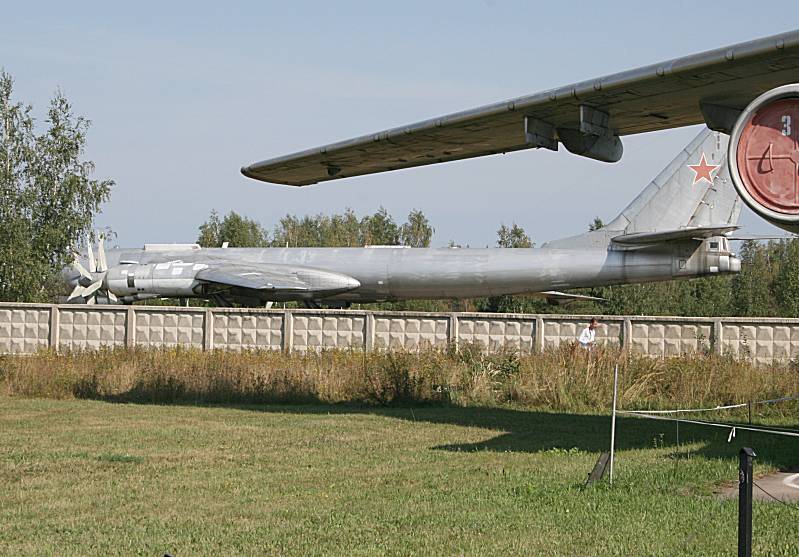
The wing in the foreground has two weapons hardpoints… and a jet engine.
When looking at your panoramic pictures its an IL-76 transport.
Anyone seen this before???
slipperysamJust looks a bit unkept in areas and i did say there are photos of areas with lawns mowed, but the areas with high grass and airframes in bad shape has always been this way?
And thanks Ken for the link to your pics!!!!
slipperysamErrrrrr?! No its not a Japanese Boeing AH-64D. Aside from anything else it hasn’t got Stingers on the wing tip.
Going on its configuration, lumps and bumps its a Westland WAH-64 Longbow Apache AH1.
I do believe your right… plus the rocket pods with the rounded nose cone are only fitted to the UK Apache as far as im aware.


 Sign In







