 Get_It
In any case, look at Afghanistan for example, where attack helicopters are based at airbases such as Camp Bastion, Kandahar, Kabul etc., not rough-and-ready FOBs.
It’s more a matter of logistics and security than the aircraft’s exact specifications.
But don’t get me wrong, I love COIN aircraft and think that it’s a shame that there are none operating in Afghanistan. Of course that I would prefer the Bronco instead of the Super Tucano.
Best regards,
Get_ItSorry to interrupt the engine discussion. But which countries are seriously looking at this?
If I look at that graphic, I’m thinking South Africa yes… but France and Portugal… no way. I’m not sure about the others.
So is there any news that indicates a prospective buyers besides Brazil?
milavia, same here. In regards to France I actually can see it as part of a package deals, Brazil license-builds French submarines and fighters and France buys a couple KC-390. But Portugal? Over the years, since the first talks over the replacement of the C-212 and C-130 fleets and the selection of the C-295, I have been talking to personnel and reading articles about the subject. So in terms of the strategy that was established for both logistical and tactical transport and the existence of the C-295 the KC-390 doesn’t make much sense. The adding of this new aircraft to the logistical chain doesn’t bring much advantage over buying a couple of extra C-295 and contributing and using a NATO transport aircraft pool or even buying the A400. But now that EMBRAER is very active in OGMA and has been talking, and talking, about manufacturing the aircraft in Portugal every minister (be it PM, Foreign Affairs, Economy or Defense) talk about participating in this program. But since they always are talking about stuff like this (like they talked with the A400M program) I’m not so sure. Meanwhile, the upgrade for the current C-130 has been on hold for the last years , and will continue, due the crisis. Good luck buying new transport aircraft, especially aircraft that isn’t German or French made, since it’s there from where the money comes from (EU).
Best regards,
Get_ItRandom question, but people are bringing it up, what is the advantage of having your UAV’s piloted from an aircraft as opposed to a ground station?
From a tactical point I’m not so sure but the greater advantage seems to come from the technical point in which you save a lot of bandwidth, since you don’t have to depend on satellites to send data and receive commands back to the base overseas or on the other side of the OT. You only depend on an operator kilometers away that can use standard radio communications to talk with the UAV.
Best regards,
Get_ItWho is the local company behind the Tiger in Australia? And is your simulator also built by Eurocopter?
Best regards,
Get_It^ It sure must be hot in the UK right now. With all that burning money and all…
Cheers,
Get_ItKC-390 should be slightly bigger than the C-130J, not in the C-295 league.
I’m not comparing the KC-390 to the C-295, my comment has to do with the whole airlift fleet (currently the C-295 and C-130) and the plans made when the C-295 was acquired. In regards to logistics and the characteristics of the KC-390 it doesn’t make any sense so it’s more than clear that if the KC-390 is acquired it will be to get work to be done in Portugal or someone getting something in return (maybe a nice job at one of the companies).
Also in the last years the number of aircraft to replace the C-130 fleet has dropped to three aircraft.
Portugal could take the drawing of a C-130J and A400M or build that would ensure more jobs than building only parts of the KC-390. After all, it seems easy to copy an aircraft like the A400M.
I believe that initially EMBRAER said that Portugal could even have an assembly line. OGMA has a longtime standing relation with Lockheed Martin and even does maintenance for the C-130 so participation in the construction of C-130J might be something foreseeable, as for the A400M I have my doubts.
I didn’t quite understand the part on how it seems very easy to copy an aircraft like the A400M.
Best regards,
Get_ItThe only thing that the Portuguese order is doing in that list is trying to get some components built in Portugal since EMBRAER owns a large portion of shares of OGMA and has been talking, and talking, and talking, about opening more aerospace factories in Portugal.
Basically someone just copy-pasted the A400M order and changed the name to KC-390.
Now with our current fleet of C-295 it doesn’t make much sense buying the KC-390, might as well either buy the C-130J-30 or the A400M.
Best regards,
Get_ItWikileaks so far hasn’t revealed anything that anyone didn’t know or at least expected in this sort of competition.
One thing about the mentioned article that I found curious:
In 2008, Prime Minister Jens Stoltenberg’s government announced it was to replace the country’s ageing fleet of F-16s. 48 planes were mentioned, whilst the government now says it is looking to buy 52, plus 4 training aircraft.
Emphasis mine. Four training aircraft? As far has I know the F-35 will not have a two-seater training version. So what’s the deal with this training aircraft thing? Is it simply a political thing or is it simply four F-35s dedicated only to put pilots fresh out of the simulators and just back from the USA on?
Best regards,
Get_ItInteresting Get It.
But whats in it for the Saab AB?
Est Unit cost US$40–61 million (export price VAT excluded).
Lets say ANG can get away with $40mill, thats a tad over $25mill yes?
In my little fantasy I see as being good enough for Saab the income from the license fees, better relations with the USA for integration of (more) American-made electronics (which can be both good or bad) and possible maintenance and upgrade deals in the future for second-hand buyer nations of those aircraft after they leave ANG service.
I can’t remember that $25mill value, am I correct to assume that it’s from the Boeing proposal?
In anyway it’s a big tad over, but at this time we cannot really know what the true cost would be. Well, maybe you guys can since you have a better idea about prices.
Maybe the prices might go up because of the local manufacturing or they may go down depending on the number ordered.
This is talking about aircraft prices. As part of the costs we still have to look at how much will be paid to operate the Gripen, which is what I was mainly thinking about. The price per unit hadn’t even crossed my mind. At first glance the Gripen, a single-engine fighter, should be cheaper to operate than the F-18.
Best regards,
Get_ItAir Force urged to consider Navy F-18s
It’s a pity countries like Sweden are sitting on a stockpile of used jets with plenty of life left in them that would work excellent for much of the ANG’s mission. Its much more affordable than the F/A-18. It’s probably even cheaper leasing idle Eurofighters than buying new F/A-18. It’s a shame that the guys in charge cannot think outside the box.
That immediately came to my mind as I continued to read this thread.
Allow me to add my two cents to this discussion with a sort-of crazy idea: License-build the Gripen locally in the USA. It already uses some American technology and components; just replace all the equipment that you can with an American-designed and -made equivalent. The design has already proven itself and everything points to it being cheaper to operate than the other given alternatives.
This would be only to fill the gap until another solution could be found. Might that solution be to wait for the F-35 production to get to full swing or be it to develop another fighter. Later on when these locally built Gripens aren’t needed anymore they could be sold to other countries that wouldn’t have enough funds to buy anything American (F-35) or can’t wait around for cheaper second-hand/used F-35 fighters to enter the market.
As long as all main components and the assembly of the aircraft is made in American soil by American workers and by an American giant (Boeing? Northrop Grumman?) it would be feasible.
Too crazy?
Best regards,
Get_ItWarplanes you say?
Dassault Mirage III single seat (only, no Mirage F1 which are horrible)
YF-23 Black Widow
Way sexier than the YF-22 or the F-22.
A-7
F-16
Dassault Rafale
F-15E Strike Eagle
IAI Kfir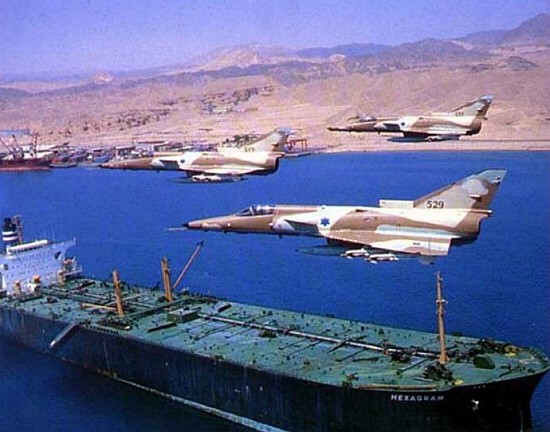

Best regards,
Get_ItCountry: Portugal
I know that it is unrealistic for Portugal to operate aircraft carriers, but having in mind the naval and exploration heritage I’ll do it anyway.
Type: STOBAR or, preferably, CATOBAR (see below)
Weight: 40,000 tonnes
Length: 270m
Width: 65m
Power supply: Gas Turbine propulsion turning electrical generator 240v
Number of aircraft: 30-35
Type of aircraft:
Fighter/strike aircraft: As many have mentioned the most expensive thing in a carrier is the air wing than the ship itself. Thus I would probably go for a single-engine aircraft like the Harrier or the F-35 C. However, I doubt that the US would be very happy about Portugal acquiring aircraft carriers or that the price of the fighters would end probably being too expensive. Unless another single-engine aircraft was developed the navy would be forced to choose a twin-engine fighter, in this case, the Rafale M (24 aircraft).
AEW: E-2 Hawkeye (2 aircraft) I think that it is better to pay more for a dedicated AEW aircraft than use modified helicopters that will have a shorter range and service ceiling.
ASW: S-3 Viking (4 aircraft) Newly-built upgraded Vikings or a similar aircraft.
Lynx or NH-90 NFH (3 aircraft)
Defensive weapons: RAM launchers and Goalkeeper CIWS
Cheers,
Get_ItIf this happens the production probably will not stop at 36 fighters. The Brazilian navy already seems to be in love with the Rafale, so if it is chosen for the FX-2 program there is little doubt that it will also be picked up as a replacement for the A-4 Skyhawk.
Cheers,
Get_Ithttp://www.iza.ne.jp/news/newsarticle/politics/politicsit/215433/
Wow, launched from F-15. Thank you for the translation Don Chan.
Best regards,
Get_ItWhy are Portugal’s submarines named Type-209 Class when they are really Type-214 Class submarines??
Originally HDW’s proposal consisted of the U-209-1400 and U-209-1500 with AIP. Later, as the Portuguese Navy introduced changes to the technical demands, HDW presented the U-209PN as their new proposal. Now, we can only assume that they kept the same class name to avoid legal problems or as a bidding tactic.
EDIT: Well, time for assumptions is over, it seems; according to a Portuguese sailor, HDW couldn’t change the name nor type on their already existing proposal.
Best regards,


 Sign In








