RMAllnutt
Indian Air Force Museum, Palam AFB:
Wapiti K163 (apparently painted as K813)Challinor Collection, Murwillumbah NSW:
Widgeon II VH-UKS (a stored wreck apparently)
Having seen the “Wapiti” at Palam in person, I’d be hard pressed to say that anything original of significance exists within the “airframe”. Sad to say, it appears to be an extremely crude replica at best. Does anyone know the history behind this restoration/recreation?
All the best,
Richard
PS. Warbirds directory lists roughly 24 surviving Lysander airframes, with about 5 to 10 of these being hulks.
RMAllnuttHiya… not sure on the production numbers, but here’s the guy… or a guy at least… who’s collecting the photos of every Phantom.
Cheers,
Richard
PS. On looking through that site, it seems that much of it is dismantled sadly. I couldn’t find any relevant photos.
RMAllnuttCan anybody see the B52 being the first aircraft in history to be in active service for 100 years?
I imagine that honor might belong to the C-47/DC-3, as surely there are still a number of military arms using them. The B-52 might be the first to 100 years of service with its original operator though.
Cheers,
Richard
RMAllnuttHeads up – if you’re not at the show, you can watch it live on Planes TV
Thanks very much for that. I didn’t catch much of the show, but it was wonderful to see it live from over here in Virginia. It was a little grainy, and choppy, but fantastic to see things as they happened!
Cheers,
Richard
RMAllnuttIndeed it will … but you’ll have to wait until next year for Volume II !
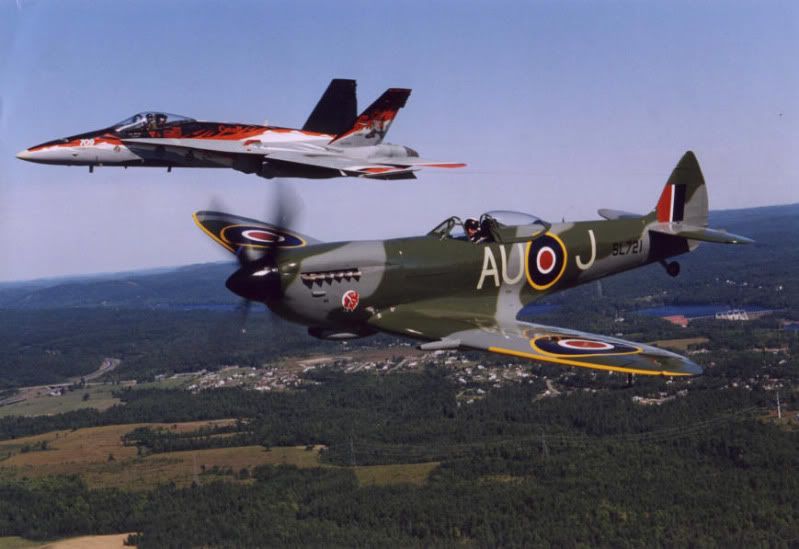
Interesting photo… I was on that photo-flight, and am wondering if this is one of my photos, as it looks very familiar. Just curious, but who is credited with the image?
Cheers,
Richard
RMAllnuttIs this the location of the old Handley-Page works? It seems such a tragedy that it’s been erased from the landscape.
All the best,
Richard
RMAllnuttElfin safety would go abso-bleedin-lutely ballistic :D:D. Tipping kiddies out of railway wagons, whatever next :eek::eek:
That’s nothing compared to what I saw at the Air Force Museum in Palam, India. Just as I arrived in the parking lot a dump truck pulled up… the sort you’d see on a major construction site. It was filled to the brim with children on a school trip with their teachers no less!!!
Cheers,
Richard
RMAllnuttDon’t know if it is or not, but it really does look fake I’m afraid!
Just curious, but why do you think it’s fake? It’s a little small to judge, but I don’t see any typical tell tale signs, and judging by the other shot, it’s pretty reasonable to accept that the lanc did come from the direction indicated. It is a remarkable shot of course, but not as good as it could have been had someone made a serious attempt at faking it… why put the other lanc so far away for one. Just my take on things of course. Photoshop has tended to make us all a little cynical of what we see these days. Either way, it looks like a good representation of the day.
Cheers,
Richard
RMAllnuttI think the sealife would prefer it, NOT!
When at RAF Ternhill 70-72 we provided the ASR Whirlwinds for RAF Valley. On arrival for Major and Minor sevicing back at Ternhill most of the fuselage would have to have the skin replaced as you could push a screwdriver through with ease. Before leaving for Valley the Whirlwind would have at least 2 gallons of WD40 sprayed internally by the safety and surface gang. They still returned after ASR duty wanting reskinning!:eek:
That’s kind of scary to hear that this had to be done during the normal servicing of the aircraft. It is my understanding that helicopter skins, at the time, were often made of magnesium alloy, rather than aluminium. This would explain the more radical corrosion problems. I know, from personal experience, that a lot of the skins for a UH-1A are made of magnesium… it turns into swiss cheese even in non-salt water environments if left outside too long without maintenance. Needless to say though… I am sure the Do-17’s skins will be severely compromised from such a longterm dunking in the sea!
Cheers,
Richard
RMAllnuttYou fell for it! Lets hope I’m proved wrong!
Graham
Since Peter once owned her… I think he’d know if she exists or not. Having seen photographs of the parts, and the data plate (IIRC), I’d say that enough of her exists to qualify as a survivor… certainly more than makes it into many restorations these days.
Richard
RMAllnuttNASM’s main priority in collecting was, and probably still is, the collection of technology. They used to base their collection policy on the relevance of a type from a technological perspective. The historical context used to be a secondary issue. This may have changed since I worked there as an intern in the early ’80’s, but that was their policy at the time. It was the reason that their two Mixmaster bomber prototypes, and the XP-47H were not kept in complete form, with just the unusual technological elements preserved. They originally had the whole airframes, but partially scrapped them (keeping the unique bits) when they were forced to move the collection en-masse almost overnight to free up an old aircraft factory building where they were then stored (so the factory could be used again).
Cheers,
Richard
RMAllnuttAeronavale (spelling) markings just look soooo right. The Rt Hon Patrick Lyndsey’s Corsair was such a looker in similar markings, where is it now??? The Avenger looks wonderful, well done all.
C6
The F4U-7 you are talking about was operated by Tony Haig-Thomas, and is now in US markings sadly; based with Jack Erickson’s collection in Tillamook, Oregon. I don’t think she’s flown for some time.
It’s nice to see the Avenger in french colors. They are such a refreshing change to the usual US schemes we see. I have a fondness for this particular avenger too, as I supplied a replacement joystick pistol grip for her a couple of years ago.
Cheers,
Richard
RMAllnutt”Undercarriage lever a bit sticky was it Sir ? ”
”Yes , as a matter of fact it was.”
”Well I wouldn’t go telling the CO that if I was you”
”But I am the CO…….”:D
Well done old boy… well done! What a perfect response 😀
Cheers,
Richard
PS. Glad they solved the problem so ably.
RMAllnuttGerman WW2 helos:
Fletner 282: frst flight 1941; intermeshing rotor configuration (think Kaman HH-43 Husky)
By 1943 over 20 B-1 models were in service in the Baltic, Mediterranean and Aegean. Their roles included ferrying items between ships and reconnaissance. However, as the war progressed, the Luftwaffe began considering converting the Fl 282 for battlefield use. Until this time the craft had been flown by a single pilot, but now a position for an observer was added at the very rear of the craft, resulting in the B-2 version. The B-2 proved a useful artillery spotting aircraft and an observation unit was established in 1944 comprising three Fl 282 and three Fa 223 helicopters.
In 1944 the German Air Ministry issued a contract to BMW to produce 1,000 units. However, the company’s Munich plant was destroyed by Allied bombing raids after producing just 24 machines.
Towards the end of World War II most of the surviving Fl 282s were stationed at Rangsdorf, in their role as artillery spotters, but gradually fell victim to Soviet fighters and anti-aircraft fire.
pic during US trials of captured example:
Focke-Achgelis Fa-223: first flight 1940
Although the Fa 223 could maintain a top speed of up to 175 km/h (109 mph), speeds as high as 182 km/h (113 mph) were recorded, and altitudes of up to 7,100 m (23,300 ft) {in ground effect}. The Drache could transport cargo loads of over 1,000 kg (2,200 lb) at cruising speeds of 121 km/h (75 mph) and altitudes approaching 2,440 m (8,010 ft).
Two of the 20 built were seized by the US, but one of these was given to the RAF. The US intended to ferry captured aircraft back to the USA aboard a ship, but only had room for one of the captured Draches.
The RAF objected to plans to destroy the other, the V14, so Helmut Gerstenhauer (FA-223 pilot since early 1944, when he recovered the dismantled wreckage of a Do-217 & another Fa-223 from a mountain using V14 with the parts slung underneath the fuselage), with two observers, flew it across the English Channel from Cherbourg to RAF Beaulieu on 6 September 1945, the first crossing of the Channel by a helicopter.
The V14 later made two successful test flights at RAF Beaulieu before being destroyed on 3 October, when a driveshaft failed. The accident was thought to be due to a failure to correctly tension the steel cables which secured the engine, despite warnings from Gerstenhauer.
WOW… that’s a big beasty! It could carry an immense payload for the time too… never heard of it before. Too bad none survive today.
Thanks for posting!
Cheers,
Richard
RMAllnuttApologies if this is a silly question but why are Nimrods almost always parked with their bomb bay doors open?
MH
Well, I don’t know about the Nimrod, but the North American B-25 Mitchell bomber, as originally manufactured, had it’s bomb bay doors remain open once the engines were off because there was no locking mechanism to keep them up. The doors will slowly flop open once the hydraulic pressure bleeds off after engine shut down. A few modern day B-25 operators install removable locking mechanisms into the bomb bay gearing structure of the cockpit hell hole to keep the doors closed after engine shut down… perhaps there is a similar situation with the Nimrod?
Cheers,
Richard


 Sign In