 Arshad
UAE SEEKS PAKISTAN BMS
LONDON [MENL] — The United Arab Emirates been discussing a major project that would deliver a Pakistani battle management system to Abu Dhabi’s ground forces.
Industry sources said the UAE Army and Islamabad have been negotiating to acquire a Pakistani BMS that would link main battle tanks, armored personnel carriers and combat vehicles in Abu Dhabi’s military. The sources said the system would be capable of forming a network comprised of a range of Western platforms in the UAE land forces and would not require the purchase of Pakistani military platforms.
The Pakistani system was identified as the Integrated Battlefield Management System. The network was meant to link armored forces and provide them with situational awareness and identity friend, foe capability.
The sources said the Pakistani system was not as advanced as Western networks and could not be regarded as network-centric warfare. The system was said to employ Very High and Ultra High Frequency radio communications, with each vehicle capable of serving as a relay.
——————————————————————————–
NOTE: The above is not the full item.
This service contains only a small portion of the information produced daily by Middle East Newsline. For a subscription to the full service, please contact Middle East Newsline at:
[email]editor@menewsline.com[/email] for further details.
some sentences seem to bee a bit conflicting but midd east/asian news :rolleyes:
ArshadSome “more” info on the american pak sales
from http://www.dsca.mil/PressReleases/36-b/36b_index.htm
Pakistan – P-3C Aircraft
On 16 November 2004, the Defense Security Cooperation Agency notified Congress of a possible Foreign Military Sale to Pakistan of eight P-3C aircraft with T-56 engines as well as associated equipment and services. The total value, if all options are exercised, could be as high as $970 million.
The Government of Pakistan has requested a possible sale for eight P-3C aircraft with T-56 engines, communications equipment, training devices, medical services, support and test equipment, engineering technical services, supply support, operation and maintenance training, documentation, spare/repair parts, publications, documentation, personnel training, training equipment, contractor technical and logistics personnel services, and other related support elements. The estimated cost is $970 million.
This proposed sale will contribute to the foreign policy and national security of the United States by helping to improve the security of a friendly country that has been and continues to be an important force for economic progress in South Asia and the global war on terrorism. The command-and-control capabilities of these aircraft will improve Pakistan’s ability to restrict the littoral movement of terrorists along Pakistan’s southern border and ensure Pakistan’s overall ability to maintain integrity of their borders.
Pakistan intends to use the proposed purchase to develop a long needed fleet of maritime and border surveillance aircraft. The addition of these aircraft will provide Pakistan with search surveillance, and control capability in support of maritime interdiction operations and increase their ability to support the U.S. Operation Enduring Freedom Operations; anti-ship and anti-submarine warfare capabilities; and a control capability over land against transnational terrorists and narcotics smugglers. The modernization will enhance the capabilities of the Pakistani Navy and support its regional influence and meet its legitimate self-defense needs. Pakistan is capable of absorbing and maintaining these additional aircraft in its inventory.
The proposed sale of this equipment and support will not affect the basic military balance in the region. The prime contractor will be Lockheed Martin Company of Greenville, South Carolina. There are no known offset agreements proposed in connection with this potential sale. Implementation of this proposed sale will require the assignment of several U.S. Government and contractor representatives for two-week intervals twice annually to participate in training, program management and technical review.
Pakistan – TOW-2A Anti-Armor Guided Missiles
On 16 November 2004, the Defense Security Cooperation Agency notified Congress of a possible Foreign Military Sale to Pakistan of 2,000 TOW-2A missiles, 14 TOW-2A Fly-to-Buy missiles, as well as associated equipment and services. The total value, if all options are exercised, could be as high as $82 million.
The Government of Pakistan has requested a possible sale of 2,000 TOW-2A missiles, 14 TOW-2A Fly-to-Buy missiles, spare and repair parts, technical support, support equipment, personnel training and training equipment, technical data and publications, U.S. Government and contractor engineering and logistics support services, and other related elements of logistics support. The estimated cost is $82 million.
This proposed sale will contribute to furthering the foreign policy and national security of the United States by helping a friendly country provide for its own legitimate self-defense needs and to enable Pakistan to support U.S. operations against terrorist activity along its porous borders. In addition, these missiles have most recently been employed in several global war on terrorism operations in the tribal areas of Pakistan and have allowed – when coupled with Cobra attack helicopters – the Government of Pakistan to employ new tactics, techniques and procedures that have proven highly effective against terrorists.
Pakistan will augment its land forces with these TOW-2A anti-armor guided missiles. Pakistan will use these missiles to increase its military defensive posture and will have no difficulty absorbing these additional missiles into its armed forces. Pakistan’s existing inventory of TOW missiles will soon begin to be affected by its specified shelf life. While TOW missiles can be employed beyond their shelf life, system reliability and safety are eroded. Pakistan continues to expend TOW missiles in both training exercises and combat operations.
The proposed sale of this equipment and support will not affect the basic military balance in the region. The prime contractor will be Raytheon Company in Tucson, Arizona. There are no known offset agreements proposed in connection with this potential sale. Implementation of this proposed sale will not require the assignment of any additional U.S. Government or contractor representatives to Pakistan.
Pakistan – PHALANX Close-In Weapon Systems
On 16 November 2004, the Defense Security Cooperation Agency notified Congress of a possible Foreign Military Sale to Pakistan of six PHALANX Close-In Weapon Systems (CIWS), upgrade of six PHALANX CIWS Block 0 to Block 1B as well as associated equipment and services. The total value, if all options are exercised, could be as high as $155 million.
The Government of Pakistan has requested a possible sale for six PHALANX Close-In Weapon Systems (CIWS), upgrade of six PHALANX CIWS Block 0 to Block 1B, spare and repair parts, modification kits, supply and support equipment, personnel training and training equipment, publications and technical data, U.S. Government and contractor engineering and logistics services and other related elements of logistics support. The estimated cost is $155 million.
This proposed sale will contribute to the foreign policy and national security of the United States by helping to improve the security of a friendly country that continues to be a key ally in the global war on terrorism.
The proposed sale will provide Pakistani surface ships with a highly lethal defense capability against inbound aircraft, missiles, and fast moving surface craft. The modernization of the CIWS will enhance the capabilities of the Pakistani Navy and support its regional influence. It will further allow Pakistan to ensure the viability of their existing CIWSs by facilitating the upgrade of the current Block 0 system that are being phased out and becoming unsupportable by U.S. Navy logistic systems. Upgrading of the current system into the Block configuration that the U.S. Navy operates from will also reduce Pakistani logistical costs and will also reduce overall operating expenses. The proposed sale of this equipment and support will not affect the basic military balance in the region.
The prime contractor will be The Raytheon Company of Tucson, Arizona. There are no known offset agreements proposed in connection with this potential sale. There will be U.S. Government and contractor representatives for one-week intervals twice annually to participate in program management and technical reviews to Pakistan.
ArshadFound this news, bit old but anyways
http://www.navlog.org/pakistan_ffgs.html
Pakistan Buys Chinese Guided Missile Frigates
The Times of India has reported that Pakistan’s navy was negotiating with China to acquire at least four F-22 (Jiangwei-II Class/Type 053H3) frigates to “help fend off a treacherous enemy.” Tacitly acknowledging his country’s continuing ‘two cats tied in a sack’ relationship with India, Admiral Shahid Karimullah reminded reporters that, “We have a treacherous enemy who misses no opportunity to take advantage and thrust hostilities upon us. It is therefore imperative that we remain fully prepared and alive to the situation for countering the nefarious designs of our adversary.”To date, the PRC has commissioned three, launched a fourth, and has six more under construction with others planned.
The basic hull and the main machinery of the Pakistani ships are to be the same as that of China’s Jiangwei II-class frigates, but the command-and-control systems, the weapons and the sensors will be specially modified to Pakistan’s needs. They will be armed with a variety of French Exocet, Chinese C-802, and US-supplied Harpoon anti-ship missiles.
The Jiangwei II Class, at 2,250 tons, appears generally similar to the original Jiangwei but carries an eight-cell HQ-7 SAM to replace the original HQ-61 SAM, and eight modified YJ-83 SSMs replacing the original six YJ-82 SSMs. For self-defense, the class carries the RWD-8 intercept, 981-3 jammers, SR-210 radar warning receiver, and two PJ46 decoy rocket launchers. In addition, the redesigned twin-100 mm main gun are installed, and two aft 37 mm AAA were moved to the top of the helicopter hanger.
Modifications on C3I and sensor systems include new fire-control Type 345 radar, which has replaced the obsolete Type 343 for the control of twin-100 mm gun and 37 mm AAAs, and datalink for over-horizon-attack on surface targets. The C3I system on Jiangwei-II is reported to be a Chinese copy of the French Thomson-CSF TAVITAC, which is installed on the latest destroyers of the PLAN.
With these improvements, Jiangwei-II are more capable than the original Jiangwei in many terms. Apparently the PLAN is generally satisfied with the performance of Jiangwei-II and is likely going to order more hulls in the near future.
An initial purchase of four of the ships was deferred in 1995 because of economic and diplomatic problems. Pakistan plans to sign the contract before the end of the fiscal year, with delivery of the first ship from China by 2005. A subsequent three F-22s are to be built at Pakistan’s Naval Dockyard in Karachi, with the last of these delivered by 2009.
Some info on http://sinodefence.com/navy/surface/jiangwei.asp

Arshad
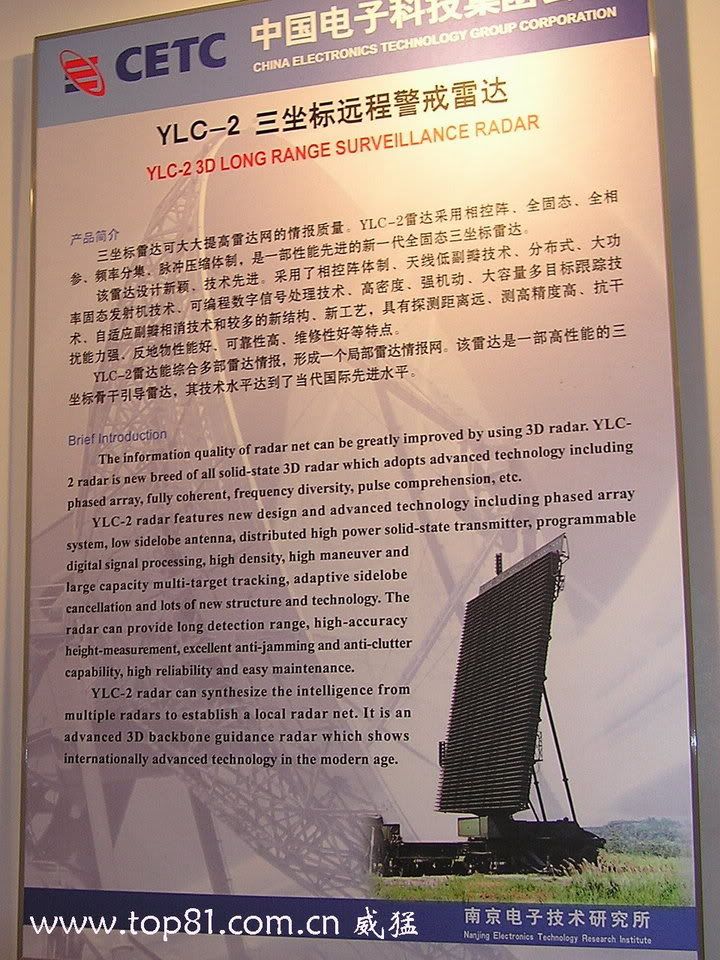
Arshadany pictures of YLC-2 radar and specs?
Scroll a half page up 🙂
ArshadNo actually thet bought unsoecified number of these radars.
From kanwa/pakdef i believe
YLC-2 and YLC-6 Radar
“PAF Receives Modern Radar System From China
June 15th, 2003: Pakistan Air Force was given the modern radar system in a ceremony on Saturday at the Faisal airbase. The radar system got from China will enhance defence capability of the country. Chief of Air Staff Air Chief Marshal Saadat Kalim was the chief guest. Defence Attaché of the Chinese embassy in Pakistan and other dignitaries attended the ceremony. Although officials have not commented on the type or radar but unofficial sources suggest that it might be YLC-2 long range entire solid state 3D RADAR as Pakistan had previously shown interest in YLC-2.”
Arshadsome Z-9 Version model
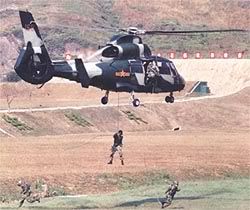
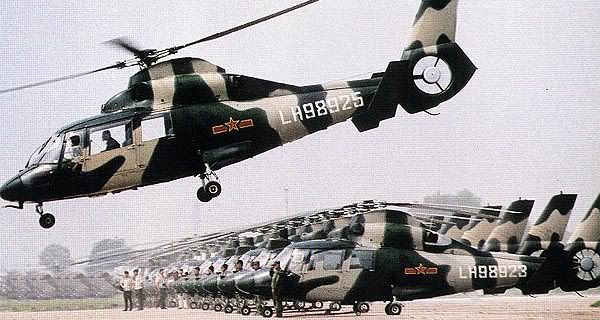
ArshadAnd return with another nick. That is why we see so many pro India posters that are “tourists”. Anyway, here :
2004.12.20.
——————————————————————————–
WILL CHINA ABANDON SU27 PRODUCTION LINE
CHINA DEVELOPS AIRBORNE C3I
CHINA RELEASED MORE SSM
CHINA RETURNS TO BALLISTIC MISSILE MARKET
MORE INFORMATION ON LFC-16 FIGHTER
PAKISTAN RECEIVED MORE CHINESE RADAR
CHINA PROMOTES AAM TO PAKISTAN
PAKISTAN SEEKS NEW CHINESE SAM
CHINA DEVELOPS MORE UAV
2004.12.10.——————————————————————————–
TRANSFORMATION OF PLA NAVY: THE THEORETICAL FOUNDATIONS
CHINA REINFORCES DEVELOPMENT OF LARGER-TONNAGE SURFACE BATTLE SHIPS
WHY DID CHINA SEND “HAN” TO INTRUDE INTO JAPANESE WATERS?
CHINA GETS AIRBORNE TECHNOLOGIES
CHINA GETS PRECISION-GUIDED WEAPONS
UKRAINE CONTINUES TO HELP CHINA MAINTAIN SU27SK FIGHTERS
CHINA GETS POWERPLANT SYSTEMS FOR HELICOPTERS
UKRAINE RESTARTS AN124 PRODUCTION LINE
MORE DETAILS ON AL HALID (MBT 2000) MBT
PAKISTAN STARTS RESEARCH AND DEVELOPMENT WORK ON AL- KHALID – II
BANGLADESH REQUESTS PAKISTAN TO REBUILD ITS OBSOLETE T-59 TANKS
YLC-2 ?, they did had one for “evaluation” didnt they.
ArshadHey guys lets stick to the topic, dont use it as a chat threadh. So the good information gets lost in the bs.
ArshadPLA thats a nice lay out proposal, any others known (that arnt old) ?
Hm Interesting, mush was in france some weeks ago, there were reports in the news of that pakistan asked for some french avionic systems for the jf-17
ArshadNice pic of starfighter in the paf found on pdf

ArshadFrance to accelerate work on PAF, PN projects
By Muhammad Saleh Zaafir
ISLAMABAD: France has assured Pakistan of accelerating pace of work in ongoing projects concerning defence requirements of Pakistan Air Force and Navy preferably. France will upgrade Pakistan Air Force’s (PAF) Mirage aircraft that will bring the capability of about 120 plans at par in different characteristics with the high-tech multi-role F-16 and other high profile contemporarily plans.
The well placed official sources told The News here on Thursday that the high level delegation of French Armament Directorate, led by its director general, visiting Pakistan these days and discussing with authorities here about the in hand joint projects and devising methods for trouble shooting if any in carrying forward them. Currently the PAF Mirage III and V are undergoing the process of up gradation of its delivery system that has become the most accurate and turned the planes system wise very close to the high-tech one. The process is almost complete while the same plans would be undergoing another up gradation when they will be having the most sophisticated nave (navigational) and attacking system. With this the fleet of the Mirage, aircraft will become world class high-tech machine, the sources said.
The French delegation has come to Pakistan on the invitation of Air Martial (retd) Zahid Anees, secretary ministry of defence production and is led by a four-star general of the French armed forces.The overall up gradation of the Mirages will be completed by mid-2006 and that will pave the way for up gradation of more Mirage plans already acquired by Pakistan through various sources.
France will provide Pakistan more efficient system for overhauling the aircraft that will help Pakistan’s technicians to overhaul and maintenance of their plans in shorter period of time. This will also help the PAF to keep even bigger number of the plans with airworthiness for much more hours.
Meanwhile, the sources said that Pakistan would keep its efforts on for finding the most sophisticated high-tech aircraft for the PAF fleet, as the F-16 is still a proposition that has already been ruled in by the quarters concern. Pakistan is hopeful that the United States will provide Pakistan more F-16 aircraft since no hurdle is in place in supply of the plans except the false hue and cry made by the Indians.
ArshadPoltics makes it inefficient, All countries with different interests. otherwise if done correctly it can be quite effecient, in a way even the jsf is a bit ” multi-national” in terms of technical/engineering work, involving a lot of research/vabrication “outsourcing”.
ArshadNice j-10 with chinese awacs
ArshadThe real way to solve this problem is for us to end our asinine embargo of Cuba and enter into normal diplomatic and economic relations. If we dislike Cuba because they’re communist, why the hell do we deal with China? They aren’t a model of democracy either. Oh that’s right, they have a huge economic market for us to exploit :rolleyes:
US foreign policy double standards such as these need to be addressed. Lifting the embargo against Cuba would be hugely beneficial for both sides. Besides, if Fidel is worried about a McDonalds appearing on every streetcorner, he can still impose restrictions on what kind of businesses, etc are allowed to come in and set up shop.
You might ask why it is for european countrys allowed to export weapons to KSA/Dubai (which have worser records) etc while china is sanctioned. All about poltics. 🙂


 Sign In







