 Alpha Bravo
Your entire post earlier was speculation..about the Tejas being a short-legged fighter, something that goes against what a IAF test pilot has said the opposite about. There aren’t very reliable figures, agreed, but you were quoting from wikipedia, which is hardly considered reliable by anyone.
Not speculation, but comparison of designer/manufacturer data, you are the one speculating on hearsay with no data. If you compare the figures from the manufacturers/designers, the Tejas is very short legged relative to the Gripen, T/FA-50 and JF-17. Where do the figures from Wikipedia come from? They don’t just magically appear from nowhere, have a look at the sources, and feel free to update Wikipedia with more reliable data, if you have any. Even using a more “up to date figure” provided by one of your compatriots of 500km, the Tejas is still short legged compared to the other three.
Besides, you don’t have the most accurate data in any case. For instance, you have provided wrong data on the JF-17’s design service life on this very thread (you claimed it was 4000 hours) and I’ve had to quote from a published article to set that record straight (3000 hours).
I was quoting the data provided by the manufacturer. Published articles can make errors, for example, your compatriot suggested that the Flightglobal article on the Tejas gave a wrong figure for its combat radius.
Tejas’ claimed combat radius and ferry range figures released on IOC 2 are 500 Km and 1700 Km on internal fuel (flighglobal article on Tejas’ IOC 2 incorrectly attributes it with drop tanks).
Besides, I was comparing export potential of four lightweight fighters with broadly similar capabilities, even though in that regard the Tejas falls way short on its limited range compared to the other three. In other aspects, the Tejas also offers limited potential in terms of exports, particularly given its current state and the items that still need rectifying;
http://www.livefistdefence.com/2013/12/what-itll-take-for-indias-tejas-to-be.html
1. Expand flight envelope to -3.5 to 8G (Currently -2 to 6G).
2. 24° angle of attack (Currently 22°).
3. In-flight refuelling capability (Integration of Cobham probe complete).
4. Demonstration of Rafael ADS Derby BVR air-to-air missile.
5. Demonstration of Rafael ADS Python-5 IIR close combat missile (Related post here).
6. Completion of integration & demonstration of KBP Gryazev-Shipunov GSh-23 23mm cannon.
7. New design drop tanks for supersonic flight.
8. New radome to improve radar and electromagnetic performance.
9. Validate more efficient cooling system for aircraft braking assembly.
10. Additional weapons testing, including PGMs.
Some of these are quite fundamental and not what one would expect with a fighter that’s been in “development” for almost 30 years. Take for example the G limit, it’s still at -2 and +6, and the expected range is now -3 and +8, when for years we’ve been hearing how it was expected to be -3 and +9. AoA still at 22, and a target of 24, when the JF-17 is at 26. Quite surprised to hear the simple integration of a canon is still not done, no supersonic external tanks, the fact that the radome needs to be redesigned for the radar and brake issues, these aren’t what one would expect from a fighter that has been in “development” for so long, which all impact its export potential, at least when compared with what’s available on the market.
Alpha Bravohogwash. A Tejas test pilot has in the past remarked in an article published in Vayu Aerospace on the “fuel sipping F-404 engine gives the Tejas enviable range for its class”. Rest is pure speculation based on inconsistent data.
We know from a PAF pilot itself that the JF-17 needs fuel more than it needs additional weapons to be carried in standard config. I quote him
“We have the capability to carry four but we decided we don’t want to,” said the air commodore. “The JF-17 is a small aircraft and we decided we need fuel
more than the extra two missiles.”While its not specific in details, it’s enough to get a fair idea that the combat range on internal fuel is certainly no selling point of this fighter.
So let me get this right, quoting official designer/manufacturer specs is “hogwash”, but quoting the opinion of an IAF pilot (which gives no figures or data), or operational preference of the PAF (again no data or figures) isn’t speculation?!
Alpha BravoF-105 :
Didn’t realise the Thunderchief was so large!
Alpha BravoSome of those numbers are hopelessly outdated. The 300 km combat radius figure is from HAL’s page which hasn’t been updated in forever. It still quotes the empty weight as 5500 Kgs. Tejas’ claimed combat radius and ferry range figures released on IOC 2 are 500 Km and 1700 Km on internal fuel (flighglobal article on Tejas’ IOC 2 incorrectly attributes it with drop tanks). Combat radius and ferry load with external fuel hasn’t been disclosed.
Gripen’s combat radius on internal fuel alone is 800 Km (on internal fuel) and 1550 Km with drop tanks and a ferry range of 3200 Km
PAC claims a ferry range of 3400 Km. The 1352 km of combat radius was claimed back in 2005 when the ferry range was claimed to be 2000 km.
What kind of on station time, payload, external fuel, flight profile, speed is projected in those figures will probably never be disclosed, therefore comparing range without them is an exercise in futility.
So you accept the figures for the Gripen on Wiki but not Tejas? It’s open source, if you believe they are so outdated, feel free to correct them on Wiki with a more up to date figure. The JF-17’s combat radius actually dates back to 2011 during the Izmir airshow in Turkey, as shown in the link. Even if the 500km range for the Tejas is more “up to date”, it’s the shortest of the three by a far margin, and according to you won’t even be achieved until IOC 2? So in what way is the Tejas not short legged of the three? As I originally stated, it is rather short legged relative to other light weight fighters out there, which won’t exactly attract it to foreign exports.
Alpha BravoShort legged ? Tejas is short legged ? FA-50 and Jf-17 would require an external tank to match the fuel carried by Tejas internally, which is shaven off their external payload and adds to drag. It carries the highest amount of fuel internally in its class. Only Girpen C will exceed its range given the best in class external usable payload.
Yet you’ve made no mention of range and combat radius? The internal fuel of the Tejas should be around 2,458kg. According to PAC, the internal fuel of the JF-17 is 2,332kg, a difference of 126kg. Gripen’s internal fuel is just over 2,000kg. In terms of combat radius, the Tejas is at 300km (Link), Gripen at 800km (Link) and JF-17 at 1,352km (Link, Link). The Tejas’ relatively large wing area (38.4m2), compared to 30m2 for the Gripen and only 24.4m2 for the JF-17 may account for that. Interestingly, the T/FA-50, with a similar planform configuration as the JF-17 (wing, LERX and tailplane), gives a range of 1,851km, although it’s not clear if this will be its combat radius (Link).
As far as exports are considered the production lines as it is would struggle to meet IAF’s requirement for the next dozen years, considering the shortfall in squadron strength, there would be no spare capacity for exports.
I’m sure the production lines could be expanded to cater for any serious interest in potential exports, if there were any. The current order for Tejas from the IAF stands at only 40.
Alpha BravoNo. The LCA is plagued by its Alpha, the 17 is teen fighter that went thought plastic surgery, the 50 is, at least, a goodwill thought in the fighter market and the Gripen is the real beast in the lot.
(Don’t take me wrong, the JF17 is an interesting cat. A pet cat that is named promise.)
You can’t make a comparison in the lot. Who by the way, have issued an RFP where FA50 and Gripen were competing?
That’s very true, although keep in mind that the Gripen has been around for a while to mature and develop as a platform, with plenty of operational flight hours with both the Swedes and other nations, as well as weapon integration. The FA-50 on the other hand is still a relatively young and immature platform, but with significant scope of expansion. The fact that it has a LIFT/Trainer heritage may attract others while put some other potential operators off. The LCA is a simple Mig-21 replacement for the IAF, once it has some fundamental design flaws addressed, as well as being short legged, so it’s unlikely to ever be exported. The JF-17 offers great value for money in terms of up front costs, especially considering what it offers (see the pic of the JF-17 placard at the JF-17 stand at Izmir, Turkey, a few years back: http://www.pakdef.org/forum/topic/9565-pakistan-air-force-pictures-videos-vi/page-3#), but may not be so attractive to those wanting anything other than Chinese derived weapons/avionics. It may well be exported to those nations that have previously used J-7s, so Egypt, Bangladesh and Sri Lanka, for example. As ever, for any potential operator, there’s a whole bunch of factors to consider.
Alpha BravoThere’s 4 aircraft out there in the market which offer broadly similar flight performance, on paper at least; LCA, JF-17, Gripen and T/FA-50. Which will do better in terms of export sales will come down to a number of factors, all of which will depend on customer needs and price. Trying to figure out the ins and outs is a rather pointless exercise, IMHO.
Alpha BravoIs JF-17 vs T/A-50 even a like-for-like comparison? The JF-17 is very PAF centric, especially considering that it has a 50% stake in it. It’s primarily meant to be a cheap lightweight, sanction free fighter to replace 3 PAF fighters, J-7, A-5 and Mirage III. The number of countries with a similar requirement as the PAF may be quite limited. Perhaps Gripen vs T/A-50 would be more appropriate?
Alpha BravoCorrection- the JF-17 is 3000 hours not 4000 hours design airframe life.
Also, whats the source of your claimed performance and design service life data for the KAI T-50?
Correction, the JF-17 Block I is designed for 4,000 flight hours, or 25 years, whichever comes first. First overhaul at 1,200 flight hours.
Alpha BravoWhat I like about these pics and videos from China is that in the background we can Q-5s, J-7s and J-8s…talk about a giant leap in generational capability! China has come a long way in a very short time!
Alpha BravoI saw this one earlier, but don’t think its real. See the shadows, looks like a photoshop.
In the immortal words of Han Solo in Empire Strikes Back…”I’m glad you’re here to tell us these things”.
By the way, the JF-17 is unstable, but not on all axis. It was deemed that being unstable on one of the axis was not worth it.
What are you talking about? It’s unstable, but only in one axis, even though it was deemed as not worth it?! Most, if not all, unstable designs are in one axis only, usually pitch. What aircraft is unstable in more then 1 axis?
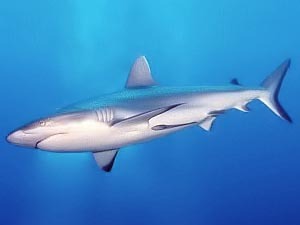
Alpha BravoReminds me of a shark, dark/light colour boundary along the horizontal axis to disrupt identification from above and below. Sharks being bottom attack hunters have evolved the colour scheme to perfection.


Alpha BravoWhich method do pilots find the easier, probe and drogue or boom and receptacle?
Alpha BravoOfficial story is that Iraq made an FMS request to buy 25 year old AAMs with their brand new F16s to be delivered in 2014-2017 whilst all their neighbours are arming up with AiM-120C7… if they were “bargain hunting” they could have just bought some stuff out of AMARC…
The entire issue with the F16 fiasco is that the deals were signed before the thaw in relations between Russia and Iraq, now that Iraq and Russian relations are stronger than at any time in the last 25 years, the Iraqis have naturally decided to can any further orders for F16s (the original plan was to acquire 96 of them in yearly batches of 18… but Iraqis only took the first 2 year batches and have NOT submitted further FMS requests. That tells us all we need to know about the “potential” for the US to supply Iraq with AMRAAMs… i.e. zilch at the moment).
If the whole F-16 saga for Iraq was such a waste of time, why then did they enter into it in the first place? There were/are other sources of fighters and advanced weapons other than the US and Russia, albeit those of European origin. I’m sure the Iraqi airforce new the weapons package that was being made available to them when they decided to acquire the Vipers, so obviously they perceived some value in the acquisition? I’m sure real politic may have played a role in applying some pressure on the Iraqis to buy US hardware, but not at the cost of their security.
Alpha BravoWhat I would be very interested in knowing is the operational status of the Flanker and Mig variants, along with the subtypes and variants. There seems to be quite a few variants of the Flanker and Fulcrum, what form of capability do all these variants have? Is there any significant commonality in systems, avionics, engines etc? If not, are there any plans to bring them all in line? How do they compare in commonality and capability with the equivalent USAF fleet of Eagles and Vipers?


 Sign In








