P Bellamy
BBC as of 16.51:
East Midlands Airport shut by Spitfire undercarriage collapse
Breaking news
The runway at East Midlands Airport has closed after a Spitfire’s undercarriage collapsed as it was coming in to land.
The pilot has not been seriously injured but the runway has been closed while debris is cleared away, a spokesperson said.
Flights to East Midlands Airport are currently being diverted to Birmingham. It is not yet known how long the runway will be closed for.
P BellamyHopefully it was just for the short hop from Kimbolton to Alconbury…
P BellamyWhile surfing the web i saw this picture.
It looks like a war weary b-17g stripped of all it’s combat equipment.
And 2 engines!
Does anyone know more about this plane??? :confused:
Apologies for the thread necromancy, but while going through some newly-arrived files I may have found the answer:
Headquarters, 2nd Strategic Air Depot
Weekly Activity Report
Period 22nd March 1944 to 28th March 1944Maintenance:
Instances occur in which flying aircraft from on-site repair to the depot presents unique problems. One such example occurred last week, in that one outboard engine and nacelle of an aircraft had been shot away, which required an inner wing panel change.
Since such repairs are beyond the capacity of field working parties, the remainder of the nacelle was removed and a regular wing leading edge built over the nacelle root. The aircraft was then successfully flown to the depot on three engines.
2SAD was at Abbots Ripton adjacent to Alconbury, and was responsible to the 1st Air Division, so the photo seems to fit too.
All the best,
PB
P BellamyDoes anyone know what happened to the RAF Thor missiles after their deployment (1959 to 1963)? I understand that three remain in the UK, but were the rest returned to the USAF or scrapped in the UK? It would be good to think that more than three survive.
The surviving confirmed ex-RAF Thors appear to be as follows:
Thor 110 (56-6760)
Current location: RAFM Cosford
RAF assignment: Bomber Command Strategic Missile School, RAF Feltwell
Thor 139 (57-2647)
Current location: Unclear. Was on static display at Patrick AFB, FL. Possibly scrapped post 1991
RAF assignment: Not yet known
Thor 150 (58-2261)
Current location: NMUSAF
RAF assignment: 150 (SM) Squadron, RAF Carnaby, Pad 38
Thor 166 (58-2277)
Current location: National Atomic Museum, Albuquerque, New Mexico
RAF assignment: Not yet known
Thor 157 (58-2268)
Current location: Remains belived to be at Pima Air & Space Museum, Tuscon, AZ
RAF assignment: Not yet known
Thor 211 (58-2322)
Current location: NMUSAF.
RAF assignment: 104 (SM) Squadron, RAF Ludford Magna, Pad 28
Thor 273 (59-2394)
Current location: NASA Goddard Space Center Rocket Garden
RAF assignment: 218 (SM) Squadron, RAF Harrington, Pad 51
Thor 278 (59-2399)
Current location: Space and Missile Heritage Center, Vandenberg AFB
RAF assignment: 223 (SM) Squadron, RAF Folkingham
Thor 284 (59-2405)
Current location: Space and Missile Heritage Center, Vandenberg AFB
RAF assignment: Not yet known
Thor 285 (59-2406)
Current location: Pima Air & Space Museum, Tuscon, AZ
RAF assignment: Not yet known
Thor 292 (59-2413)
Current location: Partial remains at Space and Missile Heritage Center, Vandenberg AFB
RAF assignment: 218 (SM) Squadron, RAF Harrington, Pad 50
All other known RAF-assigned Thors are now accounted for as launched or otherwise destroyed.
All the best,
PB
P BellamyExcluding the regular rocket launch pads at Cape Canaveral, the US dedicated Thor pads were structurally basically the same as the UK ones.
It was found that the blast deflectors on the launch mounts had to be replaced after three launches, and some cabling and equipment would be damaged each time, but the simplest reason is that if the UK pads had actually had to be used there probably wouldn’t be a pad left to reload after the incoming strike…
On average at any given time there would be 64 useable Thors in the UK; one on each pad, plus a spare held at each Wing HQ. Transporting a missile from Wing HQ to a dispersed site took a day, add another day or so to mate it to the launch mount, program the RV and mate it to the missile, do the post-installation checks etc. Not a speedy reload by any means. 😉
All the best,
PB
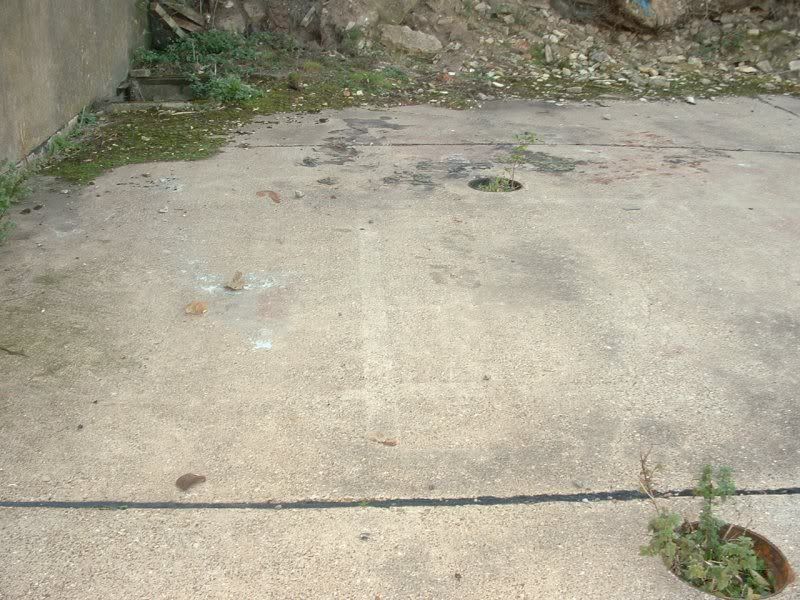
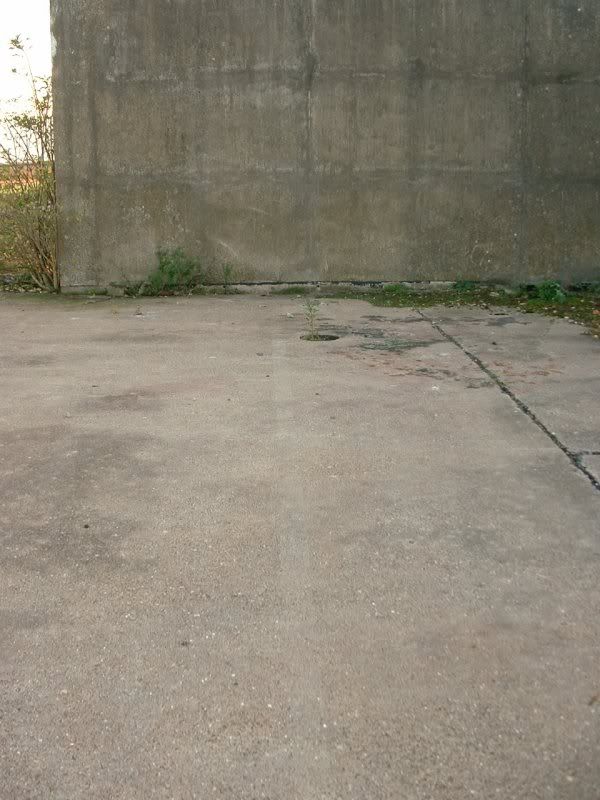
P BellamyDrainage gully:

Behind the northern blast wall, a rare survival are these painted lines marking where the various support trailers were parked:
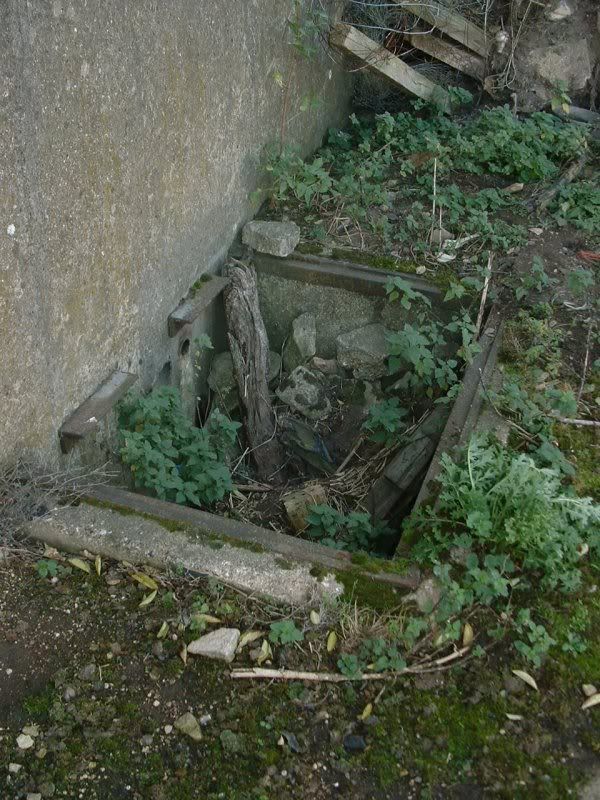
Cable/hose pit for the High Pressure Gas and Nitrogen tank trailers parked alongside:
And to finish off, the other painted Fire Point panel.
Being on the northern wall it has been better protected from the sun than the southern example:
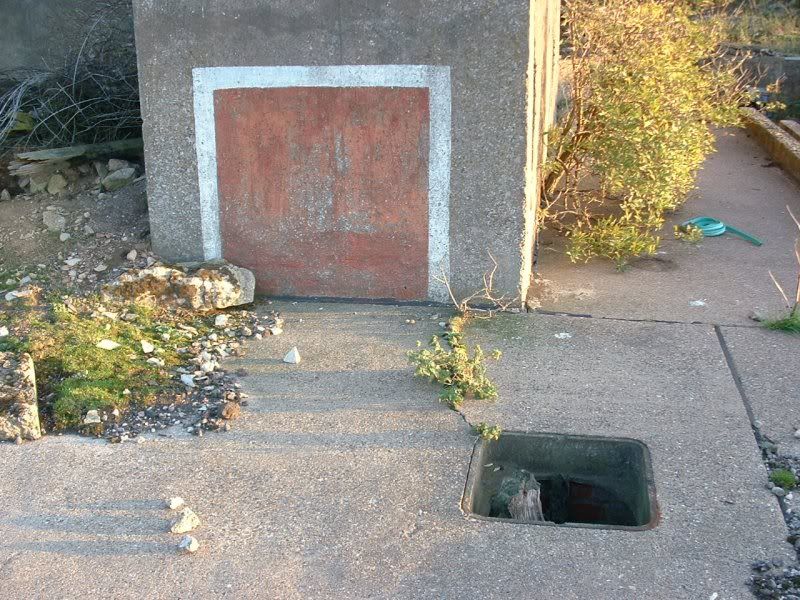
As you may have guessed, Thor in RAF service is something I happen to have a bit of interest in. 😉

All the best,
PB
P BellamyCable ducts leading to the Launch Control Area:
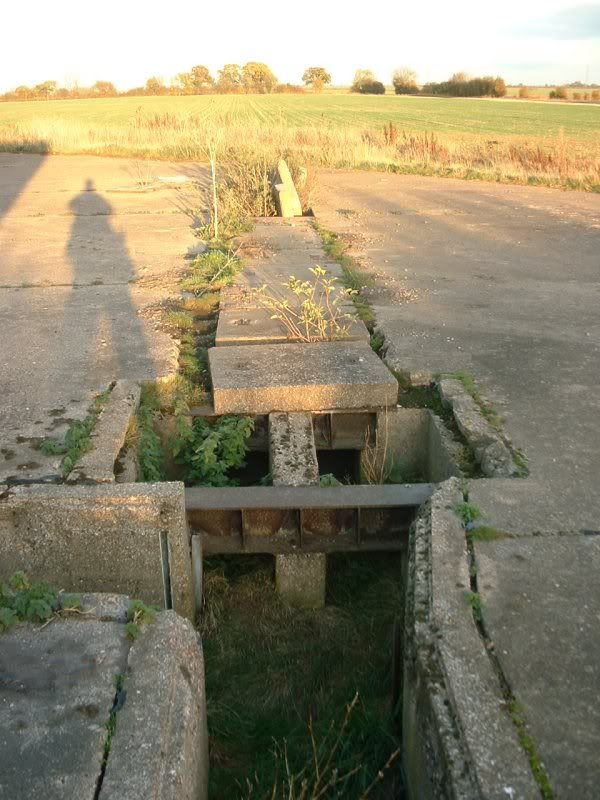
These turned and crossed the pad under the trailer reversing bay:
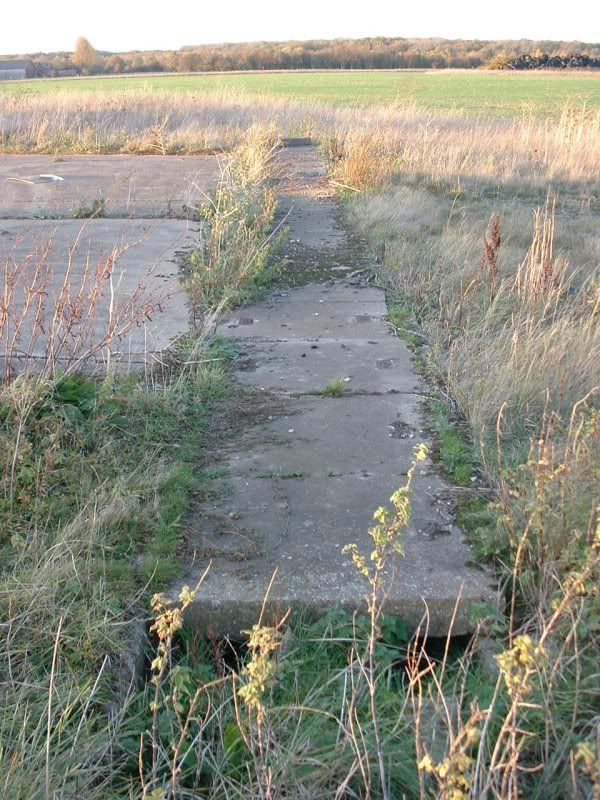
Short-Range Theodolite Platform:
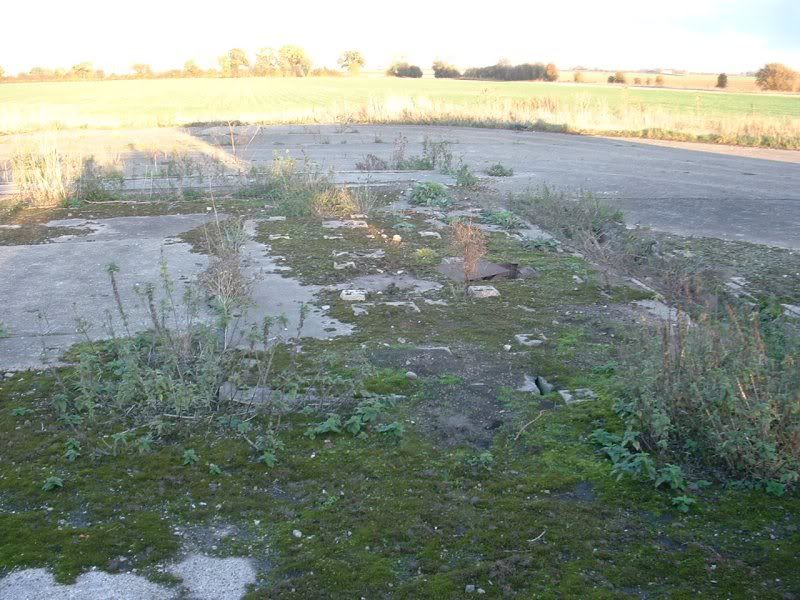
Cable duct cover in situ on the SRT platform:
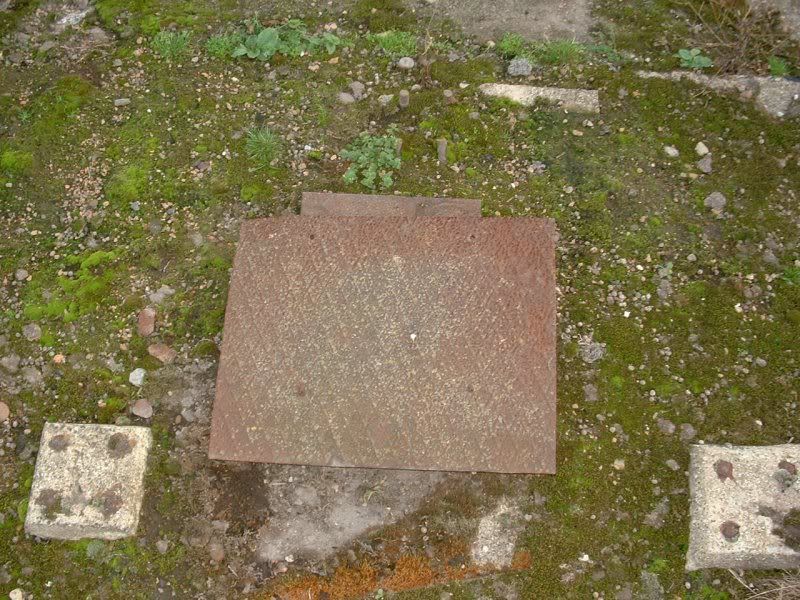
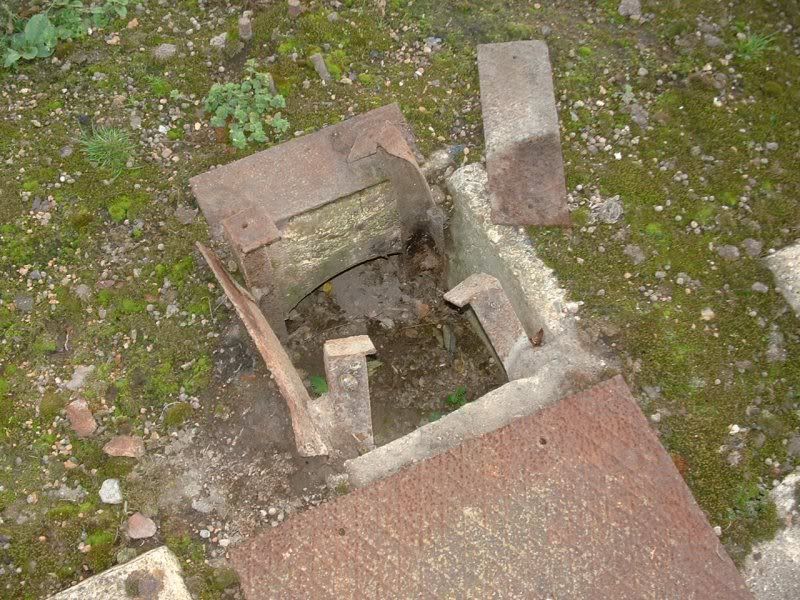
Drainage channels at the end of the Moveable Wall rails:

P BellamyCable supports in the RP1 valvegear pit:
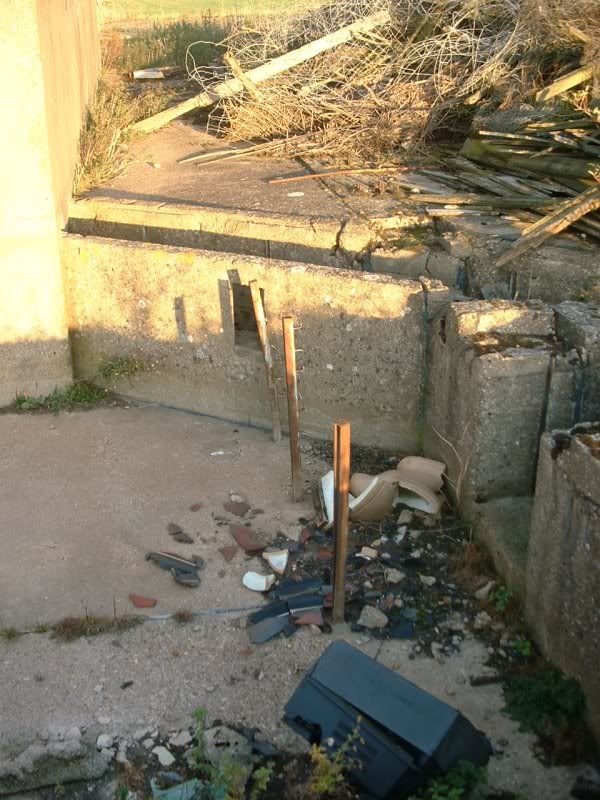
High Pressure Gas and Hydropneumatics lines duct:
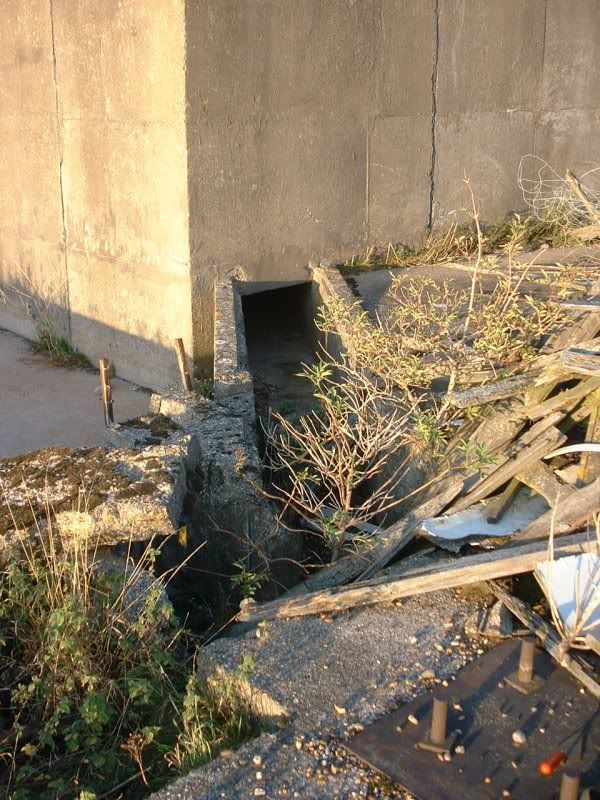
Air conditioning hose duct:
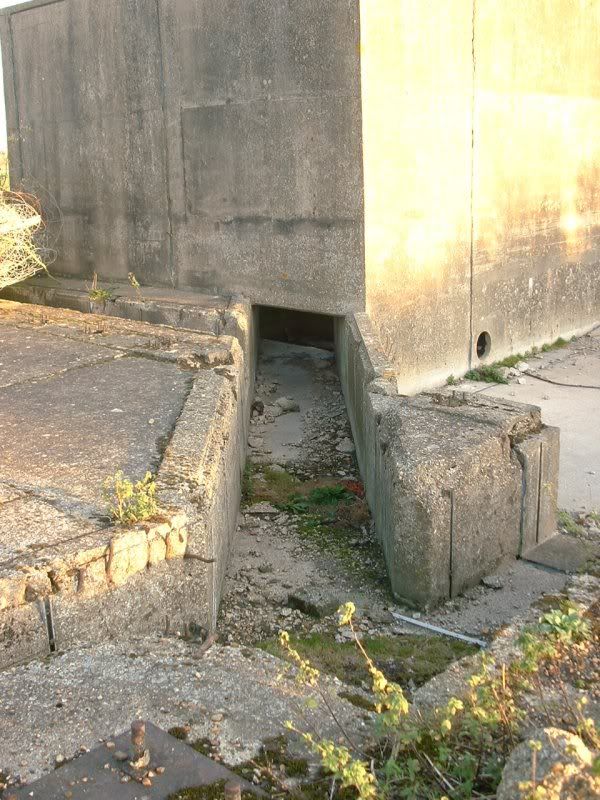
Moving around anti-clockwise, another duct from the LOX valvegear pit under the blast wall:
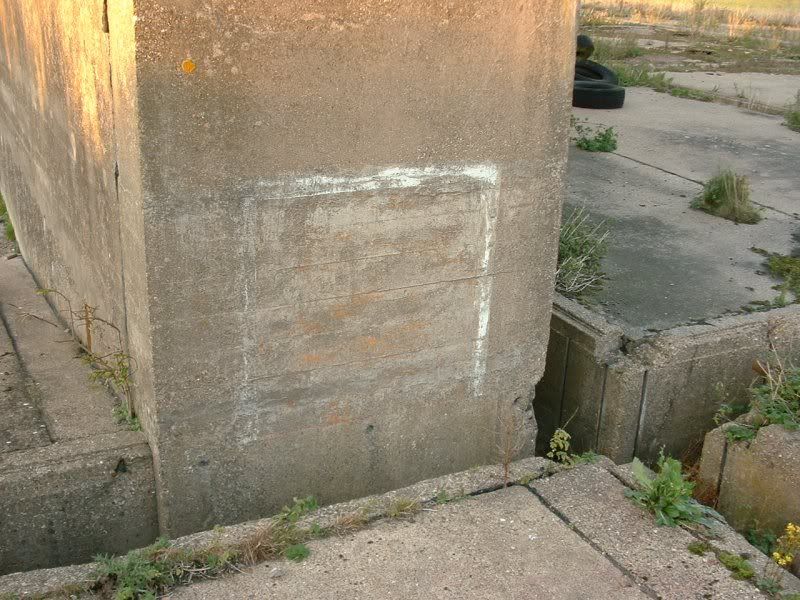
A somewhat faded Fire Point panel on the end of the southern blast wall. Compare this with the northern one downthread:
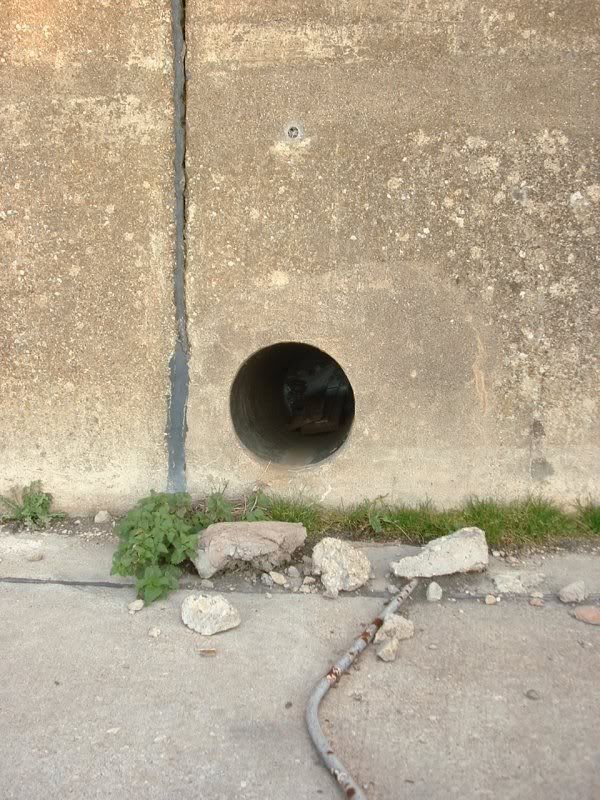
Air-con and cabling ducts with associated bracketry:
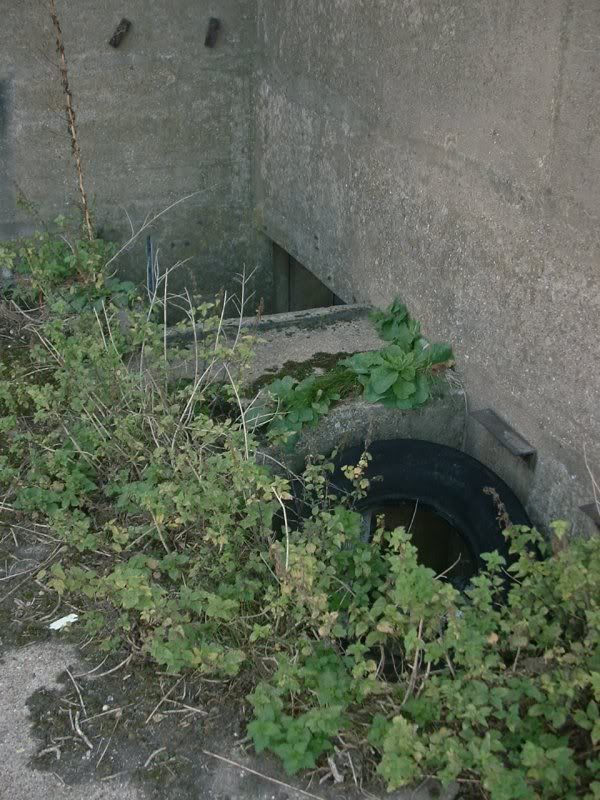
View from where the Air-con trailer was parked, down into the hose duct running to the Launch Mount:
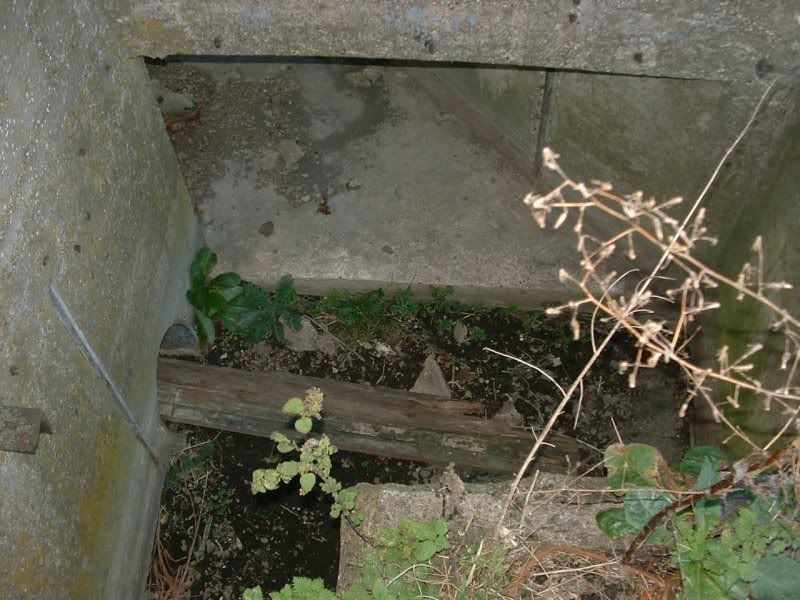
P BellamyAre there still Thor launch remains at Polebrook?
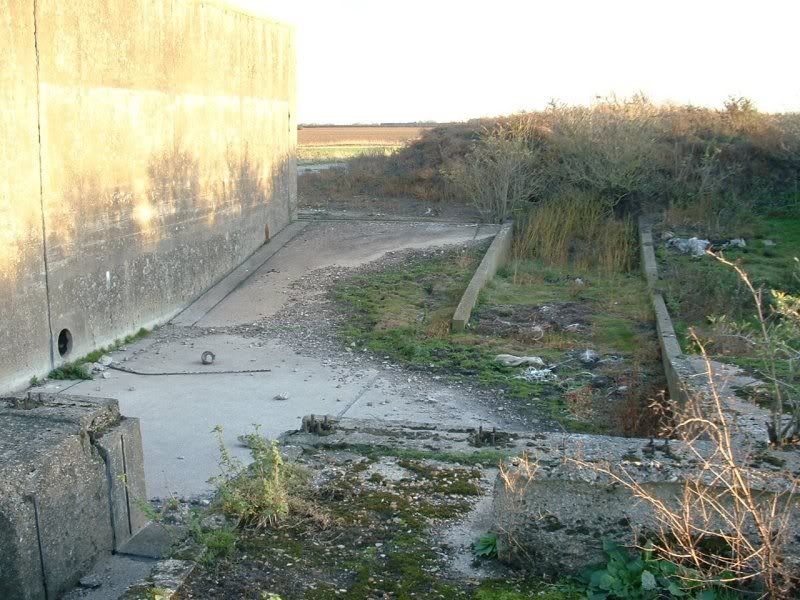
The majority of all three pads are there, although to varying degrees buried in farm waste. Launch Emplacement No.52, the southern of the three, is in the best condition.
Some photos from a permission visit to record LE52 after it had been partially cleared of debris.
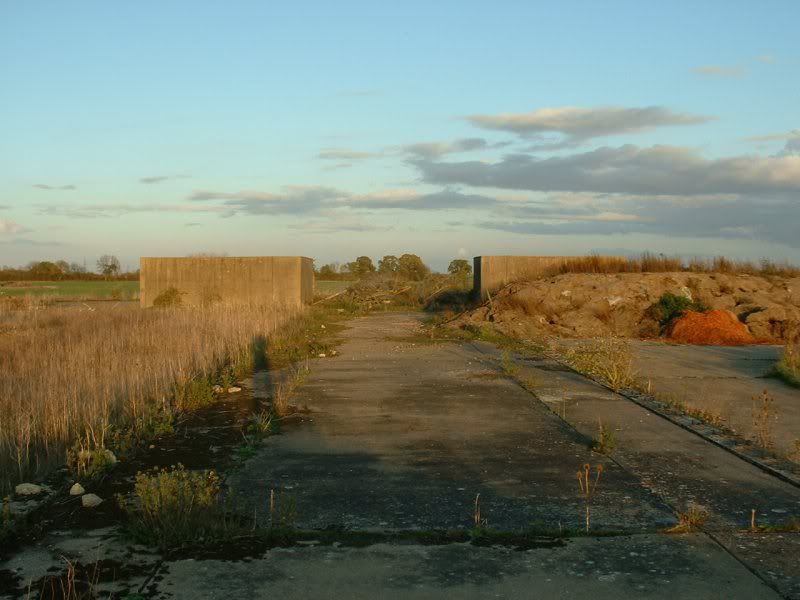
Nice sloped end to the shelter platform:
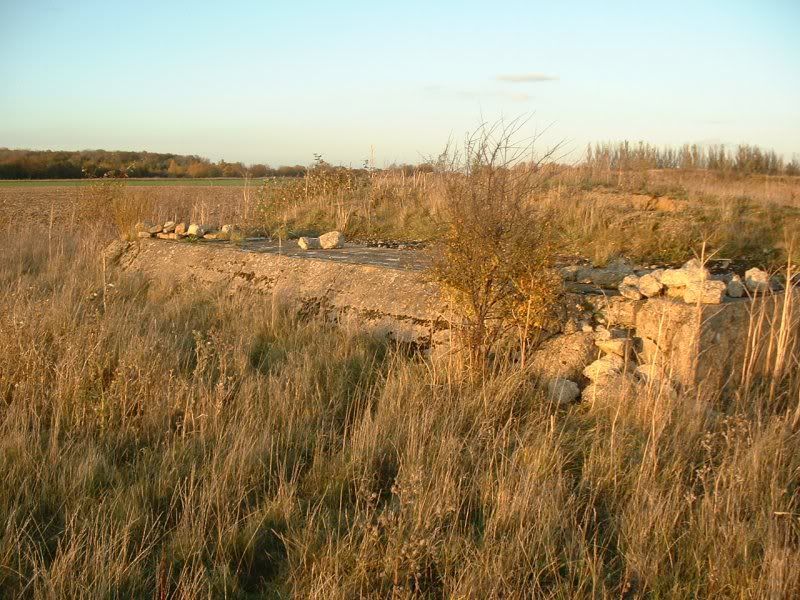
Shelter retracting cable anchor point:
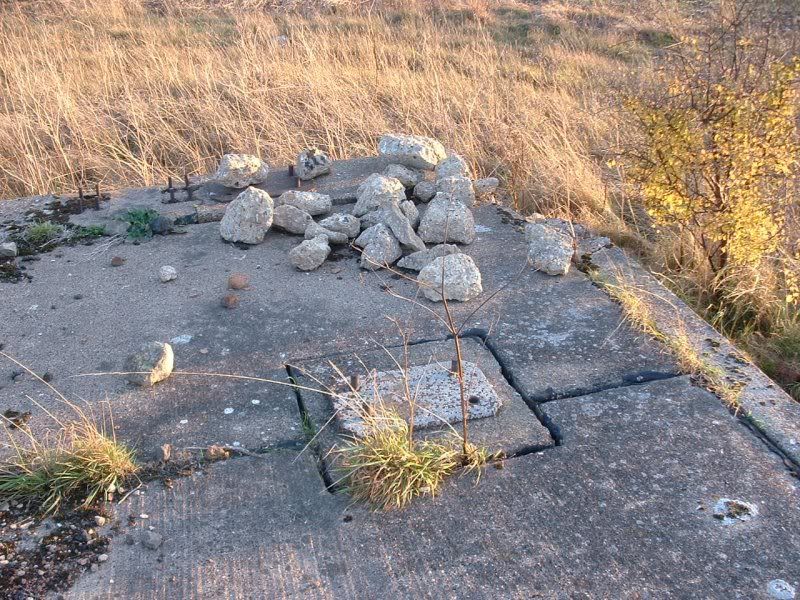
The Launch Mount brackets are still there, but the concrete on either side has been smashed to remove the pipework:
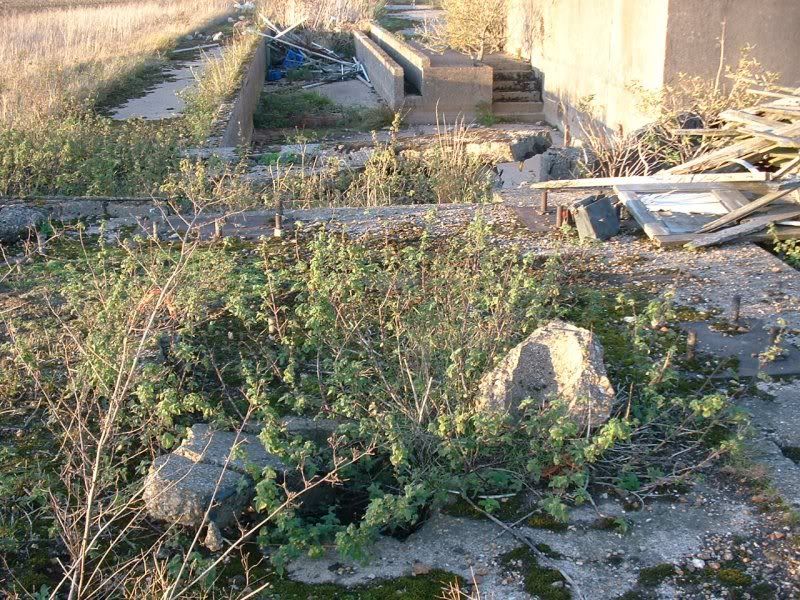
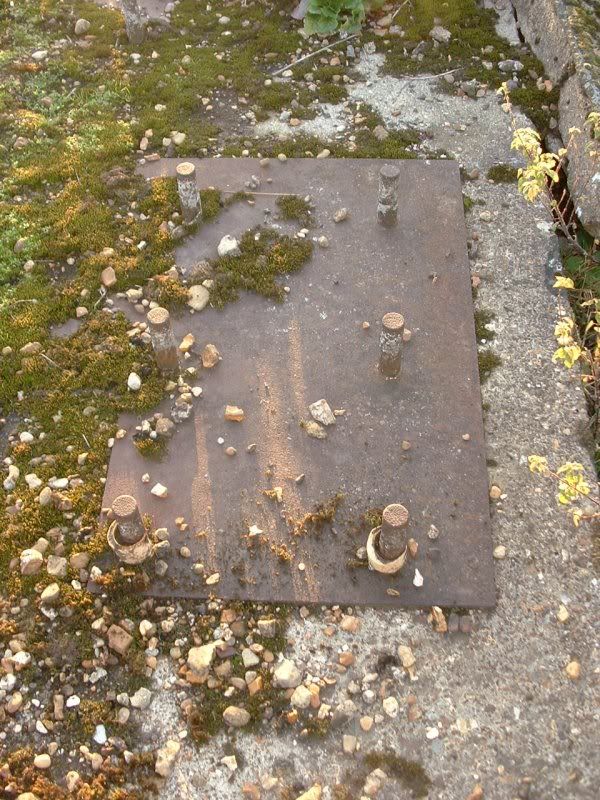
RP1 valvegear pit:
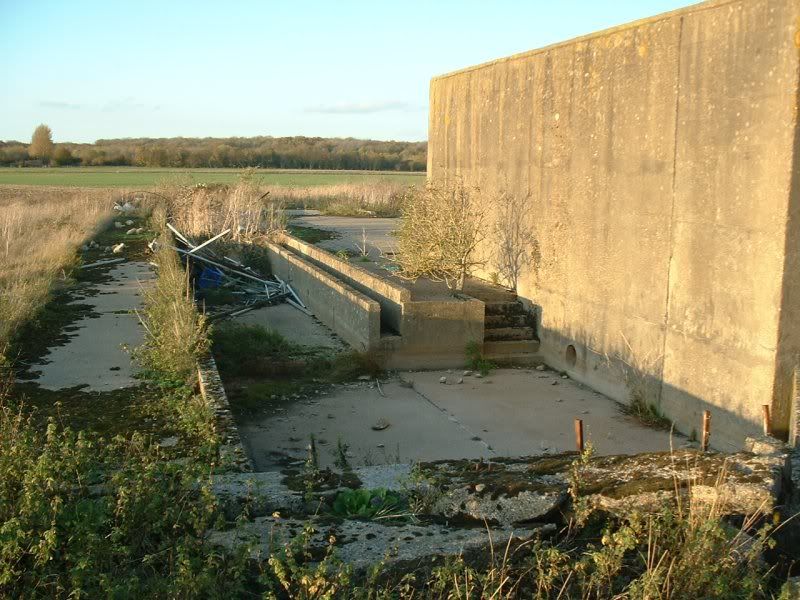
LOX valvegear pit:
P BellamyThey would appear to be the pair of nose dock hangars that stand on the north side of the runway.
All the best,
PB
P BellamyI appreciate it’s quite some time since this was last discussed, but copies of the 2nd Strategic Air Depot (Alconbury) records finally turned up today, and contained this entry:
16th August 1944
Special Projects:
An order for 4000 wing vent assemblies is being manufactured by the Sheet Metal Shop. This week 1800 have been completed and turned in to Depot Supply for distribution to the various sub-depots. These vents for wing tips will be installed on all aircraft in the 1st Bomb Division. This should eliminate danger of explosion caused by accumulation of gasoline vapors.
All the best,
PB
P BellamyP-40 doing a solo display just north of Kettering.
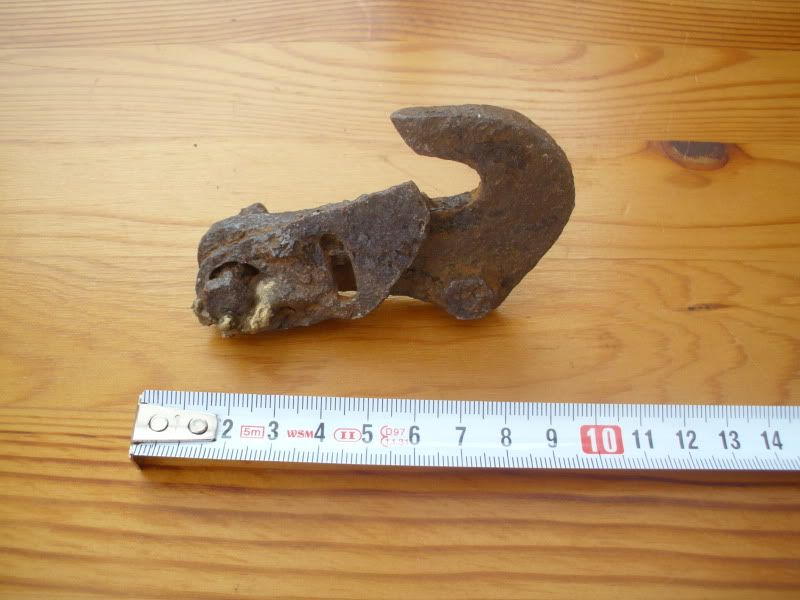
P BellamyBomb rack hook and latch assembly, to which the bomb shackles were attached.
All the best,
PB
P BellamyBomb rack hook and latch assembly, to which the bomb shackles were attached.
All the best,
PB
P BellamyThe 8AF had 30 A-35s, initially as target tugs.
These were later assigned to the various bomb and fighter groups as general purpose tugs and base hacks.
I’ll see if I can find my serial number list.
All the best,
PB


 Sign In