Jinan
JinanINS Vikramaditya to get Barak 1 SAM and CIWS from a soon to be decommissioned warship of the Godavari class
New Delhi, April 16
India’s biggest naval warship, the sea-borne aircraft carrier the INS Vikramaditya, is under a minor ‘re-fit’ that will complete its Close-In Warfare System (CIWS), a protection from incoming enemy missiles.
The Israeli Barak missile is being installed on the ship at its home the base, Karwar, south of Goa.
…
The Godavari is 32 years old and is set for decommissioning.
http://www.tribuneindia.com/news/nation/vikramaditya-to-be-fitted-with-barak-missiles/68184.html
All three ships of this class have now undergone an extensive upgrade of weapons and sensors, including the fitment of the Israeli Barak SAM system and a new fire control system based on the EL/M-2221 STGR.
3×8 VL Barak-1, 2×2 AK630
[ATTACH=CONFIG]237059[/ATTACH]
JinanThe Neustrashimy Class frigates were built at the Yantar Shipbuilding Plant in Kaliningrad, Russia. The Talwar batch 1s at Baltic Shipyard (Baltiysky Zavod, formerly Shipyard-189), Saint Petersburg, Russia. The latter is also the home of Severnoye Design Bureau, which not only designed 11356 (using the earlier Project 1135.1 design aka Krivak III aka Nerei class for KGB Matirime Border Patrol). The priority market for Severnaya is military export to Asian countries as India, China and Vietnam. As such involved in developing Delhi class, Gorshkov transformation to Vikramaditya, as well newer ships e.g. P15A. It is also designer of 22350.
I think the main problem of 11540 was that it was first conceived as a smaller ships to be produced in large number (20 or so), but that the design involved and became larger, and even in role-competition with e.g. Udaloys. And with this plumping up, cost increased and eventually (political) support in the navy was lost. Interesting – if difficult to read – history of 11540 and 11356 at http://paralay.net/11540.html. See also http://paralay.net/22350.html
A similar story is being developed in the 1970’s “Undaunted”, the project 11540. Designed as a small anti-submarine ship with a displacement of 800? T it for a few years, “plump” up to 1500, then to 2000, and in the version with the helicopter reached 2,500? T and moved into the marine zone. A similar outcome: the service in 1987, only one out “Fearless.”
http://survincity.com/2012/05/project-20380-corvettes/
Besides, one has to consider what IN wanted: a gap-filler, that could be fitted with a suite of weapons and electromics very similar to that of P17. I think, but this is my opinion, it would have been far more expensive to modify 11540 to that requirement than to modify 1135.1. And the Krivak series was a mature and proven design to begin with, with 40 units completed (versus a single 11540)
I also recal that during the time the Talwar’s were conceived, there was political struggle, with the yards lobbying for position and money. Note that the batch 2 Talwars and Adm Grigorivich are constructed at Yantar, which apparently won the political struggle for support (to get production: the 11540 was already out of the picture by then). But at the time of the first order for Talwars, that yard was in shambles, apparently.
On 07 August 2007 ShipbuildingRu reported that Kaliningrad based Yantar shipyard had laid down the lead project 1135.6 frigate for the Navy of India. For this contract Yantar had invested considerable means in modernization of the manufacturing infrastructure, and bought a lot of modern equipment. Construction of the frigates was to be completed in 2012.
“The Yantar plant was given the second series of ships for political reasons,” said Konstantin Makiyenko, deputy director of the Center for Analysis of Strategies and Technologies. “This was done not so much to support the specific plant as the economy of the entire Kaliningrad exclave.”
The Yantar plant was in a terrible state in terms of both finances and personnel. But India, which agreed on the executor of the contract, has no real cause to complain. If New Delhi had firmly insisted on its terms and demanded that the contract for these ships be given to the familiar Baltic Shipyard, Moscow would have most likely met them halfway, so as not to miss out on these lucrative contracts.
However, despite the noticeable delay cited by the Indian side, the Kaliningrad plant is filling the orders. The problems faced at Yantar are similar to those faced by the Baltic plant in the case of the first batch of frigates. Having no stable income, the Yantar plant took its time to restore production capacity and the skill level of its workforce, as well as to arrange production with subcontractors.
http://www.globalsecurity.org/military/world/russia/yantar.htm
JinanA question to what they know:
Why frigates produced after the fall of the Soviet Union (Talwar) are based on the modernization of project 1135 and non of the most new project 11540?
Thanks
11356 came about based on input from P17 project of India and money from India. Further development from 11356 resulting in 22350 and 11356M. Starting from 11540 would have been more costly for RUssian navy.
JinanMalaysia reveals plans for Laksamana-class corvette upgrades
Malaysia plans to upgrade four Kedah-class corvettes for asw role

The other corvette squadron, Skdn 24, is also undergoing a refit programme which will see the four Laksamana class ships be re-designated called Fast Attack Craft (Gun). Yes, the Laksamana class missile systems, the Aspide and the Otomat, have been retired as their RTN-10X fire control radar with Mk10 Argo fire control system are obsolete. A new electro-optical director will be used to control the 76mm and 40mm guns. The Laksamana class will also no longer be capable of anti-submarine warfare as their torpedo launchers have been transferred to the Kasturi and Lekir.
http://www.malaysiandefence.com/?p=3911

In further refurbishment work, four ‘Laksamana’ class corvettes will be refitted and re-designated as Fast Attack Craft (Gun). Their outdated missile systems have been retired, their torpedo launchers removed, and they will rely on 76mm (three-inch) and 40mm guns as their armament.
http://defense-studies.blogspot.co.at/2014/05/modernization-of-malaysian-navy.html
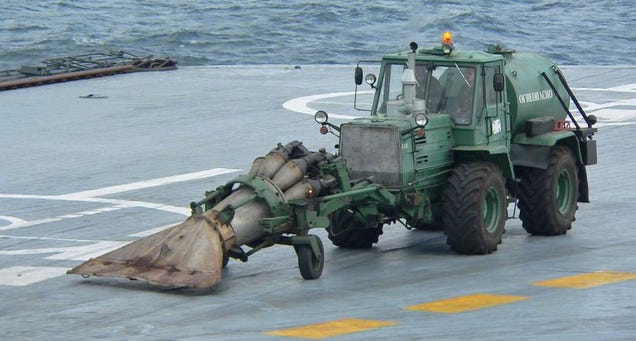
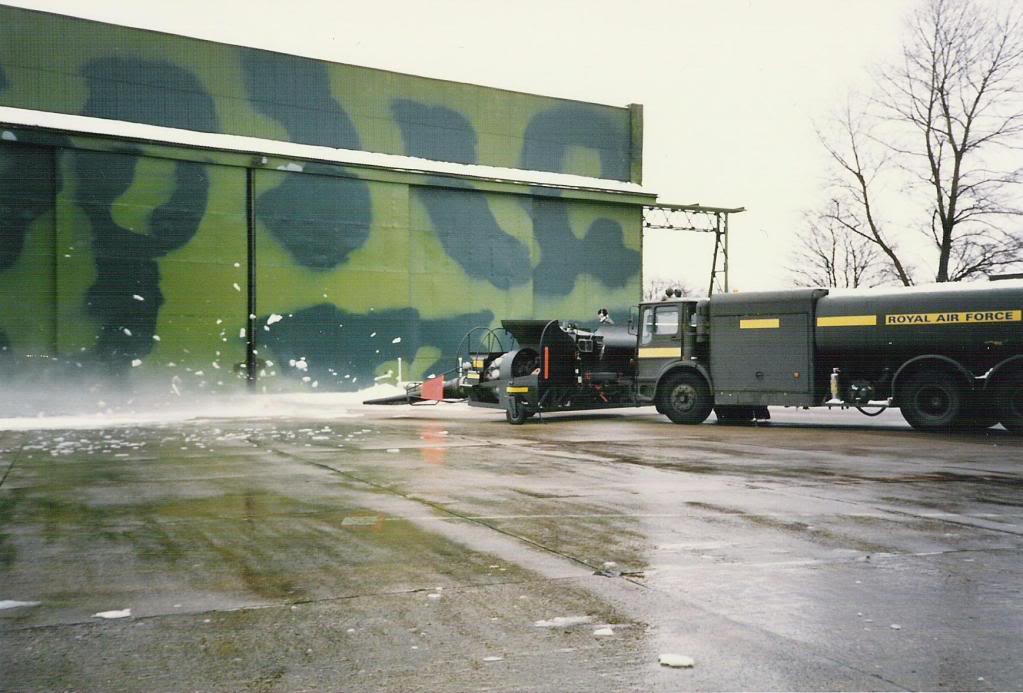
JinanRussia Straps A Jet Engine To A Tractor To Clean Carrier Decks
The Klimov VK-1 was used to power MiG-15 ‘Fagot’ and MiG-17 ‘Fresco’ fighters, as well as the Il-28 ‘Beagle’. Some engines are in use today as snow blowers



JinanHello,
It is being entirely overhauled and repaired (engines, cabling, everything) as well as receiving a partial modernization.
Work is supposed to be finished by January 2016.
She deserves!
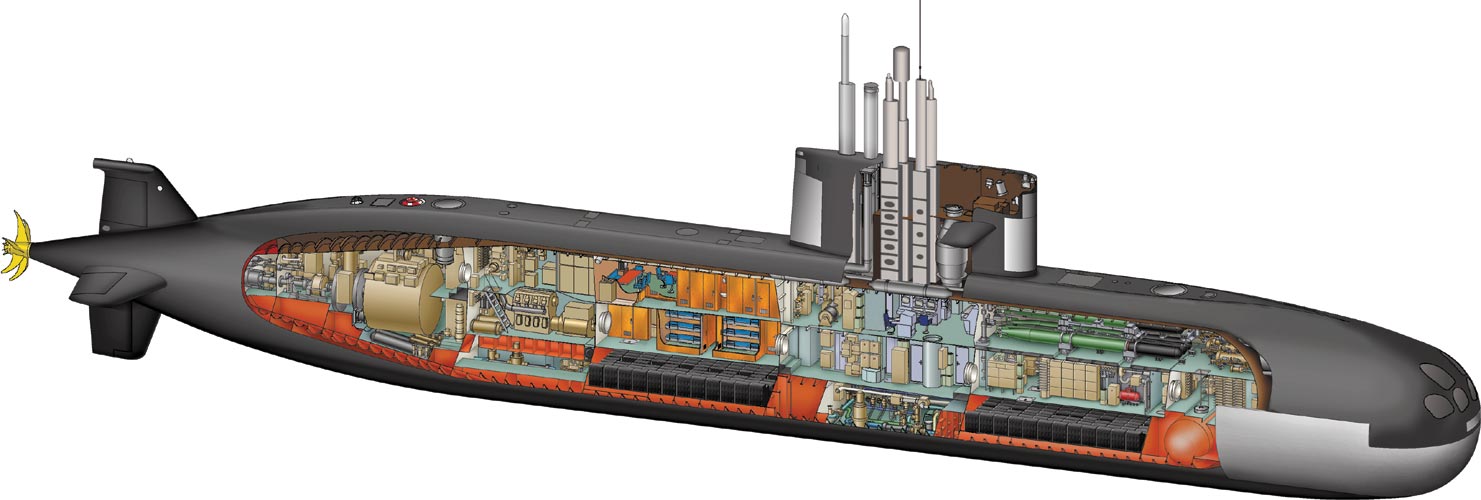
JinanThe front array part is small possibly due to space constraints of the Scorpene, so no wonder that the flank arrays comes as a standard listening feature as part of its sonar suite on the outer hull.
mMMM…. thought that looked familiar (Amur 1650)

JinanThis is not enough to maintain a deterrence posture against India. They may just decide to take the damage of just 2 nuke cruise missiles.
2x eight boats > 16
JinanI think the lesson shown here is, if you absolutely must place a CIWS right at the very bow of a ship, goalkeeper looks cooler than phalanx.
LOL. Clearly, as a Dutchman, I have to agree that Goalkeeper IS cooler than Phalanx. Then again, if I were Italian…. (it’s just that it doesn’t have it’s radar director on the mount …. but the Strales version of the 76mm is real cool)
 Although this is still my favorite:
Another cool if butt-ugly CIWS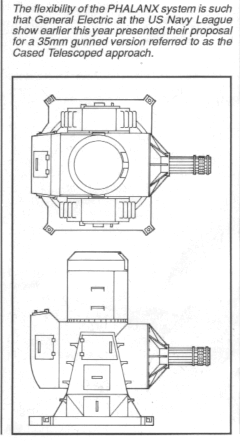
JinanPakistan also wants to deploy a sea-based leg of its nuclear deterrent. If they assign dedicated boats for this role, that would reduce the number available for conventional taskings considerably.
If you have 2 nuke cruise missiles per boat, plus 4 AShM and several torps, there is no reason why you couldn’t Multi-role those boats.
JinanThat lone C-Wiz at the bow is what is officially stopping this beaut from being an aircraft carrier :highly_amused:
Really?


Kindly also not the difference in deck markings. And the fact that Japan has ordered F-35A (not B’s).
JinanThis will enable a fleet of 11 AIP equipped submarines for active duty, PN is modernising the 2 old Agosta 70s with modern systems to enable them to provide realistic training. So a fleet of 13 subs in total. Should mean PN can have 4 boats in the water constantly. That is very very good for a Navy of Pakistan’s size.
You don’t think the oldest ships will retire once the newest are or have been delivered? It will be a few years before those 8 new ones are ready. Those Agota 70s are from the 1979/1980. so about 35 years old today. If China delivers 2 boats per year as per next year or the year after, then you are looking at 40+ years. While e.g. Singapore’s Archer class (ex–Swedisch Sjoormen from 1970) are older, I would personally not like to go to war in subs that old. 13 is too optimistic.
JinanAny news on the men?
India asked January of this year for a rental agreement regarding the Kashalot submarine. Looks like things are moving in that direction.
1 man 1 woman.
http://defence.pk/threads/indian-navy-news-discussions.30327/page-250#post-6958509
http://defence.pk/threads/indian-navy-news-discussions.30327/page-250#post-6962783
Last Updated: Saturday, March 28, 2015 – 15:34
New Delhi: The two Indian Navy personnel who died in the crash of a Dornier-228 maritime surveillance aircraft will be cremated with full military honours, an officer said on Saturday.
The bodies of the co-pilot, Lieutenant Abhinav Nagori, and flight observer Lieutenant Kiran Shekhawat, were recovered from the fuselage of the crashed aircraft.
Lt Nagori, who was from Udaipur in Rajasthan will be cremated there on Sunday.
Lt Shekhawat, who hailed Haryana’s Palwal district, will be cremated there on Sunday.
The crash occurred on Tuesday night around 10 p.m. when the Dornier-228 with three crew members onboard went down in the Arabian Sea off the coast of Goa.
The pilot, Commander Nikhil Kuldip Joshi, was rescued by a passing fishing boat.
A massive search and rescue operation was started involving at least 12 ships and several aircraft.
The fuselage of he plane was located by INS Makar, a naval hydrographic vessel, at a depth of 50-60 metres.
Divers were rushed and subsequently the body of Lt Shekhawat was recovered from the fuselage on Thursday night, while the body of Lt. Nagori was recovered on Friday.
IANS
JinanBanzaiii!!!
[ATTACH=CONFIG]236260[/ATTACH]
JinanOne should consider that the Netherlands has divested itself from all but 2 of its M-class frigates, with 2 going to Portugal, 2 to Belgium and 2 to Chile. It got 4 new ocean OPVs instead. This is something to consider for Belgium as well, which had 4 smallish frigates (not helicopter capable) that it swapped for 2 ex-Dutch frigates. Perhaps Beligum should specialize on MCM and patrol ships. Specialization is inevitable in the European context. NL divested itself of its MPA capability, which was picked up by Germany (P3Cs replacing Brequet Atlantique). One can’t stick to an all round national defence, in the Euro context: it is untenable for smaller nations.


 Sign In