Cuito
CuitoRussian MiG-29 shoots down a Georgian UAV (reportedly).
http://www.cnn.com/video/#/video/world/2008/04/22/vo.georgia.misslie.ap
Cuitohttp://en.rian.ru/analysis/20080807/115871651.html (accessed 8/8/2008)
A tale of Russian aircraft carriers
07/08/2008 16:52 MOSCOW. (RIA Novosti military commentator Ilya Kramnik)
– Sealed and decided: Russia will build aircraft carriers.
After years of debate the naval command and the national leadership seem to have agreed that the navy should have such ships. But this has not always been the case. To understand current thinking, it is necessary to take a look at the history of aircraft carrier building in Russia.
The Russian navy first used seaplanes in World War I, when its Black Sea Fleet used them to bombard enemy ports.
The possibility of building full-scale aircraft carriers was first mooted in Russia after the Civil War. Plans were drawn up to convert some ships – the training ship Komsomolets, the battleship Poltava and uncompleted battle cruisers of the Izmail class – into a new type of vessels.
However, the economy and industry were at such low ebb that the programs had to be postponed until better times.
The next step was taken in the late 1930s, when Soviet naval architects came up with two new projects: Project 71 (a light aircraft carrier with 45 planes) and Project 72 (a heavy aircraft carrier with 62 planes).
The work got under way, but World War II intervened. After the war the naval chiefs again raised the issue, but Soviet leaders did not share the admirals’ enthusiasm for this class of vessels. Nonetheless, the shipbuilding program the country adopted in the 1950s provided for the construction of two light aircraft carriers, to gain operating experience and test their capabilities.
But when Stalin died, construction of large surface ships practically ground to a halt: the new leadership did not believe in traditional fighting services and opted for missile and nuclear weapons. The question was shelved for 10 more years.
In the late 1960s, the navy got its first helicopter cruisers, Moskva and Leningrad. But they were specialist craft intended for very specific missions, and could not operate as regular carriers. Meanwhile the Nevsky PKB, the country’s largest producer of surface ships, was pondering plans for a carrier of 45,000 to 50,000 tons. Intended to provide air cover for groups of surface ships and submarines, it was to carry a complement of 35 to 40 planes, including of deck-based MiG-23 fighters, early warning aircraft, and helicopters. The ship’s own armaments were meant to deal with aircraft and submarines.
But instead of a fully operational carrier, the navy again got a dud – the Nikolayev shipyard began building a series of Project 1143 ships. These so-called “heavy aircraft carrying cruisers” were to be equipped with hunter-killer helicopters and Yak-38 vertical take-off and landing (VTOL) planes. Bazalt anti-ship missiles provided an additional capability.
Still, the idea of a full-blooded aircraft carrier was slowly but surely forcing its way into the open. It had high-placed patrons: Minister of Shipbuilding Boris Butoma, who was interested in big orders from the navy, and Defense Minister Andrei Grechko, who quite undiplomatically requested that industry build aircraft carriers like the USS Nimitz.
It was decided that with completion of the two Project 1143 heavy aircraft carriers Kiev and Minsk, the first carrier of Project 1160, with a displacement of 80,000 tons, would be laid down. But the anti-carrier lobby prevailed, and instead of starting a new series a third Project 1143 ship, Novorossiisk, was laid down. The good work, however, was continued – by 1967 the Nevsky PKB had completed plans for a Project 1153 ship, which, though smaller than the previous 1160 project, was still a true carrier and, importantly, had a nuclear power plant. But the deaths of Grechko and Butoma put paid to the undertaking. After the Novorossiisk was launched in 1978, Nikolayev started construction of a fourth Project 1143 carrier. The new vessel was named the Baku and was to be fitted out with then non-existent Yak-141 fighter planes.
But the lame philosophy of Project 1143 was clear to everyone – twice as large as British Invincible class light carriers equipped with Sea Harriers, the Russian vessels little differed from them in capability. The missiles they carried, while increasing displacement and adding to costs, did not redeem them – the ships proved cumbrous and under-armed either as missile cruisers or light aircraft carriers. Normally-configured aircraft, moreover, required a total redesign of Project 1143 ships.
The upshot was that, in 1982, when the Baku hit the water, the Nikolayev yard laid the keel of a vessel capable of carrying a full-bodied air wing of MiG-29 and Su-27 jets. Yet the ship, initially christened the Riga, proved another messy compromise: it had a ramp instead of a catapult and 12 Granit anti-ship missiles in vertical launch silos to complement the organic aircraft.
Even before she was launched, the first full-blown Soviet aircraft carrier changed her name from the Riga to Leonid Brezhnev. In 1987, she was renamed the Tbilisi and in 1990, Admiral Kuznetsov.
The Kuznetsov has remained the only Soviet-built carrier. Its sister-ship Varyag, which was laid down two years after the Kuznetsov, was launched but remained unfitted, while the Ulyanovsk, a larger vessel with catapults and a nuclear power plant, was cut up on the blocks.
The Kiev, Minsk and Novorossiisk also suffered a sad fate. In 1993, they were decommissioned and sold to China as floating entertainment centers, while the Baku, renamed Admiral Gorshkov and sold to India, is currently being refitted as a standard aircraft carrier at Severodvinsk, Russia.
In the 1990s, few if any debated the subject. The theme re-emerged in the mid-2000s, when it was declared that Russia needed several aircraft-carrying ships in its Northern and Pacific fleets.
The numbers mooted ranged from two or three to six or eight. Now plans envisage building five to six carriers over the next 20 years. Construction proper is expected to start after 2012.
Much as we might wish to believe in the feasibility of these plans, there remain several unanswered questions. What missions will the aircraft carriers and their escort groups fulfill? When and with what funds will Russia re-engineer (or build from scratch) the infrastructure of its naval bases for new ships? What types of planes will be based on them? How are their crews to be staffed? And lastly, how long will it take to build these vessels and their escorts, especially with the current personnel squeeze in the shipbuilding industry?
It is my fond hope that the navy’s command and national leaders know the answers to these questions. Otherwise, we will get at best a couple of unprovided-for ships, which will have to be sold after 10 to 15 years of service, or at worst, nothing.
The opinions expressed in this article are the author’s and do not necessarily represent those of RIA Novosti.
CuitoHard for us to understand? Huh? I think I’ll just use the word naive rather than something stronger here. I’m afraid this has been coming for quite a long time, and Georgia only provided the opportunity and picked the location.
Mike
“Hard to understand” is just a way of voicing displeasure and disagreement. The US understands the region very well, which is part of the reason Georgia will be offered NATO membership.
CuitoAugust 10, 2008, 1:44
Abkhazia starts war with Georgia
Abkhazia’s army has launched a military operation to try to force Georgian troops out of the upper part of the Kodori Gorge. It started with the use of artillery and air strikes against Georgian forces.Abkhazia has announced that it has moved its troops into the Gali district which borders Georgia.
The breakaway republic has provided a humanitarian corridor for residents of the disputed Kodori Gorge. However the breakaway republic’s officials say they don’t know whether people will use this passageway to safety.
Earlier, Russia’s Interfax news agency reported that Russian ships prevented Georgian military vessels from nearing Abkhazia.
http://russiatoday.com/news/news/28706
And some people in the region are hoping that the Javakh Armenians will open a third front against Georgia.
CuitoGeorgian plane shot down (reportedly)
CuitoRussia Today is covering this very well (in English).
http://streaming.visionip.tv/Russia_Today
EDIT: They’re covering it well, but you need to understand the biases of the newscast.
CuitoMiGs from Mozambique..nice
http://avcom.co.za/phpBB3/viewtopic.php?f=1&t=35140&start=60&st=0&sk=t&sd=a
Great link.
Cuito
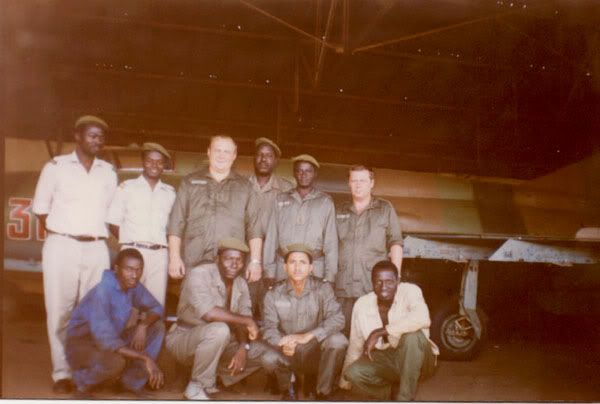
Which AF is the -21 from? Pray tell…
I’m pretty sure this is Mali. I think I recognize the hangar and the camo on the aircraft. Also, the bort numbers on their Mig-21s start with 3.
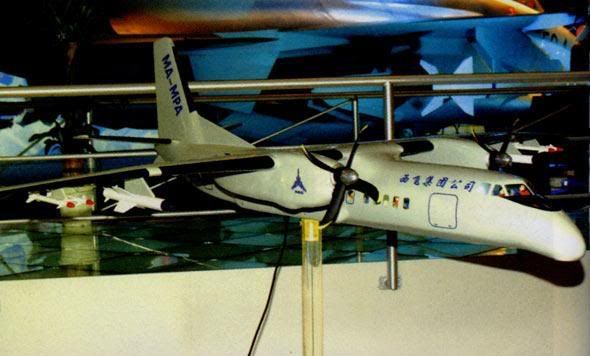
CuitoGot the following images from CDF & SDF:
Carrying short-ranged AAMs? 😮
Y-7 MPA
————
Do you mind telling me what this is? I tried googling but I got mostly Chinese pages. Is this for ASW? or ELINT?
CuitoThe ones I have are loaded with “goodies” and not in electronic format.
Well, now you’re just teasing us. 🙂
If I meet you someday I will buy you two beers for each pic (w/goodies) uploaded.
CuitoMSNBC News Services
updated 1 hour, 53 minutes agoTEHRAN, Iran – The head of Iran’s Revolutionary Guards said the country would impose controls on shipping in the vital Gulf oil route if Iran was attacked, a newspaper reported on Saturday. …Jafari also warned that Tehran would launch missiles at Israel if attacked.
CuitoI think he’s just calling it like he sees it. Obama has already said he plans on attempting to appease Iran. That suggests he’d react unfavorably if Israel were to attack Iran.
Appease is a grossly incorrect description. He has said that he would consider talking with Iranian leaders without preconditions, but with preparation.
This statement is meant as a signal that there will be a change in the way US diplomacy is carried out. Rather than only talking to one’s friends (which has largely been the Bush policy) Obama is willing to talk with adversaries. It’s more of a change in attitude and posture towards the world than an actual policy shift or change in behavior.
Indeed, Obama has stated his support for an undivided Jerusalem as the Israeli capital, for as long as the Israelis want it.
CuitoOf course Israel can launch through Iraqi territory. Who is going to stop them? Certainly not the U.S. All Israel will do, in similar fashion to the Syrian strike, is inform the U.S. of their intentions. To Israel it is Iran’s nuclear ambitions that are the prime concern. To them any humiliation of Iraq and their relation with the U.S is of no importance.
Probably the only U.S. administration that would go for the option of a U.S. strike is the present one. I can’t see any future U.S. administration opting for a strike and possibly the Israeli’s see likewise. Again we are talking about an Israeli option here, not about a U.S one.
TJ
But the Israelis need the transponder codes to ID their aircraft as friendly to the US. Informing the US is insufficient. Israel cannot pass though Iraqi airspace without US approval.
CuitoAny possibility of Israel operating from Eritrea (where they have reportedly stationed some naval assets), or Djibouti, or even the self-declared Rep. of Somaliland (not Somalia)?
The distance to target would be enormous, and I’m not sure of the details regarding Israel’s in-flight refueling capacity. It looks to be about 3500km from Somaliland to targets in southern Iran (without overflying Arabia, of course).
Perhaps Israel needs an aircraft carrier. That would be befitting to its superpower aspirations.
CuitoAccording to Wiki (so you’ll know how to interpret the list) the following countries still have the MiG-17 in their inventory:
* Mali (also MiG-15UTI)
* North-Korea (Shenyang F-5. Also MiG15UTI)
* Sudan (Shengyang F-5)
* Tanzania (Shengyang F-5)
Tanzania may be a candidate for the oldest combat jet still serving in a combat role, the F-6. Tanzania’s F-6s were seen flying at a parade in 2006 or 2005.
I doubt that most of these countries which received MiG-15s and MiG-17s still have them in service. They all have more modern types and I would think, with limited budgets, the newer aircraft would get priority for maintenance (although NK might be an exception).


 Sign In