I apologise for only now picking up this thread, but wanted to submit my penny’s worth.
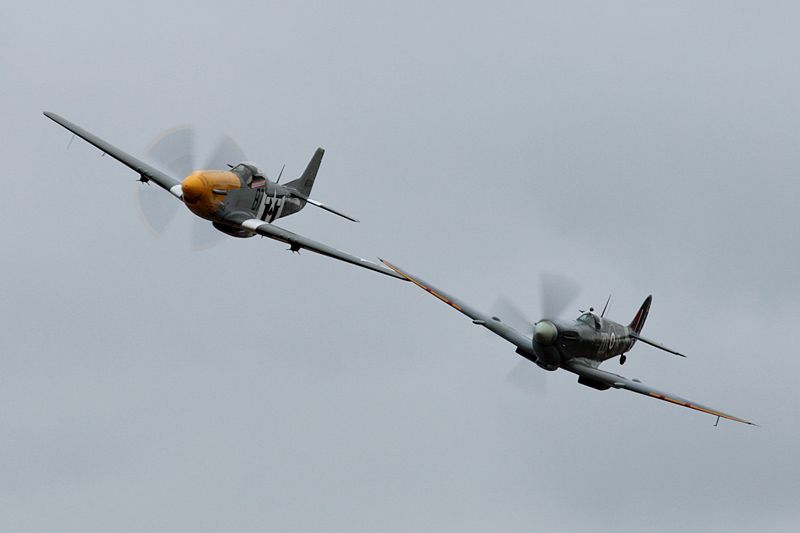
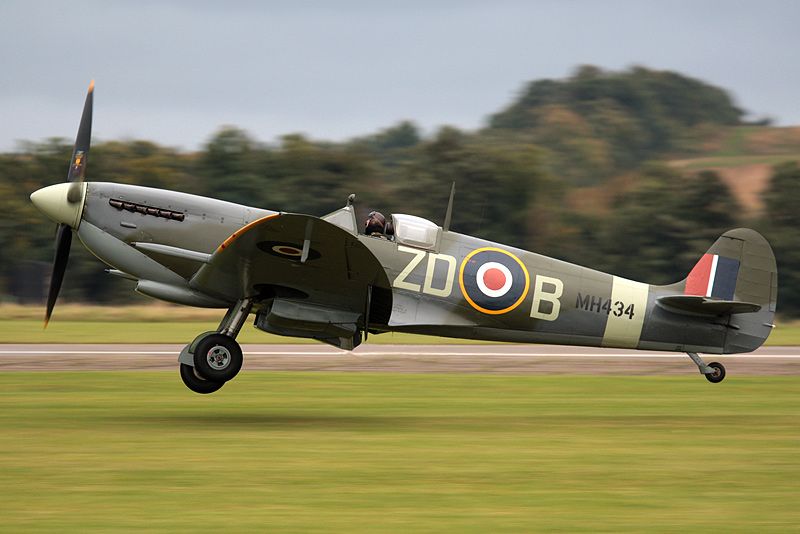
As a seven-year-old, I witnessed the collision of the two Spitfires over Fleet in 1950. I was on my way home (Kings Road) from Sunday School, which would have been at the Albert Street Hall, so I was somewhere along Clarence Road when it happened. I can still feel the excitement, (perhaps fear?) that the sound of six Merlins produced, only to be replaced by bewilderment at the site of a tailplane fluttering to earth. I recall the tailplane rather than the forward fuselage, but I knew a crash had occurred, and ran to my grandparent’s smithy at 23 Clarence Road screaming blue murder. I was afraid that the bombs would explode!
As a way of easing my troubles, my brother took me back to the crash site, the location of which seemed to have spread around. We found the field in Aldershot Road where the Spitfire had come down. A policeman was at the double-barred gate of the field and wasn’t letting anyone in. It was the first and fortunately only time I have had that smell in my nostrils. Then we went round to Regent Street to see the tailplane that had hit someone’s roof and landed in their front garden.
Some 10 years later I was doing a holiday job, cleaning out ditches for the Council, together with father of a schoolchum. Suddenly old Mr. Lovelock disappeared in a swarm of bees or wasps, having sliced through their nest with his sickle. I did what I could (I must have almost drowned him), and scrambled up the bank to the bungalow next to the stream. The lady responded to my demands for half a lemon with alacrity, and I rubbed the poor man’s face and body with it, which brought some succour. He was taken to the RAMC hospital in Aldershot, where he recovered.
That bungalow is situated on the field where the Spitfire came down!
On 1 September 1958 I watched the Seahawk XE462 crash at Blackbushe and was the first to reach the pilot, who had ejected.
The year before, Hawk Trainer G-AFBS cartwheeled on landing at the ‘Bushe, but I don’t believe it belongs here as it may not have been an organised do.
Then there was the Maule at one of the September Cranfields, but I don’t have details right now.
Apart from that, I watched the two MiG-29s collide at Fairford in 1994. I recall thinking that there was something decidedly wrong with the trajectory, and so it was. I showed photos of the blazing aircraft later to Anatoli Kvotchur, pilot of the MiG-29 that crashed at Paris in 1989, and he told me ruefully that one of the Fairford pilots had been his wingman when they were stationed together at Ribnitz-Damgarten. I’m the proud possessor of the Helmet ‘Toli was wearing at Paris.
I hope this has been of interest, and will help place the Spitfire crash more accurately
vbrgds
Alan Lathan
http://www.english-for-flyaways.de
You may have watched the two migs collide at Fairford in 94 but most other people had already seen that happen a year earlier. It was 93.:)


 Sign In