mig-31bm
That’s not a very very long range. It’s the range of multi-function search/targeting land-based & shipborne radars such as Smart-S. AAW ships might have such a radar, plus a long range radar such as the Smart-L reaching out to almost 500 km.
And land-based early warning radars can do much, much better than that.
I was talking about the range of P-18 Van radar
max range 350 km, range vs f-117 about 60 km
obviously modern radar today do better
mig-31bma little of topic, this is the possible mig 41 based on the mig 31- there were reports of russia re vamping the 31 to 5th gen status by 2030, and i think that it most likely will look like this, what do you guys think?
mig-31 have awesome kinematic , no other fighter , interceptor can match it in speed , altitude and range , it also have quite a decent radar ( probably the biggest radar on fighter ? ) , however i think it impossible to design a Stealth or Low RCS mig-31 , because
1- it cruise at a really fast speed => skin very hot => not good for RAM
2- it’s high speed despite have a very high drag design is because of it’s ramp inlets designed that allow it to lose less thrust at high speed , but the design have really high RCS , however if you redesign that to reduce RCS then you likely lose alot of kinematic performer
3 – stealth isnot only about material but also shape so you have to change shape of the aircraft as well , that will likely have bad effect on drag
4 – to be stealth it will need internal weapon bay , thus you need to make an even bigger airframe
and to be honest MIg-31 do it job well without stealth so there very little point to develop something that you willnot need , it can shot down AWACs , bomber , refueling from really long distance 300-400 km no need to get close
mig-31bmThe alleged existence of VHF AESA radar and SAMs with very wide area target acquisition capabilities have led to speculation that larger ground-based low frequency radars can be used for targeting, or at least used in conjunction with other targeting radars to improve their range.
the problem with VHF radar is often with their enormous size and inaccuracy rather than their range , they often have really really long range
mig-31bmAlgorithms and processing power are much improved these days, as is raw radar power….
For instance, the P-18 power output is ~250kW, whereas today you’d be looking at 1MW+ at peak.
i was compared P-18 with Type 42 destroyer’s radar , which about the same time
No, it didnt only detect at 37 miles, it detected at 37 miles
it not a normal radar , it a VHF early warning radar . and these kind of radar often have very very long range like 200-300 km , that why i think 37 miles is short range
mig-31bmDepends on whether the radar has Advanced LPI modes or not. I doubt russians radars are comparable to US radars in that regard.
probably not now , but in future they may
I was talking about a missile, not the SDBII itself. ( an 12′ long missile with SDBII hardware, 7-8″ in diameter (AMRAAM size ) so that 2 can be carried side by side in each bay) The missile would be have roughly the speed of the SPEARIII.
then you carry less missiles i think
The SDB has a small diameter, I don’t think it would have much draq. They would be launched in a loft trajectory. It may be less than 20km however, maybe 10 or something.
still it doesnt have rocket like AASM , i think the range likely to be very small , without engine and at low altitude may be it will just fall down like MK-80 series bomb
also low weight mean less moment tum thus go shorter range
The idea of using some F-35s with 24 SPEAR3s coming flying Nap of the Earth and a couple F-35s in stealth mode at high alt to guide the missiles has merits if the cost difference between an SDBII and a SPEAR III is not too much, which I doubt.
the benefit mainly is when you try to attack destroyer with very good anti air capability Ex : Type-52c , and can detect F-35 from long range , then it still have the option to fly low and then when come close launch a bunch of missiles at the destroyer
That kind of idea with flechettes or fragment could be good, but they if they are ejected at 3-4 km I very much doubt they would get anywhere close to the target, let alone be able to hit the sensors.
but not only 1 missiles , we have 24 SPEAR per F-35 , each SPEAR have 60 warhead => each F-35 thow total 1440 warheads over target area , even with hit rate of only 2 percent then 28 warhead will hit target
mig-31bm1 ) i want a source but not from a post of a random member on forum , and i cant find any where else that said the same thing
2 ) even if what said was true it doesnt really mean alot because stealth aircraft arenot stealth at all direction , there are some angle of them that have very high RCS , so the destroyer may just saw the F-117 at very high RCS angle of it
3 ) F-117 with bomb bay open may have very high RCS too but for quick period of time
also
P-18 VHF acquisition radar under Dani’s command, which enabled his men to detect Zelko’s F-117 at a distance of 30 to 37 miles (50-60 km
http://thediplomat.com/2014/08/the-f-35-vs-the-vhf-threat/
if a VHF radar after modification only manage to detect F-117 at about 37 miles , how could you expect a L-band or xband radar to do any better
mig-31bmDebatable. A salesman trying to maximise the appeal of his product could easily claim it as such.
really doubt that , that would be the same as claim Kinematic is stealth
The only secret part is the stealth though. The F-15, which for its time was the kinematic equivalent of the F-22 was sold at will from the late ’70s onwards. I don’t think necessarily the Russians are much better at kinematics, they’ve just had more liberty with aerodynamic design on the Su-35 because it didn’t have to be stealth.
i dont really think stealth is secret , many other country other than US have stealth UAV or stealth cruise missiles , also Western have nothing equal to Mig-31 or KH-31 so i would have to say kinematic Russian is much better ( by contrast US seem to be better at Stealth and electronic warfare )
AIR International described the EW suite as acting to maintain stealth as much as possible until active deception jamming was required.
may be they was talking about the LPI feature on APG-81
.
Also, low level clutter rejection and detection range aren’t the same thing.
clutter rejection = reduce gain = harder to detect low RCS target
It’s also common for military datasheets to understate performance and for stealth to be exaggerated.
i dont think effect of stealth is exaggerated , in fact , it not a coincident that all great power try to make stealth fighter and stealth missile
True but the language here seems openly evasive. It would be very easy to simple say, “we’ve found that the F-35 has a lower radar cross-section than an F-22,” and perhaps even quote a loose percentage.
they did say f-35 beat F-22 in stealth and it was designed to neutralize S-400 system , really nothing evasive in that
RAM doesn’t work well at VHF.
agree
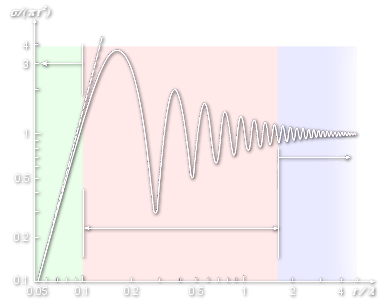
A larger shape simply increases size to wavelength ratio, which moves you back into the optical region. In the resonant region, RCS can be either higher or lower than the optical region formula suggests. The Rayleigh region is the place to be. Either way a larger aircraft isn’t particularly beneficial, it either moves you from Rayleigh to Resonant, or Resonant to Optical. Neither transition is a definite advantage and the difference between optical RCS and resonant peaks/troughs is only of the order of about 4/0.25. The only way of achieving what you want is a completely different kind of RAM, which begs the question, “why only on the B-2 and not F-22,”… or by using ionised gas.
http://www.radartutorial.eu/01.basics/Rayleigh-%20versus%20Mie-Scattering.en.html
“It is the physics of longer wavelength and resonance that enables VHF and UHF radar to detect stealth aircraft,” Westra wrote in his article titled Radar vs. Stealth.
UHF-band radars operate at frequencies between 300MHz and 1GHz, which results in wavelengths that are between 10 centimeters and one meter long.
Typically, due to the physical characteristics of fighter-sized stealth aircraft, they must be optimized to defeat higher frequencies in the Ka, Ku, X, C and parts of the S-bands.
There is a resonance effect that occurs when a feature on an aircraft—such as a tail-fin tip— is less than eight times the size of a particular frequency wavelength. That omni-directional resonance effect produces a “step change” in an aircraft’s radar cross-section.
Effectively what that means is that small stealth aircraft that do not have the size or weight allowances for two feet or more of radar absorbent material coatings on every surface are forced to make trades as to which frequency bands they are optimized for.That would include aircraft like the Chengdu J-20, Shenyang J-31, Sukhoi PAK-FA and indeed the United States’ own Lockheed Martin F-22 Raptor and tri-service F-35 Joint Strike Fighter.
Only very large stealth aircraft without protruding empennage surfaces — like the Northrop Grumman B-2 Spirit or the forthcoming Long Range Strike-Bomber — can meet the requirement for geometrical optics regime scattering.
http://news.usni.org/2014/06/09/u-s-navys-secret-counter-stealth-weapon-hiding-plain-sight
mig-31bmUltimately I think the way to go is an ARM version of Meteor, or maybe a JDRADM version.
i do agree with this
mig-31bmAll part of the same thing. SA allows you to plan routes away from hot-spots, and gives you a better heads-up of enemies and allows quicker targeting, all of which reduce chances of your detection until it’s too late.
but it not stealth , totally not the same , they may compliment the other but that doesnt make them the same thing
Actually stealth is the only hard part. Most western nations and many others are already well versed in propulsion and aerodynamics.
i mean stealth + good kinematic is very hard to make , it possible but may be super extra expensive , and if you dont know how to it may cost lot more F-22
also , i have to say Russian are much better in kinematic , they have so many working long range air to ground or anti ship supersonic missile
AIR International’s F-35 special made a clear distinction between that and active deception jamming, when the above is no longer possible.
i dont quite understand what you mean here
No one said it could. I’m merely quoting an EADS radar expert. I suspect the above ranges are underestimates and take no account frequency. It’s well known that a Type 42 destroyer could track F-117s (RCS of 0.0025m^2) out to 150km, that would imply tracking 0.001m^2 targets at 120km with ’90s ship radar. I suspect stuff like TRS-4D and Artisan will be streets ahead of that, Russian stuff too I imagine.
can you give the link for that , cause if that was true that would mean F-117 was super useless ( it only carry bomb with range about 12 km ) , there wasnt anything special with Type 42’s radar compared to SAM radar of that time , in fact it’t can even track the Mirage and exocet missiles due to sea clutter
also the figure i take for SMART-L was from a book ( so very reliable source )
http://books.google.co.uk/books?id=4S3h8j_NEmkC&pg=PA263&lpg=PA263&dq=smart-L+stealth+missile+km&source=bl&ots=hJRyOS_ZfZ&sig=RqlhsrbEaJmGJ5A4JLFwoLFL8DA&hl=en&sa=X&ei=Ejn2U7nkLujZ0QXXo4Bw&ved=0CDQQ6AEwAw#v=onepage&q=smart-L%20stealth%20missile%20km&f=false
and they only claim to detect target with RCS = 0.001 m2 from about 60 km , i really doubt that Type 42 ( or even EF-2000 ) can do better
Well the F-35 team failed to meet every other design parameter, so when they come along at the eleventh hour with vague statements in an attempt to mislead people into believing one was exceeded by an entire order of magnitude, naturally I question it. The language used is evasive. E.g. if I say, “the F-5 has a smaller cross-section than an F-35,” given my exact choice of words, am I lying? Not technically, but if the conversation was about stealth, then I’ve certainly mislead people. Stealth could also be assumed to be about EO/IR, so if I have a smaller, less powerful aircraft, maybe it’s harder to see in these regions, so I could say that it does stealth better and not be lying and say that it has a smaller cross section and not be lying.
language could be mislead , but then again that can be said about any claim of any producer
Aircraft carriers and destroyers don’t have boundary layers or shapes that can exploit it. Some detail was released about charged wing trailing edges on the B-2, it was quickly withdrawn, followed by standard ink poisoning tactics. E.g. rumours were disseminated saying it was about disguising the vortices and other rumours about electrogravitics. The last one was just a supertroll of the dumb really. Extra size would only help if the VHF problems experienced by stealth fighters were down to resonant effects. They aren’t, it’s just that the RAM doesn’t work that well outside that 3-20GHz band, nor does the ground wave effect.
actually , if iam remember correctly , stealth is due to Shape + material ( RAM ) at VHF then RAM doesnt work well , but also Shape doesnt work due to resonant effect that why the bigger size of B-2 make it better at VHF
btw : there are many stealth destroyer


mig-31bmI admit you have a point here if the antenna contains all the electronics.
not all , but mostly
The missile would attack fixed targets whose coordinated are known from other sources ( satellites etc… ). The SDB1 missile would be good to attack fixed targets. Against radars, the F-35s can triangulate from 300km to have the approximate location of the target. These radars are very powerful so the F-35’s ESM would have no trouble datecting them at long range. The SDB2 missile with its tri-mode seeker would be sent in the killing zone and would find the target by itself.
ESM doesnt work very well again AESA radar
SDB II is slower than SPEAR , more affected by weather , affected alot by altitude and speed at release
I wonder what the SDB2 range would be if launched from very low altitude with a loft trajectory. Perhaps 20km. That may be enough to attack say a convoy. Some F-35s at high altitude in stealth mode would be needed to guide the weapons.
probably less , AASM have a rocket motor and only achieve 12 km at low altitude , SDB I ,II probably have range 1-2 km from low altitude , to have long range at low altitude you probably need a tuborjet
That could be a good idea, but for the Hydra or AHEAD shell, the speed is much higher than for the subsonic spear 3, so the kinetic energy of the flechette would be much lower. They wouldn’t have much penetration capability, would they even be able of going through the radar cover? Maybe, I don’t know.
Also, at what range does the hydra or AHEAD shell release its flechettes. I would say probably at close range in order to avoid too much dispersion. Would a spear release its flechettes beyond the range of a CIWS?
agree with this different in speed probably make it harder , probably a warhead that release many small grenade that explosive on contact may be better ? , SPEAR have warhead about 20 kg so it can probably carry 60 grenade like this http://en.wikipedia.org/wiki/M67_grenade
mig-31bmThere is also the issue that AAMs NEZs are probably calculated with a significant amount of maneuvering. In an a/g attack there is no need for maneuvering except a little bit in the terminal phase, so the range maybe more than just a basic calculation taking account the altitude.
However, the AIM-9X would still slow down after its 50km a/a range, due to drag. It will end slow at the time of the attack on the radar, maybe it will be hardly supersonic at 3.3 times the a/a range.
it true
Based on the MICA VL –> MICA IR range difference, I think CAMM should be capable of about 100km A2A and maybe more A2G.
i dont really understand if this have anything to do with what i said , CAMM dont have A2G mode
mig-31bmMICA VL – 20km. MICA IR/EM – 80km. SLAMRAAM – 33km (AIM-120C-7???). AIM-120C-7 – 120km.
You have to be careful you’re comparing apples to apples:
RIM-66 is a different length (warhead may be lighter too if same as RIM-67):
https://en.wikipedia.org/wiki/AGM-78_Standard_ARM
https://en.wikipedia.org/wiki/RIM-66_Standard
actually SLAMRAAM-ER have range about 40 km but it a different missiles , the orign SLAMRAAM have range of only 17 km
http://www.flightglobal.com/news/articles/raytheon-goes-for-grand-slam-214940/
anyway
the reason why SAM have longer range when they are adopted to be use as AAM is due to the extra speed of aircraft when launching and the altitude ( thinner air )
however the Aim-9X range already have all these advantage , so the increase range will only due to the fact that ground target are very slow , or doesnt move at all , so missile probably dont need to maneuver
a better example probably the AIM-9B/C to AIM-122
AIM-9B/C have range about 4.8 km
AIM-122 have range about 16.5 km
so i think Aim-9X block III again ground target probably have range increase by 3.3 times
mig-31bmIt could very much be argued that SA is part of stealth. A better knowledge of what’s going on around you allows you to remain stealthy, remember the F-117 and SA-3. Decent stealth + poor SA = No stealth.
SA help stealth aircraft fight their enemy more effectively that true
but SA and Stealth is not the same , an AWACS like E-3 for example can be said to have very good SA , An Aegis destroyer can be said to have very good SA , but no one going to say there 2 are stealth , by contrast AGM-129 is stealth missiles but no one going to claim the missiles it self have good SA
SA and Stealth is very deadly together but they are not the same
With allegedly superior stealth technology another nation could easily use the F-35 to build a fighter that’s as kinematically good as the F-22. F-22 kinematics are good but not ‘special’ good, like its stealth is. The kinematics are far more easy to duplicate.
probably built a stealth fighter with bad kinematic ( F-35 ) or built a fighter with good kinematic but bad stealth ( mig-31 ) is alot easier to built sth that have both ( f-22 )
The F-35 does use active cancellation AFAIK.
no it doesnt , it may be able to use APG-81 as a jammer , but never read any where that the fighter itself have active cancellation
An S-400 depends on what radar you put with it. VHF AESA has been alleged to exist and that presents problems in that it offers targeting as well as detection.
The not so tiny Captor-E is actually very good.
Captor-E is about smae size as APG-81 , probably 10 – 15 percent bigger , which still far smaller than IRBIS-E or Zaslon-M
and no way it can match the S-300/400’s common radar : 64N6E Big Bird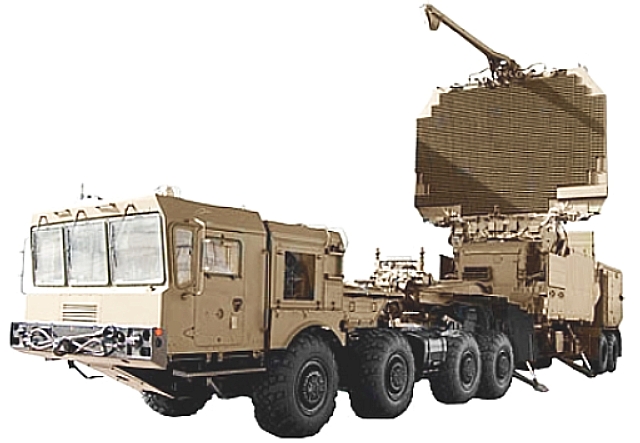
or SMART-L which better in both size and power and only claim to detect stealth missiles with RCS = 0.001 m2 from 64 km
You will note that Mike Hostage never specifically said, “the F-35 has a smaller radar cross section.” He can’t because then he’d be lying, which is harder than simply misleading. Until he says, ‘smaller radar cross section,’ it’s just more headlining.
he did say F-35 is more stealth and designed to beat S-400 system which is really something
B-2, as a larger aircraft, has more electrical power and is widely believed to use plasma stealth. That’s basically the only way you can hide something that large. Think about it. It came out in 1992. If it was effectively much better than the F-22 relative to size, why didn’t the F-22 use the same technology? Answer – it can’t because it’s too small and doesn’t have enough power to run it.
as far as i know only Russian ever claim to experiment with plasma stealth and the result doesnt end well that why they designed the PAK-FA now
if plasma stealth was working dont you think all aircraft carrier and Destroyer will have it , they are bigger and have more power than any fighter or bomber but no even the Zumwalt class you old method to achieve low RCS
if iam not wrong i did read somewhere that B-2 relative big size make it less vulnerable to VHF band ( dont remember why may be thicker RAM )
mig-31bmRough rule of thumb says that when you move a SAM to A2A role, you multiply max. range by about 4. What that means for A2G I don’t know.
RIM-66A range= 32 km the air to ground version of it: AGM-78 Range= 90 km so from GtA to AtG the range increase by about 3 times
mig-31bmThat’s always been a dubious statement. What does it include as ‘stealth’? E.g. Active cancellation, passive detection, better SA? Yes it has a smaller ‘cross-section’ but it doesn’t specifically say ‘radar cross section’. It’s someone being far too clever with words for their own good IMO. If it were truly more stealthy, why is the F-22 not for export?
f-35 have stealth + SA but F-22 have stealth+SA + kinematic , and F-22 probably a much better interceptor due to it’s speed , and USAF dont want that ?
passive detection is part of SA , and it not the same as Stealth, Active cancellation , plasma stealth are not going to happened , not in near future
anyway he also said
“F-35 is the first US aircraft designed to the requirement that it be highly effective at neutralizing S-400 systems and their cousins“
so i dont really think EF-2000 tiny radar going to do much again it’s RCS
probably have sth to do with clutter rejection threshold
EDIT: It is interesting in that he mentions cross section without the radar pre-fix in relation to low frequency radar, because it may be that the smaller physical cross section does make it better against VHF, when the usual RAM effect breaks down.
not necessary B-2 is better again VHF , low frequency and it bigger than both


 Sign In