 mig-31bm
yes, a science paper supporting my theory that
which “science paper” are we talking about here ?
the tail surfaces add rcs
No one deny that extra control surface add RCS , question is how much ? , at what aspect
what do you got that support your theory that your idol F-35 has lower rcs than a pancake,
other than wishful thinking ?
of equal size , same material then surely less control surface is better for RCS
However, B-2 is much bigger than F-35. They donot use the same kind of RAM either.
UAV are smaller than F-35 but they can’t be too costly , so their RAM probably not as good
Then the next question is how much is the different ? if one of them has RCS = -30 dBsm , the others got RCS = -35 dBsm then it does not really matter
mig-31bm1] well, there is no room for the only meteor that exist
Actually it does fit on AG station , the modification is so that it fit in AA station as well. Given that UK buy F-35 , MBDA would be dumb to ignore such big domestic market
2] in contrast to yourself, i think F-35 will carry aam externally on A2A missions,
and i dont think anyone will bother trying for 6 aam internally.
So they are so dumb that they decided to design a stealth aircraft then carry all weapon externally( with the cost of RCS and drag) instead of bothering with the internal option ? great logic right there. What next ? engine is removed from aircraft body ?
4] taranis X-47 B-2 all are in another category of rcs altogether,
you cant compare them with a fighter that needed control surfaces to be agile.
if they do run into fighter on a bomb run, write it off, its just drones anyway,
From the side may be that slight problem due to their corner, but frontal the control surface doesnt affect RCS that much
mig-31bmAnd that’s the problem.. If you wanna do self-escort, then you can’t carry more than a pitiful load of 2x AIM-120 and one large bomb
or 2 AIM-120 and 8 SDB
No, it still needs Growlers.. US NAVY made it quote clear that the EW capability of the F-35 provides only a partial protection and that NGJ (or Growlers) will be required
jamming power required is proportional to RCS value, if the defense radar is powerful enough that F-35 need a Growler to escort jamming then no amount of jamming aircraft would be enough to protect a conventinal aircraft like F-18E or Rafale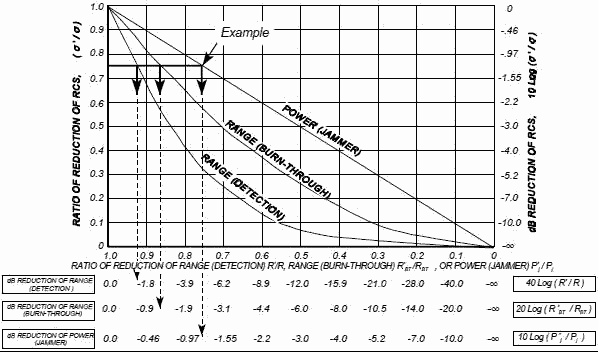

mig-31bmActually you don’t need tu22m for saturated attack. Su-34 can theoretically carry 3000L fuel tank on center line and 8 antiship missiles. This make carrier completely ineffective. The only advantage of tu22m upgrades is if missiles are internally carried and launched at Mach 2 dash from aircraft.
What short of anti ship missiles that Su-34 can carry 8 of them at the same time while still got a 3000 litter fuel tank in centerline?
And how the heck can Su-34 with that sort of load out get close to an aircraft carrier without getting completely destroyed?
mig-31bmAnd no, it’s not an air superiority fighter AT ALL and is more akin to F/A-18 than F-16 anyway.
No modern fighter is designed for pure superiority role apart from the F-22 really,and even F-22 getting modification do the ground work
mig-31bmwho knows, maybe its the inefficient attitude /AoA that forced the string of relaxed KPP ?
To quote Andraxxuss
As for my ONLY claim about F-35 being better than F-16, it was this: Its 5,3G KPP threshold figures, and relaxed 4,6G “achieved” performance figure, is slightly better than Block 50 F-16’s flight manual data at same flight conditions. As proof of burden about this is on me:
Lets talk about F-16 with following equipped with 2 AIM-120s and 2 empty pylons to match F-35:
2xAIM-120s + 2xLAU-129 on stations 1 and 9 instead of 16S210 included in basic aircraft weight, 2xLAU-129 on stations 2 and 8 for previously spent A-A missiles, + 8 racks of chaff-flare + gun ammo; weigh 599kg in total.
Drag index = 21; (+1 for each LAU-129 at wingtips, +6 for each LAU-127 at stations 2 and 8, and +7 for F-16C basic airframe drag index)
F-16C Block 50, Drag indexAltittude = 15000 feet, Speed = M0,8:
22000lbs = 218 kg fuel (6% of total internal fuel capacity) == 6,3Gs @ Drag index = 0.
26000lbs = 2032 kg fuel (63%) == 5,3Gs @ DI=0, 5,1Gs @ DI=0, 5,2Gs @ Drag index = 21.
28500lbs = 3227 kg fuel (100%) == 4,8Gs @ DI =0, 4,4Gs @ DI=50, 4,6Gs @ Drag index = 21.Now, I don’t know exact KPP details of F-35; but logically,
1- It will definately include two AAMs (as B variant has no gun, there is no point in giving it a “key performance figure” unarmed. Quite possibly, it will include 4 AAMs.
2- Logically, KPP of F-35 will at least involve 50% fuel, and judging how other KPP is given to other aircraft, it is quite possibly 60%, to include reserve fuel into equation.I assume F-35’s specific range is consistent with its wing area and thrust increase, ballpark around 50%. Then, there are 4 possibilities;
Possibility #1: F-35 achieved 4,6Gs with 60% fuel and 2 AAMs. This translates to same maneuverability, but fuel for longer range than F-16 with full internal fuel. For same range, F-35 needs less fuel, less weight. This translates to better maneuverability.
Possibility #2: F-35 achieved 4,6Gs with 50% fuel and 2 AAMs. With this fuel, F-35 can match range of F-16 with only 88% internal fuel. This means, F-35 is slightly inferior to F-16 (by 0,1Gs).
Possibility #3: F-35 achieved 4,6Gs with 50% fuel and 4 AAMs. Then you would have to subtract some 304 kg from fuel of F-16 , and add 8 to drag index, to compare it with equal grounds to F-35’s KPP. Then F-35 will have better maneuverability for same range.
Possibility #4: F-35 achieved 4,6Gs with 60% fuel and 4 AAMs. Then, this translates to better maneuverability with fuel for better range. Translates to A LOT better maneuverability when fueled for same range.This comparison actually favours F-16;
a) You cannot guarantee an F-16 to enter BFM with 2 AAMs and only 2 empty pylons; typically, it would almost certainly carry 2 additional LAU-129s at 3 and 7, plus MAYBE additional missiles on those pylons, non-jetisson fuel tank pylons on 4 and 6, centerline pylon on 5.
b) you cannot guarantee F-35’s 4,6G achieved performance years ago is not improved even by 0,1Gs. Maybe (just maybe) F-35 today is close to its KPP threshold of 5,3Gs?Even if we take worst case scenario in this comparison, how on earth that justifies “F-35 can’t dogfight” idea?
At sea level, M0,66, clean with 50% fuel, an F-16 block 30 can sustain 9Gs. An F-16 block 50 can sustain 8,1Gs. An Su-27 can sustain 8,7Gs. An F-15C can sustain 7,8Gs. That is up to 15% difference in performance, yet all these aircraft can easily “dogfight” with each other. If worse comes to worst, F-35’s unclassified sustained turn performance at 15k feet M0,8 is just 3% inferior to F-16s. If F-35 cannot dogfight with F-16, then nothing in 4th generation, be it late F-16C, F-15C, MiG-29 or M2k, can dogfight with an Su-27 or an early F-16C block.
Now if you are blowing gasket, at least answer to this claim that I am actually making.
http://forum.keypublishing.com/showthread.php?135460-test-pilot-quot-F-35-can-t-dogfight-quot/page34
mig-31bmas far as I can say, the Super 530 is always carried on inner wing pylons, so you either have two drop tanks there or the Super 530, but can’t have both
May be rare like f-16 with 4 AGM-88 , but i dont quite see why Mirage wouldnt be able to carry 2 Super 530 in the inner pylons
It seen carry something much bigger there
mig-31bmDidn’t know the F-16 had two 20mm cannons !
the F-18 2x20mm as well… looks quite serious, as a source… 😉
You know the 2 pictures are not from the same source right ?
mig-31bmAs a configuration with 2 Super 530 missiles plus 2 tanks is impossible, I’d consider the comparison useless.
Why though ? Mirage has many missiles pylon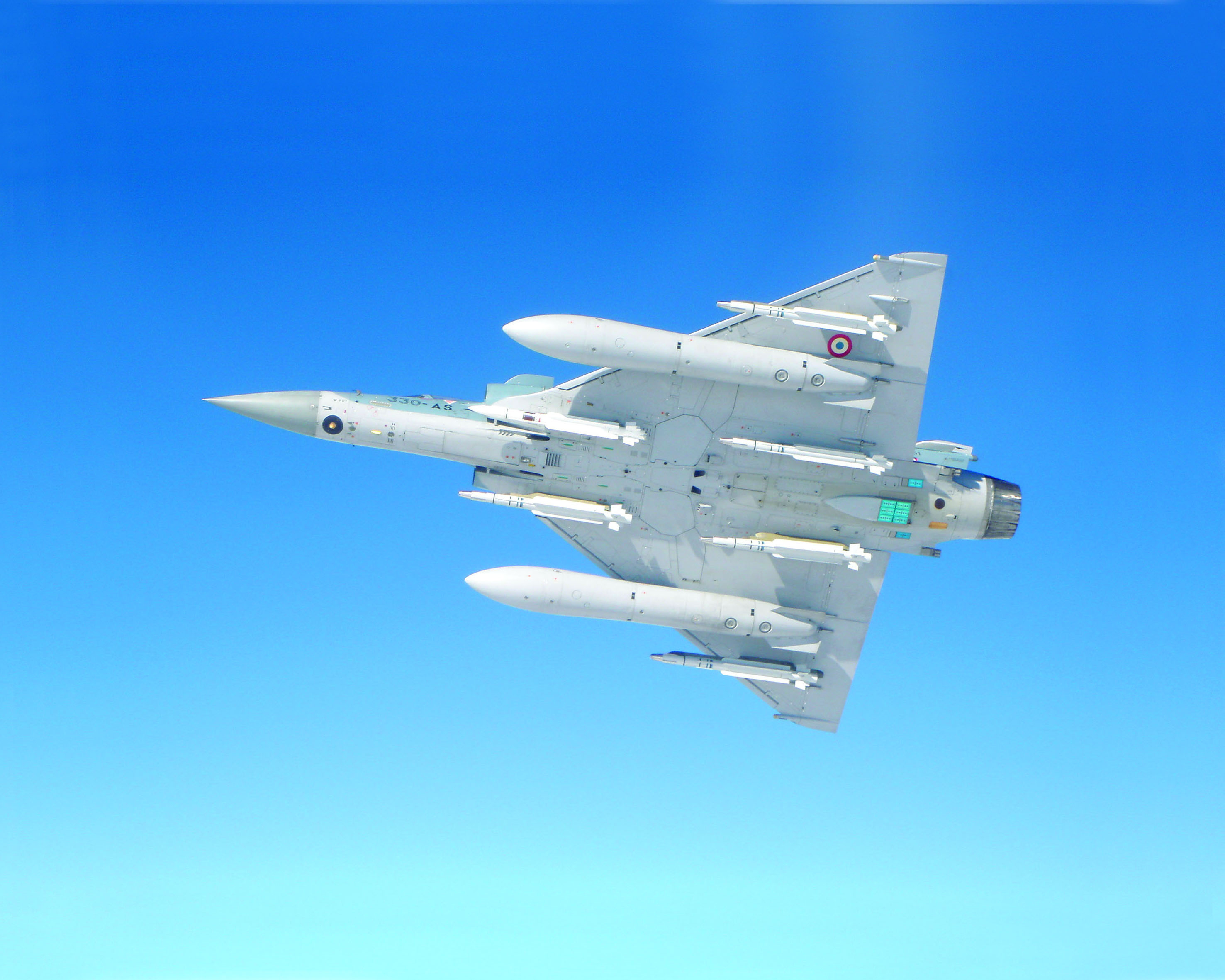
mig-31bmThere is no information about range in this graphic.
Distancia de aterrizaje y decolaje = landing and take-off distance.
Ok , but there are on the second picture
mig-31bmThe range numbers for the Gripen NG seem pretty comparable with the ones for the good old Mirage 2000, 800 NM with two externals and four 250 kg bombs, and that M53P has a lousy SFC…
Seem to contradict with this
They probably mistaken nm and km ?
There are some conflicting information out there
https://csis-prod.s3.amazonaws.com/s3fs-public/legacy_files/files/media/csis/pubs/081125_is_syria_air_sam.pdf
mig-31bmDamm they got the HEL on UAV already ? when did that happened ?
mig-31bmEF 311 kg/m^2
Rafale 326 kg/m^2
Gripen 336 kg/m^2
F-15 358 kg/m^2
Su-27 371 kg/m^2
F-22 375 kg/m^2
F-4 phantom 383 kg/m^2
F-16C Block30 430 kg/m^2
F-35 446 kg/m^2
MiG-31 665 kg/m^2Boeing 747 727 kg/m^2
(Lower=better)
To quote Andraxxus again :
1- Based on what fuel? A EF at full fuel can be easily matched by F-35 at ~50% fuel. Without comparing them within a specified range/payload its apples to oragnes comparison.
2- And wing loading alone gives us what exactly? Its only a trade off between Drag coefficient (which increases with AOA) and Wing Area, due to Cl is linear but Cd is exponential.
a) higher the wingloading, more efficient is the aircraft at minimal AOAs = at cruising, level flight acceleration, low altitude sustained turns, high supersonic medium altitude maneuverability etc.
b) lower wing loading allows less drag in thinner air when AOA is sufficently high (because greater A means less Cl is required, so less AOA which leads to smaller Cd) = instantenious turns, medium altitude subsonic maneuverability, high altitude maneuverability.So with high wing loading, F-16 Trades off slight high altitude performance for slighly better low altitude EM capability. F-15 trades off low altitude performance to be stay efficent at high altitude. Just like F-35 and F-22 relation, I see nothing wrong about that.
About rather detailed explaination of wingloading:
Aircraft G load * Gravitational acceleration * aircraft mass = 0,5 * density * wing area * Lift coefficient * V^2. If you move wing area to opposide side;
Aircraft G load * G * Wing loading = 0,5 * density * Cl * V^2 ; Assuming we are comparing aircraft on equal basis, G, density and V^2 is equal so can be negelected.Ability to pull Gs is inversely proportional to wing loading and directly proportional to lift coefficent of the aircraft. In other words, wingloading alone is meaningless without talking about specifics of the aircraft. If aircraft are mostly similar (so their lift coefficients is similar) Wing loading is an effective method for comparing.
For example. F-16C vs F-35A? they are similar enough to be *roughly* compared on wing loading alone. They have similar layouts, (probably) ballpark similar Clmax and L/D curves, so any ratio between them will at least indicate the performance difference. With little difference between T/W, T/D, Wing loading and other criteria, difference will logically be small.
But comparing Typthoon vs F-35A with respect to wingloading? There are too much differences between lift performance for such comparison to be valid; IDK about F-35 or Typhoon’s exact data but lets talk about other extremes;
A delta like Mirage 2000 at 50% fuel has 221,4 kg/m2 at 50% fuel. A Su-27 has 315,9 kg/m2 at 35% fuel. 42% advantage. Mirage 2000 is known to have Clmax = 1.0; A Su-27 is known to have Clmax = 1.85;
Assuming both fly at 300 knots (154,3 m/s);
M2000 G load = (0,5 * 1,225 * 1 * 154,3^2) / (9,8184 * 221,4) = 6,68Gs, translates to 24,1 deg/s inst. turn rate.
Su-27 G load = (0,5 * 1,225 * 1,85 * 154,3^2) / (9,8184 * 315,9) = 8,66Gs, translates to 31,4 deg/s inst. turn rate.For comparison however, we dont need such calculation; Ratio between Su-27 and M2k: 185% lift coefficent divided by 142% wing loading = 129,6% ITR performance. Considering wingloading alone in this case would have mislead us to think Su-27 had 70% ITR of Mirage 2k.
So for dissimilar aircraft, wingloading alone is meaningless. Its like measuring the length of a room, but not width, and then claim longer room is always bigger.
http://forum.keypublishing.com/showthread.php?135460-test-pilot-quot-F-35-can-t-dogfight-quot/page11
mig-31bmWhat’s sad is that the thing probably can’t turn with low enough AoA, so I guess they set its max allowable AoA to 50 so it gets a chance to not get slaughtered.
Nonsense, using that logic then aircraft with TVC will be slaughtered without them ?
When testing of the F35 is over in 2045, it will probably be limited to about 30° too.
Nic
Testing already finished 2016 at most 2017
mig-31bmHigh AoA is not about pulling large G-loads. If all else were held equal a higher AoA would likely result in a faster turn, but everything else is not equal.
Imagine two F-35s, one with full fuel and weapons, the other essentially empty… the later might be operating at lower AoA and generating less lift, but still turning faster because it is lighter.
That true , but iam talking about AoA as potential lift coefficient here.


 Sign In







