mig-31bm
Reporter-What about modern radar technology and IR signatures?
Chief of staff- Solution is off board jamming from our partners if needed,
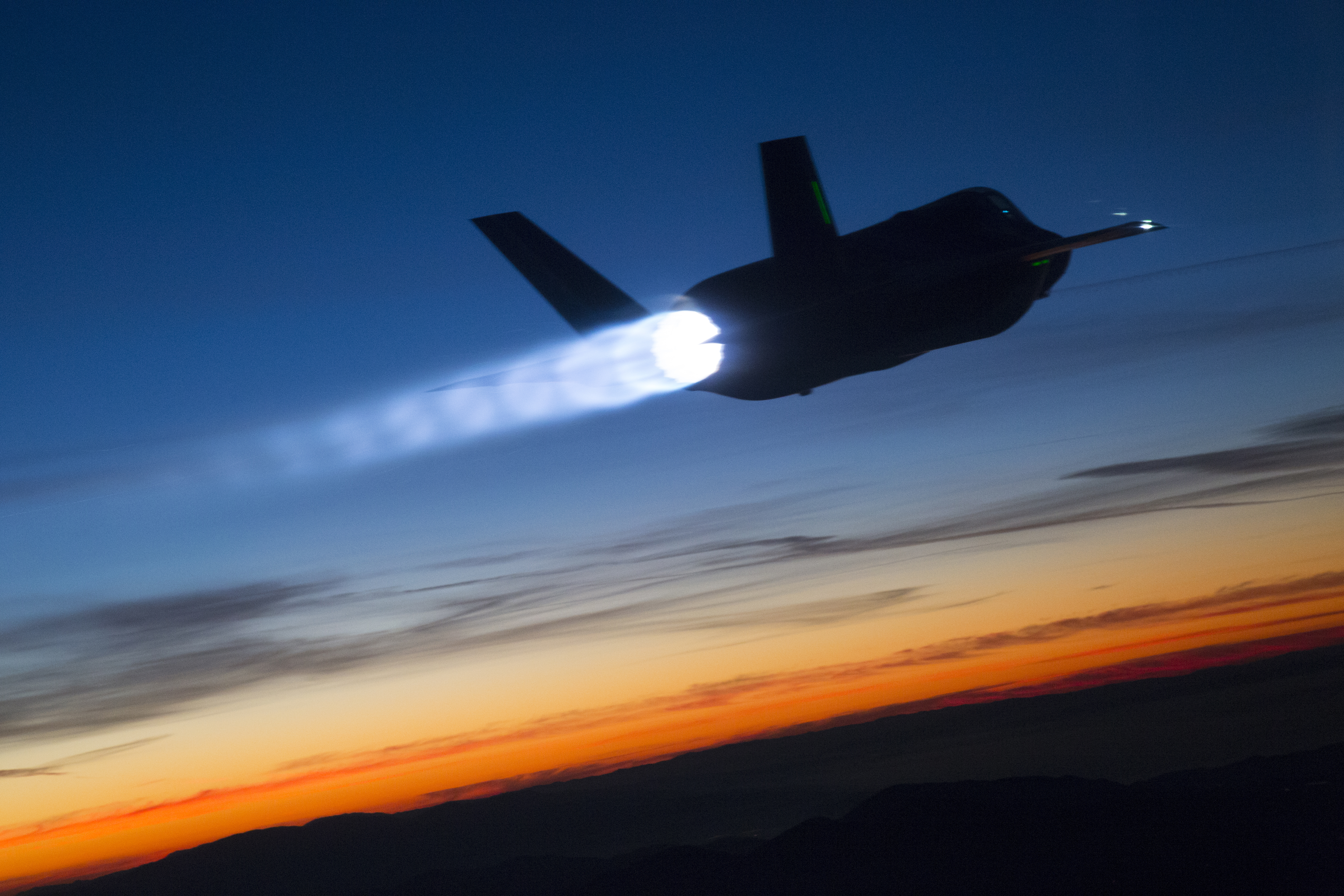
F-35 can jam enemy radar either by APG-81 or ALE-70 or ASQ-239 or MALD-J
http://www.baesystems.com/en/product/an-asq-239-f-35-ew-countermeasure-system
http://www.raytheon.com/capabilities/products/mald/
IR signature and AESA S-UHF band is a hype
1) F-35 have Infrared reduction measuare as well
https://basicsaboutaerodynamicsandavionics.wordpress.com/2016/03/04/stealth-techniques-and-benefits/
2) low frequency radar arenot magic , eventhough all AWACS use low frequency ESA radar they still need to be positioned in certain direction to detect the aircraft
https://www.flightglobal.com/news/articles/eurofighter-boasts-typhoon-reign-over-f-35-345265/
Reporter-What about speed, supercruise, acceleration and turn rates?
Chief of staff-Well we have decent nose pointing ability and fly really well with a 2 ton load out and 2 aams, and no need to disengage since we always have the upper hand
F-35 with internal load accelerated at similar rate as a Su-27 aimed with 4 R-73 , i wouldnt call that slow to be honest , it’s sustain G is around similar to a F-16 with drag index 50
mig-31bmNo,Mig-31 you are deadly wrong on that, Su-35 differs from Su-27 more than Su-30 itself.
i disagree , in terms of airframe shape su27 and su30 is very different , su30 have twin seat , different nose position , some su30 have cannard too while sukhoi themselves said su-27 and su-35 is similar in term of aerodynamics
It carry more fuel of both,
the same can be said about early F-16 and late F-16
has different weight distribution,
the same apply for different version of F-16 too , centre of gravity are very different between various F-16 version , late F-16 also have reinforce airframe and landing gears
different material used,
for internal structure part
no more airbrake
yes su-35 lack the overhead air brake of su-27 , however unless you are about to land that thing will be close hence of little relevance to RCS
Same with the F-16 E&F when compared and the SH to the Hornet.
the different between Su35 and su-27 is exactly similar to the difference between F-16E or F-16I vs early F-16C
by contrast from F-18C to F-18E , the aircraft got bigger , new wing , 2 more pylon , radar blocker for intake , new rectangular intake , different LERX
mig-31bmThat statement alone disqualifies you from further debate..
So a accurate statement disqualifies me from debate ? nice to know that
Please, return to your posting of myriad of useless equations concerning the F-35, instead.
Useless ? , i dont think so , you just mad when iam posting equation because you cant argue again physics
could not care less..
look at the KnAAZ prod. line pics, compare with old Su-27…
since you want to troll so much , here is the picture of them side by side
material wise these airframes are not identical, not even similar..
outer airframe material of 2 aircraft is the same whether you like it or not
can’t see it nowhere
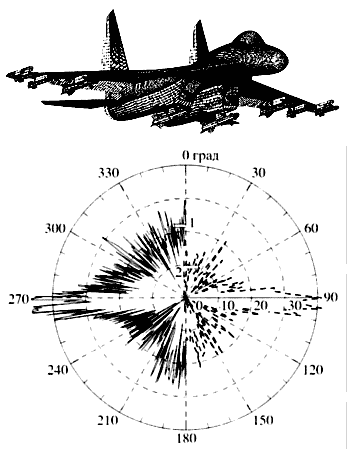
It right infront of your face , come back and look at the graph , on the left is su-27 without RAM , on the right is su-27 with RAM on engine fan blades , pylon , and airframe
Why should I? It’s not the same aircraft.. I rather wait until RCS diagram o the Su-35S is posted.
it is the different version of the same aircraft , with change in the radar , ecm and engine just like the different between F-16C and F-16E
mig-31bm1. The Su-27 and Su-35 do not have the same shape
yes they do, Su-35 is practically a Su-27 with different electronic and engine, the rest is the same, just like F-16C and F-16E
2. The materials ain’t the same
then post a source to support that statement then
, there is no official source indicate that the outer airframe of su-35 use completely different materials from Su-27
3. When RAM does not make any difference, then why bother with it?
RAM does make a difference , that what shown in the graph
4. This graphic is a simulation from an unknown source, for me it has zero face value.
the source have been posted before, you just pretend you didn’t saw it
http://www.wired.com/2009/08/russias-first-kinda-sorta-stealthy-fighters/ ( david Axe, your favorite author remember ? )
http://www.fighter-planes.com/stealth2.htm
and iam sure if article was something bashing the F-35 or praise the Rafale you will believe every single words without even care about the source
mig-31bmThis graphics has no face value. And it’s an Su-27, not Su-35…
If you have better graph then post it or atleast the reason why the graph isnt good , and because Su-27 and Su-35 have same shape and similar material , with RAM paint on they will be have similar RCS. (an example of similar relationship is between f-16C and F-16E )
mig-31bmYou’ve been told on numerous occasions here, and accurately so, that the Su-35S and Su-27 baseline aircraft do NOT have comparable RCS. The Su-35 and Su-34 have gone through airframe modifications and other fixes to reduce RCS.
and what is the source for that ?
apart from RAM , and reflective coating for canopy that can be put on Su-35 ( or any others fighter F-16 included ) to reduce RCS ( which is exactly what shown on the graph i posted ) ,Su-35 airframe have the same shape and practically same material with Su-27 baseline , unless you have some significant modification like a intake radar blocker , new platform agliment ( canted vetical tail ,pylon ) the RCS wont change much
Depends on missile type.
The problem isnt the missiles itself but the fact that Su-35 have quite big RCS , it not like F-16 and Turkey AWACs doesnt have radar themselves
mig-31bmbig aircraft = true…
big RCS = baseless assumption
mig-31bmand the Su-35S’s sheer speed/altitude and radar/missile range superiority means any Turkish/SA aircraft that enter Syrian airspace risk being engaged at will and with little or no warning
Su-35S will enjoy altitude ( missiles range ) and radar power over F-16 but it is unlikely that it will be able to attack without warning ,after all it is a big aircraft with big RCS
mig-31bmtwo more points are stealth design and combat role
the F-35 needs to be stealthy, and was designed mainly for ground attack
F-35 was designed as a multirole fighter , similar to f-16 , f-18 , su-35 ..etc and almost everything flying these day
meaning its EO IR sensors will be limited by the stealth design, and specialised in ground detection
This a baseless assumption , EOTS range performance surpassed OLS-35 significantly
the Su-35 on the other hand has a big EO IR sensor sitting on its nose that’s probably specialised in air combat
The position of the IR sensor doesnt say much about what is it optimized again
i know people think : EOTS is under the nose => at a close enough distance it cant see target flying higher than F-35 => not optimized to AA role .
but
lf F-35 EOTS is under the nose mean it cant see target flying higher than it , then using the same logic FSO , PIRATE , OLS-35 cant see target flying lower than the platform either
think about the actual situation :
let say F-35 flying at altitude of X thousands feet , Su-35 flying at Y thousand feet , if Y is so much bigger than X that Su-35 can stay out of EOTS FoV then F-35 will also stay out of OLS-35 FoV , if we ignore DAS then neither fighter can detect the other on their IRST
By Contrast , if X > Y then Su-35 will always stay within EOTS FoV and F-35 will always stay within OLS-35 FoV , so once again , i dont see a single advantage of having IRST on top of the nose vs below the nose
Another thing to consider , when aircraft fly at high altitude they will have to fly at positive AoA to increased lift available , which mean their nose will pitch up , which mean at high altitude it would be alot easier for F-35 to see aircraft flying higher than it than for Su-35 to detect aircraft that fly at lower altitude
mig-31bmOh my god, someone hold my hands:
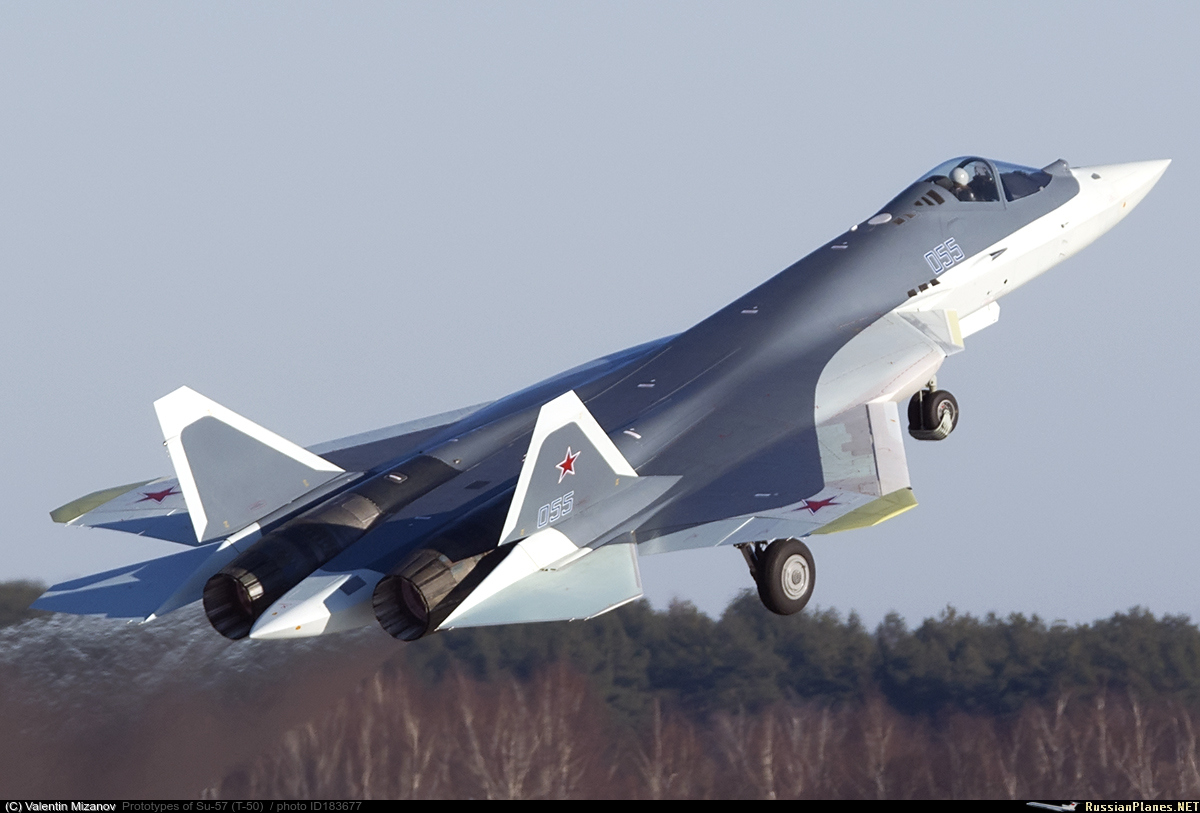
gotta say T-50 is very beautiful with this new color
mig-31bmb) I doubt that Mercurius wants to “feel” a Troll, nevermind feeding one and neither Mig31 or Mercurius are Troll´s
dont bother with OP ,he a real troll , just looks through his post here and you will see 😀 literally a copy of JSR lol
mig-31bmF-22,F-35 are not just stealthy in X band, and IRST wont have 200 km detection range again subsonic fighter frontaly ( the best i saw from EOTS is that it can see a hotel with blurry window from 70 km but that a massive hotel, detecting an F-35 that have similar colour with background is alot harder)
,
Another issue is range and velocity measurement, LRF range are quite limited (20-30 km)
mig-31bmYou’ve been here far too short to know wht everything has been claimed..
Says who? A butthurt clown who has just joined in?
he may be just joined in, but atleast the have reasonable explanation for his statement unlike you who get butt hurt when people ask for evidence of your opinion
mig-31bmsay again?
same for all fighter


mig-31bmThat interesting , thanks you


 Sign In