mig-31bm
So cool, but I think you should add Russian missiles like R-37 and R-77 too
I love to see Mig-31 and R-37 on the graph too, legendary combination
mig-31bmYeah but why not use or explore them for typical “anti aircraft” purpose?
Isn’t E-2 Hawkeye operate in UHF band?
It is mobile, it is used in anti air and it have been sold to Egypt, France, Israel, Japan, Mexico, Singapore and Taiwan.
mig-31bmIt is not bad, it is simply very big for the carried payload. Original Sidewinders had huge tail, they were not modified with the design of the fighter and IMO hindered the later instead.
Isn’t R-74 and R-73 and RVV-MD all have very big tail
That is the only reasonable option but I have seen no hard proof. Paralay has some nice drawings about this.
I haven’t seen Paralay drawing, but if there isn’t a confirmation from Sukhoi about the bay, i have a hard time believe it can carry R-74, i think the missile won’t fit even without the rail, R-74 is wider than AIM-9M
[ATTACH=JSON]{“data-align”:”none”,”data-size”:”large”,”data-attachmentid”:3858692}[/ATTACH]
If you win the war in one day. If not well managed and hidden SAMs are going to keep giving trouble, see Serbia for instance. Modern Buks have ranges of 70 km and are fully mobile. Tors can even shoot on the run. And then the claimed advantages of range go away with external carriage. I know it is a possibility, only say it is not the best.
I don’t think you need a cruise missiles that can fly 550 km to defeat medium range, mobiles SAM such as Buk or Tor-M1.
SPEAR with max range of 140 km is more than adequate to that task, even F-35B can carry 8 internally, it also got an jet engine for low altitude launch.
In future, there is AGM-X, small size and very long range
[ATTACH=JSON]{“data-align”:”none”,”data-size”:”large”,”data-attachmentid”:3858693}[/ATTACH][ATTACH=JSON]{“data-align”:”none”,”data-size”:”large”,”data-attachmentid”:3858694}[/ATTACH]
[ATTACH=JSON]{“data-align”:”none”,”data-size”:”large”,”data-attachmentid”:3858695}[/ATTACH]
It does not mean that is good for the A2A role, remember it will substitute thousands of F-16
F-35 top speed is not as fast as F-16 but it got many others characteristic made up for that
Paralay did some diagrams I used, quite handy. Other calculations I do them myself. F-16 was meant clean
Both twin engine medium fighters, but even then your diagrams show the F-35 is thicker than any of both. Would need to check this carefully in any case.
Mig-29 is supposed to be a light fighter, in the same class as F-16, so an F-35 with roughly similar volume as Mig-29 replace F-16 is ok.
Secondly, fighter don’t go to war empty. In both you and my comparison: F-16, F-18 and Mig-29 carry no weapons, with weapons, they will be bigger, not to mention that Mig-29, F-18, F-16 will probably need 2-3 External fuel tank to match F-35 range.
Cost came from demanding a luxury plane, not from making a layout more appropriate for bigger weapon bays. Su-57 expected to cost way less
it is too early to predict Su-57 cost
Secondly, i don’t think you can design weapons bay for F-35 so that it can carry four JSM internally
Depends on the mission and for instance on the range of your stand-off weapons. There is a big difference in the time of exposure depending on the capabilities of the carrier.
fighter are more than capable of carrying missiles which can out range SAM, but i don’t think any of them can out accelerate or out climb medium/long range SAM
Flying faster will increase IR signature which will increase time of exposure
Yes for big sized ordnance, that is what I am referring since they allow the plane to make big effect and/or stay out of air defences.
Once you carry ordnance which can fly 550 km or even 900 km (MALD-V) , it isn’t very necessary to carry them internally
There are other configurations of course. For instance current MRAAM capacity of Su-57 is 4 probably, even when the bays would potentially have space for 8 similarly sized missiles with fold wings. I assume they will look into this but maybe not!.
If i recall correctly, the current load is 4 MRAAM with potential space for 6 MRAAM, which is quite similar to F-35, J-20
Nevertheless, it is surely not double the load.
[ATTACH=JSON]{“data-align”:”none”,”data-size”:”large”,”data-attachmentid”:3858696}[/ATTACH]
But the airframe will need to remain, which is the core of what I try to say.
The air frame will remain but there are various enhancement that make it less of an issue:
1-ACE engine with 20% more thrust
2- Ramjet air to air missiles
3- DEW
4- Miniature weapons with extreme range: AGM-X, GBU-X, SiAW
These are ballistic targets, I am referring to aerodynamic targets. To intercept a BM you can use anything if you guide it correctly to a point in its trajectory, to intercept an aero target you need to catch it while it manoeuvres, this is substantially more difficult and the base of Russian strategy against US ABM. SM-6’s speed is what, 3.5 M or am I wrong? Will have roubles to intercept manoeuvring 10 M targets, don’t know how you want it to do the magic of approaching the target amidst evasive manoeuvres being notably slower.
I saw different analysis but wouldn’t like to deepen in the off-topic.
Mach 10 is the top velocity when missile travel out of atmosphere (same as all ballistic missile), at that point it can be intercept by SM-3
Once reentry Kinzhal will be slower, furthermore, i would imagine it need to hit its target still, so the direction of travel will eventually come back to the original flight path, and the interceptor missiles will intercept in a head on collision rather than tail chase so i guess that account for something
Bottom line, the maneuvering, hyper sonic target drone like GQM-163, AQM-37, Silver Sparrow could be intercepted, so SM-6 clearly don’t have trouble with target faster than Mach 2.2
Dont know the flight details and test history with Silver Sparrow vs Kinzahl. US armed forces have been clear in regards of not having real defence again hypersonic weapons, dont know where you have seen different info.
What i trying to convey: Kinzhal is class as an air launched ballistic missiles rather than a Scramjet or tactical boost glider, the kind of hypersonic weapon that will give US armed force an issue is boost glider and scram jet missiles
This is probably very confusing but the ability to fly at hypersonic speed but doesn’t give a weapon the same capability as the so called supersonic weapon being developed now.
Most ballistic missiles can fly at hypersonic speed but they can’t do so at the same altitude or flight path as current developing hypersonic weapon.
The maneuvering capability of Kinzhal is likely similar to Pershing II and Blue/ Silver Sparrow aka terminal maneuvering in re entry.
Nothing prevents other MiG-31 to escort them, in a mission destined to sink a CSG a substantial air wing would be created capable of launching and protecting a big salvo
Still notably outranged by R-37M
Ramjet missiles like Meteor can maintain Mach 4 velocity out to about 230 km and Mach 3 out to 270 km when launched from 50kft, M1.3 while Mig-31 launched R-37 can out range that, i think it is a big stretch to assume Mig-31 can engage stealth fighter from such distance.
[ATTACH=JSON]{“data-align”:”none”,”data-size”:”large”,”data-attachmentid”:3858697}[/ATTACH]
They say 2 M class so we dont know what is the true max speed. Barring other limitations, the propulsion is there to go very fast.
Range, speed and acceleration are important in order to reach a given interception point at the right time. On a CAP long from the fleet the distances to cover would be very big and Su-57 would be massively more apt than F-35 in that regard as far as I can see.
The top speed goal of Su-57 was originally Mach 2.35, but this was reduced to Mach 2.1 and then to Mach 2, as i heard the main reason for the difference is that the T-50 uses more composite materials in its primary structure than the Su-35S, which makes heavy use of titanium. The propulsion could bring higher speed, but i don’t think it matter if the structure of the aircraft can’t hold up.
In addition, when you need to engage a strike group 2000-3000 km away from your carrier, i don’t think you can afford to fly as fast as possible there, the distance is enormous and unless you fly subsonic, you won’t make it.
mig-31bmIt depends on number of factors to intercept a hypersonic weapons , The Trajectory it travels , The G it can pull and coversely can the SAM keep up with it , Jamming and Counter Jamming carried by the Missile and in battle environment other factors will come into play.
No two targets are same and else every SAM would be intercepting all the aircraft that flies.
In Theory and in many test most BM system gets intercepted by ABM that travels at very high speed but that with the benefit of having what to see , where to see and optimum intercept point is calculated , No decoys are used to best I know in these test or jamming counter jamming comes into play .
The variables are too many to play with.
AQM-37 was made to simulate the kinematic capability of Kh-22
GQM-163 was made to simulate the kinematic capability of SS-N-22 , SS-N-19 Shipwreck,SS-N-26 Yakhont
Silver/Blue/Black Sparrow was made to simulate the kinematic capability of short-medium range ballistic missiles.
Bottom line, max speed of intercepted aero target for SM-6 is not 800m/s. It can intercept target with much higher speed and have done so. US doesn’t stay still while their adversary develop supersonic missiles.
mig-31bmMy only point is that side WB of the F-22 are huge to carry one single SRAAM and it is very hard to discuss this as a matter of fact, just look for pictures for yourself if you disagree. Making a 5G to carry air inside is not the best investment.
As i said, they made the F-22 bay like that to have the benefit of smooth surface, which is good for stealth fighter, and J-20 uses very similar bay, so i don’t think it is as bad as you claimed
By the way, did Sukhoi confirm the wing root bay on Su-57 is for missiles ?, it appears too small for R-73 in my opinion
[ATTACH=JSON]{“alt”:”Click image for larger version Name:t4.jpg Views:t0 Size:t149.9 KB ID:t3858419″,”data-align”:”none”,”data-attachmentid”:”3858419″,”data-size”:”full”}[/ATTACH]
I was only quoting the standard strike config as demanded in the requirements. If F-35 was a light fighter it would be quite ok, for a plane more than 15 tons empty weight it is not impressive indeed
That the original requirement, now time have passed and it could carry various different kind of weapons
It is also the standard for first day strike, later in the conflict, you can carry external weapons also
Let’s say similar. Su-57 appears to have bigger surface while F-22’s fuselage is more boxy and probably has bigger internal volume. Area ruling in Su-57 is very apparent, in F-22 it is not and that adds volume.
The same applies to F-35. Look at the picture you posted, the F-35’s fuselage is quite thick and boxy too, but it is not small and empty weight just confirms it. As said it is heavier than a 4G heavy fighter. It is compact around the CoG and that is probably very good to give authority to the control surfaces and get fast turning, but it is bad for aero, specially in supersonic flight.
F-35 is not very good at supersonic flight because that was not the main requirement, therefore it has less wing sweep, high bypass ratio engine
F-22 supersonic capability is good even if you think the design doesn’t follow area ruling
Cross-sectional area of the F-35 is between 8 and 8.5 sqm as said, F-35C maybe more, F-22 and Su-57 are both below 9.5 sqm. F-16 is <5 sqm. F-35 is hence quite close to being a heavy fighter in fact.
Where exactly do you get these number from? is that an F-16 with or without targeting pod, external fuel and weapons?
F-35 size is quite close to Mig-29 and F-18 in fact.
[ATTACH=JSON]{“alt”:”Click image for larger version Name:t7.PNG Views:t0 Size:t160.6 KB ID:t3858418″,”data-align”:”none”,”data-attachmentid”:”3858418″,”data-size”:”full”}[/ATTACH]
F-22 should have been designed multirole
F-22 is already extremely expensive, make it more expensive will push thing in a bad direction.
F-35 embodies too many contradictions IMHO. Probably its avionics are a big jump compared to previous models and it has many technologies that are quite interesting. But the airframe as I have explained lacks and that is huge problem in A2A role and also in A2G, because it will not be fast and agile enough to stay away of SAMs. There is a huge difference SAMs NEZ between supercruising, high altitude attack and subsonic way lower.
I don’t think modern SAM which can easily intercept ballistic missiles or SR-71 will care particularly about whether the aircraft is supercruise or not, once it has detected them and 1-2 degrees extra degrees/second turn rate won’t be of much use if 15-20 SAM comming your way.
supersonic flight at high altitude has its own merits such as longer weapons range, reduce NEZ, but it also come at the cost of easier detection (infrared) and less maneuverable (thin air)
And the payload is not impressive, considering the idea is to carry the ordnance internally.
I am not saying that F-35 is crap. Bigger plane will be more expensive but if is 30% bigger and still has the same avionics, it wont be 30% more expensive. And if it can carry twice the ordnance twice as fast, then it is 4 times more effective, so far less units are needed. F-16 was exactly the right approach IMO, F-35 is not.
You keep referring bigger plane than F-35 as able to carry twice the ordinance, i don’t think that is the case in many situation
Let examine some 5 gen aircraft:
In internal configuration:
A2A
J-20 can carry 4 AMRAAM + 2 SRAAM.
F-22 can carry 6 AMRAAM + 2 SRAAM.
Su-57 can carry 6 AMRAAM + 2 SRAAM.
F-35 can carry 6 AMRAAM (thanks to dual internal rack in block 4)
A2G
J-20 currently can’t carry bombs or cruise missiles, and looking at its bay, i don’t think it will carry more than F-35
F-22 can carry 8 SDB + 2 AMRAAM + 2 SRAAM.
F-35 can carry 8 SDB / SPEAR or 2 JSM / AARGM-ER + 2 AMRAAM.
Su-57 can carry 4 Kh-59MK2 / Kh-58UShK + 2 SRAAM.
So while there is that specific case with ultra long range cruise missiles when Su-57 can carry 4 and F-35 limited to 2, the rest of the load out quantity, the different isn’t always big, in term of A2G internal carry F-35 does better than F-22 and J-20 and J-31
SA is crucial and an obvious new filed of development enabled by the development of electronics, who would deny that? Absolutely everybody is working on this, that US pilots and officials in the customary interviews tirelessly flatter F-35’s informational capabilities does not mean that they are the only ones working on this. MiG-31 was networked 30 years ago inside the first and by far the best IADS for which networking is the absolute essence, so probably something has been learnt and probably Su-57 is also no slouch in this regard. Chinese are no idiots either. With over-hyping SA I mean to say all traditional fighter requirements are not needed anymore and you only need a big computer and neglect the rest. This is just a poor sales line from LM and the ever MIC-supporting media to turn F-35s problems into deliberated design choices. And it will not avoid other manufacturers fielding equally IT-capable platforms that are much better dynamically
I don’t think the networking, sensor fusion of Mig-31 can be compare to the current level of 5 gen aircraft and there are plenty of so called problems of F-35 are design choice.
True. Also it losses lots of internal space and aero due to that. F119 as way lower BPR but it has flat nozzles. Which BTW in A/B mode glow in IR like the Halley comet.
High bypass engine are more fuel efficient that will make up for bigger size
There is no jet engine which wouldn’t glow in AB mode
This hiding of the nozzle works only from certain beam sectors but it does not help when egressing from an attack so I am not so convinced about it, given it is negative in many other important regards.
You can’t expect a design to be efficient in all situation.
Maybe but that is not the way to evaluate the merits of the design. It is a low resistance path if you are lucky enough that not so many other 5G are available against which yours will be compared, but it is not fair and not representative of the real threat to be faced for most of the operative life of the new plane.
War is never fair, and once these 5 gen from others countries produced in large number, F-35 will have various upgrade from its current form.
Forget it. Max speed of intercepted aero target for SM-6 is 800 m/s, Kinzhal is like 3 km/s
That is totally wrong.
SM-6 had intercepted medium-range ballistic missile and short range ballistic missiles in atmosphere since 2016 and the capability have been developed since 2012
The U.S. Missile Defense Agency and the U.S. Navy have successfully intercepted a surrogate medium-range ballistic missile (MRBM) with a pair of Standard Missile-6 (SM-6) surface-to-air missiles during a test off the coast of Hawaii. This is the second time the SM-6 has knocked down an MRBM-type weapon and the third time it has hit a ballistic missile of any kind. It also comes as concerns about ballistic missile programs in North Korea and elsewhere around the world are growing.
As part of the continued development of the complete Aegis Ballistic Missile Defense (BMD) system, U.S. military personnel launched the mock MRBM from the Pacific Missile Range Facility on Kauai, Hawaii early on Aug. 30, 2017. The Navy’s Arleigh Burke-class destroyer USS John Paul Jones subsequently tracked the missile using its on board AN/SPY-1 radar and then fired two SM-6s at it during the experiment, also known as Flight Test Standard Missile-27 Event 2 (FTM-27 E2).
“We are working closely with the fleet to develop this important new capability, and this was a key milestone in giving our Aegis BMD ships an enhanced capability to defeat ballistic missiles in their terminal phase,” MDA Director U.S. Air Force Lieutenant General Sam Greaves said in a statement. “We will continue developing ballistic missile defense technologies to stay ahead of the threat as it evolves.”
In August 2015, an SM-6 intercepted a short-range ballistic missile target. Then, in December 2016, one of the missiles successfully destroyed a surrogate MRBM for the first time.
The overall concept is for the SM-6 to complement the Standard Missile-3 (SM-3), which is a dedicated ballistic missile interceptor. Also known as the RIM-161A, SM-3 has the ability to engage intermediate range ballistic missiles (IRBM), as well as hit shorter-ranged ballistic missiles in the middle of their flight, owing to its own higher altitude performance. This is called mid-course intercept capability.
https://www.thedrive.com/the-war-zon…s-scoring-hits
These slides was published in January 2012
[ATTACH=JSON]{“alt”:”Click image for larger version Name:t1.PNG Views:t0 Size:t191.5 KB ID:t3858420″,”data-align”:”none”,”data-attachmentid”:”3858420″,”data-size”:”full”}[/ATTACH]
[ATTACH=JSON]{“alt”:”Click image for larger version Name:t2.jpg Views:t0 Size:t105.5 KB ID:t3858421″,”data-align”:”none”,”data-attachmentid”:”3858421″,”data-size”:”full”}[/ATTACH]
[ATTACH=JSON]{“alt”:”Click image for larger version Name:t3.jpg Views:t0 Size:t113.5 KB ID:t3858422″,”data-align”:”none”,”data-attachmentid”:”3858422″,”data-size”:”full”}[/ATTACH]
SM-6 will be improved, but today it would struggle against Onyx (sea skimmer) and even more against Kh-32 (Mach 5)
I don’t think so, US can already shot down GQM-163 ( Mach 2.6 sea skimming with terminal maneuver) and AQM-37 (Mach 5) with their SM-2 missiles.
US officials have repeated several times they cannot stop hypersonic weapons currently, they are scrambling to address this capability gap asap.
I don’t think Kinzhal is a hyper sonic weapon in the same sense as HTV-2, AHW, Avangard, TBG (glider vehicle ) or HSSW, ARRW, HAWC (ramjet cruise missiles)
Kinzhal is an air launched ballistic missile, which makes it very similar to Silver and Blue Sparrow launched by F-15 as target practice.
Even though both hyper sonic weapon and ballistic missiles can fly at hyper-sonic speed, the hypersonic weapon are harder to intercept because they fly at lower altitude and therefore give shorter reaction time
[ATTACH=JSON]{“alt”:”Click image for larger version Name:t6a00d8341c630a53ef01543471ce00970c-640wi.jpg Views:t0 Size:t95.8 KB ID:t3858423″,”data-align”:”none”,”data-attachmentid”:”3858423″,”data-size”:”full”}[/ATTACH][ATTACH=JSON]{“alt”:”Click image for larger version Name:tHyper-Tower-Launch_1.jpg Views:t0 Size:t49.0 KB ID:t3858424″,”data-align”:”none”,”data-attachmentid”:”3858424″,”data-size”:”full”}[/ATTACH]
Combat radius for F-35 is something like 1400 km, currently it would be out of range. USN tries to get refuelling in the short term to address this issue. But again, they would face massively faster carriers, probably supported by more MiG-31Ks and R-37Ms… not good for F-35s armed with AMRAAMs.
Mig-31K can’t carry air to air missiles they removed APU so that it can carry ALBM
F-35 fly slower than Su-57, but it can be equipped with Meteor or JPNAAM both give adequate range for stealth aircraft thanks to their ramjet engine
[ATTACH=JSON]{“alt”:”Click image for larger version Name:t1.JPG Views:t0 Size:t48.7 KB ID:t3858427″,”data-align”:”none”,”data-attachmentid”:”3858427″,”data-size”:”full”}[/ATTACH]
[ATTACH=JSON]{“alt”:”Click image for larger version Name:tFig8.JPG Views:t0 Size:t49.3 KB ID:t3858445″,”data-align”:”none”,”data-attachmentid”:”3858445″,”data-size”:”full”}[/ATTACH]
[ATTACH=JSON]{“alt”:”Click image for larger version Name:tFig9.JPG Views:t0 Size:t49.1 KB ID:t3858446″,”data-align”:”none”,”data-attachmentid”:”3858446″,”data-size”:”full”}[/ATTACH]
We know little in regards of max speed for Su-57. I read the requirement was reduced to 2 M in order to avoid need for reinforcing the keels, but then it would have a max speed little higher than cruising speed. It is very well shaped for supersonic flight, 2nd stage engines will have the highest specific thrust and big intakes with adjustable ramps… it looks like it could be in fact quite fast from that perspective but there may be other limiting factors. It can carry long ranged AAMs and fly higher, faster and further than F-35 so it would be better against MiG-31, which is on a class of its own and is so hard to engage. Su-57 was designed considering requirements of an interceptor too, BTW.
F-22 top speed is only a little higher than cruising speed as well.
It is the placard limit. The same case on F-35 as you can see its envelope cut off abrupt on the right hand side.
Having said that I don’t think the higher speed and acceleration of Su-57 will make it any different from F-35 when intercept Mig-31K launching Kinzhal from 2000-3000 km away. Su-57 combat radius is 1700 km?
mig-31bmTrue, unlike those in F-35.
True, even though, they blend the edge on F-35 bumps to minimize edge scattering, it is better to have no bumps at all.
Are they going into service in immediate future? If not better to leave them outside the discussion. In any case the bays would need modifications and F-22 seems pretty much a frozen design but for FW updates and things like that.
Is AIM-9X block III going to retire in immediate future? if not then there is no reason to think F-22 side bay is a handicapped and good for nothing. When you talk about a point when AIM-9 is retired then at that point it is likely that SACM, MSDN have been in service for a while
I said 2 JDAM + 2 AMRAAM, that is true I think.
But that isn’t the only option for F-35.
You fixate on the least impressive option.
Bigger than F-22 in what sense? We need to see empty weight to know this. Claimed data show it would be lighter, maybe we get some reliable info in November and maybe the Su-57E is not a monkey model too different in that regard from domestic version.
bigger in volume, or at least very similar in size.
F-35 is much smaller than both.
Good picture. You are touching many issues here that I cannot really agree:
> It is ok to make F-35 light as a replacement of light fighters. X-35 was below 10 tones, F-35C is above 15 tonnes. Original engine was a version of F119 and now we have F135. The plane is an overgrown light fighter that tried to become capable for heavy strike, besides having the additional, very difficult requirement of being STOVL. That is a bad idea and is showing throughout the program. F-22 should have been made with multirole capability from the onset and carrier capable, as the Su-57 is. F-35 could have been something like a stealth F-16 with engine commonality. Now the F-22 is a niche plane with little use and closed production lines, which render the fleet very vulnerable and prevent updates and new versions. While F-35 tries to be a jack of all trades, which it can clearly not. This was badly planed, even someone from the outside can see it.
F-22A is 5 tons heavier than YF-22 too. Production planes have many equipment that are not on a prototype
F-22 is already very expensive and produced in small number, making it multirole will push the cost even higher and likely result in the cancellation of the program.
Why is F-35 not a jack of all trade?
> Cost issue. The cost of the F-35 as a program is extreme. The cost of the plane is not cheap at all, it has broken all previsions many times. It has been redesigned many times too, with very big delays and resulting in technical issues, non-compliance of requirements and complications. Today cost of the plane is not really to be measured in dollars per kilogram anymore so the obsession with making it small is pointless. Avionics and high-tech gadgets are the main cost driver, and F-35 has them all, partly I guess in order to compensate for poor kinematic performance (and hence all the over-hyping of the SA and networked fighting etc. we hear which are elements unrelated to the kinematic performance of the platform and which will be included by any mature 5G fighter due to short development times of SW compared to airframes). The insistence in making the plane small (in the ball park of the F-16 from external dimensions) but adding strike and STOVL requirements has created a plane which is very thick and very heavy for its footprint. This is not good for a fighter. F-16’s cross sectional is below 5 square meters IIRC, F-35 is close to 8.5. Now imagine its fineness ratio and how harder is it to make this plane flight supersonic compared to a F-16.
All thing equal, a bigger plane will be more expensive, not to go into detail but F-35 isn’t the only program which suffer delay or technical issue.
LM is not the only one hyping the SA and networked fighting, i can recalled not long ago, Su-57 said something along the line.
> F-35 has a very big and hot engine, I would be surprised if its IR signature is much better than that of a F-22 for instance.
F-35 has a big but also a high bypass engine, high bypass engine generally has less infrared radiance and it has good masking of the nozzle thanks to vertical tails
[ATTACH=JSON]{“data-align”:”none”,”data-size”:”large”,”data-attachmentid”:3858315}[/ATTACH][ATTACH=JSON]{“data-align”:”none”,”data-size”:”large”,”data-attachmentid”:3858316}[/ATTACH]
ACE will reduce infrared signature further thanks to the third stream
[ATTACH=JSON]{“data-align”:”none”,”data-size”:”large”,”data-attachmentid”:3858317}[/ATTACH]
https://www.youtube.com/watch?v=T3eudKVbdG0
It shouldn’t need to carry so much fuel if was lighter to start with. And IRST doe not make the F-35C twice as heavy as a F-16 does it??
No, it was too high (especially with a reinforced structure) and therefore they made the wing bigger. Which means more drag and even more weight. Of course it is an issue, these design compromises degrade the capability of the plane.
You got that in reverse, it is heavier because it need to carry a load more fuel and equipment, how often do you see an aircraft that is lighter but can carry 3 times the amount of fuel?, i don’t think that ever happen
When designing a plane you should measure it against the rivals of the same generations, not against legacy fighters as JSF program constantly does.
If your enemy have 500 4 generation aircraft and 10 5 generation aircraft, then on the battlefield, you most likely face the 4 gen.
That is the reality of war.
Now exactly none, but all indicates J-31 and Su-57 are carrier compatible
It is questionable if China will ever procure J-31 or if it ever have longer range or load out than F-35
Current Su-57 can’t land on carrier and we don’t know the extent of the modification that we need to make it carrier capable.
Fighters range is longer than that of SAMs, I think this is clear. And if SAMs were enough, why to create the carriers? Air wing forms the outer defensive ring of the fleet
Fighter range is longer than SAM indeed, but when anti ship missiles get close to your carrier (that where acceleration of aircraft is most necessary), SAM will offer better reaction time. SAM radar horizon is more limited but cooperation with F-35 can negate that.
Check your data here, this is not really correct I think. Among other issues
> SM-3 is of no use against Kinzhal, SM-6 in all probability incapable of intercepting it.
> Range of F-35 is not enough to make a forward deployed CAP to stop the MiG before launch
> Speed overmatch of the MiG is so huge that F-35 cannot hope to intercept it unless it is exactly at the point where the MiG is heading to. Especially considering the perimeter to be covered, determined by the range of the Kinzhal..
> I don’t see how SM-6 incapable of intercepting Kinzhal, US has very similar target system called Sparrow
[ATTACH=JSON]{“data-align”:”none”,”data-size”:”large”,”data-attachmentid”:3858318}[/ATTACH][ATTACH=JSON]{“data-align”:”none”,”data-size”:”large”,”data-attachmentid”:3858319}[/ATTACH]
> Range of F-35 might be enough or not, depend on what is the real range of Kinzhal is 1000 km or 3000 km, or some where in between, if the range is 3000 km, i can’t see any fighter capable of intercepting the carrier before they launch missile. Speed over match between Mig-31 and Su-57 is also too huge for Su-57 to have any hope of intercept it.
mig-31bmI think what he is saying is pretty simple. Su-57 can carry 4 Kh-59 sized weapons internally. The F-35 does not have a similar internal capacity, nor will it ever.
For similar extreme long range cruise missiles (jsm,nsm,jsow-er,mald-v and so on) F-35 can only carry carry 2.
But that isn’t because F-35 bay less organized, F-35 is just much smaller than Su-57.
mig-31bmWhat I mean considers not only current efforts but rather the whole history of development. Side bays on the F-22 are example of really bad use of space. Bays on the F-35 increased big time the volume and cross sectional area of the plane (plus creating many far from ideal curve surfaces at the belly of the plane) and yet they can only carry 2 units of big sized ordnance and 2 x AMRAAM, while leaving quite a bit of unused space. Wing root bays or Kh-59MK2 on the Su-57 are an example of well organized layout for maximum use of the space and coordination between the development of the fighter and its weapons. New big sized Russian missiles are almost all 4.2 m long and 0.4 m in diameter, that shows an structured approach that not only considers the plane but also the weapons system as a whole. It is logical that US will try to make the most of the space in their fighters, SDB is an example of it. But a plane like F-22 will be left with huge side bays that only carry 2 x SRAAMs and that is a handicap during its whole operating life, even when the Sidewinders are not any more in service.
1-Side bays of F-22 has their own merits, it is bigger than Su-57 wing root bay, but it make a smooth surface. blend into the aircraft body, for stealth aircraft, the fewer corners and discontinuities the better, unless they will never use short range missiles again, you can’t say it will be a handicapped once AIM-9 retired, there are SACM, MSDN that could be candidate to be carried there.
2- Current F-35 carry 4 AMRAAM, block 4-5 F-35 can carry 6 AMRAAM, so saying that F-35 bays can only carry 2 AMRAAM is wrong. There are others use such as carrying 8 small cruise missiles.
3- I don’t think you can claim the layout of Kh-59 inside PAK-FA is more well organized than the layout of SDB, JAGM-F or SPEAR
That is why it is a bad decision to make it the preferred strike fighter too. Su-57 is multirole per definition, using the size of its airframe for greatest effectiveness. A bit more size on Su-57 means in practice twice the internal strike ordnance. So that is definitely not a plus in F-35’s capabilities nor an excuse for bad planing.
Su-57 is not only a bit bigger than F-35, Su-57 is bigger than F-22 and F-22 is already bigger than F-35.
It is not a bad decision to make F-35 small as it is supposed to replace medium , small multi role aircraft such as F-16, F-18, AV-8B, and they don’t want it to be extremely expensive, and it need to be able to take off from a carrier, and the B version must be able to take off from a pocket carrier and land vertically. It is a decision based on strategic and economical stand point. A big aircraft is cool and all but in practical, if they have to choose between carry 2 more cruise missiles, longer range or better integrated with current aircraft craft carrier fleet and cheaper, iam not surprise that they chosen the second options.
Being small have another small added benefit of smaller visual and thermal signatures.
[ATTACH=JSON]{“alt”:”Click image for larger version Name:tF-35 size.jpg Views:t0 Size:t58.0 KB ID:t3858063″,”data-align”:”none”,”data-attachmentid”:”3858063″,”data-size”:”full”}[/ATTACH]
Because it weights more than a F-15E and two tons more than the A version. A fighter with the rough length of an F-16 that is almost twice as heavy. Check TWR or max overload for the plane, not brilliant either.
F-35C carry 3 times the internal fuel load of F-16, and has internal IRST, jamming system and can carry 2000 lbs JDAM internally and has re-enforced structure to land on a carrier does it come as a big surprise that it will be heavier than F-16?
What is the other carrier capable fighter with similar internal fuel load but much lighter? I think there is none.
Max recommended overload of 7.5G is similar to F-18C, F-18E/F, Mig-29A, F-15C, Su-27, better than F-14D, F-14C these fighter still do fine when they dogfight with 9G fighters like F-16.
Max TWR will change with your weight and henceforth will be affected by how much fuel it has left
You can check min speeds for different naval fighters, F-35C is not even close to being the best in that regard despite its contemporary design. The faster it lands the harder the catch. And therefore, the more the structure needs to be reinforced, which brings the need of bigger wings and more weight in a cycle that is little beneficial for the plane’s overall performance.
I have never said it is the best, but what is the difference anyway? what is the approach speed of F-18 or Mig-35?
If they thought the approach speed needed to be lower, they could have reduce the wing sweep or further enlarger the wing, i don’t see they doing that, so i don’t think it is a problem at all
Completely a non issue.
May agree for a bomb truck, but F-35, despite its weight, does not have the airframe size to be one. The rivals of F-35 are not the 4G planes all around, are the newer 5G examples. All of them fly on internal fuel, and in fact the Flankers have been flying essentially only on internal fuel for decades, so this is hardly an F-35 innovation.
I don’t see why you can consider F-35 not have the air frame size to be a bomb truck. F-16, F-18, AV-8B has even smaller airframe and they are frequently uses in that role. There are plenty of small miniature weapons recently being introduced and underdevelopment.
The rival of F-35 are both 4G and 5G, because reality is not a video game where you level up and the enemy only get more and more powerful. Cost is an important factor. As of now and near future, the main fighting fighters of most countries won’t be 5G.
In addition, what is the other 5Gen fighter that currently can take off from carrier? there isn’t any
Not going to buy such talking points when related to A2A role, they are nothing but poor Western media excuses for the less than stellar kinetic performance of the F-35. F-22 is praised exactly for being unlike the F-35C, should USAF replace it with the F-35 or rather keep using it as the “hi” part of the mix? Speed, especially if sustained with supercruising, long range, TWR, acceleration, flight altitude are all relevant for success combating other fighters, be it BVR or WVR. Also to confront SAMs by the way but let’s leave that aside.
Do you submit the F-35s are only going to fight under the umbrella of USN SAMs? Well, I thought it was the fleet’s fighters that were going to protect the vessels and not the other way around
It is not an excuse but how they plan to join force and make the most of F-35C capability, they cooperate with the fleet, both protect the other.
F-22 has its own niche, but for a carrier fleet wise, F-35C is more useful, because its combat radius represent how far the carrier can strike, it is better to keep the carrier at longer distance.
What would USN do if a MiG-31K wing comes in their direction with Kinzhals onboard, send the fighters beyond the range of SAM cover to try an intercept of the missile carrier before it launches or run to the lifeboats? BTW the development roadmap of the USN points to tankers and other assets to allow CAP missions and AD at each time longer ranges from the fleet.
It depends, they either already loitering at long range to create a barrier where Mig-31K must past through to launch their missiles (Mig-31 can’t take off from carrier, so this could be plan when you approach a land mass) or they could aid AEGIS destroyer in guiding SM-3, SM-6 to intercept Kinzhal or they could use their jammer or confuse Kinzhal, several of options none of with involved take off and fly like hell toward the direction where Mig-31K is detected. This is in truth, not a good case for benefit of super cruising or acceleration, your carrier fighter won’t super cruise for 2000 or 3000 km, and a dozens second difference in acceleration won’t make a big deal at such extreme distance.
When will all those missiles be operational? As to the SDBs, are you suggesting they have the same effect or range that a Kh-59MK2? They are slow, weak, short ranged, easy to jam and to shoot down and have a small warhead, which means in countermeasure-intensive environments they may be way less effective. But of course they are a creative yet very expensive solution for the lack of internal carriage capacity and for permissive environments they can be a good idea. Still the
I have not at any point said SDBs had the same range or destructive warhead as Kh-59MK2, but you are acting as if for all strike missions, anything lesser than Kh-59MK2 is not adequate
In addition, Kh-59MK2 is in the same/similar class as JSM, JSOW-ER , SOM-J, LARSM, F-35 can carry 2 internally, Su-57 can carry 2 more, however, with such extreme range, is internal carrier always a must ?
Your others assumption isn’t correct:
Speed vs Kh-59MK2 : SPEAR is similar, GBU-53 is slower, JAGM-F is faster, SACM is significantly faster.
RCS vs Kh-59MK2 : SPEAR, JAGM-F, GBU-53, SACM should all have smaller RCS as they are much smaller
Infrared signature vs Kh-59MK2 : GBU-53 will have smallest IR signature because it don’t have an engine, SPEAR will have smaller IR signature too because it is smaller, JAGM and SACM could have higher IR signature because they use rocket engine.
There is nothing to conclude that they will be shot down easier if not the opposite
Easier to Jam??? : How are they easier to Jam? GBU-53, JAGM-F, SPEAR all have tri-mode seeker of IIR, MMW radar, SAL along with data link, GPS and INS
F-35 would carry half as many as a Su-57 would carry similar weapons, if Russia was interested in developing them
That is a big if, and i am very skeptical if at any point, it is possible for Su-57 to carry 16 SDB equivalent or 12 AMRAAM equivalent in its internal weapon bay.
mig-31bmWhat? F-35 is TRUE VLO and does not need jamming, escort nor stand-off weapons, they could drop a free fall bomb on top of Putin’s head at the Kremlin with impunity!
I know there are missiles being developed in the US. But there has not been the same level of disciplined, harmonized development of platform and weapons as we see for PAK-FA. And that means bad use of the available space and negative effects on the airframe. Now they seem to have realised they need something better in order to compensate the scarce internal space in F-35, especially when you realize a Su-57 will be capable of carrying twice the amount of big A2G ordnance internally.
As to carrier version:
1) F-35C needed quite big modifications to the airframe to be carrier ready. Still its parameters are far from ideal, slow and overweight with high approach speed and big footprint. All that to carry two bombs and be kinetically handicapped in AD role. Not especially brilliant if you ask me.
2) Manufacturer has confirmed the adaptation of Su-57 for carrier operation is feasible. We know the plane is STOL by itself (half landing run than Su-35) and it was even reported that it can perform a high AoA landing mode.
3) Projecting power is crucial for US. Russia does not need to create weapons or size their military to reflect US needs. And in case of attack to territories of near-peer rivals, you know the effectiveness of carriers is more than questionable.
It is impossible to say whether the new missiles program of US or Russia is more hamonized or disciplied, whatever that supposed to mean
F-35 is smaller because it was supposed to replace small and medium size fighters, it was supposed to be “cheap” so it can be produced in large number, it was supposed to take off from carrier and so on.
1) F-35C need enlarge wing and hook but the rest is quite similar to others version of F-35 , why do you think F-35C is overweight? what are the approach speed of others carrier aircraft in the same condition (same bombs load) for comparision?.
F-35C is not fast, but it can fly far with internal fuel, for a carrier multirole fighter, combat radius is more important than speed, because it is also the strike range of the carrier. F-35C can guided missiles launched by AEGIS destroyers so it can afford to fly slow.
It is wrong to say F-35C can only carry 2 bombs, if you switch GBU-31 to GBU-39 or GBU-53 then the number is 8 smart bombs internally, if you switch to SPEAR, JAGM-F then the number is 8 missiles internally, if you switch to SACM then the number is 12 missiles internally. It depends on what you load it with
2) It could be feasible for a future version of PAK-FA to land on carrier, as of now, it isn’t a carrier aircraft, and you can’t be sure that it won’t require big modification like you said in case of F-35.
3) In case of attacking territories of of near pear rival, an aircraft carrier is still better than any other kind of surface ship both in destructive power and survivability. Ballistic missiles submarine is a rare exception but who mad enough to use them?
mig-31bmSerial Production of Russia’s Su-57 Stealth Fighter Delayed Until at Least 2020 Russia will not buy the Su-57 in serial configuration before 2020, according to a Russian aviation industry source.
The Sukhoi Su-57 fighter aircraft, Russia’s first purported indigenously designed and built fifth-generation stealth fighter jet, will not enter serial production before 2020, according to a Russian military aviation industry source.
“In 2020, we plan to sign the second contract to manufacture and deliver 13 Su-57 fighter jets, some of them equipped with the second-stage engines,” the source was quoted as saying by TASS news agency in a January 16 report. “The preliminary time frame for the new contract is five years.”
Two aircraft are expected to be delivered to the Russian Air Force in 2019 and 2020 respectively. “In line with the contract signed in 2018, one serial Su-57 jet with first-stage engines will be delivered to the [Russian] Aerospace Forces this year, the other aircraft featuring the same type of engine – in 2020,” the source said.
Initially, Russia’s Ministry of Defense (MoD) expected to sign a contract with United Aircraft Corporation (UAC), a major Russian aerospace and defense company, for the procurement of an initial pre-production batch of 12 Su-57s by the end of 2018. (Earlier reports that the MoD has signed a contract with UAC for such a pre-production batch of 12 Su-57 fighter jets in 2018 appear to have been false.)
The MoD also announced in 2018 that it will not mass-produce the Su-57.
There are currently 10 Su-57 prototypes undergoing various stages testing and evaluation. It remains unclear whether the Su-57 can genuinely be classified a fifth-generation fighter jet in its current configuration. For example, nine out of 10 Su-57 prototypes are equipped with a derivative of the Russian-made Saturn AL-41F1S engine, the AL-41F1, an older aircraft engine also installed on the Sukhoi Su-35S Flanker-E, and not with
The aircraft’s sensor suite and other mission systems also continue to suffer from developmental issues. noted in December 2017: [INDENT][I]The Su-57 will be capable of carrying some of Russia’s most advanced weapons systems including new beyond-visual-range air-to-air missiles and air-to-ground missiles including the extended range Kh-35UE tactical cruise missile as well as the nuclear-capable BrahMos-A supersonic cruise missile.[/I
However, the price for carrying such a heavy weapons load will likely be reduced stealth capabilities (…) Both the BrahMos-A and KH-35UE do not fit into the aircraft’s internal weapon bay and consequently will need to be carried under the aircraft’s wings in a transport launch canister, which will reduce the fighter jet’s stealthiness.[/INDENT]
Notably, the Su-57 also lacks other high-end low-observable design features. As such, it should not be compared with fifth-generation aircraft such as Lockheed Martin’s F-22 Raptor.
PAK-FA can carry KH-59 internall, it is far better than Kh-35
mig-31bmThe weapons bays issue again… we indeed saw it launching the Kh-59MK2 CM, proving two things:
> The bays exist and are there to carry weapons (real surprise for some)
> The plane can carry twice the amount of A2G stand-off ordnance, with notably bigger range and warhead, than F-35. Plus supercruising plus longer range, make your own conclusions about their comparative effectiveness as strike planes.
Kh-59MK2 has bigger warhead but it doesn’t have longer range than JSOW-ER, JSM , MALD-V, LRASM and SOM-J, HSSW , either F-35 could hold it own when it come to missiles range.
PAK-FA can carry faster and further, but F-35 can operate from aircraft carrier and aircraft carriers can travel across the globe.
There is a number of claimed developments of new missiles for the plane too, which is something PAK-FA is doing but not necessary what we see in 5G US programs.
There are numbers of missiles in development for US 5G
SACM, MSDN
[ATTACH=JSON]{“alt”:”Click image for larger version Name:tmsdn and sacm.PNG Views:t0 Size:t441.4 KB ID:t3857885″,”data-align”:”none”,”data-attachmentid”:”3857885″,”data-size”:”full”}[/ATTACH]
[ATTACH=JSON]{“alt”:”Click image for larger version Name:tmsdn sacm.PNG Views:t0 Size:t461.6 KB ID:t3857886″,”data-align”:”none”,”data-attachmentid”:”3857886″,”data-size”:”full”}[/ATTACH]
LREW
[ATTACH=JSON]{“alt”:”Click image for larger version Name:t1.PNG Views:t0 Size:t162.1 KB ID:t3857888″,”data-align”:”none”,”data-attachmentid”:”3857888″,”data-size”:”full”}[/ATTACH]
https://www.flightglobal.com/news/ar…budget-442816/
DEW
[ATTACH=JSON]{“alt”:”Click image for larger version Name:tO9rQy8l.gif Views:t0 Size:t138.4 KB ID:t3857887″,”data-align”:”none”,”data-attachmentid”:”3857887″,”data-size”:”full”}[/ATTACH]
mig-31bmMore at source in Italian
Aeronautica Militare, esercitazione “Red Flag 19-2”: piloti italiani di F-35 volano per la prima volta con gli statunitensi ed i norvegesi. Commenti entusiasti sulle prestazioni del velivolo – Report Difesa
Aeronautica Militare, exercise “Red Flag 19-2”: Italian F-35 pilots fly for the first time with the Americans and the Norwegians. Comments excited about the performance of the aircraft
BY EDITORIAL STAFF PUBLISHED MARCH 27, 2019
Washington. The “Red Flag 19-2” exercise was concluded in the Nellis Air Force Base (AFB) in Nevada, which for the first time saw the participation of a multinational group, the 62nd Fighter Squadron (FS) of the Luke Air Base which has among its ranks F-35 pilots not only from the US, but also from Italy and Norway. Three instructors from the Italian Air Force participated in the two weeks of advanced training.In addition to the F-35As, the United States redeployed F-15C, F-15E, E-3 AWACS, an E-8 Joint Star and a USF MQ-9 Reaper remotely piloted aircraft, in addition to the EF-18G Growler of the US Navy.
Saudi Arabia fielded the brand new F-15SE fighters, Singapore the F-15SA, Belgium and the Netherlands the F-16A MLU, the United Arab Emirates a Squadron of F-16E Block 60.
The in-flight refueling function was performed by a Dutch KDC-10 and a Colombian KC-767, while the CSAR (Combat Search And Rescue) cell was guaranteed by two HH-60s, two A-10s and a USAF HC-130J. The number of aircraft in flight at the same time (in the so-called “packages”) has exceeded 60 units.
……..
The F-35s, in formation from four aircraft, acted as force enabler, achieving significant results in neutralizing the threats, with an average of around seven SAM systems and five “suppressed” Red Air assets for each mission, managing to be the the only asset to fly 100% of the planned missions: the five deployed assets allowed two missions to be carried out each day by four aircraft.At the end of the Red Flag the enthusiasm among the pilots and the specialists of the 62nd FS was very intense.
“Being at the controls of an F-35, a fifth-generation aircraft, has always been a dream of mine. I imagined that the machine had unique capabilities in combat and I had the confirmation from the first flight […] but participating in Red Flag, one of the best exercises in the world, confirmed it to me beyond all expectations “, he declared immediately after the landing from the last mission Major Alessandro P.For the pilots the results obtained, in these two weeks, are almost unbelievable: the statistics do not need comments.
The weapon system was the most effective in neutralizing SAMs and absolutely essential in the immediate transmission of all the specific information for the success of the mission.
“We knew we had an operating advantage, due to the 5th generation technology, but we didn’t expect such a high rate of success – highlights the Major Emanuele A – in the 16 OCA missions (Offensive Counter Air) flown, against zero losses among the F-35s, we have neutralized more than 100 SAM systems “.
………
mig-31bmI am actually surprised that the RAF never bought the SDB 2 to compliment the Brimstone and SPEAR 3 missiles for the Typhoon.
SDB II is very similar to SPEAR 3 except the engine, it is better to develop your own weapon
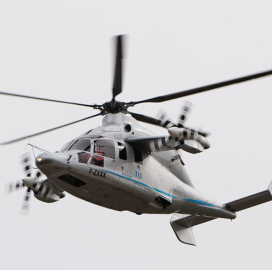
mig-31bmAirbus to Pursue US Army Helo Program With X3-Based Platform
IMOHO, it can only be that someone at Airbus misstook FARA for the Spanish word … ¡caray!*
Is it just me or S97 design is better?, more practical and what not


 Sign In