 mig-31bm
why would you want to “spot” the aircraft if you have a video channel with high magnifying capabilities that can do it for you… Rafales can visually identify targets (aircraft) and even the armaments they carry (externally, obviously) at distances up to 50km (27nm) away ( according to wiki: https://fr.wikipedia.org/wiki/Dassault_Rafale – sorry for posting french version, the english speaking one isn’t as complete about the systems) . Now, if the french do it today, don’t you think that most, if not all, other players will/do try their best to get similar capabilities ? With the RoE over the last few decades, BVR missiles could pretty much never be used in BVR, as they required the positive identification of the aircraft in front of the shooter. If you can identify it 50km away, you can launch your missiles long before the other guy can confirm who you are and shoot at you (unless his RoE allow him to shoot without having to see you first)
LRF still limited to around 20-33 km , and there are others method to IFF others than just visual .
Anyway , smaller target still harder to detect compared big target especially in clutter environment : bad weather , cloud ,hot surface …etc
mig-31bmThere corrected for you.. I think even Su-30MKI or Su-34 with KNIRTI pods have greater jamming capabilities than the Prowler once had..
A comparison of F-35’s internal jammer with modern dedicated systems would look like this:
But “any generic AESA” is not the same as a purpose-built jammer…
The AESA on the F-35, for example, is built to spot air and ground targets, with jamming capability as what Cmdr. Edgarton called a fortunate “by-product”.
But the same basic AESA technology, with a differently sized antenna to generate different frequencies and wavelengths, “backed by different processing, different power, different cooling, and purposely built to be a jammer… would have much greater capabilities.”Much greater does not sound like those remaining 15% to me..
http://breakingdefense.com/2012/12/navy-bets-on-baby-steps-to-improve-electronic-warfare-f-35-ja/
he mean a jammer with AESA technology would offer much greater capability than a fire control radar that can act as a jammer .
But that doesnt mean APG-81 as a jammer isnt better than legacy jamming pod . In term of transmitting aperture , APG-81 transmitting aperture simply much bigger than that of jamming pod you often see on fighter


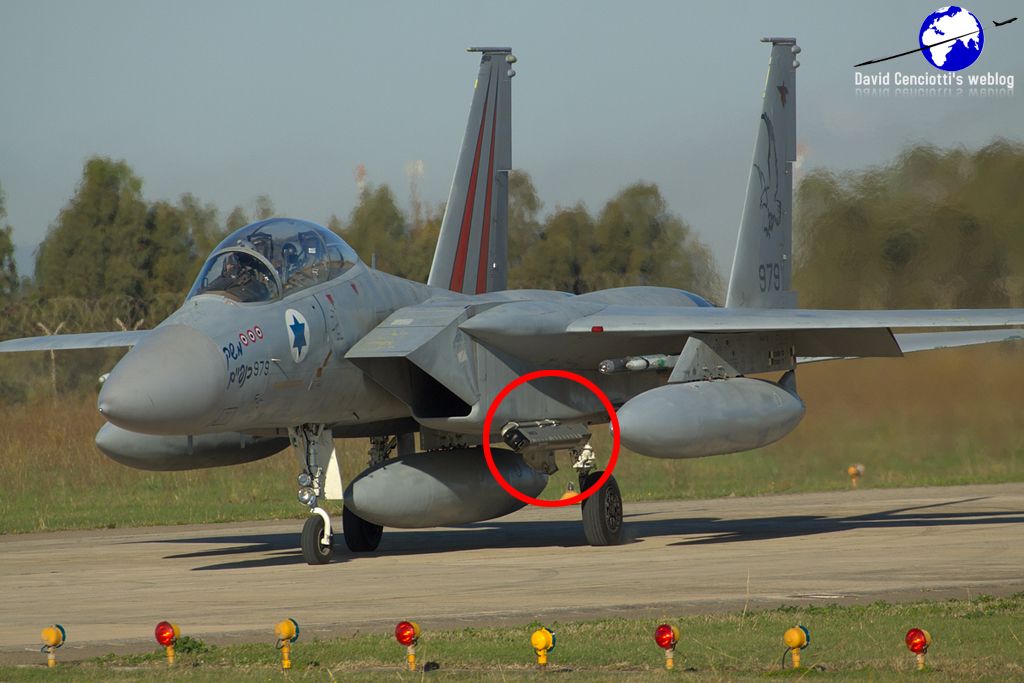
fighter with internal jammer likely have even smaller transmitting aperture
for same frequency bigger aperture mean more gain (beam more focused ) there is no way around that ,not to mention AESA radar focused beam even better .Thus F-35 can have much higher effective jamming power
You also have to consider the whole packet . F-35’s tiny RCS mean it only required a fraction ( 1/1000) of power that legacy fighter would need to jam enemy radar . Low RCS also reduce enemy’s burn through range thus allow F-35 to get a lot closer and be much a better stand-in support jamming asset compared to non stealth aircraft.
mig-31bmI have never put the max. speed figures in doubt. I have clearly said they are roughly as representative as the M2.5 figure for the F-15. You will try it once in a lifetime for a dash of ~50 miles while depleting almost all fuel and then nicely get back to your subsonic speeds where the F-35 belongs. Yes, including the A.
and that is your opinion, not fact. Since obviously you cant get any official source to support your statement, how about using aerodynamic calculations ( just like Andraxuss ) to show that F-35A cant fly for more than 50 miles at supersonic speed?
That was discussed to death few years ago.. You might not have been here, I don’t remember… Swiss eval, especially the A-A component is very specific, much of that happening in Axalp mountain range. The extreme proximity of steep mountains renders much of what we expect to be a decisive factor (sensor range, EW, RWR) quite irrelevant, while other factors like nose poiting ability, agility, controllability, radar scan rate, lock-on stability etc. play a much larger role than with the same aircraft fighting high over the Sahara desert. It’s quite impossible to evaluate these results without having the weighing of the individual factors at hand and I personally do not like to use Swiss results for anything, even if Rafale was declared the winner..
..
are you saying aircraft cant fly higher than mountain, hence factor like turn rate, acceleration rate, roll rate., speed . etc also irrelevant in Swiss evaluation?
mig-31bmBut it is still an incorrect term. Going faster is more efficient but uses more fuel….
can you explain your reason in more detail?
What I do find strange with some of the knowledgable here is that they all insist that high by-pass ratios (fan engines) work poorly at high speed and altitude.
The A12/SR71 series of a/c flew regularly at Mn 3+ with a very high bypass ratio. The core engine provided 15% of the total thrust at that speed…………..
i think J58 is turbojet engine rather than turbofan engine, there is no air go to fan section there.
Anyway this is a very informative video on SR-71 engine https://youtu.be/F3ao5SCedIk
mig-31bmThe statement in bold is complete BS. The rest I won’t comment.
lower thrust doesn’t necessarily results in less IR signature, but F-135 have higher bypass ratio compare to most 4.5-5 gen fighter. Which mean more percentage of its thrust come from the fan, as a result the exhaust temperature will likely be lower than engine with low bypass percentage
US NAVY have clearly said the APG-81 jamming is only a nice to have feature which cannot replace dedicated jammers. We have already been through this before, please use the search function and look it up if you’re new, I am tired of repeating the same..
mind you, that when they were compare APG-81 jamming capabilities with another AESA jammer, the NGJ
mig-31bmI don’t think HOJ missiles really are effective till the terminal phase with a seeker that small.
missiles in HOJ mode is basically similar to an anti radar missiles such as HARM or KH-31, they dont really need very big seeker
Noise jamming can still blunt a incoming missiles by using less power, but enough power to overwhelm the enemy radar.
very hard to jam enemy’s radar while still hide from their RWR
You will need a RWR to fire against the enemy and provide accurate guidance in the midcourse phase, which requires TDOA using multiple planes, which is a hard in a BVR duel when the enemy is firing upon you
technically speaking, a missile in HOJ mode can be launched without target speed, heading, altitudes or distance, so all you need is the target on your RWR, of course without these information missiles will have to fly direct path thus very short range and extremely low PK
. There are also countermeasures like switching your jammers on and off
i think you mean switch jammer on/off in sequence, but ok, agree
Yes LRF is the most effective way for finding velocity and range, you don’t really need effective picture for that. However if you want to range via triangulation….yes you need a high quality image.
you dont need high quality pictures for triangulation, you only need fighter that fly very far apart, and link them together. What required high quality images is passive ranging by image processing ( which is quite pointless in my opinion )
mig-31bmWhich was my point. So why not just stick with it..
i suppose each caliber size have their own advantage, neither significantly surpassed the other. 20 mm allow more ammunition being carried while 30 mm allow more stopping power. 25 mm is a mix of both
mig-31bmFaster, yes, however I doubt the difference is significant from a cheetah to a slug. Higher, no. They both fly 20 km+ high.
if you look at cruise speed then Mig-31 is almost 2 times faster than F-22
and yes Mig-25, 31 does fly alot higher, i will try to find the graph and posted here
Actually F-35 is stealthier now.
radar aperture mean the size of the radar
Yep. Noise jamming is much more suited against AESA opponents.
.and it is also required alot more power, and more vulnerable to HOJ missiles
Agreed, however I doubt its a overwhelming 3 times NEZ
with Ramjet engine Meteor doesn’t need to carry oxidizer, it can also adjust thrust suitable for cruising
If your target is blurry you can’t really measure accurately. You measure range by getting the tight high quality angles from triagulation or motion anyalsis.
.
that not how a IRST measures range or velocity, to measure these they use LRF
(or may be triangulation in theory)
mig-31bmThat does not make high supersonic speed inefficient.
When you go the extra mile to design a platform with air intakes and engines to match. Then it is by deffinition an efficient supersonic design which goes supersonic in a efficient way.
going faster is inefficient in term of fuel use, that what it mean, an F-22*at supersonic wont use less fuel than a f-22* at subsonic.
Anyway, that isn’t where i focused my point. What iam trying to say is object move fast will have higher IR signature, and that a disadvantage of going fast
mig-31bmArme while i somewhat agree with some of your point, i have to say it really hard to understand your English. May be it better to shortern your paragraph next time
Utterly hilarious people claim a 4th Gen like the Rafale is superior to the F-22.
“The F-22 is slower than the MiG31/25”
-Well the F-22’s exact speed is classified, but estimates range around 1490-1700 mph while the MiG31/25 can go up to 1800-2000 mph. But people don’t realize that the MiG has to carry external weapons meaning it can never reach its top speed in realistic combat. Jane’s studies shown, Eurocanards, Super Hornet and Su-30 are no faster than an F-35 despite going 250 mph+ faster in max speeds. I’d say the MiG-31/25 is around the same speeds as an F-22.
No, Mig-31 and Mig-25 is faster than F-22, actually alot faster and fly alot higher even when loaded
“The F-22’s electronics are no better than planes like the Rafale”
-Most Eurocanards have early AESAs development while the US is far ahead of radar technology. The F-22 uses 2000 T/R module radar while most Eurocanards are around 1000, only the Eurofighter goes 1500. Most of all the F-22’s radar has been upgraded in the APG-77v1 in 2012 which uses newer GaaS modules from the F-35. The Russians are even more behind in AESA technology.The Rafale has cool touch screens however.
This i can somewhat agree, yes in term of radar aperture
F-22 > F-35 > Typhoon > Gripen > Rafale
:
Worse of all most Eurocanards like the Typhoon and Rafale mainly use DRFM jamming since their pods are a lot smaller
No, they can use noise jamming as well, and each kind of jamming have their own advantage
.
And keep in mind “3 times the NEZ of the AMRAAM” means “3 times the NEZ of the AIM-120B.” The Meteor has the same outer frame of an AIM-120B(diameter, and length), and keep in mind at fights beyond 60,000 feet, air gets really thin making ramjets less effective plus the Meteor has more drag than the AIM-120C7. I am not saying the Meteor is inferior than the AIM-120C7(and the AIM-120D by 2018), but the difference is less dramatic. The Meteor was a 1990 concept, the US experimentedthe ramjets as well.
there are so many aircraft with turbojet engine can fly at 70-80K feet, so high altitude wont be that much of a problem for Ramjet engine
Also the design of Meteor make give it more lift than AIM-120, thus better turning ability at high altitude
IRST has always been a threat to stealth airplanes. However IRST has many limitations. They don’t really work that well under weather or clouds.
agree
Also cited ranges like(50km-90 km) doesn’t mean you can ID the target. For example you can see a target from 5 km but you cannot ID it till much closer like 1 km. To fire on a target you need good resolution from the amount of pixels on target. Blurry targets are much more harder to shoot at.
This is wrong, imagine blurry isn’t what make a target hard to shot at, lack of information such as velocity, distance, heading, altitude are what make target hard to shot at, but you are right about the part that detection range are not the same as identification distance
I suspect a 50 km capable IRST vs. frontal aspect target like the PIRATE to not get a good firing resolution on the F-22 till around 10 km. IRST also cannot range or measure velocity as well, so it has to use things like triangulation and lRF. LRF can only go 20 km usually under good weather
good LRF can reach around 20-30 km
mig-31bm@mig-31bm.
I don’t know where you got that last piece from but it is incorrect.
Supersonic flight need not be inefficient compared to subsonic. In fact the thermal efficiency is generally increased by the higher total pressure ratio.
They do use more fuel at higher speeds due to the drag law.
Just because it is written doesn’t make it true..
get it from here
http://csbaonline.org/publications/2015/04/trends-in-air-to-air-combat-implications-for-future-air-superiority/
i think supersonic speed create higher IR signature simply due to friction
mig-31bmSo why did they decide to replace 20mm with 25mm?
It would mean less rounds to spray, that right there is more a Con and not a Pro..
SU-27, Typhoon , Rafale , F-35… etc are actually all carry very little bullet compare to aircraft like F-15
mig-31bmmore is always better, but that “superior situational awarness” still remains to be seen against last modern so called 4+ gen fighters..
about the “impossible being possible”: when people said a rafale would be able to sneak close enough by effective ECM and ground masking, you and others like you claimed that a 4Gen fighter will never be able to hide from a radar as it would require active cancellation which is impossible to do… now, all of a sudden, the F-35 is capable not only to be unseen, but also to “protect” other 4gen aircraft from the radar… using some LM pixie dust or what?
i think you understand why it would be much easier for a stealth aircraft to hide in jamming environment, but just in case you forget, i repost it anyway
So it quite obvious why F-35 can get extremely close to enemy air defence with jamming.
Now move on to the next point, what is jamming?
it basically increase noise-signal ratio so that enemy can no longer track you.
In general, the further you stay from enemy’s radar, the weaker your radar reflection will be, and your jamming power at target location will also decrease. However because radar signal travel 2 ways, while jamming signal travel one way, hence, as distance increase, it would be easier for the aircraft to hide from enemy’s radar with it’s jammer. So the normal conclusion would be : jamming aircraft would prefer to stay far away from enemy’s radar, correct? 😉 Wrong! it only true for self protection (self screening) jamming.
If your aircraft doing support jamming role ( aka, you want to use the jammer to hide other aircrafts in the formation), then you would prefer the jamming density at target location to be as powerful as possible, which mean you have to get as close to enemy’s radar as possible (stand in jamming) . The problem with legacy jamming aircraft is that doing so with put them inside burn through range of modern air defense radar , so while they may be able to hide friendly aircraft flying dozen miles behind them, they are in danger of being shot down by enemy’s SAM.
As explained earlier reduce RCS will lower burn through distance significantly, with extremely low RCS, F-35 can get very near enemy’s radar, to the point where it’s jammer can help hide 4 gen fighter while the F-35 itself still not inside enemy’s burn through range
Another factor that could help is the fact that F-35 have massive jamming aperture, bigger aperture equal bigger gain, and gain play very important role if you want to focused your power at a location
Mig31 said above “the F-35 would destroy the radar”, but if it’s only about destroying a single radar, a rafale can pinpoint its location from quite a distance as well (radio waves travel further than radar’s effective range, and make it detectable, as always) and guide another one close to the ground to hit it… again, if it works as advertised, it’s nice, but not something nobody else can do
nap of the earth tactic put the strike aircraft in a vulnerable position again shoulder SAM and AA cannon, and nap of the earth tactics doesn’t work again enemy’s AWACs and interceptors either
also normally aircraft will be able to carry a higher number of short range weapons vs long range weapons ( F-35 will be able to carry more SPEAR III than Rafale can carry storm shadow)
mig-31bmBy getting this lady to seduce the SAM battery commander
mig-31bm4+ Gen fighters like Rafale match or surpass the F-22 in terms of sensor fusion, there is nothing exceptional in there.. The F-22 only has two virtues over its peers – that is RCS and speed.. nothing else..
and that RCS bit is extremely important
due to much lower RCS, it can detect and attack opponents far sooner than the opposite side can, lower RCS also mean it will benefit significantly more from jamming and can get in much closer, allow higher PK missiles shot
Complete nonsense. The F-22 was and is all about speed.. Practical speed values combined with range, not a theoretical M2.5 achieved once in a lifetime for a dash of 50 miles.
No. with top speed of mach 2.2 and cruise speed of mach 1.8 the F-22 still a slug when compared to interceptor such as Mig-31, Mig-25 or YF-12
Another nonsense.. It wasn’t that far off when you guys were all about how release SC speed provides increased kinetic range for the weapons, thus expanding the No-Escape-Zone. You were one of them claiming that the F-35 would use the same advantage.. Funny how you managed to turn the coat completely just because the F-35 has turned out to be a slow pig..
faster speed improve missiles range, that is correct, however it will also increase closure rate with enemy’s missiles , so a fast cruise speed can work again you, especially if you are not stealthy and face pop up threat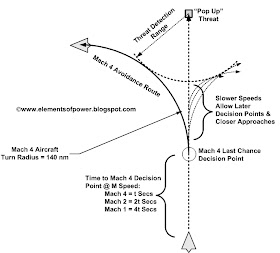
another problem of flying too fast is high IR signature
Secondly, while F-35 may not have high cruise speed, stealth allow it to achieve first look giving pilot plenty of time to get into favourable missiles launch position ( accelerate to high speed, climb to higher altitude , or both)


 Sign In







