 mig-31bm
Looks pretty cool…not bulged like the block-60.
the CFT on block 60 can be removed if they want to
mig-31bmOne of the event that triggered the drfm worry among the us forces (us navy especially) is when a planned fly by above uss George Washington by royal malaysian air force su-30mkm was spotted with sap-518 jammer pods.
you mean this story ?
http://www.veteranstoday.com/2014/11/13/aegis-fail-in-black-sea-ruskies-burn-down-uss-donald-duck/
it was actually a hoax
mig-31bmorly, so then why is this gentleman more than concerned about it ?
“We—the U.S. [Department of Defense]—haven’t been pursuing appropriate methods to counter EA [electronic attack] for years,” a senior Air Force official with extensive experience on the F-22 told The Daily Beast. “So, while we are stealthy, we will have a hard time working our way through the EA to target [an enemy aircraft such as a Russian-built Sukhoi] Su-35s and our missiles will have a hard time killing them.”
The an/apg-77 is no toy for sure
mikoyan if you pay attention , dailybeast always quoted some unnamed pilot or unnamed senior official :rolleyes: , do you know why ?, because they made thing up .If they made an actual interview , there wouldn’t be any reason for them to leave out the name ,because that just reduced their credibility ( and if the news were classified then they wouldnt get it in the first place )
read the quoted text carefully ,you see it quite obvious that they make things up , basically state their opinion and put that in a quoted text
DRFM isn’t new ,not at all , For DRFM to work, it has to detect a signal (radar pulse or pulses) to memorize and to generate the false targets. LPI radar on the other hand tries to hide the real radar signal in noise to counter that. The problem for jammer is that it doesn’t know what kind of signal the radar is sending (mismatched filtering), but the radar of course does (matched filtering). This is not a problem with relatively simple radars as the signals they send are also simple and do not change. So once the signal is detected, it can be stored and easily used against the radar.
Modern LPI radar on the other hand does a lot of things to make things very difficult for EW systems. They send complex waveforms that is like noise and can only be made sense with filtering. The radar uses matched filtering as it knows exactly the characteristics of the radar signals it has sent (like frequency, PRF, modulation, pulse width). The EW receiver of course does not and must only guess the parameters and thus uses mismatched filtering. Even if the LPI signal is detected and stored, it is not that useful as the radar has already changed the signal parameters and the stored signal will not even give the radar extra work as it would not match the changed filters. AESA sets add the challenge of being able to quickly switch between every parameter at a moment’s notice and very randomly, which will put the jammer behind the radar
In general, high PRF radars are more resistant to ECM because their average power is greater. Changing the PRF in a random fashion is an effective counter to deception because deception ECM depends on predictability of the radar. However, because PRF is related to the basic timing of the radar, this technique results in additional complexity and expense. Random PRF has been employed as a very effective ECCM feature in some radars for many years and has the additional benefit of elimination of MTI radar blind speeds.
Scan pattern. The radar scan pattern can influence ECCM capability because it influences the amount of energy directed toward the radar target. An active tracking phased-array radar is quite ECM resistant because of its ability to rapidly scan its radar beam in a random fashion than in the regular circular or sector scan pattern of conventional radars. This irregular beam positioning would give the opposing ECM system little or no warning and make it impossible to predict where and when to transmit false signals. In systems where scanning is performed in the receiver rather than in the transmitted beam, such as those mentioned in the section on angle deception, ECM has no direct access to the radar scan pattern and thus has difficulty using that information to interfere with the radar system operation
Frequency. Frequency agility is a significant ECCM design feature. Using components such as frequency synthesizers (something like those employed in radio scanners) instead of conventional crystal-controlled oscillators, some radars are able to change frequency within one pulse repetition time (PRT). This makes deception and jamming very difficult. The radar can be designed to change frequency automatically within a certain range, or this can be done manually
http://fas.org/man/dod-101/navy/docs/fun/part11.htm
and here is the quoted from an actual Marshall :
Parliamentary Joint Committee on Foreign Affairs, Defence and Trade – 16/05/2013 – Department of Defence annual report 2011-12
Air Marshal Brown:
But getting back to the situational awareness, the ability to actually have that data fusion that the aeroplane has makes an incredible difference to how you perform in combat. I saw it first hand on a Red Flag mission in an F15D against a series of fifth-generation F22s. We were actually in the red air. In five engagements we never knew who had hit us and we never even saw the other aeroplane at any one particular time
….
even with a DRFM jamming pipe, we still had no chance in those particular engagements. And at no time did any of the performance characteristics that you are talking about have any relevance to those five engagements .
mig-31bmAbsolutely, but phase shift can allow time difference of arrival and azimth aswell as triangulation….
phase rate change is basically triangulation, you still need 2 or more aircraft.
i find elevation method better
mig-31bmAntiquated links…
Basics are for sure interesting, but author forgets more recent techniques allowed by calculation power like interferometry etc.
measures the signal power to determine range would required you to know the exact kind of radar ( which is really hard again something that change frequency all the time) , and most modern radar can manage their power as well
p/s : if i remember correctly, interferometry measures phase rather than power
mig-31bmMore and more voices say DRFM makes it harder to kill enemy aircrafts.
Although adding one to a MiG-21 will hardly make the fishbed an F-22, there is no discussion this added capability seriously complicates the calculus of the aggressor.
http://aviationweek.com/awin/us-navy-aims-curb-enemy-jamming
Whats your take on this ?
How can one defend against this ? To me it looks trickier then even the most stealth shapes
DRFM isn’t anything new, many jammer ( for exampleALQ -165, ALQ-211, ALQ-99, ALQ-131.. etc) have it, again radar with frequency hopping and random waveform, PRF characteristics , DRFM jamming is really really hard
Jamming is likewise much more difficult against an AESA. Traditionally, jammers have operated by determining the operating frequency of the radar and then broadcasting a signal on it to confuse the receiver as to which is the “real” pulse and which is the jammer’s. This technique works as long as the radar system cannot easily change its operating frequency. When the transmitters were based on klystron tubes this was generally true, and radars, especially airborne ones, had only a few frequencies to choose among. A jammer could listen to those possible frequencies and select the one to be used to jam.
Most radars using modern electronics are capable of changing their operating frequency with every pulse. An AESA has the additional capability of spreading its frequencies across a wide band even in a single pulse, which equates to lowering the emission power, making jammers much less effective. Although it is possible to send out broadband white noise against all the possible frequencies, this means the amount of energy being sent at any one frequency is much lower, reducing its effectiveness
http://self.gutenberg.org/articles/aesa_radar
Air Marshal Brown: I think if you have a look around on an F16 sometimes that is not wonderful either. But getting back to the situational awareness, the ability to actually have that data fusion that the aeroplane has makes an incredible difference to how you perform in combat. I saw it first hand on a Red Flag mission in an F15D against a series of fifth-generation F22s. We were actually in the red air. In five engagements we never knew who had hit us and we never even saw the other aeroplane at any one particular time. That is a current fourth-generation aeroplane.
The data fusion in the stealth makes such a difference to your overall situational awareness it is quite incredible. After that particular mission I went back and had a look at the tapes on the F22, and the difference in the situational awareness in our two cockpits was just so fundamentally different. That is the key to fifth-generation. That is where I have trouble with the APA analysis. They tend to go down particular paths in the aeroplane, whether it is turn rate performance or acceleration. These are all important factors, but it is a combination of what you have actually got in the jet and the situational awareness that is resident in the cockpit of a fifth-generation aeroplane that makes the fundamental difference…To me that is key: it is not only stealth; it is the combination of the EOS and the radar to be able to build a comprehensive picture. In that engagement I talked about at Nellis, in Red Flag, the ability to be in a cockpit with a God’s-eye view of what is going on in the world was such an advantage over a fourth-generation fighter—and arguably one of the best fourth-generation fighters in existence, the F15. But even with a DRFM jamming pipe, we still had no chance in those particular engagements. And at no time did any of the performance characteristics that you are talking about have any relevance to those five engagements .
the passive targeting method mentioned in the article is also well known for age
mig-31bmF-16C Block 50, Drag indexAltittude = 15000 feet, Speed = M0,8:
22000lbs = 218 kg fuel (6% of total internal fuel capacity) == 6,3Gs @ Drag index = 0.
26000lbs = 2032 kg fuel (63%) == 5,3Gs @ DI=0, 5,1Gs @ DI=0, 5,2Gs @ Drag index = 21.
28500lbs = 3227 kg fuel (100%) == 4,8Gs @ DI =0, 4,4Gs @ DI=50, 4,6Gs @ Drag index = 21..
Andraxxus , how much G can a Mirage 2000 , Mig-29 , F-15E/C , Mig-25 sustain in similar condition as above ? ( 15000 feet , mach 0.8 , 4 AAM )
Also in same condition while F-35A can sustain 4.6G ,the F-35C can sustain 5G does that mean F-35C would be more likely to beat F-35A in a gun only dogfight ? ( or the much inferior acceleration will offset that ? )
mig-31bmAssuming FSX makes an accurate model. That is a big assumption…
FSX may not be able to simulate all aerodynamic phenomenon or F-135 thrust at different speed, altitude, but i think they should be able to get the outer 3D model relatively accurate
mig-31bmCome to think of it ,wouldn’t simulator like FSX have a 3D model of F-35 that we can used to estimate (or calculate ) the skin area ?
mig-31bmMig-25 can only fly very short time at M3.
not many aircraft can spend alot of time at top speed, hence this is irrelevant
..and it is not draggier. It is very streamlined without external loads.
Mig-25 is draggier than F-35, much bigger wing, massive intake.. etc, it get even worse with 4 R-40 on the wing , despite that it can fly much faster
Goals are different. Mig-25 shines like a christmas tree in the radar.
It does fly 2 x speed in MS FSX than a F-35 yes.
of course i know they have different goal, the point is plane with high drag can fly faster
mig-31bmAgain though my last question. Why were the F4 K/M series slower than the J? The engines were more powerful than the J (J79=J RB168=K/M). Because the the engines were bigger, the airframe was made fatter, the cross-section bigger. They accelerated faster than the J but by virtue of the larger cross-section, they had a lower maximum speed. It was common knowledge years ago and the butt of many an American joke over our a/c.
in my opinion the reason why F-4K is slower than the J have more to do with the engine, pressure recovery at intake rather than total drag , the K/M version have turbo fan engine , thus at high speed , high altitude it will lose alot more thrust than a turbo jet engine .
Similarly , the Mig-25 only have 10 kN of thrust more than F-35 but it is significantly draggier and heavier than f-35 , despite all that it is still 2 time faster than f-35

anyways , even if we assumed that you are right that F-4K maximum speed slower than F-4J due to drag cause by total cross section , Andraxuss assessment that drag come mostly from the wing at dogfight speed is still true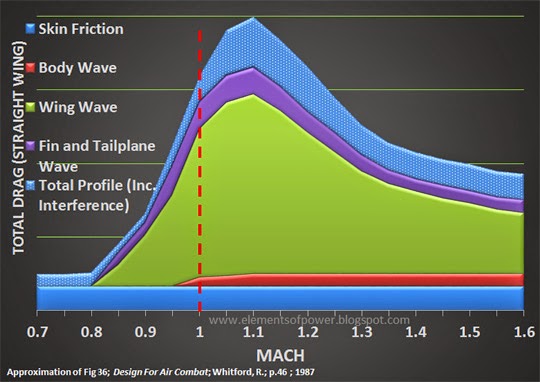
mig-31bmOh dear. Andraxxus will have to get back to Wiki again…..
Robbiesmurf ,
You may think you are very cool being an engineer and what not but i have to say your attitude is extremely cocky and irritating. And you rarely contribute any value to the discussion, i only seen you a few times but it always either you asking someone about afterburner or you saying people are amateur and only learn from wiki. The thing is even if your accusations are true, so what? if a person’s opinion is right ( accurate) then does it actually matter who he is or where he learned it?, if his opinion is wrong then it would be wrong regradless of who he is
Of course, i admit that it is a good thing that you always doubt people’s claim about their occupation but if you have a different theory then you need to explain your point on why you think his analysis is wrong or what your analysis would be, you cant just go to every thread and attack people
mig-31bm.
As for my ONLY claim about F-35 being better than F-16, it was this: Its 5,3G KPP threshold figures, and relaxed 4,6G “achieved” performance figure, is slightly better than Block 50 F-16’s flight manual data at same flight conditions. As proof of burden about this is on me:
Lets talk about F-16 with following equipped with 2 AIM-120s and 2 empty pylons to match F-35:
2xAIM-120s + 2xLAU-129 on stations 1 and 9 instead of 16S210 included in basic aircraft weight, 2xLAU-129 on stations 2 and 8 for previously spent A-A missiles, + 8 racks of chaff-flare + gun ammo; weigh 599kg in total.
Drag index = 21; (+1 for each LAU-129 at wingtips, +6 for each LAU-127 at stations 2 and 8, and +7 for F-16C basic airframe drag index)
F-16C Block 50, Drag indexAltittude = 15000 feet, Speed = M0,8:
22000lbs = 218 kg fuel (6% of total internal fuel capacity) == 6,3Gs @ Drag index = 0.
26000lbs = 2032 kg fuel (63%) == 5,3Gs @ DI=0, 5,1Gs @ DI=0, 5,2Gs @ Drag index = 21.
28500lbs = 3227 kg fuel (100%) == 4,8Gs @ DI =0, 4,4Gs @ DI=50, 4,6Gs @ Drag index = 21.Now, I don’t know exact KPP details of F-35; but logically,
1- It will definately include two AAMs (as B variant has no gun, there is no point in giving it a “key performance figure” unarmed. Quite possibly, it will include 4 AAMs.
2- Logically, KPP of F-35 will at least involve 50% fuel, and judging how other KPP is given to other aircraft, it is quite possibly 60%, to include reserve fuel into equation.I assume F-35’s specific range is consistent with its wing area and thrust increase, ballpark around 50%. Then, there are 4 possibilities;
Possibility #1: F-35 achieved 4,6Gs with 60% fuel and 2 AAMs. This translates to same maneuverability, but fuel for longer range than F-16 with full internal fuel. For same range, F-35 needs less fuel, less weight. This translates to better maneuverability.
Possibility #2: F-35 achieved 4,6Gs with 50% fuel and 2 AAMs. With this fuel, F-35 can match range of F-16 with only 88% internal fuel. This means, F-35 is slightly inferior to F-16 (by 0,1Gs).
Possibility #3: F-35 achieved 4,6Gs with 50% fuel and 4 AAMs. Then you would have to subtract some 304 kg from fuel of F-16 , and add 8 to drag index, to compare it with equal grounds to F-35’s KPP. Then F-35 will have better maneuverability for same range.
Possibility #4: F-35 achieved 4,6Gs with 60% fuel and 4 AAMs. Then, this translates to better maneuverability with fuel for better range. Translates to A LOT better maneuverability when fueled for same range.This comparison actually favours F-16;
a) You cannot guarantee an F-16 to enter BFM with 2 AAMs and only 2 empty pylons; typically, it would almost certainly carry 2 additional LAU-129s at 3 and 7, plus MAYBE additional missiles on those pylons, non-jetisson fuel tank pylons on 4 and 6, centerline pylon on 5.
b) you cannot guarantee F-35’s 4,6G achieved performance years ago is not improved even by 0,1Gs. Maybe (just maybe) F-35 today is close to its KPP threshold of 5,3Gs?Even if we take worst case scenario in this comparison, how on earth that justifies “F-35 can’t dogfight” idea?
At sea level, M0,66, clean with 50% fuel, an F-16 block 30 can sustain 9Gs. An F-16 block 50 can sustain 8,1Gs. An Su-27 can sustain 8,7Gs. An F-15C can sustain 7,8Gs. That is up to 15% difference in performance, yet all these aircraft can easily “dogfight” with each other. If worse comes to worst, F-35’s unclassified sustained turn performance at 15k feet M0,8 is just 3% inferior to F-16s. If F-35 cannot dogfight with F-16, then nothing in 4th generation, be it late F-16C, F-15C, MiG-29 or M2k, can dogfight with an Su-27 or an early F-16C block.
Now if you are blowing gasket, at least answer to this claim that I am actually making.
According to small writing in this picture : then the G spec are taken at 60% fuel, 2 missiles, bomb all dropped
mig-31bmsu-35S
mig-31bmso whats new exactly ? Americans being arrogant and bitch slapped by euro pilots flying either similar aircrafts or inferior
http://www.fightercontrol.co.uk/forum/viewtopic.php?f=287&t=63009
remember all the time, during air=air engagements above here between the US F15Cs and Dutch F16s versus Sea Harriers, 90% of the engagements had the F-15Cs defeated and the pilots made up lots of excuses on the radio to “Freddy”, the GCI controller and really did not like a foreign type/pilot successfully engaging them in their mighty F-15C’s.
I can just imagine the same going with the USAF F-22 pilots. I wonder what their reactions were or if there was any excuses. I used to love listening to the F15 pilots grumble about being whacked by Sea Harriers nearly everytime they came down for DACT.http://www.16va.be/mig-29_experience.htm
Even against the latest Block 50 F-16s the MiG-29 is virtually invulnerable in the close-in scenario. On one occasion I remember the F-16s did score some kills eventually, but only after taking 18 ‘Archers’. We didn’t operate kill removal (forcing ‘killed’ aircraft to leave the fight) since they’d have got no training value, we killed them too quickly. (Just as we might seldom have got close-in if they used their AMRAAMs BVR!) They couldn’t believe it at the debrief, they got up and left the room!
i dont think F-22 is necessary superior to Typhoon in close combat , and in F-16 vs Mig-29 case, the Mig-29 have HMD and HOBS missiles while f-16 didn’t, thus Mig-29 have very significant advantage


 Sign In







