 mig-31bm
here are how resonant and creeping wave work depending on object dimension
[ATTACH=CONFIG]240226[/ATTACH]
mig-31bmA flat plate is not an aircraft.
Please stop comparing apples to oranges.
a sphere isnot the same as an aircraft either, the assumption that low frequency will be more effective again stealth fighter come from the fact that for a sphere, when the ratio of wavelength /sphere diameter get closer to 1, the wave will start to wrap around the object thus results in different RCS from normal optical region calculation
With wavelength of only 0.15-0.3 meters, L band can not wrap around F-35 at all, the best it can achieved is get into Mie region at the wing tip, however RCS in Mie region is fluctuated between 0.26-4 times of original RCS value in optical region, So in L band, fighters like F-35, F-22 will have 4 times bigger RCS from wing tip, To get much higher RCS, the radar wave need to get into Rayleigh region ( aka much lower frequencies is needed)
mig-31bmAs I said earlier in the thread, a good rule of thumb is the change in RCS is proportional to the wavelength^2.
[Which was completely and utterly mis-understood by MiG-31. Numbers below.]
Wavelength = c/frequency
So, if RCS = 1 m2 at 10GHz (wavelength = 0.03 m)
then at 8GHz (wavelength = 0.0375 m), RCS ~ 1.6 m2
At 1 GHz (wavelength = 0.3 m), RCS ~ 100 m2
The rule of thumb is applicable to LO aircraft. But obviously, its a rule of thumb, hence approximate and not to be considered exact. But its enough to show the undergraduate report as a load of utter balls.
that rule is wrong though , look at the example of flat plate RCS at 10 Ghz and 1 Ghz ( both big and small flat plate have lower RCS at 1 Ghz than at 10 Ghz)
mig-31bmYes it is. But I’m sure the authors of that text book have taken into account what design attributes constitute a V/LO aircraft – hence rendering your reams of ‘RCS 101’ irrelevant & unnecessary (again).
i dont think what i posted is unnecessary at all
as you can see, at very low frequency, creeping wave can interfere with spectacular return both constructively and destructively, so sometime it will increase RCS, others time it will reduce RCS.
There are many different stealth design and iam sure they doesn’t reflect radar wave in exactly same way . Author also didn’t talk about RAM and low reflective material that available on modern fighter, he strictly talk about shaping .
Anyway In real exercise E-2 /E-3 couldn’t detect F-22 , In their own simulation BAE admitted that AWACS need to stay out of F-35 frontal to see it, So there is 2 possiblity , either real RCS of stealth fighter is extremely low that they still stealthy again massive AWACS radar after their RCS increased by 18 dBsm ,
or there a second possiblity that they have advanced RAM that still relatively effective until L band
mig-31bmWell, other supposedly reliable sources would contend the difference is closer to 18dB – which is roughly the difference between a small bird and an F-18. Eitherway, of much greater significance than you are postulating:
isn’t it a bit over simplified to take a fixed value as the increase of RCS when frequency get lower ?, i mean Aircraft airframe is a rather complex body, It already complicated with simple sphere, plate shape
[ATTACH=CONFIG]240214[/ATTACH]
mig-31bmone thing is: to be VLO you don’t emit, or you depend on somebody else to guide you
in 1 vs 1 engagement, RWR cant provide firing solutions again moving air target ( no info about velocity or altitude or range to target ) , all you will know is the general direction of enemy, thus it will only served similar purpose similar to a early warning radar, it been discussed several times before
http://www.f-16.net/forum/viewtopic.php?f=33&t=27364
http://forum.keypublishing.com/showthread.php?135460-test-pilot-quot-F-35-can-t-dogfight-quot/page13
in multiple ship engagement, RWR can provide firing solutions by triangulation and datalink between multiple aircraft, however, attack side can easily let a single aircraft transmitting and transfer information to others aircraft ( using stealth directional datalinks) . The side that stay silent and totally rely on RWR wont aware of the actual number of enemies on sky ( they will only detect the single aircraft that transmitting)
(and being VLO may help you if your enemy uses high frequency radars only… if they have lower frequencies radars your advantage fades away as the frequency drops
yes, lower frequencies reduce stealth effectiveness, but low frequency radar isn’t magic, according to BAE simulation, even AWACS still have to be stationed at a certain direction to be able to detect F-35 at useful range ( and that haven’t take into account jamming, clutter either )
In an internal simulation series, Eurofighter found that four Typhoons supported by an airborne warning and control system (AWACS) defeated 85% of attacks by eight F-35s carrying an internal load of two joint direct attack munitions (JDAM) and two air-to-air missiles, Penrice says.
According to Laurie Hilditch, Eurofighter’s head of the future requirements capture, the F-35’s frontal-aspect stealth can be defeated bystationing interceptors and AWACS at a 25º to 30º angle to the F-35’s most likely approach path to a target.
http://www.flightglobal.com/news/articles/eurofighter-boasts-typhoon-reign-over-f-35-345265/
AFAIK all AWACs have massive radar and use low frequency radar
EL/M-2075 Phalcon use L band
E-7 Wedgetail use L band
A-50 use L band
Ericsson Erieye use L band
KJ-2000 use L band
E-3 use E/F band ( 2-4 Ghz )
E-2C use UHF band
Also according to USAF, in exercise E-2, E-3 wasn’t capable of detecting F-22 either
mig-31bmWell, if you want something more meaty to chew on – the game supposedly ranks aircraft maneuverability by generation. No further fidelity involved.
Which would mean the F-35 has kinematics as good as an F-22. Anyone willing to defend that assumption?
if you read this thread from start, i questioned the accuracy of the simulation too, such as radar range vs IRST range, ESM system .. etc
, i also said to piestick that iam not necessary disagree with his point, that being said : i dont like it when people lie about their background, so i want to make sure piestick was telling the truth
mig-31bmWhat exactly do you expect from the guy is beyond me… :confused:
There are many simple ways he can use to prove he an actual officer
If he says he is a marine engineer officer, then it’s good enough for me..
well that the core of the problem we have here. Since a single claim that a person is in military without any evidence is good enough for many people , more and more people start to claim they involved with military to back up their point, i saw it many times , over and over, and sometimes it so obvious that the guy are not, in anyway related to military, but people still willing to believe what ever he said just because he started with : ” iam a pilot”, “i worked at pentagon” .. etc
mig-31bmWhat kind of nonsens is this mig-31bm@
If you take that approach, then we can easily cast doubts about Your so Call Engineering degrees as well
See my point?
that would be a great thing haavarla, i dont want people just take every single word i say as fact, i prefer them to contribute their opinion too and only agree if they think what i said is logical, that would make much better discussion
, i think it really bad when someone claims they are involved withmilitary then people just start to believe every single word he says without question ( not even bother to find out if he involved with military or not)
There are many ex-pilots and ground crews in many different forums, just take F-16.net as an example.
So why can’t there be someone in here too?
iam not saying there cant be ex pilot or ground crew on here, iam merely state that just because someone claim he is some sort of ex military personnel doesn’t automatically mean that the truth, i seen people use that tactics to back up their point many times ( iam not saying that piestick is one them, but it always better to make sure doesn’t it? )
mig-31bmFinally, having been a marine engineer officer on Her Majesty’s finest grey ships for over eleven years I can tell you right now the database entries for most of the ten ships I have sailed on are strewn with errors – incorrect top speeds, incorrect weapons, sensors and countermeasure fits, etc.
.
Pardon me
i dont necessary disagree with your other comments, but how do we know you are an actual marine engineer officer?, i saw people claim they are involved with military all the times, sometimes they tell the truth, sometimes they lie so that other stop questioning their point of view
mig-31bmChinese UAV : Wing so long
mig-31bmi think it depending on the angle, T-50 look quite decent from the side but from the top it kind of look like a squashed su-27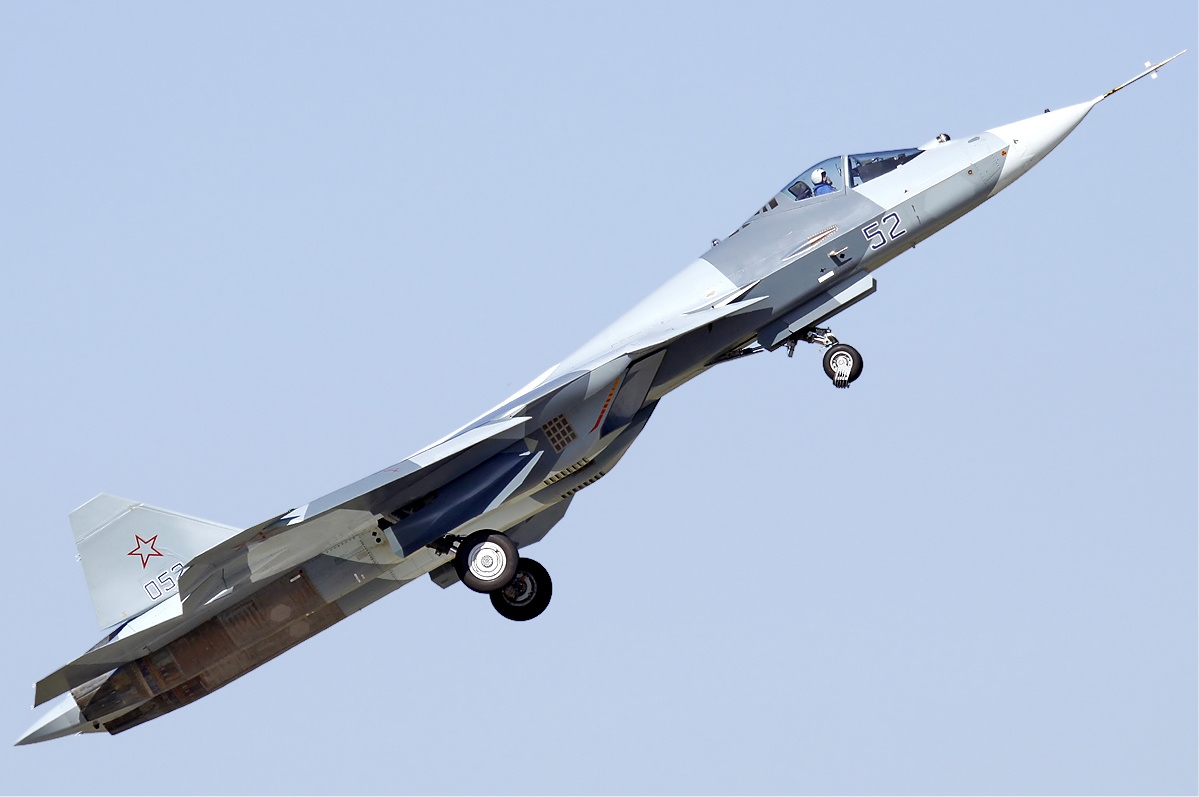

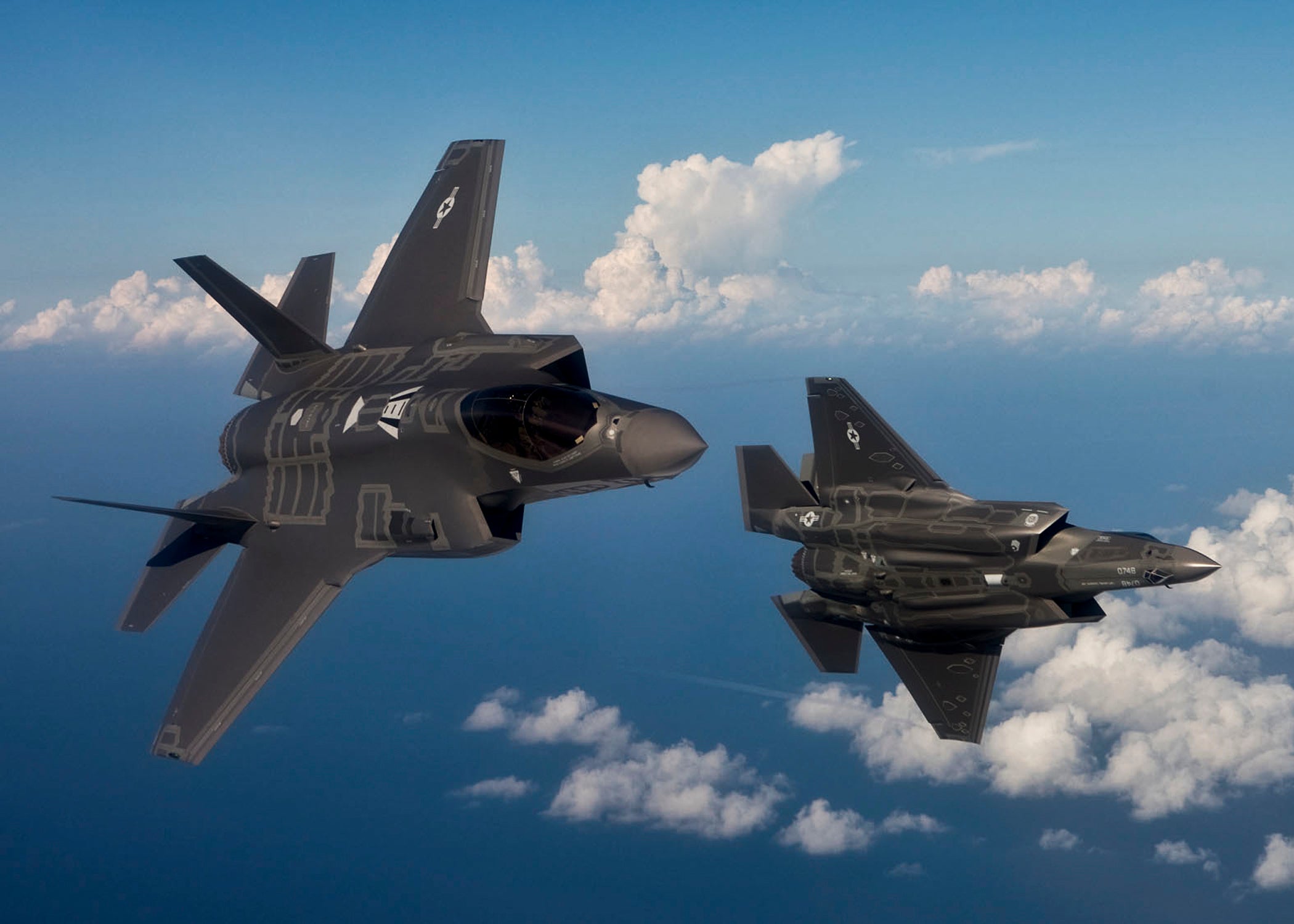
By contrast the F-35 look decent from the top or below but look very short from the side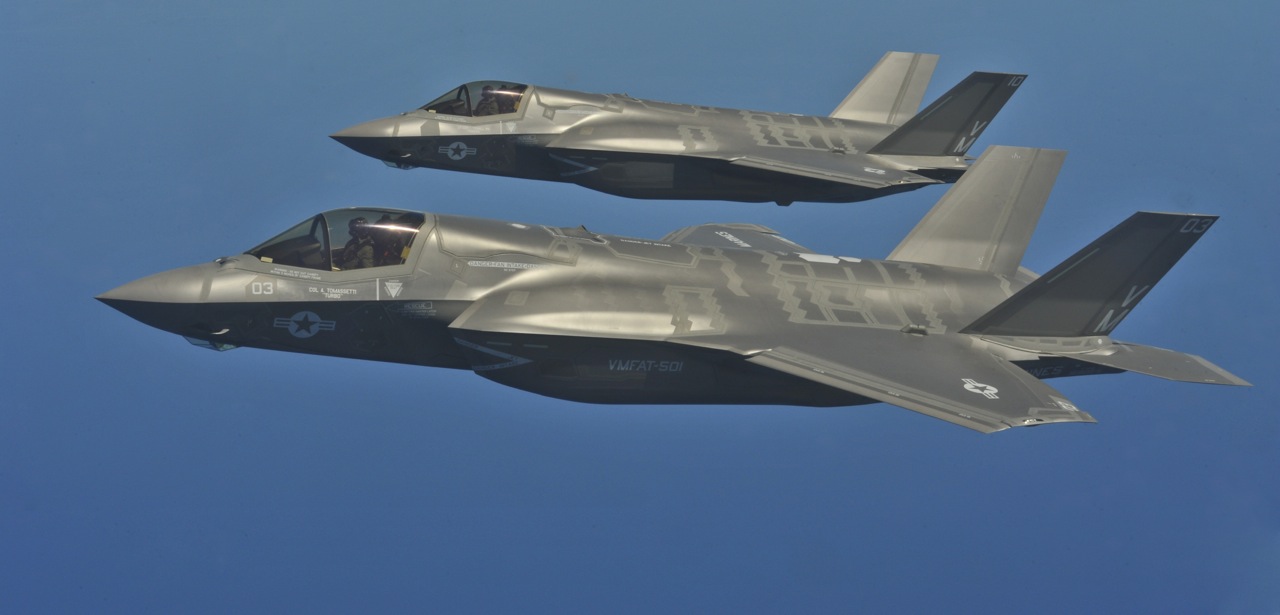
mig-31bmThose SAP-14 and SAP-518 are more than 7 years old now. the point is pods are much easier upgradable than avionics and rcs of an aircraft.
http://forum.keypublishing.com/showthread.php?96741-Russian-radars-and-ECM-ESM-RWR-systems-thread
yes jamming pod can be upgraded, but so is radar
and radar also have several advantages compared to a jammer
1) radar often have bigger aperture = better gain = longer range for same power
2) radar doesn’t have to spread power in wide bandwidth
of course the advantage of jammer is that it’s signal only have to travel 1 ways
Now, RCS are pretty much not upgrade able ( well probably they can upgrade it in very far future but it is unlikely that they can reduced stealth aircraft RCS significantly more). That being said, however RCS will not only affected enemy’s radar detection range, but also your jammer effectiveness ( as i have explained in post #164)
both f-35 radar and Su-35’s radar can be upgraded
both F-35’s jammer and Su-35’s jammer can be upgraded
but, because the F-35 have much lower RCS, hence, Su-35’s radar and jammer have to be significantly better to even the odd
and while it quite simple to put a 5Kw jammer on F-35, it pretty much impossible to put a 50 Mw jammer on Su-35 for it to reach same effectiveness level
mig-31bmI tried to find something regarding output signal Power of thos SAP-518, couldn’t find them.
But it says Field of signal is 60deg by 60deg, i’m not sure if this mean you can steer the jamming signal direction just like you can With ESA radar or if it means something entirely different.
AESA/PESA steer and focused their beam by delaying the wave between transmitting antennas (to cause destructive/constructive interference ) , phase different will be controlled to reinforce the signal in certain directions, and mute it in all others
unless SAP-518 was designed the same way as NGJ ( aka AESA jammer with many T/R modules ), i have to say it can only steer it’s beam mechanically ,and have wide jamming beam
from outer appearance SAP-518 have much smaller aperture compared to a APG-81 , Irbis-e (you can see that SAP-518 can be put on wing tip of fighter ) , it also able to transmitting in wide range of frequency (2-18 Ghz ) so not all the aperture are used for X band transmitter , Thus , it obvious that it have much much lower gain than a radar (smaller aperture = lower gain = wider beam = less focused power , just so you know for a radar , gain is more important than transmitting power)
60* 60 degree beam is very wide actually ,AESA radar of similar size to APG-81 , working in X band can easily have 1-2 degree scanning beam
If you suspect that there is an fighter out there, which uses X-band radar in a confined Ghz range, then it would automatical tune in to these Ghz.
Although the SAP-518 is not fully Integrated in the the Flanker Radar, the SAP-518 is fully digital, and does a wide number ig different tasks.
well , X band is from 8-12 Ghz , the SAP-518 could be tune to only jam frequency from 8-12 Ghz , but it wont be able to jam MADL or Link -16 in that case , the benefit is that since bandwidth is much narrower , the jamming power in each frequency is much higher ,
that being said , the radar still have advantage that it can transmitting wave in a single or a few exact frequency while the barrage noise jammer still have to spread it’s power over a range of frequency
For example : jammer will have to cover the whole bandwidth from 8-12 Ghz ( because we taking about barrage noise jamming ) , thus it’s power will be divided over a range of 4000 Mhz
by contrast a radar can choose to transmitting all it’s power in exact frequency , it can send first pulse in 8.12 Ghz , then jump to 10.33 Ghz , then back to 9.45 Ghz ..etc you know the catch , the point is it dont have to spreading it’s power
The Pilot do not have to micromanage what kind of band or spessific Ghz it want operate in.
The SAP-518 detects incoming signals through the radar and procede accordingly.
.
what you describe isnt barrage noise jamming ,but more resemble DRFM deceptive jamming
Besides standard noise jamming, one method used to decoy missiles is deceptive jamming (or DRFM) which have been used widely on many jammer such as ALQ-211, ALQ-184, ALQ-214. Some people (I.e. Kopp and Goon) see as the end-all in air-air warfare. However, repeater jamming depends on picking up the radar emissions of the missile/aircraft – if the ESM doesn’t detect the radar and recognize it (such as if the radar is AESA LPI set, APG-79, APG-80, APG-81.. etc ), it doesn’t have any signal to repeat back to the receiver, and so it can’t create false targets.
For DRFM to work, it has to detect a signal (radar pulse or pulses) to memorize and to generate the false targets. LPI radar on the other hand tries to hide the real radar signal in noise to counter that. The problem for jammer is that it doesn’t know what kind of signal the radar is sending (mismatched filtering), but the radar of course does (matched filtering). This is not a problem with relatively simple radars as the signals they send are also simple and do not change. So once the signal is detected, it can be stored and easily used against the radar.
Modern LPI radar on the other hand does a lot of things to make things very difficult for EW systems. They send complex waveforms that is like noise and can only be made sense with filtering. The radar uses matched filtering as it knows exactly the characteristics of the radar signals it has sent (like frequency, PRF, modulation, pulse width). The EW receiver of course does not and must only guess the parameters and thus uses mismatched filtering. Even if the LPI signal is detected and stored, it is not that useful as the radar has already changed the signal parameters and the stored signal will not even give the radar extra work as it would not match the changed filters. AESA sets add the challenge of being able to quickly switch between every parameter at a moment’s notice and very randomly, which will put the jammer behind the radar
Jamming is likewise much more difficult against an AESA. Traditionally, jammers have operated by determining the operating frequency of the radar and then broadcasting a signal on it to confuse the receiver as to which is the “real” pulse and which is the jammer’s. This technique works as long as the radar system cannot easily change its operating frequency. When the transmitters were based on klystron tubes this was generally true, and radars, especially airborne ones, had only a few frequencies to choose among. A jammer could listen to those possible frequencies and select the one to be used to jam.
Most radars using modern electronics are capable of changing their operating frequency with every pulse. An AESA has the additional capability of spreading its frequencies across a wide band even in a single pulse, which equates to lowering the emission power, making jammers much less effective. Although it is possible to send out broadband white noise against all the possible frequencies, this means the amount of energy being sent at any one frequency is much lower, reducing its effectiveness
http://self.gutenberg.org/articles/aesa_radar
AESA radar characteristics such as random scan pattern, random frequency, random PRF all make it very resistance to DFRM deceptive jamming.
In general, high PRF radars are more resistant to ECM because their average power is greater. Changing the PRF in a random fashion is an effective counter to deception because deception ECM depends on predictability of the radar. However, because PRF is related to the basic timing of the radar, this technique results in additional complexity and expense. Random PRF has been employed as a very effective ECCM feature in some radars for many years and has the additional benefit of elimination of MTI radar blind speeds.
Scan pattern. The radar scan pattern can influence ECCM capability because it influences the amount of energy directed toward the radar target. An active tracking phased-array radar is quite ECM resistant because of its ability to rapidly scan its radar beam in a random fashion than in the regular circular or sector scan pattern of conventional radars. This irregular beam positioning would give the opposing ECM system little or no warning and make it impossible to predict where and when to transmit false signals. In systems where scanning is performed in the receiver rather than in the transmitted beam, such as those mentioned in the section on angle deception, ECM has no direct access to the radar scan pattern and thus has difficulty using that information to interfere with the radar system operation.
Frequency. Frequency agility is a significant ECCM design feature. Using components such as frequency synthesizers (something like those employed in radio scanners) instead of conventional crystal-controlled oscillators, some radars are able to change frequency within one pulse repetition time (PRT). This makes deception and jamming very difficult. The radar can be designed to change frequency automatically within a certain range, or this can be done manually.
http://fas.org/man/dod-101/navy/docs/fun/part11.htm
it was revealed by the RAAF a few months back in testimony to the Australian Parliament that DRFM jammers can be defeated easily by AESA radar
Air Marshal Brown: I think if you have a look around on an F16 sometimes that is not wonderful either. But getting back to the situational awareness, the ability to actually have that data fusion that the aeroplane has makes an incredible difference to how you perform in combat. I saw it first hand on a Red Flag mission in an F15D against a series of fifth-generation F22s. We were actually in the red air. In five engagements we never knew who had hit us and we never even saw the other aeroplane at any one particular time. That is a current fourth-generation aeroplane.
The data fusion in the stealth makes such a difference to your overall situational awareness it is quite incredible. After that particular mission I went back and had a look at the tapes on the F22, and the difference in the situational awareness in our two cockpits was just so fundamentally different. That is the key to fifth-generation. That is where I have trouble with the APA analysis. They tend to go down particular paths in the aeroplane, whether it is turn rate performance or acceleration. These are all important factors, but it is a combination of what you have actually got in the jet and the situational awareness that is resident in the cockpit of a fifth-generation aeroplane that makes the fundamental difference…To me that is key: it is not only stealth; it is the combination of the EOS and the radar to be able to build a comprehensive picture. In that engagement I talked about at Nellis, in Red Flag, the ability to be in a cockpit with a God’s-eye view of what is going on in the world was such an advantage over a fourth-generation fighter—and arguably one of the best fourth-generation fighters in existence, the F15. But even with a DRFM jamming pipe, we still had no chance in those particular engagements. And at no time did any of the performance characteristics that you are talking about have any relevance to those five engagements .
mig-31bmThe SAP-518 operates in a range of 2-18 GHz and fits in two pods.
So tell me, why can’t the the two 117S engines combined With the aux generator generate the enough Power for the SAP-518?
it all depending on how you define enough :
let start with basic principles :
1) how a radar work : it transmit a pulse, wait for reflection pulse to come back, from the time taken the radar can deduce the range to target, from the change in reflection frequency it can deduce the speed of target.. etc
2) How noise jamming work : it basically sink the reflection wave in constant noise ( random signal) , thus the radar cant deduce range, or speed or altitude or heading of target
when jamming signal > radar’s reflection signal => noise jamming work , and radar is quite useless
you must have heard of the phrase ” Burn through distance” ?
that is when the aircraft is close enough to enemies radar that it’s skin reflection is more powerful than the jamming signal, thus the jamming is ineffective and enemy’s radar work like normal
So how to reduce enemy’s burn through distance?
1) increase your jamming power ( bigger, more powerful jammer, more focused jamming beam, work in narrow range of frequency )
2) reduce your reflection ( aka lower RCS)
Now, let examine the idea of using SAP-518 to jam all frequency from 2-18 Ghz, in all directions at the same time :
1)jamming very wide frequency range (2-18 Ghz) = less power available at each frequency ( that should be very obvious)
2) jamming in all directions at the same time ( remember how a radar can have much longer range in cued search?, that is because in cued search the radar beam is narrower, thus the transmitting power is more focused at where it trying to look, same reason why a high gain radar can have significantly longer range than a low gain one even if they both have same peak power => obvious why transmitting jamming signal in all directions will reduce jamming power )
3) Su-35 have much higher RCS than F-35 , thus it’s will need much more powerful jammer to achieve same effectiveness ( explained in previous post)
To sum up, while Su-35 can certainly use SAP-518 to jam F-35’s APG-81, MADL, Link-16, it willnot be very effective for reasons stated above


 Sign In







