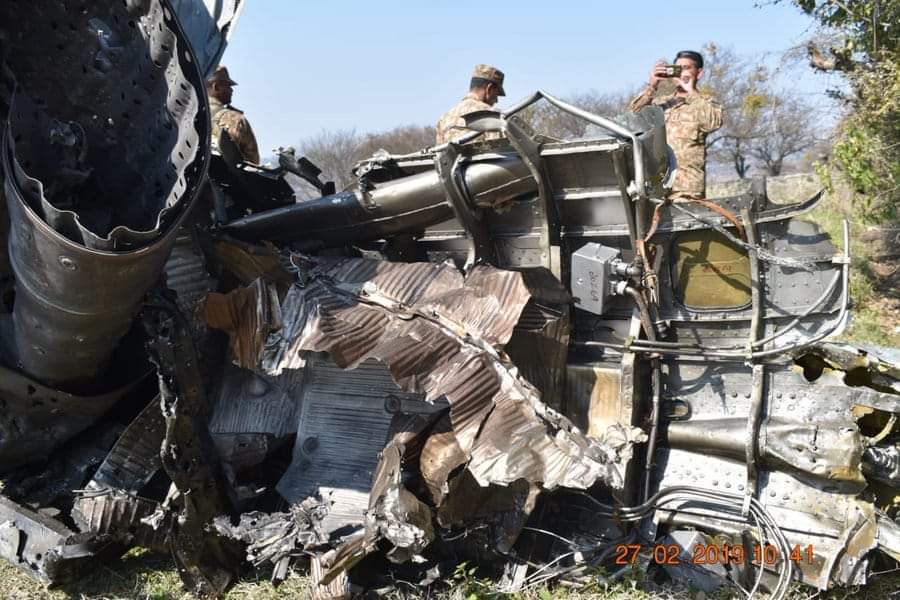
mig-31bm
First Look At F-35 Aerobatic Routine Challenges Critics, Showcases Air Force at Its Best.
“This year we are going to fully unleash the full maneuvering envelope of the F-35. This airplane just takes the flight controls, and puts it on a whole different level. We will be able to do some similar maneuvers that [F-22] Raptor does, and without thrust vectoring, just with the advanced flight controls that put the aircraft into a post-stall flight regime and keep it fully controllable”
F-35 flight control is very strange, at high alpha, the trailing edge flap is deflected upward rather than down, unlike others
[ATTACH=JSON]{“data-align”:”none”,”data-size”:”full”,”data-attachmentid”:3854778}[/ATTACH]
mig-31bmWhy speaking about Rafale centric world when you come from F-35 centric world? The idea is that Rhino and Rafale do not NEED very high AoA to be manoeuvrable at low speed. Again, i put the C version of F-35 apart.
Btw, normal approach speed of Rafale in 15T configuration is 120 kts.
F-35 KPP for approach speed is taken at 40,000 lbs (18T)
mig-31bm
mig-31bmInternal carriage doesn’t magically eliminate the loads. Whether a bomb is carried internally or externally doesn’t change the fact that the rack is subjected the load factor. I doubt that the racks inside the weapon bays can cope with a load of 18000 lb, as that’s the force acting upon it when holding a 2000 lb bomb while pulling 9 g
tiny bit of nitpicking but GBU-12 is 500lbs
mig-31bmWhile you are at it. Is this similar to a part/booster section of the Raptor / H4 glide bomb used by PAF?
This was found in Kashmir, date uncertain.
For a fraction of a second, i thought they shot down Raptor, the fighter
mig-31bmWill they escalate this into a nuclear war
mig-31bmDreadful !,ThincanKiller remind me of Captain_vietnam and his nonstop Russia Stronk
https://forums.spacebattles.com/thre…alsaka.278528/
Ignore him before mod lock down this thread.
mig-31bmI’m ducious about one point. If F-35 is so manouvrable at slow speed, why doese it have such a high landing speed? (maybe not C)
Because approach AoA is 8-10* and F-35 is heavy
mig-31bmPrecisely. So it’s not “NO WEAPON”, it’s 2 AAMs (i would think AIM9) and gun.
I checked the article again, they stripped the jet of all external stores, wing tips AAM are external stores , SpudmanWP is correct, no weapon
mig-31bmThe definition of a clean F-16 includes 2 wingtip AAMs.
That doesn’t matter, because the drag is negligible
mig-31bmSo, it was likely a F-16B, ex-RJAF. This will also confirm the serial number seen on the part in one of the pics of the wreckage.
Also note the foliage near this crash. Quite different from the bare mountainside on which the MiG-21 Bison’s wreckage was.
It is the same wreckage of Mig-21 but from the other side
[ATTACH=JSON]{“data-align”:”none”,”data-size”:”custom”,”height”:”278″,”width”:”793″,”data-attachmentid”:3853863}[/ATTACH]
and you can see similar construction on this wreck of Yugoslav Mig-21
https://www.youtube.com/watch?v=BgmDOHScjdE
mig-31bm[USER=”4698″]bring_it_on[/USER]
Could you post them here?”
https://twitter.com/VishnuNDTV/stat
This is the claimed F-16 shot down. Again do not take this seriously.
[ATTACH=JSON]{“alt”:”Click image for larger version Name:tCapture.PNG Views:t0 Size:t945.8 KB ID:t3853562″,”data-align”:”none”,”data-attachmentid”:”3853562″,”data-size”:”full”}[/ATTACH]
But Pakistan F-16 aren’t equipped with F-110 engine, they are equipped with F-100 PW220 and F-100 PW229 engines, these engines have different pattern
[ATTACH=JSON]{“alt”:”Click image for larger version Name:tF-100 engine.jpg Views:t0 Size:t294.4 KB ID:t3853563″,”data-align”:”none”,”data-attachmentid”:”3853563″,”data-size”:”full”}[/ATTACH][ATTACH=JSON]{“alt”:”Click image for larger version Name:tPAF engine.jpg Views:t0 Size:t95.0 KB ID:t3853564″,”data-align”:”none”,”data-attachmentid”:”3853564″,”data-size”:”full”}[/ATTACH]
Zoom up, that wreckage doesn’t look like F-110 engine either
[ATTACH=JSON]{“data-align”:”none”,”data-size”:”large”,”data-attachmentid”:3853566}[/ATTACH]
mig-31bmI am using the data from SAR for C version. Have not looked profile but also are other things to consider like reserve fuel for carrier landing, I am not aware of how this was accounted for.
Iam looking at your table now, but the objective is still 730 nm for CV version (the mission profile should be the same as before which is A2G).
760 nm A2A combat radius is from 2016 for A version
All combat radius in SAR are for A2G profile.
As to your points below those ones, I will not go in detail though I disagree in several aspects: intercepting supersonic planes at 1000 km from the carrier is not trivial, simply because area to cover is huge and on-station times increasingly small. You need to now the attack vector, you need to detect the carrier precisely, but due to long range of the Tu-22 / IFR of MiG-31, speed of the carriers and radar horizon this is not easy for a CSG, they don’t need to come from one predictable direction only for you to wait them there and you cannot have the whole air wing flying to be where needed to intercept. We still don’t know what is the exact range of the involved weapons so a bit more or less range for F-35 will not solve the discussion (for instance it is stated 2000 km for Kinzhal from MiG-31K, which would render your whole effort to calculate the interception pointless). You also seem to count on LPI radar of a F-35 being undetectable for a bomber-sized and accordingly protected plane? Many many details to address and not every and each one of them will be in favour of the carrier all of the time.
Radar horizon limitation will apply to both side. Tu-22 and Mig-31 also need a way to locate the carrier, this is not the same as attacking stationary target.
My proposed method doesn’t rely on knowing accurately where Tu-22 will be, but rather to make a intangible barrier infront of the carrier so that Tu-22 have to pass through if it want to launch Kh-32 ( Kinzhal is a different case though), whether Tu-22 RWR can detect APG-81 or not, doesn’t matter because not all F-35 has to be online, some can keep their radar active and share information through datalink
mig-31bmCare indicating your source? Not that the difference is extremely relevant to the case but maybe mine is outdated.
1) Please see the attached photo in my previous post for source
2) You mistaken between nautical miles and miles (should be 610 nm instead of 610 miles) and you also confuse between range and combat radius and your number is for F-35A in A2G mission while it should be F-35C in A2A profile, F-35C carry significantly more fuel than F-35A and A2A missions require lighter load also.
3) F-35A in A2A profile has 760 nm (1407 km ) combat radius is 40% higher than your value (see attached file) so the different is extremely relevant.
That means patrolling a perimeter of 5600 km against a plane faster than them and with much longer range, how many planes would you need for that considering the engagement range of AMRAAMS?
No they don’t have to control a perimeter of 5600 km, KH-32 range is 1000 km, so Tu-22 need to get within 1000 km from the carrier to launch it, so the radius is 1000 km from the aircraft carrier, but they only need to cover the sector that face the land because Tu-22 cant take off from a carrier => the perimeter is 2800-3000 km , AIM-120 engagement range is 185 km, so you can make a barrier that Tu-22 have to pass through if it want to launch Kh-32 with 14-16 F-35.
Tu-22 being faster than F-35 is irrelevant, it don’t know where the F-35 will be.
How long can the F-35 remain on station at those distances, today? Easy to bypass I would say
At 1000 km from aircraft carrier, F-35 still have 407 km combat radius left, which mean if it was a flying in a circle instead of going further, it can circling for another 814 km before it has to return to the carrier
but still we don’t have exact ranges of Kh-32 or Kh-47M2 from Tu-22, so there is much uncertainty here in regards of exact numbers. Add some MiG-31K to the mix if you want. Defending those attacks it is not as trivial as you put it.
Aircraft carrier can park outside the engagement radius of Mig-31, if F-35 use long range cruise missiles and MQ-25 make big different too, currently there is only 4 MQ-25, but i don’t think there are many Mig-31K either.
No, either we stick to deployed weapons or this is simply pointless.
So no Kinzhal for Tu-22 then, there hasn’t been any separation test yet
What were the results? How accurately does that correlate to DF-21/26?
The missiles is intercepted, how accurately that correlate to DF-21/26? no civilian know, not you, not me, or anyone here
Of course I hope it is zero. My point here is that calculating interception probability here with certainty is almost impossible and no serious expert would like to be responsible for an action that will put a whole CSG at risk. That gives the threat its deterrent value.
Yes but nothing is certain so defending against 3 missiles is still easier than defending against 300 missiles, so that point to advantage of staying at stand off range
Sorry you don’t know.
You can hide testing of cruise missiles, you can’t hide testing of medium range ballistic missiles, because of the signature involved with the launch and the altitude the missile will reach.
.lPlease consider that at the speeds considered, just varying the trajectory few degrees would change many km the interception point.
That is all well an good for a normal ballistic missile when dozens km miss distance is still acceptable, you can still kill thounsands
But we are talking about anti ship version here, the seeker have to acquire the tảget and glide the warhead toward it, so a few degrees change in trajectory can mean you miss the target completely
Why? Then why to spend billions on ABM systems and targets to test them? Why to increase the range of carrier air wing and their weapons, this was your point from the beginning.
ABM is also useful against common nuclear ballistic missiles threat, which the majority are intended to attack city, any way, my point USN had made several contradicting claims regarding anti ship ballistic missiles m, so they shouldn’t be taken at face value.
BMs are dirt cheap compared to a CSG and its air wing. Even third world countries can allow themselves to have hundreds of them, then imagine China. If what they need is a saturation attack then they will go for it, you can bet your last cent on that. For instance IIRC, Soviets scrapped 620 RSD-10 Pioneer (>5000 km range, with three RVs each) because of INF treaty, and that was only one type of nuclear missile, conventional versions could be done way cheaper and more numerous.
How much does DF-26 cost?
We are not talking about a common ballistic missiles here but one with ability to attack moving targets
To suggest a CSG can be in the middle of the sea or even jam radars unnoticed is absurd.
a CSG is big but compare to the vast area of the ocean , it is like a grant of sand in a desert
No weapon fiction please.
weapons fiction imply something only exist in movie or comic , sacm is actualy developed and funded, you won’t call Russian hypersonic weapons fictional weapons then there is no reason to call SACM a fictional weapons, if you call it a future weapon or weapon under development then it is different.
But also a better target and more interesting to shoot down.
More interesting in the sense that you have higher probability of dying if you mess with them .
Inform yourself. For Israel it does not make sense to risk their prestige, it is more valuable than their whole armed forces. Why to risk in any case? As they are doing now, they can attack Syria without fear of their planes being downed.
There is no concrete evidence to show that Israel always fly nap of the earth to strike targets in syria, and i don’t believe that tactic is usesable against all targets as well.
Secondly, Glide bombs range is altitude dependent , at low altitude, they can’t fly further than a rocket, and aircraft can’t climb faster than missiles, no where near as fast.
mig-31bmYes of course. But if you have park your carrier 3000 or 4000 km away from the target you can expect your capability to degrade the enemy´s defences will be simply negligible and you will have much better options than carrier based aviation, like long range bombers from land bases, LACM armed submarines etc.
Weapons with extreme range like JASSM-XR aren’t meant to attack SAM site, they are mainly to destroy high value stationary target such as head quarter, command center, bunker, OTH radars ..etc
The last part is of course true, but CSGs are constantly monitored and cannot vanish in the sea. Both Russia and China have naval surveillance satellites for this and also OTH radars, long range patrol aircraft etc. Plus electromagnetic, logistic footprint of CSG being simply huge. I would not count on detection and targeting being a very big problem today, but stand to be corected
A satellite have predictable trajectogy so their flight path can be evaded, radar guided satellite can be jammed as well, very easy in fact.
OTH radars are for early warning rather than firing solution, because they have terrible accuracy and ID capability, and they are vulnerable big stationary target
Long range patrol aircraft can detect carrier if they aren’t downed by the carrier air wing
Yes of course, fighters don’t normally do strike missions alone, but you have to consider your mission effectiveness too and there, F-35s with internally carried ordnance are not the most capable bomber in terms of warhead kg delivered to the target. In other words, you don’t want to send a whole squadron to eliminate a target. I would expect some A2A armed planes to be a escort for a strike group. Don’t think it is the best to send many, scarcely A2A armed strike planes together deep into enemy air space since they only would have 2 AMRAAM per plane to defend themselves. Also to consider, attack vectors are normally optimized for each target. So your scenario is a possibility but I am not sure this would work like that most of the time.
SACM will allow each F-35 to carry 2 CM and 4 A2A missiles each, having separate A2A armed F-35 as escort is not a bad idea, but even then, it is better for the group of escort and bomber to stay together as a large group than for them to divide and goes for separate targets, it is harder to deal with a group of 10 F-35 than a group of 5 F-35
On the contrary, striking with stand-off weapons makes sense all of the time since it shortens your flight time and your exposure to enemy AD decisively. Modern fighters and crews are very expensive and not easily replaceable to risk them just to save some $ on a longer ranged missile, it simply doesn’t make sense today anymore IMO.
Short range weapons have their own niches:
you can carry more, in many case you need to go close to be able to detect targets
What is SDB but a stand-off weapon? This is Israeli MO ever since Syrian AD was modernized to less than prehistoric stand and cannot be fooled and jammed trivially. They don’t enter Syrian air space, just hide behind mountainous terrain in Lebanon, pop up to launch and return.
Stand off is relative concept, compare to 20 mm cannon then AGM-114 is a stand off weapon, but compare to JSM then AGM-114 is a very short range weapons, here we had just talked about Kh-47 which can reach 2000 km and JASSM-XR that can fly 1850 km then by comparision SDB’s range is very short, and it also put aircraft within engagement range of Syria defense such as S-200
I don’t believe that Israel don’t dare to enter Syrian air space or that they only hide behind the mountain terrain after Syrian AD was modernized either
In 2013 Syrian got JYL-1 3-D long-range surveillance radar, Type 120 (LLQ120) 2D low-altitude acquisition radar, and JY-27 VHF long-range surveillance radar, all very modern radar , among them JY-27 claimed anti stealth capability
http://www.google.com/amp/s/www.christianpost.com/amp/ben-carson-releases-proof-of-chinese-radar-station-in-syria.html
https://i-hls.com/archives/18805
But on April 2018, Israel still fly inside Syria to drop SDB, they sure can’t fly nap of the earth and hide behind mountains because SDB is a glider bombs and need high altitude release otherwise it is visual range
https://southfront.org/israeli-air-f…rike-on-syria/
Yes of course. My point is that certain weapons are simply not intended for first phase of conflict against peer rivals.
They certainly intended to use SiaW and SACM against peer adversary
he U.S. Air Force is moving forward with two new weapons for its future fighters and bombers, the previously undisclosed Stand-in Attack Weapon (SiAW) and Small Advanced Capabilities Missile (SACM).
SiAW is an air-to-surface weapon, designed to “hold at risk the surface elements that make up the anti-access/area-denial environment,” the service says in written testimony to the Senate Armed Services Committee on March 29


 Sign In