 mig-31bm
what gives you the idea the non-magnified DAS IR sensors on F-35 can pick up heat sources that other IR sensors can’t ?
MAWS by definition pinpoint direction of heat sources
the major difference between DAS and a normal MWS is the way they detect , track target and represent information to pilot ,
For example : SPO-15 Beryoza and ASQ-213 are both RWR, and can pint point direction of radar source, but their accuracy and the way they showed pilot the information is very different
mig-31bmNo doubt.. If it was worse, noone would be buying it… The question is whether the capabilities are that much needed.
Well the problem is again what kind of enemy, again terrorist in cave, there really isn’t any difference
You have eloquently missed the most important word which explains everything.. A coincidence?
Simply put, when there’s no statistically significant difference between two results, then they are considered equal. That’s college stuff, man, where have you studied?
the significant level is not the same for different fields
As a matter of good scientific practice, a significance level is chosen before data collection and is usually set to 0.05 (5%).[9] Other significance levels (e.g., 0.01) may be used, depending on the field of study
To determine whether a result is statistically significant, a researcher would have to calculate a p-value, which is the probability of observing an effect given that the null hypothesis is true.[7] The null hypothesis is rejected if the p-value is less than the significance or α level. The α level is the probability of rejecting the null hypothesis given that it is true (type I error) and is most often set at 0.05 (5%). If the α level is 0.05, then the conditional probability of a type I error, given that the null hypothesis is true, is 5%.[22] Then a statistically significant result is one in which the observed p-value is less than 5%, which is formally written as p < 0.05.
1) @F-35: A prediction based on simulations using whatever parameters…
2) @F-18: A result based on a decade-long testing of real aircraft…See the difference?
F-35 first flight was in 2006, it is 2015 now, so around 10 years of testing , and iam pretty sure government have far more information about their aircraft and enemy’s aircraft than any of us here
secondly, since F-18 E/F was in used, USA only face really primitive enemy. Again terrorist living in cave or flying Mig-21, whether you have an AESA or not doesn’t really matter
mig-31bmYes, they did.. You got it right in the official DOT&E report, page 154.
http://www.dote.osd.mil/pub/reports/FY2012/pdf/navy/2012fa18ef.pdf
The APG-79 AESA radar demonstrated marginal improvements since the previous FOT&E period and provides improved performance relative to the legacy APG-73 radar . However, operational testing does not demonstrate a statistically significant difference in mission accomplishment between F/A-18E/F aircraft equipped with AESA and those equipped with the legacy radar.
Well, if you read it carefully , Firstly, they said APG-79 does provide improvement in performance compared to the legacy APG-73, So AESA is better than mechanical scanning radar
Secondly, they said there isn’t a significant difference in mission accomplishment rate between a F-18E/F with APG-79 and F-18E/F equipped with APG-73. So there is different, it just not very significant, but how much is significant ? 10% or 20% or 30%?. It also important to remember that F-18E/F even without AESA radar still have relative low RCS and good ECM equipment, far more than enough for recent conflict, I mean to be honest the mission accomplishment rate between an F-18 and and F-22 is probably the same if the only thing enemy have is a few mig-17/21.
p/s : btw you seem to take US government words this time 😉 last time you didn’t when they tested and concluded that F-35 will be 400% more capable in air to air than their best 4 gen fighter again future adversary
mig-31bmDont take my word for it, google F-35 chief test pilot Beesley
“DAS is basically missile launch detectors, beesley said”
there are many testing video of DAS detect and track missiles, AA gun, according to DAS producer, it is lot more than a MWS
mig-31bmi judge the IR MAWS sensors on Rafale/F-35 to be on pair, so with sensitivity for false rate set equal,
they would pick up objects equally
DAS and DDM-NG viewed approximately same amount of space, DAS have 6 sensor, DDM-NG have only 2, and have to use fish eye effect to see battle space, so logically speaking, DAS will have better resolution and range
mig-31bmI did not claim that.. US NAVY did..
No they didn’t claim that MSphere
http://www.navy.mil/submit/display.asp?story_id=2498
mig-31bmInteresting indeed, although you have to bear in mind that PIRATE is not being acquired by the government as an AN/AAS-42 replacement, but by a different contractor (NG) as a competing product. Frankly, considering the AN/AAS-42 was first fielded some 30 years ago it’s incredibly impressive – I guess it must have been prohibitively expensive for wide-spread deployment.
Nonetheless, PIRATE is a seriously good piece of kit in its own right.
Even more interesting is this though:
Funny that. When I said something to that effect in the F-35 thread a while ago I got shouted down, and now the company making EODAS turns to a different manufacturer in order to offer a genuine IRST to the US market. How about that?
EODAS is a short- medium range 360 degree IIR sensor
EOTS is for long range
mig-31bmA small suggestion to everybody bar lukos, put lukos on ignore.
There’s nothing to be gained from them or arguing with them as they have nothing to offer.
Take a moment, has anything they posted been of any use in either gathering new information or understanding the goings on? If the answer is no and they are not prepared to engage in reasoned discussion they should be ignored.
They will soon get bored without the attention and wander off leaving the forum a better more informative place.
Very ironic that you would say that , given your discussing style :highly_amused:
mig-31bmwhat is that green thing under the belly ?
mig-31bmLukos engineer… When are you going to understand that this is the RAFALE thread and that it is completely derailed from his original topic since XX pages because of your (and friends) obsession to be right ? STOP POSTING HERE. And MODOS , please lock this thread.
what the big deal ? you have your new Rafale XVI thread already :p:sleeping:
And Rafale fan come to F-35/typhoon thread all the time , to compare aircraft
mig-31bmThat is why you generate constructive or destructive interference to manage your own returns ,and re-shape it for desired wave length.
for constructive or destructive interference to happened , the 2 wave have to be overlap , and for enemy’s radar to received the wave with different frequency due to interference with the wave from your jammer , your transmitter have to be on the same plane-line with the incidence wave
In the other words : you can only affected the wavelength of all your reflected echo if you can transmit wave from everywhere on the Rafale with a very specific frequency , including cockpit , pylon , cannard , weapons carried => impossible
From own speed you know how the Doppler shift affects any return seen from any directions, awareness of own RCS return for given frequency and angle provides you the basic bricks to shape that return.
No , because you dont know the speed of enemy aircraft that carried the radar , and you dont know their heading either
It would imply you do track the specific return signal, which has been manipulated to look inconspicuous from the background. A geolocation of that return,assuming you could distinguish it from the rest and you had a very good geolocation capability could possibly tell you the signal was off by 100 feet eventually. One manipulate the Doppler shift to not stand out from the background so for the radar you are stationary as the ground. Arguably your RCS could be massive, it would not matter ,since ground RCS, if one can call it that, is even bigger.
as explained above , you cant change the doppler shift of all your return
and to make the echo return that affected by superposition of wave to look like ground return ,you will need to transmit with a very specific wavelength and phase different with enemy radar wave , that is super complicated if not out right impossible when you are on a moving aircraft
You can see no jammer even bother doing what you described
.
Nothing new here , that is what AESA do for a living, and why recent and decent RWR have wide band multi-channel receivers and DRFM. Actually jammers rely on the radar ignoring signals it do not recognize as his own and vice versa mistaking tempered signal as his own .
As said before DRFM isnt new , and it dont have you predicted what waveform , PRF , or frequency that enemy radar will use
multi channel receiver only help you receive electronic wave from wide frequency
and deceptive jammer try to fool radar into believing jamming signal as a target , but it cant erase radar own reflected signal , it only create what seem like a more attractive target
.
Emitting won’t get you detected automatically , as long as it is not conspicuous, either because it is kept within the noise threshold or because the emission are EM waves that looks like return from the radar ,which get filtered out by the RWR. Otherwise the RWR would consider any radar returns to be a transmitter. Of course noise jamming being above noise threshold and not within radar return frequencies would be a totally different matter and make the RWR light up like a Christmas tree.
sorry but this is BS , jamming is useless if enemy cant receive your signal thus the transmitted signal must be above the noise threshold whether you use a noise jammer or deceptive jammer , and since the jammer cant predict the radar random PRF , frequency , waveform pattern , it will have to transmit continuously with a fixed PRF ,thus it very easy for RWR to recognize them from radar return ( with sensor fuse , RWR will know the PRF of radar , thus it know when radar transmit and when it listen )
.
Because that is what AESA do, and what legacy radar do as ECCM to spoof legacy jammers that mostly relied on predictable transmit pulse patterns. Newer systems that are designed to take on against AESA are hopefully equipped to cope with frequency hopping,, and random wave forms.
To deal with frequency hoping, and random PRF the RWR will have to know the pattern ,thus it will have to listen for really long period of time to integrated the signal, thus the ability of recognizing an AESA radar with good LPI , will rely more on intelligent ,
And ?. I do not think the French ambition going head to head against the fully fledged US military hardware any time soon. USA has chosen to go for shaped passive stealth, that imply resources and budget are diverted to that end, with a lesser need for sophisticated jamming.
I dont think France have anything equivalent to ALQ-99 , NGJ
and do you think US and many other countries wold spend that much on stealth if a jammer can make a normal aircraft totally invisible like you proposed
I do not think ,the system would require specifically to identify a radar signal , just listening and recording incoming EM wave from above ,since the plane’s body shields top receivers from the below returns.Reshape the signal by anticipation of RCS raw return by sequential adding of constructive and destructive interferences to reshape a totaled up return signal without Doppler shift .That would probably be done only to treat pic returns and for incoming signal above a threshold, after all ground not being particularly stealthy, it might even be necessary to boost the return in the process, to not look suspicious in the background
A rafale fly at 100 ft from ground will have a horizon about 30-40 km , thus enemy aircraft scan the ground any where inside that 30 km circle will create return to Rafale receiver , if Spectra send jamming signal back to any incoming EM wave , it will overload itself shortly
As explained before , reshape the return by destructive or constructive interference like you said wouldnt be possible since:
1- your aircraft cant transmit from every part on the airframe
2- it doesnt work if more than 1 radar look at you at the same times
3- to make your return look like ground return , you have to know enemy speed and the doppler shift they have with ground , and you have to transmitted wave with very specific wavelength and phase different ( out right impossible when both side are moving and you dont even know their heading )
Deceptive jamming require more hardware and software to cope with AESA, but fundamentally it do the same than before, only on smaller sample scale of the ever changing signal frequency. One fundamental change though is that instead for trying to be predictive of radar wave form and patterns, from a library like the legacy systems , it is reactive and works around its own RCS raw return.
RWR have to rely on library otherwise it wont know if that the pulse is background noise or a radar
Unlike the radar, which knows which direction it is sending its signal, the receiver simply gets a pulse of energy and has to interpret it. Since the radio spectrum is filled with noise, the receiver’s signal is integrated over a short period of time, making periodic sources like a radar add up and stand out over the random background. The rough direction can be calculated using a rotating antenna, or similar passive array using phase or amplitude comparison. Typically RWRs store the detected pulses for a short period of time, and compare their broadcast frequency and pulse repetition frequency against a database of known radars. The direction to the source is normally combined with symbology indicating the likely purpose of the radar – airborne early warning, surface to air missile, etc.
This technique is much less useful against AESA radars.
http://self.gutenberg.org/articles/aesa_radar
Noise jamming is a last ditch solution.it makes the RWR full awake, it gets you detected and tracked enough for the radar to focus and dedicate beams in the given sector. It makes it clear your are jamming, , and ECCM comes on line in full to treat that sector. Against an AESA, it will not cover fast enough the frequencies range to deny the radar from getting occasional glimpse or more at the target.
deceptive jamming give out our direction too , because to jam enemy radar you have to transmit
and the kind of noise jamming iam talking about is barrage jamming ( aka ,you jam the whole frequency range )
mig-31bm& then look for mobile two digit sams with EODAS like the F35 is designed to do.
Oh wait :apologetic:
F-35 don’t look for double digit SAM by it’s EODAS, EODAS main function is to detect – track – target missiles launch, AA gun, enemy’s aircraft at close range, with 360 degree SA ( it can track target with really big IR signature from long-distance but that not the main point of EODAS)
to find- locate SAM, F-35 will mainly use AN/ASQ-239 (esm system ), APG-81 in SAR mode ( or both of them)
mig-31bmHas anyone who believes that the F35 can supercruise at c mach 1.2 explained why it can only do this for 150 miles? What brick wall does the F35 encounter after 150 miles? Lack of fuel. not good in the interceptor role. Skin temperature problems, also not good in the interceptor role, or is there another particular reason for the 150 miles only supercruise ability in level flight?
it probably have to do with combat radius, if it fly supersonic for longer the range or loiter time would be too short
The f-22 for example can supercruise at mach 1.7, however it’s combat radius only planned with 100 miles of supercruise +300 miles subsonic cruise
mig-31bmWhat if there is no cloud ? Please don’t tell me the F-35 will only fly during cloudy days.
No, but you have cloud on sky most of the time, and even if the weather is perfect, IRST system have to zoom to look far, when they zoom they have very small FoV, scan rate of IRST/EO systems are not high either
another disadvantage of IRST is short engagement range compared to detection range
The F-35 has its own limitations : It is reported to be only moderately steath in the RF spectrum compare to F-22 and future UCAV
I dont know about future UCAV but F-35 is more stealthy than F-22 according to recent information ( probably due to improvements in RAM)
The F-35 doesn’t have the altitude, doesn’t have the speed [of the F-22], but it can beat the F-22 in stealth.
F-35 First Designed To Kill Advanced Surface to Air Systems
Bear in mind that the F-35 is the first US aircraft designed to the requirement that it be highly effective at neutralizing S-400 systems and their cousins .
Hostage caused a stir in late spring when, in press interviews, he said the F-35 would be stealthier than the F-22, its larger USAF stablemate. Conventional wisdom had pegged the F-22, with its angled, vectored-thrust engines, as a stealthier machine than the F-35. Hostage also said the F-35 would be unbeatable when employed in numbers, which is why the full buy of aircraft is “so critical.”
“I would say that General Hostage … is accurate in his statement about the simple stealthiness of the F-35 [with regard] to other airplanes,” Bogdan said in the interview. The statement was accurate for radar cross section, as measured in decibels, and range of detectability, he said, and he scoffed at the notion that anyone can tell how stealthy an aircraft is just by looking at it.The comment about the effectiveness of F-35s together “has less to do with stealthiness and more to do with overall survivability,” he said.
“We are going to ask the F-35 to do things that no other airplane—fourth gen or otherwise—is going to be able to do in the future,” he stated. For some of those missions, “it would be much better to do it with more than one F-35.”
Besides their stealthiness, the F-35s share information and can perform electronic warfare, electronic attack, and cyber missions.
“When you put two F-35s in the battlespace, … they become even more survivable when they do it together,” Bogdan asserted. With two or more, “the sum of the parts is greater than the whole,” especially when the aircraft are teaming up “from different parts of the airspace, on the same targets. It becomes quite effective.”
not stealth at all in the IR spectrum
F-35 does have fuel for cooling the leading edge, it’s also have Topcoat that reduce IR signature, the Nozzle of F-35 is LOAN nozzle, it is claimed to be able to reduce IR signature and RCS as well
, can’t supercruise,
F-35 can maintain mach 1.2 for 150 miles without afterburner
can’t compete with 4+ gen aircraft in ACM,
yeah, In a gun gun dogfight Rafale, Typhoon probably eat F-35 alive
will probably be a pain in the *ss to maintain for small Air Force
Probably, but same for all stealth fighter
Conclusion ? Nothing is perfect :p
agree
mig-31bmYou mean the very same IR/EO systems that will doom any low level penetration attempt ?
..LOLBe a little coherant at least.. you can’t tell (you or lukos) optical systems are an absolute deterrent at low level where they have much more limitations than against higher alt. threats) yet tell they are absolutely useless agianst F-35.. you are being dishonezt here.
Look at the chart and satellite pictures
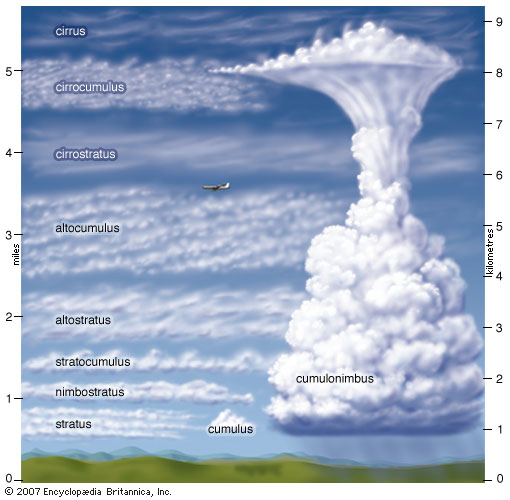


what does that show :
1) cloud are often stay at altitude from 1 km to 9 km, if you fly high enough there are often enough cloud from hiding from enemy’s IRST – EO systems
2) EO, IRST system if they want to look far, have to focus their sensor ( optical zoom) thus significant reduce their FoV and increase the time needed to scan the battle fields ( unlike Electronic scanning radar, an optical systems have far slower scan rate) .
3) 1 aircraft fighter cost 100 millions USD can buy about 2000 shoulder SAM
4) IRST, EO systems engagement range are often limited by their LFR, so often be about 20 km
now put all these information together :
A f-35 fly at altitude will have more cloud layer to hide, when it fly too high you will need an aircraft equipped with IRST system to find it because EO/IR system on ground will be blocked by many cloud layer, since engagement range using IRST are limited, the aircraft using it to attack F-35 are at serious risk of geting shot down,
Because F-35 fly at medium, high altitude it’s sensor are not limited by the horizon like a Rafale fly at low altitude. Missiles, bomb drop at high altitude will also have much longer range than the one at sea level, thus if a SAM battery use IRST/EO systems again fighter fly at altitude, they will often need to use them at maximum optical zoom, otherwise the range is too short and they will get attacked long before they detect enemy, but high level of optical zoom mean very narrow FoV and limited SA due to slow scan rate
A rafale fly at 100 ft from ground will have no cloud to hide, and the pilot wouldn’t want any cloud in that case since it limit his vision and he may fly into mountain, house, tree.. etc, flying at low altitude limit radar/visual horizon of both Rafale pilot and his enemies, thus enemy won’t need to zoom with their optic sensor ( mean huge FoV) and they dont have to worry about being attacked first either since the engagement distance of both side are similar due to horizon limitations. As mentioned earlier, a 100 millions USD fighter can buy 2000 shoulder SAM, So if you have enough money to buy 1 fighter equipped with IRST looking for F-35 fly at altitude, you will have enough money to afford 2000 IR system looking for Rafale at low altitude ( not to mention the huge amount of people at every city that Rafale fly pass by)


 Sign In







