mig-31bm
And this where DFRM with AESA jamming is effective which is the case of Spectra. Adapting the jamming signal in near real time to be effective.
Spectra is being upgraded with GaN antennas to remain effective against advanced radars.
GaN increase your transmitting power , but it doesnt increase your processing power , and as fast as the Spectra is , it still need time to analyse enemy radar signal to be able to distinguish that from background noise , by the time Spectra ( or any deceptive jammer ) done processing the reflected signal already come back to the source , that why deceptive jammer are ineffective again frequency agility radar
A simple calculation , APG-81 can detect something like Rafale from around 100 km, the total distance the radar wave need to travel is around 200 km , speed of light is around 300.000 km/s , so radar wave will cover the distance in 0.001 seconds, when Spectra done processing to send out the fake signal then APG-81 have already sending out signal in different frequency
And this is why nations keep investing on modern jamming systems…With the new step being GaN jamming
That’s the proof that jamming is still perfectly able to be relevant against AESA radars.
I didnot say jamming is irrelevant again AESA radar , i said to jam radar that have random PFR , scan pattern , and changing frequency thousands time/sec like AESA radar you will need a noise jammer , deceptive jammer will be highly ineffective
most modern jammer can do both deceptive and noise jamming any way , but that where RCS matter , because it affected signal to noise ratio
Changing Waveform is nice but it requires a lot of power powerprocessing and implies loosing in effectiveness. If the jammer can keep up it terms of processing speed (where it has an advantage being task with the single task of jamming and not detection) then it works nicely against those waveform changes.
actually , it is opposite , the radar will have significant advantage because the radar know what waveform , pattern , frequency it use ,thus it can use a filter while the Jammer have to process all signal and guess
Why do you think Spectra is being upgraded with GaN ? Why do you think the US are investing on the Next Generation Jammer based on the same technology ? To counter 40 years old threats ? Seriously…
Very interesting that you talk about that , do you understand why they want NGJ use AESA transmitting antenna and have a really high power ? , Deceptive jammer donnot required high power to be effective at all .That right NGJ is a noise jammer , just like ALQ-99 , actually if you was bothering reading the link i posted earlier , then you will realize that they use noise jamming for support jamming while deceptive jamming is onl for self protection ( aka break final missiles lock )
mig-31bmYou can stay at medium to high alt ????!!:highly_amused:
Even if you are an F35 or an F22 you have no chance of surviving against a sophisticated modern SAM defense.
Look, Captor-E radar is supposed to see an F35 at around 60Km. If a smalish fighter jet E-scan radar with limited power powersupply can see a “so called” VLO jet
Firstly :
Originally F-22 was supposed to have RCS = 0.0001 m2 and F-35 was supposed to have RCS = 0.001 m2
However according to an interview recently with gen Mike Hostage, it was reveal thatBoth F-22s and F-35s will be spotted at range by low frequency radar. The F-35′s cross section is much smaller than the F-22′s
“The F-35 doesn’t have the altitude, doesn’t have the speed [of the F-22], but it can beat the F-22 in stealth.
Bear in mind that the F-35 is the first US aircraft designed to the requirement that it be highly effective at neutralizing S-400 systems and their cousins
http://breakingdefense.com/2014/06/gen-mike-hostage-on-the-f-35-no-growlers-needed-when-war-starts/4/
So it is likely that F-35 RCS is atleast around F-22
in theory radar range will reduced by 44 % when aircraft RCS reduced by 10 times
Range of some very strong radar system vs F-35 in theory ( no jamming , clutter ..etc )
1- SMART-L
are said to be able to detect LO target with RCS = 0.001 m2 from 65 km so the F-35 ( rcs = 0.0001 m2 ) will be detect from 36.4 km
http://books.google.co.uk/books?id=4S3h8j_NEmkC&pg=PA263&lpg=PA263&dq=smart-L+stealth+missile+km&source=bl&ots=hJRyOS_ZfZ&sig=RqlhsrbEaJmGJ5A4JLFwoLFL8DA&hl=en&sa=X&ei=Ejn2U7nkLujZ0QXXo4Bw&ved=0CDQQ6AEwAw#v=onepage&q=smart-L%20stealth%20missile%20km&f=false2- SPY-1D ( Aegis ship radar )
can track golf ball-sized targets ( 0.001 m2 ) at ranges in excess of 165 km so the F-35 ( rcs = 0.0001 m2 ) will be tracked from 92.4 km
http://mostlymissiledefense.com/2012/08/03/ballistic-missile-defense-the-aegis-spy-1-radar-august-3-2012/3 – 67N6E GAMMA-DE ( s-400 radar )
the best version can detect target with RCS = 0.1 m2 from 240 km so the F-35 ( rcs = 0.0001 m2 ) will be detected from 42 km
http://www.ausairpower.net/APA-Rus-Low-Band-Radars.html4-59N6E Protivnik GE 3D Surveillance Radar ( S-400 radar )
can detect target with RCS about 1 m2 from 340 km so the F-35 ( rcs = 0.0001 m2 ) will be detected from 33 km
http://www.ausairpower.net/APA-Rus-Low-Band-Radars.html5- Tor-m1 ( short range air defense )
can detect and track up to 48 targets (minimum radar cross section of 0.1 square meter) at a maximum range of 25 km so the F-35 ( rcs = 0.0001 m2 ) will be detected from 4.3 km
http://defense-update.com/products/t/tor.htm6- IRBIS-E ( Su-35s , may be PAK-FA in future )
detection range for targets with RCS=3m2 is 350-400 km , spot super-low-observable targets with RCS = 0.01 square meters at ranges out to 90 kilometers so the F-35 ( rcs = 0.0001 m2 ) will be detected from 39 km
http://www.deagel.com/Aircraft-Warners-and-Sensors/Irbis_a001800001.aspx7- Zaslon-M ( Mig-31 radar ) detection range of 400 km for 20 m2 RCS so F-35 ( rcs = 0.0001 m2 ) will be detected from 22 km
http://en.wikipedia.org/wiki/Zaslon
so i really doubt that Captor-E will be able to detect F-35 from 60 km , and you have to remember detect # track , also the 60 km is only in perfect condition , no jamming , no clutter ..etc
then large ground based E Scan radars will see an F35 or an F22 HUNDREDS of kilometers away. And I am not even talking about other technologies available to counter stealth.
VLO was perhaps the magic bullet in the 90’s and early 2000’s but with the evolution of radar technology this feature on manned fighter jets is not anymore the game changer some would like to believe. This will become even more evident with the generalisation of AESA radars, especially with GaN technology.don’t get me wrong, stealth is still an interesting characteristic but it is not the game changer it used to be (for maned fighter jets) and this will become even more evident in the years to come.
I don’t believe a F35 or any so calles VLO manned jets will stand a chance against ground based radars with AESA GaN and thousands of modules + high power generation available.
Firstly : In order to double the range, the transmitted power would have to be increased by 16-fold
http://fas.org/man/dod-101/navy/docs/es310/radarsys/radarsys.htm
Secondly , the max detection range of radar in perfect condition is very different from the maximum tracking range in jamming condition . A major advantage of stealth aircraft is that they make jamming significantly more effective , required less power , reduce burn through range
For this reason the rafale will be in many situations even more survivable flying at low alt than the F35 at medium to high altitudes.
I think you get the wrong idea here , low flying isnt something that only Rafale can do , even a F-111 , F-105 , Mirage or tornado can do that fine ,if they want the F-35 can fly low too , by contrast , it not possible for Rafale to be stealthy like F-35
That’s why the combination of rafales+UCAV discussed by French forces is FAR more relevant than an F35 and typhoon combo. Only the UCAV would enjoy sufficient all around stealth characteristics to survive where the F35 would be wiped of the sky.
oh really , how much stealthier the UCAV compared to F-35 ?
mig-31bmNo, you need DRFM jamming, and you enjoy both pulse and return wave
DRFM isnt something new , even old system like ALQ-165 , ALQ-211 , ALQ-187 on F-16 have it
https://books.google.com.vn/books?id=l-DzknmTgDUC&pg=PA541&lpg=PA541&dq=DRFM+alq-165&source=bl&ots=2tdKC-pgHh&sig=GYiYuB6yt4xH0veCbHpmpY1hZGk&hl=en&sa=X&ei=YoVPVe2OJMWBU7nSgLgO&redir_esc=y#v=onepage&q=DRFM%20alq-165&f=false
the principal of deceptive jammer still remained the same , why it is ineffective again AESA radar are discussed above
with only the need to temper the Doppler shift. In doing so you become part of the clutter, which get filtered out.
You misunderstanding how a deceptive jammer work . It doesnt erase enemy radar signal , it only send extra signal to try to fool enemy into attacking new fake target
hence , if you send signal with small doppler shift , then that signal will get filter out , not the reflection from Rafale airframe
.
This is Point of defense technics, spread it too thin to cover all routes and it will fail. We are talking penetration with stand off weapons, not overflying a target or tossing bomb from outer ring of defense.
your standoff weapon is a AASM with maximum range of 15 km , not longer than many optical SAM i listed above , and one 100 millions dollar fighter can buy enough shoulder SAM to cover 8000 square miles
Ground clutter will not just reduce range, it will make you disappear with proper Doppler shift jamming, since radar filter out as clutter anything else.
.
No it wont , as i explained before Jammer doesnt erase enemy radar signal , they only send extra signal , if you thinking using Spectra to send signal with very small doppler shift make your aircraft invisible then you are death wrong , only that signal will be filter out , the reflection from your Rafale will still shine bright on enemy’s radar screen ,
also flying at low altitude , slow speed doesnt help much again enemy radar operate in high PRF
In general, high PRF radars are more resistant to ECM because their average power is greater. Changing the PRF in a random fashion is an effective counter to deception because deception ECM depends on predictability of the radar. However, because PRF is related to the basic timing of the radar, this technique results in additional complexity and expense. Random PRF has been employed as a very effective ECCM feature in some radars for many years and has the additional benefit of elimination of MTI radar blind speeds.
JSTAR also use Doppler amongst other technics, FOV is constrained, and system filtering make it already having poor view over low flying choppers and planes. One has to choose between scanning volume or monitoring surface. No all seeing eyes I am afraid, and opportunities to fool technologies when going in its grey zone
AESA radar scan really fast , and since JSTAR can detected moving vehicle from 250-300 km , even if it have slow scan rate , Rafale wouldnt be able to cover much distance in that time
CIWS are short range point of defense, works when you can cover all attack angle for a relatively small target area ,like a ship , not so if you need to cover a 100 km+ perimeter to deny bomb release 15 km away from target (assuming AASM for instance).
RAM , ESSM are also used to intercept sea skimming anti ship missiles , and their range are 10 and 50 km respectively , so that really isnt a small area at all
mig-31bmAs stated by who? You?
Just one point for you to to think at : frequency hopping 1000/sec do not mean using using 1000 different frequencies. Same apply to waveforms etc.
Not me
Firstly , you have to understand how a deceptive jammer work. A short definition is :
The deceptive jammer received enemy incoming RF signal , it analyse , and then re transmitted that signal with different characteristic , like different doppler , pulse width . In contrast to noise jamming, deception jammer tries to mimic the radar echo so that the radar will respond as if it is receiving an echo from another aircraft or ship.
Since AESA radar change frequency very fast , by the time the deceptive jammer done analyse it’s signal , it already send out wave in a new frequency .And you are right frequency hoping 1000 times/ sec doesnt necessary mean mean 1000 different frequencies, the number of frequency used are unknown . X band radar operate between 8-12 Ghz , so radar can send out signal at any frequency between that ,the first pulse could be 8.52 Ghz , the second pulse could be 11.243 Ghz … and so on , how many frequency they intended to use we dont know
Jamming is likewise much more difficult against an AESA. Traditionally, jammers have operated by determining the operating frequency of the radar and then broadcasting a signal on it to confuse the receiver as to which is the “real” pulse and which is the jammer’s. This technique works as long as the radar system cannot easily change its operating frequency. When the transmitters were based on klystron tubes this was generally true, and radars, especially airborne ones, had only a few frequencies to choose among. A jammer could listen to those possible frequencies and select the one to be used to jam.
Most radars using modern electronics are capable of changing their operating frequency with every pulse. An AESA has the additional capability of spreading its frequencies across a wide band even in a single pulse, which equates to lowering the emission power, making jammers much less effective. Although it is possible to send out broadband white noise against all the possible frequencies, this means the amount of energy being sent at any one frequency is much lower, reducing its effectiveness
http://self.gutenberg.org/articles/aesa_radar
The main characteristic of AESA radar are frequency agility , and random PFR , random scan pattern :
In general, high PRF radars are more resistant to ECM because their average power is greater. Changing the PRF in a random fashion is an effective counter to deception because deception ECM depends on predictability of the radar. However, because PRF is related to the basic timing of the radar, this technique results in additional complexity and expense. Random PRF has been employed as a very effective ECCM feature in some radars for many years and has the additional benefit of elimination of MTI radar blind speeds.
Scan pattern. The radar scan pattern can influence ECCM capability because it influences the amount of energy directed toward the radar target. An active tracking phased-array radar is quite ECM resistant because of its ability to rapidly scan its radar beam in a random fashion than in the regular circular or sector scan pattern of conventional radars. This irregular beam positioning would give the opposing ECM system little or no warning and make it impossible to predict where and when to transmit false signals. In systems where scanning is performed in the receiver rather than in the transmitted beam, such as those mentioned in the section on angle deception, ECM has no direct access to the radar scan pattern and thus has difficulty using that information to interfere with the radar system operation.
Frequency. Frequency agility is a significant ECCM design feature. Using components such as frequency synthesizers (something like those employed in radio scanners) instead of conventional crystal-controlled oscillators, some radars are able to change frequency within one pulse repetition time (PRT). This makes deception and jamming very difficult. The radar can be designed to change frequency automatically within a certain range, or this can be done manually.
mig-31bmFor the record, this has been going since page 102.
As stated , Low level penetration using deceptive jamming to navigate the EM bubbles is stealth.
As stated low level flight doesnt help again air threat , and deceptive jamming wouldn’t work well again AESA that change their frequency a thousands time / sec either , you need a noise jammer for that , NGJ , ALQ-99 required very high power for a reason
Through 8 pages of educational ,it appears that in the scenario where most country’s inhabitants are armed with shoulder SAM on watch 24/7
as explained , air defense can be networked , a few people saw enemy aircraft fly at low level can alert the whole defense , and there is something called work-shift , no one have to watch the sky 24/7
Every shoulder fired sam can hold a area of at least four square miles of ground as being at risk to a low level attacking fighter as a conservative estimate. One 100 million dollar fighter can buy 2000 50.000 dollar shoulder fired sams. So mass scattered deployment of those 2000 shoulder fired sams can create a low level random unsafe area for low level penetration of 8000 square miles with zero ability to detect safe and unsafe areas by inc attackers
where roofs and mountains are littered with AAA and SAM,
which they were on big conflict like the Vietnam war
while AWACS and CAP immune to Doppler shift jamming monitor the clutter .
BS , i did said myself that ground clutter will reduce detection range but as already explained CIWS can detect , track sea skimming missiles fly only 1-2 meter from the sea , JSTARS can track ground targets at a range 250km so your Rafale willnot be invisible just because it fly at low altitude , after all Rafale isnt a stealth cruise missiles
mig-31bmYou read the numbers in a non logic way. 10 percent of success is an excellent ratio for cruising missile meaning without really taking care of the weather condition and with a minimum planing just prove how it is difficult to shoot a cruising missile.
Iam sorry , what ???
who say the Tomahawk launch just used minimum planning ? , Tomahawk’s TERCOM, DSMAC required satellite to take picture of the target area
and bad weather will work in favor of the tomahawk , since it autonomous guide
Now imagine a fighter, with a trained pilot, with an optimum mission planing and you can divide this ratio by again 10.
there really no statistic to support the assumption that the low level lost ratio will reduced by 10 times by optimum mission planing , what if the enemy was prepared as well ?
and mind you , 1% lost rate per sortie is still pretty high , how many sortie did the NATO fly in gulf war ? 100.000 sortie , it is that many , with 1 % lost rate , soon you will run out of aircraft
The low ratio you mentioned for aircraft was also due to the poor opposition. In case of deep strike if there is strong opposition. There will be missions where the low flight profile will be preferable.
In case of deep strike again strong opposition they use stealth fighter fly at altitude or cruise missiles which is alot safer
So a guy at the border say a plane arrive and deep inside the country let say hundred km there are some guy that know exactly from where and when the plane arrive. Then you cross your finger that the weather is ok. That the fighter don’t attaque at night and that from the initial observation to the man pad guy the plane doesn’t change the direction.
The only thing I wonder is why you don’t give the man pad to the first guy. You know the one the is the first to detect the plane?
Every shoulder fired sam can hold a area of at least four square miles of ground as being at risk to a low level attacking fighter as a conservative estimate. One 100 million dollar fighter can buy 2000 50.000 dollar shoulder fired sams. So mass scattered deployment of those 2000 shoulder fired sams can create a low level random unsafe area for low level penetration of 8000 square miles with zero ability to detect safe and unsafe areas by inc attackers. And , we are in the internet age , the whole air defense can be alerted and prepare when someone saw an enemy aircraft fly at low level
and if the weather is bad then the Rafale will have to fly higher since it may risk fly into terrain , building as well
mig-31bmR-27ER may have max. aero range greater than MICA, probably.
Not probably, R-27ER will have better max range due to significantly more propellant it carry
BUT it is completely illogical and flawed to say ‘I have charts for A missile – therefore if I know that B missile is less ranged X distance, then everything will be diminished by a factor of Y”.
Missiles launched at lower altitude, slower speed will have less range than the same missiles launched from high altitude, high speed .Especially if the missiles have to climv 50K ft upward to reach target . That is physic, you cannot change it
That’s idiotic. You don’t know the different between each missiles when it comes to piloting and control laws (which trajectory will it adopt ?), drag coefficient, or engine characteristics (motor efficiency versus altitude) or burn profiles.
Missiles motor are not the same as jet engine, their performance are largely not affected by altitude
the flight profile long range missiles use is fly in an arc to increase their range and having ability to covert potential energy to kinetic energy in terminal phase
you are trying to argue that somehow there is a magical propellant or flight profile that allow MICA a 112 kg missiles to match the range of R-27ER a 350 kg missiles
Furthermore – when it comes to electronics and technology, R-27 is from another age. First, its fundamental functioning (semi active) is flawed, and any fox 1 shooter fighter will struggle against fox 3 shooters, even if the gap can be reduced with adapted tactics.
R-27 is Super 530D counterpart, a powerful but obsolete missile. VVS are not phasing out R-27 with R-77 (even if this is extremely long..) for no reason.
no one here argue that R-27 have better guidance than Mica, we are talking about kinematic performance
and actually the RuAf did’t even buy R-77 to replace their R-27
mig-31bmSo, to sum it up: lukos ang mig31, you both consider theoretical abilities of SAM systems as facts while downplaying Rafale’s real life facts as irrelevant. You take 25 years old “stats” but refuse to take into account everything that moved forward in the mean time
the danger of IR guide SAM and AAM again aircraft is not theoretical at all, they have shot down many aircraft in the past
And what real life Rafale fact you talking about?
if you talked about R-27ER range vs MICA range
the stat come from flight manual, so there is nothing wrong with trusting it, R-27ER is significantly bigger and heavier than MiCA, both type use normal rocket motor
there also nothing wrong about the fact that a missile launched from sea level, at mach 1 will have very short range compared to something launched at mach 1.4, 40-50k ft
basically, as said by others… it is not ignorance, obviously you distort fact to serve you PoV on purpose
if you think iam distort fact, then you should be able to explain where iam i wrong
mig-31bmMiG-31, did you ever try to spot an aircraft?
Moreover, did you ever try to spot an aircraft when you don’t where to look (i.e knowing its approx. angular sector)?Visual acquiring is something you learn and practice. It is something very difficult, especially when the background is bad weather or ground. You eye has to adapt a certain amount of time, staring at a determined azimuth, and from this point, and this point only, the eye will have sufficient adaptation to detect the contrast difference and motion between the aircraft on the ground in a roughly 30° arc.
And it is impossible to keep visual awareness all day long, especially when your acquiring time window is just of a few seconds.
we go over this before
1: they dont use a single person looking at the sky all day long , there is something called work shift
2: Modern MANPADS units are networked with a variety of intelligence sources, someone near the country border seeing a rafale pass by can easy call and alert MANPADS units deep inside the territory
3: it not a few seconds , as i have already calculated for you
4: shoulder SAM is not the only threat , there are threat from optical guidance SAM like Pantsir-S1, AN/TWQ-1 Avenger, M163 VADS, SA-13 Strela-10M3 , SA-8 Geko as well
mig-31bmOk so 90 percent of success for crushing missile is not a good rate for you? And the source of the shoot is Irak claims.
It make me reminds when there were this Iraki communication minister saying “everything is under control” I guess mig trusted him.
you have to remember one thing very important , a cruise missiles cannot be used for a second times , while an aircraft can be.
a 10% shot down are good for a cruise missiles but terrible for aircraft.If you lost 10% of aircraft for every sortie , then after 10 sortie you will have nothing to fly
How many people live in the world with binocular Implanted permanently on their eyes to look after potential airfrat at 18 km ? ����
again , war time is difference from peace time ,for example in Vietnam war , there are a huge number of AA cannon on house roof direct at the sky at all times
mig-31bmYes it did once landed only . Below a link, Not the report I recall and was looking for but this will do
http://theboresight.blogspot.dk/2011/03/spade-is-spade-for-odyssey-dawn.html13-May Aircraft of unknown origin [below] is shown operating at very low altitudes over (or near) the battlefront in full view of western cameras in daylight. Aircraft is an L-39 (L-59) class light-attack jet. These aircraft are all known to be operated by the LARAF, Tunisia, Algeria and Egypt.
08-May: It appears the LARAF is down – but not out. They reportedly attacked fuel storage tanks at night at Qasr Ahmed with Aermacchi SF.260s light attack/trainers (pictured below) being the most likely culprit. The aircraft could be operating out of (or near) Misurata, hidden in hangers or other structures. More LARAF activity with this aircraft is expected. Also reports (06-May) of an unknown helicopter dropping mines in Misurata harbor flying in Red Cross markings
07-May: Rebels in Misurata reported the regime used “small aircraft, typically used for spraying pesticides, to drop bombs on four oil storage tanks in Qasr Ahmed”, near the Misurata’s port. The bombs started a fire which spread to four other main storage tanks. These storage tanks are Misurata only source of fuel storage. Reportedly the fire is still burning at the local fuel terminal and smoke is rolling over the city.
This to point out that there are no all seeing eye, over a full country
ok i read it
Firstly :it a blog rather than an official source
Secondly : the info is quite vague to be honest , for example : ” They reportedly attacked fuel storage tanks at night at Qasr Ahmed with Aermacchi SF.260s light attack/trainers (pictured below) being the most likely culpritthe aircraft could be operating out of “
Thirdly : what i understand from the article is that these fighter attack relatively unimportant target ( not a NATO airfield or ship or sth like that ) , and at night when there is no one around ( i doubt there alot of AWACs or fighter flying CAP at that time )
Problem is you need to know where to look and it has a narrow FOV. That would be like trying to find something evasive looking through a tube
I think we already over the part about how fast a modern AESA radar can scan
as it can be seen from the picture , it take APG-81 about 1.3 second to scan 2/5 it’s total FoV
also as i have explained , a rafale carrying weapons isnot the same as a stealth cruise missiles , it willnot be invisible just because it fly close to ground , sure clutter will reduce enemy detection range , but Rafale still moving really fast and have quite big RCS viewed from above
Not really, what it gets is correlating strong signals.
if the enemy radar is at lower height than the Rafale then it will look at Rafale in the sky background
if the enemy radar is at higher height than the Rafale then it will look at Rafale in the ground background
but as i have explained while the enemy radar have to distinguish between return from ground and return from the rafale , spectra will have to distinguish signal from enemy radar and signal that also from enemy radar but reflected back from ground
. .
. Granted it is smaller , it is also slower and tend to fly a bit higher.
Tomahawk fly at 15-30 meter from ground at speed about 800-850 km/h
AGM-84 can fly at 3-5 meter from the sea at speed about 800-900 km/h
something like NSM , RBS-15 Mk3 can fly at mach 0.95 ,only at 1-2 meter from the sea ..etc
i doubt that a Rafale carry 6 AASM can do better than that
Not sure to follow the reasoning here., because to me both are about the same , that is denying or delaying engagement from enemy to the latest possible.
Stealth allow you to attack enemy without able to attack you
Low flight tactic reduce engagement range of ground defense but both of you can attack each other at the same time , and low flight tactic put you in disadvantage situation again enemy’s fighter , AWACs
But as someone suggested , this topic has been enough derailed, and it may be more adequate to discuss this matter further in another dedicated thread.
alright
mig-31bmWhat would much more surprise me I’d if you have a source to support what is the tomahawk ratio that has been shoot.
let talk about gulf war for example :
[ATTACH=CONFIG]237366[/ATTACH]
at the start of the war 291 tomahawk was launched , overall 85 % missiles hit or damage their target out of 95 % successful launch , which mean lost rate of 10%
[ATTACH=CONFIG]237367[/ATTACH]
After the end of gulf war , Tomahawk missiles are continued to be fired , on January 17 – 1993 , a total of 45 Tomahawk missiles were launched at a nuclear facility , Iraq claimed 8 missiles was shot down and 1 was damaged , which mean lost rate of 17.7%
https://books.google.com.vn/books?id=l-DzknmTgDUC&pg=PA261&lpg=PA261&dq=tomahawk+missiles+gulf+war+shot+down&source=bl&ots=2tdKB0ufFn&sig=CNC9UXF151gyPY4z2llsusJ-OUs&hl=en&sa=X&ei=6ThOVduPLsbwUqmIgJAI&redir_esc=y#v=onepage&q=tomahawk%20missiles%20gulf%20war%20shot%20down&f=false
In Gulf war the coalition aircraft flew over 100,000 sorties , losing 42 aircraft due to enemy action , so the lost rate is 0.042% per sortie
so low flying have considerably higher lost rate
A Rafale using spectra is less easy to lock than a cruising missile.
If yo pay attention , he was talking about how Rafale can hide in ground clutter that why i have to explained Rafale is not a stealth cruise missiles , it have much bigger RCS , especially with weapon
also I didnt listed normal cruise missiles , i listed stealth cruise missile that have tiny RCS and IR signature , i doubt that it would be harder to lock the Rafale
Btw Spectra cannot jam optical guide SAM or shoulder SAM , it’s performance again modern AESA are also questionable
A radar at 15 meter high that allow to scan 40 km is called a navy radar. As on the ground you will never achieve that.
Why ? , sea clutter is ways worse than ground clutter since the sea wave is moving
also , 15 meter is just a number i prefer to use, it not the maximum height of ground radar
in real world they can reach much higher , even without being put on hill or mountain
For example 40V6M/MD family of mobile mast.Two configurations are most commonly used, these being the shorter 78 ft 40V6M and taller 127 ft 40V6MD. The cited mast heights in Russian literature are 24 metres and 40 metres, respectively, and actually refer to the elevation of the antenna phase centre when mounted on the mast, rather than the physical height of the antenna.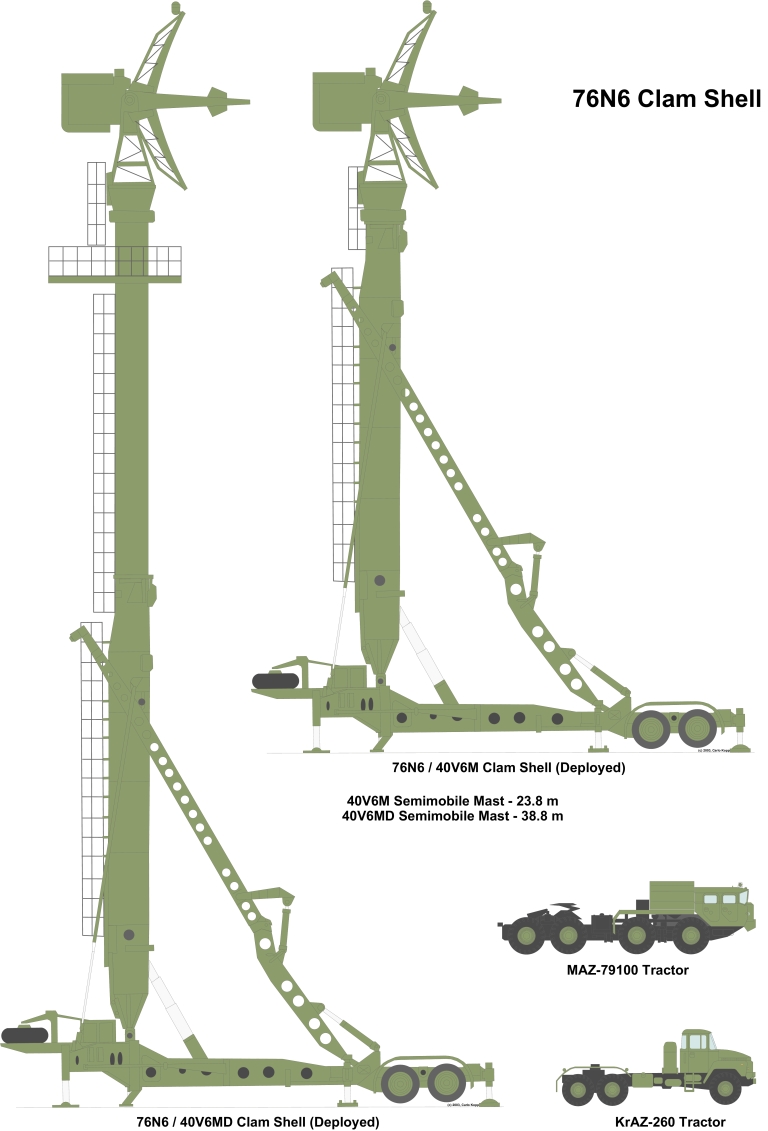
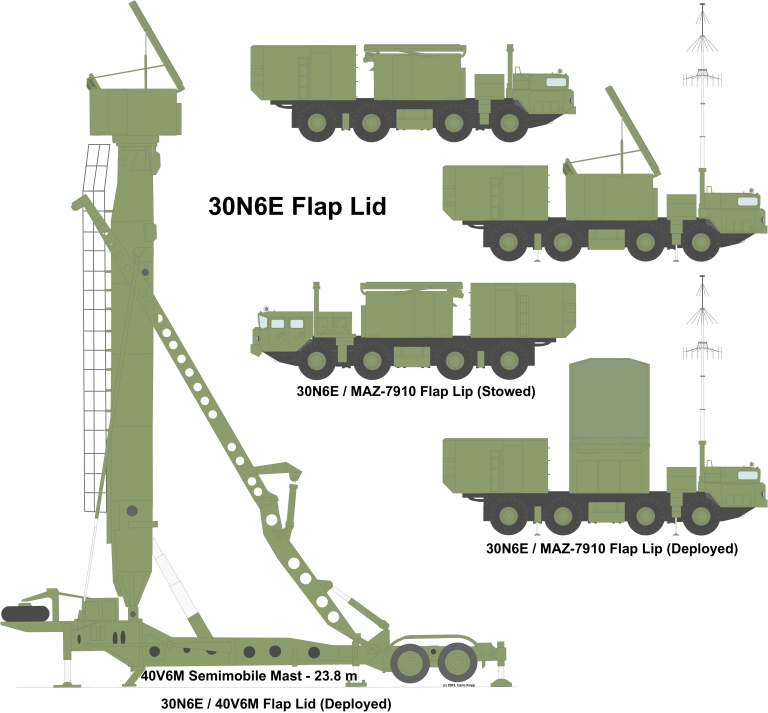
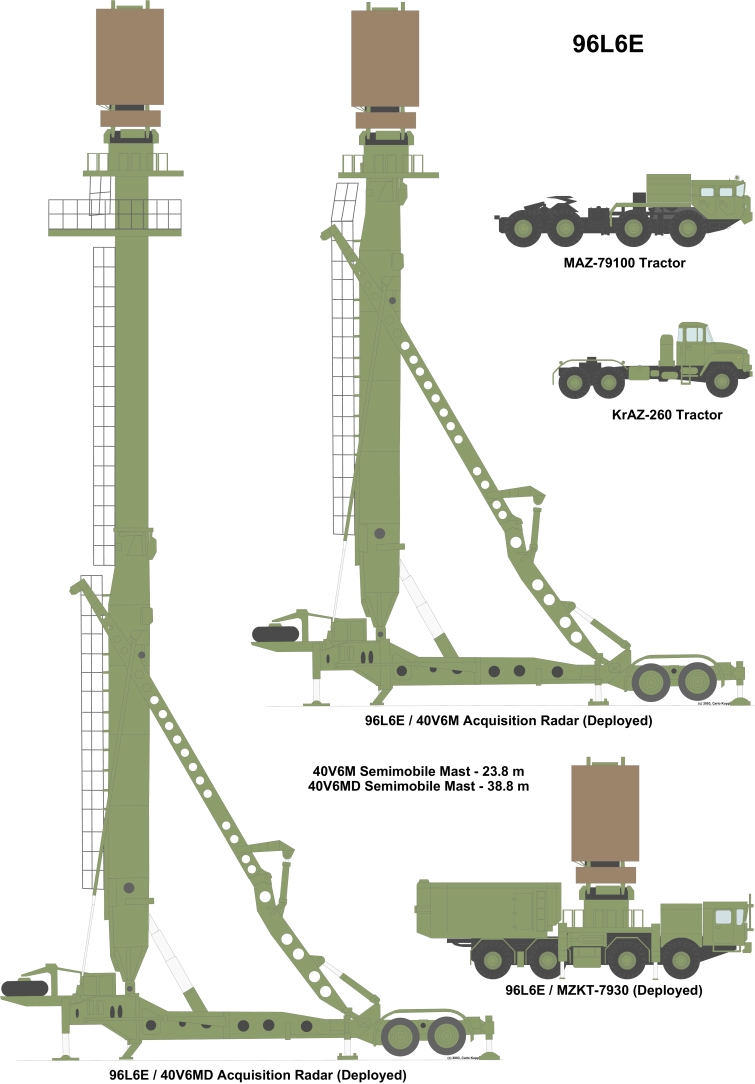
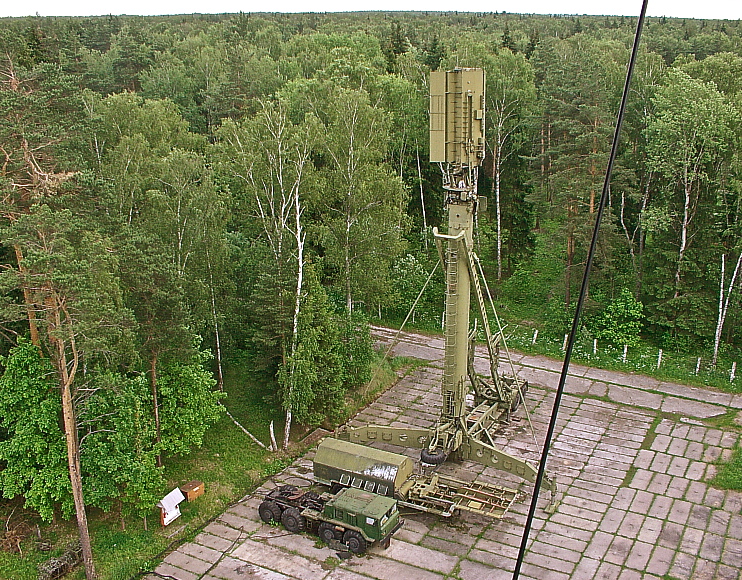
In real world the two meter tall person will even not hear the Rafale before he arrives.
in real world he use his eye + binocular
In real world between the two meter guy and the Rafale at 18 km ther are trees, houses, and lots of thing that will not allot the lock. Plus a last things call spectra
in real world the guy would stay on the roof of some tower or house with good height for better view
and Spectra cannot jam optical guide SAM or shoulder SAM
mig-31bmTry to get out and visualize yourself 24/7 with your shoulder SAM ,waiting for it. And then when it happens having to get a lock on a low flying 900 km/h +.Shoulder SAM are a good deterrent against CAS, much less so against a fast flying passing by. So a hazard yes ,which would require depth and saturation to perform, hence numbers . No wonder why this has not been used effectively against cruise missiles, whose flying a bit higher and slower, makes for a far more accessible target.
you would be surprise with the number of aircraft shot down in Vietnam war by AA cannon
also Cruise missiles is a much smaller target compared to a Rafale , and yes they do get shot down as well, there are many Tomahawk that get shot down by AA cannon on the way to target
Not sure ,as mrmalaya suggest ,the tactics will disappear, it would probably for piloted planes ,but UCAV and cruise missile are likely to pursue the tradition.
low fly isnt a bad tactic again sea target , but again ground target in side enemy territory there are too much danger come along with it
Deep penetration flying altitude in a VLO , that can now our days already be detected and tracked with mostly passive and/or distributed system
Both low flying aircraft and stealth aircraft can be detected and tracked by enemy
however , stealth let pilot attack enemy before they are able to track and engage him
by contrast for a low flight aircraft
_ again ground SAM , AA cannon :low flight tactic let pilot attack enemy at the same time they can attack him
_ again enemy’s fighter , interceptor : low flight tactic let enemy attack pilot before he can counter attack
The key is that very low level typically reduces exposure time to a few seconds.
a rafale fly 50 meter from ground , and a radar that is 15 meter tall will have radar horizon about 40 km
assumed rafale fly at mach 1 that is still 118 seconds window of engagement
a rafale fly 15 meter from ground , and a 2 meter tall person , will have visual horizon about 18 km
assumed rafale fly at mach 1 that is about 54 seconds window of engagement
mig-31bmTry to get out and visualize yourself 24/7 with your shoulder SAM ,waiting for it. And then when it happens having to get a lock on a low flying 900 km/h +.Shoulder SAM are a good deterrent against CAS, much less so against a fast flying passing by. So a hazard yes ,which would require depth and saturation to perform, hence numbers . No wonder why this has not been used effectively against cruise missiles, whose flying a bit higher and slower, makes for a far more accessible target.
you would be surprise with the number of aircraft shot down in Vietnam war by AA cannon
also Cruise missiles is a much smaller target compared to a Rafale , and yes they do get shot down as well, there are many Tomahawk that get shot down by AA cannon on the way to target
Not sure ,as mrmalaya suggest ,the tactics will disappear, it would probably for piloted planes ,but UCAV and cruise missile are likely to pursue the tradition.
low fly isnt a bad tactic again sea target , but again ground target inside enemy territory there are too much danger come along with it
Deep penetration flying altitude in a VLO , that can now our days already be detected and tracked with mostly passive and/or distributed system
Both low flying aircraft and stealth aircraft can be detected and tracked by enemy
however , stealth let pilot attack enemy before they are able to track and engage him
by contrast for a low flight aircraft
_ again ground SAM , AA cannon :low flight tactic let pilot attack enemy at the same time they can attack him
_ again enemy’s fighter , interceptor : low flight tactic let enemy attack pilot before he can counter attack
mig-31bmwhat I find absolutely hilarious is all that insistance on “plenty of shoulder mounted SAM systems” and so on, while the VLO fighters will go in “safely”..
Pantsir-S1, AN/TWQ-1 Avenger, M163 VADS, SA-13 Strela-10M3 , SA-8 Geko , Shoulder SAM , AA gun are all very serious threat when flying at low altitude , and they are so much cheaper than something like Aegis , S-300/400
First, when you go in at first, (first day strike) you are usually with the advantage of surprise. guys don’t walk aroung with MANPADS on their shoulder whole day long…
when enemy wasnt prepare , anything can do the job fine ( for example :in 9/11 an airliner are used by terrorist to attack pentagon , twin tower )
By contrast if enemy was even a bit prepared with some short range optical SAM like Pantsir-S1, AN/TWQ-1 Avenger, M163 VADS, SA-13 Strela-10M3 , SA-8 Geko ..etc then low flight raid can result in very heavy lost
in that first day strikes, you can go in low level, and you’ll go for targets like communications, radars, and everything that makes an IADS viable. you won’t all of a sudden go to strike the isolated lone target completely behind the SAM curtain, without ever bothering doing anything about those SAMs.. be it in low level or from high altitude. Once you have softened the eventual threats in the first days of that hugely potent, pixie-dust powered radar network that sees anything anywhere, you’ll return to attacking from higher altitudes, using your electronic warfare suite to manage eventual remains of it, go around danger zones and so on…
the problem are most modern SAM are mobile , you can hope to strike and destroyed some of them in the first attack , but not all of them , and a low flight raid without element of surprise is quite dangerous
Why was there pretty much no low level attacks in the last 20 years or so? Because they weren’t needed, pure and simple. Any war in which NATO and Co were engaged were against oponents whose air defense networks could be treated either through cruise missiles first, or with much more modern ECM suites than what the opposite side was using.
Stealth bomber, autonomous decoy are still used
low flight tactic are used as well but not by fighter , they are done by cruise missile like Tomahawk , when losing a few of them are still sustainable
Mig31 fantasizes about those radars on top of the mountains.. first and foremost,
Not a fantasy , it is an actual tactic to put radar on mountain for better radar horizon
if you put it there, it will be among the nicest targets in the area, and among the first to be destroyed… Any Rafale flying high, way beyond any SAM that radar may eventually be able to shoot at it will have its position pinpointed and and once the radar coordinates are passed to other allied aircraft in the area, that radar will have the appropriate weapon headed its way very soon.. unless there is a way around it so you don’t need to waste a costly cruise missile or such on it and just fly around.
the radar can have several short- long range SAM to protect itself ( especially since mountain radar have better radar horizon , it can protect itself easier )


 Sign In