mig-31bm
So you are saying that the strategy employed by the F35 is to go head on against all emitting radars?
no , but try to turn the frontal to them
Claiming that the head on RCS is to be expected in any situation is naïve to say the least. Especially in situations where multiple emitters are to be considered.
I hope this will make you reconsider throwing around unverified best case scenarios as a general rule.
totally agree ,RCS arenot the same at all angle
[ATTACH=CONFIG]236253[/ATTACH]
From http://www.intechopen.com/books/aeronautics-and-astronautics/the-assessment-method-for-multi-azimuth-and-multi-frequency-dynamic-integrated-stealth-performance-oIt isnt perfect but it should give you an idea on what a near perfect RCS shaped aircraft reflects (look up the X-45 if you havent). Most of the time the reflection is at 0,01 sqm (with valleys down to <0,0001 as well as higher than 10sqm.
the picture you posted was their RCS curve model but not their test result , and it was again S-band ( frequency 2-4 Ghz ) not X-band ( frequency 10-12 Ghz ), the test result look like this
so the average frontal is about -30 to -40 dBsm or 0.001 to 0.0001 m2
btw here another one of their model
any way i dont think F-35 reflective curve will resemble X-45 , because they have quite different design
here a picture of something that resemble the F-35 more
from 2002 Cal-Poly VLO Bomber design study. ( from SpudmanWP )
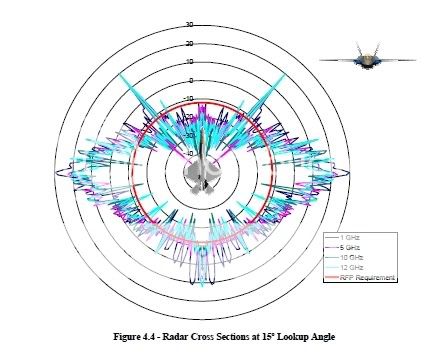
so the frontal have the average RCS of about -20 dBsm or 0.01 m2 ( without the effect of RAM )
Things to notice:
1. They have no agenda to falsify data and they will fail the class if their data is not accurate.
2. All RCS measurements were done assuming bare metal.
It is important to note that the addition of radar absorbing material (RAM) would further reduce some of the returns on the aircraft. Also, currently the RCS software is treating the entire aircraft and all of its parts as purely reflective metal surfaces.
3. RCS, across all bands, is affected by shaping. This affect is roughly the same (within an average of about 10db).
mig-31bmNo, take another look, the wing is not horizontal and no fuselage surface either
No again, they are vertical while the wing is not horizontal
they look pretty perpendicular to me though 😮
Rafale
vs Eurofighter+Royal+Saudi+Air+Force+Eurofighter+EF-2000+Typhoon+F234+(4).jpg)
vs F-16
So? In what is it different from what I’ve said? You emit the appropriate wave back to the transmitter. That wave will vary depending on speed, angle, loadout, initial wave form and frequency and so on
the problem is to get destructive interference, the 2 wave must be in exact plane, on the same line ( ok iam not very good at explaining but imagine if you want to intercept a bullet with a bullet, your bullet have to be on the same line)
and to get the correct phase difference to transmit the wave when both side are moving are simply impossible ( it hard enough to do that with a stationary transmitter)
Nevertheless shape stealth is still a mean of RCS reduction even if achieved with spectacular result, it remain largely constrained to certain incidence of radar wave . Expose the wrong profile to radar wave and the benefit achieved with passive shape stealth are no longer effective. From there, internal storage aside , there are no reason to think it will fare any better than any other planes using similar material and methods of RCS reductions, arguably size would matter more than anything else .
even when exposed at wrong angle stealth aircraft still have advantage in
1)extensive use of RAM ( alot more than normal fighter)
2) internal weaponry
3) platform alignment ( no 90 degree angle between 2 surface)
also what is the wrong angle you talking about? , if that something like looking directly from bellow then yeah, size matter more
About diving toward a S400, given the weapons the F35 is intended to carry internally and the plane characteristic you may not be far off. But I would be glad to listen what are the alternate for ingress and attack profile for an F35 engaging in DEAD against an S400
.
F-35 can use weapon like SDB, Spear to attack from 100 km or weapon like JSM to attack from 300 km.. etc depending on situation
low RCS from wide angle rather than just head on are desired because when you try to penetrate an air space, your aircraft will be looked at by enemy from many angle, rather than just head on
PS, since you brought it, I do not think F35 nor Rafale each in their respective RCS reduction class, are optimized against air threats but rather against ground radar.
i have to disagree with this Rafale RCS is still too big to achieve any tactical advantage again ground radar
mig-31bmHm yes IRST work good in smoke (fire squad using similar teknik to find victims in smoked buildings) and bad weather.
no it doesn’t , infrared is absorbed and diffracted significantly by smoke, rain, cloud, fog
if you dont believe me, just go to youtube and find any Apache attack terrorist video and see what happened after missile hit ground ( the smoke completely block everything in the area)
And you don’t use LRF that would be stupid form to show where you are…
Quote from http://www.publications.drdo.gov.in/ojs/index.php/dsj/article/viewFile/1810/897
” The IRST system should be
able to track single as well as multiple targets and
passively calculate range of the selected target
using kinematics-ranging calculations. The reasons
for using kinematics ranging calculations are: (i) it
is able to give range information while target is
beyond the scope of active range devices like laser
range finder (LRF), (ii) using LRF, capable of
ranging very long distant targets, the weight of the
system increases which is a constraint for airborne
applications, and (iii) one gives away his own position
and becomes vulnerable to detection by enemy, the
very reason for which IRST is being preferred
over radar.”
the fact is IRST and targeting pod today are still fitted with LFR because :
1) kinematic ranging are very inaccurate
2) kinematic range are very hard to achieved in normal conditions
here is how it work
https://www.google.com/patents/US5282013
and here the accuracy
A 3-dimensional kinematic ranging algorithm for IRSTs is described, capable of real-time operation at greater than 25 Hz. The algorithm implements two 2-dimensional extended Kalman filters to estimate range in azimuth and elevation which are then combined to give the 3-dimensional range. Also included are algorithms for target manoeuvre detection and for determining the confidence of the range estimate. Simulation results for the algorithm are presented, which show that accuracies of better than 20% can be achieved at long range, depending on the measurement accuracy.
mig-31bmThe vertical tail is perpendicular to what part of the aircraft?
to the wing and the body
same for weapon pylons?
weapon pylons is perpendicular to the wing as well
Actually, no, it requires “only” to know the shape and respective intensity of radar return under a given angle and then emit the “opposite” wave from your jammer’s antena.
that not how destructive interference of wave work ,the 2 wave need to be opposite in incident and phase difference between the waves must be exact odd multiple of π for the event to happened
mig-31bmNobody disputes the fact that the F-35 is made to be stealthy. Saying for the Rafale “it has a some frontal RCS reduction feature. That’s it at best.” is a rather observed PoV.. if you look at it closer, it has zero right angles, and all edges are at a different angle so that none will serve as an amplifier of returns from another one. From the prototype whose concept dates from 1984 (before rcs requirements were added to the project) the evolution is significant as no surface has been left “as is”,
actually Rafale have many right angles that can serve as an amplifier of returns from another one
1- the vertical tail
2- the weapon pylon
3-rafale carry missiles externally ,missiles fin are also perpendicular
also the canard was also said to amplifier the return
and, most of all, the Rafale is made from the beginning with deep strike in mind (“deep” meaning “deep into Soviet territory” where there would, obviously be a very powerful IADS to deal with).
Rafale was meant to do that by nap of the earth tactic
When explaining what SPECTRA does, among other things the Dassault representative said a few years ago (don’t ask me for a reference, I’ve read it but no way to know where exactly) that SPECTRA, through its various smart modes not only makes the aircaft harder to track, but can litterally make it disappear from the radar scope. Obviously, the details wouldn’t be said (again, all detailed stuff in regards to SPECTRA is classified) but it shows one thing, while the US have chosen to push the shape stealth to the maximum, which is one approach,
i heard about that story as well , but it more or less the same as the story about plasma stealth ( more BS than truth )
active cancellation aka destructive interference of wave (wave propagation) will required the whole Rafale ( everything on it ) become an antenna , and it must be able to transmit from any part , with the exact frequency ,opposite incident and phase difference between the waves is exact odd multiple of π
that just sound like starwar tech
the French considered more efficient to work on ECM rather than shape which, once its been correctly optimized (removed the obvious points which bring peak RCS, like right angles, open straight air duct to the engine and so on), would cost too much to improve to the maximum, for too little RCS gain to be interesting.
smaller RCS will always make jamming more effective
Each PoV has its merits, and the second has a one big advantage: it works
same can be said about normal stealth , it work as well
mig-31bmWhat I thought. Deriving figures from such claims is essentially useless and misleading.
literally everything we know about weapon came from producer figure and claim
and shaping , and internal layout of major organs.
iam not quite sure what you mean , but radar wave are not meant to penetrate aircraft skin
When it comes to materials and visible reduction technics all constructor can be estimated to be relatively on par, so major differences would not come from that alone.
i think major different between Rafale and Typhoon’s RCS come from the sloping angle of typhoon radar
As for shaping, it functions assuming certain incidence angle. At other angles of radar wave incidences the benefit deprecate rapidly
true , but it assume most common angle , or angle that will give tactical value
Might be right, but do not seem to convert significantly in operation. Pilot testimony tend to indicate, they detect F16 at around same range as M2000.
mirage likely have same RCS as F-16A
F-16C however have much smaller RCS , and i have not heard about the testimony you mentioned
By the way Rafale pilots testimony also reported detecting EF earlier than they normally detect a Rafale. Take it as you feel, but note I did not mentioned tracking there and this was with PESA.
Typhoon dont even have PESA though
I do not dispute F35 having arguments in SEAD and DEAD. Shape and internal weapon station will allow it to come closer than competition with the right incidence exposing its most RCS reduced profile. That is effectively why it was built for and why it is so expensive and ultimately big and heavy. It implies tactic and radar direction finding equipment to make this to work. Now extrapolating this to be effective under any circumstances and at any incidences is very far fetched. Exposing the wrong profile to radar wave will pretty much deny any shape stealth benefit and make you as visible as any other none stealth shaped plane (in clean configuration that is or from above to hide external stores impacting negatively RCS, but at that stage it may not even make a significant difference anyway). So no it is not wishful thinking. But you have a point when talking real war condition, as a clean configuration plane would be pretty much useless at that stage, unless it is already egress.
you dont seem to get it ,F-35 is a stealth fighter ,stealth is the most important part of it , from most angle F-35 will have significant lower RCS compared to fighter like EF-2000 or Rafale ,even at these worst angles F-35 still enjoy the benefit of having RAM , internal weapon , and it doesnt have 2 surface perpendicular to the other
mig-31bmI can’t exactly tell you about Saabs radar…the only thing i know, is that it’s the first with GaN tech that makes it atleast 25 ish % stronger.
what do you mean ?
that the actual range is longer than n the advertising ? ,or that the new radar is 25 % stronger than the old one ?
any way , only 25% increase in power wouldnt improve range significantly , if i remember correctly 50% increase in power only increase range by 6.5%
The claim says “small uas” not large UAV.
most small UAV are still bigger than AGM-84 ,unless you talking about something like Wasp MAV
They also claim small fighter 500km.Gripen c is the smallest fighter and has 0.1m2 RCS.
they didnt claim 500 km range again gripen C
F-16 , mirage ,mig-29 ,mig-21 … ect are all small fighter ,most small fighter have RCS around 1-5 m2
It also say it has Counter countermeasures and countercounter jaming….
it possible for radar to counter deceptive jamming by improve processing power and algorithm , however it not possible for them to counter noise jamming the same way because the real signal simply be masked by noise ( like trying to see the star in the morning ),the only way to counter noise jamming is if target get in burn through range
Im talking about newly made but not finished stealth aircrafts, that lacks performance to be stealthy.
can you name one ,because this confuse me
Radar tech arn’t gonna be evolving any slower.
same for jamming tech
and here the benefit of being stealthy :
mig-31bmSaab giraffe 8a can see a UAS inside 200km, they will se a stealth fighter.Probably before that.
http://www.saabgroup.com/en/Land/ISTAR/Multi-role_Surveillance_System/giraffe-8a/
ok
Agm-84 have RCS around 0.1 m2, so let assume a small UAV have RCS equal that ( even though UAV often have bigger wing, size)
now if Giraffe 8a can detect target with RCS = 0.1 m2 from 200 km, it will detect target with RCS = 0.01 m2 from around 100 km, target with RCS = 0.001 m2 will be detected from around 50 km, target with RCS =0.0001 m2 will be detected from around 25 km. tracking range is about 80% of detection range, => it can track an F-35 from around 30-40 km ( when there is no jamming or ground clutter interference), with jamming from MALD-J, ALE-70, APG-81.. etc the range will be easily less than 20 km
If you fly over a land where they have modern short range airdefence they see you with thier eyes and shoot (robot70 or aacanon )undefendeble. No stealth there at all. They don’t need radar. We are talking invasion towards a defender here, not isis.
using radar = affected by stealth, jamming
using EO/ IR = affected by fog, smoke, rain, cloud
Im saying stealth is good sure, easier to survive, but stupid if you take away all other benefits(abilitys) from the fighter. It becomes a “nische” plane.
we are talking about modern stealth fighter, not F-117 right?
mig-31bmChina sais they see stealth(i believe them). Saab even sells anti-stealth radars since last year…delivery to first customer next year. And that is not the only way to counter stealth.
yes, every radar can see stealth, even the one on the old mig-21, the problem is at what distance , simply say a radar can see stealth fighter mean nothing
Stealth is only dangerous if the weapons carried by the stealthy aircraft can reach its target effecively.You can fool missiles. In a high electronic warfare environment with electronic decoys and
so on you have to be pretty close to get your weapons to hit.
there is something called data link, HOJ that can help missiles defeat ECM to what extent we dont know
it true that stealth fighter dont carry alot of weapons though due to their size, that why there is a rise in development of weapon such as SDB, Spear, Brimstone, CUDA, MSDM.. etc
Also you might need to fire several of them to be sure…. Stealth vessels usually have small spaces and low ordinace.
It all depends on situation of course. Bombing isis will be easy !
question is how many to be sure?
2 or 3 or 4 or 6?
The smart stealth aircraft is built like for example the russian pak-fa like an air superiority fighter, because even if detected, it will still be a good fighterjet.
the trade of is that it somewhat less stealthy and easier to be detected
also detect is very different from able to track and attack, being able to track stealth target in perfect condition is also very different from being able to do that in jamming condition.. etc
The russians prioritys are to hit the awacs and the computer centers…..if you then have netcentrix and a fighter as the *-** which is built solely for the stealth part and to be netcentric…..you are smoked if your links are gone
5 gen fighter can operate alone without AWACS support, and I think it always priority to hit the weakest link
Also big targets with hot engines will always be seen by ir. Not to talk about old school anti air shells lol
IR system dont work well in bad weather or if there is smoke , they are also useless if enemy fly into cloud, the engagement range of IRST also very limited because it restricted by LRF, if i remember correctly OLS-35’s LFR is only 15 km
mig-31bmReally wonder where you pull those RCS figures .
producer claim
Given EF is bigger with big mechanical radar compared to smaller Rafale and Gripen .considering all constructor appear to have devoted and used same level of RCS reduction technics, it is very unlikely the EF RCS would end up being a fraction of that of the Rafale or Gripen ,
RCS depends more on platform alignment, and construction materials than size, it safe to assume that they claim EF-2000 rcs =1/3 rafale is if EF-2000 equipped with AESA radar ( EF-2000 radar is a little bit skew => reduce head on RCS a little bit)
Gripen doesn’t have bigger RCS than Typhoon, it’s 0.4 m2 RCS claim is when it carry 6 AAM, while Typhoon and Rafale claim is when the fighter flying clean
on the contrary.
M2000 and F16 are in the same ball park , given size and RCS reduction technics(meaning none) are of similar level.
wrong, F-16C was painted with iron ball paint ( same thing on F-117) and it also have gold painted canopy ( see have glass programmes to know more) while mirage have none
=> mirage likely have RCS equal F-16A => around 3-5 m2
So only thing one can conclude in term of RCS, assuming plane presenting itself in most optimal position for Lower RCS : M2000,F16 > EF, Rafale, Gripen >> F35.In non optimal condition, they are all likely to end pretty much equal.
…
lol no, F-35 was designed to neutralise S-400 and similar air defense by it’s RCS ( radar like 64N6 BIG BIRD **** on any aircraft radar in term of power, size, range, processing speed) , it ‘s shape, materials and even avionics all have the main purpose of reducing RCS ( also the reason why it heavy, and expensive )
it is wishful thinking to assume that somehow Rafale, Typhoon or Gripen will have equal RCS with F-35 in real war condition
mig-31bmThe Rafale(s) in the incident referred to were RBE2 PESA equipped examples.
can you give me a link about the test, i cant find it anywhere
mig-31bmI just took this one example (in bold)
Besides that claim, you can always read articles and claims how Rafale’s nose is too small and therefore, its radar lacks detection range, power and whatnot..
when one recalls the defeat of the Typhoons against Rafales where Rafales had to simulate SU-27s armed with the R-27 missiles, something doesn’t work out as it shoud. The scenario was for both types to fly and fight according to preestablished rules (Rafales playing the bad guys and using bad guys tactics) and yet, the Rafales (supposedly having 3 times higher RCS and weaker radars) detected the Typhoons (supposedly having better radars combined with lower RCS), locked onto them and virtually shot their missiles. As the R-27 is a SARH missile, that means the Rafales had to keep the lock on the Typhoons for the duration of the missile flight, which they did. Even while they were locked, they never were able to lock the Rafales in return and shoot back, not to say they never managed to break the lock.
What does it show? simply that RCS “claims” are BS 90% of the time, as that is classified data. same goes for radar capabilities.
I havenot heard about the test but
1) at the moment Rafale have AESA radar and Typhoon doesnt => Rafale radar will likely have better resistance to jamming, harder to be detected by RWR
2) AWACS support ?
3) 50% reduction in RCS only reduce detection range by around 6.5% , RCS of Rafale and Typhoon was given in clean configuration, their RCS with pylon and missiles may be very different ( given the fact that gripen was claimed to have RCS = 0.4 m2 with 6 aam, if we assume that a clean gripen have RCS = 0.1 m2 then 6 missiles + pylon will increase RCS by 0.3m 2)
=> rafale have RCS = 0.3+0.3= 0.6 m2
=> Typhoon have RCS =0.1+0.3 =0.4 m2
0.4 and 0.6 are too close to make a different in radar detection range ( the number may not be accurate but i think it can give you a rough idea)
4) one could argue that fighter and missiles maneuverability are somewhat classified too, and without flight manual for EF-2000, Rafale , gripen it would be impossible to know how agile are they
mig-31bmWell, at low alt the F16 and the others can sustain 9G. This is the upper limits of what the pilots can handle so naturally they are pretty equal.
The F35 is a solid performer and it is has superior capabilities to all other fighters in some aspects like BVR and ground attack.
1-3 Look in the flight manual for the F16 regarding the pylons, they barely have any effect. And in the chart i gave you the baseline was F35 with 50% fuel and the F16 with full internal fuel.
i dont quite understand element power explanation, so i take the F-35 vs F-16 comparison from Andraxuss, i think you dont mind?
( F-16, gripen have quite similar size so i think the effect of drag are quite similar)
Now let’s move into a more realistic scenario for close air combat; Lets assume both aircraft expanded their BVR missiles and moving into merge with 4x AIM-9s. For F-16
-2x LAU-129 launchers for wingtip (drag index 1) (previously carrying the expended AIM-120s)
-4x LAU-129 launcher+adapters for 2,3 7 and 8 (drag index 6)
-4x AIM-9M missiles on stations 2,3,7 and 8 (drag index 5)
-basic drag index includes two wingtip AIM-9s, removing both -> drag index -8
-F-16 “C” basic drag index = 7Calculating those will give us drag index = 45. If F-16 was carrying wing EFTs and dropped them, there would be additional +8 drag index for each NNJET pylon, additonal centerline tank pylon (after dropping the tank itself) would add +7 to the drag index. I will simply take the F-16’s data from Drag Index 50 graph.
As F-35 will be carrying AIM-9s internally there will be no drag penalty. Its launcher/adapter mechanism is also integrated, so I will only add 88×4 = 352 kg to the weight.
Comparing armed F-35 armed with 4x internal AIM-9s versus F-16 armed with 4 AIM-9Ms and 2 empty pylons. At sea level;
Click image for larger version.
This was by far the most suprising result to me. I was expecting extra drag would degrade F-16’s performance a little, but not this much; At very slow speeds, F-16 still has slight advantage, but at above M0,6 F-35 actually sustains turns BETTER than F-16 blk50. On ITR part, F-35 gets advantage as the speed increases, topping out at 24,4 deg/s versus F-16’s 22,5 deg/s.
Same aircraft, at 30k feet:
Click image for larger version.
On average; F-35 has 1,2 deg/s superiority to F-16’s Sustained turn performance at subsonic and transonic realm. While supersonic F-16 has better STR. Their ITR is mostly comperable, however at supersonic F-16 enters PhiMax state which degrades ITR performance. While F-35 looks better in theory, I don’t know if similar conditions would affect F-35 too.
. At a gross weight of 22,000 lbs, the F-16C would only have 1,800 lbs of usable fuel (basic aircraft weight of 20,200 lbs; page A1-6 of the F16 Supplement), and even that is assuming no wing-tip missiles, no chaff or flares, and no cannon ammo. Considering that we are comparing “sustained” turn rates here, I think it would be fair to compare the two aircraft with fuel loads that provide an equal amount of time in full afterburner (that way they can “sustain” that turn rate for an equal amount of time). Assuming similar thrust specific fuel consumption (which is a bit unfair with the F135 being a much newer engine that uses reheat for a smaller percentage of its max thrust), that would be about 2,700 lbs of fuel for the 43,000 lbs thrust F135 compared to 1,800 lbs of fuel for the 29,000 lbs thrust F110-GE-129. That would put the F-35A somewhere around 15,300 kg gross weight for a fair comparison (I’m guessing at a basic weight of ~14,000 kg for the F-35).
By my estimation, a 15,300 kg F-35A roughly matches the STR of a 22,000lb F-16C while having a fairly significant ITR advantage. Once you start adding munitions to both aircraft, the advantage should swing into the F-35A’s favor due to it being a heavier aircraft that is affected less by the additional weight as well as it not having to deal with extra drag from external stores.
I just don’t see the F-35A being at a significant disadvantage in a WVR dogfight. I think the F-35A’s kinematic weakness is in high-altitude and high-speed BVR combat where its VLO signature and advanced avionics should more than compensate.
acceleration graph
http://forum.keypublishing.com/showthread.php?129077-A-quot-Rough-quot-F-35-Kinematics-Analysis
btw sustain turn graph of some fighter at 30K feet
[ATTACH=CONFIG]236194[/ATTACH]
Not really the same. Not even O’Bryan at LM calls it supercruise so why should you?
yeah, but since LM defined supercruise as the ability to fly at speed > mach 1.6 without reheat, that probably why they said F-35 is technically not supercruise
The language is less important than the design, but C++ doesnt have one standad for compiling. Or rather it has a standard but not everyone follows it. This means that something that is correct according to C++ specifications can produce errors due to a special interpretation in the compiler. This is why most others use C or ADA for their system cores.
ok i dont know alot about coding, so i take your word for it
so basically aircraft using C++ like Rafale, F-35 easier to have bug and harder to fix compared to gripen?
PAWS-2 is queing the DIRCM.
PAWS-2 can be putted on both helicopter and jet aircraft, it can provide information and control the DIRCM if the platform have DIRCM turret, however Gripen-E dont have DIRCM , even SAAB themselves said so ( Rafale and Typhoon or Su-35 dont have DIRCM either)
mig-31bmAs you have cited F-16, Hornet, F-35 and Gripen, then I show my Thrust/Weight (T/W) calculations using after-burner, with empty weight + 1/2 of internal fuel + 1 ton. (air-to-air missiles, pylons, gun rounds, etc) :
– F-16C Block 50 (GE F110) : 129 kN (13.154 kg) / [8.581 kg + 1.625 kg + 1.000 kg = 11.206 kg] = 1,1738 -> 1,17
– F/A-18C Hornet : 2 x 78,7 kN (16.050 kg) / [10.810 kg + 2.463 kg + 1.000 kg = 14.273 kg] = 1,1245 -> 1,12
– F/A-18E Super Hornet : 2 x 97,9 kN (19.966 kg) / [14.552 kg + 3.390 kg + 1.000 kg = 18.942 kg] = 1,0541 -> 1,05
– F-35A : 40.000 lb (18.144 kg) / [13.290 kg + 4.139 kg + 1.000 kg = 18.429 kg] = 0,9845 -> 0,98
– F-35B : 40.000 lb (18.1440 kg)/ [14.651 kg + 3.162 kg + 1.000 kg = 18.813 kg] = 0,9644 -> 0,96
– F-35C : 40.000 lb (18.144 kg)/ [15.785 kg + 4.479 kg + 1.000 kg = 21.264 kg] = 0,8533 -> 0,85
– Gripen C : 80,5 kN (8209 kg) / [6.800 kg + 1.200 kg + 1.000 kg = 9.000 kg] = 0,9127 -> 0,91
– Gripen E (< 2012) : 98 kN (9993 kg) / [7.100 kg + 1.700 kg + 1.000 kg = 9.800 kg] = 1,0197 -> 1,02
– Gripen E : 98 kN (9993 kg) / [8.000 kg + 1.700 kg + 1.000 kg = 10.700 kg] = 0,9339 -> 0,93
I’ve used 2 configurations for Gripen E, one promoted by Saab until approx. 2012 (7.1 ton of empty mass), the other revised by Saab in 2014 (8.0 ton. of empty weight), so we can see how important is the increase of 900 kg in the mass of Gripen E.
So, in T/W ratio, Gripen E is only better than Gripen C and F-35C. The 2012 Gripen E would be also be better than F-35A/B.
very detailed information, but there a small problem, gripen on 50% internal fuel will fly a shorter distance than an F-15, Su-27, or F-35 on 50% internal fuel, I think it more fair to compare them when fueled to be able to fly to the same distance ( let say 300 – 400 km from base)
mig-31bmOk, this is from elements of power.
At low alt the differences between fighters is quite small. But none the less thie is what RNAF have to say.
Similarily Gripen has been succesful in beating Typhoons (like in meat Grinder for SwAF and Czech AF in later excercises). But those are exceptions to the rule, just like when the F16 or Gripen can win duels with Typhoons.When it comes to agility while carrying heavy loads the Rafale is quite a beast. I’d put Gripen C half a step behind Raffie and Taffie because of their performance while loaded and at high alt, and I’d put Gripen a half or a full step ahead of the F16. As stated above (elememts of power, as well as Andraxxus charts) the F35 will roughly match the F16. The problem it has is that while others can jettison fuel tanks and fly “clean” in the endgame, the F35 has to fly with whatever it has in the tanks as well as the penalty of being huge to begin with.
i dont deny that Rafale , Typhoon , gripen are better at dogfight at high altitude compared to F-35
what iam trying to say is that at low altitude ,they are somewhat equal as it is stated by italian pilot that below 10.000 feet ,F-16 and typhoon are closely matched
According to the Italian pilots, the F-16 matches the EF-2000 under 10,000 feet. But above FL100 the Typhoon becomes quite difficult to beat since its superior aerodynamics
i do aware that Gripen-E , typhoon , rafale can drop their external fuel tank , but
1-they cant drop the pylon
2-because external fuel are used first ,when fighter drop their external fuel tank , they still have 100% internal fuel left
when you compared
a 100% internal fuel Rafale , Typhoon , gripen vs 30-45% fuel F-35 i dont think there is a huge gap in kinetic performance
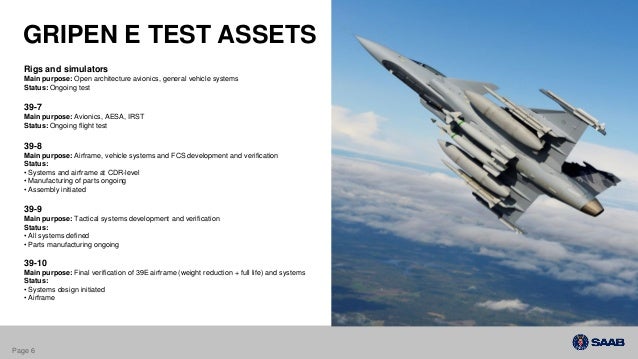
btw here are what SAAB themselves said about F-35 , EF-2000 , Rafale, T-50 and their own Gripen-E
39-7 is the aircraft that has been flying since 2008 and several news are out regarding the avionics tests, stuff like the AESA and EWS over performing and so on.
fair enough ,but APG-81 , DAS and AN/ASQ-239 have been tested as well , and many of them have been made
by contrast Gripen-E and it’s AESA radar is still somewhat like Mig-35 at the moment (only 1-2 prototype been made )
The twin seater has also been supercruising while armed (mach 1,2+). This is more than most current F35 blocks are allowed to go with afterburner…
http://jyoutouhei548.up.seesaa.net/eecfd3aa.jpg
F-35 did similar thing
http://www.airforce-magazine.com/MagazineArchive/Pages/2012/November%202012/1112fighter.aspx
There is nothing wrong with C++ other than the compilers and that for some reason LM design the avionics as a single system block (probably because of a desire to increase performance and not risc any interface bugs between modules). To quote Bjarne (the designer of C++)
Now add a thousand engineers of various competence levels designing one single system and you start to understand the problem. Also building everything as software blocks makes the entire system really hard to manage and debug. Gripen C OTOH gets upgrades for the threat library or FCS upgrades without having to wait for the MS* packages.
There are no warnings anywhere, everything looks ok but stuff just dont work (look at ALIS for a prime example). And since the software is so fkn huge it takes a genious to find the little hardcoded bug.
Others, like Gripen, have smaller codebases and code separation. For instance the EWS works separately from the FCS and weapons control (at least initially). This meant few clashes and the smaller codebase meant easier bug fixes.
Now, Gripen E will have a much larger code base. And this is handled by physically separating the code and have the system use internal APIs for communication. This means that users now can develop their own apps, and if they mess something up the fighter is still flyable and it can still use its basic functionality. This also makes bug testing much easier.
honestly , i have no idea what is this about :p cant you explained it a bit simpler ?
about threat , weapon update didnt F-35 have UAI or sth like that ?
, btw what the coding that Rafale, typhoon ,T-50 use ?
The question still remains. Did the previous 100 times RCS-reductions make modern fighters invincible? Yes or no.
nothing ever made an aircraft invincible , but reduce RCS can improve aircraft survivability significantly
Just give me one situation where this is needed (apart from when you have a missile and you enemy doesnt), in which case DAS or no DAS – You just need to point the nose a bit and fire.
1-dogfight at night
2- fur ball ( many fighter in WVR dogfight )
3- DAS help launching missiles at enemy hidden by the air frame
4- DAS can give information to guide the launched missiles=> somewhat more accurate
Also, Rafale has already demonstrated 180 degree off boresight lock on in various excercises so the capabilities arent exactly new.
if i remember correctly in the Rafale case , there was another Rafale datalink to it
http://www.ar15.com/archive/topic.html?b=1&f=5&t=598598
http://www.gripenblogs.com/Lists/Posts/Post.aspx?ID=793
Is SAAB a good enough source for you?
if you read the link carefully it does say PAWS-2 is strictly a missile warning system , when integrated it can detect threat and active the countermeasure available on the aircraft ,gripen-E have chaff and flare however it lack DIRCM ( same for typhoon , Rafale )
even SAAB themselve said nothing about DIRCM on gripen-E
Survivability and countermeasure summing up:
Effective system awareness with
AESA Radar
IRST
EW system
RWR – Radar Warning Reicever
MAWS – Missile approach warning system
Large amounts of countermeasure dispensers
Chaff, hot chaff, flares in pre-programmed sequences
http://saabgroup.com/en/Air/Gripen-Fighter-System/Gripen-and-Switzerland/Gripen-E/Gripen-E-features-at-a-glance/
Elbit information about PAWS-2 :
http://www.ainonline.com/aviation-news/defense/2013-12-20/elbit-will-help-defend-future-gripens
to be honest PAWS-2 is quite similar to AAR-54
I think this is starting to get off topic. But now you have sources for every claim I have made and I think that even if you have a different conclusion than I have you will find that in principle our differences lie not in the facts (not anymore at least), but rather in our expectations. I have seen leaps like the F35 before and the result has not been the revolution everybode was hoping fore. The competition has a wierd way of catching up faster than expected.
yeah ,seem true


 Sign In