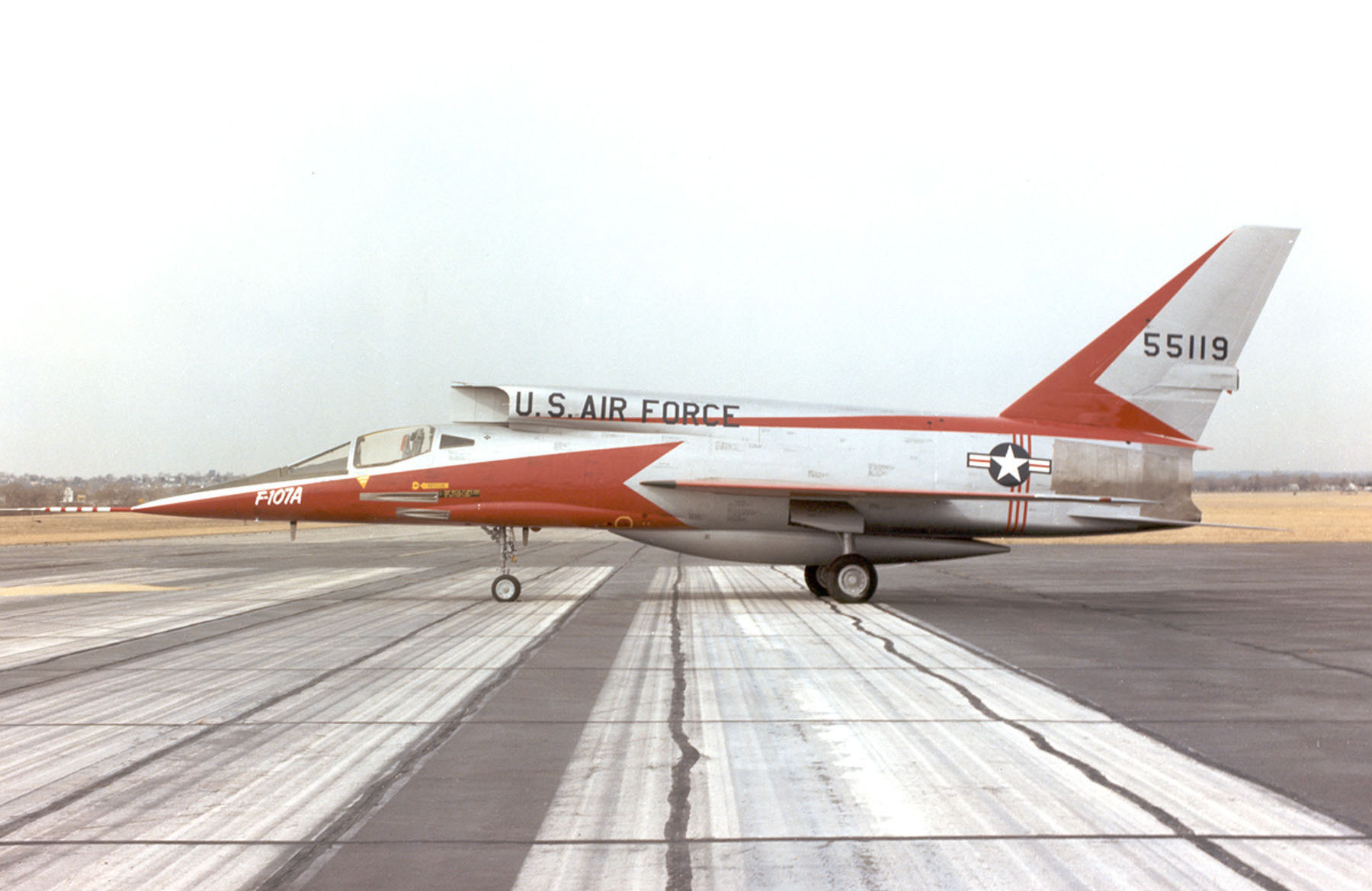
This reminds me of interceptor back to last centery 60’s
Yes, the 2D nozzles are stealthier. That’s why the F-22 uses them rather than the 3D. The Russians would just leave them as is, if signature management wasn’t a significant factor.
It is funny to say 2D nozzle is steathly, if it is then why F-35 isn’t retenggular nozzle?
If you learn some stealth tech you would know that 2D area of cenction of nozzle is larger than 3D nozzle.
I have no idea why the link address was lost, here is added as follow
http://www.airliners.net/aviation-forums/military/read.main/97791/
I remember hearing that for instance (at least the early) the F/A-18’s could achieve instantaneous roll-rates of approximately 720-degrees per-second. From what I remember, the A-4 also had roll-rates of about 720-degrees per-second (though I’m not sure if that’s a peak roll-rate, like not just the roll rate you’d reach when you have the stick all the way to one side immediately — which is an instantaneous roll-rate — but if you held the stick to one side for a little bit and allowed the roll-rate to build up) as well.
The words pretty clear show that roll-rate is degree of per-second with no explaination of how many rolls sustained within, therefore, if there is two rolls, it is shouldn’t be in per-second, per-second means merely one second isn’t it?
No body go to there to correct it?
Simply being able to maintain Mach 1+ dry isn’t enough
Yes, that’s not enough, so what?
Super cruise basically means that an airplane can go beyond Mach 1.? without using an afterburner.
A first question to ask is: why is this important?
The reply seems to be simple; an afterburner consumes (wastes) a huge amount of fuel. If speeds higher than Mach 1 can be achieved without using an afterburner, on normal engine functioning, then this is generally “fuel friendly”, postive for the combat range and so on…
Achieving supercruise depends on two things:
– the thrust an engine can deliver without afterburner
– the air resistance (drag?) of the planeA fighter can accelerate on normal engine regime until drag equals max thrust, for anything faster the afterburner must be applied.
Comparing two planes one should not only look at which speed the planes need the afterburer to further accelerate but also look at the fuel consumption throughout the speed range.
Doing so, yuo could find a situation where a plane with one engine needs to start its afterburners at mach 1.1 where a plane carrying two of the same engines does not need to do so at that speed.
The devils question is however: do the 2 engines of the second fighter together consume at that speed less fuel than the single engined one.
Or said differently, we should compare the fuel consumption of two planes throughout the speed range and not decide only on the supercruise ability alone which one is best.
IMO, most of your explanation are redundant:diablo:
If the red line of Supercruise merely is over M1 and without AB, then most of jetfighters since 70’s last century has already over this crucial line, 4 essential characters of ATF should be reduced to three.:p

The Yak-25/27/28 series just like SNSACO S.O.4050 Vautour was successful configuration due to engine pods of closing CoL which leading to less trim drag for stable design and liberated from inlet and engine naselle which causing more capability of fuel.
However, seperated wing’s engine pods also was a configuration with more wet area and frontal area, that’s why you never saw such configuration breakthrough Mach 2 except special design and powerful engine used.
simply

Your theory will be funny if you will be drawing it by yourself.
……the aircraft with canard will be near neutral stability while the tailed will have higher levels of unstability to achieve the same results..
Prove it, if you have no idea that length of chord for canards a/c actually is much longer than tailed a/c
You are right, see the MiG-35 turn 180 within 7 secs.
I don’t have the video you caught from.
I am pretty sure that envelope of Eurofighter or Rafale can completely neutralise the Su-27 and also cover the Su-30MKI and Su-35 original version.
1st, the more lift offered by delta wing which area is larger than conventional design would totally offset the downforce generated by canard and gravity even much more.
2nd, the graph were showing a subsonic situation, those green arrow would moving rearward leading downforce canard produced trend to zero even to be a positive lift.
Did anyone here know the approximate size of PAK FA?
you calculate it.


Now this does not mean using a canard will always guarantee better ITRs, the aircraft with tailplanes might have higher lift coefficents and relaxed stability to surpass the ITR of any canard delta configuration and this is what happens between the F-15 and Kfir, MiG-29 and Viggen, and F-22 and Rafale
Although there was some data showing that ITR of Raptor could be over 40°/s, but according to demonstration, F-22’s ITR was never better than Rafale, meanwhile, we are not absolutely sure that ITR done by Raptor did not using TVC.
On the other hands, Kfir’s canard is fixed surface and Viggen’s is with elevator, ergo there is no comparable thing between F-15 and Kfir, MiG-29 and Viggen.
Wing area of Rafale is larger than Mirage? I will put mony on what you said would be reference area not an exposed area of wing.
The JH-7 was not full loaded.