 Flogger
Judging by the wingtip fairings that Iraqi wreck looks like an Su-25 to me.
My mistake i appologize it is true it is not a MiG-25 but a Su-25.
But these are MiG-25 pictures for sure
FloggerMore MiG-25s
FloggerAwesome pictures. A shame these birds are being retired from the IAF.
here are some MiG-25 wreckages product of accidents
FloggerThanks for the pictures.
Never seen that good a picture of the Ye-155R before…….
Keep them coming guys……please!
Here are some
FloggerThe fact they put fixed stakes as canards on the Kfir and the Cheetah, already shows you something is amiss. That means the Mirage III has long and fast take off and landing speeds, which means you’re not getting enough lift and pitch at low speeds even from a large wing area. Again, that is classic delta behavior. Another clue is the US dumping pure deltas early, while the Russians went to a compromise—delta with elevators—on the MiG-21, then later dumped the configuration as well.
But after going to sweep wing and VG layouts (Mirage F1, Tornado), Europeans went back to the delta wing, this time with canards (Typhoon, Rafale, Gripen). Apparently these disadvantages, will still present, can be minimized (not eliminated but minimized) through various devices as mentioned before. They also apparently viewed that the main advantages of a delta still outweighed its disadvantages. In fact I think deltas may be on the way back.
The reason for this is obviously the layout is most efficient at high speeds, and air combat is gravitating back to the high speed, slash and dash kind of style. Things are changing because of efficient short range missiles with high off boresights, tracking and helmet sighting systems, as well as effective medium range BVR AAMs. No matter how well you maneuver, if you’re slow, you’re dead. If you are in a delta wing fighter, you’re going to bleed energy faster and handle sluggishly the slower you get, so in effect you’re always keeping your speed up and high, avoid sustained turning except at high speeds, and try to nail your opponent with one or two passes then break away. These tactics are going to be more appropriate in the light of more advanced missile developments.
What you say is particularly truth.
The MiG-23P/ML/MLD for such a reason early in the 1980s was an excelent weapons sytems thanks to the AA-11. R-24 and other weapons.
Here is the MiG-23P/Ml/MLD weapons set
FloggerNo the F-15 is the logical next step in the F-4 lineage. Apart from the twin tailfins it resembles the F-4 layout in many ways. Especially tail surfaces and wing layout. Engine position. Engine numbers. The F-22 is the next step up from a F-15.
It might be shocking but design wise even the mighty F-14 has some parts from an F-4.
It is not just about the form.Btw deltas are not deltas. There is huge difference from a F-102 / Mirage III to a Mirage 2000 to a EF or Rafale.
Conventional stable delta, relaxed stability delta, close coupled rcanards with relaxed stability delta design.
On the other hand I must say, that the VG layout of the MiG-23 was actually even less succesfull, while the conventional design of the F-4 is still flying today.
Check that in the F-4 the horizontal taiplanes have an anhedral, while outer wing parts have a dihendral due to the high setting of the horizontal tail caused undesirable non linear pitch moment characteristics at high AoA .
These is due to the tail being above the nozzles on a fuselage extension quit high above the wings.
These features you do not see on the F-15, niether the inlets with vertical ramps or single fin
The F-15 has a TWR higher than the unity too the F-4 has not a TWR higher than the unity
The F-15 has a high set wing while the F-4 a low set wing.
The F-4 aerodynamically speaking has a different configuration to the F-15.
FloggerAccording to a French pilot that I talked few years ago, they could have done without the F-1 providing that the Mirage III would be modernized.This would have left more money available for the M4000. One of the main reason of having the F-1 in French service was to have the caution of its country air force to sell it to others, however the F-1 was a decent jet, proving its worth where it was used in combat.
In France, the designer of Mirage, Marcel Dassault had a lot influence and could have its way when he wanted ie: FA-18 versus upgraded F-7 Crusader
I can agree with that statement in some way because a fighter like the IAI Kfir showed that with new technologies you could keep the Mirage III well in to the 1990s.
The Mirage F1 was supposed to fix the inherent delta wing short comings with a taiplane and a more conventional higher aspect wing.
Relaxed stability in the Mirage 2000 returned the Delta to the Mirage Dynasty but that was thanks to FLY BY WIRE.
Flogger[QUOTE=MirageIII]
Fighters like the Mirage III were obsolete by 1968, the IAI Kfir upgraded the Mirage Family to higher levels, neverthelss the Mirage G4/8 and Mirage F2 were not deltas and none was purchased, the fighter that replaced the Mirage F1 was the Mirage 2000 another delta.
The Mirage 2000 relaxed stability was the main new advantage that gave to the Mirage 2000 delta layout a new opportunity to compete with the tailed Mirage F2 and VG wing Mirage G and Mirage G4/8 prototypes and fixed the Mirage III flaws in order to replace the Mirage F1Ask the Egyptian Air Force, Syria and Jordan!! they might not share your opinion about being obsolete. At that time the Mirage III was still holding its own, do not forget that countries like South Africa, Australia, Switzerland and Spain were at that time taking delivery of the Mirage III. They are reputable Air Force and would not have taken in service an obsolete plane as their front line fighters.
The Kfir came later on in the 70’s, if you ask French fighter pilots in the late 60’s and early 70’s they were quite satisfied with their “obsolte” plane. The Mirage F-1 was not requested by the French Air Force, it was proposed by Dassault and it was taken in service. The Mirage IIIRS did won a Photo Recon competion in Belgium in 2004 against more modern planes!!!
Please try to see i am not saying the aircraft turned obsolete for one night to the other, but definitively by 1968 new fighters were looming in the Horizon that by the time they were fielded the Mirage III was obsolete, the french understood that and new the Mirage F1 was supposed to fix the Mirage III flaws and keep the dynasty up to date.
By 1969 the F-14 and MiG-25 programs were very well advanced, the SAAB JA-37 was getting ready for enter into service.
FloggerThe fact that Dassault use a more conventionnal configuration for the Mirage F1 proves you’re right on that I think.
Fighters like the Mirage III were obsolete by 1968, the IAI Kfir upgraded the Mirage Family to higher levels, neverthelss the Mirage G4/8 and Mirage F2 were not deltas and none was purchased, the fighter that replaced the Mirage F1 was the Mirage 2000 another delta.
The Mirage 2000 relaxed stability was the main new advantage that gave to the Mirage 2000 delta layout a new opportunity to compete with the tailed Mirage F2 and VG wing Mirage G and Mirage G4/8 prototypes and fixed the Mirage III flaws in order to replace the Mirage F1
For example this Mirage G4/8 are very similar to the MiG-23 in concept but it was a twin engined aircraft, nevertheless unlike the MiG-23 it was not mass produced it flew on 8 May 1971 seven years before the Mirage 2000 would do it strange but VG wing was not prefered and Dassault returned to the tailess Delta wing platform with the Mirage 2000 but no one can say the Mirage 2000 is not an agile machine and in that we can see the greatness of the Mirage III original aerodynamic configuration
nevertheles the single engine Mirage G was more MiG-23 alike it first flew just few months after the MiG-23 prototype did it on 18 November 1967 just six months after the MiG-23
The Mirage F2 was also a prototype never produced because it was considered to costly however this aircraft competed directly with the Mirage F1 it flew for the first time on 12 June 1966.

FloggerOn the contrary in my opinion I feel the MiG-23 and the F-4 has a better aerodynamic configuration than the Mirage III. There is a pretty darn good reason why every other country other than France dumped the tail less pure delta design pretty quick, went swept wing (F-4), or tailed delta (MiG-21). Deltas are very efficient in moving at high speeds, but really proves to be a drag at slow speeds and tend to bleed speed quickly in turns. An F-4 or MiG-23 will will probably have better sustained turning than a Mirage III or any derivative. Deltas also tend to have high landing and take off speeds. Its design configuration is really in need of aids like fixed or variable canards, stakes, wing crank, variable camber from adjustable leading edge slats, double elevons and so on.
The pluses of deltas is being efficient at high speeds, gives you a large wing area for low wing loading, its ability to store lots of fuel in the wings giving you good range for a plane of its weight, and it produces a light but very tough and sturdy airframe right to the wing tip. The last part makes these planes simple but durable workhorses.
True but the Mirage III gave way to the Mirage NG, Atlas Cheetah and IAI Kfir, these canard delta configuration has been widely used on 1980s fighters such as the Eurofighter, JAS-39, J-10, Rafale, IAI Lavi, MiG 1.44 while the F-4 last influeced fighter flew in 1984, this was the J-8II, but the vast majority flew in in the late 1960s as the MiG-23 and Sepecat Jaguar did or early 1970s as the Mitsubishi F1/T2 did but these aircraft are now obsolete.
The VG wing is also forgotten thanks to advancements in aerodynamics and after the MiG-29 and F-15 no important US or Russian aircraft had VG wing.
The VG wing was an aeronautical fashion from 1966 to 1974 in fighters such as the MiG-23, F-14 and Panavia Tornado ADV and from 1964 to 1981 in bombers and attack aircraft such as the F-111, Su-24, Su-22, MiG-27 or B-1B in fact the last VG wing aircraft to fly was a Bomber the Tu-160 Blackjack and this was in 1981.
The MiG-23 and F-4 configurations have been abandoned early in the 1970s only retaken in the very old fashion J-8II, but as aerodynamic configurations their influence was limited till the 1970s.
The Mirage I Delta aircraft has evolved from the very early 1950s to the late 2000 when the MiG-1.44 flew, the Delta was first tested in 1953 with the F-102 and the canard delta combination in 1967 with the JA-37 Viggen.
The Mirage 2000, Kfir C2, Dennel Cheetah, Mirage 4000 are good examples that still are evolving in Europe with the Rafale, JAS-39 and Eurofighter and in China with the J-10.
The Mirage III family gave way to a limited but effective fighter the Mirage F1 but later ruturned to the delta with the Mirage 2000 thanks to relaxed stability and later to full moveable foreplanes in the Rafale via the Mirage 4000.
FloggerMirage I, Mirage II, Mirage III, Mirage IV, Mirage V/50, Mirage 2000, Mirage 4000, Mirage F1 and the Mirage G8 all are a lineage named MIRAGE.
Sorry flogger you forget a lot of Mirage in your lineage (Mirage F2, F3 ,ACF and the VTOL Balzac V and III-V).
Sorry i did not know all the ones you mention besides the Balzac, any way from my point of view the Mirage III derivatives and in general it`s aerodynamic configuration it is a superb one better than those of the MiG-23 or F-4 thanks to the incredible growth potential it had.
The same applies to the JA-37 Viggen which gave way to the JAS-39 Gripen.
My favorite Mirage III derivative is the IAI Kfir
FloggerReally no comonality.
2 engines in a big fighter with long range and BVr missiles. High power to weight ratio for a heavy. Even the F-14 has a direct lineage to the F-4, although they used the vg wings to adress some porblems encountered in the F-4.
You just look at the outer form of an aircraft, but that is tellig nothing.
Please that is not a way to say a lineage.
The Russian Su-17 and Su-22 are a lineage, the Su-9, Su-11 and MiG-21 represent another lineage, TsAGI worked a common design concept that Mikoyan and Sukhoi adapted to especific requirements, the MiG-29, Su-27/30/33,35/37 and Su-34 are another lineage all come from the same TsAGI aerodynamic common configuration.
The Dassault Mirage is another lineage.
Mirage I, Mirage II, Mirage III, Mirage IV, Mirage V/50, Mirage 2000, Mirage 4000, Mirage F1 and the Mirage G8 all are a lineage named MIRAGE
The MiG-25 and MiG-31 are a lineage.
the Tu-160 and B-1A also come from the same aerodynamic fashion for bombers in the 1970s despite they are build by different companies and countries.
you must be dreaming to say that the F-4 gave way to the F-22.
First the F-22 is a stealth fighter which in fact share more traits with the F-117 and the B-2 than with the F-4.
the F-15 has more in common with the A-5, F-14 and MiG-25 than with the F-4.
The F-4 has an ancestry in the F-101 and F-3H-2
The real F-4 ancestors and relatives are thoses, check that those aircraft are real ancestors that already had all the features that the F-4 has and that were further perfected in the F-4
The F-4 is the jewel in the crown of all the naval Mc Donnell aircraft where their engines were a separate element independent of the Fuselage, you can see that the F-3H-2, F-101 Voodoo and F-4 had an independent fuselage from their engines where the vertical fin and tailplanes are fixed ala Blackburn Buccaneer S.2B


FloggerFlogger, the MIg-23 has more in common with the Su-24 which is basically a twin engined, doubled up Mig-23 in many respects. The same way the Mirage IV is a scaled up Mirage III. The TU-22M has more in common, swing wing wise with the Su-17 / Su-22.
i agree but the MiG-23 and Tu-22M still belong to the same TsAGI design concept and aeronautical fashion.
see the three aircraft have so similar configuration
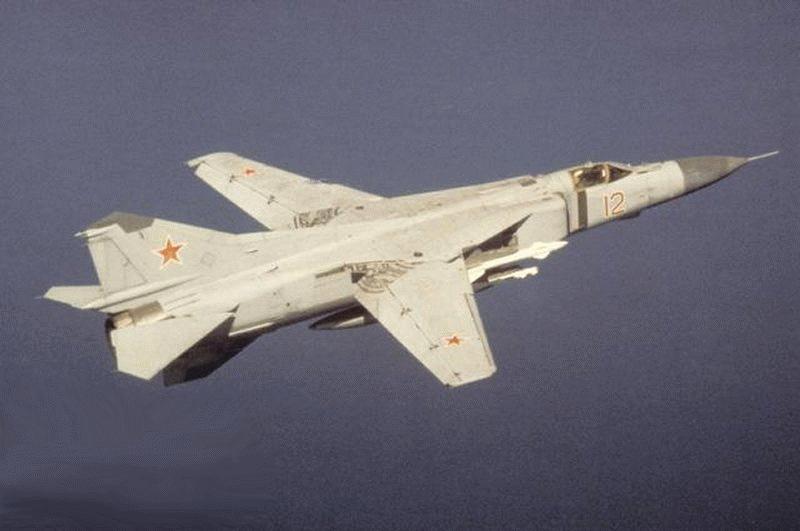
but you are right the MiG-23M and the Tu-22M2 have different VG wing pivot positioning for the swinging part of the wing.
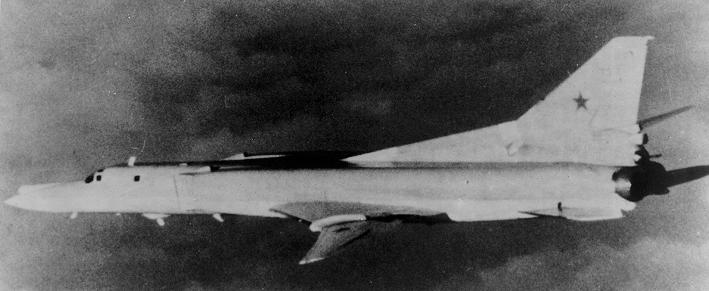
The Su-24 is more similar to the MiG-23 in the VG wing swinging part

But the F-4 has nothing in common with an F-22 or the F-15 in aerodynamics beside being a jet fighter aircraft
FloggerOuf merci Mirage III!!! Je crois qu’il essaye de dire (je vais essaye de traduire ca a l’air repetitif…)
“qui a construit les SAM et les avions qu’utilisait le Vietnam du nord ?”
Combien d’avions et de SAM avait le vietnam dans les années 60 ? et l’URSS ? et le pacte de Varsovie ? (je résume c’est toujours la meme phrase avec des trucs rajoutés a chaque fois…)
The Mirage III was obsolete at the end of the 70’s. Upgrades are useful , but at a moment, you need a new aircraft (otherwise, you loose you share of the market…). The new aircraft was the Mirage 2000.
I can explain you easily in this way:
There are two kinds of aeronautical design, the revolutionary and the evolutionary, the Revolutionary is when the next generation has very little in common and the technologies applied to the new generation aircraft are totally new, in few words a leap forward in technology or Technological breakthroughs in combat aircraft technologies; Evolutionary is self explaining, it means an upgrade or enhancement of the previous proven aircraft design concept with new technologies.
the Revolutionary examples are the F-4 and the F-15, both aircraft share very few technologies and the design is a totally new aircraft, other examples are the F-16 and the F-35 or the F-15 and the F-22.
The Evolutionary example are the Su-7 and the Su-17/22/20, the MiG-29 and the Su-34, the Mirage III and the Mirage 2000.
In the case of the F-15 and F-4 you can see that the F-15 airframe does not have any thing in common with the F-4.
The F-15 and F-22 have very little in common, the F-22 has thrust vectoring, the F-15 has not, the F-22 has STEALTH applied, the F-15 has not, the F-22 has supercruise the F-15 has not.
The F-22 has so many new technologies that a F-15A and a F-22A have
nothing in common, beside the fact the F-22 and F-15 have double canopies, are tailplane fighters, have twin engines and twin vertical fins both aircraft are totally different in design
FloggerThere’s only two differents families of Mirage III derivatives.
First, the upgraded Mirage III
Mirage V (1967)
Mirage 50 (1979)
From 1979, the last Mirage 50 were upgraded by south africa and Chili. (panthera, cheetah…). The Mirage IIING who flew in december 1982 was a testbed for the upgrades.second, Kfir family.
The nesher was the Israeli Mirage V (there’s was no difference with a normal Mirage V)
Kfir C1 C2 C7 C10 are Mirage V with J79 engine and israeli electronics.And that’s all! The Mirage 2000 is NOT a mirage III derivative, it’s a new airplane (much better)
Kfir and Cheetah are UPGRADED Mirage III.
Mirage 2000 is a TOTALLY NEW AIRCRAFT.
An upgraded aircraft is not the same thing as an aircraft derivative…It’s difficult to say that all Mirage were based on the III. Some had very different engines (M53, TF30…) other differents wings (swept, swing-wing…).
The idea that “all mirage are derived from the III” is a myth; only the air intakes are similar!!
read first what i said i said the Mirage 2000 had relaxed stability that means a different wing and center of gravity relation but the Mirage III and Mirage 2000 are still the same design concept just modernized


 Sign In







