 Flogger
Could you please think before your write on this forum!!!! Your statement are amaizing, it sounds like you were flying over Hanoi doging SAM with the US. AIR FORCE,went over Moscow to test their air defense system and just before that flew during World War II over Berlin!!! As mentioned before the US government put restrictions on which targets could destroyed in North Vietnam, many of them were SAM sites close to Hanoi.
I talked to a US B-52 pilot who flew from Guam to Hanoi during Linebacker mission, it was hell to fly over or even nearby this area just by the concentration of SAMs and AAA. There are numerous accounts from pilots who flew those missions who say the same again and again and here your are pretending and assuming they what those guys lived mean nothing!!! who are you to make those statments?? the only one who can really tell and know what they are talking about are those who went there.
On top of that, don’t you think that if give the opportunity the boys form the US. AIR FORCE would not have taken them down while the North Vietnamese were in the process of building them!!!
Don’t you think that if the US. NAVY would have been allowed to go after the ships brining SAMs to Haiphong it would have a major impacts
some questions
Who built the SAMs and aircraft North Vietnam used?
How many aircraft and SAM types had Vietnam in the 1960s? how many aircraft and SAMs types had the USSR in the 1960s?
How many SAMs had the USSR and WARSAW PACT in the 1960s and How many had North Vietnam in the 1960s?
FloggerIf the Americans suffered so many losses is because the Vietnamese had quality in their Russian made weapons and a strong will to defeat the US
Interesting comments. Just few facts to refresh your memory dear Flooger
The US.AIR FORCE, NAVY AND MARINES were not allowed to strike targets at will in North Vietnam. The targets indentified by Recon planes had to receive clearance from Washignton before being approved to be attacked. There were numerous SAM sites close to Hanoi that were left untouched due to this system (like fighting a boxing match with a hand tied behind your back!!)
When the US. NAVY mined Haiphong Bay it brought North Vietnam to its knees having no more SAMs to fire at the incoming strike planes, unfortunately the US. NAVY had to clear the mines later on
The US forces were not allowed to strike at the nerves of the war, meaning they were not allowed to touch Russian ships delivering supplies to Haiphong as well as railroads and bridges near the North Vietnam-China border due to fear of getting those two countries directly involved in the conflict.
The issue is not about quality of Russian weapons, some were ruged and efficient as well as the US were. The issue is how the use of weapons is allowed during a conflict like the First Gulf War showed it
One last point
Flogger, we all have a favorite plane, mine is the Mirage III, however it do not mean that you have to defend it at all cost and against all odds just because you like it so much. This forum is for grown-up people, please do us a favor, behave like one. Thank you
Yes but North Vietnam was not a Supe power with all the man power and technology the US had they depended in Russian weapons and a will to defeat a super power, that is the real reason they defeat the US
FloggerThere never was a concentration of air defenses in the US like there was over North Vietnam. I can’t speak to what was around Moscow, but the thousands of AAA sites in North Vietnam were denser than over the German Ruhr in WW II, plus there were huge numbers of SAM sites in addition to the fighter defences. Granted, the fighter defenses over central Europe were stronger on either side of the Iron Curtain, but the AAA defences in North Vietnam were immense.
:rolleyes: So tell us, how powerful was the Mujahideen Air Force? :rolleyes: :rolleyes: How many Patriot missile batteries did they have? AAA sites? :rolleyes:
Oh, actually there was a little air to air combat in that war. Two Pakistani F-16s shot down two MiG-23s.
hehehehehehe
Yeah the americans do not need such amount of aircraft because they have Tom Cruise style pilots, Top Gun is a reality :rolleyes:
Specially since North Vietnam was a Superpower all your statement are true :rolleyes:
FloggerReally how about that lineage ?
F-4 -> F-15 -> F-22
What lineage? the F-22 has no commonality with the F-4, i see no commonality in the F-15 and F-4
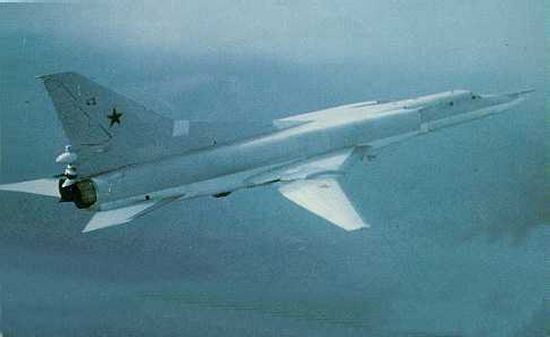
The MiG-23M and Tu-22M2 have almost the same configuration
see
Tu-22M
MiG-23MF
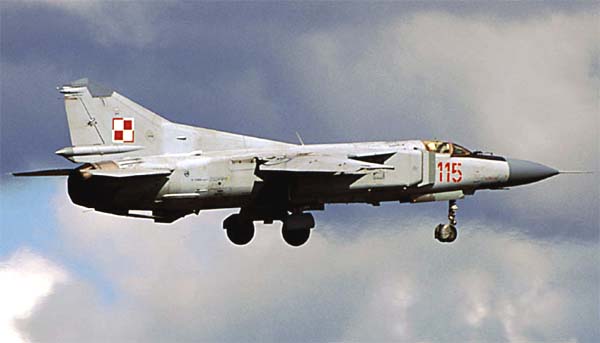
The MiG-23MF and Tu-22M2 belong to the idea that VG wing will solve the same problems and the vertical ramps are the best design for an inlet in the Mach 2 class speed, check the MiG-23MF and Tu-22M2 have even the same style vertical fin
The Su-24 belongs to the same design aerodynamic fashion philosophy
FloggerStrongest defenses, next to Moscow probably yes. Sure the Soviet Union and the WarPac had more Sams, more AAA and many more fighters, but they also had to defend much more territory. The NVN did defend Hanoi and that is about it. Further South no SAMs were encountered until very late in the war and no fighters were seen right until the final offensive in 1975. So in defenses per km² the area around Hanoi was probably one of the best defended targets in the world.
true but the NV did not have the different types of aircraft that the Soviet have,niether the Number of jet aircraft.
Saying the americans faced the best defended city in the world it is a lie, Moscow was better defended even Berlin, the point is that statement is to give a excuse for the poor results a super power achieved.
FloggerAside from its poor abilty to take battle damage, I disagree with this assesment of the F-105. It was a bomber, and it flew into the teeth of the strongest air defenses in the world. The vast majority were shot down by AAA, and any other aircraft would have been hit at least as often as the F-105, probably more often. The same goes for the F-4. Load up any aircraft of the period with bombs and it becomes a flying target until it drops its weapons on the enemy. After that, the F-105 was almost untouchable by other fighters. It was the F-22 of its time, cruising out of enemy airspace on the deck at such high speeds that nothing could catch it.
The F-105 was a strike aircraft, it was never intended to be fighter. Its not fair to compare it to dedicated air to air fighters of the time. As a strike aircraft, there was nothing better, except perhaps the later F-4. No tactical aircraft could carry such a large load to such distant targets at such a high speed.
Different F-105 wings used different tactics over North Vietnam. One wing flew large strike packages at medium altitudes with large numbers of support aircraft. They were plagued by AAA, SAMs and MiGs that had to be fended off by fighter escorts, chaff bombers, SAM suppression aircraft, and the like. The other wing used low level attacks without support aircraft, using the F-105 in the way it was designed to be used – high speed flight at low level, using terrain masking. The defenders had little warning of attack, and the F-105 was more successful using these tactics. Before you knock the F-105, name one aircraft that could have done the job better.
HEHEHEHEHEH strongest defences in the world :rolleyes: heheheheheheheh come on
the strongest defences in the world in the 1960s were NORAD AND THE SOVIET UNION, or NATO or the WARSAW pact, but Vietnam never fielded so many fighters and SAMs as the Soviet Union or the US did.
If the Americans suffered so many losses is because the Vietnamese had quality in their Russian made weapons and a strong will to defeat the US
The F-4 and F-105 are good aircraft but the Mirage F1, JA-37 or MiG-23 have also good merits despite Afghanistan or the Iran-Iraq war probably do not have Historically in the West mind set the importance of Vietnam.
If the JA-37 had ever been used in a Vietnam style war i think i would had performed better.
The Soviet Tu-22M, Su-24 and MiG-23s in Afganistan had better combat record than the B-52, F-105 and F-4 in Vietnam.
Aircraft like the Mirage III and it`s derivatives are worthed aircraft to put in the contest with te F-4 and MiG-23 as excelent products of the 1960s technology
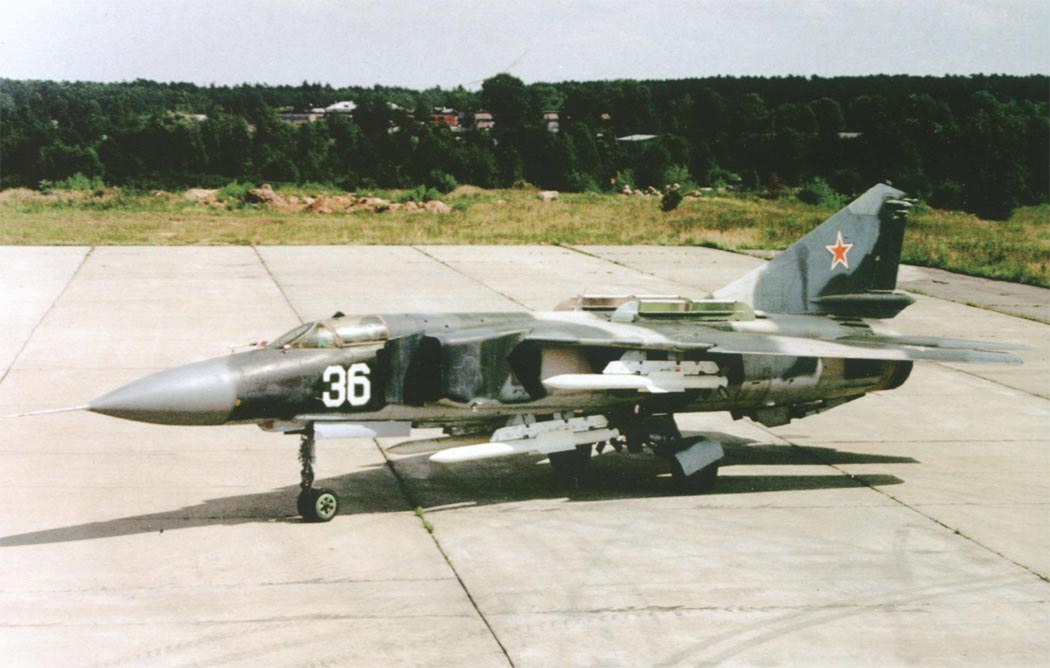
The F-4`s vertical ramp inlets were great influences in the MiG-23 and J-8II, from frontal views they look quit similar

FloggerThe Mirage III NG and Kfir C2 had all the features you can enjoy in the Mirage 2000 and Mirage 4000 and eventualy lead to the Rafale.
I’m gonna make it very simple.
What features ?
The Mirage 2000 Mirage III NG and Kfir C2 are basicly single engine, single seat delta aircraft with canards, with the same half cones center body inlets, in the Mirage 2000 the center of lift is in front of the center of gravity contrary to the Mirage III and IAI Kfir, in order to compensate for that lack of stability the Mirage 2000 uses fly by wire.
Relaxed stability meant a different positioning of the wing center of lift with respect the center of gravity, this meant something more than just adding canards or a new engine like in the IAI Kfir, since the Mirage 2000 has a new engine. radar and needed better visibility a new airframe and wings were built but basicly the Mirage 2000 is a Mirage III
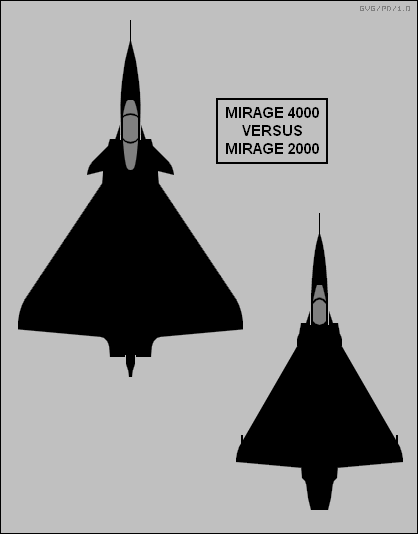
The Mirage 2000 is a totally new airframe yes it is true but is because the Mirage III airframe was not capable of absorbing all the new technologies that were fitted in the Mirage 2000.
The Mirage 4000 is a twin engine Mirage 2000 with bigger canards and bouble canopy.
FloggerI’m not sure of the name, it’s the F-4 use in the Luftwaffe.
The mirage 2000 doesn’t owe mcuh with a mirage III even they look nearly the same.
The mirage 4000 is more complex than the 2000 and the RAfale is based on stuides on the mirage 4000.
So I think you should rethink your opinion about the rafale 🙂the comparison isn’t really fair.
the f4 is way bigger and has been in use for a very long time in the USAF, so much more fund to made it evolved.
The Mirage III had all the features that lead to the Mirage 2000, Mirage F1, Mirage 4000 and even Rafale.
The Mirage III NG and Kfir C2 had all the features you can enjoy in the Mirage 2000 and Mirage 4000 and eventualy lead to the Rafale.
Basicly all Dassault aircraft are evolutions of the Mirage III.
The Mirage 2000 is basicly a Mirage III NG (IAI Kfir C2) with relaxed stability and fly by wire, better visibility and new engine.
The Mirage 4000 adds the twin engine platform and the bouble canopy to that evolution.
In order to fit the Mirage III with such enhancements Dassault built new airframes but the basic Mirage III aerodynamic concept was kept in the Mirage 2000 and Mirage 4000
The JAS-39 has a similar relation to the more stable JA-37.
The Rafale is a further evolution of the Mirage 4000 in a smaller platform and with different air intakes for better AoA and engine function.
The F-4 has never lead to such large family of aircraft derivatives, the Mirage III excellence lead to a great array of fighters such as Mirage V/50, Mirage IV, the Kfir C2, Dennel Cheetah, ENAER Pantera, Mirage 2000, Mirage F1, Mirage 4000 and Rafale.
The MiG-23 only sprung the MiG-27 and the Russians had two other aircraft with similar aerodynamic configuration: the Su-24 and Tu-22M
The Su-24, MiG-23 and Tu-22M2 are basicly the same aerodynamic configuration tailored to different military needs
FloggerI stick to the proven datas of a real user, like the former GDR , which operated MiG-23MF and ML.
But there is no problem for you to figure it out yourself. Just look into the landing-roll with full chute!
The specification demanded from the heavier Flogger to stay in the landing demands from the Fishbed. Icy and bumpy runways in mind.
Quoting sources without making-up you mind about data given is a senseless behavior! To blame the source for that only shows limited knowledge.
I fear you claim the consumption values from cars given at advertisements as facts too.
Hehehehehehehe
Well in that case all the data you gave for the Mirage F-1 or F-14 should be unaccurate :rolleyes: because those are also manufacturers data too all Russian pages you look will tell you same data i gave you 😀
I stick with the Russian Books some even written with the nice help of Belyakov 😉 hey and one question were the Russians MiG-23 operators? 😀 probably they did not operate the Type :rolleyes: hehehehehehe so the information they give must be without any operational experience :rolleyes: hehehehehe
but let`s give you some figures by different books
A) “MiG-23MF Flogger B ” by ROSSAGRAPH
Landing speed 248-270 km/h;
B) “MiG aircraft since 1937” by Putman Aeronautical book
MiG-23M landing speed 265 km/h Page 190
MiG-23S landing speed 240 km/h Page198
MiG-23ML landing speed 255 km/h Page 192
MiG-23MLD landing speed 240 km/h Page 193
C)”MiG-23/27 Flogger Soviet Swing-Wing Fighter/Strike Aircraft by AEROFAX
MiG-23M Landing speed 235 km/h, Page 30
D)” OKB Mikoyana” by Polygon
MiG-23M landing speed 235 km/h Page 106
MiG-23ML landing speed 245 km/h page 107
Check that in Aerofax`s Book a Western publisher and Polygon`s book a Russian one you have the same speed for the MiG-23M which no Warsaw pact nation had except Russia (Soviet Union) and with better engine than any downgraded MiG-23MF
FloggerFlogger, you’ve got to learn that you can never trust just once source for data such as those listed above. I’ve read hundreds upon hundreds of sources on F-4’s and I’ve seen maximum speeds listed from 1,320 mph all the way up to 1,600 mph. Generally speaking though the speed I’ve seen the most is 1,500 mph for the F-4E with slats, which makes sense because the earlier hard-wing models were capable of 1,580 mph because they lacked the slats fitted to F-4E’s after the Agile Eagle program. The slats caused more drag and such reduced the speed of the F-4E compared to say an F-4D. Agility was greatly increased, and on par with many variants of MiG-21, despite what you often hear.
The MiG-23 is the same. I’ve seen numbers of 1,520 mph, 1,550 mph, 1,515 mph, etc. It just depends on the source and you can never go one just one source. I hope you’ll take my advice and learn to look at multiple sources before going with one specific number.
The same goes for the ceiling statistics…most sources I’ve seen state 62,250 feet for ceiling while 60,000 feet is quoted for British Spey-engined models (which incidentally were slower than their J-79 cousins with a maximum speed of Mach 2.1 or about 1,385 mph).
Besides, Boeing never built the F-4. McDonnell Douglas, who Boeing bought, built the F-4. There’s no telling where those stats were pulled up from. Of course 1,485 mph isn’t that far from 1,500 mph so it doesn’t really make much of a difference. Who’s to say that 1,485 mph reached one day wouldn’t be 1,500 the next.
I totally agree with you, i have also found different numbers.
This kind of annoys me because the unreliability even of some books but i think the F-4 has a slower rate of climb than the F-15, the figures i have for the F-15 climb rate is 50000 feet/min (15240m/min) that is the reason i feel the book WARBIRDTECH series volume 8 titled “F-4 GUN NOSED PHANTOMS” is reliable because in the book the figure for the F-4`s climb rate is 41300 feet/min.
I do not think the F-15 is marginaly better than the F-4 in climb rate it must has a quicker acceleration by a great margin.
Also Boeing`s is credible they are the most reliable surce of all them all.
FloggerFor the benefit of the others. The Flogger ist not STOL, its landing-speed is still faster compared to those of Tornado or Fencer!!!!
The landing-speed of the MiG-23 is 260-280 km/h or 140-150 kt, depending on landing weight.
The possible minimum speed was ~ 260-300 km/h or 140-160 kt, depending to weight.
The allowed minimum was 400 km/h or ~220 kt, otherwise restricted movements at best.
A pilot said, you feel like a ripe plum then.
You are wrong the MiG-23 landing speed is 240 km/h
check this russian source Landing speed MiG-23
FloggerF-4E Max speed:2.24
Mach 2.27 (1,500 mph)
F-4E rate of climb:41000 feet/min
Try 49,500 feet/min
F-4E Service ceiling:58750 feet (17905m)
Try 62,250 feet
I’m also a bit skeptical of those TWR ratios. THe MiG-23 is supposed to have a much better TWR than the F-4, yet those numbers put them very close….
In short what am I saying? Those numbers are just numbers. I’ve already conceded the MiG is slightly faster than the F-4E variant (though not faster than earlier models like F-4B and F-4C with hard-wing), and has better acceleration. The F-4 has longer range, better avionics, better payload and a two-man crew. Bottom line is that both have advantages and disadvantages.
If a third-world country like Vietnam with a bit of foreign help is able to shoot down over six hundred aircraft of the type, then I rather call the aircraft a ticket to heaven than anything else.. This shall be the best aircraft of the cold war? You are kiddin me..
Now you’re just getting desperate…..
You do realize the F-4 Phantom was involved in far larger numbers than any other fixed-wing aircraft of the entire war don’t you? USAF service….USN service…USMC service……fighter….bomber….recon….SEAD…..CAS…..FAC…..precision strike……etc…..constant combat from late 1964 until early 1973……
Now flex I know you’re an intelligent guy…….do you think the Mirage III or the MiG-23 or the MiG-21 or the Viggen or whatever other non-U.S. airplane you can think of would have done better? Seeing as none of them have the versatility and overall multi-role capability of the Phantom II I seriously doubt it…..
In Gulf War I, much more advanced Tornadoes have proven much more prone to shotdowns than nimble Jags. I would take Jag over Tonka any day of the week.
Jags also didn’t have to fly over Iraqi runways at 100 feet to deliver the JP.233…….you’re comparing apples with oranges here. In short, both of your comparisons have left you looking rather like a fool so please take a different approach.
It might not have been carryin as much bombs and stuff and would not have flown that far but at least I would have had a good chance to return back..
Yes I guess completion of the mission isn’t really all that important. Pilots and aircrews are just there to take-off, fly around, and then get home safely. All that into harms way nonsense is just stupid afterall……
It’s like you’re saying the Jaguar was purposely designed to be more survivable than the Tornado, and that’s just ridiculous. The Tornado had much more dangerous mission profiles in the Gulf War, and it was involved in larger numbers so the losses are of course going to be more. I think there were somewhere around 8 Tornado GR.1/GR.1A squadrons compared to one Jag squadron…….so again I ask you to do the math.
Don’t twist it. You have clearly pointed out that Phantom was the best performer of these four even in A-A, ergo better than Mirage F1… Look it back for yourself and quit lyin to my eyes..
Again I ask you to find what point I denied it…..I think they are both relatively even in the air-to-air role, but personally the advantages of the F-4 are the reason I would take it. If you want longer range, larger payload, two-man crew, and slightly more speed then the F-4 is your jet…if you want more agility the F-1 is your jet.
F1 or Viggen and studies on Phantom? Where? When?
perhaps those were worded wrong……but when the world saw what the F-4 was capable of in Vietnam and the Middle East, features like better radars for more autonomous operation became a big thing as well as multi-role capabilities…..it could be argued that if the F-4 had failed as a multi-role fighter in Vietnam then you’d never have seen developments of the Mirage F-1 like the F-1E or any other fighter for that matter until later when costs prohibited designing something for one missions. The success of the F-4 sped up that trend, and then combined with higher costs is the reason you see so many multi-role planes today.
I disagree. There is one single confirmed F-4 kill with Super 530D. You are not serious if you take that account and completely ignore all other kills being achieved by R.550 or 530F.
Did you read what I wrote instead? I said the Super 530F had done most of the work (the Super 530F was comparable to the AIM-7F, but IRIAF fighters had the older AIM-7E variants), and also you forget to mention the R.550 which was an ALL-ASPECT weapon. Even Iraqi MiG-21’s proved to be much more dangerous because they were now equipped with the weapon. Look at the success of FAA Sea Harriers. That made a huge difference in air combat. If an F-1 can shoot an F-4 or F-5 or even F-14 from any angle in close while the other three can only shoot the F-1 from the rear hemisphere with the AIM-9P who do you think has the advantage?
I’ve heard you jump all over the MiG-29 bandwagon by saying it had bad AAM’s and that’s the reason it has suffered losses, yet when its Western aircraft that come into play you change your tune? Double standard yet again?
The Climb rate and in general all the data i gave was based upon the WARBIRDTECH series book “F-4E gun nosed Phantom”
So i did not make up the data.
By the way BOEING`s webpage gives a much lower figure for the F-4 ceiling of only 56,100 feet and a max speed of 1485 mph so the figures you gave are not accurate
FloggerAs we knew that no matter range, celling, climb rate, turn rate, T/W rate, Radar Range, max load, top speed, the PhantomII was better than rest of them.
On the other side, the prototype of Phantom first flew in 1958, whereas Flogger was in 1965. The PhantomII also was much earlier than Flogger.
MiG-23ML max speed:2.35
F-4E Max speed:2.24
MiG-23ML rate of climb:47,244feet/min
F-4E rate of climb:41000 feet/min
MiG-23ML Service ceiling:60695 feet(18500m)
F-4E Service ceiling:58750 feet (17905m)
MiG-23ML thrust to weight ratio 0.88
F-4E thrust to weight ratio 0.87
FloggerHmm, I think the experiences with the shortcommings of the Draken, rather than that of the Mirage III, led to some of the aerodynamical sollutions for the Viggen. 😉
Well that is certainly true, what i meant is the Delta Wing best fighter has been the Mirage III and has been the best representative of a Delta fighter but you are right the Drakken was the aircraft to surpass and replace but undoutedly the Mirage III share more commonality with the JA-37 as delta fighters because the JA-37, IAI Kfir C2 and the Dennel Cheetah resemble more the Mirage III than the Drakken.
But i addmit the Drakken lead to the JA-37 concept, it is true but the JA-37 takes the design closer to the IAI Kfir than to the Drakken showing how good was the Mirage III.
In the Draken the air intakes blend the fuselage with the wing and create vortexes but in the SAAB JA-37 and IAI Kfir the inlets are not blended to the fuselage as in the J-35 Drakken and the Canards are the foreplanes that created vortexes.
The IAI Kfir showed how good was the Mirage III/V in development potential.
FloggerPhantom i feel you exagerate the F-4 legacy.
I’m not exagerating anything. I’m stating things which are true, and if you read any book about the evolution of fighters you’ll find the same thing….
The Mirage III represents a more advanced aircraft in terms of aerodynamics and development potential.
No it doesn’t. The delta-wing design has been around since the 1940’s, and it is a product of German wartime research. The first tailless delta to enter service was the experimental XF-92. Before that, the Me-163 was a tailless aircraft as well though the wing wasn’t the same as that of the XF-92. From the XF-92 came the Convair F-102 Delta Dagger, which entered service in 1956. There’s no doubt some of the design of the Mirage came from the F-102. So if you want to go that route of reasoning, you have to conclude that the Mirage IV, Mirage 2000, Mirage 4000, and Rafale are all based on the F-102? Does that not sound a bit ridiculous. You see where you’re going with your argument? It’s not logical…..
And you think the Mirage III had more development potential than the F-4? Compare the best version of each, and I think you’ll figure out pretty quick that the F-4 was by far and away a much more capable aircraft that was more suited for future developments and it had great growth potential. Even before upgrades, the F-4E, and contemporary Mirage IIIE, while similar in age were very different in capabilities with the F-4 being the much more capable jet. I’m not saying the Mirage was a bad airplane by any standards because it proved itself well in combat. The F-4 was just a step above.
The JA-37 with cannard has a great influence in fighters like the JAS-39, IAI Kfir C2 and Rafale, only see that the Mirage III sprung the Mirage F1, Mirage IV, Mirage 4000, Rafale and later aircraft like the Eurofighter of J-10.
I think you’re missing my point. A fighter can be influential in more ways than the wing type it has….the F-4 was influential in terms of the two-man crew concept, the large airframe providing heavy lifting capability and long-range, the powerful avionics suite and radar, and the capability to be completely multi-role, therefore allowing one fighter type to do all missions. You have to remember that the F-4 wasn’t designed to be multi-role like fighters are now. The design just lent itself to versatility and despite efforts by Dassault and MiG to make the Mirage III and MiG-21 multi-role, neither held a candle to the F-4 in terms of overall versatility. It is because of the success of the multi-role capabilities of the F-4 that aircraft like the F/A-18 Hornet were designed to be multi-role from the start.
The F-15 like the MiG-25 owed more to the A-5 Vigilante than to the F-4, in fact the MiG-25 and F-15 are evolutions of the A-5 Vigilante design concept.
Why? Because they all had rectangular and slanted air intakes? That’s ridiculous. The F-15 and MiG-25 probably used some elements of the A-5’s design, but the A-5 wasn’t the primary influence in the development of those two aircraft. That was driven by operational requirements and the design in the case of the F-15 was to create an aircraft that wouldn’t be surpassed in the air-to-air role. In the MiG-25’s case it was to create an aircraft that had such power and speed that it could intercept anything the USAF put in the air (namely spy planes and bombers).
The Russians easily realized the MiG-21 main disadvantages it had with respect the F-4 and saw great potential to the imperant need for STOL could be solved with the F-111 design solutions.
The has good rough field performance, but it is not a STOL aircraft. Furthermore, how would the F-111 design help to create a STOL aircraft? If you think the F-111 was a STOL aircraft then you’re either incredibly confused or just plain stupid. The swing-wing design for the F-111 was intended to give high dash speeds, but a smooth ride at low-level for the strike mission.
The MiG-23 indeed owes a lot to the F-4 but the F-4 is not very agile and the MiG-21 proved it has many flaws like any aircraft but for 1970s aircraft well has a good design.
Actually, the slatted-winged F-4E’s and F-4F’s can turn just as tight as many MiG-21 variants. Furthermore, compared to newer jets the MiG-23 isn’t exactly king in the dogfight. A well flown F-4E with slats could stay with a Flogger no problem. Throw in things like helmet sights and stuff, and it gets a bit more complicated, but a MiG-23 and F-4E in a close-in dogfight would be a close fight.
See that the Mirage 2000 is basicly a Mirage III updated with new technologies, the Rafale owes a lot to the Mirage III based Mirage 4000 and all these design have an excellent design based upon the Mirage III
Using that logic I can also conclued the Rafale is nothing more than a Mirage III with canards, RBE 2 radar, and MICA AAM’s……
Or maybe that the F-22 is an F-102 with stealth capability and a bubble canopy…..because afterall the F-102 had weapons bays and so the F-22 must be based on it…..
Flogger its the kinds of posts like your last one that are the reason I hate debating with you. You don’t use logic in your reasoning. You tend to say the same things over and over again without proving any of your points. You make the worse comparisons and analogies, and half of your writing is near impossible to read.
So the MiG-23 is for STOL and the F-111 is for high speed? the F-14 is also for high speed and not STOL? :rolleyes:
The MiG-23, MiG-27, Tu-22M, Su-17/20/22, Su-24 F-111, F-14, Tu-160 and B-1B have VG wing for the same reasons but each design is optimised for an especific task.
In the MiG-23 and F-14 high lift and thrust give you a fighter while in the F-111 and Su-24 low thrust just give you a good ride at low speed but low drag aerodynamics give you high speeds.
The Tu-22M, Tu-160 and B1B are so massive that is difficult to give them a thrust to weight ratio of more than the unity and the overload limits so low that are just plain bombers.
In the MiG-23 VG wing offered the best compromise for STOL, high speed and Agility, it represented better solutions than the MiG-23-01 Faithless direct lift, same is with the Su-24 T-6-01, in fact check that the MiG-23 16deg, 45 deg and 72 deg wing settings are for STOL, agility and high speed respectively.
It is true the F-102 was a delta aircraft and flew much before the Mirage III yes that it is true but the French opted and evolved the Mirage III concept through out the Mirage III history, the basic Mirage III was modified to give you several variants Mirage V/50 and new derivatives Mirage G, Mirage G8, Mirage F1, Mirage 2000, and Mirage 4000.
the americans did not followed the same path, they developed the F-102 into the F-106 but later opted for the tail plane configuration, the Europeans followed a different path, the Mirage III evolved into the Mirage F-1 and Mirage 2000 and much later into the Mirage 4000.
the JA-37 is the end result of the Mirage III success and a solution to fix the Mirage III flaws and shortcomings, the Mirage F1 did the same but in the Mirage F1 you have tail planes while in the SAAB JA-37 you have foreplanes
The modern SAAB JAS-39 and Rafale are very advanced evolutions of what the Mirage III started
Artem Mikoyan did indeed saw the A-5 vigilante and was so shocked by it that proposed the MiG-25 to the Soviet high command, the F-15 is a response to the MiG-25 threat and followed almost the same solutions.


 Sign In







