 Starfish Prime
Who’s expectation are we talking about here?
Another valid question.
Starfish PrimeThe PAK-FA and and even more so the J-20 turned out to be stealthier than expected, so the need for an IRST is likely to become urgent as both will soon enter service.
There are a lot of things that the USAF would like to afford but can’t, it’s not just a matter of requirements.
Where’s the evidence they turned out stealthier than expected?
Starfish PrimeIn what realistic scenario do two F-35s have to take on 27 enemy fighters anyway? Alien apocalypse?:D
Starfish PrimeWhat on Earth do they teach people at German Universities?
Political scientist pleads for own cities for refugees
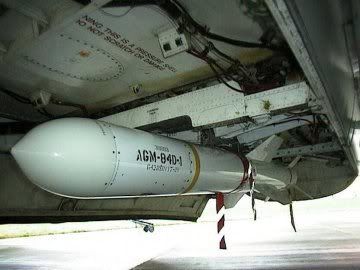
Starfish PrimeThere are pictures online of Harpoons in the bomb bay, & various references to it being cleared in 1982.
Oh, okay thanks. I never knew that.
Starfish PrimeWhat we do know is that fragments of RAM and composites from the shoot down wreckage of the F117, has been in the hands of Russian scientists, for a very long time. Enough to sufficiently say they have thoroughly analysed it, to determine the chemical and structure make up of it. That would of given a massive insight and direction to where RAM was headed and understanding the applications of it. Therefore it is safe to say using this opportunity, they can model simulations on the potential next generation of RAM and learn how to defeat it in the process.
That’s like arguing that the S-300 system at Nellis AFB provides a massive insight into the S-500 system. The F-117 is a 1983 system, the B-2 is a 1997 system and has had several signature reduction updates. The RAM/RAS has evolved over that time and no, how does one item give an insight into where future development is heading? What would a crashed P-51 tell you about an F-15?
I’ll take you back to this post to explain why guessing and estimation doesn’t work.
You have several affects multiplying, A, B, C, D and E, we’ll assume there are 5. Now assume they equal 0.5 each. 0.5^5 = 0.03125. Now assume they equal 0.4 each. 0.4^5 = 0.01024. So by guessing wrong by 20% you’re now out by >200% and the guy who wrote that only has 1 of the X many parameters multiplying together to ‘any’ accuracy – the raw outline shape, the rest he is completely guessing.
Is the analyst assuming the B-2’s RAM/RAS performs the same as an F-117s at all frequencies? What improvement has he assumed? Has he worked out how effective the surface wave management is? Has he allowed for all the serration patterns exactly. How accurately has he worked out the shape? Because guessing curvature isn’t something that works well for stealth design. Why? Consider an ill-conditioned set of simultaneous equations. Fudge a parameter by <1% and the answer changes by >10,000%.
http://engrwww.usask.ca/classes/EE/840/notes/ILL_Conditioned%20Systems.pdf
Guessing does not work!
Starfish PrimeI suspect that’s because the internal weapons bay cannot be modified to carry A2A missiles.
Yeah, I think it carried all guided weapons in general on the external pylons.
Starfish PrimeYes i know all those figures, but when has the US airforce even come close to a pier who’s forces are at least a real challenge, things can go differently, even though you have a edge in numbers and technology you still may loose to many aircraft to make it worth while.
It’s been up against aircraft and systems supplied by a peer force constantly. In Vietnam many of the enemy pilots were Soviet. Take the Bekaa Valley Air War, US supplied force vs Soviet supplied force, result, walk over.
https://en.wikipedia.org/wiki/Operation_Mole_Cricket_19
Let’s take the Ethiopia-Eritrea conflict 1999. Did the R-27R (1983) perform anywhere near as well as the AIM-7M (1982) did 8 years earlier in Desert Storm? Nope, didn’t even perform as well as the AIM-7D did in Vietnam during the 1960s.
https://en.wikipedia.org/wiki/R-27_(air-to-air_missile)
https://en.wikipedia.org/wiki/AIM-7_Sparrow
Starfish PrimeOne or two B-2 did fly over the north pole and close to the Russian border in the arctic, do you think the Russians would not have sent up a Mig-31 to scan the B-2 and see how its RCS figures equated on MIG-31 radars from different directions. Plus over the horizon radars would have been pinging the B-2 to see what reactions they get. Put all this into super computers and with Russian mathematical skills Iam sure they can work out how the B-2 fares.
Depends whether they saw it or not, also depends whether it was wearing a luneberg lens for peace time air traffic control purposes. You also can’t analyse an aircraft’s RCS in VHF using a MiG-31’s X-Band radar, which practically has to be WVR for detection. The B-2 has also had regular signature reduction updates. It’s like arguing that NATO is bound to have a defeat jamming system for the S-400 because they’ve monitored it in Syria. Depends what radar setting it was using at the time.
Starfish PrimeI personally think that medium range IR guided missiles, like MICA IR, too, are game changers. But since except Russians and French the others don’t field any, they obviously don’t count..
In fact, you’re not.. You’re claiming the missile not having LOAL but you are wrong.. Your source says “the missile lacks capability of manoeuvering before lock” not launching before lock.. The fact is there is a way of firing it well beyond the seeker range and it’s not a blind shot as the carrier aircraft has IRST. Yes, there is the 15deg limitation but 15deg at ~60km that’s a huge box of airspace. How far can you escape in those 45secs you got left, or even start launching flares if you don’t even know the R-27ET is coming?
MICA IR is a beast, no doubt..
Quite wrong, ASRAAM has similar kinematic capabilities compared to MICA and there is an ASRAAM upgrade that will use CAMM components being worked on as we speak. The problem is the R-27ET isn’t medium range in practice because it’s seeker-limited and the historical combat performance stats of other R-27 variants hasn’t really inspired confidence. However, none of this really applies to dogfights, which were the original topic.
Okay, but that’s no different to an AIM-9M, which isn’t regarded as LOAL. Essentially any IR AAM can be fired without lock, hoping that it will meet an aircraft on its travels, but in the field that isn’t known as a capability, it’s known as a Hail Mary. The missile can’t even be sent to a specific INS position, nor does it have a datalink, nor an IRST function, it’s just fired straight (hopefully) and if the enemy aircraft moves outside its 15deg cone, it misses. Friendly flies across that cone during flight and it’s ‘oops’. So whilst you can argue technicalities, by the widely accepted definition of LOAL, it’s not LOAL because it lacks all of the 3 key attributes of the industry-defined LOAL capability. Therefore my statement was accurate to the definition of LOAL used in Western defence.
Starfish PrimeHaving older legacy systems, some from the 90’s and early 2000’s, but i find it hard to believe they would have the latest updated Russian specific SAM systems. In the past there has been defections of sorts. Regarding the equipment that was handed over, it was quickly updated/improved so that particular system/hardware would not be compromised. Russia has very well established intelligence gathering capabilities, they would for sure know what is in the hands of the western world.
Oh I agree, but on the opposite face of that coin, when someone claims a Russian scientist has accurately analysed the RCS of a B-2, that’s even less likely, since the absolute best they can have is some F-117 fragments from Serbia.
Starfish PrimeAlso comes down to training and integrated defence systems. I cant think of when the us airforce came up against a solid and not degraded system with a robust airforce of near equal ability. Only through training and numerous systems electronic warefare etc. 4 gen planes, unforseen capability on the enemies side etc. Libya got export ware equipment and poor training. Having a robust integrated sjr defence system without fighter cover also is critical. Only Russia, China to some degree. India, could put all this together.
There isn’t an air force of near equal ability, so that’s a purely theoretical construct.
http://www.globalfirepower.com/aircraft-total.asp
http://www.globalfirepower.com/aircraft-total-fighters.asp
http://www.globalfirepower.com/aircraft-total-attack-types.asp
http://www.globalfirepower.com/aircraft-helicopters-attack.asp
I also think this export vs domestic argument is overstated and over-used. Would customers voluntarily buy deliberately neutered equipment? Historically relying on SAMs as a core air defence strategy has never proven successful, nor have they demonstrated anything close to what could be described as successful Pk levels. Have there ever been any Russian missiles over the last 50 years that have demonstrated successful combat performance, e.g. double digit Pk? It always seems to be a matter of excuses why NATO equipment worked well vs excuses why Russian equipment didn’t.
Starfish PrimeSu-35 has a higher fuel fraction that the PAK-FA, so it would be difficult for the T-50 to outperform it by a wide margin.
Normally , i couldnt careless about your trolling but F-35 range on internal fuel is 2220 km , if PAK-FA can travel 2000 miles longer that would bring its range to 5440 km ,not a chance.You outright lying
Unless they’ve almost doubled the fuel efficiency of the Su-35’s engines.:highly_amused:
Starfish PrimeJudging by the trail, the F-105 was a lot closer when it was hit. Something like 120 meters.
Quite true but still, it’s hardly pin-point accuracy. If they were achieving the 30% Pk alluded to, then the NV would hardly have taken to firing them blind set to burst at a specific altitude.
Newest SA-15B?
Let’s see them. Aside from the fact that the “Latest” Tor (of even a couple iterations old) was not exported or sold to countries the US could get them from
You’d be surprised what people will sell for the right price.
Starfish Prime8 mile is good range for missile based on 1950s tech. optical tracking works when you already know where to look for. its not the 360 degree.
newest sams are protected by shorad/guns against projectiles. that VHF radar is not modern AESA. you fail to understand that F-117 was dealing with 1950s technology in adverse circumstances for Serbs as they could not use airdefence liberally due other Nato fighters. that even missing point of launching BM and cruise missiles on bases where short range stealth fighters are parked. stealth fighters need non stealth tankers and support otherwise they radiate more. its a complete flop.
But it wasn’t 1950s tech. For a start the SA-3 came out in the 1960s and the radars being used were later model Squat Eye VHF, SNR-125M1 and a P-18, which are actually 1980s and 1970s (P-18) technology and the F-117 is 1980s stealth technology.
Yes, there are AESA radar but the F-22 and F-35 are smaller in RCS and have sophisticated jamming and ESM on top of their stealth.
To get to those tankers, enemy fighters would have to fight through the likes of F-22s and F-35s. Shorad and guns vs a swarm attack, my money is on the swarm attack with MALDs, MASSMs and SPEARs. The truth is that swarm technology presents a threat to S-X00 systems even with legacy fighters. SAMs are expensive, roughly 100 times the price of MALDs and likely 10 times the price of SPEARs.
1986 Libya. Libya had SA-5s, SA-6s, SA-2s, SA-3s and SA-8s. One US aircraft was shot down by AAA fire, none by SAMs. 5 major ground radars were destroyed.
https://en.wikipedia.org/wiki/List_of_combat_losses_of_United_States_military_aircraft_since_the_Vietnam_War
https://en.wikipedia.org/wiki/1986_United_States_bombing_of_Libya


 Sign In







