Starfish Prime
http://forum.keypublishing.com/showthread.php?126574-GAO-summary-of-Desert-Storm
With respect to your point about the A-10 and F-117 having 100% survivability at night. The A-10 was not a day 1 asset. The A-10 was not sent in whilst SA-2s were still operational, so the comparison is apples to bananas. Pre-SEAD/DEAD survivability != Post SEAD/DEAD survivability. I could make the same observation about the AC-130 and say it was more survivable than the F-15E but there’s obviously something amiss with that observation.
Starfish PrimeI’ve asked for official specs of ANAPG-77, including its power characteristics. Still waiting for them.
Your source tells pure and obvious bull****. That’s why i said i’m pretty sceptical towards Western sources. Its author don’t know **** about subject he’s writing about. MIG-31M was a very different plane, in comparison to original MIG-31, with a much larger nose cone, changed specially for the bigger antenna of the old Zaslon-M. Person who isn’t aware even of this well known fact – can’t be taken seriously.
Sorry, but you cited a bull****.
No, you didn’t. Here are three respected Russian sourcers. All of them are saying “MIG-31M had larger nose cone to fit larger Zaslon-M antenna”.
http://testpilot.ru/russia/mikoyan/mig/31/m/mig31m.htm
http://militaryrussia.ru/blog/topic-651.html
http://www.airwar.ru/enc/fighter/mig31m.htmlIt’s very sad, that you didn’t know that MIG-31M was completely different plane, than original MIG-31.
Really?! Coz index Sh135E says it all.
It’s obvious, already, that you’re using pretty bad and unreliable sources – full of misinformation. Story with Zaslon-M is a nice example.
Really?! So, you’ve change one speculation on another?!
Let me refresh you memory, then…
If you think it’s easy to find something in the area of thousands sq.kilometers, well…you’re delusioned one.
http://www.ausairpower.net/APA-Flanker-Radars.html
https://en.wikipedia.org/wiki/AN/APG-77
…unsourced, arbitrary denials.
…ditto
All those sources tell me is that the -M version is indeed bigger than the -A and that the diameter is 1.4m, which is what I said. You’re arguing with me by proving I’m right, which is a very odd tactic to say the least.:confused:
It actually says very little. They make no mention of a domestic variant having 400km range anywhere on their site, nor do they state that the 350km is export only. That said, none of this actually makes any odds to the original analysis you refuted, the numbers work out either way.
Every source states 13km for the shoot down, which is something an A-10 with sidewinders on the rails could easily manage with no radar, especially against a non-evasive target with no EW. So unless you think a sidewinder equipped A-10 or R-73 equipped Su-25T makes a good air defence solution this incident is in no way a rebuttal of the effectiveness of stealth. Much closer and a ZSU-23-4 could have shot it down.
Not my speculation:
http://www.defenceaviation.com/2007/02/how-was-f-117-shot-down-part-1.html
The SAMs were most likely guided manually with the help of thermal images and laser rangefinders included in the Pechora-M variant of the SA-3s believed to have been used. Reportedly several SA-3s were launched, one of which detonated in close proximity to the F-117A, forcing the pilot to eject.
You have to admit that given the distance, it would have been well within the realms of optical designation and a 60kg proximity-fused blast fragmentation warhead wouldn’t have to get particularly close for a kill. And that’s why this example is silly, radar or not, a radar wouldn’t be needed at that kind of range… for any aircraft, so it makes a rather silly anti-stealth radar case.
Well:
a) If not emitting it isn’t very useful.
b) I stand by the statement. An S-300 launcher has a huge RCS, probably not far short of that of a barn, or even a small farm if you take the complex in total (all units) and a fast scanning AESA radar would be very capable of detecting such a target from a long way off, as would passing satellites.
Lets face it here, you’ve criticised an analysis, even though all the numbers available seem to imply that it’s ballpark correct especially given that the F-22 reportedly has an even smaller RCS. You could argue that the f-22 and F-35 may not be the right way round but other than that it’s spot on.
https://basicsaboutaerodynamicsandavionics.wordpress.com/2016/03/04/stealth-techniques-and-benefits/
Starfish PrimeIMO is there is someone that should know what makes a good war plane, it would be Yeager. In the last few days he has come out and stated both the F-22, and the F-35 are a big waste of money since they both fall short of the job at hand.
Good football players don’t always make good managers.
Starfish PrimeF-117 campaign in yugoslavia was unsuccessful, it flew far less sorties than f-16, yet sustained more losses.
the conclusion from the iraq campaign is that it was on par with f-16, except f-16 flew far more sorties,
cheaper, and with more sloppy planning
In total it flew 2,055 missions over 4 separate conflicts with one WVR loss. I hope people also realise that SA-3s were present in both Desert Storm and Iraqi Freedom and netted exactly zero F-117 kills over 1,306 sorties.
Over the same period, 5 F-16s were lost and 25 other aircraft.
It seems me that there we are at the usual confrontation going nowhere in which what The things my own part have to do is the easiest and would always work flawless and the ones that your have to do are actually impossible or won’t actually work.
About the F-117 thing in particular, just two considerations:
It was not Russia, it was not China, it was neither India, Iran or even North Korea, it was just Serbia (and Montenegro still).
And it was not S-400, nor S-350, neither S-300v, nor BUK and even KUB, it was Sa-3/S-125 Neva.
The same fact that someone has get to keep that old piece of scrap on the move for 78 days and operational would be worth for itself the highest decoration of valor, let’s imagine being able to shot down a stealth plane.
And that’s probably why it was successful. Optical lock capability.
http://www.defenceaviation.com/2007/02/how-was-f-117-shot-down-part-1.html
Note:
1. This equates to a per sortie loss rate of <0.0005.
2. It was WVR. Nobody has ever claimed that stealth aircraft are invulnerable WVR, or even still stealthy at that kind of range.
3. It was a 33 year-old aircraft with next to zero SA or jamming, not an F-22 or F-35.
4. The loss was as much a result of bad tactics as anything else. They became predictable.
Starfish PrimeIt’s not a fact – just your speculation. BTW, can you provide any official source on APG-77 specs, including peak-power? I guess you can’t, which makes your speculations even more speculative.
You really think Zaslon-M on upgraded MIG-31BM is equipped with antenna of 1,4m diameter??? 😮 You do realise that 1,4m was an old version of Zaslon-M, designed for MIG-31M? New Zaslon-M on MIG-31BM has the same 1,1m antenna, as that one on original MIG-31.
One more cool story, yeah.
Another one baseless speculation…
Stop repeating this misconception. Check the facts.
You do eralise its specs foe export version, right?! Coz for our domestic version Beliy declared 400km.
I repeat it again – S-125 was limited by its missiles range. Not radar. Your statement about radar is just another one baseless speculation.
I think you don’t realize how it’s really hard – to find something on the ground, dozens kilometers away.
Speculation based on a modern AESA of equal power and another good PESA radar with a 56% larger diameter than the Irbis-E.
The source clearly states it as 1.4m, and here are other sources saying the same. It’s also fundametally obvious that the MiG-31 has a far bigger aperture.
https://books.google.co.uk/books?id=Kt2ZaOilGXIC&pg=PA176&lpg=PA176&dq=Zaslon-M+diameter&source=bl&ots=vQITcPWELX&sig=dG37Wc_8J59V7IcA3LWZ4XbPY1I&hl=en&sa=X&ved=0ahUKEwi9n8-bhOHOAhUlCcAKHTWlCIQQ6AEIKTAC#v=onepage&q=Zaslon-M%20diameter&f=false
https://en.wikipedia.org/wiki/Zaslon
Baseless? I cited a source and note that this is for the -A version, not the -M.
http://www.ausairpower.net/APA-Flanker-Radars.html
Rated at 2.5 kiloWatts average power, with a 25% duty cycle peak power rating of 10 kiloWatts
I have checked the facts, please cite some sources rather than just blind denials.
Source mentions nothing of export version.
RCS “Irbis” is a multi-functional X-band system based on phased array with electronic beam control, located on the two-stage actuator (azimuth and heeling) and future computing systems. The structure of a radar control system also includes equipment requestor state identification operating in the Mk-XA modes and mikronavigatsii unit.
RCS “IRBIS” provides detection, tracking and measuring of coordinates air, land, surface targets day and night, in all weather conditions in the presence of natural and organized interference.Performance characteristics
“Air-air” mode:
– detection range with ESR = 3m 2 – 350 km
But again, this causes very little difference in the calculation.
You can repeat it as much as you like but that doesn’t make it so. The fact is that the F-117 was WVR at the time it could be engaged by X-Band radar. This source states that lock was attained at 13km, so the range of the missile is moot.
https://en.wikipedia.org/wiki/Zolt%C3%A1n_Dani#The_stealth_kill
It’s also possible that radar lock wasn’t even used at that range.
http://www.defenceaviation.com/2007/02/how-was-f-117-shot-down-part-1.html
The SAMs were most likely guided manually with the help of thermal images and laser rangefinders included in the Pechora-M variant of the SA-3s believed to have been used. Reportedly several SA-3s were launched, one of which detonated in close proximity to the F-117A, forcing the pilot to eject.
Erm… a huge truck and PESA (not AESA LPI) radar emitting at 1MW and subject to 1/R^2 law is harder to detect than a passive stealth aircraft that’s subject to 1/R^4 law.:highly_amused: Chances are satellites have already pinpointed the large double-digit SAM positions prior to the strike anyway.
I don’t know where this assumption that stealth doesn’t work comes from, or why people think several nations are spending billions on it if it doesn’t work? Baffling.
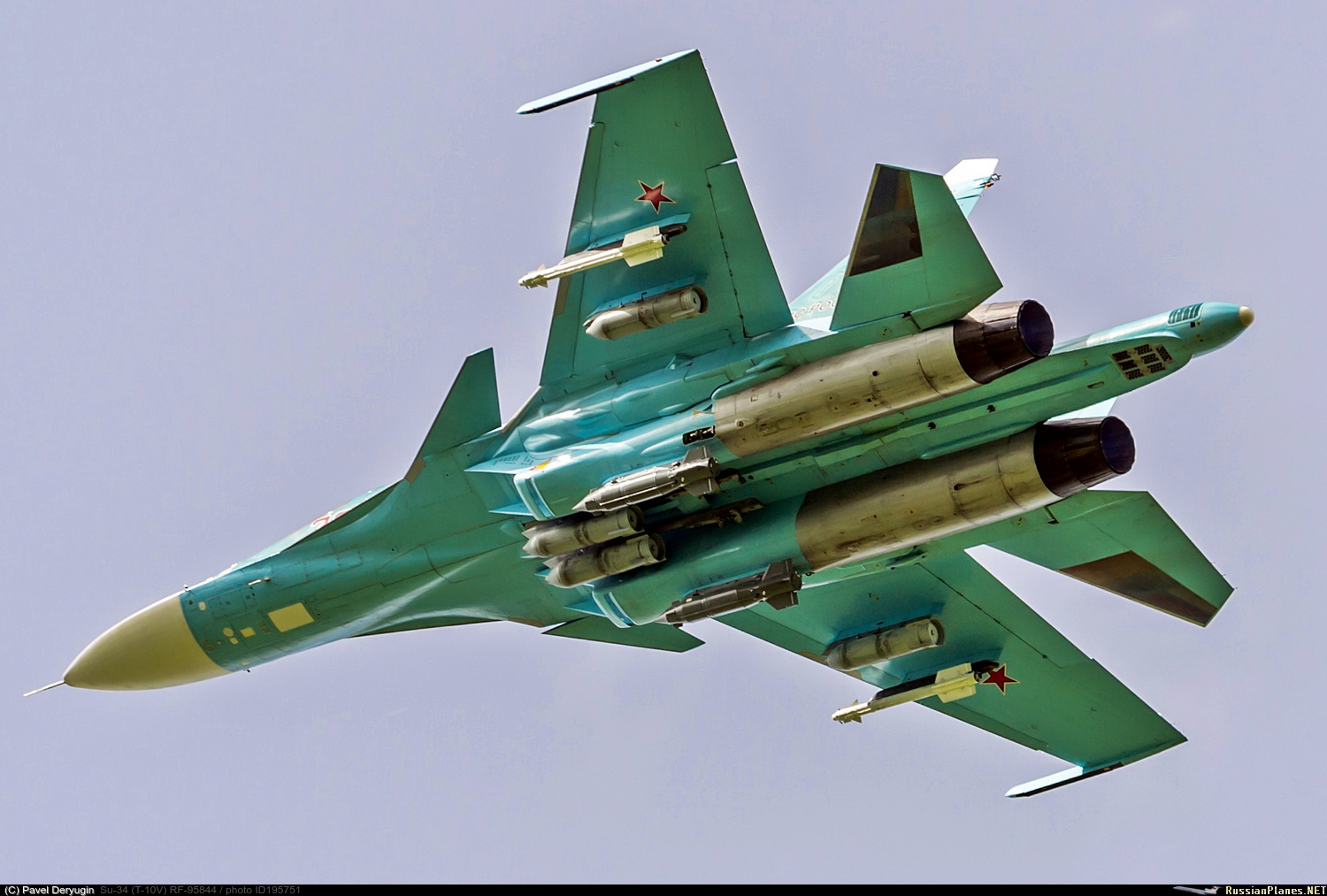
Starfish PrimeI don’t recognise the bombs under the intakes?? KAB-500SE?
Starfish PrimeThat’s where this thread is ultimately heading.
Starfish PrimeWhere did you get this bold part? Coz CEO of NIIP said nothing about scan mode.
For comparison, Zaslon’s peak-power is only 5kW while diameter of antenna is only slightly bigger than antenna of Irbis.
Well, well, well…so, we have another one adept of 0,000001sqm *********? Ok, LOL.
D2=D1/(RCS1/RCS2)^0.25
RCS2=1sqm – 400/(3/1)^0.25=304 км
RCS2=0.1sqm – 400/(3/0.1)^0.25=171 км
RCS2=0.01sqm – 400/(3/0.01)^0.25=96 км
RCS2=0.001sqm – 400/(3/0.001)^0.25=54 км
RCS2=0.0001sqm – 400/(3/0.0001)^0.25=30.4 кмOnly if you believe in 0,00000000zerozerozerro1 bull****.
FYI information, S-125 is restricted by missiles range, not radar. Maximum range of the missile 5V27(V-601P) is….17km.
So, you’re completely wrong in your ‘analysis’.
Good luck with that, yeah.
The ‘narrow scan’ is concluded from the fact that an APG-77 with equal power only manages 200km for 1m^2.
The Irbis-E is 900mm in diameter, whereas the Zaslon-M is 1400mm in diamater. Now the power is actually far less important than the diameter. That 56% increase in diameter gives a 142% increase in gain and a 56% increase in range. The 4 fold increase in power would only give a 41% increase in range, except the figure you quoted is wrong for several reasons.
http://www.airforce-technology.com/projects/su-35/
http://www.ruaviation.com/news/2015/4/13/3068/?h
The average power of a Zaslon-A is 2.5kW but with a 25% duty cycle, giving 10kW peak power. Now that’s a -A not a -M. Now according to Combat Aircraft July 2015, the detection range of the Zaslon-M is twice that of a Zaslon-A and diameter was increase from 1.1m to 1.4m. Now the change in diameter only equates to a 27% range improvement on its own.
Really ? thought it’s 10 kW given that the average power is 2.5 kW. Pulse doppler radar typically operates at duty cycle of 15-25% To prevent/reduce effect of eclipsing.
5 kW peak means it has 50% duty cycle. that’s FMICW realm
Spot on.:eagerness:
http://www.ausairpower.net/APA-Flanker-Radars.html
The Russian’s snatched the leading position back with the early 1980s N007 Zaslon on the MiG-31 Foxhound, a massive phased array design twice the size of the US AWG-9 radar. Rated at 2.5 kiloWatts average power, with a 25% duty cycle peak power rating of 10 kiloWatts, this immense radar is claimed to be capable of detecting a 0.3 m2 RCS cruise missile at 35 nautical miles range.
You use 400km in your calculation but the manufacturer quotes 350km for 3m^2, which is what I used. That aside 26km or 30km is functionally useless, especially when that’s detection only.
Well actually it depends what version of the SA-3 it was. It’s far more likely to have been a Volna-M given the date. Most sources also quote the slant range at 25km.
http://www.ausairpower.net/APA-S-125-Neva.html
Err… nope, other way round. You can actually work the range based off the Irbis-E system. [(50)^(0.25)] x 26.6km = 71km for detection.
Well err, if you think a huge truck and a 1MW radar are stealthy, good luck with that.
Starfish PrimeBased on size I’d say 50,000+lb empty.
Starfish PrimeMaybe they could make an ASBM missile based on that THAAD-ER for the pacific pivot?…
Not big enough. It would likely be better to base it on the Sparrow missile family, which is already GPS/INS guided, then add terminal homing.
http://www.rafael.co.il/marketing/SIP_STORAGE/FILES/1/1171.pdf
Starfish PrimeThe questions are, how far will Turkey go and will they concede the territory afterwards?
Starfish PrimeLet’s be real here.. Afghanistan, Iraq, Libya, Syria, Ukraine, which one didn’t end up in a mess?.. I have to think very hard to come up with a single op which really went smoothly. The last one was what, Grenada?
Panama.
Starfish PrimeNo but it stands to reason that if an S-400 radar is emitting, the F-35 will see it well before the radar sees the F-35. So the pilot will either attack it head-on (frontal RCS) or avoid it completely.
Ofcourse the next thing you will show us, is the SAR of S-400 radar..?
Mindless claims..
Who said a 20kW class radar can see it sooner? The quoted 3m^2 target range for the Irbis-E is on a very narrow sweep and even at that it’s a dubious claim at best. For comparison the huge Zaslon-M on MiG-31s only claims 200km for the same target on a full sweep. It also doesn’t follow that the radar equation applies simplistically wrt a such a huge reduction in RCS but even if it did, 30,000^(1/4) = 13.16. 350/13.16 = 26.6km for detection only. That’s on a narrow angle sweep and even then such a range is useless because IRST will see it before then. Factor in for actual targeting/engagement range and you’re basically WVR by that stage, making the radar functionally useless. Now detection range for an S-400 radar may be circa 70-80km (26.6 /[ [1000/20]^[1/4] ]) but the article is saying that actual engagement range is around 21km.
Now we know the F-117 was engaged by the SA-3 at 13km. That radar was around 250kW.
https://en.wikipedia.org/wiki/S-125_Neva/Pechora#Radars
So quadruple the power and it equates to ~1.4 times that range for the F-117 (19-20km). So the analysis is within the right ball park and the effect of EW hasn’t been factored in yet.
Now a 1MW radar can be detected from a long, long way away and even when not emitting, the system isn’t remotely stealthy.
Starfish PrimeHi All,
18/18 although will admit the Meriln picture stumped me until I Googled the Kestral just a yank built version of the Merlin so I suppose 17/18 in all honesty…:DGeoff.
I got that one by process of elimination.
Starfish PrimeBut at what range?


 Sign In