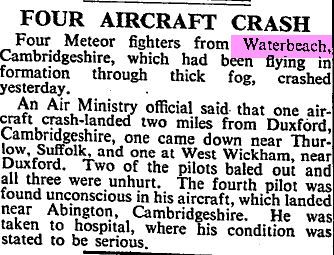
As reported in the press at the time:

As the image is titled “Meir 1942.jpg” I assume it’s Meir (Stoke-on-Trent) as it was in 1942.
History of Meir as reported in the local paper:
Why wasn’t Meir airfield developed after the Second World War to provide Stoke-on-Trent with a commercial airport? It’s a question which still crops up, even though the last plane took off from the airfield in 1973 and the site off the A50 has long been covered with industry and housing. However, Meir was doomed from the start by its location close to a thickly-populated area, the sloping ground and an industrial haze which created problems of visibility. The airfield was opened by the city council in 1934 as Staffordshire’s first municipal airport and initially called the City Aerodrome. From 1939 it became a wartime RAF station where novice pilots were trained. Bombers assembled at the nearby Rootes factory at Blythe Bridge were also flown from Meir. After the war, activities were largely confined to glider training for ATC cadets, although Staffordshire Potteries flew aircraft in the 1950s and the Staffs Light Plane Group continued until the 1970s.

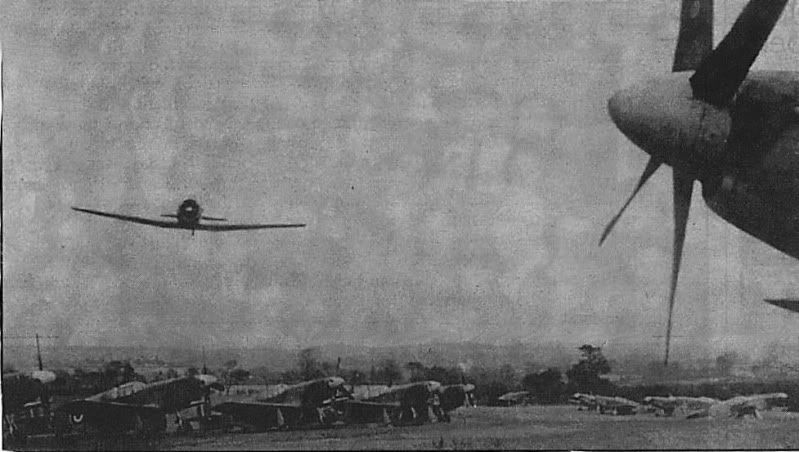
Looks like a Harvard buzzing some Mustangs
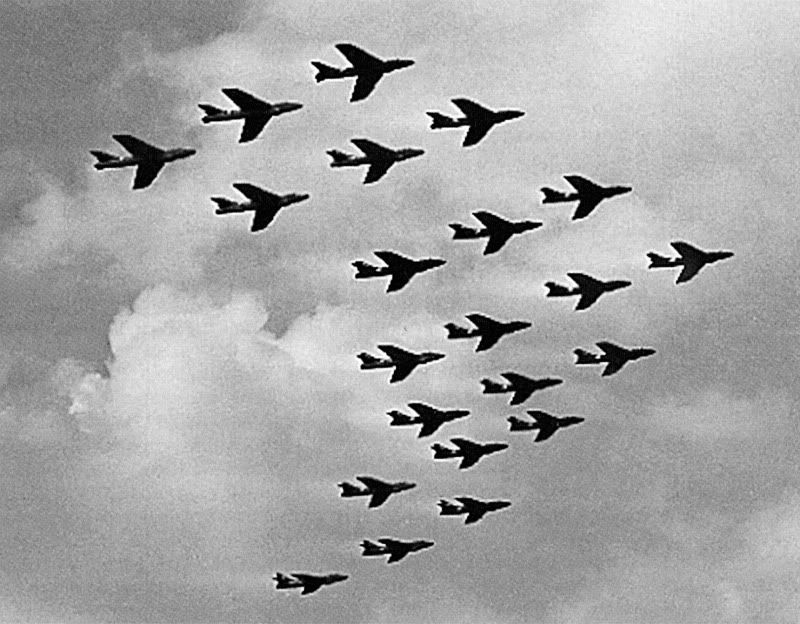
The large formation you refer to is presumably the famous (and record-breaking) 22-aircraft which looped at the Farnborough show.
These are them:

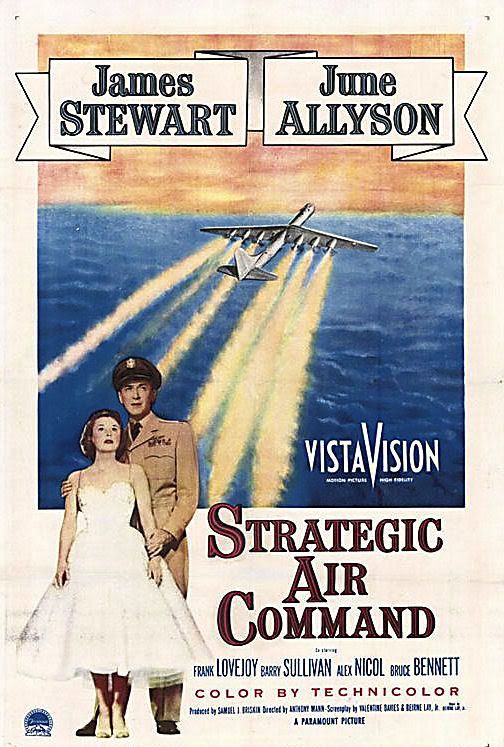
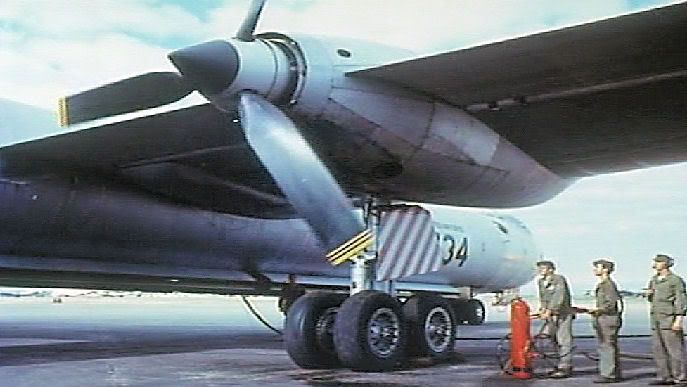
Strategic Air Command – lots of SAC aircraft

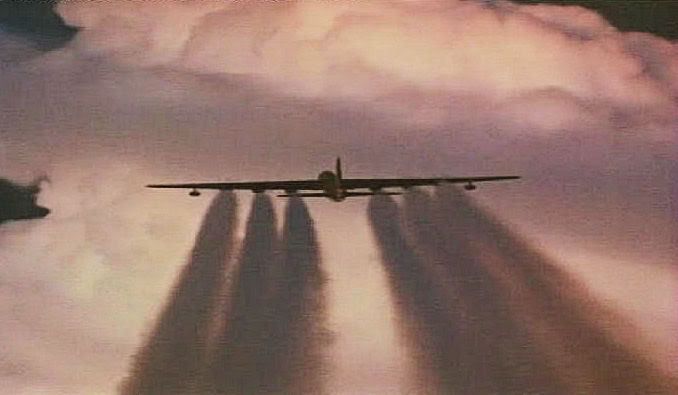
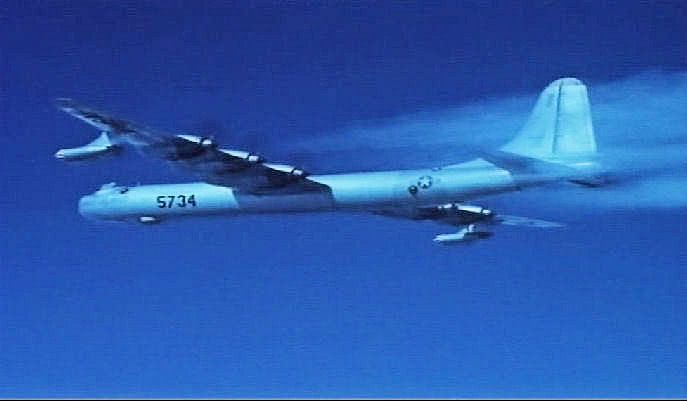
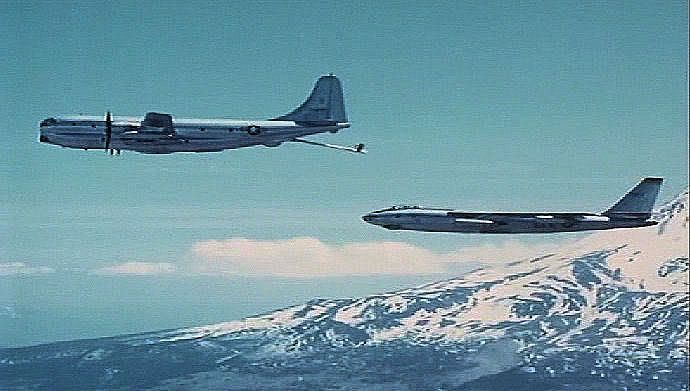
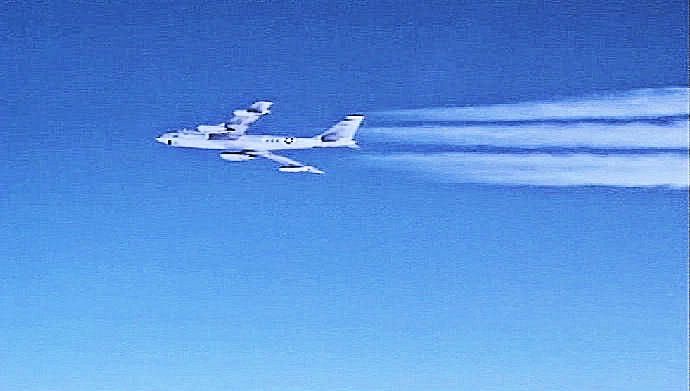
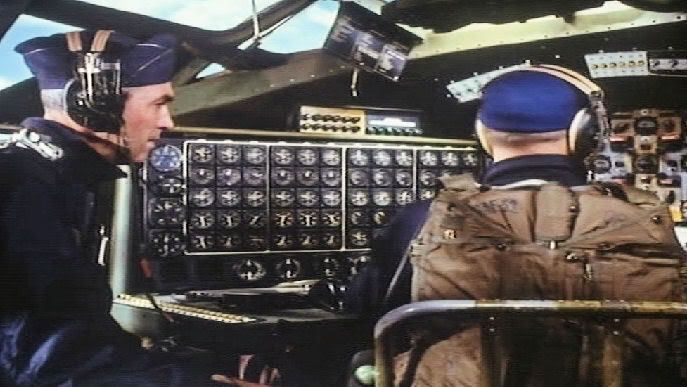
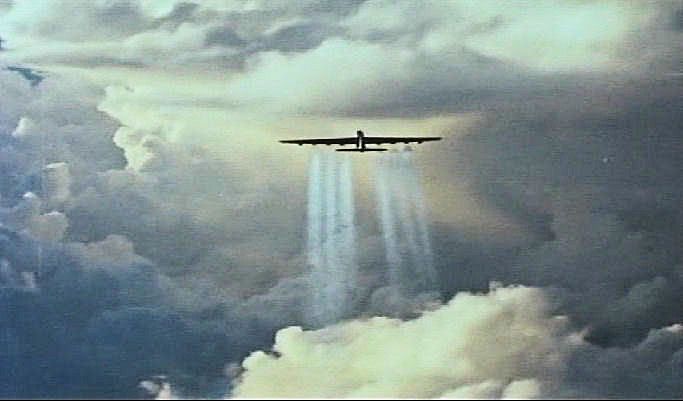
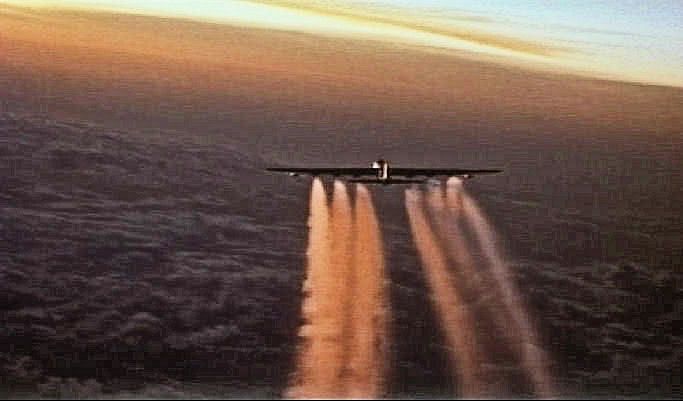
Allegedly stars were James Stewart and June Allyson but the REAL star was the B-36, plus some other SAC aircraft in supporting roles.


The B-36. Star of my favourite aviation film “Strategic Air Command”.
A couple of screen grabs:


Hi all.
Many people say Airshows attract the second largest crowds (after Football) in the UK and that the majority of visitors.
Is this written any where, are there any reliable/quotable sources. If so, could somebody please point me in the right direction.
Cheers
Ben
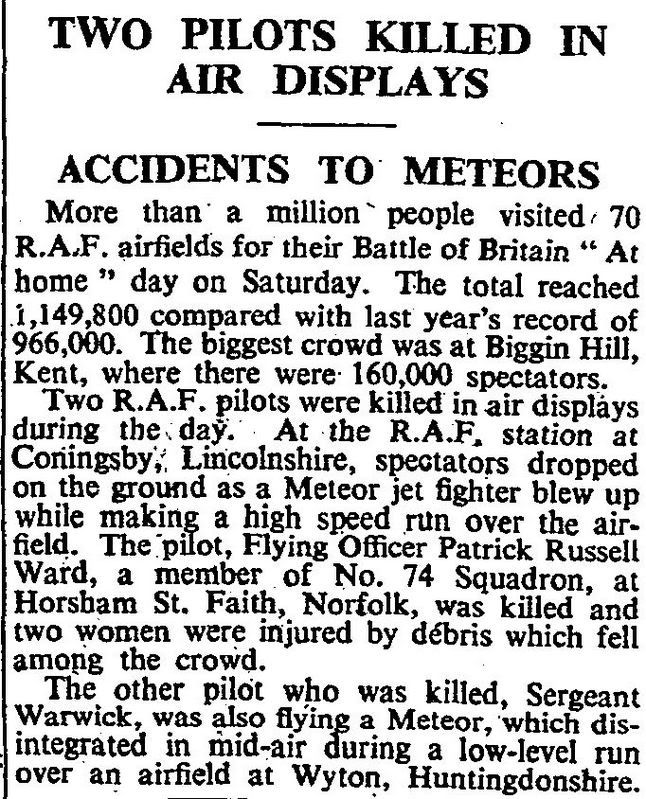
I have a September 1953 press cutting that shows that over 1 million visitors (1,149,800 to be precise) visited RAF airfields for the September 1953 Battle of Britain diplays.
See below.

Hi all
A good friend of mine did his ab initio RAF pilot training in Rhodesia in the early 1950s and his first solo was in the above Chipmunk. It was subsequently sold to the civilian market and went to the States as N4TG.
I understand it may still be flying in the US but under a different registration, any information on its current status would be much appreciated as my friend has great interest in the aircraft.
Just been browsing this forum and came across this mention of Chipmunk WG272.
I was stationed at RAF Thornhill (5 FTS) S. Rhodesia arriving there in August 1951. When I arrived Tiger Moths were used for primary training, but starting in September 1951 Chipmunk T.10s started to replace the Tiger Moths at 5 FTS.
5 FTS was allocated 27 Chipmunk T.10s. Built at Hawarden near Chester, they were crated and shipped out to Durban in South Africa and transferred to rail trucks for the journey to 394 MU at RAF Heany near Bulawayo where they were assembled, flight tested and then flown up to Thornhill.
WG272 was the first Chipmunk to arrive at RAF Thornhill and I photographed it shortly after its arrival in September 1951.

When the Rhodesian Air Training Group closed in October 1953 flying clubs in South Africa and Australia realised that the many surplus RAF Chipmunks now on offer were an economic alternative to the purchase of new aircraft.
Eleven used Chipmunks were imported into Australia via South Africa. They proved so popular that when the RAF released further aircraft in 1956, W.S. Shackleton Ltd were appointed to purchase Chipmunks on behalf of the Federation of Australian Aero Clubs. In total some 80 ex-RAF Chipmunks were exported to Australia.