 Y-20 Bacon
im quite curious about the potential of the L-15 in the light attack, light fighter roles, and if it would truly be cheaper to buy and operate than the FC-1.
ideally the PLAAF fleet would be L-15 / J-10 / Flanker clones with a gradual shift to J-20
Y-20 Bacongood insight Totoro.
first off my apologies for calling you a fat furry cat that follows young girls.
in any case I follow most of your sentiment.
I wonder if there is also a market for Mirage 2000s as well, now that more are beginning to enter the market as M2K customers are switching to Rafale.
in Chinas case, maybe they were better off going for L-15s and J-10s instead of adding the FC-1 in the middle.
Those poor countries that cant afford a squadron of FC-1s, could probably afford with more L-15s which probably would provide most of the same functions.
Those with money would have gone for the J-10 if available (Ive a feeling had it been made available for export and given license production, Pakistan would have chosen it over the FC-1). A perfect alternative to the F-16 during the times the US isn’t playing nice with Pakistan, like currently.
Y-20 Baconwow no love for the Draken
but the mirage iii was certainly solid
Y-20 BaconI only know of one J-10 crash in which a female pilot died. But this article says there were a ton of crashes and they blame the Russians?
When a Chinese-designed jet fighter crashed, local media found fault with the imported Russian engine while praising the injured pilot for his “outstanding soldier’s conviction” during the incident.
According to a report by the Beijing-based Sina Military Network, the Russian-built engine used in the J-10 is prone to malfunction, having caused multiple crashes in recent years.
On Sept. 19. a J-10 fighter jet from northeastern China’s Shenyang Military Region crashed during a nighttime patrol mission, state-run China Central Television (CCTV) reported. The Russian-built engine had lost power at over 11,000 feet, said pilot Li Tong, who ejected at 1,000 feet following an abortive 198-second attempt to glide the aircraft to a local airfield.
Li survived with neck and spine injuries. Because he had avoided lit, populated areas when maneuvering his damaged plane, CCTV lauded him as a hero, saying that he had made no less than five “weighty decisions” to “avoid the loss of property and life among the masses.”
A distinguished military pilot, Li Tong told CCTV that his first priority was to save the jet, which at the time of engine failure was carrying 200 rounds of aircraft ordnance and 2.5 tons of fuel. As Li struggled to restart the engine, the plane fell to about 5,000 feet.
Why a Russian Engine?
The J-10 is a single-engine light fighter aircraft that was developed by the Chengdu Aircraft Corporation in the 1990s and put into service starting 2005. It is built around the powerful Russian AL-31 engine, which was originally intended for the two-engined Su-27 family of Soviet-designed fighter aircraft.
With its Western-inspired and locally-designed single-engine configuration, however, the J-10 suffers from severe compatibility issues in using the AL-31. At the same time, the Chinese-designed WS-10 aircraft engines have proven even less reliable than the Russian equipment
Despite claims made in 2014 by a spokesman for the Chinese research institute tasked with the WS-10’s development that the engine was “fully operational and matured” for use in an upgraded J-10, a Sina report this August revealed that the Chinese aviation industry had yet to reduce the Taihang’s failure rate to within acceptable boundaries. The Chinese air force and in particular the J-10 jets will continue to run Russian engines.
According to Chinese naval publications cited by Sina, consultations with Russian providers to find a solution for the AL-31 compatibility issues have been delayed for want of funding.
“Measures to address failures from the perspective of design theory cannot be given,” the Sina report thus said.
Netizens found issue with the Chinese media reports and analysis of the September crash, saying that CCTV’s triumphant depiction of the pilot’s emergency actions drew attention away from the technical failings common to modern Chinese fighters.
A user in Guangdong Province contradicted the Sina analysis for its implication that the engine can simply be re-engineered, if only the Russians would help. “The engine is not like a graphics card that can be changed at will,” the post reads. “It is integrated with the entire airframe.”
“What if the aircraft was severely damaged, or if the pilot had no time to process the malfunction? Never make a trifle of human life,” a netizen from Shanghai said, criticizing the CCTV report for its rosy depiction of Li Tong’s flight and crash that “avoided residential areas.”
Y-20 Bacon^ PLA’s reply will likely be one of the following:
– you didn’t read Sprey properly
– you have biased western thinking thats why you cant understand
– China is developing something that all the other countries couldn’t figure out
– its a conspiracy!
– something something JF-17
Y-20 Baconthat is a brilliant idea Munir, great!
your level of knowledge reminds me of one of our Finnish members, Topspeed who says he is an aerospace engineer.
You two have very similar thinking. I think magical things can happen between you two.
here is his profile
https://forum.keypublishing.com/member.php?21126-topspeed
Y-20 BaconThis seems to answer some of the questions in the 1960s fighters thread.
it would seem that had the Draken met todays FBW controls, it would’ve been very formidable
Y-20 BaconUAE saves Airbus! Congrats
France better thank UAE by giving them the source codes to Qatars Rafales.
Y-20 BaconI know a lot of people here get wet over fighters, but I think the Il-112V pics are great news. Isn’t this the one India got cold nuts over?
What is the intended capacity in terms of vehicular transport? Google shows only drawings of one civilian looking van.
Y-20 Baconthanks Yama,
didn’t realize how expensive the mirage 3 was!
Y-20 BaconGiven combat experience of both the USN and Israelis, could hardly go wrong with either the F-8 or the Mirage III.
Would be interesting to ask the French which was better… there must have been some pilots who practiced DACT between the Aeronavale and Air Force.
it would also be nice to hear what Finland thought of MiG-21 vs Draken, as they operated both for a long time.
Ultimately for third generation technology the two seaters were the way to go.
and how many 3rd gen 2 seat fighters were there besides the F-4?
of course there were 2 seat versions of the mig-21, draken, etc but they were just configured to be trainers yes?
Y-20 Bacon^ please don’t bring in your personal history here, no one wants to hear it. we are talking about aviation.
secondly every large country is a bully. some countries find the US to be a bully, others find China or Russia to be a bully, others India. stop living in your bubble.
but we are talking about airplanes not politics.
Y-20 BaconI agree with you Paralized
the Su-27M would have been nice.
Had Brazil actually ordered them in the late 90s or early 2000s, I think things would have been very different.
the current Su-35 many never have been born as the RuAf would’ve picky backed off the Brazilian order
and China would be placing canards on all its J-11/16 variants
Y-20 Baconhey Hyper,
how can you tell it is the new engine on the J-20? the pictures are so grainy and low quality it is hard to tell.
Y-20 BaconNever understood why people got wet over the su-47 / s-37
looks wise it was a bit meh. kind of flat looking. I think people were attracted to its black paint.
If I had to pick something Russian from the 90s, it is definitely the Su-27M. Best looking flanker variant by far.
love the triplane configuration and the large frontal fuesealge..but I guess TVC wins over canards


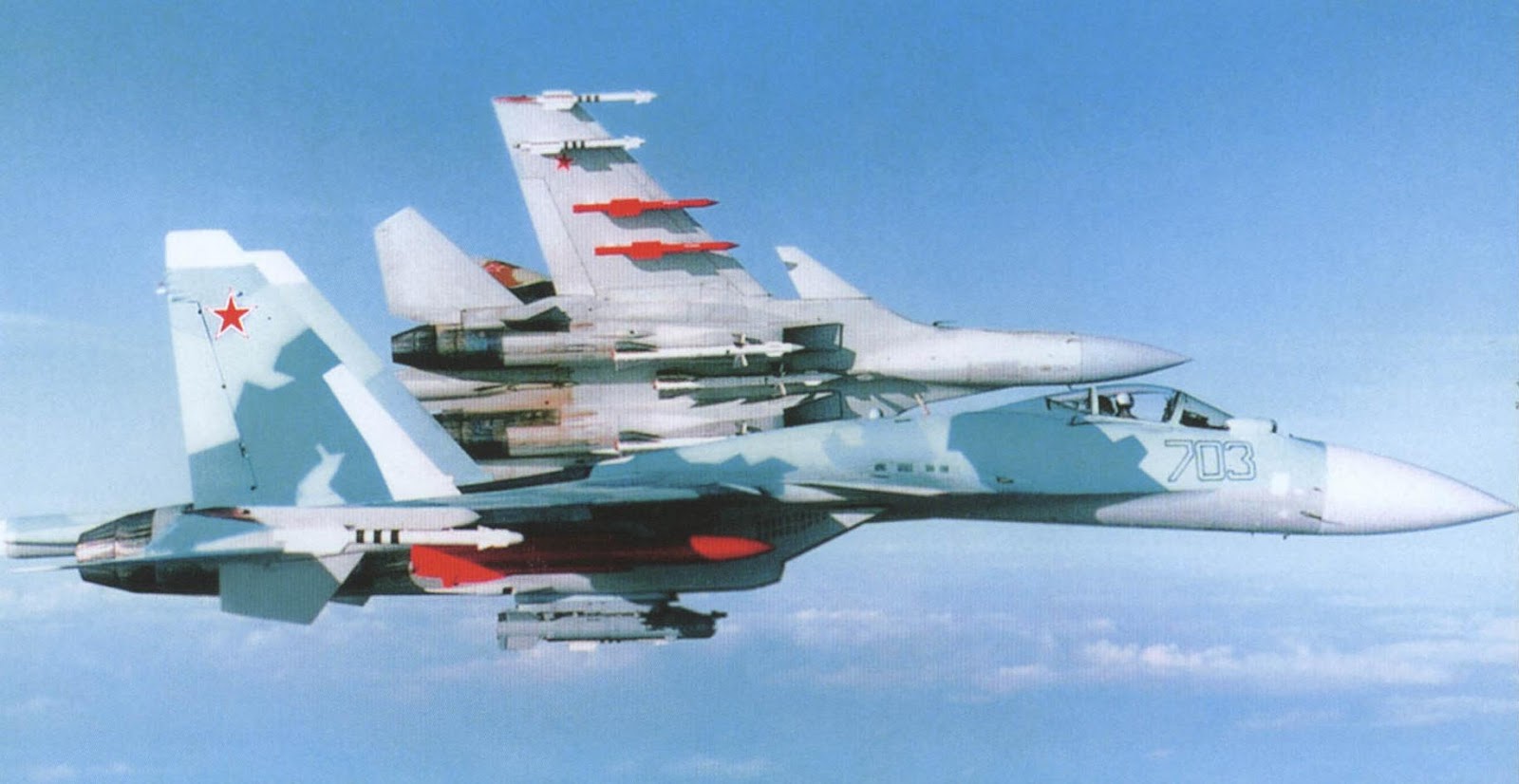
research wise.. never understood why they wanted to do research on forward swept wings.
the X-29 came out a decade before and the limitations of such wings were widely published.


 Sign In







