aced_inc
Asian UAV industry: Grand plans
Asian manufacturers are carving themselves out a niche for close- and short-range tactical UAVs. Now they want a larger slice of the global market
Long-standing involvement in the unmanned air vehicle sector by a variety of Asian aerospace and defence manufacturers has seen increasingly ambitious concepts in the high- and medium-altitude class in recent years. To date, however, none of those programmes have progressed beyond the design stage because of their high development costs and a limited customer base beyond immediate national requirements.
© Flight International
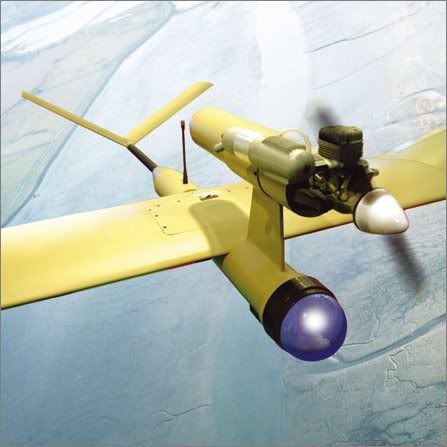
Integrated Dynamics developed the Desert Hawk two – vehicle system for Pakistani army
Instead, Asian manufacturers are proving to be at their most successful in the close- and short-range tactical segments, largely on the back of military requirements and the relative accessibility of the technologies involved in this part of the UAV market. Asian manufacturers are also showing themselves to be emerging as genuine innovators here, led by firms such as Singapore Technologies Aerospace and the South Korean-based Ucon Systems. Out-of-the-box concepts have appeared, including a hand-launched mini-rocket UAV – designated Firefly – developed by Integrated Dynamics of Pakistan and released on to the international market late in 2005.
Positioning play
The emergence of the global UAV market is widely seen by Asia’s defence and aerospace sectors as presenting an opportunity for leveraging technical capabilities, and positioning for larger roles in the development of an expected global civil UAV systems market. Translating those aspirations into practical industrial programmes, however, is presenting challenges.
In an unusually revealing presentation at the Unmanned Systems Asia Pacific 2006 conference in Singapore last month, Dr Tan Jiak Kwang, ST Aerospace chief engineer and director, advanced systems, said: “When we began our UAV business we tried to mirror the vision of our commercial aviation business, which I think we can say we have achieved. ST Aerospace is the largest independent third-party MRO in commercial aviation. So we mirrored that vision and we tried to progress it. But almost immediately we realised it is a tough road ahead of us.”
ST Aerospace UAV study projects have included almost the full spectrum of air vehicle concepts, ranging from high-altitude, long-endurance to small hand-launched tactical systems. Key programmes include the Fantail vertical take-off and landing short-range UAV, the Skyblade series of hand-launched short-range air vehicles and a larger catapult-launched tactical derivative, and the MAV-1 low observable tactical UAV demonstrator, which is now part of a swarming UAV demonstration effort.
The company would like to continue to widen its efforts, Tan said, but faces practical challenges ranging from limited airspace access due to Singapore’s small size through to the reality that “as a new player, we are competing against many of the big players”.
ST Aerospace’s approach to the market has emphasised unconventional configurations Tan said, with a view to exploring and opening up new niches in the overall UAV market. However, that approach has posed its own challenges in that “with unconventional configurations, the limitation is that we don’t have enough aerodynamics databases”.
Prototype development has emphasised commercial-off-the-shelf components to reduce prototyping and production costs. However, “the use of COTS components has got us into some trouble because some of those are not ruggedised”. Tan said issues had also emerged over the performance and reliability of COTS components, with this affecting some servo and sensor subsystems, as well as with electromagnetic compatibility and interference, software release and integration of COTS items into an overall architecture.
The emphasis on unconventional designs has also meant that there has been a lack of suitable subsystems that could be adapted for use, with problems including size, weight, cost and availability. This led to requirements for ST Aerospace to develop its own flight-control computer and sensor board, and payload pan/tilt mechanisms, while datalinks were required to be extensively customised.
Even with these technical hurdles being resolved, there remains the practical problem of ensuring that systems developed meet potential user expectations, Tan said. A key lesson is that “UAV developments require the co-learning of the user”.
Tactical systems
The focus on tactical requirements by many of Asia’s UAV developers reflects the ongoing modernisation of defence forces across the region and the benefits that such systems can bring to the modern battlefield. As well as the new ST Aerospace designs unveiled at Asian Aerospace last month, significant new systems recently unveiled within the region include a vertical take-off and landing vehicle by Ucon Systems, and two hand-launched UAVs developed by Integrated Dynamics with a third, a micro-UAV, in development.
Integrated Dynamics started work on the Desert Hawk in late 2003 in response to Pakistani army requirements, with a prototype first flying in late 2004. While the configuration has close parallels to the L-3 Communications-BAI Aerosystems Javelin, Integrated Dynamics says the design evolved independently, the air vehicle intended to be able to perform both powered and unpowered flight, with both internal-combustion and electric- engine options available. Endurance is around 2h.
© Flight International
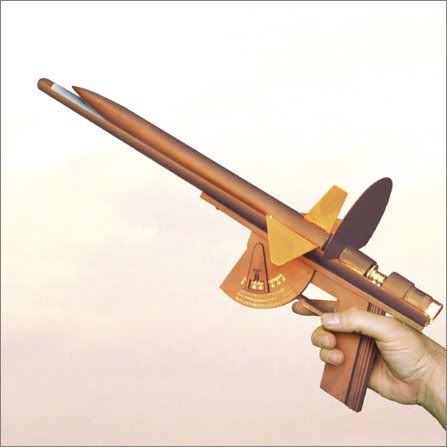
The Firefly mini-rocket UAV offers 8s flying time
A standard Desert Hawk system, says Integrated Dynamics, comprises two air vehicles and a common portable ground control station. The two-air vehicle baseline is intended to support operations in environments where line-of-sight datalinks encounter terrain-masking problems, with communications relay-based missions demonstrated as part of the flight trials programme during 2005.
Integrated Dynamics began development of the Firefly mini-rocket UAV in late 2004 in response to Pakistani army operational requirements for a high-speed, short-range observation system that could be used in the high-altitude environments of northern Pakistan. A basic system costs around $3,000 and comprises four rockets, launcher, a carry case, datalink and a PDA-based ground control station.
The rocket UAV uses commercially available miniature solid-fuel engines that provide a flight time of 8s, with the air vehicle covering 800-1,000m (2,600-3,300ft) before disintegrating on impact with the ground. The rocket airframe is made of PVC plastic with snap-on glassfibre fins for stabilisation. The payload is a fixed focal-length disposable CCD video camera and a 1.5Ghz L-band datalink. Flight testing for the system began in mid-2005.
Subsystems used in the Firefly are also supporting development of a hand-launched micro-UAV, with flight testing about to start. That system is based around an 200mm (8in) flying wing made of vacuum-moulded plastic. Endurance is expected to be around 30min. Range is forecast at 1km (0.5nm).
Integrated Dynamics says the bulk of its avionics and mission systems, including data and communications links, have been developed in-house. However, for its smaller UAVs, it is working with Colarado-based UAV Flight Systems to meet autopilot requirements. Development work in the tactical segment, Integrated Dynamics says, offers the company potential market as a supplier of subsystems and components – even airframes – to more established UAV manufacturers and users and this market is being pursued in parallel to full systems development.
A parallel opportunity is seen in supplying UAV subsystems to other nascent supplier nations, with Integrated Dynamics particularly targeting the United Arab Emirates as a customer given that nation’s aspirations of becoming a major UAV supplier in the medium to long term. A similar market strategy is being pursued by Ucon Systems, which has carved out a niche role as the primary supplier of ground control station expertise to the UAE air force’s UAV research and technology centre (Flight International, 13-19 December 2005).
Ucon Systems has its origins with a group of former Korea Aerospace Industries experts who worked on that firm’s Night Intruder 300 tactical UAV development programme and later set up their own company in 2001 to explore alternative UAV concepts.
PETER LA FRANCHI / LONDON
aced_incPAKISTAN – PLUGGING THE GAPS
Robert Karniol JDW’s Asia-Pacific Editor
Bangkok
While Pakistan’s defence strategy has been firmly focused on rival India, various threats undermining internal stability have led the country to re-assess its military capabilities. Robert Karniol reports
* Emerging from US sanctions imposed in 1990, the Pakistani armed forces aim to fill a range of capability gaps
* Tensions with long-time rival India have lessened but New Delhi remains the primary driver for Pakistan’s force development
· Three distinct threats are undermining internal stability and prompting the armed forces to enhance further
Pakistan’s emergence as an overt nuclear power led to its armed forces establishing a new conventional defence strategy focused on traditional rival India. Other threats have since escalated, undermining internal stability.
India and Pakistan fought three full-scale wars in the post-colonial period and have skirmished almost constantly. The latest significant clash took place in mid-1999 at Kargil, along Kashmir’s contentious Line of Control (LoC), and in 2002 a million troops faced each other during a major force mobilisation. Tensions, however, have eased notably in recent years.
A ceasefire has been in place along the LoC since 2003 and is viewed as successful. This has been supplemented by a series of confidence-building measures and, since early 2004, by sluggish peace talks that continue. The catastrophic earthquake of October 2005, centred on Pakistan-controlled Kashmir, also moved rapprochement forward through India’s sympathetic response.
India, nevertheless, remains of central concern to Pakistan’s armed forces.
“Threat is based on two perspectives: capabilities and intention,” said Lieutenant General Tariq Majid, the army’s chief of general staff.
“Intention takes no time to change, so it’s on the basis of capabilities that you have to proceed with your planning and your strategies. We have to stay alive to the possibility of a conventional threat from India.”
Pakistan’s security strategy is rooted in maintaining a “minimum” credible deterrent capability and this encouraged Islamabad to launch a covert nuclear weapon programme after India’s 1974 nuclear test. This effort’s success, revealed in 1998, produced a new perspective in its armed forces on the conventional threat.
“Due to the nuclear forces in India and Pakistan, any conventional war that breaks out will be limited in scope, in extent and in time. It would be extremely intense, but within these three parameters,” explained General Ahsan Saleem Hyat, Pakistan’s vice chief of army staff.
“We have tailored our doctrine and concepts and employment of forces to this understanding. This is the result of nuclearisation.”
Force development in Pakistan is otherwise influenced by two main factors: the need for flexible response capabilities in order to meet aggression at an appropriate level and capabilities allowing for an active defence posture, which includes an offensive response.
Internal conflicts
The potential for conflict with India remains dominant among Pakistan’s military leadership thinking, but actual combat operations are focused on addressing three internal security issues: the conflict within Islam; a revived low-level insurgency in Balochistan; and the ‘war against terror’ centred on the Federally Administered Tribal Areas (FATAs) along the Afghan border. These are separate problems, though with some overlap.
The military response to Islamic militancy largely involves heightened security conditions and enhancement of counter-terrorism capabilities. Dealing with the Baloch insurgency, which is mainly centred on two of 27 districts, is spearheaded by the paramilitary Frontier Corps, though there is some army involvement. The Frontier Corps’ strength in Balochistan is being expanded by 12 wings, for example, while the army’s Balochistan Corps has set aside one battalion for specialised training as a reaction force. Two companies from this battalion have completed training and the remaining two have started.
Military activity is more strongly focused on the ‘war on terror’ in the mountainous FATAs. There are seven FATAs in all but the conflict centres on two of these the agencies of North and South Waziristan: where over 80,000 ground troops are deployed with army helicopters and the air force providing support. This campaign involves developments in structure and capabilities, including the establishment over two years ago of the battalion-plus Special Operations Task Force (SOTF). Capability enhancements under way involve tactical lift through additional helicopters, night-vision devices and unmanned aerial vehicles (UAVs). “We are not fighting America’s war in the FATAs. It is in our own interest. We’re fighting this war because, unfortunately, there have been fallout effects in Pakistan from the instability in Afghanistan,” said Gen Tariq.
Winning the ‘war on terror’ in the FATAs can be viewed as Islamabad’s tactical objective. Military sources say that over 210 foreign militants and Al-Qaeda personnel were killed in February, with a further 700 local and foreign militants arrested. However, there is a strategic objective as well.
The tribal FATAs are unruly and underdeveloped, with a high degree of local autonomy dating back to the British colonial period. Beyond acting against the extended terrorism threat, President General Pervez Musharraf aims to gradually bring them into Pakistan’s mainstream. This is a long-term project, with one Islamabad-based analyst saying it may take a generation or two to fully implement, but it is a process seriously started with Pakistan’s ‘war on terror’.
There are three core requirements driving force development in Pakistan. The armed forces seek to maintain a “minimum” credible deterrent capability and, more immediately, pursue capacity-building for the ‘war on terror’. Finally, there is the need to meet organisational and developmental requirements to support Pakistan’s substantial commitment to UN peacekeeping operations.
“The government has made serious efforts to improve our economy, and we have to be mindful that this progress on the economic front is not retarded. So affordability is always affected,” said Gen Tariq. “We have to prioritise.”
Army
The Pakistan Army is re-organising after the completion in 2005 of a comprehensive study focused largely on improving efficiency and the ‘tooth-to-tail’ ratio. Cost-cutting is another factor. This applies to both conventional and sub-conventional threats, the latter covering counter-terrorism operations and low-intensity conflict. Over 50,000 personnel have been trimmed from 550,000 by suspending recruitment and attrition through normal retirement. Existing units are also being brought up to strength, mainly by addressing equipment shortfalls. At the same time, command articulation arrangements are being improved through moves such as the grouping of loose elements.
Two other broad initiatives are also apparent: the creation of new forces to address critical imbalances and selective force modernisation. The creation of new forces is mainly pursued through pruning the authorised strength in various institutions and units; the latter influenced by the introduction of advanced technologies requiring less manpower.
Enhancement of special forces is one consequence.
“We are now at the stage where we will have a total review on the overall structure of the army and for that the studies are in progress,” said Gen Tariq.
The army’s immediate concern is centred on counter-terrorism operations in the tribal areas bordering Afghanistan, with over 80,000 troops deployed. General Ehsan Ul Haq, chairman of the joint chiefs of staff committee, says this has required a meaningful enhancement of capabilities.
“Airborne mobility, aerial surveillance, special forces and communications – these have become far more significant in our development priorities,” he explained.
The need to improve tactical mobility led to the induction of 10 additional Kazan/Mil Mi-17 medium transport helicopters and 26 Bell 412EP multirole medium helicopters. These will be supplemented by around 20 refurbished AH-1F Huey Cobra close support/attack helicopters on order from the US for delivery in 18 months. The acquisition of the Mil Mi-35 attack/assault helicopter is under consideration.
“We are also looking very seriously at armed scout helicopters, with options from France and the US under study,” noted Gen Ahsan.
In the area of surveillance, the army is looking to indigenously develop UAVs, but has meanwhile acquired from Germany the EMT Luna short-range battlefield reconnaissance, surveillance and target acquisition UAV. Three or four systems are likely to be obtained: the army’s UAV system first.
Night-vision systems and improved weather radar systems are another priority, while communication capabilities have been partly addressed with military radios worth USD78 million, acquired from the US.
Much of this capability has gone to enhance the special forces, which centre on the three battalion-strong Special Services Group (SSG).
A recently issued request for tender involving 100 7.62 mm sniper rifles and 50 0.50 cal sniper rifles is most likely geared to these troops as well. The SSG will be expanded, though details are unclear, but it has meanwhile been augmented through the establishment over two years ago of the Special Operations Task Force (SOTF).
The battalion-plus SOTF received equipment and training support from the US. It has dedicated aviation support, night-fighting capability and a counter-terrorism mission. Additionally, the training of two battalions of regular infantry as a reaction force in two army corps areas is partly completed. Each of the nine corps headquarters should eventually have such units.
Conventional requirements include improved firepower. There is interest in obtaining additional long-range artillery, including multiple rocket launcher systems with a range beyond 80 km, and two long-standing programmes are focused on main battle tanks (MBTs). The artillery systems will be supported by the planned induction of an undetermined number of target acquisition radars, ideally the US-made AN/TPQ-37(V) Firefinder weapon-locating radar, while provision of night-fighting capability is another priority.
The MBT programmes involve the new Al Khalid, now entering service for deployment along the southern border with India, and the upgraded T-59. Both are fitted with a 125 mm smoothbore gun (the T-59 previously used a 105 mm gun) together with advanced systems and better armour protection. The Al Khalid has night-fighting capability while two thermal imaging systems, from Thales and Sagem, are being evaluated to equip the T-59.
Support elements are also slotted for improvement, most notably in ground-based air defence.
“We’ve had shortages and, in fact, gross inadequacies in the medium-altitude capability,” said Gen Ahsan. Separately, Gen Tariq noted: “We have placed a bias toward missiles rather than guns and on point defence rather than area defence.”
This concern will be partly addressed through the acquisition planned for 2007 of a new low-altitude missile air-defence system, which should be produced locally under licence. Several systems are currently under evaluation.
The Pakistan Army, Gen Ahsan notes, is predominantly foot-infantry based.
“We are looking to provide them with greater protection, including nuclear, biological and chemical protection. We also want to equip them with night-vision devices and some more firepower,” he said.
“We always planned for the infantry to have grenade launchers, but never obtained them. We now hope to start gradually procuring these.”
Navy
The Pakistan Navy’s counter-terrorism mission is concentrated on its participation since 2004 in the Coalition Maritime Campaign Plan (CMCP), which was originally premised on interdicting militant movements by sea but has since expanded to cover transnational criminal activity. It is the only regional navy contributing forces and is set to assume overall command of the multilateral Task Force 150 in April.
This is the navy’s first involvement in multilateral operations outside the training framework and the leadership stresses its regional outlook.
“We have very good bilateral navy-to-navy relations with all our neighbours except India,” said Admiral Afzal Tahir, chief of the naval staff.
“India’s navy budget is about nine times that of the Pakistan Navy. We cannot match them platform for platform, or weapon for weapon, but what we will do is have the capability to ensure that we can safeguard our core interests.”
Current efforts toward that goal include the completion of its Khalid-class (Agosta 90B) submarine programme, with the third of three platforms due to start sea trials following its delayed launch later in 2006, and oversight of a frigate programme concluded with China in April 2005.
The frigate deal involves four F-22P (Jiangwei II-class) platforms, with the last of these to be built locally at the navy’s Karachi shipyard following upgrade work to be completed by 2010.
The submarine fleet includes two Hashmat (Agosta)-class boats and three MG110 midget submarines; the navy’s four Hangor (Daphne)-class boats were retired in January.
“We have lost four platforms so I am quite confident that the submarine strength will increase in future,” said Adm Afzal Tahir. He adds that there is an outstanding requirement for a multirole ship, including rescue capabilities, to support the submarine fleet.
Among major surface vessels, the navy appears to have abandoned its initial interest in procuring four second-hand frigates and instead favours the acquisition of four corvettes. Provisionally, these would be built locally. Elsewhere, Adm Afzal Tahir foresees the need for one or two additional mine countermeasure vessels and another replenishment tanker “a few years down the line”.
In the area of upgrades, the lifting of US sanctions allowed the navy to obtain several long-delayed systems. These include the Vulcan Phalanx Block II close-in weapon system and the RGM-84/UGM-84 Harpoon Block II medium-range anti-ship missile. Atlas Elektronik Black Shark heavyweight torpedoes have meanwhile been purchased for the Agosta 90B submarine and an upgraded version of the Chinese LY-60N short-range theatre defence missile will be fitted on the F-22P frigates.
Analysts have also noted Pakistan’s first test launch in August 2005 of its indigenously developed Babur (Hatf VII) cruise missile.
“The missile is presently in land configuration only and we are in no hurry to put these on ships or submarines. We will have to look at this in time,” Adm Afzal Tahir said.
Further, the navy is bolstering its fleet of maritime patrol aircraft (MPA). Two Lockheed Martin P-3C Orions in the current inventory will be upgraded after extended maintenance work is completed around mid-2006 and eight more refurbished P-3Cs have been obtained from the US for USD970 million.
The latter will also be modernised and the full Orion fleet should be completed to the latest configuration by 2009. With three old Dassault (Breguet) 1150 Atlantic MPAs to be retired by the end of 2007, the overall fleet will have doubled to 10 modern platforms from the current five.
Elsewhere, the navy’s marine contingent will be expanded over the next two years to about brigade-level from its current strength of some 1,500 in view of the expanding requirement for ground-based air defence of naval shore facilities.
The marines have this, together with security along the Indus delta creeks, as their core responsibilities, and in 2005 their capabilities were improved with the acquisition of four Griffon 2000TDM hovercraft from the UK, and a number of assault boats. The hovercraft are probably connected to ongoing development of the amphibious wing.
The heightened focus on air defence is tied to the development of Jinnah Naval Base (JNB) at Ormara and the civil port at Gwadar. Offshore infrastructure has been completed at JNB and naval vessels visit there for periods of 7-10 days. Permanent basing should start in about two years with the completion of onshore infrastructure.
Adm Afzal Tahir says the deep-water port at Gwadar will remain a purely commercial facility, at least initially.
“Naval vessels can go alongside for a few days or a week, but it is just 100 n miles from JNB so we cannot afford to install additional (naval) infrastructure there,” he said.
Commenting on the impact of establishing JNB, the navy chief said: “Karachi [until now the only major naval base] is tucked into the northeast corner of our area of operations. JNB is right in the middle, so we will have greater flexibility of deployment together with quicker response,” he said.
“Of course, it also makes us less vulnerable.”
Air force
The Pakistan Air Force (PAF) lost an average of nine aircraft annually through attrition over the period 2000-03, but this has halved over the past two years. “We enhanced our flying,” explained Air Chief Marshal Kaleem Saadat, the chief of air staff. While acting as PAF chief of operations ACM Kaleem launched an initiative to reduce losses due to pilot error. He spoke to Jane’s shortly before his retirement on 20 March, when Air Marshal Tanveer Ahmad Khan assumed the top post.
“In 2000, our flying per pilot was in the region of nine hours per month. We have progressively taken this up to 15 hours, or 15 sorties,” he said, adding that the figure has now stabilised.
This expansion of flying hours is paralleled by increasingly complex exercises. These include the introduction of surface effects in dissimilar air combat training exercises and intensified operations. The latter saw one air base generate 175 sorties in a day during a trial, for example, while the PAF as a whole flew 8,000 sorties of various types in a month during the September 2005 Exercise ‘High Mark’.
Another core development is the PAF’s rewrite of its basic doctrine, which dated back to 1988.
“We tried to amplify the characteristics of air power for our sister services,” said ACM Kaleem, noting that this also outlines force goals and new missions. The doctrine was released in April 2005 and a revised edition has just been completed following input from the army and navy.
The focus in combat aircraft is on preparing for the introduction of the JF-17 (FC-1 Super-7) attack fighter: a collaborative programme with China involving 150 platforms. This will become the PAF’s mainstay fighter as older models are phased out, with delivery of four aircraft from the first small batch production due in March 2007.
Russian sources have told Jane’s that the RD-93 engine powering the Chinese model will not be re-exported to Pakistan, but ACM Kaleem says that Beijing has provided solid assurances otherwise.
Three prototypes now undergoing evaluation are fitted with a Chinese radar, probably the NRIET KLJ-10, and this will outfit the Pakistani fighter if it performs as required.
Beyond this, ACM Kaleem says there is an outstanding requirement for 35-50 additional advanced fighters. Plans to acquire more Lockheed Martin F-16s were suspended due to the October 2005 earthquake that devastated Pakistan. This could delay any deal by at least two to three years. The air chief is concerned that both circumstances and requirements may have changed by then, necessitating new negotiations and still further delays, and he suggests that Islamabad may end up turning again to China.
This could also impinge on plans to obtain the Joint Direct Attack Munition, which has been requested from the US.
The PAF has meanwhile finalised a contract for Italy’s Galileo Falco medium-altitude endurance tactical UAV, with delivery due in December. Four systems are involved and these will supplement an indigenous UAV already deployed but requiring further development.
ACM Kaleem says tactical and strategic-lift assets are currently sufficient. Strategic-lift assets have been supplemented by six Lockheed Martin C-130 Hercules transport aircraft to bolster the 10 currently operational. The first of these arrives in March and all will be delivered before 2007. Twelve C-130s should then be upgraded to C-130H standard, including a glass cockpit, with the remainder placed in storage.
The PAF is also upgrading its air-defence network, including indigenous development of a multiradar tracker and graphic user interface. The service has also acquired several new radar systems from China, including the YLC-2 long-range 3-D phased-array surveillance system and previously unknown YLC-6 low-level system. Six of 10 YLC-6 radars on order have so far been delivered and Pakistan is also gaining six US-made AN/TPS-77 tactical mobile radars for medium-level application.
ACM Kaleem says that Pakistan has also finalised a contract with Sweden for the Saab-Ericsson airborne early warning and control aircraft, thought to involve seven platforms. This has the Ericsson Microwave Systems Erieye airborne radar mounted on a Saab 2000 turboprop aircraft.
Talks are now under way to replace the Thales Defence Systems Crotale low-altitude surface-to-air missile (SAM) system, with the current inventory including 11 acquisition units and 23 firing units.
Discussion involves acquiring the MBDA Spada 2000 low- to medium-altitude SAM system, which offers both tactical and strategic mobility that includes air-transportability by C-130 Hercules. A contract could be finalised before the current financial year ends in June.
“When US sanctions were imposed in 1990 both the PAF and the Indian Air Force were second-generation air forces. No real-time surveillance capability, no air-to-air refuelling capability, no airborne early warning capability, no beyond-visual-range capability, no stand-off weapon capability. However, after 13 years of sanctions India had all of the above and Pakistan had none until beginning three or four years ago. This is the gap,” said ACM Kaleem. “We have to bridge this gap in a manner that we can deny the advantages that our neighbour has in these domains so that we are able to defend ourselves effectively.”
aced_incPAKDEF.INFO : SAAB 2000/Erieye Update
Seven Saab 2000 aircrafts, all former airliners have been thoroughly refurbished by Saab and the installation of a strut-mounted EMS Erieye radar on one aircraft’s spine is almost completed. The hot-and-high performance of the Saab 2000 was a significant factor in the PAF choice. Unlike Erieye remotely operated radar systems, PAF required onboard operators and this demand was met by Saab and EMS. The Erieye system will link into PAF existing network along with civilian ATC system. This is an extensive contract which includes ground equipment to support the radars and aircrafts. The seventh aircraft will not have radar but will have the provision for the radar, however, this aircraft will used for other specialized roles including training.
aced_incNaval version of Hataf-VII soon
Naval version of Hataf-VII soon
By Muhammad Saleh Zaafir
ISLAMABAD: Pakistan is developing naval version of cruise missile after successfully testing the versions equally effective for the use in air and on land and it is expected that serial production of the missiles will commence immediately after the completion of the tests. The tests will be completed by the middle of this year.
The missile batteries will be inducted in the armed forces early next year.
Highly placed sources told The News that Hataf-VII, Babur has established Pakistan’s superiority in cruise missile technology over the countries of the region. Pakistan is the fourth country of the world that has used peculiar technology for the cruise missile that is not only accurate in recognizing the target but cannot be detected by radar and satellite both. This capability has made it the most lethal weapon system.
The technology indigenously developed by Pakistan was used by the United States, Russia and France. India that used fast-track technology for its cruise missile that can hit a target up to 290 kilometres whereas Babur which can attain a speed of up to 800 km can reach a distance of more than 500 kilometres. In the next test within a couple of months, the missile would have a capacity of reaching much beyond 500 kms, the sources indicated.
The sources said that the technology used by India is called ‘ram engine technology’ and is borrowed from Russia. Such missiles are faster in speed but they cannot avert the obstructions; their accuracy is doubtful while the hallmark of Pakistani manufactured missile is accuracy up to millimetres and its edge for being invisible due to ground platter since it has to travel at a very low altitude parallel to the ground.
The missile that has been developed by Pakistani scientists and engineers of the National Engineering Scientific Commission (NESCOM) under its chairman Dr Samar Mubarakmand by burning midnight oil has camera fitted in its nose with computer-fed images of the target. The high-tech camera navigates the missile to its destination. The recent accurate tests have qualified the tested versions of the missile for the land force and the air force. The missile ignited through rocket motor flies with jet-fuel and is capable of carrying any weapon of deterrence.
aced_incThanks for the pics.
aced_incA trainer version of the MiG 21 fighter aircraft of the Indian Air Force crashed soon after take-off from Uttarlai airbase in the Barmer district of Rajasthan on Tuesday. Two pilots were killed in the crash.
“The aircraft crashed near Uttarlai village in Barmer district at 3:35 pm,” an IAF spokesman said in New Delhi.
The bodies of the pilots were found near the crash site by rescue helicopters.
“So far, no damage has been reported on the ground as the fighter crashed in an open area,” he said. A team of flight safety officials from Air Headquarters had also rushed to the spot. The IAF has ordered a court of inquiry to find out the cause of the accident. The ill-fated aircraft was one of the older versions, which are progressively being phase
These aircrafts need to be phased out as soon as possible. Such a high number of crashes wrecks havoc not only on the inventory, but also on the morale of the pilots.
My condolences to the families of the 2 pilots.
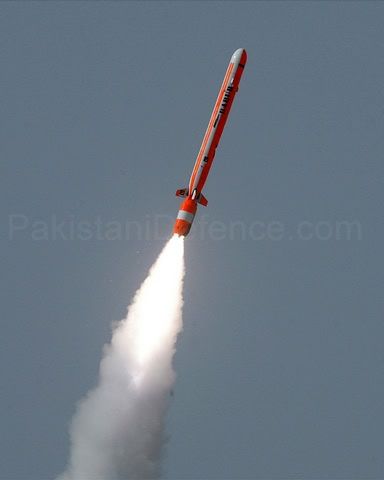
aced_incSecond test firing of Babur cruise missile in 7 months. Congratulations Pakistan.
aced_inc
Watch the documentary here :
http://video.google.com/videoplay?docid=8892825445819740962
Final Solution is a study of the politics of hate. Set in Gujarat during the period Feb/March 2002 – July 2003, the film graphically documents the changing face of right-wing politics in India through a study of the 2002 genocide of Moslems in Gujarat. It specifically examines political tendencies reminiscient of the Nazi Germany of early/mid-1930s. Final Solution is anti-hate/ violence as “those who forget history are condemned to relive it”.
Awards
Wolfgang Staudte award & Special Jury Award (Netpac), Berlin International film festival (2004)
Humanitarian Award for Outstanding Documentary, HongKong International film festival (2004)
Montgolfiere d’Or (Best Documentary) & Le Prix Fip/Pil’ du Public (Audience award), Festival des 3 Continents at Nantes (France; 2004)
Best Film, Freedom of Expression awards by Index on Censorship (UK; 2005)
Silver Dhow, Zanzibar International film festival (2004)
Best documentary, Big MiniDV (USA; 2004)
Special Jury Award, Karafest (Karachi; 2004)
Special Jury Award, Film South Asia (Kathmandu; 2005)
Human Rights Award, Docupolis (Barcelona; 2005)
Special Jury Mention, Munich Dokfest (2004)
Special Jury Mention, Bangkok International filmfest (2005)
Nominee, Best Foreign Film, Grierson Awards (UK; 2004)
Best Documentary/Short Film, Apsara Awards(India;2006)
Special Award by NRIs for a Secular and Harmonious India (NRI-SAHI), NY-NJ, USA (2004)
Special Award by AFMI, USA-Canada (2004)
Special Jury Award, Worldfest 2005 (Houston)
Special Jury Award, Mar Del Plata Independent film festival (2005; Argentina)
Screened at over 80 international film festivals.
aced_inc
Watch the documentary here :
http://video.google.com/videoplay?docid=8892825445819740962
Final Solution is a study of the politics of hate. Set in Gujarat during the period Feb/March 2002 – July 2003, the film graphically documents the changing face of right-wing politics in India through a study of the 2002 genocide of Moslems in Gujarat. It specifically examines political tendencies reminiscient of the Nazi Germany of early/mid-1930s. Final Solution is anti-hate/ violence as “those who forget history are condemned to relive it”.
Awards
Wolfgang Staudte award & Special Jury Award (Netpac), Berlin International film festival (2004)
Humanitarian Award for Outstanding Documentary, HongKong International film festival (2004)
Montgolfiere d’Or (Best Documentary) & Le Prix Fip/Pil’ du Public (Audience award), Festival des 3 Continents at Nantes (France; 2004)
Best Film, Freedom of Expression awards by Index on Censorship (UK; 2005)
Silver Dhow, Zanzibar International film festival (2004)
Best documentary, Big MiniDV (USA; 2004)
Special Jury Award, Karafest (Karachi; 2004)
Special Jury Award, Film South Asia (Kathmandu; 2005)
Human Rights Award, Docupolis (Barcelona; 2005)
Special Jury Mention, Munich Dokfest (2004)
Special Jury Mention, Bangkok International filmfest (2005)
Nominee, Best Foreign Film, Grierson Awards (UK; 2004)
Best Documentary/Short Film, Apsara Awards(India;2006)
Special Award by NRIs for a Secular and Harmonious India (NRI-SAHI), NY-NJ, USA (2004)
Special Award by AFMI, USA-Canada (2004)
Special Jury Award, Worldfest 2005 (Houston)
Special Jury Award, Mar Del Plata Independent film festival (2005; Argentina)
Screened at over 80 international film festivals.
aced_inchttp://timesofindia.indiatimes.com/articleshow/1454558.cms
IAF aircraft crashes, 2 pilots killed in K’taka
[ Saturday, March 18, 2006 11:56:30 amPTI ]RSS Feeds| SMS NEWS to 8888 for latest updates
BANGALORE: Two pilots of Indian Air Force’s ‘Surya Kiran’ aerobatics team were killed when their plane crashed on the outskirts of Bidar in north Karnataka on Saturday, police said.
Was this aircraft equipped with ejection seats ?
aced_incSome Say India Deal Ignores Another Energy Need: Food
By Paul Watson, Times Staff Writer
March 7, 2006
NEW DELHI — A nuclear cooperation deal reached last week between the U.S. and India has added fuel to the debate over whether the South Asian nation can afford a multibillion-dollar push to become a regional military power.
As President Bush and Prime Minister Manmohan Singh shook hands on the landmark pact Thursday, the World Bank released a study showing that almost 40% of the world’s malnourished children live in India.Bush administration officials say the nuclear accord, which must be approved by Congress, is partly aimed at strengthening India so it can serve as a counterbalance to neighboring China. However, development experts here said the strategy ignores the plight of several hundred million Indians mired in poverty.
“I think the Western world, and perhaps more so the United States of America, has a feeling that India is a highly developed country,” said Babu Mathew, India director of the development agency ActionAid. “So they are reluctant to face the reality of the other side of India, which is millions of people living in poverty.”
An estimated 300 million of India’s 1.1 billion people live below the official poverty line of less than $1 a day. The number of poor is actually much higher because the government underestimates the daily minimum of calories each Indian needs when measuring poverty, Mathew and other experts say.
Although the right to adequate nutrition is enshrined in the Indian Constitution, more than 38% of the nation’s children are undernourished, compared with 26% in sub-Saharan Africa, the World Bank study found.
Singh’s government raised defense spending 7% in its budget announced last week, and the Communist Party of India (Marxist), which leads a left-wing alliance that keeps the coalition government in power, said the budget didn’t provide enough for agriculture, health, education and job creation.
The budget “has failed to address many of the vital problems of the common people, particularly the peasantry and the unemployed,” the party said in a statement.
Bush said U.S. aid to India’s civilian nuclear program would strengthen the country’s economy by helping it meet rapidly growing demand for electricity. India gets 56% of its electricity from coal-fired plants and just 3% from nuclear reactors. A quarter of its power supply comes from hydroelectric dams.
Just over half of Indian homes are connected to the power grid. Many suffer frequent blackouts because India doesn’t generate enough electricity to meet demand. The power shortage slows industries and businesses, sapping economic growth.
But Mathew argued that more nuclear power plants wouldn’t meet the needs of the poor.
“People who don’t have land, people who don’t have employment, people who don’t have housing can hardly use electricity,” he said. “The ‘trickle-down’ model of development has been prescribed for India for 50 years, and 50% of India’s population has not received the benefits of it.”
Under Thursday’s deal, India agreed to allow United Nations inspectors to monitor 14 of 22 nuclear reactors it will have built by 2014. The other eight will be closed military facilities, free to produce weapons-grade material to expand India’s nuclear arsenal even though the nation refuses to sign the 1970 Nuclear Nonproliferation Treaty.
The U.S. tentatively promised to sell advanced civilian nuclear technology and nuclear fuel to India. Analysts say the U.S. sales could help India increase its weapons production by freeing up domestic uranium sources.
But nuclear power is unlikely to make much difference to India’s needs, said Kamal Mitra Chenoy, a professor of international studies at Jawaharlal Nehru University in New Delhi.
“Even our nuclear scientists are saying that in 20 years, perhaps nuclear energy could meet 5% of India’s energy needs,” he said.
Last year, Indian President A.P.J. Abdul Kalam called on Parliament to boost the share of India’s power produced from renewable energy sources, such as the sun, wind, oceans and biogas, from the current 5% to at least 20%.
Kalam, an aeronautical engineer who played a leading role in India’s missile and nuclear weapons programs, also argued that India should develop thorium-based reactors because the country has an abundant source of the raw material.
But building nuclear plants and disposing of their waste is expensive, “so this idea that it’s a cheap fuel, or a clean fuel after [accidents at] Chernobyl and Three Mile Island, are highly questionable assumptions,” Chenoy said.
India’s government would do more for the economy by doubling education spending from the current 3% of gross domestic product, Mathew said. India’s healthcare system needs even more help because it receives less than 1% of GDP, he added.
India surpassed China to become the biggest buyer on the world arms market in 2004, when it agreed to buy $5.7 billion in weaponry, according to a U.S. congressional study. China’s arms contracts totaled $2.9 billion that year.
India’s arms contracts that year included a $1.4-billion deal for a used Russian aircraft carrier and a lease on two Russian nuclear-powered submarines, acquisitions seen as a move toward countering China’s growing naval strength.
India is also shopping for 126 fighter jets. After reaching the nuclear deal, the U.S. announced it was willing to sell New Delhi advanced F-16s and F-18s worth up to $6.9 billion.
The countries insist their new partnership will not spark a regional arms race.
“We have no territorial ambition and will not join any arms race, but will procure arms as per requirements for defense preparedness,” Defense Minister Pranab Mukherjee said Saturday.
That is a common “argument for legitimizing military expenditures in a poor country where thousands of farmers are committing suicide because of debt,” Chenoy said.
Times staff writers Alissa J. Rubin in Vienna, Paul Watson in Bombay, India, and Mark Magnier in Beijing contributed to this report.
aced_inctphuang…according to an interview of JF-17 project director, The aircraft will also be equipped with IRSTS, CLDP, and Helmet Mounted Display
http://www.pakdef.info/pakmilitary/airforce/index.html
click on aircraft on the left hand side, and then on ‘PakDef Special: Q & A with Chief Project Director, JF-17 Project, PAF’ at the bottom.denlopviper…point was that integration can be and is performed locally. BTW, what do u mean by we dont have any other AAM in service rite now? Is your point exclusive to F-7PGs?
Well mate, most of us (probably?) dont have cousins or uncles working in AFs or defence factories, and our knowledge is based upon newspapers. 🙂 Having said this, defence related magazines are ‘generally’ more credible than ordinary newspapers when it comes to defence related news. Finally, let me rephrase the question…if this news of simulating R-Darter turns out to be true, then why did PAF did so?
If PAF simulated R-DARTERS, Denloviper’s pet cat would’ve been the first one to know.
aced_incBULLLLLLLLLLLLLLLLSSSSSSSSSSSSHHHHHHHHHHHHIIIIIIIIIIIIIIIIIIIIIIITTTTTTTTTTTTTTTTTTTT
they must have been talking about H2/H4……AGM-154A…if it was considered…i`d eb the fisrt to know….also..all deals related to PAF hav been on hold for almost 6 months now because the tanure of the current air chief ends on the 18th of this month….untill AM tanveer ( soon to b ACM) takes over…no deal with respect to PAF goes through….
after all…..its an airdroped weapon…the army has nothing to do with PAF procurment….and its presentation would hav been done by the current ACAS weapons who still has 6 months left on the seat…..back in oct 2003…director missiles of ht PAF did go for a teach evaluation of hte JSOW btu wasnt considered for procurment mainly cuz of the H2/H4
btw….how can you guyz even believe such bull****…exactly which jet in the PAF is qualified to carry a 2000 pound glide bomb?…..ony 2 jet in PAFz inventory carry 2k pounders…F-16s n Mirages……mirages onyl carry 2k pounder ont he centerline…thats it….
The AGM-154 JSOW capability is part of the anti-terror package.
PAF F-16’s and Mirages are already integrated with this weapon.
aced_incBut if Pakistani forces are using it, why do you need standoff?
Who wouldn’t like a little Stand-Off these days ? 😉
Maybe the AGM-154 Joint Stand Off Weapon is for use not only against internal threats but external too. Its multi-purpose..isn’t it ? 😀
aced_incI wonder why one need standoff weapons to fight the indigeneous “freedom fighters”. Oh, I forgot! Naval AC and AShMs were also given “to war on terror”. I would wager that not even one of the JSOWs would be used in any ops in Pakistan.
Attached some more info on the JSOW from Raytheon’s Official Website (needs Adobe Acrobat Reader). Enjoy.


 Sign In