 MiG-29
If they really don’t care, then why even bother sent B-52 to response China’s action ? Why not just ignore it like nothing ever happend since they have the real control ?
by not informing China their B-52 were going to fly in the newly created China`s ADIZ the US sent a clear message, you mess with Japan, you mess with the US, US secretary of Defence confirmed that later
read article
MiG-29I am of course aware that China has sent J-10s to meet F-15Js before. I’m not sure what your point is.
China did not set up the ADIZ zone because they wanted to stop US, Japanese or South Korean aircraft entering in the ADIZ airspace. They only wanted to have the right to operate and potentially intercept aircraft at the distances which is within the ADIZ.
The fact that US, Japan, SK are operating in the ADIZ means nothing, because so long as China says the ADIZ exists then it exists.
.
Look i will give a simple response, the ADIZ is not more than an aggression by China.
Why? it does not matter who was in Charge of the Senkaku 1000 years ago or 200 ago, it matters who has them now, China won`t get them, as long as the US and Japan protect them.
China has scrambled already J-10s since 2013, the Japanese only have the option of re-arm and keep stronger alliances with the US, India and other nations, China`s short sighted politicians do not see, they will be contained.
read article
http://online.wsj.com/news/articles/SB10001424052702303562904579227763685027266
http://www.dailyfinance.com/2013/12/01/will-chinas-no-fly-zone-mean-billions-for-boeing/
MiG-29The U.S. is no longer in the position to rein any anyone in, it is becoming a paper tiger quickly.
They simply did not care about China`s new established id zone just after the Chinese claimed they would apply military responses, what the Chinese do? nothing, the US sent two B-52, that shows who is in real control.
MiG-29I doubt it. The Argentinians weren’t exactly modern, and even the Royal Navy of the 1980s wasn’t quite as modern for its time as various PLA and JSDF ships and aircraft and fighters are for today.
And the UK and Argentina weren’t the worlds second and third largest economies, and any potential conflict wouldn’t spark over one of the world’s most economically important regions that could drastically impact maritime traffic and trade.
And also, the Falklands war never had the potential to rope in two nuclear powers either, whereas a china and japan disagreement could lead to the roping in of America.
No, war is still very far on the horizon. The ADIZ move was an inevitable tactic for the PLA to more rigorously defend the nations airspace from modern US bombers and strike aircraft, while serving the dual purpose of trying to bring Japan to the negotiating table over the disputed islands.
I never said they didn’t have the resources nor equipment until recently? I’m not sure how I answered my own question.
If anything, they’ve had the resources to set up an ADIZ for the better part of a decade, even when they were still using ground based radar and control centres.
Obviously having more AEWC now (4 KJ-2000 and some 11-13 KJ-200 I believe) and more longer range and modern fighters gives them greater confidence to assert control should they need to, but the resources were there for most of the 2000s.If you look at the wording of all nations ADIZ, they all reserve the right for “emergency measures”. Go google the US FAAs ADIZ policy. Now, China’s sounds ominous because the way it was written was that “non compliant aircraft will face emergency measures,” however it has since been clarified by mainland state media that it means china reserves the right for emergency measures, again, the same as any nation with an ADIZ.
Of course that fact has largely been ignored in media, because a chinese aggression narrative sells better and sounds better to the audience.
There are several things you misunderstand
In January this Year, the Chinese sent J-10s after Japanese F-15s were sent after a Y-8, the Japanese are used to those tactics by China this was near the Senkaku.
read link
http://rt.com/news/china-japan-diaoyu-senkaku-822/
The Chinese have failed in their attempt to achieve to legitimize their ID zone simple because since January 2013 they are sending J-10s, the 23 November move was not obeyed by the US, Japan and South Korean air forces, meaning they do not care about the ID zone.
Japan also has airliners passing through the zone meaning ANA and JAL do not inform China, making any claim by China just a claim.
read link
http://online.wsj.com/news/articles/SB10001424052702303562904579228201449430892
The real danger is a civilian aircraft could have a similar fate to the Korean airliner downed by the Soviets, but here China will be looked like the bad guy for sure.
So basically Japan and the US have counter acted China`s move in the Legal term, making the ID zone illegal, not recognized.
China even retracted, saying they won`t shot down any aircraft.
And a detail, the falklands were close to the nuclear option according to some reports, Thatcher and her team thought about the option.
They never implemented it but it was thought out
read link
http://news.bbc.co.uk/2/hi/uk_news/4629275.stm
China is just trying to exploit the chinese resentment against Japan
read link
MiG-29If you understand that the island’s sovereignty was always under question then you’d recognize that Japanese moves in the last few years had led to this present stand off.
And China has always challenged Japanese possession of the islands for the 20th century because they should have been returned to China after the second world war. l[/url]
Agreed.
at the middle of the video there is a interview with robert fisher in English
MiG-29Whether the dispute is a result of history or resources is largely irrelevant to this thread because the islands are only one part of the ADIZ topic, and what both sides want is control over the islands. Reasons why is indifferent
In your nationalistic rant, ecology does not play a part of the issue, the real reason is not historical reason but economic reasons since they are fighting for oil and fishing grounds, people like you go try to justify an aggression by China to Japan under “historical reasons” forgetting the issue is economic.
You do not establish a territorial dispute for historical reasons but for economic ones, and the reason is China wants the oil and fishing grounds and all the resources of the area.
Since i know you are a Chinese who does not even in China and who cares only from a nationalistic point of view rather than the real matter that is lack or resources, overpopulation, increased ecological foot print is pushing china to try to steal territory and land from the Philippines Vietnam and Japan.
And they use the excuse of being the victim of western imperialism, but yeah the US defends Japan and you want to know something i am glad the US has forces in Japan so they keep us free and defend our rights.
You are just a pawn who does not even think a real solution, and the solution is not pandering nationalism as you do, but find ways to lower the ecological foot print of China so their is a lower need for resources and less conflict, cooperation in the creation of Eco-friendly technologies, so the countries in the area find solution by peace.
Japan has all the rights to arrest those Chinese fishermen, since the Islands are not administered by China they were administered by a Japanese and as such Japanese decided who comes and who does not come.
Do you understand the concept of Visa?
So now you and your nationalistic friends who do not even live in China but in the west go claiming foul play, ignorant of a real solution and supporting the use of J-10s and J-11s.
Peace my friend is what i like and Japan does not want to be another Tibet
MiG-29You know, Mig, not responding to replies and posting irrelevant divergent topics is exactly the reason you were banned on SDF.
In this case, neither of your last two posts aren’t particularly relevant to the ADIZ.
And bolding and increasing font size don’t make them any more relevant, alrighty?
For an guy like you who only panders nationalism, has no ecological background and does not care for the ecology yes they are irrelevant, for people who see the link between ecologyc lack of resources, a history of territorial disputes of course it makes sense.
For Chinese who live in the west complaining how evil is the western world but still live there just waving the flag yes you are right my post is irrelevant.
But for people who live in Japan like me who want peace and have a family and do not want war yes this dispute has nothing to do with the rise of China but for a war of resources.
MiG-29A quick history lesson shows those islands were “awarded” to Japan during their colonial era, remember about 100 years ago when all these big powers, Japan, US etc. were slicing China and patting themselves over their backs for it ? Besides looks at the frigging map and see where China and Japan are and where the Diaoyus are! Hello captain obvious!
Today though, the mere involvement of the yanks pushing their vassal japanese and korean governments from behind throw away any credibility of japanese claims of those islands. In fact it’s purely for US interests: those islands and especially their airspace and possibly underwater are serving for spying on chinese surface and submarine vessels when going out of chinese waters, and spying on China proper. Their “support” also serves the US media war against China by painting them as “evil” and trying to take land away from the “good and peaceful” Japan etc. Plus they also have similar skeletons in their closet as well, remember Guantanamo Bay, and who it REALLY belongs to? I do.
But the whole farce can be seen from the very reaction to the new chinese ADIZ. It wasn’t the japanese who challenged it first, not the koreans, no. It was the yanks! What?! Can anyone else see the hypocrisy?
A bit of History
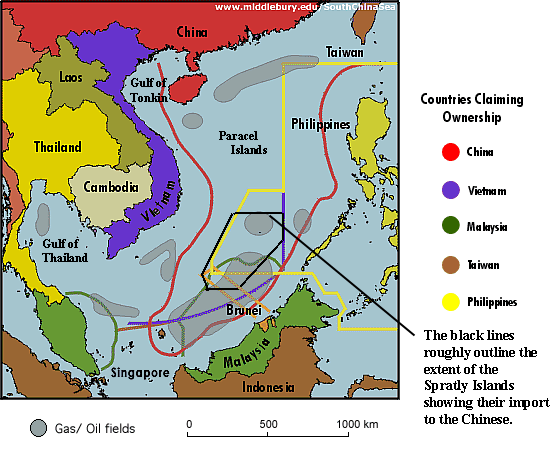

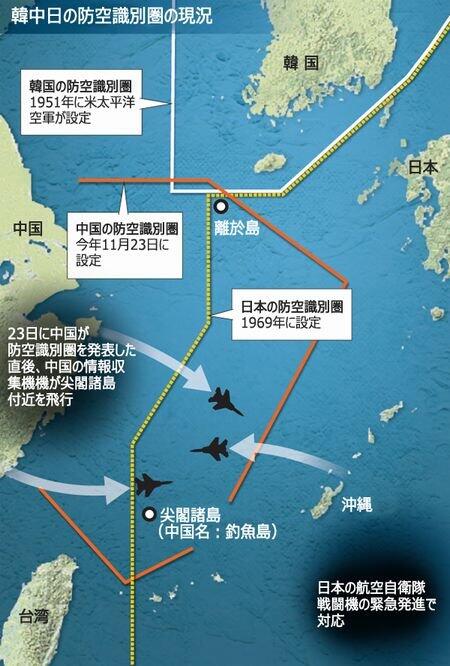
MiG-29Japanese maps showing the ID zones

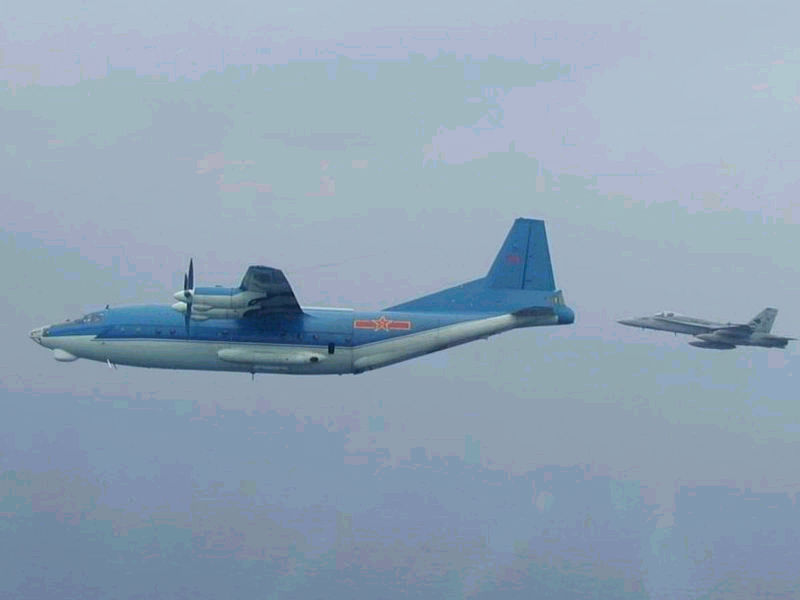
a little bit of history from January this year
The standoff between Japan and China escalated to a new level after both sides sent their jets to tail each other in airspace near the cluster of disputed islands that has created tension between the two powers.
A Chinese Y-8 transport plane flew near the vicinity of the Diaoyu or Senkaku islands (as they are known by the Chinese and the Japanese respectively) on what the Defense Ministry in Beijing described as a “routine patrol” on Thursday. It was immediately tailed by a Japanese F-15. Chinese authorities then ordered two more J-10 planes into the air, to perform “verification and monitoring” on the Japanese aircraft.
“Aircraft from Japan’s Self-Defense Forces have intensified their surveillance activities against China, and expanded the area of their scope, disturbing the normal patrols and training of Chinese civilian and military aircraft,” said a spokesman from China’s Ministry of Defense.
A Foreign Ministry spokesman followed with another statement, accusing Tokyo of “creating tension”.
Japanese officials responded by claiming that Chinese planes have increasingly intruded into the airspace above the islands, which are currently owned by Japan. They noted that over the past year alone jets protecting the area had to be scrambled over 150 times, though it is not clear how many of those were a reaction to China’s presence.
http://rt.com/news/china-japan-diaoyu-senkaku-822/

At a monthly briefing for Chinese reporters, a spokesman, Yang Yujun, said it was “incorrect” to suggest China would shoot down planes in the zone. On Thursday, Japan’s top government spokesman, Yoshihide Suga, said that the Chinese had not been notified of the Japanese flights, and reported that China had not scrambled its fighter jets to intercept them.
MiG-29China will have to back down on this. They don’t have the strength to force the issue. Come back in another 10-15 years…
things i think are not so easy
MiG-29BEIJING — China sent fighter jets on the first patrols of its new air defense zone over disputed islands in the East China Sea on Thursday, the state news agency, Xinhua, said.
Multimedia
The New York Times
The patrols followed announcements by Japan and South Korea that their military planes had flown through the zone unhindered by China.
The tit-for-tat flights between China on one side and South Korea and Japan on the other heightened the tensions over the East China Sea where China and Japan are at loggerheads over islands they both claim.
The airspace in the new zone announced by China last week overlaps a similar zone declared by Japan more than 40 years ago. Both zones are over the islands known as Diaoyu in China and Senkaku in Japan.
China has said that noncommercial aircraft entering the zone without prior notification would face “defensive emergency measures.”
China would take “relevant measures according to different air threats” to defend the country’s airspace, Xinhua reported.
In a direct challenge to earlier threats by China that it could take military action against foreign aircraft entering the zone, the United States sent two unarmed B-52 bombers to fly through the airspace for more than two hours overnight Monday. The Chinese military said it had monitored the flight path of the American planes, and China appeared to backpedal from its initial threats of action.
In an unusually strong editorial in English, Global Times, a newspaper that often strikes a nationalist tone, said in Friday’s editions: “Maybe an imminent conflict will be waged between China and Japan. Our ultimate goal is to beat its willpower and ambition to institute strategic confrontation against China.”
Elsewhere, the paper said that the United States was not the target of the new zone.
Responding to the situation, the State Department said, “We have urged the Chinese to exercise caution and restraint, and we are consulting with Japan and other affected parties throughout the region.”
Analysts have said that China’s declaration of the new zone is meant to whittle away at Japan’s hold on the islands. But the unexpected move is also seen as another attempt by an increasingly assertive China to establish itself as the dominant regional power, displacing the United States.
China had seemed to be stepping back this week from its original harsh tone, when it said aircraft entering the airspace needed to file flight plans in advance or face the possibility of military action. On Wednesday, a Foreign Ministry spokesman said China would decide on a case-by-case basis how strongly to respond to those who break its rules.
In a further clarification of its original stance, the People’s Liberation Army said Thursday that the new air zone was “not a territorial airspace” and did not mean that China would take immediate military action against aircraft that entered the zone.
At a monthly briefing for Chinese reporters, a spokesman, Yang Yujun, said it was “incorrect” to suggest China would shoot down planes in the zone. On Thursday, Japan’s top government spokesman, Yoshihide Suga, said that the Chinese had not been notified of the Japanese flights, and reported that China had not scrambled its fighter jets to intercept them.
The South Korean government announced that it, too, had flown aircraft through the zone without alerting Beijing. Chinese officials said they had monitored the flight by what the South Koreans described as a surveillance aircraft. Like Japan, South Korea claims sovereignty over some territory in seas beneath the airspace, but Seoul enjoys warmer ties with Beijing than does Tokyo.
During a previously scheduled defense meeting on Thursday, South Korea asked China to change the boundaries of the new zone, according to the South Korean Yonhap news agency. But China rejected the request, said a spokesman for South Korea’s Defense Ministry, Kim Min-seok, according to the Yonhap report.
MiG-29Chinese fighter jets were scrambled and followed US and Japanese planes that had entered the newly-proclaimed Chinese air defense zone in the disputed area of the East China Sea, Xinhua reports.
Two US surveillance aircraft and 10 Japanese F-15 jets were ‘tailed’ by Chinese pilots on Friday.
China ordered an urgent dispatch of its Su-30 and J-10 fighter jets to an area in the East China Sea after the foreign aircraft “invaded” the air defense zone, they said.
The reported intrusions came in defiance of the East China Sea Air Defense Identification Zone (ADIZ), established by Beijing last week.
China’s move has triggered outrage from several states in the region and critical rhetoric from the US, as the vast zone covers disputed areas, including the islets claimed by both China and Japan.
Chinese Foreign Ministry spokesman Qin Gang told a daily press briefing that civilian flights have not been impacted, Xinhua news agency reported on Thursday. China has said that all planes flying through the zone should submit flight plans and identify themselves, or their operators would end up facing “defensive emergency measures.”
“We expect all sides, including aviation companies, to actively coordinate with us and jointly safeguard flight safety,” Qin said.
Earlier Thursday, Japan and South Korea, key US allies in East Asia, sent their own military aircraft into the zone’s airspace in an act of defiance.
MiG-29(CNN) — China sent fighter jets into its newly claimed — and hotly disputed — air defense zone above the East China Sea on Thursday, the same day that Japan’s military firmly insisted its own patrols over the area wouldn’t stop because of Beijing’s declaration.
The People’s Liberation Army Air Force flew warplanes, including Su-30 and J-11 aircraft, into the “air defense identification zone” that Beijing announced last week, air force spokesman Col. Shen Jinke said. A KJ-2000 — an airborne radar early warning system — also took flight.
The Russian-devloped Su-30 is a two-seat aircraft described by its manufacturer as “a highly maneuverable fighter” capable of hitting ground and sea-surface targets. The Chinese-made J-11 is a single-seat fighter also capable of ground attacks.
The fighter jets conducted “routine air patrols … aiming to strengthen monitoring on air targets in the zone and fulfill the air force’s historic mission,” Shen said in a statement posted on the Chinese defense ministry’s website.
Jinke portrayed the mission as a “defensive measure … in line with international practices.” China’s military has been on “high alert,” he added, and is prepared to act “based on different air threats to firmly ensure air-defense safety.”
What comes of Beijing’s latest foray over its controversial newly created zone remained to be determined early Friday. Still, some of its previous actions — including the declaration itself — have been met with staunch resistance by Japan and its longtime ally, the United States.
On Thursday, Japanese Chief Cabinet Secretary Yoshihide Suga said his nation’s Self Defense Force has used ships and planes to patrol and conduct surveillance in the East China Sea since before China claimed the air defense zone that covers much of the sea.
And they wouldn’t stop, he insisted.
“We have no intention to change this operation in consideration for China,” Suga told reporters.
“… We will continue the surveillance/patrol operation with strong determination to protect our territory against China’s one-sided attempt to change the status quo by force.”
Japan isn’t alone in disobeying China, which has warned military measures could be taken if planes entering the zone fail to identify themselves and submit flight planes to Chinese authorities.
Two unarmed U.S. B-52 bombers recently flew through the area in what the U.S. State Department characterized as a planned military exercise.
READ: B-52s defy China’s new air defense zone
War of words
China has grown more assertive beyond its recognized borders since Chinese President Xi Jinping took office about a year ago — creating a delicate situation for Washington, which has promised to focus more on Asia and uphold commitments to its allies in the region.
“Unlike his predecessors, Xi is making foreign policy with the mindset of a great power, increasingly probing U.S. commitments to its allies in the region and exploiting opportunities to change the status quo,” Stephanie Kleine-Ahlbrandt, director of Asia-Pacific programs at the U.S. Institute of Peace, wrote in a commentary for CNN.com this week
The United States and Japan have criticized Beijing’s air defense announcement, saying it escalates tensions in the region and raises the risk of an incident. They say they won’t recognize the new zone.
China hit back at those comments with strong words of its own, describing the U.S. and Japanese statements as unreasonable and unacceptable.
After news of the U.S. flights emerged, the Chinese Defense Ministry responded cautiously Wednesday, saying it had monitored the planes’ activity on the edge of the air defense zone. The statement held back from criticizing the U.S. action.
At a regular briefing later Wednesday, a journalist asked a Chinese Foreign Ministry spokesman if Beijing is concerned it will now be seen as a “paper tiger.”
“I want to emphasize that the Chinese government has enough resolution and capability to safeguard the country’s sovereignty and security,” replied the spokesman, Qin Gang.
Map showing the controversial air defense identification zone in the East China Sea.Map showing the controversial air defense identification zone in the East China Sea.
Simmering dispute
The bomber flights are the strongest American involvement yet in a festering territorial dispute in the region between China and Japan over a set of small, uninhabited islands in the East China Sea.
After China’s air defense declaration Saturday, U.S. Defense Secretary Chuck Hagel reiterated American support for Japan, where thousands of U.S. troops are stationed as part of a security agreement.
He said the U.S. Japan Mutual Defense Treaty applies to the disputed islands, known as Senkaku by Japan and Diaoyu by China.
Uneasy encounters between Chinese and Japanese planes and ships have already taken place repeatedly over the past year near the islands, which are believed to have large oil reserves nearby.
Tensions spiked after the Japanese government purchased some of the islands from a private owner in September 2012, angering Chinese authorities, who saw the move as an attempt by Japan to tighten control.
Hagel warned that China’s “unilateral action” of declaring the air defense zone “increases the risk of misunderstanding and miscalculations.”
Amid the tensions, U.S. Vice President Joe Biden will visit the region next week on a previously announced trip, stopping in Tokyo, Beijing and Seoul, South Korea.
Why China’s new air zone incensed Japan, U.S.
Difficult to monitor
Monday’s U.S. bomber flights also highlight the challenges that analysts say China faces in policing its newly claimed air zone.
In its statement Wednesday, the Chinese Defense Ministry said that “China has the capability to exercise effective control” over the area.
“Beijing might have bitten off a bit more than they can chew because actually going out and monitoring these things on an ongoing basis is probably a bit beyond the capabilities of the Chinese air force right now,” said Greg Waldron, Asia managing editor of FlightGlobal, an aviation and aerospace industry website.
“In a sense, it’s more a rhetorical statement, as opposed to a realistic military space,” he said.
Adding to the complications and confusion surrounding the zone, Japan’s two main commercial airlines said Wednesday that following a request from the Japanese government, they and other members of the Scheduled Airlines Association of Japan will not submit flight plans to Chinese authorities for flights through the zone claimed by Beijing.
The two carriers, Japan Airlines and All Nippon Airways, said the association had concluded that there would be “no impact” on the safety of passengers on board flights through the zone without the submission of flight plans to China.
But Waldron said he wasn’t entirely sure about that. From a legal point of view, he said, the airlines probably don’t have to report their plans and follow all the rules requested by China.
“I think from a safety perspective, it’s a good idea for them to do so,” he said. “Just in case.”
‘The right of every country’
Since it declared the new air defense zone over the weekend, China has been busy making its case for why it feels the move was justified.
It has pointed out that other countries already operate air defense identification zones in waters around their territory, noting that Japan has had a zone in place in the East China Sea since the 1960s.
“It’s natural, it’s indeed the right of every country to defend its airspace and also to make sure that its territorial integrity, its sovereignty are safeguarded,” China’s U.N. Ambassador Liu Jieyi said Tuesday.
But analysts say that by declaring a zone that now overlaps with that of Japan, China has increased the likelihood of a high-risk incident in the air.
China slams ‘inappropriate’ U.S. remarks on territorial dispute with Japan
Chinese flies fighter jets into disputed defense zone; Japan defiant – CNN.com
MiG-29MiG-29BEIJING, Nov. 26 (Xinhuanet) — Twelve Chinese-built Zhi-9 (Z-9) utility helicopters were delivered to the Royal Cambodian Air Force in Cambodian capital Phnom penh at the handover ceremony on November 25th.
http://news.xinhuanet.com/english/photo/2013-11/26/c_132918517.htm


 Sign In







