 Jai
JaiToo bad I cannot read Japanese. The following are links to JASDF’s pages about Cope Thunder 2004.
http://www.jda.go.jp/jasdf/copethunder04/copethunder.htm
http://www.jda.go.jp/jasdf/copethunder04/copethunder1.htm
http://www.jda.go.jp/jasdf/copethunder04/copethunder2.htm
http://www.jda.go.jp/jasdf/copethunder04/copethunder3.htm
Glenn do you know Japanese, or maybe you can get some assistance. 😉
JaiLarge scale war-fighting scenarios are underway at Elmendorf Air Force Base. It’s all part of “Cope Thunder” where military units from across the world come to participate. The United Kingdom brought along their AWACS plane and offered a rare look inside. AWACS stands for Airborne Warning and Control System. Military officials say it’s an invaluable piece of equipment, whether it be in the United Kingdom or the United States.
In a wartime situation, early warning is key. That’s where the AWACS plane comes in.
Tech. Sgt. Theo McNamara, a spokesperson for Elmendorf Air Force Base says, “It is a critical aircraft, a critical platform in any combat environment. It’s really the eyes and the ears of the F-15s that we see in training around Alaska.”
This week the United Kingdom offered a rare look inside of an AWACS plane that is in town for Cope Thunder exercises. The training enables air force units from around the world to sharpen their skills, exchange air operation tactics and promote closer relations with participating countries. Mock air battles are taped and then reviewed by technicians who point out tactics that were performed well and those that could get them killed in a real war scenario.
“There’s no doubt there’s a value to us,” says Mike Palmer the UK Army Detachment Commander for Number Eight Squadron. Palmer says that training together is invaluable, because the coalition between forces becomes stronger, “… Because that enables us to work on our procedures together to get the same practices, we found that we’re so close in the way we operate, that by exercising together we’re about to step into harmony and to start operating in no time at all.”
Those operations will include working AWACS planes like this one for quick 360-degree airborne surveillance that provides early warning that has saved the lives of countless troops in wartime situations.
Cooperative Cope Thunder has taken place annually in Alaska since 1992 with more than 1,500 people participating each year.
JaiYahoo25, take a look at this thread – Interview with director general of RSK-MiG by PiBu
It is more recent than the article which you posted.
“In spite of external similarity with the basic MiG-29, the MiG-29K has completely new radar, navigation and piloting equipment, modern air-to-air and air-to-surface weapons as well as an extended flight range.”
“At India’s request, we are working on a modernised version of the MiG-29 with a smaller variant of the N-011M Bars multimode radar [used by Indian Su-30MKI fighters] to provide compatibility, which is very important for the Indian Air Force. Moreover, the phased-array antenna increases the radar capability.”
JaiWe expect to have this aircraft with a range and combat payload close to that of the Su-27/30-series fighters
With a payload similar to the Su-27/-30 series, how is this fighter supposed to be light ?
JaiRather interesting news about the J-UCAS.
Boeing Team Demonstrates Revolutionary UAV Control Capabilities and Integration with Fighters
ST. LOUIS, July 19 /PRNewswire-FirstCall/ — Boeing (NYSE: BA), a leader
in aerospace technology development, along with a team of leading industry and academic researchers, has demonstrated for the first time that manned fighter aircraft such as the F-15E can effectively utilize an unmanned aerial vehicle (UAV) as a partner in coordinated combat operations.Recently completed flight demonstrations and experiments at NASA’s Dryden
Flight Research Center at Edwards Air Force Base, Calif., demonstrated
emerging autonomous control technologies that will allow real-time collision
avoidance, autonomous evasive maneuvers, autonomous rerouting in response to pop-up threats and in-flight faults, and even UAV mission tasking using voice commands and a common language vocabulary.A Boeing-developed transformational software infrastructure called the
Open Control Platform (OCP) was a key to the demonstrations. The OCP provides a middleware platform and run-time framework for embedded flight software, integration with control design tools, and software that enables the
distributed simulation of multiple UAVs under control.Bay said SEC technologies are being transitioned to DARPA’s Joint Unmanned
Combat Air Systems (J-UCAS) program and are aimed at addressing the needs of future, highly maneuverable, autonomous air vehicles.In the flight demonstrations and experiments conducted in June, multiple
war-fighting scenarios were flown with Boeing’s J-UCAS T-33 flying test bed,
along with an F-15E Strike Eagle fighter. The T-33 test bed contains a J-UCAS avionics pallet that allows the vehicle to operate as a UAV.
JaiKarna,
Thanks for the information. Do you know about the level of upgradation involved, that is SMT-1 or SMT-2 ? The last news regarding the SMT upgrade was that an Indian team consisting of officials from IAF and ASTE were in Russia to check out the SMT upgrade.
One more question. Till now the MiG officials have only acknowledged that they are working for a Bars-29 for the MiG-29K. Is the news regarding Bars-29 for upgraded MiG-29 a confirmed one ?
BTW guys, the SMT upgrade involves increasing the fuel capacity of the fulcrum by adding an enlarged spine fairing along the middle and rear parts of the airframe. It is part and parcel of the SMT upg.
JaiPhalcon deal delayed indefinitely.
‘High-level Israeli Defence delegation in India’
NEW DELHI (India): Amid defence cooperation, growing at fast pace between New Delhi and Tel Aviv, a high-level Israeli defence delegation is on India’s for talks with the focus on further fostering bilateral cooperation even under the new Congress-led government.
The delegation, comprising senior Israeli Defence Ministry officials and high-level executives from major armament manufacturers, is scheduled to hold talks with top echelons of Indian Army, Navy, IAF and other defence officials, said a media report quoting highly placed sources here.
Muslim world including Pakistan have already voiced their serious concerns over the burgeoning Indo-Israel defence cooperation, saying it will have a deep impact on the security and stability in South Asia besides escalating arms race.
Islamabad has also expressed its reservations over 28% substantial hike in India’s defence budget for fiscal 2004-05 to Rs 770 billion against the revised defence allocation of Rs 603 billion in the previous fiscal year.
The visit of the delegation takes place following the recent high-level visits by Indian delegations led by the Vice Chief of the Army Staff Lt Gen Shantanou Choudhary and Naval Chief designate Vice Admiral Arun Prakash to Israel.
With the Congress-led alliance coming into power, apprehensions were voiced over the continuing close security cooperation between the two countries.
However, Defence Minister Pranab Mukherjee had later told newsmen that the new Government would be guided by country’s security needs in following ties with other countries.
Since 1990s, India and Israel armaments trade has jumped to over 10 billion US dollars encompassing close cooperation in defence field including the recent 1.5 Billion dollar deal to deliver Air Early Warning and Control System platforms to India.
The deal, under which Israeli Phalcon radar would be mounted on an Russian IL-76 platform, is progressing well with the first of the Five AWACS aircraft scheduled to be delivered by 2007, said the report.
The talks of the Israeli delegation would focus on sale of anti-ship Barak Missiles for Indian Naval warships, medium range and high altitude Unammed Aerial Vehicles for the Army and Navy, sale of sensors and human remote sensing devices and night vision.
Israel and India are also involved in close cooperation in the upgradation of Russian-supplied T-72 tanks specially making them night operation capable and in upgradation of the Mig-21 Bison aircraft, added the report.
According to the report, the two sides have recently achieved a breakthrough by agreeing for a close collaboration in developing short range missile and fine tuning command control system of some of the indigenous missiles.●
JaiAviation commander comments on Tu-22 crash
VELIKY NOVGOROD. July 9 (Interfax-Northwest) – The crewmembers of a Tu-22 bomber that crashed in the Novgorod region on Friday could have survived by ejecting, long-range aviation commander Lieut. Gen. Igor Khvorov told journalists.
“Having finished their routine training flight, the pilots were preparing to land at Soltsy airfield. The airplane was 10 kilometers away from the runway at that time”,” Khvorov said.
“However, when the airplane was seven kilometers from the runway, something went wrong. It tilted to the left side, increased its vertical speed and crashed two kilometers from the runway,” he said.
“Judging by the fact that the pilots decided against ejecting from the airplane, although an order to the effect was given by ground services, they struggled to save the airplane until the last moment. We presume they were no longer able to use their ejection seats because the situation became critical,” the commander said.
The Tu-22M3 model involved in the crash has ejection seats that allow pilots to escape from the airplane even after it has made an emergency landing, he said.
“Obviously, a decision to eject was taken too late, as none of the airplane’s rescue systems was activated,” the general said.
Khvorov said that three theories behind the incident are being examined, but declined to provide further details.
The Tu-22 crashed five kilometers from the village of Soltsy, killing all four crewmembers aboard.
JaiCrossposting from BR.
Nikolai Novichkov article regarding Russian Military Industrial Complex – 2002
The contract signed in November 1996 covers the development, testing, production and delivery of 40 Su-30MKI fighters and an option for another 20 aircraft of this type. The first eight machines delivered to India in 1997 were built in the Su-30K version (without canard fins and the use of the thrust vector control technology). These aircraft were equipped with Russian-made avionics.
Moreover, in parallel with deliveries of the first production planes that started in 2002, development work and flight tests to bring up the Su-30MKI to the final configuration are under way. All the 32 fighters will be delivered to India in 2002-03 in three batches (10, 12 and 10 machines, respectively). Aircraft of these batches will somewhat differ from each other. As the planned phases of deliveries are fulfilled, capabilities of the fighters will be gradually built-up through software increment and expanding avionics suite, its integration with the current airborne air-to-air and air-to-surface weapons. Ten aircraft of the third delivery phase to be handed over to the Indian AF in December 2003 will conform to a final configuration provided in a technical specification of the contract. Thereafter, all the 22 Su-30MKI fighters of the first and second delivery phases will be brought upto the final configuration in 2003-04. All the 18 fighters in the Su-30K configuration delivered in 1997-98 will be also upgraded to the third delivery Su-30MKI version. Besides equipping the Su-30K with an international avionics suite its airframe will receive canard fins and will transform into a triplane. The AL-31F engines will be replaced with the AL-31FP TVC ones (FP stands for (Boosting, Swiveling).
Each of the Su-30MKIs will have a flying life of 6,000 hours. The figure is unique because none of the previously exported Soviet or Russian fighters had such a rated life.
The Russian side has already been delivering appropriate technical documentation and some specific manufacturing equipment. HAL plans to roll off the first aircraft in 2004. The price of the fighter is expected to be around US $ 31 million. It seems probable that India in conjunction with Russia will participate in the development of a fifth-generation fighter.
JaiAn article by Mr. Piotr Butowski.
( JANE’S MISSILES AND ROCKETS – MARCH 01, 2004)
JANE’S MISSILES AND ROCKETS – MARCH 01, 2004
Novator offers a redesigned KS-172S-1 long-range AAM
Piotr Butowski
Sukhoi has displayed a model of the Su-35 multirole fighter carrying under its wings two KS-172S-1 ultra-long range air-to-air missiles, writes Piotr Butowski. The weapon is an export variant of a missile originally offered to the Russian Air Force by the Novator Company of Yekaterinburg.
Work on the KS-172 air-to-air missile began in 1991. Alternative designations ‘Izdeliye 172 (K-172)’ and the anglicised ‘AAM-L’ have also been reported. The basis of the new weapon was the second stage of the 3M83 surface-to-air missile used by the S-300V (SA-12 Gladiator) anti-aircraft system.
A full-scale mock-up of the KS-172 was shown in front of Su-27 fighter at Zhukovsky in August 1993. but over the next 10 years there was no further news of the project. The model shown late last year has a different shape to that of the mock-up shown in 1993. Both versions have a two-stage propulsion system, but in the current KS-172S-1 design the length of the tandem-mounted booster has been increased while its diameter has been reduced. The length of the missile without booster has been reduced so that the overall length of the complete round is unchanged.
According to Novator, the KS-172S-1 is 6.0m long and weighs 700kg, dimensions which are unchanged from those announced in 1993. Its diameter has been reported as 40cm.
In the 1993 design, the nose section of the missile was of smaller diameter than the rest of the fuselage, a configuration which proves additional internal volume for the rocket motor. In the current design, the fuselage is of constant diameter, and the tail-mounted cruciform control fins are of shorter span and longer chord.
The missile is guided to the target by a multi-mode guidance system typical for beyond-visual range missiles. In the first phase of flight, guidance is by inertial navigation with command updates in the mid-course phase. An active-radar seeker is used for terminal guidance. According to earlier reports, the missile carries a directional high-explosive (HE) fragmentation warhead, probably weighing about 50kg, and initiated by a radar proximity fuze.
Maximum range of the KS-172S-1 export variant is 300km; the version proposed for Russian air forces is believed to have a range of 400km. The missile will be used against air targets flying at altitudes from 3m to 30km with speeds up to 4,000km/h and manoeuvring at up to 12g. Typical targets could include all types of aircraft (including AWACS or J-STARS platforms, tankers, reconnaissance and electronic-warfare aircraft), cruise missiles, as well as long and medium-range anti-aircraft missiles which pose a threat to the KS-172-armed fighter.
Several test launches of the KS-172 have been made, but these rounds were not fitted with a guidance system. The firing of rounds fitted only with an autopilot and programmed to fly pre-planned manoeuvres is common in the early stages of air-to-air missile programmes.
The Russian air force did not adopt the KS-172, but opted to back a competing K-37M missile offered by Vympel. It is surprising to see that the Novator weapon is now being offered for export.
*** FAIR USE NOTICE. This message contains copyrighted material whose use has not been specifically authorized by the copyright owner. It is being made available without profit to those who have expressed a prior interest in receiving the included information in their efforts to advance their understanding of arms trade activities, for non-profit research and educational purposes only. I believe that this constitutes a ‘fair use’ of the copyrighted material as provided for in section 107 of the U.S. Copyright Law. If you wish to use this copyrighted material for purposes of your own that go beyond ‘fair use,’ you must obtain permission from the copyright owner.
For more information go to:
http://www.law.cornell.edu/uscode/17/107.shtml
JaiThis is from Force magazine – an Indian defence publication
Volume 1 No 6 April 2004 , Page 55 .
Excerpts from the Article:
India Starts Defence Exports : Joint Ventures Now yielding rich Dividends
KS -172
– Joint Venture between India’s DRDO and Russias NPO Novator.
SpeciFications :
– It is an ultra Long Range AAM with a Development Range of 400KMs To Target AEW/AWAC Type High Value Aircrafts.
– Sole Carrier in the Indian AF will be the Su-30MKI
Features ( Dimensions) :
– 1.4 Meter long Rocket Booster
– Weight 748Kgs
– Core Diameter 0.40 Meter , Total Lenght 6.01 Meters , Span .61 Meters
– Launched by a Solid-propellant Tandem Rocket Booster
– The KS 172 will attack its Targets with an adaptive high explosive ( HE) fragmentation warhead.
Guidance
– Secure Data-Linked Based inertial Navigation System for MidCourse Guidance ( This would probably be done by AWACS or the 2-3 MKIs Working in Tandem with their Mini AWACS Capability)
– Active Radar Homing for its Terminal Phase.
-The missile will be used against air targets flying at altitudes from 3m to 30km with speeds up to 4,000km/h and manoeuvring at up to 12g.
INDO-RUSSO CO-OPERATION
DRDO and NPO will jointly Develop:
– An Active Homing Radar Seeker with a Wide Lock-On Range Which is able to recieve targeting data from the launch AC.
– Design a combined Gas/AeroDynamic Control system with 3d TVC . Provides High Manoeuvrability irrespective of launch Conditions and allows for missle launch with AC in super Manoeuvrability flight mode.
– Create and Adaptive Rapid Reaction Autopilot Which Optimises with Missile Stabilization and control Parameters within the firing range.
– Development of Special Interaction Logic btween the KS-172 Explosive Fuse and Guidance system Which ( In addition to structural and config features) gurantees absolute immunity of the Warhead detonation system to Jamming
*** FAIR USE NOTICE. This message contains copyrighted material whose use has not been specifically authorized by the copyright owner. It is being made available without profit to those who have expressed a prior interest in receiving the included information in their efforts to advance their understanding of arms trade activities, for non-profit research and educational purposes only. I believe that this constitutes a ‘fair use’ of the copyrighted material as provided for in section 107 of the U.S. Copyright Law. If you wish to use this copyrighted material for purposes of your own that go beyond ‘fair use,’ you must obtain permission from the copyright owner.
For more information go to:
http://www.law.cornell.edu/uscode/17/107.shtml
JaiJANE’S MISSILES AND ROCKETS – MAY 01, 2004
————————————————————————–
India and Russia negotiate co-operation on KS-172 AAM
David C Isby
Russia and India are currently negotiating a long-range air-to-air missile (AAM) project as a follow-on to the joint Brahmos supersonic anti-ship cruise missile programme, writes David C Isby. The Novator Design Bureau in Yekaterinburg is developing a long-range missile designated the KS-172 or R-172 (see JMR March 2004, p1). The proposed negotiations would make available Indian investment and technical assistance.
Novator’s proposed partner, India’s Defence Research and Development Organisation (DRDO), is currently working on its own beyond-visual-range AAM, the Astra. A variant of the KS-172 could be used to arm India’s Su-35 fighter force for use against high-value standoff targets such as radar surveillance aircraft and flight-refuelling tankers.
*** FAIR USE NOTICE. This message contains copyrighted material whose use has not been specifically authorized by the copyright owner. It is being made available without profit to those who have expressed a prior interest in receiving the included information in their efforts to advance their understanding of arms trade activities, for non-profit research and educational purposes only. I believe that this constitutes a ‘fair use’ of the copyrighted material as provided for in section 107 of the U.S. Copyright Law. If you wish to use this copyrighted material for purposes of your own that go beyond ‘fair use,’ you must obtain permission from the copyright owner.
For more information go to:
http://www.law.cornell.edu/uscode/17/107.shtml
Jai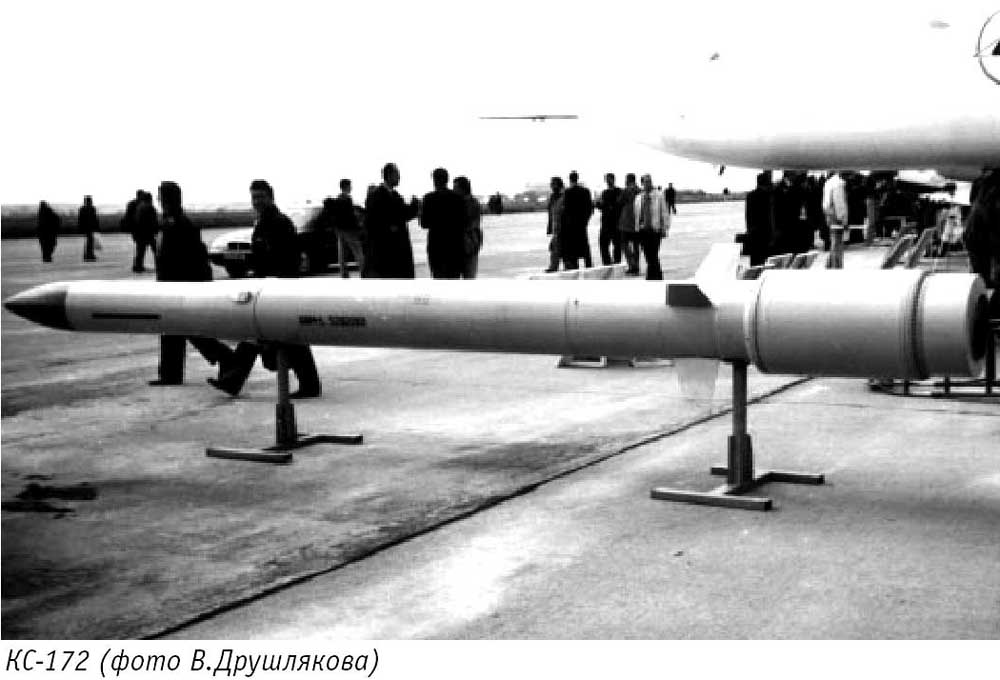
Jaitroung, on the HSLD thing.
OFB = Ordnance Factory Board
Bomb 250 Kg. HSLD High Speed Low Drag A/C Bomb

Bomb 450 Kg. HSLD High Speed Low Drag Bomb Dropped From MIG/Jaguar

HIGH SPEED LOW DRAG AIRCRAFT BOMBS
Conventional 1000 lb class of aircraft bombs offer more drag, thereby adversely affecting the operational efficiency of modern high speed aircraft. Keeping this in view, DRDO has designed and developed high speed low drag (HSLD) bombs in 450 kg and 250 kg class suitable for carriage and release by modern aircrafts. These bombs are effective against ground targets like railway yards/bridges, major installations, bunkers, runways and hardened targets.
The bomb consists of two major subsystems, namely, bomb body filled with HE and tail unit. Two types of tail units, Retarder Tail Unit (RTU) for high speed low level bombing and Ballistic Tail Unit (BTU) for high speed high altitude bombing have been developed for the bomb to be used in different tactical roles.
The HE filling of the bomb is Dentex (RDX/TNT/Aluminium) for achieving maximum blast and fragmentation effect for inflicting maximum damage to the target. The bomb can be carried on various in-service aircraft like, Jaguar, MiG and futuristic combat aircraft of the the IAF.
The 450 kg HSLD Bomb is already in service and under production at the Ordnance Factories. The 250 kg HSLD Bomb with RTU has been introduced in the Services. BTU has successfully completed flight trials and awaiting introduction into the Services.
JaiIn my previous post I was not suggesting complacency towards technological innovations. I meant to say that in the threat perception from an Indian PoV, a few other countries occupy a more central role as compared to the US.


 Sign In







