 Dr.Snufflebug
The X-31 did a controlled landing at 24dgs AoA and came to a halt at some 500m (compared to the usual 2500m), and the X-31 had nowhere near as much wing surface and stuff to work with, but it did have TVC and an advanced FBW system.
The Su-57 has powerful engines with TVC, advanced FBW, tons of available lift with a huge wing area and loads of control surfaces for low-speed maneuverability, big drag chutes, fin “braking” by symmetrical deflection (or whatever to call it, just like the Su-35S) and a pretty hefty gear assembly (which I assume provides for pretty hefty brakes). I don’t think it needs thrust reversing to attain a remarkable STOL performance if lightly loaded and pushed to the extreme.
What is certain though is that they’re exaggerating things at Zvezda, as usual. Even if the plane under could land within a supercarrier’s deck length in theory (under ideal conditions on land) does not in any way mean it can actually reliably land on a real carrier unaided.
Dr.SnufflebugBeen quiet here for some time. New (old) photo from last summer:

And Zvezda is running a Su-57 special today, and it contains lots of footage of two T-50’s shot from the back of an An-26. I only watched the trailer for it, and even though my Russian is kinda rusty I still heard numerous silly factual errors and what not being splurted out by the commentary… But at least the footage is good.
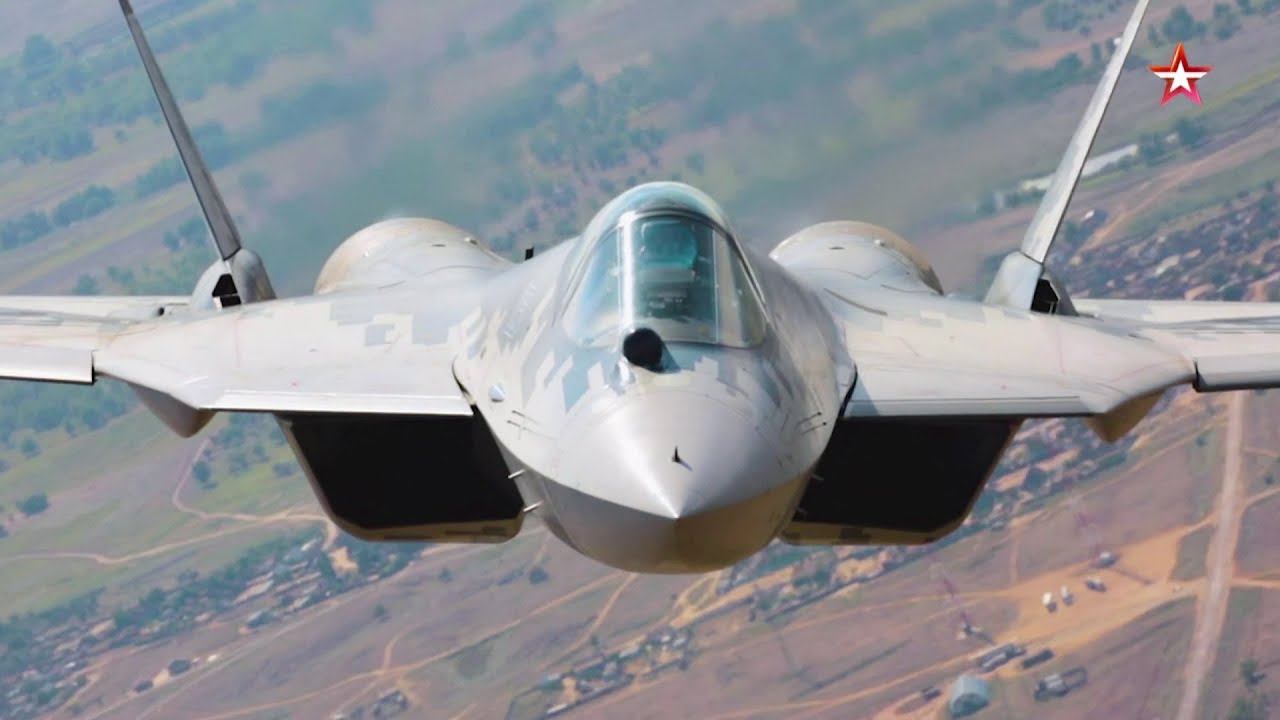
Dr.SnufflebugThat Su-57 model has now taken flight… It could become the most epic radio-controlled scale model of all time if they really go for it, I think, but as for now it’s fairly basic:

They built a turbine-powered Su-35BM model with working TVC years ago, but it still had static “nozzles” as above (the small scale turbines inside the nozzles moved though)… Their latest, full-fledged MiG-29 scale model has moving petals, however:
…And it has a HUD, MFD and everything, it’s nuts:
[ATTACH=JSON]{“alt”:”Click image for larger version Name:tTqLxsLKPKiU.jpg Views:t1 Size:t105.8 KB ID:t3838111″,”data-align”:”none”,”data-attachmentid”:”3838111″,”data-size”:”custom”,”height”:”455″,”title”:”TqLxsLKPKiU.jpg”,”width”:”455″}[/ATTACH]
If they can pull off the way more complicated nozzle movements of the Su-57, and make it all work out, oh boy! Modeling p*rn right there.
Dr.SnufflebugRusJet, the incredibly ambitious guys behind several Jet World Masters-winning RC scale models of the Yak-130 and MiG-29 (check them out, the detail is nothing short of amazing) are making a Su-57 now:

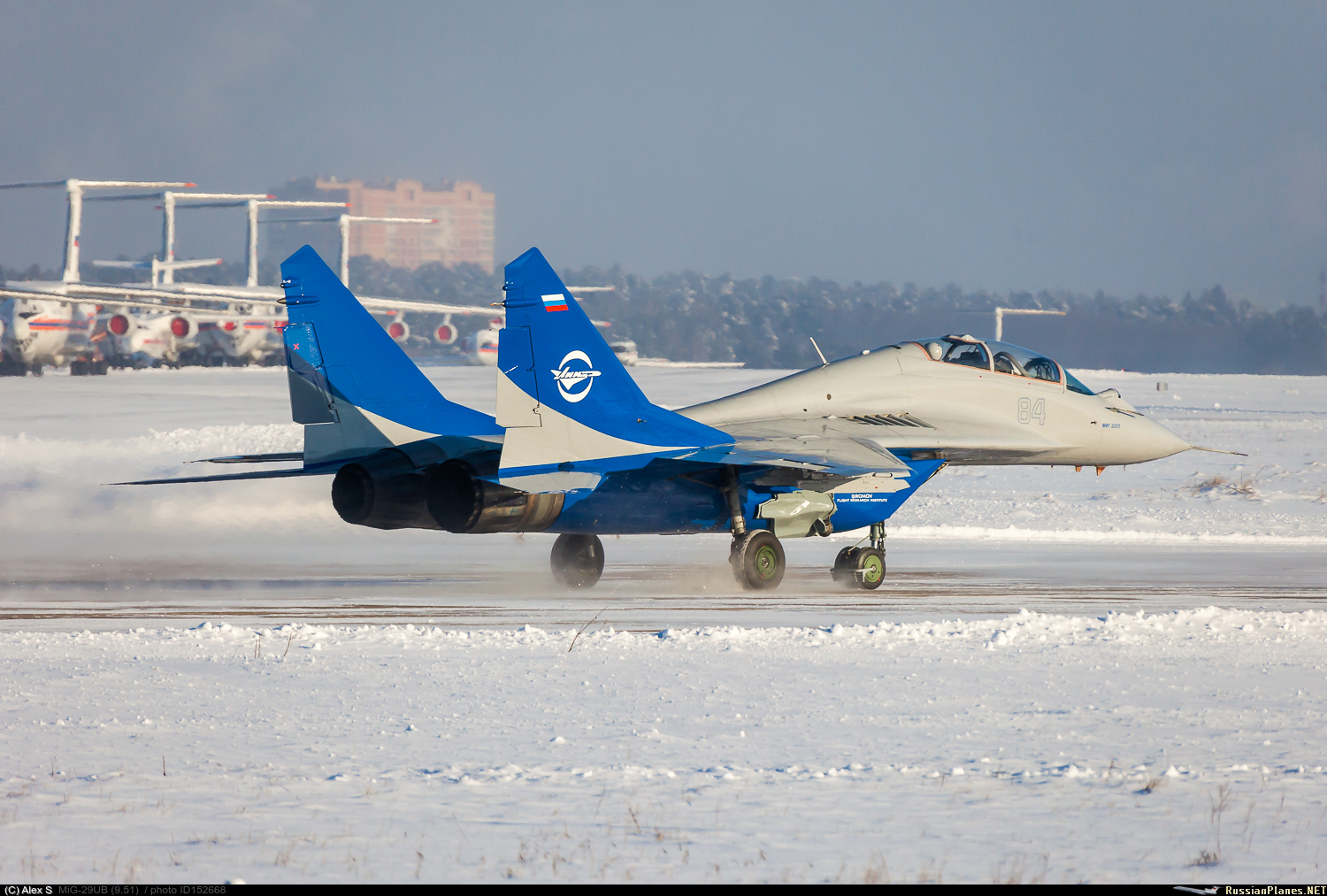
Dr.SnufflebugIs that some kind of UCAV related test (on the picture the Mig29 is single manned with the active pilot seated in the back)?
I have no idea what kind of flight tests they were doing, but as you would know if you’ve ever flown a military trainer – the instructor (senior pilot) sits in the back on nearly all (tandem-seat) models, and when flying a trainer solo you tend to just sit there as well.
The plane pictured is the same airframe that crashed, “white 84”, but that particular photo is a couple of years old. Anyway, it flew for the Gromov flight research institute, “LII”, which operates out of the well-known Zhukovsky airbase.
There are videos of the crash out there, because nowadays everybody has a decent video recording device in their pockets (i.e. a modern cellphone) and Zhukovsky/Ramenskoe is a pretty urban, populated area, despite it being host to a somewhat secretive airbase. The crash videos show this MiG-29UB being pretty much up in flames well before it hit the ground, so something pretty terrible must have occurred in flight, most likely related to the engines. Severe bird strike, perhaps (goose-level severe).
Dr.SnufflebugTest flight bird crashed yesterday, a MiG-29UB from the Gromov institute. Pilot ejected and is fine.
Dr.SnufflebugThat datasheet is for the active homing 40N6E missile for the S-400… Totally unrelated.
The MiG carries a (mockup?) ASAT missile of a new kind, possibly based on the “Ishim” project/concept, which in turn was based on “Kontakt” (30P6) from the 1980’s. Designed to disable objects in low-earth orbits up to 600km.
Basically a Russian ASM-135, in other words.
Dr.SnufflebugMiG-31 with a new ASAT weapon?

Dr.SnufflebugThe An-72s with well-integrated guns above are from PSFSB, i.e. the border guard branch of the Russian federal security service. Most likely, it’s to provide them with some means to shoot down or warn (with tracer fire for instance) trespassing small aircraft on their own, such as airborne drug/gun runners or whatever, without having to call on the air force and all of that.
The pylons that can be fitted to the An-26 family can be used for other things than just high explosive ordnance, for that matter. They can fit smoke bombs, flare bombs, torpedoes (as in the Peruvian Navy example above) and so on and so forth. None of that is really “makeshift” in any way – the pylons are official, standard issue, and lends the type some additional flexibility/multi-purpose abilities. Though, I have to agree that using them to carry plain bombs does have an air of “makeshiftness” to it as they’re hardly optimal for that (even though crews apparently train for it regardless).
I’m sure you can find uses for those pylons when on paradrop missions too, considering the various containers they can carry.
Dr.SnufflebugThey are saying it is an upgraded F-5F so:
https://www.farsnews.com/news/13970530000805/ببرهای-آسمان-با-قلب-ایرانی-و-چشم-دیجیتال-تصاویر-مشخصات
…This must be the 3rd or 4th upgraded F-5 they announce as “the first domestic…”, but they’ve all been externally indistinguishable from vanilla F-5E or F’s, with the exception of that funny twin-fin modification.
The Fars article above does note a few interesting details though, namely what seems to be a proper 0-0 seat (it looks a lot like a reverse-engineered Zvezda from the MiGs, I’d say), some fancy full-color MFDs and what I interpret as a domestically produced J-85 derivative with a domestic afterburning section.
To be honest I’m surprised that Iranian aviation industry hasn’t come longer than this. Then again this is how China started as well, way back in the day. First copies of foreign aircraft, then minor modifications over the years, then larger modifications (e.g. new wings, new intakes, new canopies, that kind of thing) and at last fully domestic planes (though still built concurrently with various copies etc).
Dr.SnufflebugYou’re probably right. Rossiyskaya Gazeta (which is the Russian government’s official rag) mentions NK-32-02, but yeah, the little we see looks like the regular engines and Tupolev’s own press release only mentions the engine control systems from the Tu-160M/M2 and that there is a high level of unification with the Blackjack in terms of avionics.

Dr.SnufflebugFirst M3M-modified Backfire:
Seems like they did away with the defensive guns entirely and put some kind of big EW/radar thingy there instead. Also note what looks like future IFR provision. She has a glass cockpit now, vastly updated navigation and targeting systems, plus integration with the next-gen missiles. Oh, and a Blackjack powerpack (half of it…)
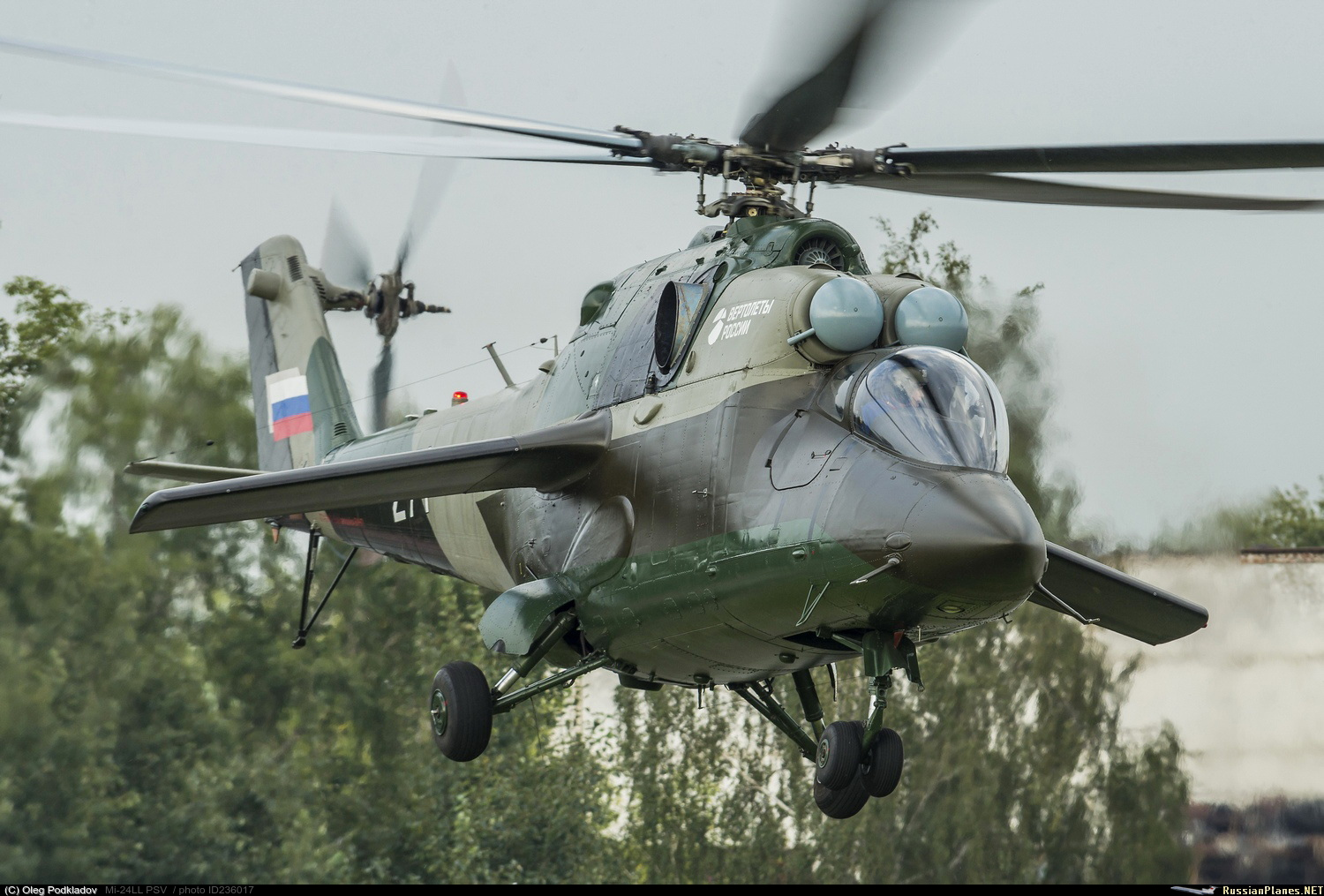
In other news, what I presume is the world’s fastest conventional helicopter (not yet FAI ratified, though, but I have it on good authority that she’s faster than the Lynx that set the current record in the 1980’s) has gotten yet another change of wings (it started with the usual Mi-24 drooped ditto with pylons, then it flew wingless for quite a while before receiving a pair of low-mounted straight, flush wings… Now it’s back to droop but completely smooth:
Dr.SnufflebugAn-72 with semi-integrated UPK-23 gunpod: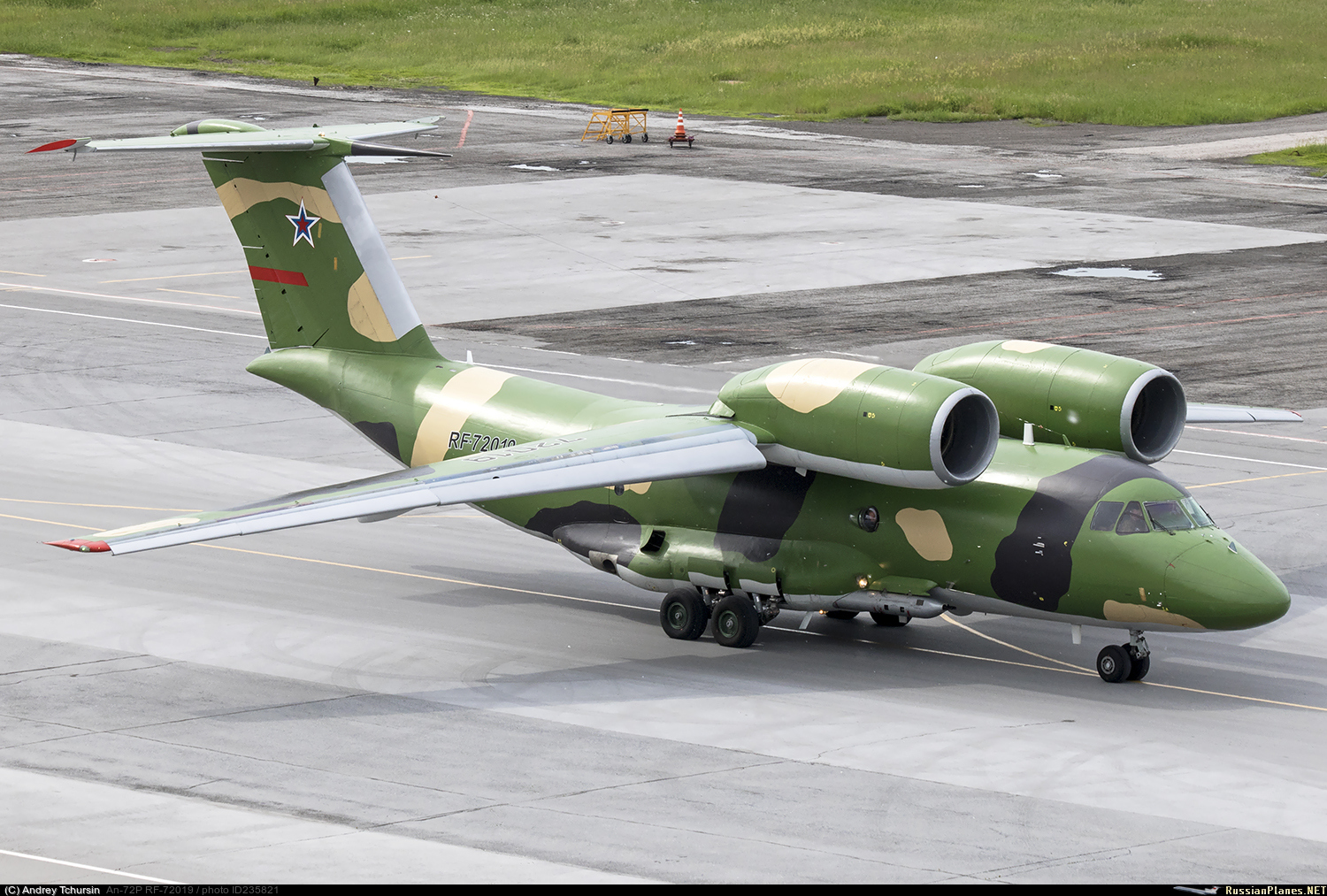
This is more or less standard armament for these in Russian PSFSB service, even those in far less militaristic liveries: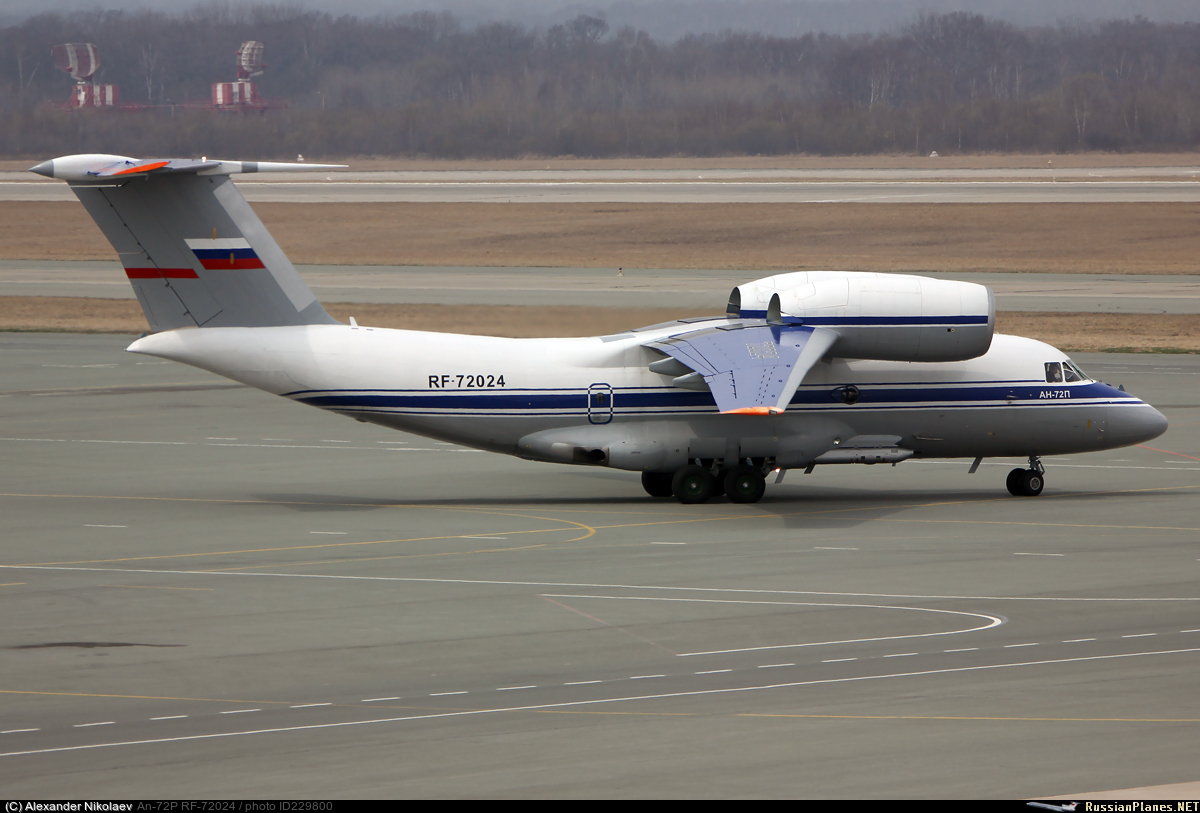
The An-26 photos with the WW2 slogans above, that Gerard posted a few years back are from a Baltic fleet aviation exercise. The slogans were just an impromptu joke by the crew. Interestingly though, when these exercises took place they said they practiced An-26 bomb runs for the first time since the USSR days. That, together with the fact that the fuselage pylons are standardized for the model (BDZ-34) and rated up to FAB-500, strongly suggests that those particular Antonovs were designed from the get-go to be able to perform limited combat tasks.
Dr.Snufflebug22160:

Dr.SnufflebugRandom question: How come the KJ2000 (the Chinese “A-50”) has two massive ventral fins for stability, whereas the A-50/50U doesn’t?


 Sign In







