 Dr.Snufflebug
Speaking of the Antonov An-124… The chief designer of both this aircraft and the legendary An-225, Victor Ilyich Tolmachyov passed away today:
https://www.facebook.com/alexey.rogozin/posts/10214233733615450
Tolmachyov, a native Muscovite, lived and worked in Ulyanovsk with the Volga-Dnepr An-124 fleet and the Aviastar maintenance facilities. R.I.P.
Reminds me though, upon hearing the news about a potential Ruslan reboot, Ukraine yesterday said that building something like the An-124 or this “Slon”/Elephant is impossible without the Kiev bureau’s “expertise”.
A statement I find kind of curious if I may say so, considering that most An-124’s were built in Russia and indeed the last new An-124 rolled out of Aviastar in Ulyanovsk as late as 2004. To my knowledge, none were built in Kiev after 1993 or so… Add to that the fact that key people like the aforementioned Tolmachyov had nothing to do with the Kiev bureau after the collapse of the USSR, but stayed in Ulyanovsk, and the fact that the by far biggest operators of the An-124 are the Russian Air Force and Volga-Dnepr, and all their maintenance and refurbishing etc. takes place in Russia (in Ulyanovsk…). I’d be surprised if they didn’t know “how”…
The only thing that is a problem are the engines, as there are no domestic “D-18-class” turbines available at present.
Dr.SnufflebugA Swedish news outlet says that they’ve read a classified report on the NH90 operating costs:
https://www.aftonbladet.se/nyheter/a/l10LQ9/skenande-kostnader-for-forsvarets-nya-helikoptrar
They say that the NH90’s that the Swedish Armed Forces have in service at present cost about 24 000 euros per flight hour to operate, six times (!) more than the UH-60’s that Sweden bought as an interim measure while waiting for the delayed NH90’s. So not only were they more expensive to acquire than planned, and delayed by many years (making the Swedish Armed Forces spend even more money acquiring UH-60’s, simply by necessity), they are also incredibly expensive to operate and each flight hour requires some 20 hours of maintenance.
They are allegedly considering to mothball them at this stage.
Dr.Snufflebugare you referring to the move from 3 piece to 2?
J 35 went through three canopy changes (not counting the trainers)
The last one was with the F1-F2 versions, which remained onwards into -J and so on. There it was a very bulged two-piece, but it looks great on that machine. The earlier two varieties were basically three-pieces but with varying degrees of “roundness” to them.
edit: need moar
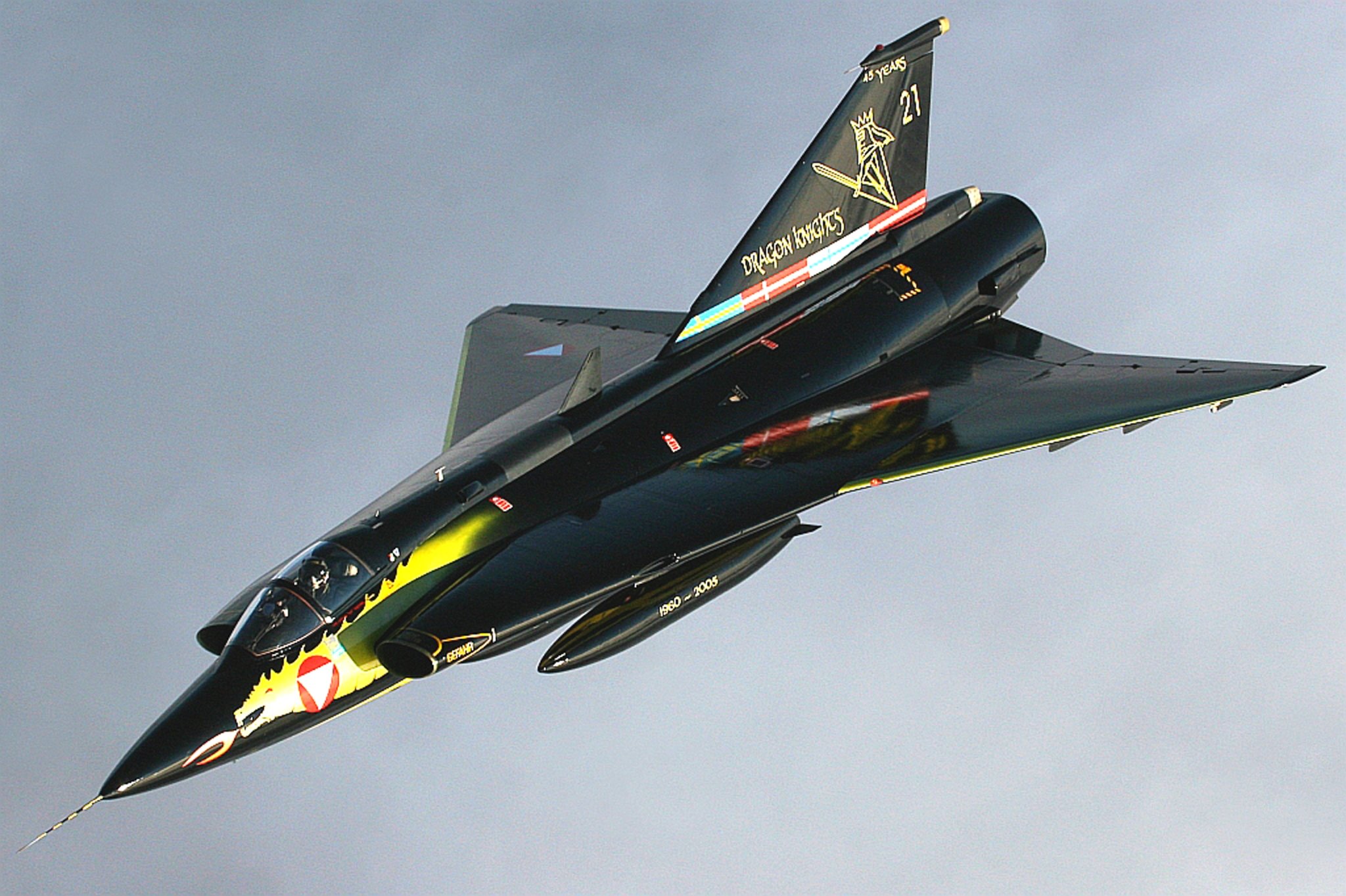
Dr.SnufflebugLate-model Drakens, hands down. Once they received the newer canopy (F1-F2 and onwards, IIRC)
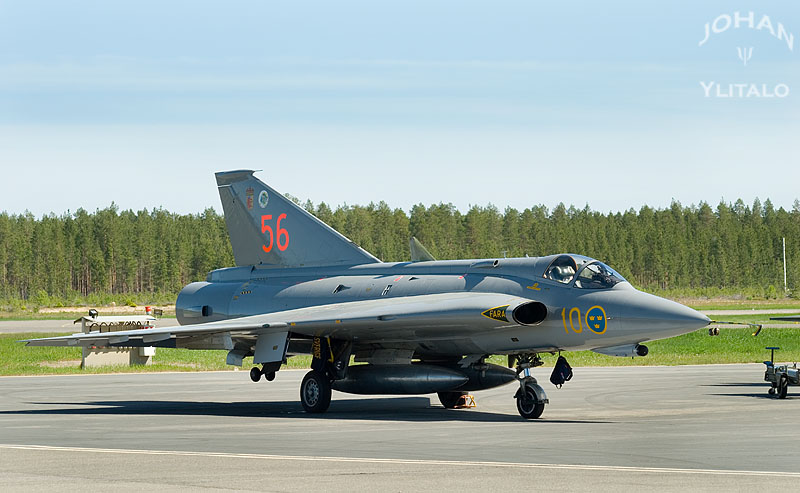
Dr.SnufflebugMentioning that the MiG-31 had a datalink before the JA-37 Viggen is useless information.
That is just trolling, and got the deserved answer.
Saying the the MiG-31 had a datalink, and then comparing the features is useful information.
Well, he clearly meant that MiG-31 had a comparable datalink suite (planes exchanging information etc) before JA 37 received one.
Your snarky remark about J 35A having a datalink (without specifying features) long before, adding sarcasm-laden things like “congratulations Russians” and so on was pretty much uncalled for, and ultimately rather ignorant, given what I wrote above. But whatever, no point in bickering about that, it detracts from what I assume the OP wanted to discuss.
edit: Also, will you guys please stop using hyphens when talking about Swedish aircraft? There never was a “J-35A” or a “JA-37” or whatever.
Dr.SnufflebugLet’s see some rotary-wing love:

Dr.SnufflebugThe Soviet datalink suite Vozdukh/Lazur was in VVS operation in the 60’s already, on various MiG-21s etc, simultaneously with J 35A and Stril 60, and just about as capable (in terms of streamlining GCI)
The MiG-31 datalink suite was way more advanced, but came later. More akin to the 1985 upgrade of JA 37 as mentioned above.
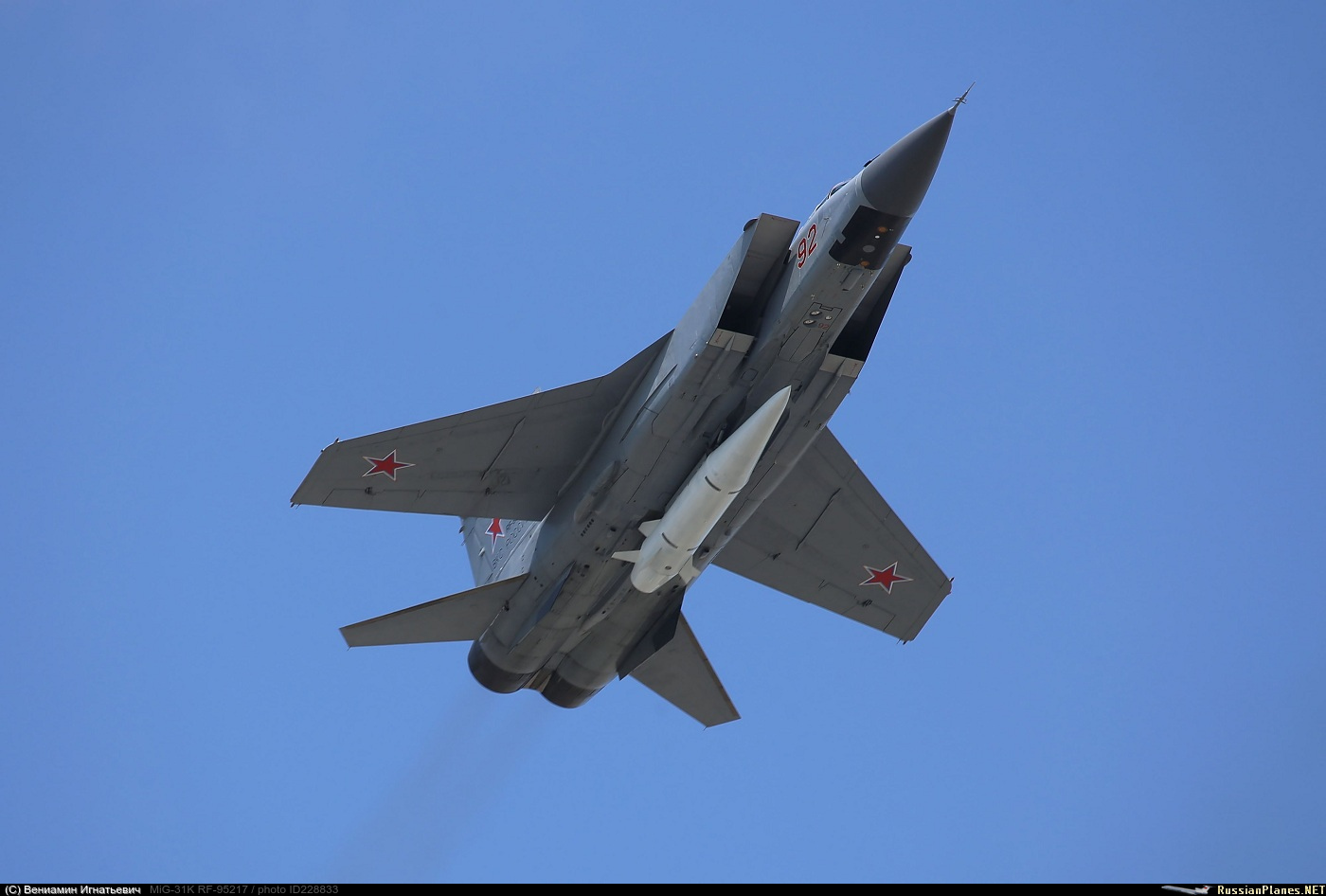
Dr.SnufflebugKinzhal over the heart of Moscow:
Dr.SnufflebugSweden, 1915:


It’s a Thulin “type A”, a Swedish-built Blériot XI copy. This Swedish roundel was briefly used by Army Aviation/Field Telegraph Corps, before the more well-known three crowns roundels were established (together with the actual Air Force)
The reason the colors look inverted in the old photographs is because of the orthochromatic photographic emulsion they used at the time, which made blues much lighter and yellows/reds much darker, occasionally creating a very striking inverted look.
The same effect is evident when looking at photos of Swedish flags from the period, you’d be forgiven for thinking that this is Finland or something:

…But it’s Sweden, 1908 (royal reception in the port of Oxelösund)
Dr.SnufflebugThere appears to be an expansion of Belbek airbase:
“Belbek airport will receive its first civilian flights later this year”
http://obyektiv.press/novosti/aeroport-belbek-nachnet-prinimat-grazhdanskie-rejsy-uzhe-v-etom-godu
Apparently they’re expanding it for future military/civilian joint use. Which frankly sounds a bit redundant considering the recent and rather massive capacity expansion at the Simferopol international airport (the new terminal opened just a week ago or something, and it’s like ten times the size of the former one):

(The first three are the same USSR-era building, built 1957-1960, only with some minor additions and new “cosmestics” over the years, with the blue and white tile pattern being added after the events of 2014…Then they built the massive new terminal 2016-2018)
But then again Sevastopol is administratively separated from the rest of Crimea, so a dedicated airport there might be warranted in their eyes.
I wonder if they’ll do anything to the airfield on Cape Khersones though, I like the location (and it was the default starting airfield in the Russian Su-27 videogames from the 1990s, I seem to recall) 🙂
Dr.SnufflebugWow. Snufflebug, you seem to be quite well informed about the air forces of the Russian civil war. Do you happen to have photos of AFs of Azerbaijan, Armenia, Georgia? Of yourse we all know that photo of Georgian Sopwith Camel, no need to post this particular picture here…
I’m really not that informed on the matter, but I’ve long found this particular period and war to be quite interesting. Perhaps because it is somewhat obscure here in the West, even though several Western nations were heavily involved and even landed troops in Russia during it all.
The numerous factions that sprung up, broke apart, fought, joined forces, assimilated and so on and so forth are very interesting as well. One could literally make a big video game about that alone, or why not a flight sim? 🙂
I’ll see if I can find any Caucasus republic things in the material I’ve gathered over the years. Meanwhile, yet another RKKA Nieuport, the stars are similar to the ones above but they’re slightly pointier and without the thick black circles:

As the caption notes, they’re pointing down here, which was common in the early days.
And this Nieuport-10 from the Naval Flight School in Oranienbaum outside Petrograd (St. Petersburg) has been through a lot. I’ve found it depicted in three different liveries.
1917 (Imperial Russian Air Service, and whatever it was called during the Provisional Government and the Russian Republic):

1918 (blue rings gone, but the St. Andrew jack is still there):

1918-19 (Soviet Russia, probably a different individual, but it’s the same model and from the same flight school. Roundels now entirely painted over with a black RKKA star on red, though it still retains the St. Andrew jack):
Dr.SnufflebugNice bump there! :eagerness: Few months short of 18 years old thread.
Dr.Snufflebugno they are not! Thank you for your input. very helpful for me.
Oh, great! I’m glad to help. I really like your website, it’s a truly fantastic project.
Dr.SnufflebugP.S. do pardon me if these have been featured before. I haven’t read through the entire thread. 🙂
Dr.SnufflebugAnother RKKA roundel, this time from 1919, southern front (Don, Kuban, Caucasus), incidentally might have been fighting the aforementioned Don Republic forces as it’s in the same area at the same time.




 Sign In







