 Dr.Snufflebug
The 5th Army of the Workers’ and Peasants’ Red Army (RKKA), Russian Civil War, Siberia, 1920.


Sopwith Strutter.
There are loads of short-lived roundels from that period, and I see you have already included the Don Republic’s, but the black triangle roundel was not used by the Don Soviet Republic, but rather the opposing (anti-Bolshevik) Don Republic, 1918-1920 (those photos of various Nieuports bearing that roundel are from 1919)
Dr.SnufflebugSo the PAK-FA thread again disappeared without a trace, nor an explanation as to why?
It’s kind of annoying, to be frank. Barring the occasional tirades, it’s usually a good resource. Each time it disappears like this, it becomes a huuuuuuge drag to dig up certain pieces of information that one got used to being able to find therein.
Honestly, even though some discussions in that thread were getting kind of “old” and pointless, they weren’t particularly agitated or breaking any obvious forum rules as far as I could see. I tend to just ignore the WoT’s anyway, and mostly focus on the posts of a few members who usually deliver quality stuff.
As many of you have already written above, it would certainly be nice with some kind of explanation from the moderator(s). I mean, if there is something in particular that kicks off this mystical disappearance act each time, knowing how to avoid it would be totally swell.
Dr.SnufflebugLooks to me like it has the full “Vitebsk” MAWS suite.
Two rearwards-facing ultraviolet missile approach sensors (in a “V” arrangement), and one front-facing ditto next to the front gear, plus underwing jammer pods (Л-370-3с) and so on.
Dr.SnufflebugOn Zvezda today they showed fragments from the F-117 that was shot down over Serbia, and spoke about the analysis of the RAM they did back then and so on and so forth. First time I see it properly confirmed that parts of the wreckage were sent abroad (though it has been strongly implied before, and pretty much a no-brainer anyway)
Lots of talk about RCS studies in general, in that programme, with lots of models shown. Obviously nothing high-tech, as that is surely classified, but still.
Dr.SnufflebugI wonder what kind of dB-readings you’d get right there:
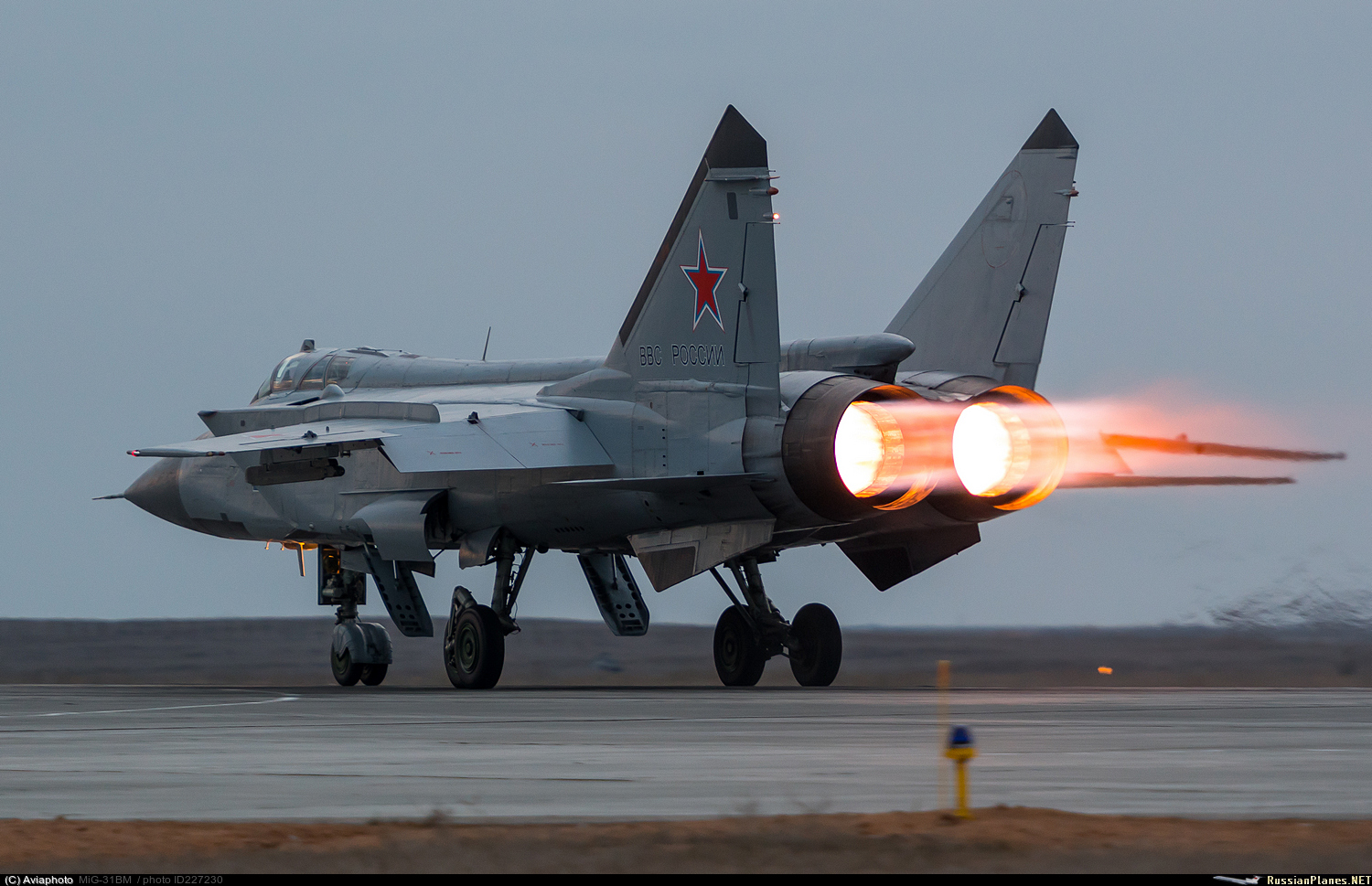
Dr.SnufflebugIn the Federal Assembly speech just a little while ago, they showed footage of a MiG-31 firing a large boosted ASM that I’ve never seen before.
edit: Yep, it’s called Kinzhal (after the ancient Georgian weapon) and it’s an air-launched hypersonic missile. And apparently, judging by the footage it’s been tested live and is supposedly already in service.
They also showed footage of a big bunch of other things, including a HGV similar to the WU-14 or the Falcon, and a laser system similar to the XN-1 LaWS, and they’re apparently also in service.
Just wow, that came from out of nowhere.
Dr.SnufflebugSo they started talking about pr. 23000E “Storm” again:
http://www.interfax.ru/russia/601338
I find it quite hard to believe, but who knows.

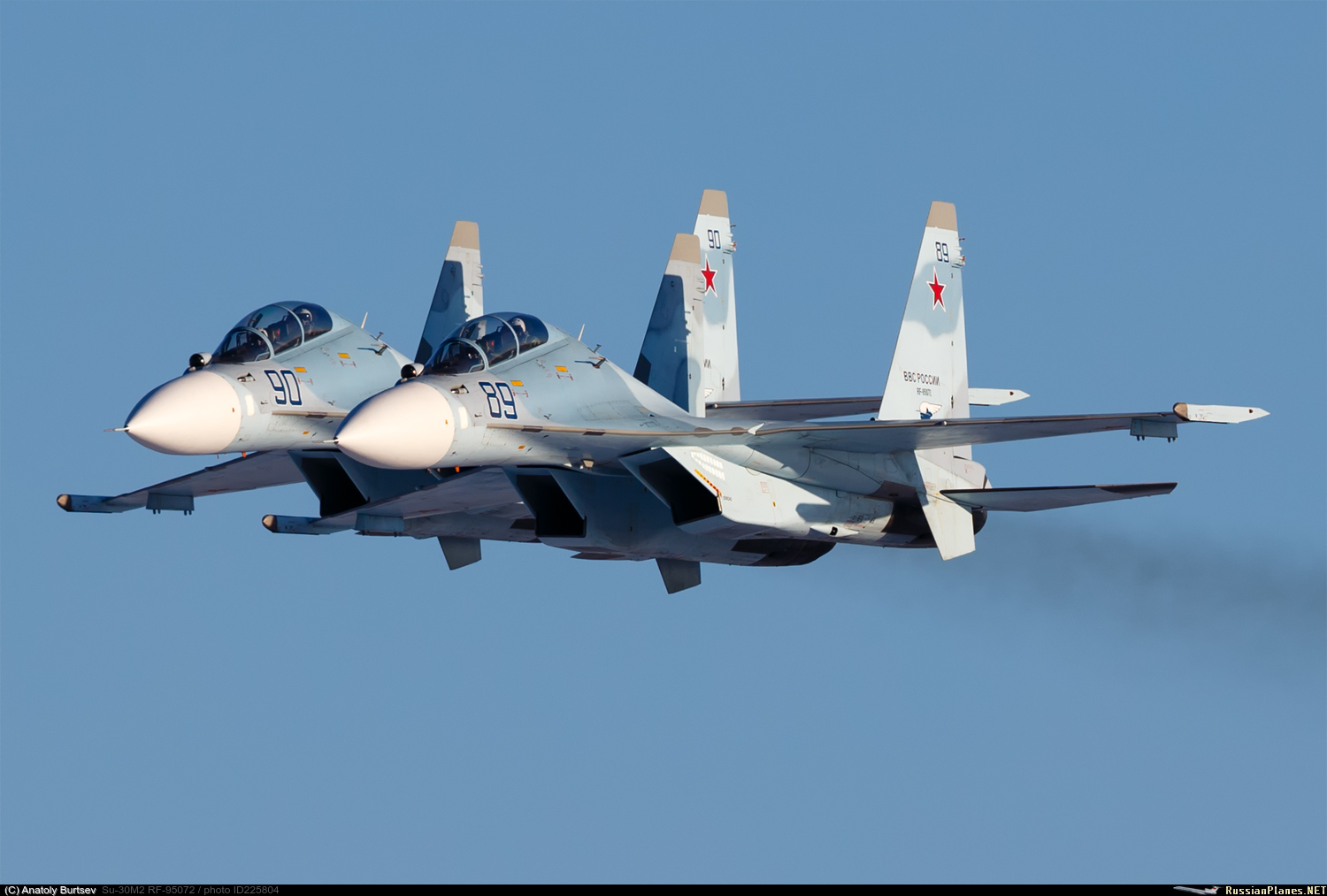
Dr.SnufflebugJust a nice shot, from last year:
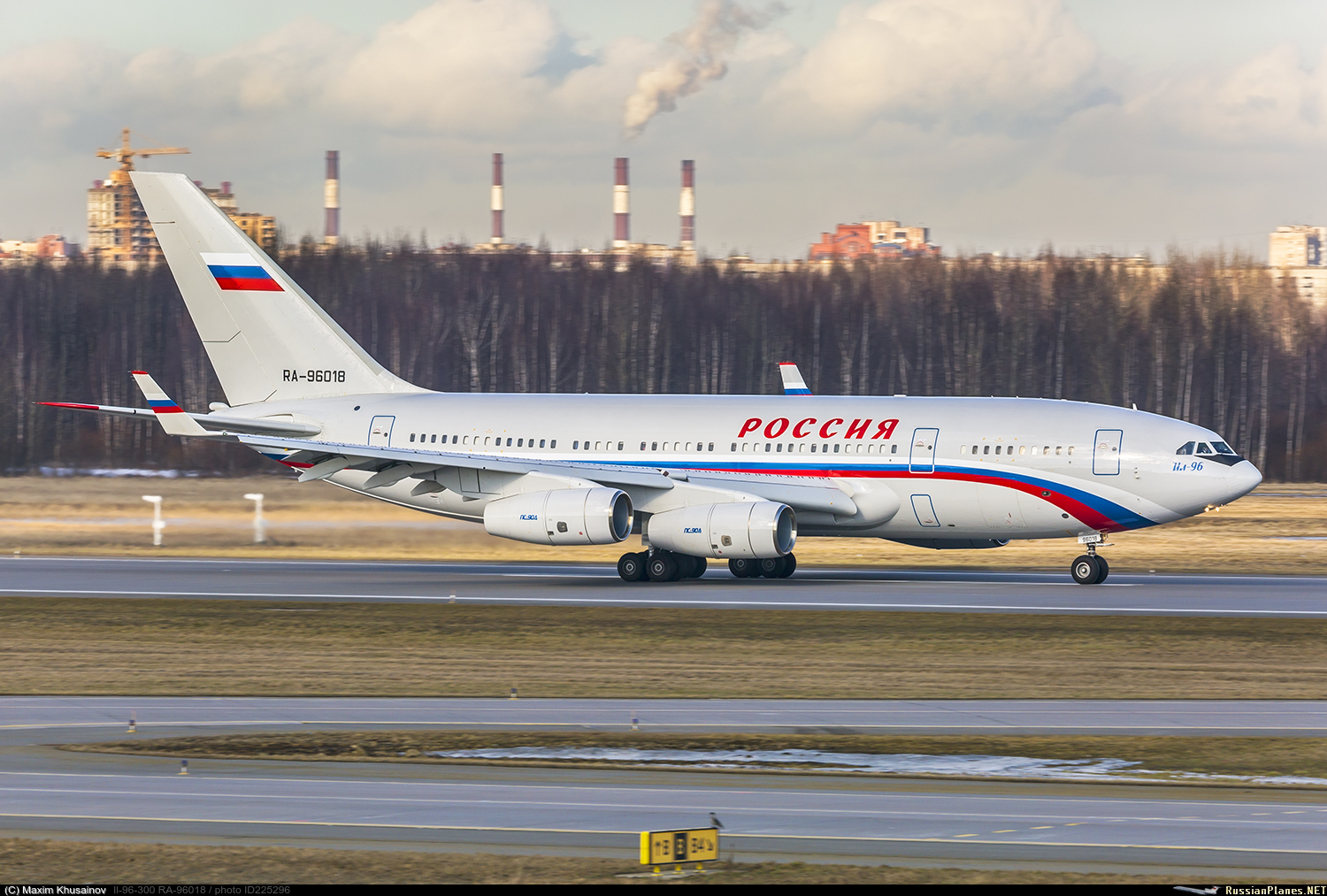
Also, bit random but I’ve always had a soft spot for the Il-96 (and 86), they have this elegance to them somehow, despite being huge widebody airliners (from 2015):
Dr.SnufflebugIf we follow that logic, then it’ no coincidence that Buran is nearly identical to the Space Shuttle.
It certainly is not. The Buran was nearly identical to the Space Shuttle orbiter, externally. The airframe and its aerodynamic properties were pretty much the same, it was a case of “why reinvent the wheel”, they wanted a system with Shuttle-esque capabilities. Not that the Soviets had not designed shuttle-esque vehicles before on their own, because they had, but they decided to play it safe when it came to “countering” the STS (they were deeply paranoid about its abilities…)
But apart from the aerodynamic features of the orbiter, the rest of the Buran system was way different from the STS, in that:
The lifting system, Energiya, was designed as a standalone super heavy rocket from scratch, capable of flying on its own with all kinds of different payloads piggbacking on it. In fact, its first flight was with an 80-ton space laser (which later failed to enter its designated orbit due to a fault in its own systems, while Energiya performed nominally and delivered it as intended).
The Buran was merely one of many such potential payloads, and as such the Buran lacked big honking engines of its own plumbed to an EFT as on the STS. Buran was stand-alone.
The Buran was designed from the ground-up to fly automatically, under computer control, so as to be able to function as an autonomous in-orbit rescue-and-retrieval vehicle among other things. On its first (and only) spaceflight, it flew under computer control, successfully.
The Buran’s safety systems were far superior to the limited options offered by the Space Shuttle orbiter, partly thanks to its non-dependence on the launch vehicle assembly. Also, it had a far more thought-out crew escape provisions for ejections at lower altitudes.
All these capabilities were engineered into the system because the Soviets were so freaking paranoid about the STS and they pretty much thought it could do all of it. Turns out they overcompensated, so to speak.
The space buff Scott Manley called Buran a “Space Shuttle v2.0” which I find rather suitable a description. Apart from the sounder overall design choices, mind you, the lifting technologies developed for the STS were retrospectively repurposed to finally become a US “Energiya” of sorts, in the contemporary Space Launch System.
…But, I fail to see how this relates to F-14 and MiG-31. The only similarity between the two is that they were both tailored to carry big long-range AAMs (AIM-54 vs. R-33).
The MiG-31 shares its basic airframe with the earlier interceptor/reconnaissance aircraft MiG-25, and the role it was assigned was previously assigned to the Foxbat (P/PD versions) and the Tu-128. I.e. patrolling and defending the vast swathes of airspace over the USSR, especially over the many remote areas.
The Tomcat, not so much. Clean sheet design, swing-wing, carrier optimized, far more versatile than the MiG-31, the most similar predecessor being the naval F-4, but still not quite.
Dr.SnufflebugPlease excuse, but why is he referring to it as a car? Is that a translation error?
It’s a Google translation. He is referring to it as a “machine”, but the Russian word for “machine” (mashina) is colloquially used to refer to ordinary cars in general too, and machine translations (or car translations? :p) often fail to distinguish these things. It’s context sensitive, so to speak, and the translation algorithms aren’t quite there yet…
Dr.SnufflebugFrom the armed forces of the soviet Union a book about the F-14, by the Ministry of defence and air forces of the Soviet Union
I have a whole set of these, including Mirage 2000 and F-15C. They include detailed kinematic graphs, pre-flight and cockpit procedures, weapons and radar data and so on and so forth. Most of it is from open source data that was available at the time, though some of it might’ve been gathered through more covert types of intelligence. What I can say for certain is that the USSR never got their hands on an F-15C at any rate. I reckon the same applies to the cat.
Dr.SnufflebugThe pilot was a certain major Filippov, formerly Ukrainian Air Force, defected to Russia in 2014.
I haven’t reviewed any of the militant-supplied footage, and I do not intend to either so I don’t know whether this is true but media reports that he put up quite a fight once he landed, using his sidearm:
https://lenta.ru/news/2018/02/03/prinyal_boy/
Anyway, afterwards the area was pummeled by Kalibr cruise missiles and air strikes in retribution:
https://tvzvezda.ru/news/vstrane_i_mire/content/201802032005-6phj.htm
Dr.SnufflebugThank Dr. Snuffelburg.
So something more apt to a weapon than to a plane.
Perhaps the most relevant application of such a propulsion system is found in spaceflight and things like SSTO.
Dr.SnufflebugJudging by the diagram, it’s a rotating detonation engine (RDE) and it runs on an internal oxidizer so “rocket” is technically correct.
Dr.SnufflebugAh, nice… Su-35S and Su-27SM3:
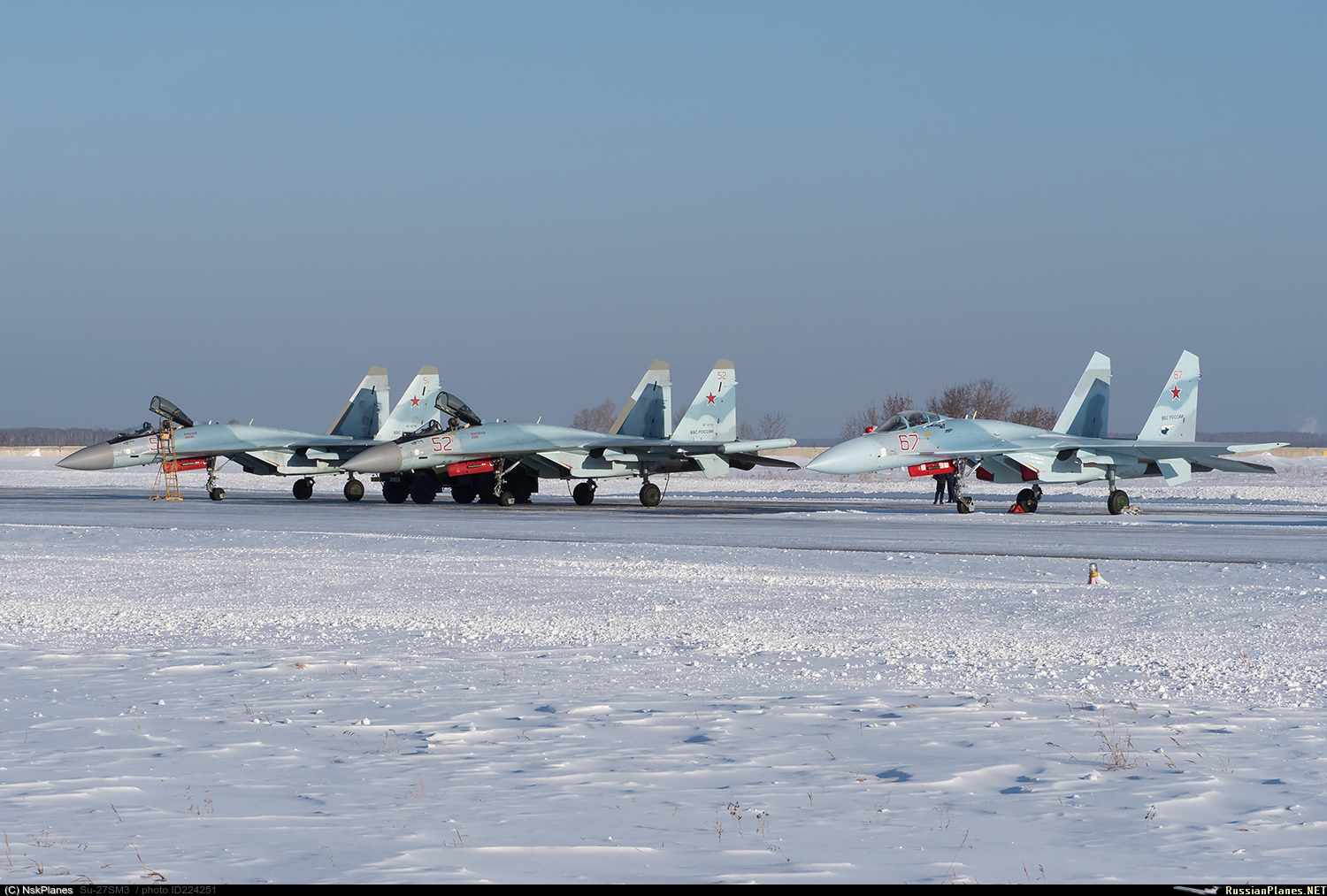
The color-matched radome on the latter does look really sleek.
I guess so.. it obviously doesn’t even seem to have a HUD..
It had some kind of HUD back when it was still flying, at least:

But my guess is that it’s been gutted since. As for the rest of the cockpit, wasn’t it just a “legacy” Su-27 they pretty much lifted into place?
The concepts they exhibited elsewhere (as models at fairs etc) were Su-37-like though:
Comparison: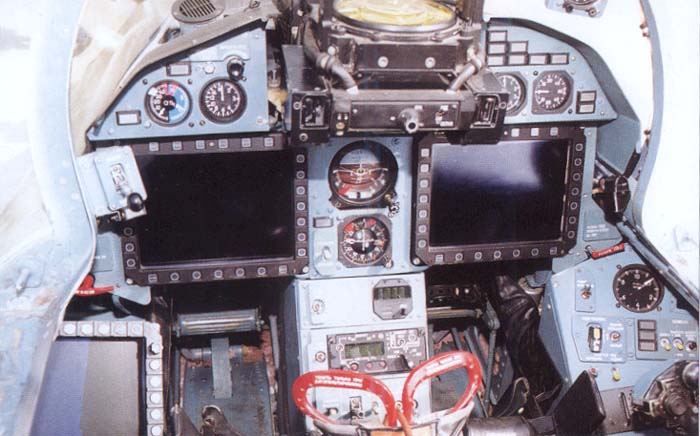


 Sign In







