Discendo Duces
[QUOTE=dcollins103;1260680]Hi Cees
This is an interesting point that you have raised.
Just sticking to the remit of the RAFM at Hendon for a moment, and their wish to display as many examples of types operated by the RAF, then there are several notable ones absent.
Just off the top of my head here are some 40’s era types:
Extinct:
Supermarine Spiteful
Westland Welkin
Westland Whirlwind
Bristol Buckmaster
Bristol Buckingham
Vickers Wellesley
Short Stirling
Partially extinct:
DH Hornet
Bristol Brigand
The RAF Museum has enough gaps in its collection of aircraft that are not extinct, (the Douglas Boston springs to mind for a start) without resurrecting types that never saw service. Nice idea though.
Discendo DucesI saw your Chipmunk at White Waltham in October 65, and again a year later. It was WP836, and on both occasions was derelict in one of the ‘tent’ hangars in the London UAS area, I noted that it had scorch marks on the fuselage, with very little fabric covering remaining on the wings . By my next visit, in Nov 1967, it was lying where you saw it.
I have the Vampire noted at WW as derelict in Nov 1966 on the fire dump , where you photographed it, with serial XD589.
Seeing the picture brings it all back!
Discendo DucesQuote:
Originally Posted by JDK
” Discendo Duces :
Satellite imagery was Jim Pearce’s ‘secret weapon’ in finding airframes in the former Soviet Union long before Google Earth became available to the masses. Presumably he paid someone, NASA or the Russians, for access. “
Can you substantiate that? Not everything stated about Russian a/c recoveries is true…
Well no, I can’t. It may have come from a conversation that I certainly had with the man himself – this was at an airshow in the UK where parts of the FW189 were exhibited, shortly after being recovered. I do remember raising the subject of how he found out about all the wrecks he was recovering, but whether he was very forthcoming in his answer, I can’t now remember.
True or not, I must have heard or read it somewhere ; I certainly didn’t make it up.
Discendo DucesVindication!
Of sorts 😀
Well, yes, of sorts…bearing in mind that the image quality he bought would probably have been superior to Google Earth.
Discendo DucesDo you think this aircraft would have been seen on Google Earth, before it was found by ground teams?
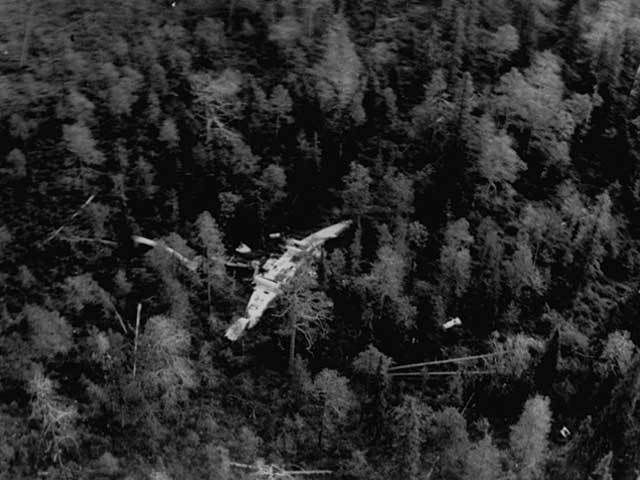
Fw 189 recovered by Jim Pearce 1990.
Satellite imagery was Jim Pearce’s ‘secret weapon’ in finding airframes in the former Soviet Union long before Google Earth became available to the masses. Presumably he paid someone, NASA or the Russians, for access.
Discendo DucesWell thanks chaps…really, I just came across it by chance but made a note of it anyway.
As to why it came from Leconfield, some MU’s were/are ‘parent’ units for any airframes or cockpits issued to ATC and CCF units in their area ( and that area could be a large one), so it’s possible that it was returned to 60 MU after it was no longer required – but this is just speculation.
Discendo DucesI knew that this one rang a bell but didn’t want to post until I had dug out the information that I knew I had – somewhere.
Last year at the PRO I was looking at the 229 OCU Chivenor ORB, and among the entries for May 1967 is the following:
” The cockpit of Hunter 7407M was transported from RAF Leconfield to RAF Chivenor by Chief Technician Wooley accompanied by a small working party. On arrival here this team spent one week from the 1st May to 8th May modifying the cockpit in accordance with the instructions issued by Squadron Leader J.R.Norris the Chief Ground Instructor. This sectioned cockpit will in future be used to instruct and check student piolts on their ejection drills.”
This suggests that the work was carried out by a party from 60MU, but gives no indication as to whether 60 MU had previously ‘owned ‘the cockpit, or had collected it from somewhere else. Perhaps Wrecks and Relics has the answer?
HTH
PS While on the subject of cockpits, an entry for December 1966 states:
“Cadet Flt Sgt AG Cole, Marlborough College CCF, visited the Hunter Simulator 4th-7th. He is attempting to build a crude simulator in the forward fuselage section of an old Hunter aircraft.”
Discendo DucesI knew that this one rang a bell but didn’t want to post until I had dug out the information that I knew I had – somewhere.
Last year at the PRO I was looking at the 229 OCU Chivenor ORB, and among the entries for May 1967 is the following:
” The cockpit of Hunter 7407M was transported from RAF Leconfield to RAF Chivenor by Chief Technician Wooley accompanied by a small working party. On arrival here this team spent one week from the 1st May to 8th May modifying the cockpit in accordance with the instructions issued by Squadron Leader J.R.Norris the Chief Ground Instructor. This sectioned cockpit will in future be used to instruct and check student pilots on their ejection drills.”
This suggests that the work was carried out by a party from 60MU, but gives no indication as to whether 60 MU had previously ‘owned ‘the cockpit, or had collected it from somewhere else. Perhaps Wrecks and Relics has the answer?
HTH
PS While on the subject of cockpits, an entry for December 1966 states:
“Cadet Flt Sgt AG Cole, Marlborough College CCF, visited the Hunter Simulator 4th-7th. He is attempting to build a crude simulator in the forward fuselage section of an old Hunter aircraft.”
Discendo DucesThat was part of the problem, every time the aircraft was moved it was dismantled, crated, moved, then rebuilt. A lot of the time the guys who were tasked with the job had no real interest in the aircraft from an enthusiasts point of view, so they were not overly careful how it was handled. Bits got lost and in many cases any old bolts were used to put the aircraft together. A lot of the fairings on the He111 were held in place by tape!
When the Ju-88 arrived from storage is was also in a poor state, it took me and my boys the best part of a year to put it back into a reasonable condition for display, but by the time it was dismantled and re-assembled at Hendon it had been pretty bashed about again. I just about made me cry when I saw it after the move.
They weren’t known as ‘Crash & Smash’ for nothing…
As for missing parts, I remember going through aircrew selection at Biggin Hill after applying for an ATC flying scholarship. One evening, we were allowed to visit the exhibition hangar, and to my great delight, were told that we could climb into any aeroplane we fancied. Naturally, we took full advantage, as you don’t get a chance like that every day. All very nice, but looking back, I wonder how many bits were damaged or went missing along the way.
And no, I don’t have any Heinkel or Junkers instruments!
Discendo DucesThere is a fairly recent thread about ‘High Flight’ (1958) on another forum. It chronicles the trials and tribulations of a student pilot progressing from the Piston Provost, to the Vampire, and finally the Hunter. A cheesy plot but some excellent flying scenes, apparently.
Much of it was filmed at Cranwell, though I believe that at least some of the Hunter scenes may have been shot at Chivenor.
It’s not available on VHS or DVD, so if anyone sees it coming up on TV, please let us all know!!
Discendo DucesOh dear…there was an attempt to buy XF509 when it was up for disposal, the idea being that it would stay on its plinth at Chivenor as a memorial to the RAF presence there, a far more fitting location. Chivenor was, after all , the real ‘home’ of the Hunter in the Royal Air Force. Unfortunately, attempts to get sponsorship from both the council and local business fell on deaf ears.
And it would have been under the noses of the Royal Marines, not the people mentioned in the preceding threads…
Discendo DucesActually, at present it doesn’t have one – it’s back on the military register as XF995.
Presumably when the contract with ETPS finishes, it will revert to G-BZSF.
Discendo DucesAccording to Wrecks & Relics, Varsity WL678 ( ex 115 Sqn, struck off charge 21.5.70) was on the LBA fire dump until it expired, around 1985 – so this is probably your hulk.
Discendo DucesAlthough the RN never mentions it for some reason, Lt Cdr Dave Morgan DSC RN (rtd) was Flt Lt Dave Morgan RAF at the time of the Falklands. It now appears to be generally accepted that he had four kills from the conflict, and was thus highest scorer.
The RAF provided about a quarter of the SHAR pilots and they scored about a quarter of the aerial victories.
The official position is that the last ‘enemy’ aircraft that the RAF shot down was in 1948, and it was Israeli in the series of engagements that took place at that time (the RAF maintained its neutrality by shooting down some Egyptians, as DD notes).
After that, despite the banter, the RAF hasn’t had the chance to engage in air combat. RAF fighters weren’t deployed to Korea and the next major conflict in which the RAF participated in which there was air-air action was the Falklands. If you read Jerry Pook’s recent book, you’ll get an idea of how effectively the RN used the GR3s (as a hint there are two chapters called ‘#More Navy C*ck Ups’ and ‘Yet More Navy C*ck Ups’ ), which were (mis)tasked purely on ground attack and recce missions.
During Desert Storm, the F3s didn’t push into Iraq because of IFF issues, and they flew defensive CAP. Two were pulled off an attack against Iraqi Mirage F1s that were running towards naval assets to allow them to be engaged by Saudi F-15s, much to the RAF’s irritation – not least since there are strong suggestions that the F-15s, faced with several F-1s, bodged the attack which allowed at least one Mirage to escape.
Unofficially, there is some fairly strong circumstantial evidence that an Indonesian C-130 was brought down by a Javelin during the Confrontation and slightly less robust evidence that a Hunter gave an Indonesian MiG-17 the good news in another engagement that was hushed-up.
Finally, there is disupte over whether a Tornado GR1 ought to be credited with a kill over a MiG-29. The MiG was hit by a JP233 munition, and there is some evidence that it had just taken off when it was hit, and thus counts as a kill. The consensus seems to be that it is technically an air-air kill, but not in the spirit of air combat (aircraft needs to be brought down by something being aimed in his general direction, not by colliding with incoming ordnance).
DJJ,
I’d like to take issue with a couple of points. According to the book that I quoted previously, any engagements with the Israelis in the late forties were entirely one sided, and not in the RAF’s favour.
The circumstantial evidence of the downing of the Indonesian C-130 is exactly that – circumstantial. I recall that this one was laid to rest a while back on another forum by someone who was on the Javelin QRA that night. Stooging around at low level at night where they weren’t supposed to be, the Indonesians probably didn’t need anyone else’s help in losing an aeroplane. I hadn’t heard of the Hunter v Indonesian MiG17 story, though there is a similar tale from Aden, concerning the North Yemenis, IIRC.
I agree with what you say about Desert Storm, and I would venture a guess that the F.3 crews would have acquitted themselves well in the Iraqi turkey shoot, had it not been for the very real danger of being shot down by friendly forces. I have also heard that the Saudi F-15 crew you mention were talked through the whole engagement by the USAF.
Discendo DucesDid you mean RAF aircrew manning a Royal Air Force squadron aircraft, rather than RN? That rules out the Falklands.
And if the original question was concerning an intentional kill in combat against an enemy, rather than a bit of dumb finger trouble….. I think you have to go back a lot further than that F4/Jag incident.
All the way back to 22nd May 1947: two Egyptian Spitfires attacking Ramat David airfield in Palestine were shot down by RAF Spitfire FR.18s from, I think, 32 or 208 Sqns, or a combination of both.
Ramat David was still occupied by the British, in the process of withdrawal from the ensuing Arab-Israeli War. Earlier that day Egyptian raids had destroyed five Spitfires and a Dakota on the ground at the airfield; the Egyptians later claimed that they had thought that the Israelis had already taken the field over. (From ‘British Aircraft in Combat Since 1945’ by David Oliver.)


 Sign In