Ozair
OzairYou might want to take a look at the submissions for the JSF for Australia inquiry located here :-Joint_fighter Submissions
Read #35 Sorensen, #7 Name withheld.
Wow…
I have been reading them as they are released and frankly most of anti-JSF submissions are rubbish. There is a very clear common thread of misunderstanding within most of the negative answers which can be directly attributed to Air Power Australia. The number of submissions that state the F-22 is the best option for Australia clearly show how misguided they are…
As for your examples,
#7 has little substance. DSTO is not a major contributor to the acquisition of Defence capability within Australia, they form only a small segment and in all cases weapon/system capability is only one component of the acquisition process.
#35 does not indicate that the F-35 was not tested against top line threats. All he is complaining about is that on that one particular day it was not tested against the top line threats. Given he stated there were other nations participating it is entirely plausible the testers were not interested in showing the full known/estimated capabilities for adversary airframes/missiles. Do you honestly think the US would not have run simulations against top line threats?
Ozairer, rather than trying to decrypt, in case of war, they may simply opt for destroying them, crippling the functionnality for some time at least
Addressed in the first section. If the cables are destroyed preventing internet to the US there is significantly more damage to the US, and frankly the globe, than ALIS not being able to call home. A half decent military will have communications back-up including SATCOM, rendering this type of attack largely ineffective.
OzairI thought the JSF range was ~728nm from that briefing
http://s9.postimg.org/cq3o12cbj/New_Bitmap_Image_4.jpg
But page 11 here is the shorter distance 590nm combat distance.
http://forskning.tekna.no/wp-content/uploads/2013/11/Norway-and-F-35-7-nov-2013.pdf
About the only thing we can take from that Norway 728nm F-35 radius is that it is flown between 5k and 25k altitude, so hardly optimal cruise profile but essentially medium throughout. Again though, what does that profile actually show? We don’t know if any combat time or turn radius is included, how long the aircraft is expected to spend at 5k compared to 25k etc etc.
Eurofighter can be calculated here on page 53:-
Eurofighter_Capability.pdfBriefing are both from the Norwegian competition so are from the same time frame, note that since then some JSF KPP’s have been reduced.
I can’t see any ranges or profiles listed there, albeit looking on my phone, for the Eurofighter A2G config but it does highlight another issue with a three fuel tank A2G payload. The centreline hard point looks to be the only place to put the targeting pod, therefore removing one of the fuel tanks for most A2G missions. Even when using JDAM/Brimstone a TGT pod would likely be carried making the Wiki range figure more suspect, especially as it purports to have a low component to the profile.
My point stands; we have way too little information on range/payload/profiles to make even remotely accurate estimates on drag of the respective aircraft.
OzairIt seems the Erieye ER is S-band like the original Erieye.
What do the radar experts on the board think about this? I am no expert in radars so my question is probably terribly naive: Will an S-band radar be able to track fighters and other flying objects? Or is the resolution too poor?
S Band is pretty standard for dual role early warning/targeting radars including as Swerve mentioned the E-3. SPY-1 is S-band as is SAMPSON/EMPAR. S-band is a good compromise when considering range and rez cell etc.
Ozairhttp://www.jpost.com/Opinion/COLUMN-ONE-The-IAFs-Achilles-heel-444662
That link was from obligatory and shows a vulnerability of the F-35. “Defense-Aerospace cited an article published last October in Wired.com reporting that those cables are “surprisingly vulnerable” to attack.”
The lunacy of an attack against submarine telco cables being identified as a concern for F-35 shows just how absurd Defence-Aerospace is. Clearly this line of attack against F-35 has not been thought through.
There are two possibilities. First that the cables will be attacked and crippled, rendering them useless. If that happens, there are more worries than the F-35 not connected to ALIS such as the entire global financial system collapsing… If that does happen, the US and many of its Allies have military only SATCOM, such as WGS, to rely on, which has more than enough bandwidth to ensure F-35 can talk with ALIS globally. In fact, the likelihood is that at forward deployed locations or at sea military units will only be using SATCOM to communicate this information anyway.
Second, if the cables are compromised and somehow the Russians or others can access the cables and cyber attack the ALIS messages going back and forth then good luck. They will have to decipher the ALIS connection from all the porn and cat videos passing through the fibre. If they somehow can, they will then need to break into the encryption on the fly, almost certainly done at the industry standard of 256 bit. Given how difficult this is I have no confidence that they would be successful. The only really effective way to get into ALIS then becomes attacking the nodes at either end of the link, so either the deployed ALIS system on a base transmitting the info or the ALIS node in Texas. Again implausible as this attack method becomes no different from any other airframe which needs to order spare parts and uses the airframe deployed maintenance systems to accomplish this task.
Surely there are more intelligent arguments that people can make…
Ozairwell, wiki gives combat radius for ground attack (three 1000l tanks and A2G ordnance hanging in the wind) in hi-lo-hi profile of 750nm for the Typhoon, and norwegian presentation (official by LM) gives 600nm radius for the F-35 carrying everything internally and without the “lo” part (the one most fuel-thirsty)
So, even without studying their aerodynamics in detail, one can’t miss the fact that the F-35 will burn significantly more fuel to fly significantly less… at some point even without “details”, the aerodynamics do not seem very efficient there
Can you provide the source for the F-35 number and it appears that there is no source for that Eurofighter number on Wiki. Also note that the same range is listed for the air defence with 10 min loiter time profile without a reference except for fuel. Nor does it state the A2G payload. Frankly that seems a little dubious. I am highly suspect of public released range figures, including for F-35, as there are many variables which are often lost when a single range figure and a big hands profile is listed. When we compare the listed ranges to what fighter aircraft actually operate with conducting ops, whether Libya or Syria, the ranges drop significantly from those listed. More appropriate would be specific NATO profiles but I suspect these would be classified.
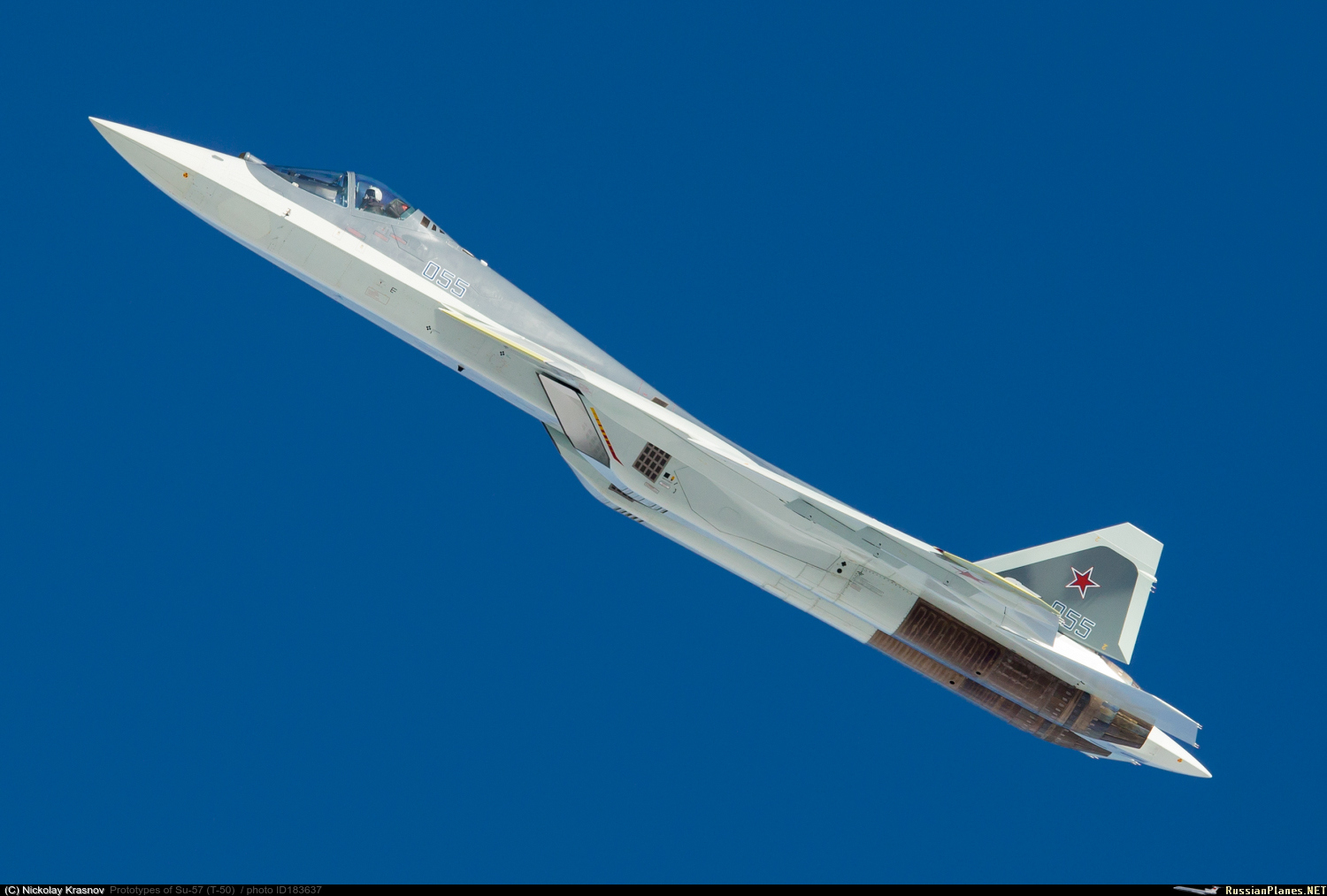
OzairThat is a great shot!
OzairAnd despite being clean and packing more than 1t more of fuel than a single seat Typhoon with three 1000 l tanks and despite that the latter also carries its weapons externally, the combat radius is pretty similar according public data. Doesn’t speak too favourable for the fuel efficiency and drag of an F-35…
There is clearly not enough infomation to draw a conclusion either way so making claims about the drag of either, based on such limited info, is pointless.
OzairSounds to me like a really good effort at spinning the reality to suit the story.
Ha, if you interpret facts as spin sorry but I will stick with the facts, unlike your opinion they are based in reality. The absence of any type of rebuttal by yourself speaks volumes though.
Plus as per standard operating procedure a little dig on a personal level at the end.
A statement that you don’t know what you’re talking about and need to do more research, after having it clearly demonstrated that you didn’t know what you were talking about and had an opinion based on incorrect information, is not a personal dig. This is your opportunity to say “yes actually now you point that out it is clear I was incorrect, there is no link between the initial acquisition of SH by Australia and the late delivery of F-35” and not attempt to link Australian fighter acquisitions to the F-35 being late.
OzairThe F-35 was meant to replace both the F-111 and the F/A-18. Accelerating the retirement of the F-111 was ofcourse the reason for introducing the SH. However, delays within the F-35 program itself also played a role, especially as an earlier ISD was anticipated when Australia chose the F-35. Delays plus the cost of the aircraft were certainly primary drivers for boosting numbers by acquiring 12 EA-18G and by transforming plans for an interim solution into a permanent solution that forms part of the RAAF’s future force structure for a considerable amount of time, even well beyond after the F-35’s EIS.
The Growler acquisition was certainly the big step away from RAAF moves for a single fighter type fleet. As for how permanent the SH are for the RAAF, I still have my doubts. By 2025 when the RAAF SH will require a significant mid life upgrade it may be cheaper to move to a single type and acquire the latest F-35 blk version. Growlers would remain in service and use existing SH spares and airframes to keep the fleet operational for a longer period of time.
There is of course the still to be released Defence White Paper that was supposed to be 2014, then 2015 and now 2016. I haven’t seen any rumours on the long term fighter force plans other than the unlikely F-35B for LHD talk.
OzairSo what? No really, so what? Simply stating known data doesn’t mean anything or change or invalidate my opinion.
The Hornet was originally chosen when the F-111 was alive and well and performing the long range interdictor role that I believe Oz requires. So that rather neatly supports my opinion. Ta.
Actually it doesn’t. If you consider that the Hornet was chosen in 1981 and operated from 1984 the threat landscape in South East Asia in 2006, when the SH purchase was announced, had changed slightly…
The F-111 in service received two significant upgrades to allow it to remain relevant but by the early 2000s the RAAF clearly identified that the F-111 was not able to provide the long range interdiction required against emerging IADS, including and most especially Indonesia. In this context Indonesia signed an MOU for Flankers in 2003 with the intention to acquire 50+.
This conclusion resulted in the acquisition and attempt to integrate the AGM-142 onto the F-111. $500+ million dollars and 7 years late the RAAF reached a very minimum IOC with the weapon. This, more than anything else, soured the RAAF against the F-111. It was quite simply not sustainable nor could it be modified at acceptable cost to become survivable on the modern battlefield. So difficult was the F-111 to maintain that the RAAF estimated in 2009 it required 180 hours of maintenance for every hour flown!
In the Aust Govt Defence White Paper of 2000 they indicated the F-111 would be retired from service between 2015-2019 with the classic Hornets being replaced, ultimately by JSF, before the F-111s. Only after acknowledging that the F-111 was unsustainable going forward did the Aust Govt agree to retire it by 2010, long before they would receive sufficient F-35 and therefore a final decision was made to acquire the SH in 2006.
For sourcing on this, feel free to read the excellent F-111 history written by Mark Lax available here, http://airpower.airforce.gov.au/Publications/Details/431/From-Controversy-to-Cutting-Edge.aspx
The Super was selected because something, now what was it?, is exceeding late to the table and Oz needed a platform to somewhat make up for the retirement of the F-111’s. They have been forced to buy more Supers due to the on-going tardiness of which platform again?
Completely incorrect. SH were chosen because the cost difference between operating the F-111 and the SH over the projected timeframe, until replacement by F-35, was the same. Remember, the plan was to operate the F-111 until late this decade. The RAAF also correctly determined that the SH was significantly more survivable in the battlespace than the F-111.
Australia also has never purchased more Super Hornets. They acquired 24 with the decision to have the final 12 modified to allow conversation to Growler at a later date. The RAAF did subsequently cancel this modification and acquire 12 Growlers directly. This provided the ability to directly plug into the USN training infrastructure for EA-18G aircraft since the RAAF had no experience operating a dedicated jammer.
A SH and a Growler are also not the same. While the base airframe may be the same the Growler is a dedicated jammer aircraft, so much so in USN service it is cleared to launch only HARM and AMRAAM.
Perhaps knowing what they and we know today the decision to go Super and not F-15E is not looking so bright?
Wrong again. The RAAF had already identified that the F-15 was not sustainable, cost significantly more than the SH, and operating the SH allowed the RAAF to have essentially a common pool of aircrew for classic and SH who could be trained locally.
The RAAF took steps to alleviate the lack of the longer range F-111 and AGM-142 in the inventory by funding a significant upgrade of the classic Hornet including the integration of JASSM.
So all in all thanks for that snippet of data, it rather supports my opinion quite neatly.
On a side note it is terribly boring when you F-35 lovers attempt time and time again to re-write history to suit the narrative of F-35 is the bestest.
What you have actually demonstrated is you don’t know what you’re talking about and I suggest you do a bit of research before you shoot off on topics you have no factual knowledge of.
OzairSmall airplanes do not carry enough sensors, communications/EW, weapons or fuel for today’s operations (DCA, policing, OCA, strike, CAS, Etc.).
Sensors such as long range radar with state of the art modes allows you to target incoming cruise missiles, ID and target enemy aircraft at long range with low probability of detection by that enemy. IRST allows you to ID and target enemies without EM emissions. ESM allows you to ID enemies and their determine bearing in relation to ownship. Add volume, weight, power and cooling.
Communications data links provide interoperability and data sharing with friendly air and ground assets. Electronic warfare keeps your jet from getting shot down quickly. Add volume, weight, power and cooling.
Multiple weapons allow you to put multiple enemies at risk simultaneously. While you might not kill them all, you will cause them to go defensive and alter their strategy. Add volume, weight, power and cooling (yes, smart weapons require power and cooling).
Fuel is energy which allows you to go fast at full throttle, go to high altitude quickly, go long distances or loiter for long periods of time. Add volume and weight.
There is a substantial financial burden associated with operation and support of any airplane, no matter how simple or complex an the airplane. These “logistics tail” costs include manpower (pilots and maintenance personnel paychecks), training and facilities (runways, buildings/hangars, infrastructure and utilities) – lots of money before the first airplane arrives at the airbase.
If an air force has limited budget, it would limit the number of different types and thus the number of different logistics tails it has to pay for. Then it becomes a trade study to select how much goodness in enough – balance the mix of sensors, comms/EW, weapons and fuel to fit the budget. But you can bet the result will not be a small airplane.
An additional side effect of having a small platform with limited sensors is that battlespace information has to come from somewhere, else it might as well be a WWII aircraft flying a patrol area with no situational awareness. Hence a large investment is required in support aircraft such as AEW, ELINT and C2 nodes, which don’t usually mix well in high threat environments.
It makes more sense to invest in the fighter sized platform, that way ensuring it is capable in all threat environments, including where support systems cannot operate, instead of numerous larger high value assets that are potentially more vulnerable and critical. Broaden the centre of gravity and the system overall becomes more survivable.
OzairSmall airplanes do not carry enough sensors, communications/EW, weapons or fuel for today’s operations (DCA, policing, OCA, strike, CAS, Etc.).
Sensors such as long range radar with state of the art modes allows you to target incoming cruise missiles, ID and target enemy aircraft at long range with low probability of detection by that enemy. IRST allows you to ID and target enemies without EM emissions. ESM allows you to ID enemies and their determine bearing in relation to ownship. Add volume, weight, power and cooling.
Communications data links provide interoperability and data sharing with friendly air and ground assets. Electronic warfare keeps your jet from getting shot down quickly. Add volume, weight, power and cooling.
Multiple weapons allow you to put multiple enemies at risk simultaneously. While you might not kill them all, you will cause them to go defensive and alter their strategy. Add volume, weight, power and cooling (yes, smart weapons require power and cooling).
Fuel is energy which allows you to go fast at full throttle, go to high altitude quickly, go long distances or loiter for long periods of time. Add volume and weight.
There is a substantial financial burden associated with operation and support of any airplane, no matter how simple or complex an the airplane. These “logistics tail” costs include manpower (pilots and maintenance personnel paychecks), training and facilities (runways, buildings/hangars, infrastructure and utilities) – lots of money before the first airplane arrives at the airbase.
If an air force has limited budget, it would limit the number of different types and thus the number of different logistics tails it has to pay for. Then it becomes a trade study to select how much goodness in enough – balance the mix of sensors, comms/EW, weapons and fuel to fit the budget. But you can bet the result will not be a small airplane.
An additional side effect of having a small platform with limited sensors is that battlespace information has to come from somewhere, else it might as well be a WWII aircraft flying a patrol area with no situational awareness. Hence a large investment is required in support aircraft such as AEW, ELINT and C2 nodes, which don’t usually mix well in high threat environments.
It makes more sense to invest in the fighter sized platform, that way ensuring it is capable in all threat environments, including where support systems cannot operate, instead of numerous larger high value assets that are potentially more vulnerable and critical. Broaden the centre of gravity and the system overall becomes more survivable.
OzairAnother synthesized debrief, easy to readand assimilate.
I noticed only a minor error around the Bulkhead problem with what seems to be a confusion in the detailed explanation around which version are where in the EFH testing (B stopped at 9k and then stated as reaching 12000hours – might not be the A model instead?)**See pages 15&16
You missed the one line where it talks about the A model specifically and states the A model has already completed the 2nd life testing, so 16000 hrs. The B testing was restarted and is currently at 12000 hrs with no issues other than the bulkhead.


 Sign In