 moon_light
As to the F-15 limit at Mach 2.5, note that the manual for the F-15C states that the aircraft is operationally limited to Mach 2.5. The implied maximum aerodynamic speed is Mach 2.6. And it’s with the older PW F100-220 engines. The latest 229s have about a 22% thrust increase, suggesting a 10% further increase in speed, so you can hit Mach 2.75.
No you can’t
[ATTACH=CONFIG]261916[/ATTACH]
moon_lightUmmm, please pay attention. I quoted 45 degree / sec ITR at Mach .6. The F-22 gets 26 degree STR at Mach .6, iirc.
But at what altitude? if you want to reach Mach 3 then your aircraft need to be at 55-60k feet at the very least, and have you forgot that you need to gain so much altitude in your initial climb so that even after your deceleration and turning away, you still have enough altitude to make a dive that will result in Mach 3 top speed? That mean you need to climb to around 80-90k feet.
For comparision, at 40k feet, STR of a clean F-15 is only 5 degrees/second
[ATTACH=CONFIG]261915[/ATTACH]
Also, your acceleration speeds are assuming external missiles, which significantly increase drag. That is a big difference between the F-15 and the stealth fighters, including the F-22. The latter maintain internal carriage, significantly reducing drag.
8 air to air missiles (4 of which is comformal) don’t reduce F-15 acceleration by 47 times.
moon_lightAgility matters a lot less when everyone has HOBS. The PL-10 purportedly can hit 180 degrees off bore-sight Likewise, as I’ve explained to FBW, you only need enough LO to stop the enemy from hitting you with AIM-120s at range
They can turn and are designed with stealth in mind unlike Mig-25, Mig-31 or SR-71
And once again, Boeing claims that the F-15 can hit 3000 km/h.
They also stated F-15 limit at Mach 2.5 , likely the site author get lazy and took 1220*2.5 = 3050 km/h without consider that speed of sound change with altitude.Regardless, nothing is more accurate than flight manual
[ATTACH=CONFIG]261914[/ATTACH]
moon_lightThe zoom climb already makes a partial turn to 180, hence 3 seconds. The 4 second turn’s 45 degree turn rate is treated as an ITR, since the aircraft has enough energy ready to bleed.
At Mach 2.2 , 55k feet, Mig-31 has 2.7°/sec ITR and 1.1°/sec STR, F-14A has 2.9°/sec ITR and 0.68°/sec STR. so with 45-60°/sec ITR, your magical J-20 and Su-57 can turn 22-88 times faster ????? that some ways into fictional world
[ATTACH=CONFIG]261912[/ATTACH]
The 8 second acceleration from Mach .6 to Mach 3 is based off a dive.
F-15C with F-100 PW-220 is one of the fastest aircraft out there in term of acceleration and according to manual data, it still need nearly 380 seconds to accelerate from Mach 0.8 to Mach 2.1 but your hypothetical J-20/Su-57 only need 8 seconds to accelerate from Mach 0.6 to Mach 3 ????. So it accelerate nearly double speed range while 47.5 times faster????
[ATTACH=CONFIG]261913[/ATTACH]
moon_lightMach 3 isn’t such a big challenge, ultimately. The technical specifications on the F-15 show that Boeing has an air superiority aircraft, albeit of the fourth generation, that can achieve Mach 3 speeds.
Mach 3 is a big challenge if you want an LO, agile fighter, and F-15 can’t reach Mach 3
[ATTACH=CONFIG]261909[/ATTACH][ATTACH=CONFIG]261910[/ATTACH]
moon_lightThe biggest advantage, imo, of adding the WS-15s is that they’re supposedly TVC engines. The problem with boom-and-zooming with J-20s or Su-57s is that you need to be able to zoom away, and at Mach 3 your control surfaces are pretty much locked. With TVC on both aircraft, you should be able to maneuver quickly into a zoom climb, which by my calculation suggests you’ll need 8 seconds to bleed off speed back into Mach .6, another 3-4 seconds to reverse direction, then another 8 seconds or so to get back to Mach 3,
So in your world, J-20, su-57 have 45-60°/second sustain turn rate at Mach 0.6 and they only take 8 second to accelerate from Mach 0.6 to Mach 3 ???? are they powered with hyperdrive or something?
moon_lightI’m really not sure about whether the J-20’s top speed is a mistake. Remember, the J-20 has a higher fineness ratio than the F-22 (1.62 vs 1.4), and it has a higher angle of wing sweep.
Mirage IV have higher fineness ratio and higher wing sweep than Mig-25, doesn’t mean it is faster. A fixed inlet are not meant to provide good pressure recovery at very high speed like > Mach2.
About the combat uses of high speed; the trick is that stealth fighters aren’t going to be detecting each other at 30-45km. In actuality, AEW&C and ground-tracking counter-stealth radars will be giving detection, but not weapons-quality tracks, far in advance of 30-45km.
If we assume, say, a Su-57 moving at 20k meters and Mach 2.8, and launching a R-74M2 at a F-35 moving at Mach .9 at 10 km altitude, the R-74M2 will go further than any AIM-9X BLK2s
Your assumption doesn’t make any sense, since when can Su-57 fly at Mach 2.8?. Why only Su-57 accelerate to high speed and high altitude while F-35 is still at its cruising speed and altitude?. Fly fast (especially Mach 2.8 fast) make you very easy to detect by Infrared sensor and radar.
moon_lightAlso, via SDF, we have a claim that the J-20 can achieve 3000 km/h speeds. It’s not that impossible; the J-20 was designed for supercruise with only 174 kn of thrust. The VTech drag estimates show that the J-20 can achieve almost Mach 2 supercruise due to having a very low total drag. Increasing engine power from 174 to 280 would yield a 27% increase in speed, or Mach 2.5, and a further boost to 360 kn would yield Mach 2.88 speeds.
It is a myth
https://forums.spacebattles.com/threads/chengdu-j-20-top-speed-leaked.667711/
moon_lightOf course a F-35 would be in a dire situation when confronted with such a plane, not being capable of engaging and disengaging due to inferior kinematics and ceiling and having a relatively low A2A payload of MRAAM with only Mach 4 speed. In comparison, Su-57 would count on up to 4 x LRAAM with modern and powerful seekers and Mach 6 capable.
IMHO, RVV-BD is faster but Meteor can sustain high speed all the way, JNAAM based on Meteor airframe but with an AESA seeker
http://www.airrecognition.com/index.php/archive-world-worldwide-news-air-force-aviation-aerospace-air-military-defence-industry/global-defense-security-news/global-news-2017/august/3704-japan-plans-to-invest-66mn-in-jnaam-missile-development-project.html
Just a question. Using a linear drag equation (as opposed to detailed non-linear, i.e, Cd drops as speed increases), the Su-57 seems to be able to hit a max speed of around Mach 2.7 or 2.8.
Is this the real secret of the Su-57? I.e, it’s “stealthy”, in terms of being LO, but it’s willing to sacrifice stealth for speed?
We know with the F-22, it’s supposed to be able to reach Mach 2.45, presumably at altitude, but it avoids hitting high speeds due to damage to composites and stealth coatings. With the J-20, we recently received a report that it’s capable of a Mach 2.9 max speed. With regard to the Su-57, the report of Mach 2.1 supercruise implies that it should be able to hit Mach 2.76 (as a minimum).
Is that the actual secret of the Su-57; it’s less a replacement for the Su-27, and more a replacement for the MiG-31?
That’s to say, let’s say the Su-57 is engaging F-35s. Since the F-35 is relatively slow and unagile, it has a relatively low NEZ factor. The Su-57, once the F-35 has been detected, scoots rapidly at the F-35, reaching its maximum speed of Mach 2.7, then loosing R-74 IR missiles at the F-35, hopefully from outside its targeting, but not detection range. It then zoom climbs, attempting to shed off as much speed as possible, then dives to resume its maximum speed, outrunning retaliating AIM-120s.
The alleged leak of J-20 top speed was confirmed to be a mistake https://forums.spacebattles.com/threads/chengdu-j-20-top-speed-leaked.667711/
Moreover, the distance when stealth aircraft can detect each other 30-45 km , they won’t have enough time to accelerate to stop speed.
moon_lightBut the distance between the turbine outlet and nozzle outlet is nowhere near as great as between fan inlet and the DSI. So a radar blocker on the back end of a fighter’s engine will not work anywhere near as well with specular reflection
How does distance play any role here when the blocker block the direct view?
also:
But the thing is, if you use a properly matched composite you don’t need a radar blocker from an electromagnetic standpoint. The blades of the low pressure turbine strongly reflect for your standard jet engine because of the mismatch in wave impedance. (https://en.wikipedia.org/wiki/Wave_impedance)
I don’t think they mentioned anything about reflection and wave impedance in there, secondly, unless the whole engine is radar transparent, i still need a blocker
moon_lightThe same old posters/F16.net types polluting and flaming the topic.
The same posters who flamingly denigrate, and always include a certain large industrial fighter programme in every single post
AJ wrote loads of sh.. t but he isn’t the only poster polluting this thread, the constant sh… t from KGB or panzerfeist isn’t any better. Constant propaganda versus propaganda and screaming contest.
Which fighter programme are you referring to, Su-57? All the major fighter programmes get a lot of stick on this forum – much of it well deserved. Have you ever visited an F-35 thread on this forum?
Agree, the trash talk and insults in previous F-35 threads were dozens times worse than this but they have good information sometimes.
moon_lightUnfortunately, AFAIK, there is no E-M diagram for F-8U or F-104 but they did a series of test for those aircraft against Mig-21F13 in HAVE DOUGHNUT program, and these comments seem telling
So
F-104
_ F-104 is superior to Mig-21 in accelerate until 30K feet
_ Mig-21 turn rate is superior to F-104 at all speed and altitude.
F-8U
_ subsonic acceleration is comparable to Mig-21, with Mig-21 able to gain only 200 feet.
_ supersonic acceleration is noticeably inferior to Mig-21
_ Mig-21 has more instantaneous G available through the speed range (until 400 KIAS)
_ Below 400 KIAS, 16K feet F-8 can sustain 1 G higher, above 450 KIAS, Mig-21 can sustain 0.5 more G
_ Comparable Zoom performer until 36K feet, the maximum separation is 1000 feet, Mig-21 has slight advantage if the zoom doesn’t excess 30k feet
F-5N
_F-5E has superior MIL/AB acceleration until 15K feet.
_ Mig-21 has superior unloaded acceleration until F-5 top speed
_Mig-21 can zoom slightly better.
_Mig-21 has slightly better Instataneous G below Mach 0.9
_F-5 has slightly better sustained G
On topic of Mig-21 and F-5, I found this
http://www.checksix-fr.com/wp-content/uploads/2017/01/Compared-Air-Combat-Performances-Mig-21-vs-F-5E.pdf
As far as these go, the Mig19 could do with better engines…
F5 is simple, agile, and cheap.. but facing an F-8 or, even more, an F-104 properly flown, it will have difficulties touching any of them. It will be able to turn on a dime, but the other guys, especially the F-104, will simply remain at speed and use their massive power advantage to remain out of range
If i understandit correctly, F-5E can accelerate better
moon_lightYou cannot interleave anything between emission and reception of reflected signal because do not know how long the return will be. (or on very pculiar modes)
You can interleave if you know the exact waveform you used, that also how pulse compression work, you uses matched filter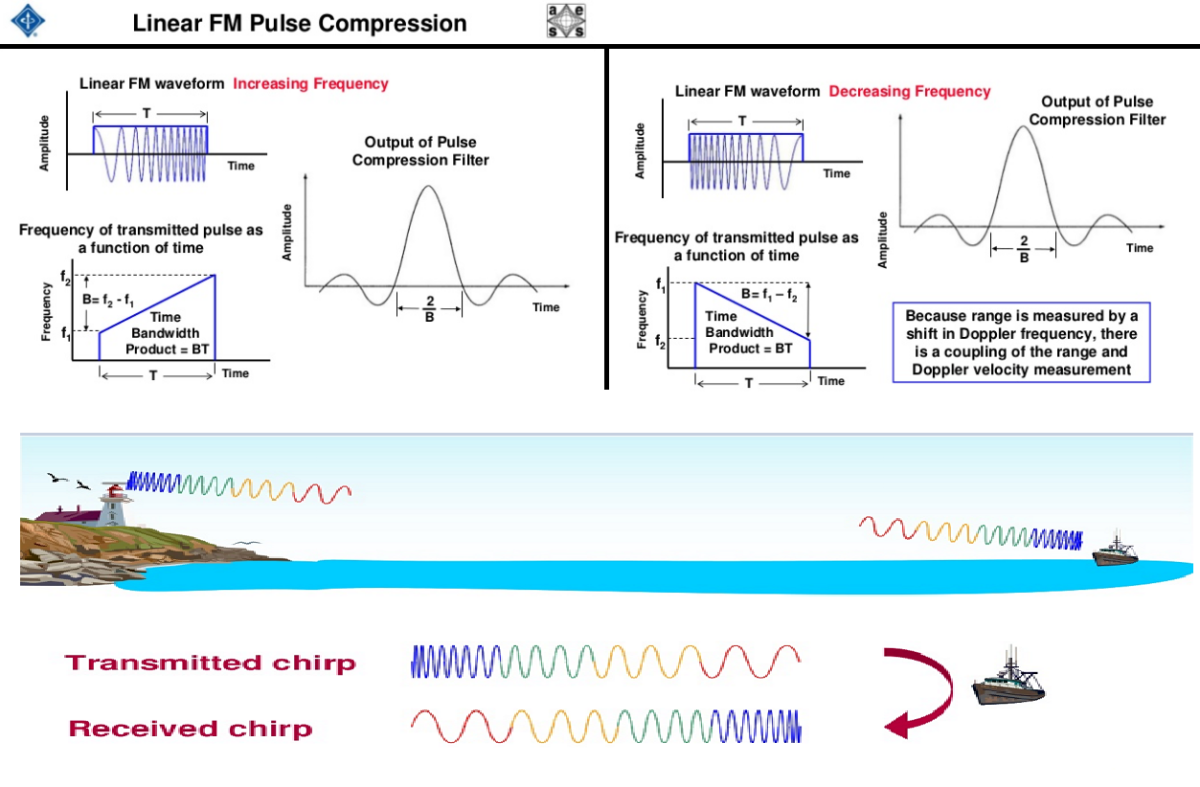
moon_lightThe main reason US fighters aren’t equipped with internal jammers is that it doesn’t fit the USAF doctrine. EW support, escorting and strike are all conducted by different platforms. This way, the USAF gets the best tool for each role.
Other air forces that don’t have the means of the US so they try to build/adapt platforms that can do every role, e.g. self-escorting, self-jamming, recon…
F-15 has an internal jammer, eventhough they have EF-111
F-14 and F-18 both have internal jammer despite the existence of EA-6B and EA-18G
You can’t use the same antenna for reception and emission in an EW suite. When you transmit, you’re deaf. That’s ok in a radar where you schedule RX & TX, in a jammer you need to be able to emit all the time.
So the difference between a passive suite and an active suite is hardly trivial. Once you’ve chosen passive-only, going passive requires re-engineering the whole plane
Most jammers are deaf when they transmit because their receivers will be flooded with signal from the transmitter side/back lobes, because the aperture of a jammer is much smaller than a radar, their beam width will be much wider (many are omi directional) and their side lobes will be contain more percentage of total output.
There are very few jammer with ability to jam without interfering with their own receiver.
[ATTACH=CONFIG]261140[/ATTACH]
Regarding ASQ-239, looking close at the photo provided by BAE, its antenna is not a single parabol antenna or panel antenna, but rather a series of vivaldi antenna put together as a planar array, so one group can operate as transmitter while others as receiver at the same time.
moon_lightIf ASQ-239 has active antennas, the ones pictured in an earlier post is not one of them.
and you know that how?
Yet there have been contemporary US fighters which had internal jammers (F/A-18) or internal IRST/FLIR (F-14). The reason why those fighters you mentioned did not have internal jammers was simple – there was no requirement when they were designed, and once such requirement came up, those planes had too little internal space to effectively install jammers, or it would have required too costly modifications.
F-14 and F-18 are bigger aircraft and don’t have to pay attention to weight as much as F-16 or AV-8B


 Sign In







