looks to me as F-35 were carrying 2 DT under this modelling
F-35 doesn’t have external drop tank
Code One is owned by Lockheed Martin.. That makes is extremely biased by pure definition.. If you ever expect to get impartial information, look elsewhere
If code one is owned by Lockheed Martin then in my opinion it will be the best place to find information about LM products, like MBDA systems will be the best place to find information about MBDA products… etc. It is not easy to find an unbiased source though, just because a website, blog or forum are not owned by corporations doesn’t mean they will not be biased. Case in point : air power australia, national interest and defensive issues are not owned by any corporation but their bias make me want to puke. Some sources like radar tutorial and aircraft 101 are objective but too academic.Unbiased and frequently updates sources are rare
Point taken.. In return, please, restrain from using anything written in Code One.. it is not only biased, but sometimes an outright lie and never provides any sources. Thank you
What wrong with Code one? their articles are quite well written in my opinion
In BVR the F-22 is likely to detect the F-35 first thanks to its larger radar and the fact that the F-35 carries external WVR missiles.
Also, the F-22’s IRST ( assuming a small part of the F-35’s cost overrun had been spent on F-22 upgrades ) would detect the F-35 first thanks to the fact that it is a pure IRST, and also that the F-35 has to use its reheat to maintain supersonic speed. The F-22 probably wouldn’t need to fly very fast to have the first shot with its AIM-120D, so that would reduce its IR sig. Also the F-35 won’t have the 120D before 2020-2022 or something like that, giving the F-22 a substantial advantage until then.
Also the F-35 carries more missile, so can afford double or even triple shots. Its IRST can guide the missiles to remain stealthy. The F-35’s is likely to detect the missile launch so I would guess it may be able to counter attack relatively quickly, but the F-22’s missiles are already under way when it starts shooting, and can achieve a higher speed. The F-22 being stealthy, it would be hard for the F-35’s missiles to get sufficiently close to get a lock, especially if the F-35 has been shot down first about 10 seconds before it has the opportunity to do so.
In WVR, if both have an HMS, it’s probably about even. One ihas the DAS and the other one has more maneuvrability ( assuming the F-22 is not upgraded with the DAS, but the F-22 could well have been upgraded with it, if a part of the F-35 cost overrun had been spent on that ).
F-35 has more IR reduction measures in my opinion, but F-22 can carry more missiles internally

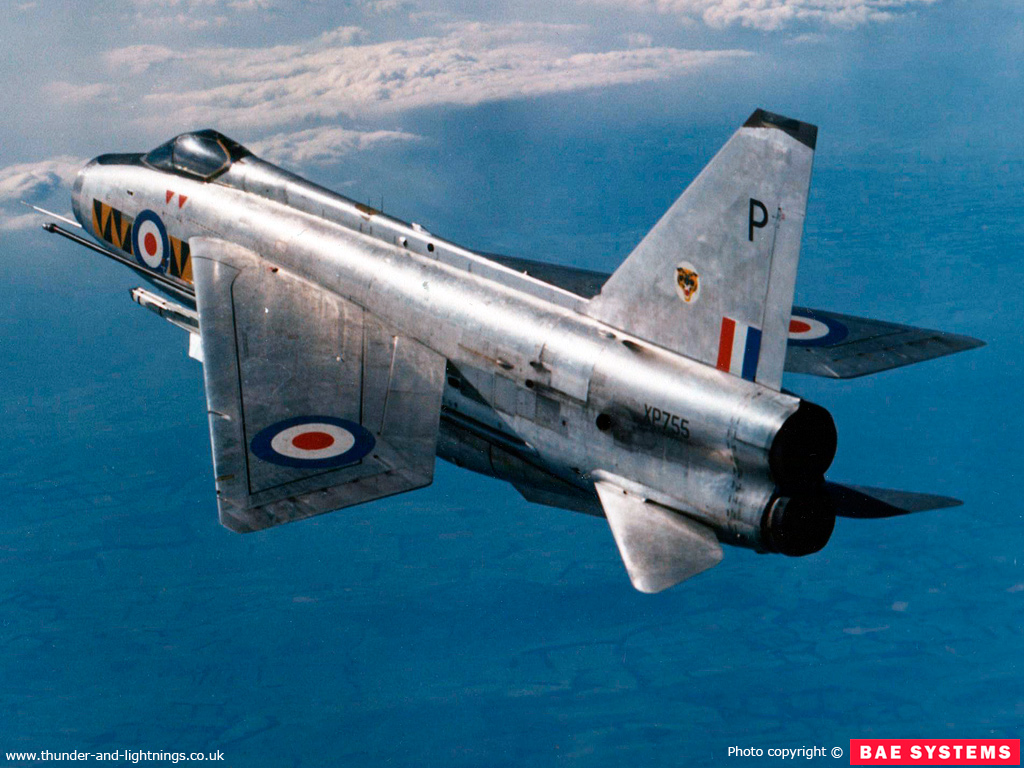
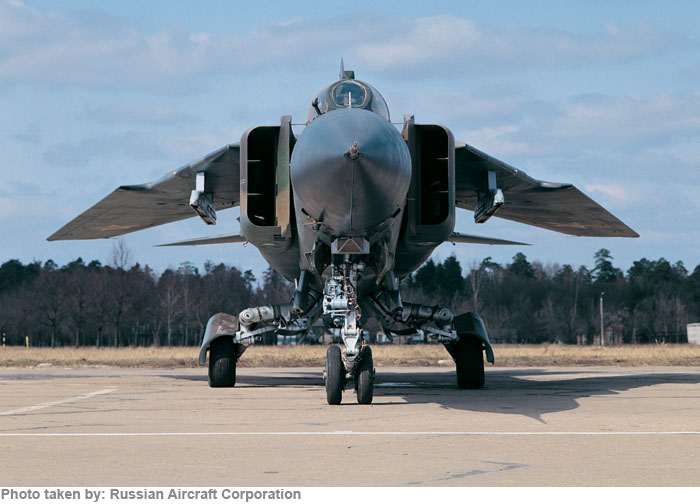
How is the English Electric Lighting and Mig-23 compare to F-35 in term of acceleration ? . They have better acceleration than F-16 according to some source

@Msphere, graryA, lolek, mig

What make F-15 so good in 9K set up but not vertical fight ?
I read the conversation in the last 2 pages. It quite clear that you are a troll JSR. For the sake of everyone stop, it is pathetic and cringe.
The receiver bandwidth basically have to match the bandwidth of the transmitter pulse. So yes.
I still dont understand , bandwidth = upper frequency -> lower frequency , frequency is revolution per second so why would a shorter transmitter pulse have wider frequency ? if i understand it correctly , wouldnt frequency is the same whether the pulse long or short ? Or bandwidth here have different meaning ?
I dont understand their graph , their represent of bandwidth for last one make sense but the 2 first one are very confusing
And what are time side lobes ?

Because bandwidth of a pulse is defined in the receiver. Not the frequency of that pulse.
http://www.radartutorial.eu/09.receivers/rx10.en.html
“The larger the bandwidth of the receiver, the shorter the rise time of the edges of the rectangular pulse.”
thus smaller pulse bandwidth have longer rise time.
Sorry if iam too thick, but i really struggle to understand this .So you saying the bandwidth of the reciever must be wide to be able to process a short pulse ?
My understanding is not that shorter pulses are inherently higher bandwidth, but that higher bandwidth pulses can be further compressed in order to achieve the resolution of a shorter pulse. Basically, you use high bandwidth and compression in order to transmit long pulses without sacrificing range resolution.
No, they haven’t talk about pulse compression yet at that part of the slide
Can someone explain to me why shorter pulses have higher bandwidth ?
The best way to jam radar is with chaff
Chaff are pretty much useless against Doppler radar
Im suprised they dont have drones with the sole purpose of creating chaff clouds in front of a aircraft formation
There are drones for that purpose
There is only 1 bay for flares though , much fewer than others aircraft
The flares bay of F-35 look wide enough, should be able to accommodate atleast 2 F-15 type flares dispenser, so that make 40 flares each side, for a total maximum of 80 flares. I think you underestimate the number of flares that F-35 can carry and overestimate the number of towed decoy that it can carry, 4 towed decoy is quite alot
Iam sure it can carry more than 20 flares, but iam curious where is the place that they will put the DIRCM turret