dark light

moon_light

Forum Replies Created

Viewing 15 posts - 256 through 270 (of 913 total)
  • Author
    Posts
  • in reply to: Antenna choices #2201000
    moon_light
    Participant

    Yes. But you can’t shape parabolic antenna to attain say.. radiation pattern of Taylor with -40 Db sidelobe.

    .

    what is the Taylor ?I never heard of that kind of antenna before

    in reply to: Antenna choices #2201011
    moon_light
    Participant

    And btw do anyone have a formula to estimate gain for different kind of radar ( parabolic vs slotted array vs AESA …etc ) based on their aperture size and frequency ?, i seen it before but cant find it anymore

    in reply to: Antenna choices #2201012
    moon_light
    Participant

    The reason for that..

    Parabolic is simple to manufacture, high performance (high gain, easy to get narrow beamwidth) Plus it just can take any polarization (only depend on feed)

    A downside of parabolic antenna in radar is that it has no control upon radiation pattern, making it bit susceptible to ground clutter for airborne application Thus for requirements that does not need extensive clutter application or where low cost is needed. Parabolic is preferred

    i dont quite understand ,isnt the radiation pattern of parabolic radar depending on the exact shape of the antenna ? and shouldnt ground radar be affected much more from side lobes compared to airborne one ? ( since the ground is close to them the side lobes will hit the ground and reflect back )
    another question,why there is no fighter or ground based radar system use horn antenna ? they seem to have very wide band width and good gain

    in reply to: F-35 News and discussion (2016) take III #2202728
    moon_light
    Participant

    Let not waste forum bandwidth by responding to JSR. If no one talk to him, he will just be bored and go troll somewhere else

    in reply to: Are modern aircraft vulnerable again EMP attack? #2203266
    moon_light
    Participant

    There are EMP resistant microchips, but nothing is EMP proof.

    how are they made? what is the difference with normal microchip?

    in reply to: Are modern aircraft vulnerable again EMP attack? #2203267
    moon_light
    Participant

    I know the F-35 was tested against the effect of high altitudes electromagnetic pulse ( results of high altitudes nuclear explosion)
    https://s31.postimg.org/7hoev5yej/IMG_20160626_034808.jpg
    , so it is certain that it’s equipment is hardern against EMP effects, but how and to what extent, i dont know.
    i can see how they shield FBW system but not sure how can they shield the radar or RWR

    in reply to: F-35 News and discussion (2016) take III #2204417
    moon_light
    Participant

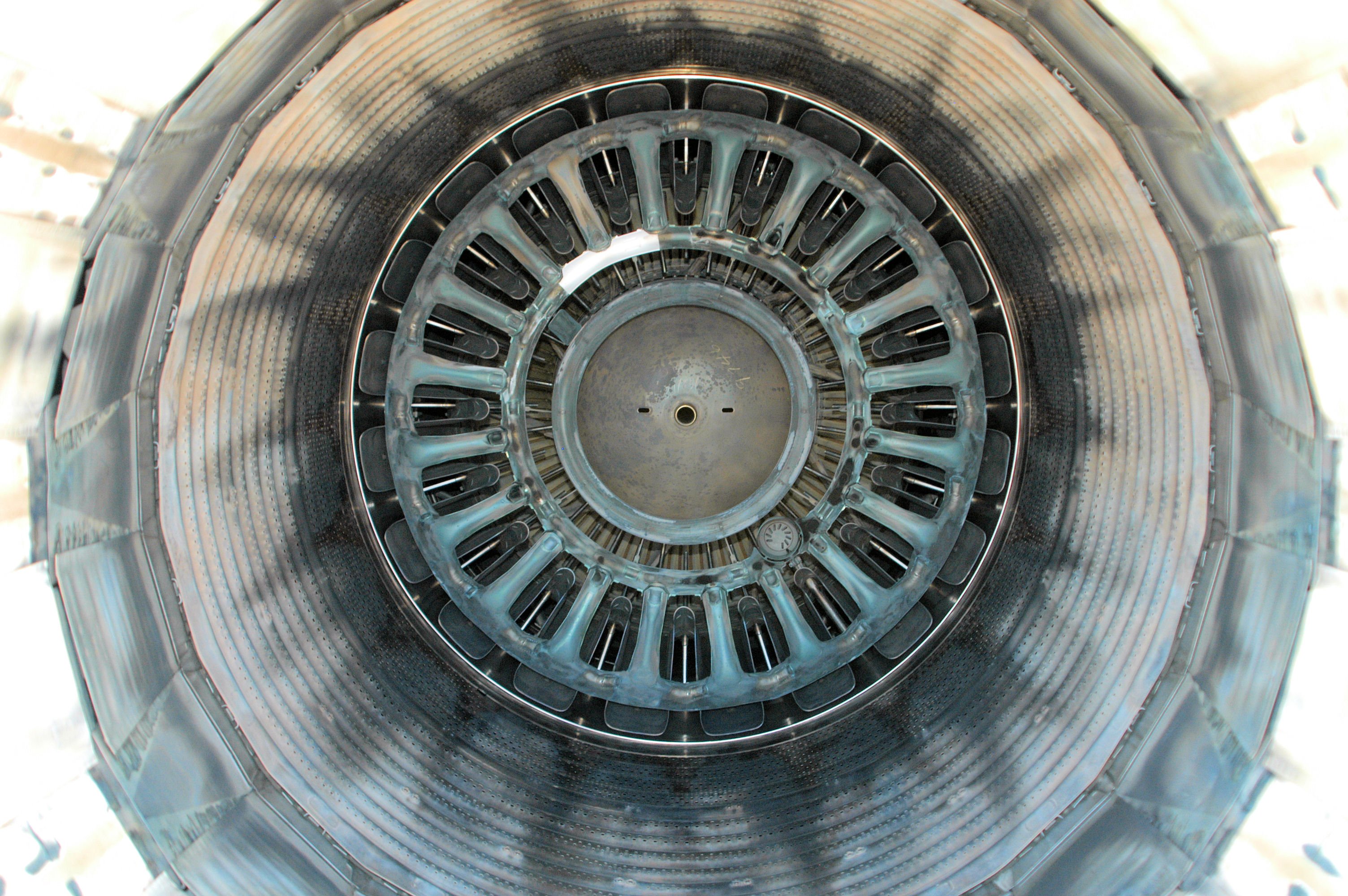
    Previous afterburner designs (other than F119) do not offer a VLO RADAR signature.

    The behind of F119 and F-110 look quite similar
    https://s31.postimg.org/nmn6d5mvf/f22_03_106_zpsf3dc2161.jpg
    http://data3.primeportal.net/hangar/don_busack/f110-ge-100_f-16/images/f110-ge-100_f-16_14_of_17.jpg

    in reply to: F-35 News and discussion (2016) take III #2204531
    moon_light
    Participant

    Which part? About the F135? Or different augmentors?

    i preferred both, why doesn’t F-135 has manifold and spray bar? what is the disadvantage and advantage of it?

    in reply to: F-35 News and discussion (2016) take III #2204542
    moon_light
    Participant

    F100-PW-229 has an 11 stage afterburner. The F135 has three zones (lacking manifolds or spray bars of standard engines), and as you are alluding- the amount of afterburner is adjustable between Mil and Max power.

    this is interesting, can you explaine in more details?

    in reply to: F-35 News and discussion (2016) take III #2204767
    moon_light
    Participant

    yes, and why isnt it supercruise in a technical sense ?

    Because they used afterburner to break the sound barrier

    my best guess he is following the pilot prior, whom stated it only took ‘a teeny weeny bit, so almost SC’,
    and took the next step not counting it at all, making it ‘supercruise but not in a technical sense’

    you don’t know the exact altitude and fuel load of both situation, it could be that in first case the F-35 have amost full fuel and AG load while on the second case it has around 50% fuel and AA load
    we dont even know how thrust much the lowest stage of afterburner add so lift induced drag may play an important role here

    in reply to: F-35 News and discussion (2016) take III #2204793
    moon_light
    Participant

    yes, bingo fuel after the itsy bitsy bit of a/b that doesnt count as a/b when one want to imply it supercruise albeit not in a technical sense,
    without being caught lying through the teeth

    Pilot clearly said it doesn’t use afterburner, and saying that it run out off fuel right after 150 miles would be like saying for some reason the dash is only used when pilot going home and near air base, simply nonsense

    in reply to: F-35 News and discussion (2016) take III #2204794
    moon_light
    Participant

    The big question still stands.. what happens after those 150 miles? Does it run out of fuel or does the speed drop to subsonic? Or something else (thermal load)?

    It come back to subsonic, the 150 miles is a dash part of the total combat radius, just like on F-22, it doesn’t fly supersonic all the time, combat radius only include 100 nm supercruise dash

    in reply to: F-35 News and discussion (2016) take III #2204965
    moon_light
    Participant

    I think one important factor that everyone over look is the load out of the F-35 in question, an F-35 fully loaded with 100% fuel and 2 JDAM will have a bit more drag than an F-35 with 50% fuel and 6 aam ( yes iam aware that they carried load internally) , that explains both testimony and also fit with the model created by the aerodynamic engineers

    This is the most reasonable explaination ,whether the F-35 can supercruise or not probably pretty much depending on lift induced drag , so when it is fully loaded with JDAM and fuel it probably cant pass the Mach barrier , but when it carry an AA load and 50% fuel , it can pass the mach barrier on Mil because induced drag become much smaller

    By contrast , using vectors component , a diving angle of 2-3 degrees would probably add only 1000-1500 N , so diving theory hold no water


    in reply to: F-35 News and discussion (2016) take III #2205397
    moon_light
    Participant

    Agreed.
    The F-35 zeliots seems to have a hard time understand how and when wave drag impact on a jet (any jet).
    So seeing how the F-35 cruise at mach 0.8-0.9 which is in Transonic regime.

    If we was to take the words of pilots and aerodynamic engineers then F-35 can cruise at mach 1.2 , it just need the afterburner to go throught the transonic area first

    It will reduce range considerable.

    any jet will have significantly less range when fly supersonic , even the one like f-22 or pak-fa

    in reply to: F-35 News and discussion (2016) take III #2205401
    moon_light
    Participant

    regarding F-22 and F-35, perhaps, but surly all other jets are not estimates?

    yes ,performance of others jet are from flight manual

Viewing 15 posts - 256 through 270 (of 913 total)