moon_light
Wikipedia says otherwise:
http://en.wikipedia.org/wiki/Boeing_YAL-1
It seems that its IR sensors would need to be cued to a target, perhaps by a nearby AWACS. Then there is the question of whether aircraft are stronger or weaker than ballistic missiles. I suppose the laser hitting an aircraft would be bad for the pilot’s eyesight. 😮
no IR sensors on YAL-1 can detect target by themself ( there are 6 IR sensor )
i think ballistic missiles are designed to fly at very high speed ( mach 10-15 ) so their airframe much be harder to penetrate by the laser , and even if the aircraft airframe is stronger than missiles airframe i think the laser on YAL-1 can still burn them at closer range ( YAL-1 can intercept missiles at over 500 km , so it shouldnt be a big problem for it to intercept fighter at 200 km :p )
moon_lightanyway in my opinion nothing have better look than Su-37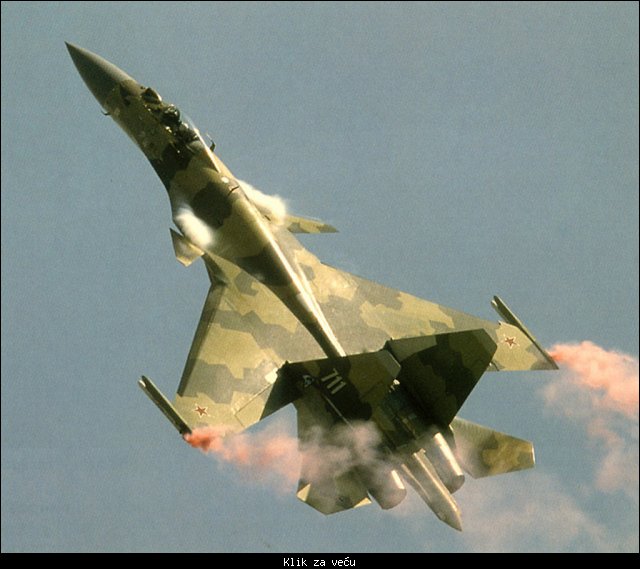


moon_lighti think F-35 have better look than T-50 and F-22 if you look at it from higher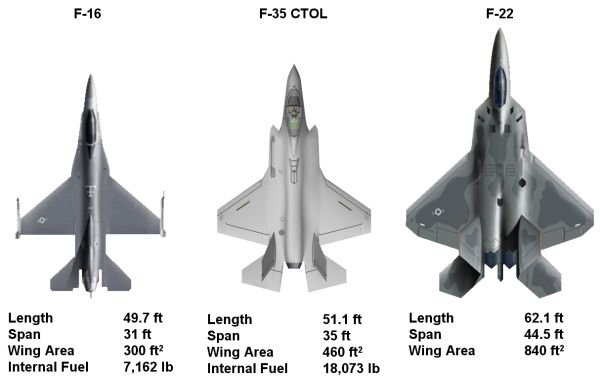

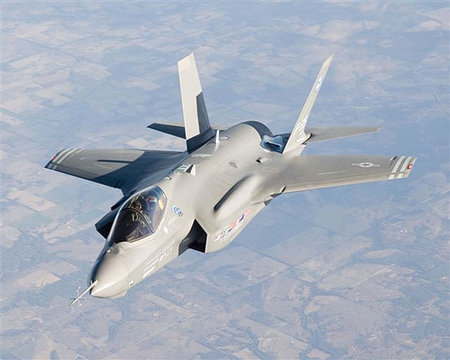

in some angle the T-50 look quite fat and ugly

moon_lightOne document that may be of interest:
http://www.dtic.mil/dtic/tr/fulltext/u2/a456960.pdf
Page 53, below table 2:
With a highly sensitive ES receiver, a 1W LPI can be detected at 250 km! To avoid detection one would have to go to lower transmit powers. No doubt modern AESAs like the AN/APG-81 have much higher sensitivities than the one presented in table 2 on that same page; on the other hand one should also keep in mind the dependence on RCS for detection. 4.5 gen a/c like Rafale, Typhoon, and Gripen NG are assumed to have RCS around 0.1m2. I wonder how the F-35 can detect such a relatively small a/c at a large distance without using at least some power?
Does anybody have ballpark figures of the power output of modern AESAs in LPI mode?
Anyway, I am wondering that if e.g. the F-35 is to face another VLO plane then it would have a problem, since, in order to detect a VLO at a distance it would most likely have to increase the power, even if sensitivity of the radar is excellent… this will make it easy for the other VLO plane to detect the emissions. And if the VLO planes opposing the F-35 have the capacity to triangulation then the F-35 may find itself in trouble:
http://gb.zinio.com/reader.jsp?issue=416108193
page 43, first paragraphPerhaps I am wrong, but even if the other plane (e.g. PAK FA) has, say, one order of magniture higher RCS than the F-35, it may still have sufficiently low RCS to cause a real headache for the F-35s radar.
In such a scenario the F-35 might be better off turning off the radar? In which case the scenario Saab describes below becomes true…
1-this have been discussed many time in the old thread ,very sensitive RWR can see LPI but they also see a lot of background noise ( not to mention jamming from MALD-J or EA-18 ) that why it really hard to detect AESA radar ( russian , USA , chinese will not going to spend money on stealth fighter , if AESA radar is so easy to detect like that )
2- rafale and EF-2000 will not going to have rcs =0.1 m2 when they carry missiles , pylon , pod ( not to mention fuel tank )
3- T-50 and F-35 probably detect other by IRST before they can see the other on radar
moon_lightthis is the real sexy 🙂

moon_lightThe brochure says “expanded BVR engagement zones.”
I think it is safe to say well beyond 20-30km.
i dont know :confused: , CUDA seem extremelly small actually , i dont think it will have much longer range than aim-9x
moon_lightAt a dog-fight range, you don’t need radar-guided missiles; you need IR missiles.
why ??
moon_lightOne thing LM is conveniently staying silent about is what’s the real range of CUDA. I’ve seen many people pretty quick to be impressed by the increased load, but what’s its real characteristics.
“A medium BVR missile” seems rather vague tbh, and the fact that there are no comparaison on range vs other missiles like the AMRAM when they stress the ability to carry much more than legacy missiles worries me… a lot!
their is not enough information about the range for CUDA , but according to LM they will be BVR ( may be 20-30 km ) , an F-35 may carry 3 meteor for BVR fight , and if they all miss and the enemy try to get close to dogfight it still have 4 CUDA to play , so the range may be not so important , CUDA is for situation when the enemy try to dogfight
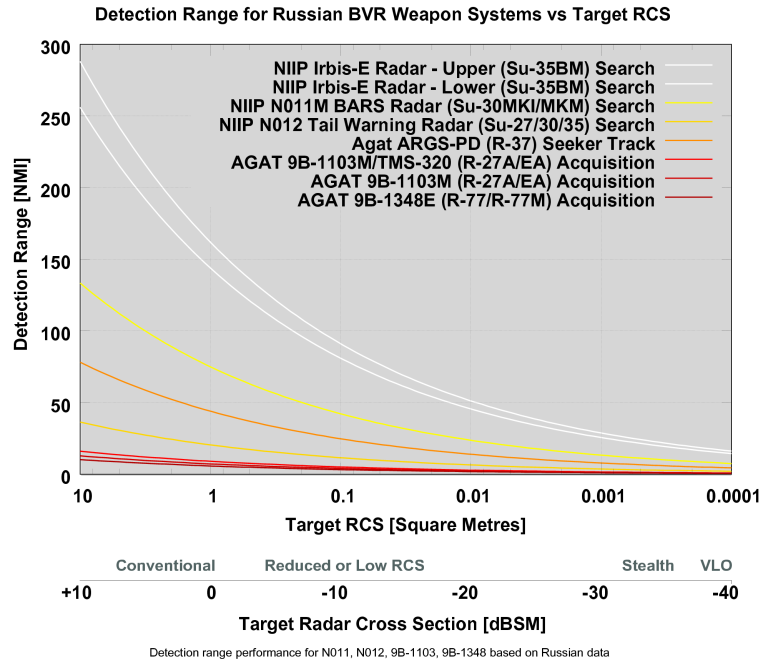
moon_lightBased on official numbers. “Captor C can track a fighter sized target at 185 km”, the N011M can do the same at 75 to ~100nm. Some sources claim 160-185km. The Russian numbers are pretty official.
according to the russian source , Irbis-e can detect target with RCS = 0.01 m2 from 90 km so if it can manage to go to the side or the rear , it will likely to be able to see F-35 , F-22 from far 90-100 km , but if we are talking about head on situation then it can only see F-35 from 55-50 km , and F-22 from 28 km assuming there is no jamming and narrow search pattern , even in the kind of situation F-22 , F-35 can still see the SU-35 from much farther distance , have more time to accelerate to their top speed => increase PK of their missiles
moon_lightSo you are not disputing my assumptions, only my conclusions?
In that case please explain where I’m wrong instead of giving me a general “you are wrong” answer.
1 The radar performance (distance) for the Captor C is at N011M-level or 30% higher.
2 In order to not need to go closer than 20 nm in BVR they need to engage the target (firing missiles) at a slightly longer distance.
3 To engage in BVR you need to be able to track the target, if you dont have IRST/FLIR then most likely by radar.
4 The minimum frontal RCS is different from the general frontal aspect RCS. In the case of the F22 the general frontal RCS is closer to 0,01 than 0,001 aqm. If this is the other way around then the Luftwaffe Eurofighters didnt use their radar but got the lock on by some other means.
5 Assuming the other statements are true we get the range figures I have submitted when the enemy is using Irbis E.My numbers range from X to Y assuming the shortest possible detection range enterpretation from the quotes and is likely a couple of km longer, unless of course they are talking miles in general and in that case the end result is pretty close to the stated numbers.
Mkay?
the line in red => very big assumption without solid reason
1- EF-2000 could have use IRST
2- Nato use AWACs very often , so may be the reason why they can see the F-22 from that far is because of the AWACs
3- the article only say that EF-2000 can’t go closer than 20 miles notthing say that they can detect or track F-22 at that distance
4 – even if the Article mean Ef-2000 can see F-22 from 50 km in some situation , that doesnot mean these are head on situation , may be from the side ( EF-2000 fly very wide formation ) or from the rear
5 -in practice F-22 often use luneberg lens to hide it’s real RCS , in some situation they even have wing tank so their RCS are much bigger than normal
to sum up : there is no evident to say that the frontal RCS of F-22 is 0.01 m2 rather than 0.0001 m2 like what have been published by US government , and as the frontal RCS of F-22 is 0.0001 m2 even Irbis-e can only see them at 28 km ( for F-35 the number is 55 km )
moon_lightThat is assuming that the F35 or F22 will have their most optimal RCS footprint. The Germans showed it to be wrong.
At 100 nm the Captor C can track a “fighter sized target” that usually is 1-5 sqm. This puts Captor C at 100-130% of the range performance in the N011M BARS in the chart. Irbis E has ~200% of the range performance of the N011M.
If a radar in the N011M-class (or with 30% longer range) can be used to engage a F22 at 20nm then the ballpark for the Irbis E will be 55-100% further away.The general frontal RCS-figure for the F22 will be closer to 0,01 sqm than the marketed 0,0001 sqm.
Do note that the basic assumptions are the following: 1: the luftwaffe Eurofighters used their radar since I only know of one Luftwaffe individual with Pirate (twin seat 30-42) and 2: I purposely chose the shortest range given in the quotes. Real tracking range is most likely a bit longer.
according to US government the f-22 frontal rcs is 0.0001 m2 and the f-35 frontal rcs is 0.001 m2 there is no reason to make up different value for frontal RCS without clear information
in the case of EF-2000 and F-22 i think it may use irst or guide from AWACs or using very wide formation to be able to see f-22 from different angle
Btw the range that EF-2000 see f-22 is detection range => the track range to launch missiles will likely shorter
P/s : you may also want to look at some graph here
http://www.f-16.net/f-16_forum_viewtopic-t-16084-postdays-0-postorder-asc.html
even in your graph , the detection range of Irbis-e again target with RCS = 0.001 m2 is only 30 nm =55 km and that is only the detection range
moon_light
360 degree engagement capability, expanded BVR capability, expanded WVR capability, multi-mode seeker…
Yes please, I will take 12. (and throw in 12 more for my buddy) :diablo:
:dev2:
😮 this missile is so cool ,it really look like a miniature version of NGM
the T3 design . by contrast , look a lot like Meteor :
T3

meteor :
it would be really good if the meteor can do air to ground as well
moon_lightHaha, true story. My interpretation is pretty similar. But this is very relevant for the F35.
This should mean that a F35 has to engage threats like the currently fielded Su35S at distances over 70km to be sure about having the first shoot capability. (I assume that the F35 only is slightly less stealthy than the F22)
Is the Aim120 good enough (considering NEZ and kinematic disadvantage)? And more importantly, is this good enough of a range to counter the coming AESA-upgrades on the Flanker series?
I just try to count on the lower side so the stealth advantage isnt neglected.
irbis-e can detect target with rcs= 0.001 m2 at 50 km (although it a narrow beam search ) , su-30’s iris is not as good as the one on EF-2000 , it can only see fighter 35 km head on and have LFR range of 20 km http://igorrgroup.blogspot.co.uk/2009/10/ols-35-irst-option-for-su-30-family.html ,so i think F-35 still have good first shot advantages , especially if it use Meteor instead of Aim-120D
moon_light1.PIRATE can detect Raptor from 50km (head on, non AB), automatically go to STT mode, and visual ID(STTI) from around 40km ( AFM september 2008, page 62) – so typhoon probably can shoot from 40km range.
http://typhoon.starstreak.net/Eurofighter/sensors.html
2.Maj.Gumbrecht told that he can’t go closer than 20miles – so shoot from over 30 miles (~50km) was low Pk ( see AMRAAM shoot distance from Allied Force – around 25-30km – so 20 miles [32km] is rather realistic against top 4.5 gen fighter [NEZ of AMRAAM]).
3.Problem should be AMRAAM Pk against VLO jet. Probably typhoons pilots need to avoid AMRAAMs and go closer to around 15-20km to fire ASRAAM/IRIS-T or use AMRAAM just like fox1 (risky job).Anyway kill ratio was still on Raptor favor, hey but F-15C can’t engage VLO before going to WVR… ( no IRST).
EF-2000 dont even have LFR for it’s IRST , i dont really think it can have fire solution by it’s IRST
moon_lightSmaller ir signature? When LM chief was in Norway, he had to admit that the f-35 had considerable hotter signature than most 4 gen planes. And that is not even an priority thing to fix on the must/should be fixed.
can you give some source for this ? , sound quite not real , no way the f-35 can have hotter signature than 2 engine aircraft like tornado , f-14 , mig-31 , f-18 , su-27 , su-30 , su-35 , f-15 , mig-29 , mig-35 …etc


 Sign In