moon_light
I have to disagree with following statement:
The MiG-29’s seven G limit is due to loads on the vertical stabilizers. MAPO has advertised that the Fulcrum could be stressed to 12 Gs and still not hurt the airframe. This statement is probably wishful and boastful. The German Luftwaffe, which flew its MiG-29s probably more aggressively than any other operator, experienced cracks in the structure at the base of the vertical tails. The F-16 can actually exceed nine Gs without overstressing the airframe. Depending on configuration, momentary overshoots to as much as 10.3 Gs will not cause any concern with aircraft maintainers.Both MiG-29 and F-16 experienced similar cracks at the base of the vertical fin(s). They are easily recognizeable by applied strenghtening patchwork.
Both MiG and F-16 airframes are considered a whole league behind Mirages in terms of durability – I think our Greek friends could lose a word or two on this issue..
that what pilot that fly both aircraft said , i have no idea about durability of both airframe
moon_lightThanks. I only have to wonder about sustained turn rate at supersonic speeds. Who needs that? I cannot really imagine why would anyone fly at say M1.5 and have to turn tightly at the same time. :confused: That leads to quick energy bleed which kinda defeats the whole purpose of high speed dashing, doesn’t it?
F-16 has been known for excellent acceleration and climbing characteristics but from my memory the Fulcrum was quite comparable in both aspects.
no not at mach 1.5 but dogfight often be at speed like mach 0.8->1.2 , mig-29 perform quite like f-18 , good at low speed , good nose pointing but high energy bleed make it not a good energy fighter ( turn burn vs boom-zoom )
moon_lightyou may also interested in this
I’ve got over 500 hours in the MiG-29 and 2000 hours in the F-16 (I also flew the F-15A/C and the F-5E). The following is an excerpt from a research papaer I wrote while working on a Master’s Degree in aerospace engineering. Bottom line: F16 (and F-15) good, MiG-29 bad.
MiG-29 Fulcrum Versus F-16 Viper
The baseline MiG-29 for this comparison will be the MiG-29A (except for 200 kg more fuel and an internal jammer, the MiG-29C was not an improvement over the MiG-29A), as this was the most widely deployed version of the aircraft. The baseline F-16 will be the F-16C Block 40. Although there is a more advanced and powerful version of the F-16C, the Block 40 was produced and fielded during the height of Fulcrum production.
A combat loaded MiG-29A tips the scales at approximately 38, 500 pounds. This figure includes a full load of internal fuel, two AA-10A Alamo missiles, four AA-11 Archer missiles, 150 rounds of 30mm ammunition and a full centerline 1,500 liter external fuel tank. With 18,600 pounds of thrust per engine, this gives the Fulcrum a takeoff thrust-to-weight ratio of 0.97:1. A similarly loaded air-to-air configured F-16 Block 40 would carry four AIM-120 AMRAAM active radar-guided missiles, two AIM-9M IR-guided missiles, 510 rounds of 20mm ammunition and a 300 gallon external centerline fuel tank. In this configuration, the F-16 weighs 31,640 pounds. With 29,000 pounds of thrust, the F-16 has a takeoff thrust-to-weight ratio of 0.92:1. The reader should be cautioned that these thrust-to-weight ratios are based on uninstalled thrust. Once an engine is installed in the aircraft, it produces less thrust than it does on a test stand due to the air intake allowing in less air than the engine has available on the test stand.
The actual installed thrust-to-weight ratios vary based on the source. On average, they are in the 1:1 regime or better for both aircraft. The centerline fuel tanks can be jettisoned and probably would be if the situation dictated with an associated decrease in drag and weight and an increase in performance.Speed
Both aircraft display good performance throughout their flight regimes in the comparison configuration. The MiG-29 enjoys a speed advantage at high altitude with a flight manual limit of Mach 2.3. The F-16’s high altitude limit is
Mach 2.05 but this is more of a limit of inlet design. The MiG-29 has variable geometry inlets to control the shock wave that forms in the inlet and prevent supersonic flow from reaching the engine. The F-16 employs a simple fixed-geometry inlet with a sharp upper lip that extends out beyond the lower portion of the inlet. A shock wave forms on this lip and prevents the flow in the intake from going supersonic. The objective is to keep the air going into the engine subsonic unlike a certain ‘subject matter expert’ on this website who thinks that the air should be accelerated to even higher speeds than the aircraft is traveling. Supersonic air in the compressor section? That’s bad.Both aircraft have the same indicated airspeed limit at lower altitudes of
810 knots. This would require the centerline tanks to be jettisoned. The placard limits for the tanks are 600 knots or Mach 1.6 (Mach 1.5 for the MiG-29) whichever less is. It was the researcher’s experience that the MiG-29 would probably not reach this limit unless a dive was initiated. The F-16 Block 40 will easily reach 800 knots on the deck. In fact, power must be reduced to avoid exceeding placard limits. The limit is not thrust, as the F-16 has been test flown on the plus side of 900 knots. The limit for the F-16 is the canopy. Heating due to air friction at such speeds will cause the polycarbonate canopy to get soft and ultimately fail.Turning Capability
The MiG-29 and F-16 are both considered 9 G aircraft. Until the centerline tank is empty, the Fulcrum is limited to four Gs and the Viper to seven Gs. The
MiG-29 is also limited to seven Gs above Mach 0.85 while the F-16, once the centerline tank is empty (or jettisoned) can go to nine Gs regardless of airspeed or Mach number. The MiG-29’s seven G limit is due to loads on the vertical stabilizers. MAPO has advertised that the Fulcrum could be stressed to 12 Gs and still not hurt the airframe. This statement is probably wishful and boastful. The German Luftwaffe, which flew its MiG-29s probably more aggressively than any other operator, experienced cracks in the structure at the base of the vertical tails. The F-16 can actually exceed nine Gs without overstressing the airframe. Depending on configuration, momentary overshoots to as much as 10.3 Gs will not cause any concern with aircraft maintainers.
HandlingOf the four fighters I have flown, the MiG-29 has by far the worst handling qualities. The hydro-mechanical flight control system uses an artificial feel system of springs and pulleys to simulate control force changes with varying airspeeds and altitudes. There is a stability augmentation system that makes the aircraft easier to fly but also makes the aircraft more sluggish to flight control inputs. It is my opinion that the jet is more responsive with the augmentation system disengaged. Unfortunately, this was allowed for demonstration purposes only as this also disengages the angle-of-attack (AoA) limiter. Stick forces are relatively light but the stick requires a lot of movement to get the desired response. This only adds to sluggish feeling of the aircraft. The entire time you are flying, the stick will move randomly about one-half inch on its own with a corresponding movement of the flight control surface. Flying the Fulcrum requires constant attention. If the pilot takes his hand off the throttles, the throttles probably won’t stay in the position in which they were left. They’ll probably slide back into the ‘idle’ position.
The Fulcrum is relatively easy to fly during most phases of flight such as takeoff, climb, cruise and landing. However, due to flight control limitations, the pilot must work hard to get the jet to respond the way he wants. This is especially evident in aggressive maneuvering, flying formation or during attempts to employ the gun. Aerial gunnery requires very precise handling in order to be successful. The MiG-29’s handling qualities in no way limit the ability of the pilot to perform his mission, but they do dramatically increase his workload. The F-16’s quadruple-redundant digital flight control system, on the other hand, is extremely responsive, precise and smooth throughout the flight regime.
There is no auto-trim system in the MiG-29 as in the F-16. Trimming the aircraft is practically an unattainable state of grace in the Fulcrum. The trim of the aircraft is very sensitive to changes in airspeed and power and requires constant attention. Changes to aircraft configuration such as raising and lowering the landing gear and flaps cause significant changes in pitch trim that the pilot must be prepared for. As a result, the MiG-29 requires constant attention to fly. The F-16 auto-trims to one G or for whatever G the pilot has manually trimmed the aircraft for.
The MiG-29 flight control system also has an AoA limiter that limits the allowable AoA to 26°. As the aircraft reaches the limit, pistons at the base of the stick push the stick forward and reduce the AoA about 5°. The pilot has to fight the flight controls to hold the jet at 26°. The limiter can be overridden, however, with about 17 kg more back pressure on the stick. While not entirely unsafe and at times tactically useful, care must be taken not to attempt to roll the aircraft with ailerons when above 26° AoA. In this case it is best to control roll with the rudders due to adverse yaw caused by the ailerons at high AoA. The F-16 is electronically limited to 26° AoA. While the pilot cannot manually override this limit it is possible to overshoot under certain conditions and risk departure from controlled flight. This is a disadvantage to the F-16 but is a safety margin due its lack of longitudinal stability. Both aircraft have a lift limit of approximately
35° AoA.Combat Scenario
The ultimate comparison of two fighter aircraft comes down to a combat duel between them. After the Berlin Wall came down the reunified Germany inherited 24 MiG-29s from the Nationale Volksarmee of East Germany. The lessons of capitalism were not lost on MAPO-MiG (the Fulcrum’s manufacturer) who saw this as an opportunity to compare the Fulcrum directly with western types during NATO training exercises. MAPO was quick to boast how the MiG-29 had bested F-15s and F-16s in mock aerial combat. They claimed a combination of the MiG’s superior sensors, weapons and low radar cross section allowed the Fulcrum to beat western aircraft. However, much of the early exploitation was done more to ascertain the MiG-29’s capabilities versus attempting to determine what the outcome of actual combat would be. The western press was also quick to pick up on the theme. In 1991, Benjamin Lambeth cited an article in Jane’s Defence Weekly which stated that the German MiG-29s had beaten F-16s with simulated BVR range shots of more than 60 km. How was this possible when the MiG-29 cannot launch an AA-10A Alamo from outside about 25 km? Was this a case of the fish getting bigger with every telling of the story? The actual BVR capability of the MiG-29 was my biggest disappointment. Was it further exposure to the German Fulcrums in realistic training that showed the jet for what it truly is? It seems that MAPO’s free advertising backfired in the end as further orders were limited to the 18 airplanes sold to Malaysia.
If F-16Cs and MiG-29s face off in aerial combat, both would detect each other on the radar at comparable range. Armed with the AIM-120 AMRAAM, the F-16s would have the first shot opportunity at more than twice the range as the Fulcrums. A single F-16 would be able to discriminately target individual and multiple Fulcrums. The MiG-29’s radar will not allow this. If there is more than one F-16 in a formation, a Fulcrum pilot would not know exactly which F-16 the radar had locked and he can engage only one F-16 at a time. A Viper pilot can launch AMRAAMS against multiple MiG-29s on the first pass and support his missiles via data link until the missiles go active. He can break the radar lock and leave or continue to the visual arena and employ short range infrared guided missiles or the gun. The Fulcrum pilot must wait until about 13 nautical miles (24 kilometers) before he can shoot his BVR missile. The Alamo is a semi-active missile that must be supported by the launching aircraft until impact. This brings the Fulcrum pilot closer to the AMRAAM. In fact, just as the the Fulcrum pilot gets in range to fire an Alamo, the AMRAAM is seconds away from impacting his aircraft. The advantage goes to the F-16.
What if both pilots are committed to engage visually? The F-16 should have the initial advantage as he knows the Fulcrum’s exact altitude and has the target designator box in the head-up display (HUD) to aid in visual acquisition. The Fulcrum’s engines smoke heavily and are a good aid to gaining sight of the adversary. Another advantage is the F-16’s large bubble canopy with 360° field-of-view. The Fulcrum pilot’s HUD doesn’t help much in gaining sight of the F-16. The F-16 is small and has a smokeless engine. The MiG-29 pilot sets low in his cockpit and visibility between the 4 o’clock and 7 o’clock positions is virtually nonexistent.
Charts that compare actual maneuvering performance of the two aircraft are classified. It was the researcher’s experience that the aircraft have comparable initial turning performance. However, the MiG-29 suffers from a higher energy bleed rate than the F-16. This is due to high induced drag on the airframe during high-G maneuvering. F-16 pilots that have flown against the Fulcrum have made similar observations that the F-16 can sustain a high-G turn longer. This results in a turn rate advantage that translates into a positional advantage for the F-16.
The F-16 is also much easier to fly and is more responsive at slow speed.
The Fulcrum’s maximum roll rate is 160° per second. At slow speed this decreases to around 20° per second. Coupled with the large amount of stick movement required, the Fulcrum is extremely sluggish at slow speed. Maneuvering to defeat a close-range gun shot is extremely difficult if the airplane won’t move. For comparison, the F-16’s slow speed roll rate is a little more than 80° per second.A lot has been written and theorized about the so-called “Cobra Maneuver” that impresses people at airshows. MAPO claimed that no western fighter dare do this same maneuver in public. They also claimed that the Cobra could be used to break the radar lock of an enemy fighter (due to the slow airspeed, there is no Doppler signal for the radar to track) or point the nose of the aircraft to employ weapons. Western fighter pilots were content to let the Russians brag and hope for the opportunity to see a MiG-29 give up all its airspeed. The fact that this maneuver is prohibited in the flight manual only validates the fact that this maneuver was a stunt. Lambeth was the first American to get a flight in the Fulcrum. Even his pilot conceded that the Cobra required a specially prepared aircraft and was prohibited in operational MiG-29 units
Another maneuver performed by the Fulcrum during its introduction to the West is the so-called “Tail Slide”. The nose of the jet is brought to 90° pitch and the airspeed is allowed to decay. Eventually, the Fulcrum begins to “slide” back, tail-first, until the nose drops and the jet begins to fly normally again. The Soviets boasted this maneuver demonstrated how robust the engines were as this would cause western engines to flameout. The first maneuver demonstrated to me during my F-15 training was the Tail Slide. The engines did not flameout.
The MiG-29 is not without strong points. The pilot can override the angle of attack limiter. This is especially useful in vertical maneuvering or in last ditch attempts to bring weapons to bear or defeat enemy shots. The HMS and AA-11 Archer make the Fulcrum a deadly foe in the visual arena. The AA-11 is far superior to the American AIM-9M. By merely turning his head, the MiG pilot can bring an Archer to bear. The one limitation, however, is that the Fulcrum pilot has no cue as to where the Archer seeker head is actually looking. This makes it impossible to determine if the missile is tracking the target, a flare, or some other hot spot in the background. (Note: the AIM-9X which is already fielded on the F-15C, and to be fielded on the F-16 in 2007, is far superior to the AA-11)
Fulcrum pilots have enjoyed their most success with the HMS/Archer combination in one versus one training missions. In this sterile environment, where both aircraft start within visual range of each other, the MiG-29 has a great advantage. Not because it is more maneuverable than the F-16. That is most certainly not the case regardless of the claims of the Fulcrum’s manufacturer and numerous other misinformed propaganda sources. The weapon/sensor integration with the HMS and Archer makes close-in missile employment extremely easy for the Fulcrum’s pilot. My only one versus one fight against a MiG-29 (in something other than another MiG-29) was flown in an F-16 Block 52. This was done against a German MiG-29 at Nellis AFB, Nevada. The F-16 outturned and out-powered the Fulcrum in every situation.
The Fulcrum’s gun system is fairly accurate as long as the target does not attempt to defeat the shot. If the target maneuvers, the gunsight requires large corrections to get back to solution. Coupled with the jet’s imprecise handling, this makes close-in maneuvering difficult. This is very important when using the gun. Although the Fulcrum has a 30 mm cannon, the muzzle velocity is no more than the 20 mm rounds coming out of the F-16’s gun. The MiG’s effective gun range is actually less than that of the F-16 as the 20 mm rounds are more aerodynamic and maintain their velocity longer.
If the fight lasts very long, the MiG pilot is at a decided disadvantage and must either kill his foe or find a timely opportunity to leave the fight without placing himself on the defensive. The Fulcrum A holds only 300 pounds more internal fuel than the F-16 and its two engines go through it quickly. There are no fuel flow gauges in the cockpit. Using the clock and the fuel gauge, in full afterburner the MiG-29 uses fuel 3.5 to 4 times faster than the Viper. My shortest MiG-29 sortie was 16 minutes from brake release to touchdown.
It should not be forgotten that fights between fighters do not occur in a vacuum. One-versus-one comparisons are one thing, but start to include other fighters into the fray and situational awareness (SA) plays an even bigger role. The lack of SA-building tools for MiG-29 pilots will become an even bigger factor if they have more aircraft to keep track of. Poor radar and HUD displays, poor cockpit ergonomics and poor handling qualities added to the Fulcrum pilot’s workload and degraded his overall SA. It was my experience during one-versus-one scenarios emphasizing dogfighting skills, the results came down to pilot skill.
In multi-ship scenarios, such as a typical four versus four training mission, the advantage clearly went to the side with the highest SA. Against F-15s and F-16s in multi-ship fights, the MiG-29s were always outclassed. It was nearly impossible to use the great potential of the HMS/Archer combination when all the Eagles and Vipers couldn’t be accounted for and the Fulcrums were on the defensive. The MiG-29’s design was a result of the Soviet view on tactical aviation and the level of technology available to their aircraft industry. The pilot was not meant to have a lot of SA. The center of fighter execution was the ground controller. The pilot’s job was to do as instructed and not to make independent decisions. Even the data link system in the MiG-29 was not meant to enhance the pilot’s SA. He was merely linked steering, altitude and heading cues to follow from the controller. If the MiG-29 pilot is cut off from his controller, his autonomous capabilities are extremely limited. Western fighter pilots are given the tools they need to make independent tactical decisions. The mission commander is a pilot on the scene. All other assets are there to assist and not to direct. If the F-16 pilot loses contact with support assets such as the E-3 Airborne Warning and Control System (AWACS) aircraft, he has all the tools to complete the mission autonomously.
The combat record of the MiG-29 speaks for itself. American F-15s and F-
16s (a Dutch F-16 shot down a MiG-29 during Operation Allied Force) have downed MiG-29s every time there has been encounters between the types. The only known MiG-29 “victories” occurred during Operation Desert Storm when an Iraqi MiG-29 shot down his own wingman on the first night of the war and a Cuban MiG-29 brought down 2 “mighty” Cessnas. Are there more victories for the Fulcrum? Not against F-15s or F-16s.Designed and built to counter the fourth generation American fighters, The MiG-29 Fulcrum was a concept that was technologically and doctrinally hindered from the beginning. Feared in the west prior to the demise of the Soviet Union, it was merely an incremental improvement to the earlier Soviet fighters it replaced. Its lack of a market when put in direct competition to western designs should attest to its shortcomings. The German pilots who flew the aircraft said that the MiG-29 looked good at an airshow but they wouldn’t have wanted to take one to combat. Advanced versions such as the SMT and MiG-33? Certainly better but has anyone bought one?
Lt. Col. Johann Köck, commander of the German MiG-29 squadron from
September 1995 to September 1997, was outspoken in his evaluation of the Fulcrum. “It has no range, its navigation system is unreliable and the radar breaks often and does not lend it self to autonomous operations”, he said. He added that the best mission for NATO MiG-29s would be as a dedicated adversary aircraft for other NATO fighters and not as part of NATO’s frontline fighter force.
http://www.f-16.net/index.php?name=PNphpBB2&file=viewtopic&p=168581
moon_lightIf you can support that by some data, I’ll gladly stand corrected.
here is the chart for sustain turn rate of different fighter at supersonic
http://www.eurofighter.com/eurofighter-typhoon/swing-role/mission-effectiveness/sustained-turn-rate-supersonic.html
the chart for sustain turn rate of different fighter at low subsonic speed
http://www.eurofighter.com/eurofighter-typhoon/swing-role/mission-effectiveness/sustained-turn-rate-subsonic.html
here is the instantaneous turn rate compare between F-16 and mig-29
They might not like it, but with a 28deg/sec instantaneous turn rate (compared to the Block 50 F-16’s 26deg) we can out-turn them.
http://www.16va.be/mig-29_experience.htm
so basically mig-29 have better instantaneous turn rate than F-16 while F-16 enjoy advantage of better sustain turning at supersonic speed , at low speed then mig-29 become better again
btw the acceleration of F-16 is so incredible http://www.eurofighter.com/eurofighter-typhoon/swing-role/mission-effectiveness/acceleration.html
moon_lightright now the F35 isn’t superior to anything that’s actually in service…
Nic
really , come on
moon_lightWhy is it unlikely?
It is well known that the Flanker turn n burn exellent. There are several sources of this. Do some research if u want.
The Flanker has several compromises in its design, but Inst/sustained turn rate is certainly not one of them.Keep in mind that this was clean with 50% fuel.
The performance decrease when you put aordinance on or top up the fuel tanks, but that goes for most jets.
better turning fighter doesnot necessary have better sustain turn rate ( different between turn fighter and energy fighter )
Viper might be among the best to you but I am quite sure that Fulcrums have gained up to 2 deg/s advantage over the F-16MLU Viper (I remember figures 28 deg/s Fulcrum vs 26 deg/s Viper sustained @ low level, unknown speed). AFAIK, Su-27 is even slightly better than MiG-29 in that regard.
Sorry, cannot help you more.
i think that you get your fact wrong by a little bit , mig-29 have better max turn rate while F-16 have better sustained turn rate
moon_lightSustained turn rate of clean aircraft @15.000ft , 50% fuel
– Mirage 2000-5 : 17 deg/s @ M 0.7, 6 Gs
– F-16C Block 50 : 18 deg/s @ M 0.75, 7 Gs
– Rafale : 19 deg/s @ M 0.7, 7 GsSu-27 is said to have 22.5deg/s @ M 0.7
no value for altitude for su-27 :confused: , different aircraft have advantage at different altitude for example : at high altitude the F-15 can turn inside F-16 while at medium and low altitude the situation is opposite
moon_lightThe plane with the wing (F-111, Su-24, B-1B, Tu-22M, Tu-160) is able to fly at a height of 30 – 50 meters at supersonic speed. Other aircraft (F-15E, Su-34) no more than M = 0.85.
why ?? , i think when their wing swing back they almost be like delta wing ?
moon_lightIf there is no heat or strength limitation on canopy or airframe, its always thrust = drag decides it. And amount of thrust is mostly decided by the inlet design. Basically higher number of shocks allow engine to produce more power.
For example take F-16 and MiG-31: Their engines have similar uninstalled thrust: of 152kN and 132kN. However at Mach 2.0, Single shock inlet on F-16 would only recover 60% of the outside pressure. With already low pressure at high altitude engine on F-16 can only produce ~40 kN of thrust. At Mach 2.5 a typical fixed inlet recovers only 30% of the outside pressure, meaning an GE-110 can only produce ~20 kN of thrust. On the other hand typical 5 shock inlet on MiG-31 will recover as much as 95% at M2.5. At M3.5, recovery is around 85%, and even at such high speeds each of its D-30F6 engines will produce more than 100kN or thrust, whereas F-16’s inlet wont even allow the engine to run at all. This makes up for a lot larger, heavier and draggy airframe compared to F-16.
Bell X-2 is a special case as it is rocket powered. It will produce more or less the same 67 kN thrust at all speeds so it actually has higher thrust than most aircraft around.
very good answer i think 😀 , btw can u explain why can’t the Bell x-1 can fly at mach 2.44 with the wing that not swept at all
moon_lightCompare the relative weight of the engine (engine power / the weight of the engine = specific gravity).
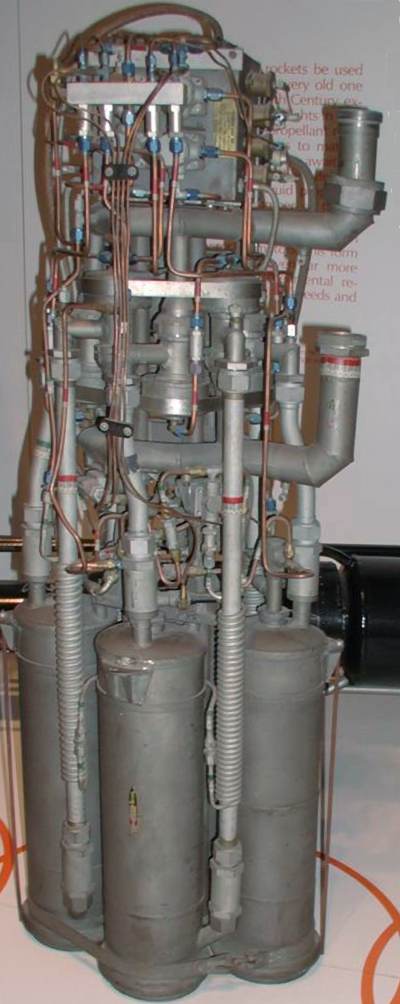
XLR11: 27kN / 95 kg = 2770 kg / 95 kg = 29 kg / kg http://en.wikipedia.org/wiki/Reaction_Motors_XLR11
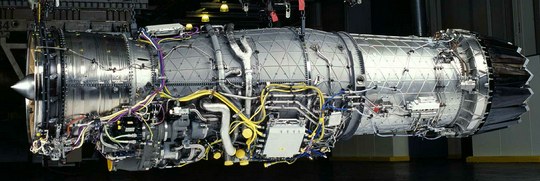
F135-PW-100: 19507 kg / 1701 kg = 11.5 kg / kg
but the engine come with the aircraft too so i think the thrust/weight of F-35 is much much higher than Bell x-1
moon_lightI tell you what is different. The assumptions regarding agility are based on relevant and published data about speed, weight, dimensions, wing loading, engine thrust etc. Add some manufacturer claims and pilot’s accounts (no matter how contradictory) and you can make a reasonably accurate estimation.
Now to the RCS, what data do you have except two figures which you can’t even correctly interpret? Not only that, there isn’t even a series version of the T-50 to speak of so that we can at least conclude its final configuration.
So, if you want to ask the same question again about what is different, then here my answer: almost everything.
Firstly , pilot claim F-35 is as agile as clean F-16 come very close to F-22 and can reach high AoA like F-18 😎 but you assume it fly like a brick and have no chance in WVR combat :confused:
Secondly , i dont think i have heard anything about pilot claim the T-50 is agile especially in it’s final form , while carry weapon which still not complete until now ( like u said ) 😉 , you think adding RAM , shaping will not affected T-50 ability to manuever at all compared to Su-35 ??? 😉
Thirdly , your claim about the agility of F-35 and T-50 simply estimation 😉 if you say you can base on public figure then i can too 😉 why it reasonable for you to believe the cruise speed and wing loading number of T-50 but you can’t believe the huge RCS value of it 😉 while both are official information come from Russian 😉 then you again assume Sukhoi use different way to calculate the RCS of T-50 😉
fourth , if you can estimate how agile and effective an aircraft is in WVR combat just by some public information and why can’t i :confused: and as stealth affected by shape the fan blades of T-50 not hidden is one of the most obvious thing showing it not as stealth as F-35( same way when you say F-35 higher wing loading and lower cruise speed make it a prey in close combat ) 😉 even the Russian say T-50 trade off stealth for agility but why it so hard for you to understand ? F-35 just do it the opposite way
Finally , you simply ignore all the ability of HOBS missiles along with DAS in WVR combat :confused:
or your love of you for the T-50 is too much that it hard for you to accept that it simply not superior to F-35 , and yes i havenot talk about the J-20 that you claim superior to F-35 in kinematic for no reason , j-20 dont even have a decent engine now
moon_lightPerhaps moon-light has more luck convincing us, if he use even more smilies in his posts.. yepp that should do the trick.
that not my video man , i just saw it on youtube and thought it quite interesting
moon_lightAs expected you have just decided to continue bothering us with your eyeball RCS analyses. Frankly, discussing things with people who have an answer in style “it’s common sense” or “it’s blatantly obvious” on everything makes roughly as much sense as to argue with a religious fanatic.
😉 well it just the same way when you assume F-35 will much less agile , slower and be the prey for T-50 😉 what the different ?? 😉 not to mention you also assume that Sukhoi use the different way to measure the RCS of T-50 (with no prof ) to defend the fact that they are themselves say T-50 have RCS = 0.5 m2 😉 and you also ignore the effectiveness of HOBS missiles along with DAS just to conclude that F-35 is useless as a fighter in WVR 😉
while i do respect you in your field dont you think your opinions is some what bias toward the F-35 😉
moon_lightThis video is rather typical of the random busslhit you can find on Youtube (or any blog/forum/whatever). I remember trying to destroy the argument the author tried to make, and got my comment deleted within a day without any further explanation or rebuttal.
This video does not prove anything as:
- the sensor is not the same for every target,
- the brightness/contrast settings are not the same from one target to the other,
- the distance between the sensor and the target is unknown,
- the weather conditions may not be the same from one target to the other.
This is the kind of BS that puts the average fanboy to shame.
[EDIT] Sintra, you got me!
oh actually you are right :p havent really think about it
may be due to the contrast setting and the slow speed when the rafale about to land
moon_lighti just seen a very interesting video , it seem that while it impossible to make fighter invisible in infrared , reduce ir signature could have great effect in detection range
http://www.youtube.com/watch?v=WlWQsW4ZZfQ
especially from 1:07 to the end 😮 you guy can see the different between a helicopter and a Rafale with some paint reduce IR signature :eek::eek:


 Sign In








_00-kil1.jpg)