Marcellogo
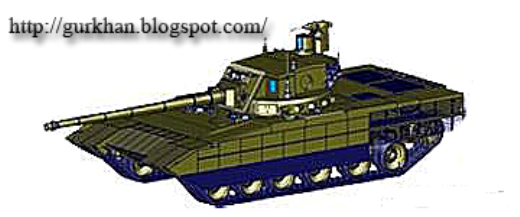
they are saying this is how the naked turret looks like with out the slats
Yes, you get it. I ‘ve seen some impressive pics showing the spent round ejector +APS tubes part, outer skin is so distant it completely cover them.
Marcellogothat’s the concensus on Tank-net as well. The turret armor looks too thin.
likely not the final/real turret config.would not be the first time some one did that. That new Turkish tank had a totally different realistic looking mock up top and only recently revealed its true turret, which looked like the korean K-2’s turret.
I am surprised not more countries are doing like the Russians and Jordanians by moving the crew completely into the chassis and using an unmanned turret. you figure all those roasted tank crews in chechnya, ukraine, syria, and iraq would motivate others to do the same.
It look as a turret but it is not really such: just look at pictures from its left side. There is a large hole just in the front part to allow vision to an optical sensor (the main “gunner” visor?) located deep inside it.
Hard part of the “turret” is probably at a such depth, what you see on the outside is instead just a simple covering structure, acting like slat armors do, just being watertight so to protect also from adverse weather conditions (Russia is not the Iraqi desert)
Just look also at the gun mount, it sits quite low near to the hull and the roof of the turret is well above it but the latter seems to be a separate, not moving part .
MarcellogoThey have done it a generation before with the Tu-28.
At a loaded weight of 40 tons it was something out of any possible scale at its time.
Now Su-34 is just a ton away from it but they are really apples and oranges.
Make fit Soviet planes into a dimensional categories is difficult also for another reason.
Soviet Union got two air forces you know and the fighters of VVS and the ones of PVO were designed according to almost opposite requirements.
Frontal aviation gave almost no importance to range while for the other was an essential part of their own mission.
MarcellogoTu-28 had 24,5 ton weight. MiG-31 has 21,8 tons weight which exceeds F-111A by 1,3 ton. If had been produced, F-12 would have 27,6 ton weight.
MiG-21 and MiG-23 technically belong to the same class. Its not that soviets thought “hey lets build a new class of airplane”. Necessities of 2rd gen aircraft, MiG-21, required a bigger engine, a radar and stronger airframe for stronger electronics. Thus MiG-21 was 30% larger than (light) MiG-17, with later variants easily exceeding(heavy) Mig-19. Necessities of 3rd gen aircraft required way bigger radar for BVR, and and airframe that can lift rather big BVR missiles; 4 of them.
In essence, MiG-21 was the smallest possible aircraft for its role in 50s, MiG-23 was the smallest possible aircraft for SAME role in 60s. And MiG-29 is still the smallest possible aircraft for SAME role in 70s. Looking more at Soviet/Russian aircraft weights:
1st gen: Light= MiG-17: 3,9 tons. Heavy = MiG-19: 5,6 tons.
2nd gen: Light = MiG-21: 5,6 tons. Heavy = Su-7: 8,9 tons Su-9: 8,6 tons.
3rd gen: Light = MiG-23: 9,2 tons, Heavy = Su-15 10,7 tons, MiG-25: 20 tons, Tu-28: 24 tons,
4th gen: Light = MiG-29: 11 tons, Yak-141: 11,4 tons. Heavy = Su-27: 16,3 tons, MiG-31 21,8 tons.
5th gen: Light = LFI = ??? Heavy = PAK-FA: ~19 tons.Switching from 1st to 2nd, 2nd to 3rd, light aircraft was always heavier than the previous types heavy. Excluding interceptors, MiG-29 was heavier than the heaviest fighter of 3rd gen.
Compared to Russians, US actually had smaller difference between generations in terms of weight increase:
1st gen: Light= F-84: 5,2 tons F-86: 6,1 tons. Heavy = F-89: 11,4 tons
2nd gen: Light = F-104: 6,3 tons. Heavy = F-101: 12,9 tons, F-105: 12,4 tons F-106: 11 tons
3rd gen: Light = F-5A: 4,3 tons, A-4: 4,7 tons. Heavy = F-4: 13,4 tons, A-6: 11,6 tons. F-111: 20,5 tons
4th gen: Light = F-16: 7,3 tons. F-18: 10,4 tons. Heavy = F-15: 12,7 tons, F-18E: 14,5 tons, F-14 19,8 tons.
5th gen: Light = F-35: 13,2 tons. Heavy = F-22 19,7 tons.What I like is irrelevant. Your assumption of distinctive groups easily puts MiG-19 MiG-17 in the same class. MiG-19 was twin engined, had twice thrust, twice payload, of MiG-17. MiG-17 was the Mig-29 of its time, and MiG-19 was the Su-27 of its time. Its simple as that. Looking at grippen and calling both “light” is as laughable as saying MiG-29 and Su-27 belong to the same weight class.
In order to avoid this, suddenly there pops up additional groups, which only adds to the error. If air force requirements change, and 6th gen fighters revolve around 60 and 80 tons weight, then according to new criteria of “current norm” will you say Su-27 belong to a ultralight weight? Or if they all become drones and weigh between 3 and 5 tons, Grippen suddenly becomes a ultraheavy aircraft?
In an analogy; you are claiming Volkswagen Passat B1 is a super mini comperable to Ford Ka and Fiat 500, on the basis that its lighter than those cars.
Looking from airframe design POV, there is no such thing as 4.5 gen. Rafale, Eurofighter, Su-35 etc are all 4th gen still.
With the exception of last line (but it’s because Gen thing is in itself a cluster…k IMHO) I declare your post PURE GOLD.
MarcellogoI understand your point but weight class actually has to refer to weight.
The F35A weighs 13,3 tonnes. The F15C weighs 12,7 tonnes. If we look at other versions like F35B and C we get to 14,7 and 15,8 tonnes.
In classification of objects consistency is preferred and i think the one below is decent.
Light < 9’000 kg
Medium < 12’000 or 13’000 kg (not sure which is the better, if F15C is a heavy class fighter jet then the limit is 12’000 kg)
Heavy <16’000 or 17’000 kg (F15, F35, Super Hornet,
Heavy heavyclassAnd to be frank, weight is the best classification for weight.
That would sort of make this list (that I think most agree with, somewhat sorted in order):
Light: Tejas, Gripen A-C, F16A, Kfir, Gripen E, F16C (F16C is the bridge between light and Medium fighters, most others stay just below 8’000 kg and then its a jump to ~9’000)
Medium/Light mediums(?): Rafale, FA18C, EF2000, MiG 29 (after MiG 29 it is a jump of a few tonnes with almost no fighters)
Heavy/Heavy mediums(?): F15C, F35A, Super Hornet, F15E, F35B, F35C (If a jet is over 2000kg heavier than a EF2000 or MiG 29 then it is a heavy fighter…)
Heavy heavyclass/Heavy(?): Flankers, F22, F14, F111, MiG 31
Maybe that makes more sense?
One could go by size, but then it would make any sense calling them heavy light and medium anymore.
Better reply is your own motto: Lockheed Martin, because drop tanks stay during dogfights™
Weight difference between F-35 (and F-22) and F-15 depends by the way larger fuel tank size (+provisions for stealth): put F-15E conformal tanks on a C and its empty weight would rise up and surpass the Lighting again.
For the same reason navy fighters has a greater weight of a land based ones due to the provisions for carrier take off and landing.
To made a sum of the discussion at this point:
One single parameters is not enough to determine class and role of a given fighter.
Using range alone would made MiG29A, MiG29C and MiG29M fit into three different categories.
Same with weight: F-16A, F-16C block 50 bare and F-16E with conformal tanks will end up the same way.
Size also is heavily dependent on aircraft configuration: pure Delta as seen above look way shorter than others.
Probably we would better define them using comparative data like trust ratio and empty/loaded weight.
MarcellogoA slightly different approach to the topic from me.
To what extent are these jets limited by the life form inside of them?
One of the most important differences would be in negative G handling, our own lifeform simply doesn’t bear it.
MarcellogoAbout the classification of fighters I would look at the type of engine they carry, obviously compared to their same age counterparts.
So let’s say for modern turbofans aircraft with one 8000ks to 10000ks thrust for about a ton weight turbofan are to be listed as light (Gripen, Golden Eagle, Mirage 2000), fighters with two of such engines or with one of the heavier 12000ks to 18000 for 1500/1800 kg weight are to be listed as mediums while heavy and superheavy ones are the ones with two of the said heavyweight engines.
Aircraft weight can be deceiving:F-15C weight less than F-35.
Doctrine changes are the main : latest fighter tends to carry much more fuel inside and stealth tend to add a lot of weight also (with one notable exception there).
In every case Rafale is a real step up for French as is still a medium weight two engine fighter while Mirages were all lightweight fighters.
MarcellogoJust looking on wikipedia
YF-22 made its first flight in 1990 and had an Empty weight of 33,000 lb, less than 15 tons.
First F-22 flew 1997 and entered service in 2005 and weight 19,700 kg.
First PAK-flight in 2010 so its almost 13 years of difference to be considered, with all innovations that surfaced in the meantime.
Even if general level of technological items in Russia is surely inferior to western one surely Pak-fa has many things in it that when F-22 was finalized just doesn’t existed jet.
So i don’t think than it could weight much more than the decisively larger and technologically inferior SU-35S that just weight 18,400kg still having some LO features added.
MarcellogoDo we have any idea when the T-50 will achieve “Western” IOC? For comparison, the F-22 reached IOC in December 2005, and by that time there was already a training squadron at Tyndall, and a combat squadron (27th FS) at Langley, which makes for about 60 aircraft. When can we expect the T-50 to reach a similar status? I understand that the original plan was 55 T-50’s by 2020, but recent articles seem to indicate that this has been pushed back.
Just never.
IOC concept never existed in russian/soviet procurement process.
Same with LIRP.
They have instead a design bureau that get fund to made initial prototypes, when project is mature enough there happen acceptance trials by the VVS, when it is passed all following prototypes are taken in charge directly by the armed force that conduces the so called state trials to finalize the project, test it in operative mode elaborate tactics and write user’s manual and train the first pilots.
It is a a quite lengthly phases (about three years ) but the number of aircraft produced in it is minimal, often no superior to the ones built by the bureau before the formal acceptance.
In the meantime, design bureau and the factory designed for serial production built the “first serial production plane” in order to set up assembly line and check the production process.
When this is done… they just wait until state trials are over.
After it, full scale serial production of a fully capable aircraft.
No IOC, no LRIP. It is ready when is ready and when the work begin, it is the real one.
Some person of the design bureau would keep working on further upgrades and modifications in order to keep it updated, but they are not considered as reaching some FOC but making a more advanced version of the same design.
Marcellogodouble post, sorry
MarcellogoDoes it specifically say internal bay? Because it also says 8xRVV-AE too. KAB-500Kr has some 3m length, and IMHO its 4xKAB-500 internal and 4 additonal on pylons.
Though I believe they can fit 4xFAB-500 M54s per bay if they really want it, its length is around 2.2m.
Well, if it is 3 instead of 2,2 meters it not such a big difference (or maybe they have finallymade a KAB with M54 body), R-77 is longer and have about the same overall width, so where you can fit one you could probably have place for the other also.
More than lenght it would be the width to make the difference in such a case, I think .
Well, in every case it seems that the drawing has a lot of interesting things inside, worth of a closer investigation?
They gave a weapon load between 1620 Kg (A2A) and 10000 kg (A2G) ?
MarcellogoFolding wing ?
You refer to KAB 500 or the same PAK-FA?
I don’t understand Russian, knowing Croatian and Cyrillic something I can get, still not such to be sure than these eight refer to the cargo bay only.
Certainly the overall dimension of the KAB is given a special evidence in the drawing, so I would think it is suc but I would like to be certain as you know… it seems a load sooo superior to the ones of F-22 and F-35
MarcellogoWait a minute…
:confused:
[ATTACH=CONFIG]235669[/ATTACH]
I’ve read well or they are saying that the PAK-FA can carry eight KAB-500 in its inner bay? 😮
It’s more than half of its max weapon load:love-struck:
I wonder what would they be positioned: 4 in a single row ,2 columns of two in each bay or a diamond shape?
MarcellogoIt seems to have side looking radar, so I’am not sure it is 051, that’s doesn’t have neither the main one.
MarcellogoHard to say.
The Su-34 did enter the VVS ranks, and yet it was still in various weapons trials due to several factors..
The Su-35S entered VVS ranks, and still had some weapons trials going.Very hard to compair how VVS makes their units IOC.. its not done the exact same way as in US.
It would seem, once the factory trials are done, the different units can enter VVS service with older weapons systems, while at the same time doing weapons trials for newer weapons systems.
On top of this the Su-27 made its debute on older engines. We see the T-50 doing pretty much the same approach.
We’d also seen RuAF make use of different older units or flying labs for various testbeds, imo, engines, FCS, weapons trials etc etc.Call this Russian concurrency, and in the end, who is the claim US F-35 concurrency is any better off vs Russian Pak-Fa concurrency..?
When all the $ and Rubles are accounted for we might say the Russian concurrency is infact way more efficient in terms of expences.
You are mixing up two different things there: aircraft development and weapons integration.
While the initial development phase of a military aircraft obviously implies also to integrate an initial set of weapons, it is absolutely normal, both in the East than in the West to integrate some others in a second time.
It is neither a thing only about newly introduced items
Eurofighters, for an example, being A2A oriented only recently has been cleared to use all the different types of LGBs their users have and the integration of Taurus and Storm Shadow in still ongoing, while the same weapons are used by the aging Tornado by about a decade.
F-22 itself would be cleared for the use of AIM-9X from 2016-2017 onward, five years after the last of them has left the assembly line.
And yes, development and acquisition process between SU/Russia and Nato countries belong to two different planets even without taking into account the F-35 concurrency mess.
Distances are so big that we woud need a new thread for describe it completely.


 Sign In