 RayR
RayRNEW DELHI: The US is offering 245 Stinger missiles to India as part of a weapons package for the Apache attack choppers being acquired by the Air Force.
“245 air-to-air Stinger missiles and 56 launchers are included in the weapons package for the Apache helicopters,” officials of Raytheon, which manufactures the missiles, said.
“The Stinger compliments the advanced performance of the Apache by providing the IAF with the critical air-to-air defence capability,” they said.
India has selected the American Apache helicopter for its requirement of 22 attack helicopters which will have both air-to-ground and air-to-air roles in the service.
“Yes, Apache is final now,” IAF chief Air Marshal N A K Browne had recently told a press conference when asked if the service was procuring the American choppers. The two sides are at present negotiating the contract.
RayRSeems like S-24.
RayRAsbestos causes cancer no two ways about it.
There is a reason why IN didnt want it in the first place. No developed country uses asbestos in their shipbuilding.
Its a separate matter that IN had no other viable option as things turned out. But that does not negate the fact that asbestos is harmful to the health and its use is prohibited in most countries not only in shipbuilding but any type of construction.In the past millions of people have died of industrial asbestos exposure in the US and worldwide.India or for that matter Russia , China etc are a separate story altogether.Its not as if the boiler lining is a naturally occuring form.The mineral has to be mined , then processed and the lining manufactered in a factory which presents an occupational hazard to the miners and the factory workers too. Regulations need to be made more strict in those countries if not ban its use altogether.
Its not a question of “proper” installation , use of asbestos in any form is not advisable.
RayRAfter sinking so much money into one capital ship..there was no practical option other than selecting asbestos! Does not say well about what the IN thinks about its personnel though.In India , cost of a human life is cheap and the armed forces are no exception.And this is exactly why India will remain a third world country despite excelling in several fields.
Anyhoo , close monitoring is in order for signs of deterioration of the lining during usage.
RayRWell oh well…the Russian viewpoint?
INS Vikramaditya trials termed successful
VLADIMIR RADYUHIN
MiG-29K taking off from INS Vikramaditya. Photo: Oleg PerovThe controversial sea trials of the INS Vikramaditya in Russia, initially described as an embarrassing failure, appear to have actually been a success, while propulsion problems developed by the aircraft carrier are not nearly as serious as reported in the media.
After the ship returned to the Sevmash shipyard a week ago the Indian Navy’s overseeing team, who closely monitored the sea trials, came to the conclusion that the ship had overall done extremely well and the programme of tests had been largely fulfilled.
The results of the trials were analysed and remaining work was detailed in a protocol signed by Vice Admiral Nadella Niranjan Kumar, Controller Warship Production and Acquisition (CWPA).
The main conclusion from the trials is that the INS Vikramaditya has stood the test as a full-fledged highly capable aircraft carrier converted from the former hybrid missile-cum-aviation cruiser Admiral Gorshkov. The ship displayed excellent seaworthiness and manoeuvrability and performed flawlessly during aircraft takeoff and landing. It’s sophisticated radio-electronic, navigation and other systems demonstrated high efficiency and reliability.
The malfunctioning of the boilers that occurred during high-speed tests will not require their replacement or removal from the vessel. The problem has been pinned down to insulation lining that is placed between the boiler steel casing and ceramic firebricks. Traditional asbestos lining was not used at the request of Indian specialists and replacement material developed slight deformation when the boilers were run at full power, causing some firebricks to fall out. The Indian side has now agreed to the use of asbestos cardboard.
The boiler problem did not prevent the INS Vikramaditya from completing the trials. Informed sources told The Hindu that Indian Navy officers were particularly impressed by the flight programme. A MiG-29K and a MiG-29KUB 4++ generation fighters performed 41 impeccable take-offs and landings with full arms payload and additional fuel tanks. The combination of Russia and India-made optical and electronic landing systems enabled the Russian pilots in 70 percent of the landings to hook the second out of three arrestor wires, which is considered a perfect result, the sources said.
The 44000-ton vessel also displayed superior manoeuvrability, performing a 360-degree turn at a minimum radius equal to one-and-a-half hull length at a speed of 18 knots.
Apart from the boilers, defects were also detected in some other equipment, such as refrigerators, nitrogen generators and compressors sourced from German, British, Polish and Indian suppliers who had been picked by the Indian side.
Russian shipbuilders have promised to complete all repairs by the beginning of next year, but since pre-delivery trials in the White Sea can resume only in late May, when sea ice melts away, the Vikramaditya will be handed over to the Indian Navy next autumn instead of this December, the sources said.
RayRi mean even with the same radar the range against naval target that have the same RCS value as an air target always much much shorter:confused:
Generally speaking, yes with all other things remaining constant including the radar mode, if there were such a mode which can be employed to search both air and surface targets.But actually, radar modes are differently optimised as air search and surface search with differing characteristics.So with the surface search mode on the radar might pick up a land or sea target earlier than an air target of the same rcs.
RayRAnother question that isnot very relevant : why the range of sea-surface search mode of fighter radar is quite short , i used to think that due to the ship moving so slow so it’s harder to find them in the clutter of moving wave , but if the radar can see the shape of the ship then what prevent it from detecting the ship at max range ( i mean ship often have rcs= 10000 m2 – 50000 m2 but in sea-surface search mode fighter can only detected a destroyer at 200-300 km )
Quite a few problems there.Peak power output , antenna size , reciever sensitivity and the prf.Also radar line of sight will be an issue in extended ranges.Add to that interference from the sea surface.
RayRWhich you think will win if a gunship helicopter like the KA-52 go against a jet fighter like F-16 or even F-35:)
i know that normally ,people think helicopter have no chance to shot down jet fighter but i think actually helicopter have a lot of advantages if it is an ambush make by the helicopter
Advantages of helicopter :
– Most fighter use Doppler radar so when the helicopter hovering (stationary ) they will be invisible to the fighter radar or the AIM-120’s seeker
-compared to fighter helicopter have much slower speed and don’t have jet engine so they have very low IR signature , if helicopter are painted by some thing like this http://www.army-technology.com/contractors/camouflage/intermat/ finding them by FLIR would be almost impossible for the jet fighter pilot
-almost every helicopter have DIRCM so they are quite immune to IIR or EO missile , even the most modern one like AIM-9x , by contrast jet fighter only use flares
-helicopter have much better armor that can survive direct hits from armor-piercing and high-explosive projectiles
-normally helicopter have short range radar but new helicopter like the KA-52 will be equip with zhuk-AE radar ( mig-35 radar )
-new helicopter can also carry long range missile ,( as i know russian decided to put the KH-31 on the KA-52 so may be in my opinion this gun ship can also carry missile like R-77 , R-37 … )
Advantages of jet fighter
-fly much higher and faster so it is easier for them to out maneuver a missile
-have towed decoy to evade radar guide missile
-carry a bigger load , more missiles , more bombsSo what your opinion :p
P/s : in an experiment in 1978 the helicopter proved to be extremely dangerous to jet fighter http://en.wikipedia.org/wiki/J-CATCH
In case of a Zhuk equipped Ka 52 facing of a say Mig 29 , even if there RCS are the same..the Mig 29 will always have the first shot as its fcs will arrive at a firing solution at a longer distance away because it also takes into account the airspeed and the kinematic range of the missile will be longer than when fired from the helo.
RayRSome anecdotal evidence, Tu-95, an otherwise awe impressing a/c,
has the radar return that of a large ship due to the props.
And it was a problem with semi active missiles when the launcher had to keep painting the target, and thus keep flying towards it, closing range so it would eat a short range missile in return, that is no longer the case with fire & forget missiles.
Well active missiles are not totally fire and forget in the true sense.You have the keep the target painted till the seeker acquires the target.That means a few seconds where the aircrafts are closing in on each other.Interesting problem arises in such scenario where one of the aircraft has fired a missile and they are still closing.If the aircraft is on the burner and they are closing in pretty fast then there is a high chance of getting a missile in return as the distance between them rapidly diminishes.Otoh if the aircraft slows down so as to decrease the rate of closing then you have to keep the airspeed above a certain level so that you are not in a disadvantage if it ever comes to a merge.And missiles miss quite often.
RayRNever heard anyone refer to refractory bricks as “COTS” before lol.
Anyway funny situation for the Chinese.On one hand reputation of their mil-ind at stake[or maybe they perceive it that way] and on the other side they must be having a chuckle at the carrier being delayed again.
In any case the ultimate responsibility rests with Sevmash.
RayRWas that before or after the accident?
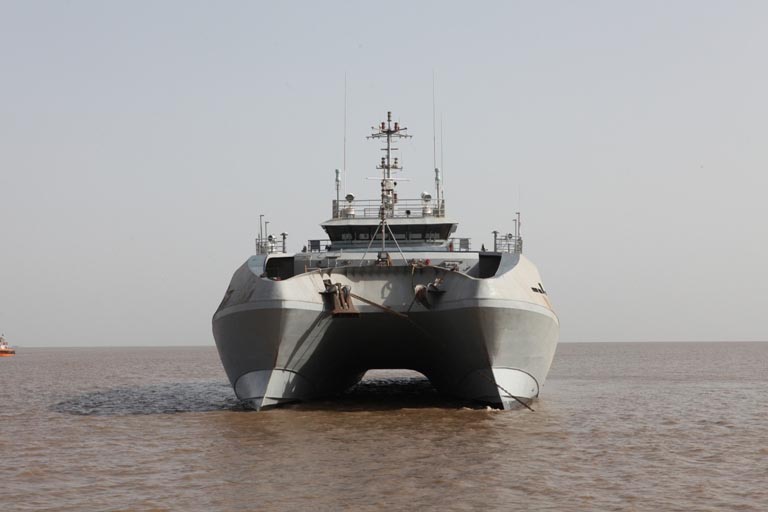
RayRINS Makar inducted.Built by Alcock Ashdown yard.5 more to come.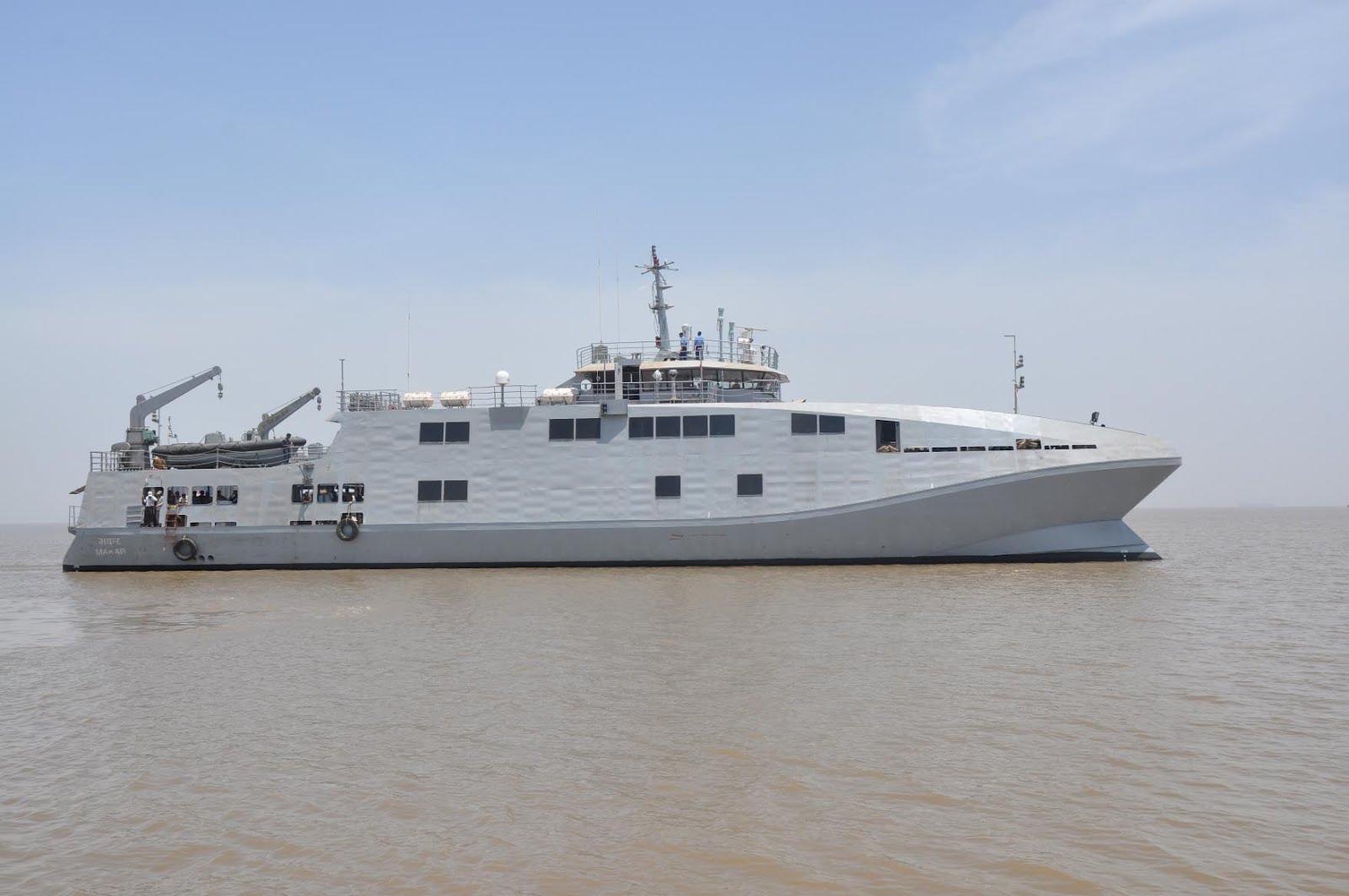
RayRThe Vik has turned out to be a total waste of money.
Its going to take at least a year before the repairs are complete.Even if they repair the damaged boilers this time , there is no guarantee that the other boilers wont conk off next time when nearing top speed..therefore there is going to be a lower speed threshold this time set for the ship.
While about 27 kn and above is fine for a carrier , I do think practically they would limit the speed to below 25 to be on the safe side.This is a decent cruise speed [22+], but sometimes it requires to operate at dash speeds >25 , so its a problem for operational deployment.
As for selling the ship back to Russia , good luck with that. Plus the navy loves its new Mig29Ks.
RayRWhat a farce.This ship is now unlikely to travel at 30 knots in her lifetime.Huge limitation.Some sources are saying they have to cut open the ship again to replace the affected boilers.One of the poorest decision making by the IN in recent times.
RayRAEWC finally landed in India..


Early 2013 is the date for flight trials with all eqpt.


 Sign In








