RayR
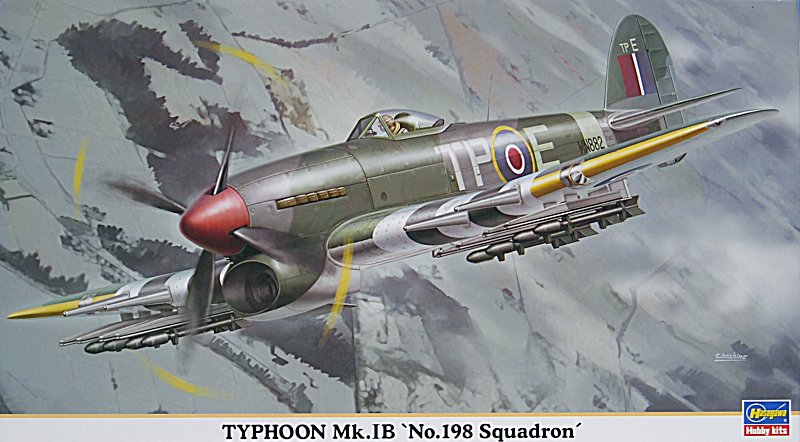
RayRUK defense minister to go to India to tell the Indians to buy Typhoons…Maybe it is still the 1920s?
But…but…the typhoon was only introduced in the 1940s….?
:dev2:
RayRAnd some news regarding Saras…
IAF is committed to buy 15 Saras even when it needs some major changes..imo IAF sometimes gets the stick unfairly regarding its support for indigenous projects.The IAF is stuck between a rock [protecting the airspace from ever increasing threats from neighbours] and a hard place[never ending deadline shifts from HAL/drdo/Nal etc.].
India’s National Aerospace Laboratories (NAL) is introducing more composite materials into its 14-seat Saras push-turboprop aircraft.
The first two prototype aircraft only had composite materials for the control surfaces, such as the rudder, elevator, and vertical and horizontal stabilizer. But the new prototype, the PT1N, now being built, has a composite wing and bulkhead as well as composite materials for the front top skin and floor sections, a NAL official tells AviationWeek on the sidelines of the India Aviation airshow in Hyderabad.
About 33% of the aircraft will be made of composites. The use of composites – and optimization of the aluminum alloy fuselage – will deliver a 500 kg weight saving over the earlier prototype, the NAL official says.
Saras is a 14-seat transport aircraft that is powered by two turboprop engines, each fuselage-mounted towards the rear, and well back from the wings.
The official says the new prototype has Pratt & Whitney PT-6 engines generating 1,200hp whereas the PT-6 engines on the earlier prototype only generated 850 hp. NAL decided to increase the engine’s thrust to ensure the aircraft can achieve a single-engine take off and landing. This is an EASA and FAA requirement, so the aircraft can land and take off even if one of the two engines shuts down, he says.
HAL actually lost one of its first two prototype aircraft in 2009. It crashed after one of the two engines suddenly shut down. All three on board died in the crash.
The organization’s joint head of knowledge and technology C. Divakar says it aims to first achieve military certification by the end of 2013, after which it will examine trying to gain civil certification for the Saras.
Divakar says the Indian air force has agreed to buy 15 Saras aircraft and that state-owned Hindustan Aeronautics will be the manufacturer.
HAL is also developing a five-seat general aviation aircraft, the C-NM5, which India’s Mahindra Aerospace will be manufacturing and marketing.
NAL senior technical officer and project lead, Shijo Francis, says the C-NM5 completed its first flight on Sept. 1 at Mahindra’s Australian subsidiary GippsAero, which built the first test aircraft.
This aircraft has already completed 10 hr. of flight tests and the plan is for it to be certified by the end of 2015 as a FAR Part 23 general aviation aircraft, Francis says.
The C-NM5 is basically a stretched version of NAL’s two-seat Hansa-3 trainer aircraft that has European certification and has already gone into production, says Francis. Fourteen Hansa-3s are flying today, all in India, he says.
The C-NM5 can carry either five people, including the pilot, or it can be used as a freighter or for medivac. Francis says the C-NM5 has a large door that folds out in two places, creating a space about two meters wide, so cargo or medical stretchers can be loaded on quickly and easily.
RayRI will buy a ship with the lottery that I will win tomorrow :rolleyes:
RayRSo the RD-33 Series 3 engines are still nearly as smokey as the original RD-33s..the RD-33MK engines on the MiG-29K seem to be relatively smoke free though. They don’t seem to have used a new combustor on the Series 3 engines.
I think the RD 33 series 3 engines are the same old tech but with longer mtbo.So probably the smoke will remain.. I wonder why they dont fit the RD 33MK though…cost cutting?
RayRVideo of Mig 29 UPG with very smoky engines!!
RayR^^ The poor guy can’t help it if the program keeps missing deadline. What was supposed to be a Diwali present turned Christmas gift is arriving after Holi.
I meant why post half images when he can show the whole…
RayRIt will come in due time..
RayRCorrect. This is in fact backed by data given in an article that you yourself posted.
The third Su-30MKI that crashed was built in 2009 and by Dec 13, 2011 (1.5~2 years from the date it joined service) had already completed 400 flight hours. That’s at the very least 200 flight hours in 1 year, which is on par with NATO Air Forces.
The guys based in NE are probably doing more than 250 hrs….
RayRA few details about workings of NSTL..
The NSTL has developed both light-water torpedoes (LWTs), named TAL, and heavy-weight torpedoes (HWTs), named Takshak and Varunastra. Takshak has two versions, a submarine-launched variant with wire guidance and a ship-launched one with autonomous guidance. Varunastra is an advanced version of the ship-launched HWT. Under development is a torpedo called Shakti with thermal propulsion, which can generate 500 kilowatt of power and rev up the engine within a second. “Thermal propulsion is a challenging technology,” said Rangarajan. “It is a totally indigenous effort. We have already consolidated several technologies in its development. Only the United States, the United Kingdom and Russia had torpedoes with thermal propulsion when we took up the challenge.”
The LWT is 2-3 metres long, weighs 200 kg to 300 kg and packs 50 kg of explosives. It can be launched from ships and helicopters. When a helicopter releases the LWT, the latter drops down with the help of a parachute, which gets detached when the torpedo hits the water. TAL has a speed of 33 knots an hour and can operate at a maximum depth of 540 m. It is under production by Bharat Dynamics Limited, Hyderabad, for the Navy.
The Advanced LWT (ALWT) is currently under design and will be in production in 2015-16. In Takshak, which is an anti-submarine system, the wire is the medium of communication between the torpedo and the firing ship. If the wire breaks, Takshak would become an autonomous torpedo like its ship-launched variant. It can travel up to a distance of 40 km for taking out submarines and can operate up to a depth of 400 m.
Varunastra, which is ready for trials by the Navy, weighs more than one tonne and contains 250 kg of explosives. It travels at a speed of 40 knots an hour, going in circles and bobbing up and down to attack targets. K. Sudhakar, Principal Associate Director, NSTL, called the torpedo’s homing device, located in its front portion, “its eyes and ears” as it detects and tracks the target. Its guidance system enables it to take the optimum path towards the target, and its onboard computer guides its rudder’s navigation towards the target. The warhead has a proximity fuse, with the blast occurring about 8 m from the target. “The torpedo should have its own intelligence to reject the decoy and go towards the target,” Sudhakar said. Besides, torpedoes should be water-tight. “Development of a torpedo takes 10 to 15 years. It has to go through several sea trials. We started out in this field 25 years ago. No torpedo technology is available in the open market,” he added.
Decoys are mini-torpedoes that “seduce” and mislead torpedoes coming from enemy craft so that naval vessels can get away, explained N. Raghavarao, senior scientist. The NSTL has developed a submarine-launched decoy. The Navy has inducted this decoy into service. The NSTL and the NPOL are working on another decoy called Mareech. The NSTL is developing Mohini, a rocket-launched anti-sonar decoy.
Mines in underwater warfare are lethal and cost-effective weapons. Capable of detecting targets, they can be launched from ships, submarines and air. They can stay under water in “sleep” mode for several months and, on sensing magnetic, acoustic and pressure signatures, wake up to detonate. The NSTL has delivered processor-based ground (that is, seabed) mine to the Navy, says S.M. Bhave, a senior scientist. It has developed moored mines, which will hang at certain depths in the sea.
A big programme under way at the NSTL is the building of an AUV. Manu Korulla, scientist, called the AUVs “a new class of intelligent underwater vehicles, which will operate without human supervision to carry out survey, surveillance and reconnaissance missions.” The AUV can be configured to drop and hunt for mines, lift underwater bodies, do counter-communication measures and change course on sensing obstacles. It will have cameras, sonars and image processors. “We know the technology to develop various sizes of AUVs for various applications,” Korulla said.
RayRAnyway, that article are biased.
Consider how many Su-30MKI India has over how many years of service.
Its safty record are not bad at all.
Very correct.Its been almost 10 years the IAF is flying the MKI , and more than 10 if you consider the MKs as well.The IAF have around 150 MKIs flying as of today and the MKI pilots get the highest flight hours in the IAF which is more than 200 per year in general.And there has been only 3 crashes during this period.
Considering all these , you’d have to say that the MKi indeed has a very good flight record and rubbishes any claim about its lack of reliability.
RayRCan you shed some more light on what you are saying here? There is no other fighter with TVC engine in IAF and even Rafale wont have a TVC. TVC is a complex piece of equipment with moving parts. Naturally it will require more maintainence.
See here
http://defense-update.com/20111217_indian-air-force-opts-for-more-su-30mki-despite-problems.html
RayRI dont know why Tarmak has become such a tease recently…like Aroor or suman sharma…may be at some level all journalists are the same :rolleyes:
RayRBelow is Teal Group analyst Richard Aboulafia’s comment on the Indian Su-30, quoted in the link below.
http://www.flightglobal.com/news/articles/in-focus-india-advances-air-force-modernisation-368774/
“Adding a capable, reliable, high-end jet to India’s fighter force will be transformational,” says Teal Group analyst Richard Aboulafia. “Most of the Indian air force is comprised of either lighter, older planes such as the [Mikoyan] MiG-21 or Sepecat Jaguar, or heavier, but not completely reliable, Sukhoi Su-30s.
“The best part of their fleet is the 50 or so Mirage 2000s, which are almost medium fighters and relatively modern. India has never had a significant force of capable, reliable planes. Whether they get Rafales or Eurofighters, they’ll get a significant number of modern, medium/large capable jets. That represents a major qualitative improvement.”
Sorry but thats garbage.
The best part of the current IAF fleet are its MKIs and are the IAF pilot’s aircraft of choice for all types of missions.MKIs always get the first look and shot in air to air vs Mirages and can perform all types of ground attack as well as antiship missions.
There have been problems with servicability particularly of the tvc engine and some problems regarding its fbw..but they still are quite less compared to other russian birds.
RayRI suspect its going to be the Chinese or the Russians..
If variants are considered , its going to be the 2 seater FGFA built for India..
RayRGood read!
New horizons
By Air Vice Marshal Mohan John (retd)
http://week.manoramaonline.com/cgi-bin/MMOnline.dll/portal/ep/theWeekContent.do?programId=1073754900&contentId=11073115
It was after a long selection process that the French Rafale emerged as the aircraft that will be inducted into the Indian Air Force from 2015. The 052,000-crore Medium Multi-Role Combat Aircraft deal involves the induction of 126 fighter aircraft, with an option to induct 63 more, if required, at a later stage. Apart from the huge money and the leap of technology involved, what does the deal mean from a fighter pilot’s point of view?
The Indian Air Force conducted the initial selection in a meticulous and professional manner. More than 600 technical parameters were compared during the process, before arriving at the shortlist comprising the Rafale and the Eurofighter Typhoon. The final selection was done by the government, based on costing norms, including life cycle costs.
The air force is more technology oriented than the army or the navy. In a combat scenario, all other factors being the same, the air force with better technology will come out ahead. With two nuclear-armed neighbours, and given India’s political relationship with them, it is imperative that the IAF has the best technology that the country can afford. The MMRCA deal is about induction of such technology.
When I joined my first operational squadron in 1974, it was equipped with the MiG-21 FL, an early variant. The MiG-21 is a much maligned aircraft because of the number of accidents it has been involved in. I personally found it a wonderful aircraft to fly. Like all things mechanical, it had its quirks. If you are aware of these quirks, you could get away with a lot, and still come back to talk about it. ‘Supersonic sports plane’ was a very apt tag for the MiG-21 FL, and in retrospect, that was precisely what was wrong with the aircraft. It had very limited radius of action (the distance you could go out, fire your weapons, and return safely), its weapon carrying capability was negligible, and it had no avionics worth the name. The later variants of the MiG-21 overcame many of these limitations, and had much better operational capability.
In 1974, the IAF was trying to inculcate cost consciousness among its personnel. One step taken was to mark each item of equipment, including the aircraft, with its cost. Every time you came near the MiG-21 FL, you were reminded that the aircraft cost 076 lakh. Today, you will not get a high-end car for that money! This aspect of the low cost of Soviet/Russian aircraft became a kind of mantra in the IAF.
As the IAF progressed professionally, the flaw in this logic came out. The IAF had started the process of ‘life cycle cost’ studies of the aircraft in its inventory. By then it had inducted a number of MiG variants (MiG-21, MiG-23, MiG-25, MiG-27 and MiG-29) and the Mirage-2000. The study brought out that, when the life cycle costs are worked out, aircraft like the MiG-29 are not really cheap.
In 1985, I joined the newly inducted Mirage-2000 fleet. The aircraft was a technological marvel. What surprised me the most was the ease with which you could adapt to and assimilate these new technologies. I think it was the way in which it was presented to the pilot in the cockpit. It all seemed so natural and logical, and left you wondering how you managed without these technologies so far. While the aircraft performance was in a different league, mainly because of the innovative fly-by-wire system, basic flying was extremely simple. It was the management of the onboard systems that required skill. The availability of onboard systems like the multimode radar and the navigation and weapon-aiming systems made it possible to exploit the aircraft operationally for tasks limited only by your imagination. Also, the Mirage-2000 has an exceptionally good flight safety record.
As I went up in the hierarchy of the IAF, I got to see these aircraft from a different perspective. As the chief operations officer of a flying base, and thereafter as a base commander, I realised that the MiG-21 and other Soviet/Russian aircraft were not really maintenance friendly. Keeping these aircraft fly-worthy was a challenge. Compared with them, the Mirage-2000 was in a totally different league.The Mirage-2000 is built on a modular concept. Most modules had built-in test equipment. If the test showed ‘no-go’, the faulty module just had to be pulled out and replaced with a functional module, and you were good to go. Even the engine was a module. Replacing an engine, which is required at times, took a little more than an hour. In the case of the MiG-21, an engine change was a major job which took significantly longer time and more effort to accomplish.
In 1993, I was part of the team bringing in more Mirage-2000 aircraft from France. Dassault, the manufacturer of the aircraft, made it a point to show us the Rafale, which was in the process of being operationalised for induction into the French air force and navy. The aircraft embodied an extension of the Mirage-2000 philosophy, but was more than a generation ahead in technology.
My association with the Mirage-2000 fleet included a fair amount of interaction with the French representatives, especially from Dassault. They are hard-nosed businessmen. If you have the money, and are willing to pay, they will deliver the required service. They did not seem too concerned with matters like foreign policy. However, like any businessmen, they will not waste an opportunity to exploit the customer if the opportunity arises.
In 2006, I was part of a delegation to the Farnborough Air Show. The Indian delegation was in demand because of the MMRCA deal. We were given briefings by all vendors in the fray. One common point about the two American vendors, Boeing and Lockheed Martin, was that, when queried about specific equipment or weapon options for the F-18 and the F-16, the standard reply was “We will have to check with the State Department”.:p:p I do not think Dassault does business under such constraints.
The induction of the Rafale will pose challenges to the IAF. In my opinion, the main challenges will be training and infrastructure creation. The assimilation of these new technologies will not pose much of a problem, but the volume of personnel to be trained, especially for maintenance, will be a challenge. Induction of such high technology will also require the creation of dedicated equipment servicing and repair bays, and other allied infrastructure. This is a mammoth task.
The author has flown more than 3,500 hours on various fighter aircraft, including the MiG-21 and the Mirage-2000.


 Sign In