dark light

Lightndattic

Forum Replies Created

Viewing 15 posts - 226 through 240 (of 349 total)
  • Author
    Posts
  • in reply to: AV-8 Harrier II #2559030
    Lightndattic
    Participant

    Ahhh……that pod looks so asymetrical! Lol it’s driving me nuts…..

    I can deal with something like an F-4 carrying an ECM pod or targeting pod on one Sparrow recess, but when you get something out on the wings that’s as asymmetric as that it just drives me nuts.

    What’s driving me nuts is the external tanks so far out on the wings on some, but not others. In my mind, the externals should be the closest to the fuselage. 😀

    in reply to: JP233 missions #2562228
    Lightndattic
    Participant

    In a conventional war vs WP forces (if such a thing was even possible), then yes, it’s mission was practically suicidal. If the gloves ever came off, a Pershing would take care of the airfield without a doubt.

    in reply to: Picture of Sea Harrier armed with Sea Eagle #2562308
    Lightndattic
    Participant

    This is the only one I can find at the moment 😮

    That’s an awkward looking location for the -120.

    in reply to: B1-B Lancer over Norfolk 23-03-2006 #2562337
    Lightndattic
    Participant

    The last time I went hiking in the Ozark Mountains of Arkansas, a pair of Bones from Robbins AFB (shows how long ago that was) flew up the valley I was climbing out of. They were moving pretty fast in relatively close formation (for being down in a mountain valley). I was high enough that I was able to look down on them as they blasted through.

    It was a sight to see, but not as good as the zoom climb from ~200ft to several thousand ft I saw one do in the late 80’s at Barksdale AFB, LA.

    in reply to: Russian Su-33 Flanker-D pictures. #2564762
    Lightndattic
    Participant

    Paging Flankerman….. Flankerman to the customer service desk, please.

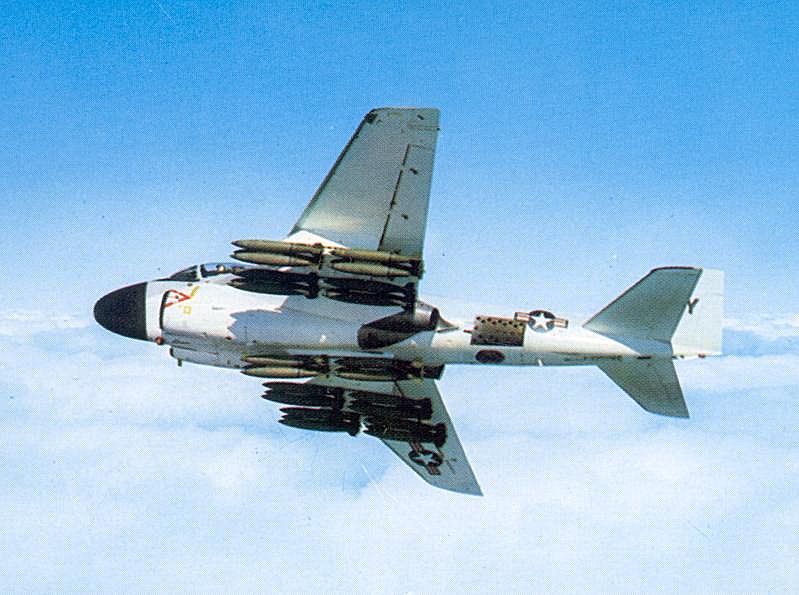
    in reply to: IMPRESSIVE WEAPON LOADS THREAD #2566938
    Lightndattic
    Participant

    Yeah, I know they’d never go into combat like this (I wouldn’t think anyway) but still. . .

    That’s gotta be a PS. 111’s have 2 swivelling pylons inboard and 1 non swivelling pylon outermost on the wing.

    And I’ve been a Bone Fan and grew up on SAC bases all over the US and have never seen the Bone with the external hardpoints loaded or even fitted with pylons.

    Here’s my contribution:

    http://www.fas.org/man/dod-101/sys/ac/us_mil_a6_01.jpg

    in reply to: F-117 Surface finish… #2597555
    Lightndattic
    Participant

    what you are seeing are not the CAUSE nor the REASON for the skin to behave in the way it does, what you are seeing is the EFFECT of actions upon the skin. There is a very large difference.

    I was told by many sources that the cause of the wrinkles was due to a combination of some slack built into the fuselage and the fuselage stretching under the stresses of normal flight- i.e. wingflex and the balloning of the fuselage under pressurization. Over the lifespan of the airframe, those wrinkles DO grow.

    In this pic of the rollout of the first B-52A, you can see stress wrinkles on the forward fuselage just in front of the forward landing gear.

    in reply to: F-117 Surface finish… #2597613
    Lightndattic
    Participant

    lightnattic………….got anymore drivel like that??

    what you see on that B52 is a perfect example of a diagonal tension stress field. This occurs when the skin panel(denoted as the areas surrounded by both horizontal and diagonal stiffeners) can no longer maintain its shape under an applied load, this can be horizontal, vertical or a combination of both. The panel will buckle to relieve the stress in the structure, and the stress is converted to a load carried along the 45 degree diagonal.

    this load is being caused by the weight distribution over that part of the aircraft, in this situation. whilst i am not involved with the stressing of fuselage’s (I am a wing man) I do know that the hoop stresses in the fuselage stiffeners must account for the fuselage acting under pressure.

    The skin will not shrink by a great deal at altitude (certainly not enough to tension that amount of slack) but what will happen is that there will be a little additional rigidity due to the pressurised cabin (if indeed the pressurised cabin is sealed via the fuselage skins, which i do not know), and you will get some support from dynamic pressure.

    I would suggest that even with the two elements combined this is not enough to support the fuselage and unbuckle the skin (the nose needs to be propped up in order to unbuckle the panels).

    Of course they could have used a slightly thicker grade of skin panel, or added more stiffeners (this would have been the lighter solution) as it is, this must be fatigue certified to fly in that condition (we would not design our parts to operate normally in a buckled state, unless there was a specific purpose, but i won’t go into that as its a bit work-sensitive). Certainly, we can let some metallic structure buckle a certain number of times, but you probably wouldnt want to see it if you were a nervous passenger!

    coanda

    What it the drivel? I’ve spoken to numerous pilots and other crewmembers, Airframe shop airmen, and Boeing engineers about it in the 8 years I lived at Barksdale. I’ve seen BUFFs in flight in person during several Space-A trips and ROTC incentive flights and have seen the the skin in the area of the pic wrinkle and smooth out in flight as the wings flexed going through turbulence.

    If what I posted is drivel in your mind, then it’s a well established myth in both USAF and Boeing circles.


    in reply to: F-117 Surface finish… #2597718
    Lightndattic
    Participant

    I think the B-52’s rippled skin was actually as-built (or as designed, not sure), and had to do with the pressure cabin inside an otherwise unpressurised airplane. The riplled skin on the forward fuselage gives some margin for different temperature effects on the high-altitude flying airframe (remember, STRATO-fortress) with a heated capsule inside. The rippled forward fuselage should be there to ‘shrink’.

    It also has to do with the flexible wings. Before the B-52 reaches takeoff speed, the wings will start flying first, then the fuselage is pulled up as well. In flight the wings are basically straight out, not drooped when on the ground. If there were no slack in the fuselage skin while on the ground there would be skin damage after every flight.

    in reply to: F16 ejection #2598431
    Lightndattic
    Participant

    I can’t believe FI would show that without confirming the details of the incident. I’ve seen that same video posted several times saying it was a Hawk trainer up in Canada, a 2 seat Jag in England, etc.

    in reply to: F-117 Surface finish… #2599166
    Lightndattic
    Participant

    Indeed, a rippled skin is indicative of an airframe that has seen its fair share of flying hours! see……….B52’s!!

    Oh yeah.

    http://homepage.mac.com/topcover/.Pictures/topcover/Guam/20BS29w.jpg

    in reply to: Su33UB thrust vector engines #2601181
    Lightndattic
    Participant

    That’s wierd… it’s got the short veritcal fins and a round nose radome, not the wide platypus style one.

    in reply to: Singapore F-16 upgrades to Block 60 #2603301
    Lightndattic
    Participant

    That story’s got to be pre 2004, so it’s not likely.

    in reply to: Problems of the F-35 #2603303
    Lightndattic
    Participant

    And it’s top speed can be attained with a full warload for a far longer distance compared to legacy fighters. Very rarely does an F-16 reach it’s top speed of M2 and with a usable weapons load, forget it.

    in reply to: [Thai AF Open House] Make a guess how low she flyover us? #2603592
    Lightndattic
    Participant

    That MK 747 was hard on the reversers- the nose wheel is still off the ground! 😮

Viewing 15 posts - 226 through 240 (of 349 total)