 mark_pilkington
.
The Duigan Centenary of Flight replica of the Duigan 1910 pusher is progessing well, all timber for the project has been purchased, and all the wing ribs were completed before xmas, and the forward canard has now been constructed.

The Governor of the State of Victoria has agreed to be the Patron in Chief of the project, joining Dr Gwynne Duigan, the family archivist and matriach already the project patron, the replica is currently well on target to be completed in time for the Centenary celebrations in July 2010, work is now being undertaken to fit a Heath henderson upright 4 cylinder engine to the design, in place of the original locally built 1910 Tilley.
Donations can be made via the website using paypal or via cheques, the Australian National Aviation Museum is hosting the fund raising through its tax deductability charitable status and the replica will join the collection when its flying displays are completed.
http://www.duigancentenaryofflight.org.au/
Regards
Mark Pilkington
Secretary
Australian National Aviation Museum
mark_pilkingtonMark,
5 x Avro cadets
Howard
hello Howard,
there must be something in all that Brown Coal smoke causing them to breed like that smiles, I knew you had one flyer and at least another 2 restoration projects, (& also thought you had parted with one) so I was being conservative in my count – and Ross was enquiring about restoration projects not airworthy aircraft in Victoria.
regards
Mark Pilkington
mark_pilkingtonRoss,
I’m not across all active restorations in Victoria (& there are scribes who make it their business to do so) and I dont wish to get into a “my state’s restorations are bigger than your state’s…” etc as I’m not into parochial rivalry as per my earlier comment in any case.
However the following is a cross section of the serious/active flying restoration project’s in Victoria that I am aware of:
(those in brackets may not be active at this time)
Australian Gliding Museum
3x Flying Replica’s of the 1909 Taylor Glider (just finished)
multiple vintage gliders under restoration to fly
RAAFM
Flying replica of 1914 Bristol Boxkite underway, – target 2014
Australian National Aviation Museum
Flying replica of 1910 Duigan Biplane underway – target 2010
1930’s BA Swallow under active restoration to fly
Harvey McBain
1x Pussmoth
1x DH Dragon
John Pettit
1x Hornet Moth
(1 Hornet Moth – “2nd one”-stored?)
Maurice Rolph
DH Dragon Rapide – due to fly this year
(Proctor stored?)
P40F – Judy Pay
Storch – Judy Pay
P40N – Ian Whitney
6x Wirraway’s
Jones Consortium
Matt Griegg
Don Brown
Ian Witney
Michael Higgins
Jeff Eastman
Howard Jones
2x Avro Cadets
Precision Aerospace Wangaratta
1 Sea Fury
2+ Boston(s)
2+ Vultee Vengeance
Vought Kingfisher
2+ P-39(s)
2+ P-38(s)
2+ P-40(s)
2+ Ki-61(s)
Melbourne
2x Mustangs (confidential)
1x Mustang Bob Eastgate (repair)
1x Mustang – Graham Hosking
and there are obviously numerous active Tigermoth and Auster restorations underway, and other projects currently doing more “storing” than “restoring” at this particular time including 1x Drover and 2x Wackett Trainers etc.
Obviously not the centre of Australian restoration activity but some interesting activity still the same, and there are many more static only projects beyond these flying projects.
regards
Mark Pilkington
mark_pilkingtonNone of the aircraft sold, those bids were the highest bids but were not accepted, however the highest bidders have first rights to negotiate a direct purchase with the seller.
regards
Mark Pilkington
mark_pilkingtonBut you would have to admit, Sydney is the world city for Australia and it does make sense having an International Event in the country’s world city, rather than just in one of the state capital cities.
I can’t think of an suitable runway in NSW, but I am sure there some, maybe one of the RAAF bases would be suitable.
As for the QVAG Festival of Flight – there is no doubt that it is the premier fly-in in Australia and that is not just a Queenslander’s opinion, it is a fact. Why don’t you come up and attend. I am sure you will enjoy yourself and appreciate the diffeerence between a fly-in and a air show and why to an enthusist (like you) the aviation fun factor is higher at a fly-in.
From my own point of view, its not the location of Avalon thats the problem (this year’s weather was not typical of previous years, & some early shows suffered from October show dates in notorious bad weather), the problem is the Public show events, they are becoming very predictable and repetitive, and the ground displays appear to be shrinking, entry costs are rising rapidly as value seems to drop, and participants seem to walk away in their droves, possibly for the “treatment” reasons you mentioned earlier. Relocating it elsewhere doesnt change those issues?
on the other side of the Harbour and then the Tourists can see all of Australia at one sitting, (but Sydney does have its down sides and I wouldnt want to live there).
A centrally located airshow that allowed most people from North /South and Central would be fantastic, but I dont think there are good options in Sydney itself?
Mascot – No! too busy?
Bankstown? – probably not? to obusy – too small
Camden – too small?
Richmond? yes, been done before – but it does get fogged in? perhaps access /security issues for RAAF, and may become the Avalon of Sydney in other ways in anycase?
Albion Park – limits on airshows apparantly
Temora, – yes – but a long long way out for the General Public
But the issue is unless the NSW government under-writes it, it wont happen, and the NSW government has more pressing financial issues, (other than wanting to waste $1B on “restoring” the Opera House which has to take the cake as this years best “early April Fools Day” joke?).
The issue is that relocating the “current” International Airshow to anywhere else, wouldnt have “me” travelling to see it, nor many others, (I have trouble justiflying crossing the proverbial road to see it) its content in the air and on the ground really isnt of great interest, this year I primarily went to see the Caribou and F111 in the air for the last time (from my point of view).
QVAG festival of light is a different issue all together, as its content is exactly my interest, is interesting enough to justify the four day drive, and is one I definately will get to, but probably not this year.
But you did hit on an opportunity, why not relocate the “festival of light” to Sydney, so much better located for everyone to attend, and the smaller strips of Camden or Albion Park etc would be perfect, especially if run as a fly-in not airshow, imagine the turnouts that central location could deliver in terms of warbirds and vintage aircraft from North, South and Central, and maybe west as well?
– Great Idea! a truely “National” Fly-in for Antiquers and warbirds, centrally located in the “National Centre” or “World City” of Sydney, now that would really be worth going to!
As for all those Victorian’s we send up to Qld, well thats just the advanced party and infiltration forces, by the time we have finished “AFL” will be the dominant footy code, Daylight saving will be the norm, and then we can start shifting some of those nice vintage aircraft back down south where they belong!
smiles
Mark Pilkington
mark_pilkingtonThe difference between success and failure can just down to the weather (and Melbourne has a reputation for fickle weather)
Maybe the Avalon Airshow should see a venue change (and name change) to be staged in Sydney.
cheers
Ross
Despite the rumour of fickle weather Melbourne is suffering an extended drought and rain/fickle weather is no longer the norm and hasnt been for over 10 or more years. In fact during the competition in the early 1990’s for what became the Sydney 2000 Olympics it was shown Sydney even then had been averaging more wet days than Melbourne.
I doubt the Victorian Government who fund the running of the Avalon airshow would fund it in Sydney or anywhere out of Victoria, and the only other suitable sized airfield in Victoria that could take the range of aircraft would be Mangalore, however the other infrastructure, (airport hardstanding, local accomodation, rail/freeway transport, Aerospace Convention, resources) are all unlikely to see Mangalore gain the role over Avalon.
Obviously the NSW or Queensland government might choose to fund it in their own states, or even fund a competiting airshow (such as Wide bay at Bundaburg?) but I’m not sure it would change the management of the outcome? unless the objectives of the airshow, and its content were realligned.
It currently operates a week long industry exhibition and convention with 2 public Airshow days that focus on General Public Entertainment rather than Enthusiasts, and thats probably reasonable, however its the selection of appropriate acts for that purpose that controls the aircraft on display.
The weather could occur anywhere, in Queensland there is the risk of a cyclone rolling in unannounced, or floods, NSW have had GA events at Bankstown cancelled due to poor weather, weather is a risk with all public out air events, even gold coast theme parks.
The “everythings better in Queensland” theme becomes tiresome after a while, and isnt neccessarily the case, or solution to all problems.
regards
Mark Pilkington
mark_pilkingtonThe Orion, Sirius, Altair family are constructurally incestuous and it would be interesting to know exactly what materials were used in the various components.
Kingsford Smith’s Altair was originally built as a Sirius 8 s/n 152 for Captain Hutchinson in the USA, with reinforced spars and a long range fuel tank.
It is assumed it retained the original timber fuselage and wing, and not the metal construction fuselage used on some later new built Altairs.
It therefore seems strange so much timber built structure can be seen in apparant detail, as is claimed to be seen from the sonar scan?
regards
Mark Pilkington
mark_pilkingtonThanks for the info on the wheel. I note that it is the starboard unit and from the sonar scan that would appear to be the wing still attached to the fuselage. I believe that the LSC was fitted with a type ‘D’ stabiliser which was of metal construction and had a type ‘C tail fin which I think was wooden construction. The ‘triangles mentioned as being part of the Altair construction are surely no more than the ‘bay bracing’ between the spars. The Orion, Sirius, Altair family are constructurally incestuous and it would be interesting to know exactly what materials were used in the various components.
John
It is confusing as to how much of the wreck has already been investigated by Mr Lay’s divers and scans already, his media releases are scant on detail yet the sketch implies either significant detail is detectable from the scans, or divers have confirmed those details directly??
Assuming the sketch details are factual, then it seems to show the port wing has failed on impact with the water, and come to rest under the wreck (conversely tidal action may have shifted and broken up the wreck?, although the engine would be expected to mark its resultant resting place), interestingly the port wing is shown to contain its undercarriage i”retracted”? in place?.
The starboard wing appears shattered from the undercarriage point out, and may have suffered structural damage in the tree-strike, perhaps explaining how its retracted undercarriage seperated from the wing within 2 years of the crash.
The sketch is showing the engine and prop, seperated tail and observable remains of wing and fuselage??
It is possible the tree-strike has caused the aircraft to nose dive into the water not too far off the southern coast of Aye Island, causing both pilots to be killed or fatally injured in that fall?
The sketch implies the fuselage is somewhat intact, with identifyable damage at the engine attach, and loss of its tail? but suggestions the mid-fuselage is still recognisable?
It is hard to believe these structures are all surviving sufficently observable or identifyable? even if long rotted into the mud and effectively simply now a sand casting?
It would be interesting if Mr Lay would ?, and how much is based on artistic licence? or interpretative zigsaw fitting of possible components to dubious sonar shadows?
Life was a lot easier when side scans were being provided on this forum with the accuracy and detail of reverse negative airfix models, and divers were able to accurately describe the evidence and details of the discovery of a Spitfire Float plane simply by relating how they “had touched it with their own hands” (wonder why that certainty never got raised?)
I am hoping the families, and the sad story of these two pilots is not being taken for a ride here, I am particularly concerned by the $10M-$30M estimated costs to investigate and recover remains/wreck?
regards
Mark Pilkington
mark_pilkingtonFor the recovered u/c unit to to have detached from a largely wooden airframe it must have broken up pretty decisively. Two questions where precisely was the leg recovered from and how long after the crash?
John
The leg was recovered from the south “coast” of Aye Island, the site of the suggested tree strike, it was recovered 2 years after the crash, although its not clear how long it may have been on the “beach”, it was covered in shellfish which suggested a period of time in water no deeper than 13M, suggesting it had rested with the wreck on the bottom of the bay for some time before breaking free and floating due to the inflated tire.
There was a question as to why the retracted wheel would be damaged if the aircraft had a tree-strike, or bellied into the sea, that assumes that the gear was retracted at the time.
Obviously in a forced landing in the sea there would be risks to landing with the gear down so that should be discounted as a likely outcome.
If the tree-strike did occur there are two basic situations,
1. an unintentional tree-strike, at an intended cruising height and speed with gear retracted, due to navigation error, or altimeter height error, or simply lack of marked height for the island on the map, either way the gear would most likely remain retracted, but any damage to the wing due to tree impact may cause it to breakup over time, releasing the undercarriage to float away.
2. There is the possibility the crew may have attempted an emergency forced landing on Aye Island due to other causes, (Kingsford Smith departed ill, fuel loss, engine problems, loose engine cowl etc) and lowered the undercarriage expecting to find a clear patch of land on the island, and instead encountered a treed hill rising infront of them (apparantly the hill rises from the North to a peak at the southern cliff).
Obviously there is nothing in evidence supporting or confirming any version of events, but I personally consider 1 above the most likely situation.
Unfortunately discoverly of the wreck is unlikely to provide sufficient intact wreckage to determine those issues above, other than its location and proximity to Aye Island supporting the tree-strike as being a likely cause of the subsequent ditching.
It would be interesting to know if the other wheel remains lodged in the mud or has also broken away over time and floated off into the bay? Of course by 1940+ the interest in a floating aircraft wheel would have anyone spotting it assuming wartime wreckage and may not have showed much interest at all let alone linked it to the loss Kingsford Smith 5+ years earlier?
If the wreck has become embedded in mud/silt, and rotted away over time, and trapping the other wheel insitu, then it may suggest the wing was badly damaged during the water landing, or even from the tree strike, allowing the 1937 recovered wheel to break free from the rest of the wreck.
Interestingly I have seen a drawing in a local newspaper contained with the Film crew story reported above, that sketches the remains of the fuselage, wing, engine etc over the top of the sonar scan, and shows a section of wing perpendicular to the fuselage and wing line suggesting significant damage to that wing, I have no idea what basis or information was used for that sketch? or its suggestion significant parts of the wreck could be identified? I have found that drawing reproduced online below.

I notice others are rightly or wrongly are stepping forward against these claims, and that Mr Lay claims to have spent $1M so far, and is now proposing a $30M? recovery project???????
Perhaps a @$30k investigation project should be done first by a credible authority such as the National Museum of Australia?, subject to the actual real evidence Mr Lay might have?
http://www.news.com.au/dailytelegraph/story/0,,25218038-5001021,00.html
And the wreckage is believed to be incredibly well preserved beneath a layer of mud off the Burmese coast, giving hope to the aviator’s family that his remains and artefacts will finally complete their voyage home.
Filmmaker Damien Lay said he was “100 per cent” certain that the grainy black and white sonar images of seabed near Aye Island, in the Bay of Bengal, shows Sir Charles’ plane the Lady Southern Cross.
But it was Mr Lay who in 2005 claimed the Japanese midget submarine that went missing after a raid on Sydney Harbour was resting near Broken Bay. Divers found it the next year 5km off the Northern Beaches.
“To me it’s 100 per cent proof positive,” Mr Lay said yesterday. “The critical pieces of evidence are three equilateral triangles contained within what I believe is the starboard wing.
“These structures don’t occur in nature and they measure exactly 1.5m x 1.5m x 1.5m. We know those are the dimensions in which these aircraft were manufactured.”
The images were taken during filming of Mr Lay’s documentary The Last Anzac on February 23 and 24, with divers sent down on February 25 to find a layer of mud.
Mr Lay will take images to the aircraft manufacturers Lockheed Martin in the US to analyse the images before organising a salvage mission.
http://www.news.com.au/dailytelegraph/story/0,,25055717-5001021,00.html
In finding his resting place, Lay says he aims to also restore Sir Charles’ reputation as our greatest aviator and rescue it from allegations that he made an error or fell asleep in the cockpit.
Sir Charles vanished with co-pilot Tommy Pethybridge off the Myanmar coast in an attempt to break the England-Australia speed record in a Lockheed Altair, named Lady Southern Cross.
Using research and findings by Sir Charles’ friend, Jack Hodder, in 1938 – and the work of the late aviation historian, Ted Wixted, in 1983 – Lay says he is certain he will find the remains of the plane close to Aye Island, in the Bay of Bengal.
Hodder first searched Aye Island after discovery of an Altair undercarriage wheel. His search of the island found tree damage consistent with an aircraft crash.
Wixted built on these findings, suspecting Sir Charles had clipped the treeline in the dark, before turning towards Myanmar. He felt that the aviator was then forced to ditch into one of Aye Island’s bays.
“His 1983 search found something in the area, but he couldn’t prove it was the remains of the Lady Southern Cross,” Lay said.
“I’ve got no doubt he found it, but was let down by the technology and search techniques of the day.”
Lay will film his attempts for a documentary, The Lost Anzac.
http://www.smh.com.au/national/kingsford-smith-not-likely-says-dick-smith-20090321-94yj.html
Kingsford Smith? Not likely, says Dick Smith
Joel Gibson
March 22, 2009
ONE in 1000 versus 100 per cent.That is the mathematical gap between adventurer Dick Smith and documentary filmmaker Damien Lay over the fate of Australia’s greatest aviator, Sir Charles Kingsford Smith.
The eminence grise and the upstart of Australian adventurers went toe-to-toe yesterday over whether a grainy sonar image solves one of aviation’s greatest mysteries: how, why and where did “Smithy” die?
Lay collected the image on February 25 near Aye Island off Burma, after a five-year, $1 million search. He claims three equilateral triangles under 20 metres of water and a layer of mud in the Andaman Sea are the preserved wing trusses of Kingsford Smith’s rare Lockheed Altair aircraft, the Lady Southern Cross, which disappeared between India and Singapore in 1935.
In 2005, Lay infamously claimed to have located the third Japanese midget submarine that attacked Sydney Harbour. It was later found off Sydney’s northern beaches, which he conceded had damaged his reputation.
He will now travel to the US to seek confirmation from the plane’s manufacturer before raising between $10 million and $30 million needed for a recovery mission to be planned with the pilots’ families.
“If I had a shadow of a doubt in my mind I wouldn’t be standing here before you today. I wouldn’t do that to [77-year-old] Charles jnr,” Lay said yesterday.
But Mr Smith remained “most sceptical” about the find while Kingsford Smith’s biographer, Ian Mackersey, described it as “complete nonsense”.
Mr Smith said he had flown “backwards and forwards” over the site, which was awash with decades of wreckage and junk.
“It could be so but I think it’s about a one in 1000 chance,” he said of the chances it was Kingsford Smith. Mackersey said a report by two Defence Ministry engineers, quoted in his book, had found the plane would have virtually disintegrated on impact and could not have survived the 70 years since.
Interestingly it is acknowledged elsewhere that Ted Wixted had found an engine during his earlier search which he felt wasnt from the Altair, creating the risk either Lay is correctly or incorrectly basing his claims on that wreck (he seems to allude to that in one quote above) or that many other wartime wrecks might exist in the same area and Lay has discovered one of those instead?
Either way it is worth spending a little bit of time and effort to explore what is the basis of the sonar image and determine what survives and can be identified, without spending $10M to $30M to raise what ever it is to the surface quite yet?
regards
Mark Pilkington
mark_pilkington.
I thought the initials may have related to Australia’s wartime “Aircraft Producton Commission” responsible for the Beaufort program, however their badge and symbols were completely different.
regards
Mark Pilkington
mark_pilkingtonSome good points, Ron.
However we are pretty certain that Smithy, his navigator and aircraft won’t be far from where the undercarriage leg was found.
We won’t find from the discovery of the wreckage (after 70 years) and the bodies (if they survive in any interpretable form) the cause or details of why they came down – although there’s an outside chance of a part holding a clue to a flight failure – but very unlikely.
Claims that the investigation is going to change history makes good headlines but no one’s making any unreasonable claims of the story – except the film-maker. It is also perfectly viable for the film-maker to have got an independent but expert witness to assess their data for the press release, as has been done in the past, adding a lot of credibility to the claim – but not here, notably.
Certainly finding the wreckage would bring closure to the Smith descendants, a good thing, but let’s be clear – that’s a social and personal thing, not “how incredibly wrong the official history has been even until today” unquote.
Regards,
A proper investigation of the wreck, with or without recovery would be of great use to resolve the final resting place of the aircraft and that may support the tree strike theory if it sits near the SE of Aye Island or dispell it if miles away. But the time since the crash, and expected deterioration of the airframe may not yield evidence to prove the cause of the crash, ie fuel exhaustion, engine failure, unfortunate tree strike etc, it may not even identify crew remains etc.
Sir Lawrence Wackett had concerns over the riveting of the cowl before Smithy left Australia, and suggested that may have contributed to an engine failure and forced landing in the sea, but its unlikely that light sheet metal structure will survive after all these years to allow that to be evidenced.
If handled appropriately in the manner of the recent HMAS Sydney discovery, such investigation will at least bring the uncertainty to a close as to the exact location, and that location may then re-inforce the links with Aye Island ,and allow the tree-strike theory to be confirmed as the most likely cause.
(Apparantly the height of the hill on Aye Island was not marked on maps of the day, and the unintentional tree strike while flying in darkness seems a plausable and unfortunate accident to have caught the crew unawares.)
Of course, if handled poorly, we could see many unsubstantiated claims made, un-neccessary disturbance of the wreck during its investigation destroying its remains, or even destruction by attempts to rip it up from the mud, (a spitfire in the sand on a beach comes to mind).
If the remains of the crew are not positively located, and the cabin, seat belts etc are not found intact to suggest/confirm their fate, is? there a risk Aye Island will become the search site for shoes etc as has become the unfounded legend now associated with the loss of another pioneer pilot.
I do support the wreck and its victims being treated with the utmost dignity, and think any investigation and recovery should be being overseen by the Australian Minister and department of Heritage, and of course the Burmese Government, as it seems to sit inside their territorial waters.
Dependant on its condition, ability to survive recovery, an appropriate location for its to be conserved and displayed, and the wishes of the immediate family, the wreck could be recovered and conserved, but there is really no pressing need to recover the aircraft, it is unlikely to be recognisable as the Altair, and may consist of little more than another undercarriage and wheel, and corroded engine block after 75 years.
If crew remains do survive, it is reasonable to recover those for formal burial, as continues to be done with MIA crews discovered in wrecks in PNG, but the sea has a habit of quickly reclaiming such remains.
regards
Mark Pilkington
mark_pilkington.
smiles,
you didnt miss much, friday night’s show was severely affected by a low cloud base, that caused a number of items to be cancelled and the F111 dump and burn to be less than impressive as much of it occurred above the cloud ceiling out of sight from the ground.
I didnt go saturday but it was wet all day and apparantly muddy conditions under foot.
Saturday night suffered very strong winds with a number of aircraft damaged with an ultra-light Renegade lifted in the air and then dropped onto its left hand wing tip and undercarriage, damaging both, a number of tents blew away including one from the Army, and the AAAA’s (Antiquers) which flew into the Sliver Centenary biplane from WA, causing some minor damage, (at least the wind dried the mud up for sunday).
I went sunday which started fine but got progressively worse with increasing strong winds associated with a rain front, the afternoon show suffered many cancellations including the USAF B1 and RAAF F111 (apparantly due to too stong cross wind components? – Avalon is a single N-S runway), the HARS Connie suffered some type of engine problem and had to abort its display in the afternoon.
There were some highlights in the air, the RNZAF B757 display was very impressive for an airliner, and – err ummmm, well the RNZAF B757 display was very impressive.
Some noisy fighter displays if your into that type of thing, and the
Caribou was good to see for a final time.
Ground display included the rare Silver Centenary Biplane VH-USC (an original Australian pre-war design similar to the Avian and DH60, designed and built in WA), the Australian Gliding Museum’s 1909 Taylor Glider Replica, the Connie and both C-47’s from HARS, the original TAA DC-3 VH-AES, and one of the first ANA DC-3’s VH-ABR, as well as 2 charter DC-3’s, VH-OVM & VH-TMQ from Essendon, with 6 in attendance it was probably the largest contingent of airworthy DC-3’s together in Australia for quite a while. (not counting the gaggle of DC-3s stored at Bankstown and auctioned this weekend)
Warbirds were largely absent, Geoff Trappett’s Mustang was there along with the RAAF Museum’s example, as well as a couple of CT-4’s from the RAAF Museum and a Yak reproduction.
There were some nice antiques in the ground display including Stinson Reliant VH-UXL and Silver Centenary VH-USC mentioned earlier.
All in all a rather unimpressive show, even if you excuse the organisers for the bad weather beyond their control.
Probably not worth the $50 entry, and $10 carpark fees, (and I didnt have any travelling or accomodation costs to consider, didnt take a family of kids, and BYO food and drink to avoid the overpriced vendors) – not a show I would travel interstate to see, but interestingly I understand attendances were only slightly down on the previous airshow.
Below are a few happy snaps from the Sunday, I spent some time hiding from the rain in the cockpit of the TAA DC-3 and snapped a few aircraft from that vantage point., the photos are not of any great quality, I had lost my enthusiasm for photographing due to the weather, and didnt break out my telephoto lense or video camera at all.
regards
Mark Pilkington
mark_pilkingtonMark, if I am correct your calculations are based on staff numbers to visitor numbers? Surely the numbers of building and facilities should be taken into account also – for example one very large building might need less staff to run than five smaller buildings of an equal area.
Roger Smith.
Roger, yes that is correct, and I pointed out in my post that such an analysis did not take into account the role such staff was playing etc.
Obviously Hendon’s building original layout etc hasnt changed, but may be more labour intensive than Cosfords and if you were comparing both sites that may be an issue, but I am simply comparing both sites as a total, against their historical performances. Obviously if all new buildings/exhibits for visitor visits etc required far less staff then the existing site then the staff ratios would be able to degrade without any impact.
I was primarily trying to indicate that despite the recorded increase in staff numbers of 29% over the period of @2003 -2008, the total visitations had grown by 45% effectively outstripping or consuming that growth in staff numbers, hence a 19% reduction in the staff to visitor ratio.
Therefore without taking into account numbers or size of buildings, facilities or staff roles undertaken there seems a real “shortage” of staff, which is apparantly acknowledged and claimed by management?
regards
Mark Pilkington
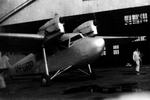
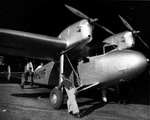
mark_pilkingtonYou could also search for the Tugan Gannet as Wackett left Cockatoo for Tugan and designed an identical aircraft called the Gannet.
John
Although obviously sharing a lot of design aspects, I think you will find the Gannet is a slightly larger aircraft than the Codock.
I think you will find the LJW6 Codock used 2 Gipsy Major 4 cylinder engines (edit: correction – thats two 6 cyl Napier Javelin engines) while the LJW7 Gannet used 2 Gipsy Six engines, effectively highwing monoplane equivalents to the DH84 Dragon and DH89 Dragon Rapide relationships.
regards
Mark Pilkington
mark_pilkington.
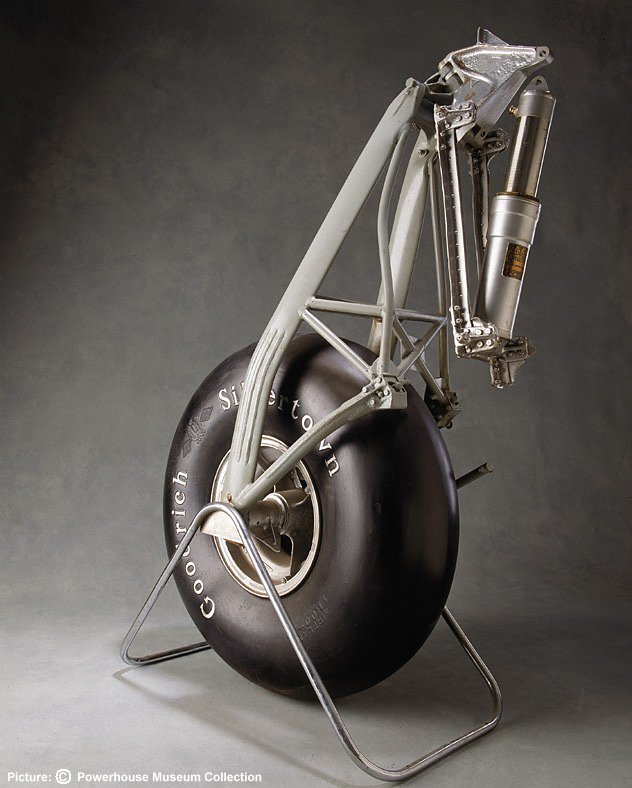
for those interested, here is a link to the surviving wheel recovered in 1937 from Aye Island and preserved in the collection of the Powerhouse Museum in Sydney.
http://www.powerhousemuseum.com/collection/database/?irn=141688
Also here is a link to Ron Cuskelly’s excellent Lockheed site entries for the Kingsford Smith Altair:
http://www.adastron.com/lockheed/altair/altair.htm
and a photo of the surviving wheel as shown on Ron’s site, courtesy of the Powerhouse Museum.
Regards
Mark Pilkington


 Sign In







