 mark_pilkington
Time will tell but even if there are
substantial remains of a Stirling over there this will be the find of
the decade.Fingers crossed
Cheers
Cees
Fingers and Toes crossed!
There is no need to preserve an example of every obscure type ever built, but the Stirling is one of those few types that seems too critical to aviation history to have been lost totally to extinction, and while a composite reproduction as already underway would be nice, a composite original, or intact original would be much much better.
This is a very exciting development, hopefully it does exist and is substantial and intact remains.
Do we have any russian forumites with the ability to access photos?, even if diplomatic relations between the governments are precluding formal access? There must be some local knowledge of its existance/recovery? “Perestroika”!!!
regards
Mark Pilkington
mark_pilkington.
There may be a RAAF report by Paddy Heffernan on the flight characteristics of the Bulldog ? see page 121 of Duff
also
In February 1930, eight Bulldog IIs arrived in Australia in the SS Fordsdale, and acceptance tests were carried out at Point Cook in May.
I thought the weight and balance figures would be in the rigging notes in chapter 1 of the RAF manual AP1393?
Have a soft spot for the Bulldog as I recovered the remains of RAAF Bulldog II A12-7 that P/O Eric Reid crashed in 1936, see Luff 123.
I assume Bulldogbuilder that your Ed Storo from the USA, how is your replica bulldog progressing? what engine are you intending to fit to the aircraft?
can you post any photos for us to enjoy?
regards
Mark Pilkington
mark_pilkingtonI have been advised by email that the Science Museum only holds one Sunbeam Engine, a Sunbeam Nubian 2, indicating the BAPC Engine List I linked and posted above may have significant errors.
I’m not connected to the BAPC but assume there are some members etc on the forum, it may be worth reviewing those entries and updating the document linked on the internet to avoid further confusion?
Regards
Mark Pilkington
mark_pilkington.
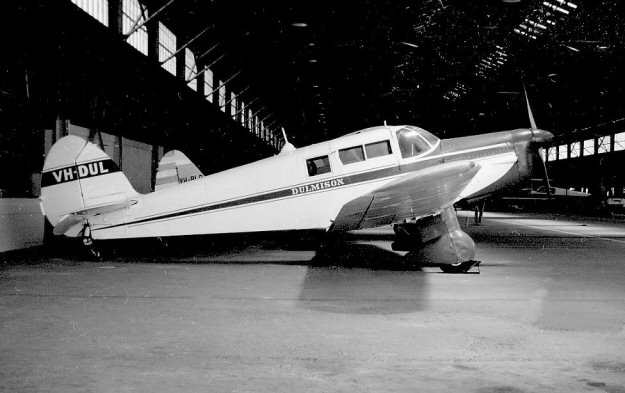
Maurice Rolfe at Moorabbin Airport owns Proctor Mark 1 VH-DUL, currently stored for future airworthy restoration, which still sports a DF loop installation but it does not have a perspex housing?
Were the aerials, and DF Loops fitted in the same aircraft?, I dont recall ever seeing such a photo? and I expect the DF loop would have compromised the aerial mast location and aerial wire itself?
http://www.edcoatescollection.com/ac1/austcl/VH-DUL.html
This was the ex-RAF Proctor P6187 civlianized in 1946 as G-AHFU. It was not exported to Australia, however, until 1958 – a late-comer as far as Proctors go. When Geoff Goodall took the above shot in at Bankstown, NSW, January of 1964 the aircraft was owned by the Dulmison Co, (now Dulmison Australia) a leading supplier of electric utility and transmission equipment. As this is wriitten (in Raleigh, NC, in September 2006) I am somewhat familiar with that enterprise insofar as my wife works for a leading power transmission consulting company who use their products. I suspect that their executive aircraft today is not a Proctor!
regards
Mark Pilkington
mark_pilkingtonA site Map sketch of RAF Kasfareet in 1947, and other period photos of the base from 1953-1956.
http://rafkasfareet1953-56.piczo.com/?cr=1
Despite the google earth photo showing what seems hard bare ground, the photos on Alwyn York’s website seem to show a very desert “sand” surface? making burial perhaps more viable and easier to conceal that I would have thought?
regards
Mark Pilkington
mark_pilkingtonWhy not:p
In 1986 (2 decades) the Egyptian Air Force, after persistent requests from the RAF Museum, conducted a 100 km square air search over the desert for the remains of Stirlings reputed to have been seen at Kas Fareet, near the Suez Canal. Doubts had been expressed about four engine aircraft ever having used the runways there, but the possibility becaume a certainty when the aeroplane spotting records of Denys Voaden were produced showing that in 1947 the north dump at 107 MU, Kas Fareet, held seven 1589 HFF Stirlings. However the Arab-Israeli war had passed over this part of Egypt in the 1950’s and everything left was probably removed in the later battle field clearance projects.
Quoted from the Stirling File, Air Britain
It would be nice if there are still bits left (as are the Mk 22 Spitfires in Syria). But who will want to have a look at the area.
Cheers
Cees
Thanks for that . My father watched them buried at Kasfereet post-war and we triggered the RAF Museum via Jack Bruce in the late 70’s to the episode.
I just wondered why the term “alleged” crept in.
No Problem 🙂
A big trench was dug out with bulldozers -apparently about 500m long and 15-20m deep alongside the airfield. A large amount of redundant equipment of all sorts was then hauled into it.
The Stirlings were towed in, their undercarriages retracted and the wings hacked off. Eventually the entire “grave” was bulldozed back over.
As I understood it the EAF only looked over the surface at a later date.
I would be interested in any confirmation that the kit was actually dug up by the Egyptians. IIRC we were informed it was a somewhat expanded MiG 21 base in the 70’s.
Seems Kasfareet is abandoned, largely intact and undisturbed or built over, (there does seem to be a Missile base to the north?)
So “25 deg south” can the location of the trench be identified? -who’se got a spade?
google earth co-ordinates N 30° 14′ 31” E 32° 24′ 39”
“Free Short Stirling to the first person to find them”
smiles
Mark Pilkington
mark_pilkingtonjerryw,
I have spoken to the curators at both Qantas Founders Museum and Australian Stockman’s hall of fame, both confirm there are no Sunbeam Dyak engines in either collection.
The suggestion of one existing at the Stockman’s hall of Fame came from this british website?
http://www.localhistory.scit.wlv.ac.uk/Museum/Transport/planes/SunbeamEngines11.htm
I am assume now it has confused the presence of a Dyak 504K replica in Longreach, with the presence of an actual engine, (I believe the second Avro 504K replica may have been displayed at the Stockman’s Hall before the Qantas Founders Museum opened.)
The curator at Qantas Founders confirmed their example does not have a Dyak.
I have seen the Sydney example myself, it does have an engine within the cowl, and the adjacent signboard refers to an original Sunbeam Dyak being installed.
During the 1960′-1980’s Qantas had an original Avro 504K (A3-4) on loan from the Australian War Memorial, and fitted a Sunbeam Dyak in place of its own rotary, these two replica’s were built by Qantas when the AWM original was returned and restored to its original RAAF configuration, so I assume the Dyak was simply transfered into one of the Replicas’.
Qantas also has its historical collection on display at Mascot, with a Beardmore and RAF V8 on display, but no Dyak.
So it would seem the two already listed, the Mascot Qantas Dyak 504k Replica, and the Bull Creek museum are the only two Dyaks in Australia.
regards
Mark Pilkington
mark_pilkingtonJerryw,
I cant confirm it, or vouch for the accuracy of the overall list in any case, but I had interpreted the “2” as suggesting there are two examples of the Arab engine at the Science Museum?
Arab – 200hp, 8L, w
2 Science Museum
Also I noticed now in reviewing the BAPC list that my cut and paste from the list left these two further entries off
Sikh – 800/900hp, 12-cyl
Science Museum
Sikh – 400/500hp, 6L
Science Museum
It would seem well worth confirming their holdings directly with the Science Museum.
In addition to the two Sunbeam Dyaks recorded in Australia, in your list
Dyak Mascot Airport, Sydney.(in Avro)
Dyak RAAF Museum, Bull Creek, WA.
I believe there is a third Dyak existing in Queensland in Longreach, originally on display with the Australian Stockman’s Hall of Fame, but now perhaps?? with the nearby Qantas Founders Museum, who also display another “Dyak” Avro 504k Replica, built at the same time as the one on display in the Qantas terminal at Mascot, although I am not sure that this second one has any engine fitted?
regards
Mark Pilkington
mark_pilkingtonJerryw
the BAPC have an engine list that appears to show a few different engines in England to your list, (particularly those held by the Science Museum?) and to be missing some of the automotive conversions you list?
SUNBEAM COATALEN
Arab – 200hp, 8L, w
2 Science Museum
Dyak – 100hp, 6L, w
Cossack – 300hp, 12-cyl
Science Museum
Gurkha – 1915, 240hp, 14.1lt, V12, w, 960lb
FAA Museum: Short S184 remains
Manitou – 1918, 370hp, 15.4lt, V12, g, 820lb
IMI-Marston Heritage Centre:
no.65665 (Imperial War Museum)
modified National Motor Museum, Beaulieu:
‘350hp Sunbeam’ first car to exceed
150mph
Maori – 1916, 155hp, 7.65lt, V8, w, g
II Imperial War Museum: no.2-320-116
Science Museum: no.8012
Maori – 275hp, V8, w
Science Museum: ex-airships R33/34
Matabele – 400hp, 18.2lt, V12, w, 1000lb
National Motor Museum, Beaulieu:
‘1000hp Sunbeam’ first car to exceed
200mph
regards
Mark Pilkington
mark_pilkingtonI was under the impression it was you Mark? Has somethign changed??
Smiles, no nothings changed, just a lot of water still to go under the bridge before I would describe it as being recovered at this stage, some red tape has been resolved, but many other aspects still require resolution.
I assumed from your post another party was proceeding down the same track.
Regards
Mark Pilkington
mark_pilkingtonWell the Avro Lincoln is finally being recovered after some red tape.
Peter,
can you advise who is recovering the Lincoln and its destination/intended outcome?
regards
Mark Pilkington
mark_pilkingtonMy information is readily exchanged with other rebuilders of Percival aeroplanes. Unfortunately time constraints prevent any other actions.
If for example I asked Hendon to disassemble part of their Proctor to take some photos of the inside of the outer wing panel (say it took 20 hours of work) – what do you reckon my chances would be?
Museum’s tend to provide research access to aircraft and archives for free, other than costs incurred in photocopying etc, it would be reasonable for Hendon to fully recover their paid staff costs if they did choose to open up their wing for your requirements.
Equally if Hendon wanted you to open up your wing for them you might as easily ask whats in it for you to incurr that same 20 hours of work? I dont really see the relevence to that point?
I have been associated with Proctor restorers myself, and am aware one Melbourne based restorer obtained some records from Edgar Percival himself, on the proviso that person would make them freely available to others, which as far as I know he has done. Certainly he provided a copy to Leigh Giles a close friend of mine and long term Proctor enthusiast, who then made a copy for inclusion in Moorabbin’s archives.
The Moorabbin Archives, along with its aircraft as accessible to restorers and researchers at no cost other than entry fee, as you well know from your visit that commenced this thread, and even the earlier photos taken and posted for you by me elsewhere in the forum.
That is the distinction being made here, open/public access to the aircraft / information is a role and purpose of static museums, discoveries and understandings by restorers as they deconstruct original parts, review drawings or manufacture replacements are lost to the wider public/enthusiasts if they are kept private, or only distributed between a select few, and some restorers may simply choose not to disimmenate that information, or record it in a reproducable fashion in anycase, given their focus on producing the end product, not a “how I did it” book.
Some restorers limit photography etc of their work in progress as they are concerned about those photos being published, and perhaps public debate or regulatory assessment of the identity or content of original parts, I understand that is a particular issue in the UK? I’m not so sure of a specific regulation in the US or Australia?
regards
Mark Pilkington
mark_pilkingtonFrom my practical experience with my proctor rebuild and using the original construction drawings I think I know one hell of a lot about the design/construction of Percival wooden aeroplanes. Far more that would every be evident from a static in a museum. There is one hell of a lot of hidden detail that unless you have been involved in the construction you wouldn’t know.
Where that information researched/learnt/identified is documented transparently and preserved and made available publicly, then the rebuild process, even if discarding all original parts and replacing them with parts of differing materials, will add some value to the historical knowledge of Percival wooden aeroplanes and their production and operational use, although that information is largely derived from the research and records of the restoration, (ie what is learnt along the way) not neccessarily the example of the finished product?
The rebuilder’s learnt knowledge and expertise does not transfer inside the finished product when it is sold on and flown by the new buyer, the finished product may not contain much of the original information.
There are celebrated stories of warbirds changing hands such as a Firefly mark VI with chin cowl and merlin engine from a Canadian Avro York? being purported to be a early mark V, and the P40 with its gear welded down, and sporting T6 fin and tailplanes, both apparantly flown in to their unsuspecting new buyers, but obviously light on in “transparant and open admission” of the use of non standard parts and overall authenticity?
Where someone builds a new build FW190, and the parts are not exact copies of the original, to the point where they are not interchangeable onto an original airframe, then the new build FW190 clearly isnt really an FW190 at all, it is a reproduction/replica, and while creating the look and feel of an FW190 in the air for our entertainment and enjoyment its not playing a role in preserving true historical material at all.
This is the issue “major rebuilds” encounter, how much of the original material remains, how much of grandad’s broom was really used by him, when dad replaced the handle and I replaced the head?
I understand with the current FW190, ME262, and Oscar new productions, that their status as new construction is transparantly admitted, the problem arises when what are effectively reproductions around a data plate are presented as simple restorations, yet the materials and parts are not authentic.
I think we all seem to agree:
Flying aircraft, and static aircraft all have a role to play in preserving and displaying our aviation heritage.
Not every flying aircraft is authentic to the orginal production and condition during its historical use, and quite often neither are many static aircraft, or preserved in ideal or perfect conditions.
However a static aircraft can strive to do so, by utilising non-airworthy parts and conserving rather than restoring, and if preserved in ideal conditions can last for many years as an authentic timecapsule exampling the production and historical use configuration.
A Flying aircraft must focus on its safety and airworthiness first, and make compromises to authenticity as required. As long as those compromises are documented and known, the remaining authenticity can equal the role of the static example in exampling the production and historical use configuration.
Even a reproduction / replica plays a role in displaying the heritage of a type, but it may not be accurate enough to provide much more than the outline or colourscheme with any authenticity?
regards
Mark Pilkington
mark_pilkingtonThe AFM (Australian Flying Museum) has as its basic policy that historic (older than 30 years) aircraft should be preserved and in flying condition.
Experience with the Neptune showed that unless you are able to store an aircraft under cover, restoration to flying is an uphill battle that you are likely to lose. Flyable condition is a much higher standard that as a static exhibit (usually) and that in itself is the cause of many problems.
Ross
“Old”, even “30 years old”, doesnt mean historic, there are many aircraft in Australia today operated as “Vintage” “Antique” or “Warbird” aircraft, that have little relevence or importance to Australia’s history, the operation and exhibition of those aircraft is entertaining, but its not preservation of Australia’s aviation heritage in any way or form?
Luscombes, Nanchungs, C170’s are excellent recreational aircraft, and have interesting characters and visual appeal, they are old, perhaps vintage, but not “historic” aircraft in my opinion?
There are however many historic aircraft flying within Australia, restored and owned by private individuals, some of which are the result of mamoth efforts to recover an airframe from the dead, and painstakingly restored as accurately as possible.
However many airworthy restorations have compromises to the original specification due to lack of parts availability, or improved safety or servicability, perhaps as simple as the quality of glues used, but perhaps extending to the sythetic coverings, a more modern engine (The Klemm Swallow) or simply avionics/radios.
While these are in some ways neccessary and desired, it dilutes the originality of the aircraft against the original production, or period use that it purports to represent.
In NZ you would be well aware of the wartime produced Proctor fitted with a pre-war Vega-Gull sloping windscreen, it does a wonderful job of re-creating the pre-war type, but its not an “accurate” restoration of either a Vega-Gull or Proctor from a factory production “preservation” point of view?
Theres nothing wrong with that in my opinion, as long as the airframe is not that historically significant that you are destroying history to impliment those compromises, I guess this is why we prefer to see a replica flying, rather than flying the original Southern Cross, (and yes I know it is not in its true original “Pacific crossing” condition)
An Ideal Static airframe should minimise these compromises in accuracy, hence the current consideration of the best way to present the Swoose Goose currently under restoration at the NMUSAF.
In regards to the engine within the Moorabbin Proctor, the museum is indebted to Ken Baird for his years of work to restore that aircraft, and Ken would be best placed to explain any compromise on the engine.
However I am aware of my own past discussions with him that while the airframe was restored to near original condition, the engine is only a shell intentionally restored by him to that condition, to preclude any future attempts to run this engine in the airframe.
As JDK states, volunteer museums do not have the resources of government funded service or “National” museums, to undertake exacting restorations in all cases, some of the Moorabbin aircraft are Nationally, and in my opinion, Internationally significant, others are types of notable interest but have equivalent airframes preserved elsewhere within Australia, others are representative examples but not the best of breed, some, like the Wessex, are incomplete and certainly the poorer examples in preservation, the correct job of the static museum is to put its resources into preserving the more significant aircraft within its collection.
Most Australian Static museums focus on preserving aircraft related to Australia’s Aviation Heritage, with some type of collection policy or preservation objective (there are exceptions to that, and I dont see that as a problem in itself, as long as the museum prioritises its resources and efforts accordingly.) They may not do it perfectly, but they do try.
The QVAG/AFM website indicates the Australian Flying Museum when formed, was going to preserve large flying aircraft in a group ownership arrangement, other than the Neptune, has the AFM taken on any other restoration/preservation projects, and achieved its goals with any other historic aircraft?
You are correct about the resources and efforts required to restore and operate a large aircraft such as the Neptune, I admire the efforts and achievements of the HARS who have taken on two airworthy Neptunes and former RAAF C-47’s in addition to their better known Constellation and Catalina operations.
regards
Mark Pilkington
mark_pilkingtonRoss,
I dont know alot about the Australian Flying Museum other than what I think was its? intention to rebuild and fly a Neptune? that is now a spares ship with HARS? (or was that someone else in Brisbane?)
What aircraft has the AFM preserved? and what is its collection policy?
Regards
Mark Pilkington


 Sign In







