 mark_pilkington
The Memphis Belle mockup sections of B17 are in storage in Australia.
Regards
Mark Pilkington
mark_pilkington.
The WIX Warbird registry lists KB941 being broken up for parts in Canada by 1986, with only the centre-section being acquired by Charles Church in 1990.
http://www.warbirdregistry.org/lancregistry/lanc-kb941.html
Charles Church had purchased the former Strathallan Flying Lancaster project KB976 in 1987, however that airframe was badly damaged by a Hangar collapse.
He purchased the Centre section of KB941, along with the fuselage of KB994, and the Lincoln RF342 to use for parts to support the rebuild of the damaged KB976.
(Lincoln RF342 had previously been purchased by Doug Arnold in 1983 from Southend, to support the intended airworthy restoration of Lancaster KB899 as G-LANC, purchased from Canada by Doug Arnold in 1984, and sold to the Imperial War Museum at Duxford in 1986)
Photos’ exist of KB976’s centre-section under rebuild indicating a substantial repair/rebuild.
Unfortunately he died in an accident and the parts all transfered to Doug Arnold in 1990 – also for rebuild of KB976.
On Doug Arnold’s death the parts split in 1992 with a complete Lancasters worth of parts being purchased and transferred to the USA by Kermit Weeks, this consisted of KB976’s wings, centre-section (under rebuild using parts from KB941) the centre fuselage from KB994 and rear fuselage from KB994.
The predominant damage to KB976 in the Hangar collapse appears to have been crushing of the top of the fuselage? and it seems that was the use of KB941 to donate its covered wagon structure to repair KB976’s Centre-Section, and as can be seen Kermit has also substituted other fuselage sections from KB994 for the damaged sections of KB976 into his long term project.
The surviving sections of centre and rear fuselage of KB976 still carry the scars of the Hangar collapse.
The remaining lancaster parts and Lincoln transferred to Aces High from 1993 to 1997 when they were acquired by David Copely of the Imperial Aviation Group, although by that time the Lincoln Cockpit, and damaged rear fuselage of KB976 had been transferred to other owners.
These remains were sold and shipped from the UK to Australia in 2006, and included both the covered wagon fuselage section of wing centre-section of KB994 (spars cut off flush with the fuselage) and the floor section of a second wing centre-section (also cut off flush with the fuselage).
This second section is believed to be the remains of the KB941 centre-section, after its covered wagon section was consumed in the rebuild of the damaged section on KB976. That “section” of KB941 held by the Australian National Aviation Museum to support the eventual restoration of Avro Lincoln RF342.
http://www.aarg.com.au/Lincoln.htm
regards
Mark Pilkington
mark_pilkingtonRoss,
http://forum.keypublishing.co.uk/showthread.php?t=79234
I now realise it was this earlier posting of yours that I was belatedly responding to, which explains why I hadnt seen the details of the specific military equipment fitout you were seeking.
regards
Mark Pilkington
mark_pilkingtonhello Ross,
took some pics of “AUC” today, but focused on the rear of the cockpit and the area of the luggage compartment, didnt re-read this post to realise you wanted specific item photos and the top of the centre-section area, will do those in @ 3 weeks.
http://aarg.com.au/Proctor.htm
regards
Mark Pilkington
mark_pilkington.
The Condor, and the Fokker would both seem to be rare enough to justfy consideration, the Fokker did feature in a magazine a few years ago, consisting of the steel tube fuselage and wooden wing spars, similarly I understand the Condor had been found to be still surviving as a steel tube frame? both if still existing may be reasonably well preserved? other than lose of parts to the strong winds.
Perhaps the most interesting “wreck” and rarest wreck is Mawson’s REP/Vickers monoplane fuselage, which is in fact the first Vickers aircraft ever built, its wings were left in Melbourne, and its fuselage was shipped down to be used a a powered sled, its rudder survives in his preserved camp, the fuselage was apparantly blown away by strong winds.
Vickers No. 1 monoplane
1 R.E.P. 60 HP five-cylinder air-cooled semi-radial engine The very first airplane to be built by Vickers, this was a license-built French machine, designed by Robert Esnault-Pelterie. The fuselage was built in France while the wings were made in England. After being tested at Vickers’ new airfield at Joyce Green, Dartford, and then at Brooklands, it was crated and shipped to Australia for use by the Australasian Antarctic Expedition. However, the wings were damaged beyond repair on October 5, 1911, during a practice flight at Cheltenham Racecourse, Adelaide, Australia, before the expedition left for the Antarctic. Minus its wings, the machine was converted into an air-tractor, and taken south, but it did not fly in the Antarctic. The first tests of the machine as an air-tractor were made on November 15, 1912. After a short trial trip on November 20, 1912, the vehicle made a successful depot-laying trip with a load of 700 pounds on December 2, 1912. At 3 PM on December 3rd, three men and the air-tractor left the expedition’s base at Commonwealth Bay on a major trip. On December 4, 1912, while towing four sledges loaded with fuel and supplies, several of the pistons seized and the engine broke down. The air-tractor was left at this point, about ten miles from the base. Later another party of men recovered the air-tractor, which was taken back to Commonwealth Bay and abandoned there.

28th August 2007, 22:23
David Burke
Rank 5 Registered User Join Date: Jan 2000
Posts: 3,974There are over a hundred aircraft wrecks in the Antartic – amongst these the remains of a Fokker Universal from the Byrd expedition.
By the way David, your not an author on the subject are you?
Moments of Terror: The Story of Antarctic Aviation, by David Burke
New South Wales University Press, ©1994, ISBN 0 86840 157 9
Pages 9-11, 79, 190, 210-211, 303
regards
Mark Pilkington
mark_pilkingtonim not to sure on how valuble/ invaluble it is
Given its an original 1909 aircraft engine, (despite its lack of successful flight) it would seem to be very important and of great significance, perhaps not equal to AV Roes original triplane, but certainly one of the few original survivors from those early pioneers?
I am becoming convinced the engine is a normal combustion engine, given its original intended use in a car, and no apparant details of a steam boiler in the drawings or design discussion in the research material sent to me.
regards
Mark Pilkington
mark_pilkingtonScott,
any updae from NEAM on the engine?
I have recieved info from the UK that advises the following:
The engine was designed and built by Harry Fothergill, an Engineer from Teeside in 1907/1908 as a 30hp 6 cylinder engine for a car, however that did not proceed and the engine was ony partially completed as a two cylinder and never fitted to a car.
It was acquired by Captain Joseph Donovan for his aircraft and given to Thomas Macleod another local engineer who took it to Gale’s Garage in West Hartlepool where it was completed to its original 6 cylinder specification during 1909.
Captain Donovan had designed what might be best described as a helicopter with two driven short contra-rotating rotors above a circular canvas wing, and two contra-rotating pusher propellors at the rear in front of a single vertical rudder.
The circular wing was to act as a parachute during landing, and the undercarriage was jettisonable wheels and two skids, , the machine was intended to be able to be fitted with floats for operation as a flying boat or seaplane.
The design was patented as #21618 and a company formed – the Donovan Aeroplane Company in May 1909
Construction of the machine was undertaken at the Howcraft Carriage Company in Oxford Road West Hartlepool at a cost of 200 pounds, and it was then taken to a field at Johnson’s Rift House Farm.
It was placed in a specially built shed to await its testing.
It was tested by Captain Donovan on 25 October 1909, and proved to be a dismal failure, the engine had insufficient power to do anything more than turning the propellors and could not cause any “tractive effect”?, the completed airframe was excessively heavy and “unwiedly”, “the plane would not have flown even if driven by a 300hp engine” was the comment of eye witness Harry Fothergill (the original designer and constructor of the engine) in 1965.
Flight on the 29th of October 1909 reported the construction and failure , and the subsequent sale of machine and fittings by auction for 35 pounds.
Captain Donovan died at the age of 84 at Grove Hill Middlesbrough in 1928, suggesting he was 65? at the time of the attempt to fly in 1909?
regards
Mark Pilkington
mark_pilkingtonIts obvious I’m getting noplace in here as far as info goes so if nobody wants to check or ask simple questions to varify whats been said then why do you bother?
Yes another long one eh kids, hooroo
Thanks Bernie,
Thanks for the eventual update on the Defence scans.
I actually did ring the Bunderburg Council last friday and asked some simple questions and got some very clear and open answers.
* The Council invited representatives of ABMM to tour the site in a minibus and identify all the areas to be scanned by Defence.
* Defence spent $50,000 on scans that identified absolutely nothing.
* The Council has invited ABMM to bring forward its eye witnesses to identify the bunker entrances
* The Council has offered to excavate any bunker entrance that ABMM can identify.
* ABMM are apparantly bringing in their own scanning experts at their cost.
* The Council and ABMM have agreed to a deadline of February 2009 for this investigation to be completed.
* The Council has airport employees who have worked at the airport since the early 1970’s and have no knowledge of the bunker, removed rail tracks or entrances that are claimed to have existed and been since removed or hidden.
In that enqury I didnt find any evidence of a conspiracy, in fact the person I spoke to was quite open to the possibility of a bunker and keen to resolve the risk of live munitions being onsite.
He was particularly keen to give those with evidence and claims of the bunker the opportunity to locate it and prove its existance.
Apparantly there is now claims of an area that was not scanned by defence, however it seems that site was not identified by ABMM as a target area during the minibus tour of the site that defined the Defence scan areas.
If such an “active” entrance exists, why doesnt ABMM simply enter it with Council permission and bring out photos or other evidence of the contents?
I would agree there is little point in continuing the banter, until real evidence is presented, there is little to support the claims the bunker exists, and the council offer to ABMM to bring forth such evidence seems very reasonable and to clearly put the ball in their court to prove its existance.
I am more sceptical than ever that such a bunker exists, let alone the wild claims of what is in it, I look forward to the results available by February to confirm that.
Moggy, as the orginator of this thread I am happy enough for this one to be locked, rather than deleted, as a reference for those who do search the net for evidence on the Bundaberg Bunker, (or lack of it), a new thread can always be created when the aircraft are being wheeled out of the excavated bunker between now and February.
regards
Mark Pilkington
mark_pilkingtonRadar = been done 6 years ago but nobody wants to see it.
Bernie, I want to see it, and have been asking you to show it from the outset?
Are you the person with that information?, or have seen it?, or have you just heard about it?
On another forum someone associated with the Australian Bunker Museum? posted these comments apparantly in relation to that same scan?
Now as I have mentioned previously above, We DON’T KNOW if the site contains 500lb aerial bombs and aircraft or not. We really WON’T KNOW until we are allowed to excavate the site.
plant-pilot could well be right about the site being an air raid shelter. That was my initial conclusion as well after performing the geophysical survey over the site. At the very least we have a previously unknown large-scale underground air raid shelter which is historically significant in itself and which deserves to be heritage listed.
If anyone has any questions about the site or the Bundaberg Bunker stories, let me know.
Cheers.
——————————————————————————–
Last edited by ABMM : 13-04-2008
Is ABMM above referring to those same radar scans? and if so he seems to have conducted them, and throws doubts on what it is, and what is inside it?
If you do have radar scans that proove your claims, (and no one officially wants to see them, or take them seriously including the media), why dont you simply post them here to convince everyone publicly?
and my old chestnut “The Defence scanning is intended to prove or disprove the existance of the bunker, has that occured? or a date been set for it to occur?”
smiles
Mark Pilkington
mark_pilkingtonSorry….Ken Rimmel isn’t exactly correct here.
well thats enough to confirm it then! smiles
NO Wrong!
Its clearly one of the three dis-assembled aircraft hidden in an underground bunker in Bundaburg Australia!
smiles
Mark Pilkington
mark_pilkington“A Napier Sabre under destruction testing at Napier’s own engine test facility in Acton, London” According to Ken Rimmel’s little pictorial tribute to the Typhoon. Knew I’d seen it somewhere…
NO Wrong!
Its clearly one of the three dis-assembled aircraft hidden in an underground bunker in Bundaburg Australia!
smiles
Mark Pilkington
mark_pilkingtonBernie
Its quite simple, so far theres been no real evidence shown here to proove any of the claims made, so its hard to believe.
If and when that evidence is shown, or the new scans are done, or something is unearthed you are welcome to complain and crow we didnt believe.
So the question remains – has the new scanning proceeded? or do you know when it will?
regards
Mark Pilkington
mark_pilkingtonbdn12,
Obviously, the power comes from the pistons, but what transfers the pistons motion into rotational motion of the engine block?
In simply terms it is like bolting the crankshaft of a radial so it cant rotate, that causes the crankcase to do so.
I guess strickly speaking, it is after the compression and ignition of the gases within the cylinder, and the expansion of the gases are pushing the piston down, that the angled vector of the con rod at that point pushing on the fixed crankshaft then causes the cylinder to be pushed sideways by the piston on its downward travel thus causing the crankcase to rotate? (as the cylinders are bolted to the crankcase).
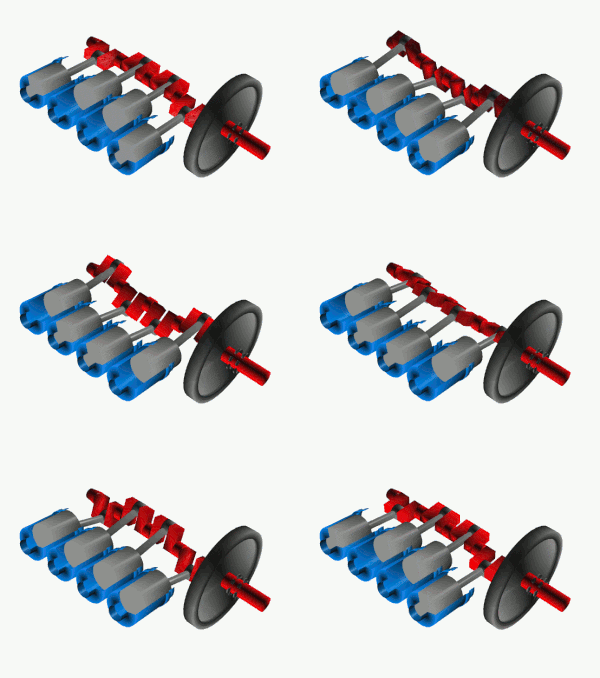
More generally the crankshaft, master and con rods of the Rotary work the same as the Radial, and any other internal combustion engine.
There is a bearing at the crankshaft/master rod connection point, and the master rod rotates, around the crankshaft, which in a rotary is stationary, and which in a radial – rotates.
That point of the crankshaft (the crank pin) is off-set from centre to create the up-down movement of the piston as the engine rotates.
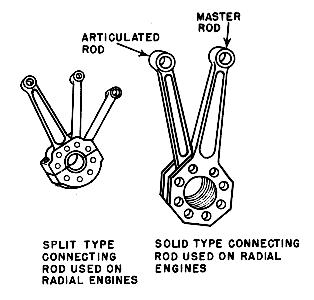
Usually one piston is connected to a master connection rod, with the other pistons connected to that master rod, via individual connection rods, the Master clamps a bearing surface (the big end) around the “crank pin” of the crankshaft, the other “con rods” are then connected to the Master.
http://en.wikipedia.org/wiki/Crankshaft
http://science.howstuffworks.com/radial-engine2.htm
http://www.aviation-history.com/engines/radial.htm
regards
Mark Pilkington
mark_pilkington.
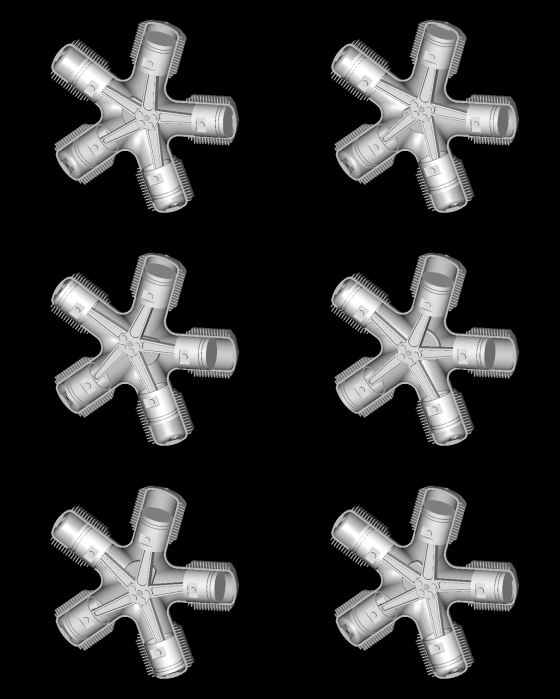
Here is an interesting graphic showing how the crankshaft remains stationary, while the pistons, the cylinders, and therefore the crankcase all rotate.
The website has further information on interpreting and understanding the graphic.
http://www.keveney.com/gnome.html

regards
Mark Pilkington
mark_pilkington.
The RAAF were an early user of the DH-60 as a basic trainer, and “Dickie” Williams was criticised by a visiting RAF AVM for selecting it over continued use of the Avro 504K.
A total of 118 DH60’s from Cirrus, DH60X, DH60G, DH60M and DH60GIII models flew with the RAAF in the A7- series, the first two being imported and evaluated in early 1926.
(TigerMoths were not included in this series, and instead recorded under the A17- series )
These aircraft were ordered from the UK, directly for the RAAF, and even constructed locally, however a number of civil examples were impressed by the RAAF during WW2, including some that had been previously retired from RAAF service.
The typical scheme in the RAAF was an overall silver dope with pre-war red/white/blue roundels and the A7- serial in black, many, but not all, had a tri-colour rudder, I suspect these were painted in the UK before shippment and adopted the RAF colourscheme.
Below is a restored RAAF example still flying in Australia


regards
Mark Pilkington


 Sign In







